Building Blocks
This section contains fundamental products for the synthesis of organic and biological compounds. Building blocks are the essential starting materials used to construct complex molecules through various chemical reactions. They play a critical role in drug discovery, material science, and chemical research. At CymitQuimica, we offer a diverse range of high-quality building blocks to support your innovative research and industrial projects, ensuring you have the essential components for successful synthesis.
Subcategories of "Building Blocks"
- Boronic Acids & Boronic Acid Derivatives(5,756 products)
- Chiral Building Blocks(1,242 products)
- Hydrocarbon Building Blocks(6,095 products)
- Organic Building Blocks(61,037 products)
Found 196200 products of "Building Blocks"
Sort by
Purity (%)
0
100
|
0
|
50
|
90
|
95
|
100
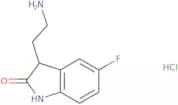
3-(2-Aminoethyl)-5-fluoro-2,3-dihydro-1H-indol-2-one hydrochloride
CAS:<p>Versatile small molecule scaffold</p>Formula:C10H12ClFN2OPurity:Min. 95%Molecular weight:230.66 g/mol3-(Trifluoromethyl)-1,4,5,7-tetrahydropyrano[3,4-c]pyrazole
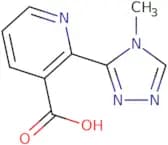
CAS:<p>Versatile small molecule scaffold</p>Formula:C7H7F3N2OPurity:Min. 95%Molecular weight:192.14 g/mol2-(4-Methyl-4H-1,2,4-triazol-3-yl)pyridine-3-carboxylic acid
CAS:<p>Versatile small molecule scaffold</p>Formula:C9H8N4O2Purity:Min. 95%Molecular weight:204.2 g/molRef: 3D-CVD03521
Discontinued productPB-22 3-carboxyindole metabolite solution
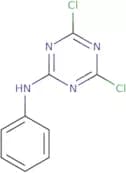
CAS:Controlled Product<p>PB-22 is a synthetic cannabinoid, which can be classified as a CB1 receptor agonist. It is one of the many cannabinoids that have been created in an attempt to circumvent drug laws by creating compounds that are similar to those found in cannabis but have different chemical structures. PB-22 has shown to increase locomotor activity and stimulate the cb1 receptor in mice. Magnetic resonance spectroscopy (MRS) and assays were used to determine the binding affinity of PB-22 for the CB1 receptor. The MRS data showed that PB-22 bound with high affinity to the CB1 receptor and had a lower affinity for CB2 receptors. This suggests that PB-22 may be more potent than other synthetic cannabinoids, such as JWH-018 and CP 55,940, which bind better with CB2 receptors than CB1 receptors.<br>PB-22 is an analog of JWH-073 and has been shown to have a stronger effect on locomotor activity than JWH</p>Formula:C14H17NO2Purity:Min. 95%Molecular weight:231.29 g/mol4,6-Dichloro-N-phenyl-1,3,5-triazin-2-amine
CAS:<p>4,6-Dichloro-N-phenyl-1,3,5-triazin-2-amine is a reactive and labile compound that has been shown to inhibit the nuclear factor kappa B (NF-κB). It is an analog of 2,4,6,-trichlorophenyl-1,3,5-triazine. 4,6-Dichloro-N-phenylsulfonyl triazin-2 amine is a chlorinated derivative of 4,6 dichloro triazin 2 amine. The chlorine atom in the molecule may be replaced with a cyanuric or chloride group. This chemical compound is used in dyestuffs and as a precursor for other chemicals. The effect varies depending on the dose administered.</p>Formula:C9H6Cl2N4Purity:Min. 95%Molecular weight:241.08 g/mol3-Bromo-5-tert-butylphenol
CAS:<p>Versatile small molecule scaffold</p>Formula:C10H13BrOPurity:Min. 95%Molecular weight:229.11 g/molRef: 3D-XRB66126
Discontinued productMethyl 5-oxa-2-azaspiro[3.4]oct-7-ene-7-carboxylate hydrochloride
CAS:<p>Versatile small molecule scaffold</p>Formula:C8H12ClNO3Purity:Min. 95%Molecular weight:205.6 g/molRef: 3D-YPD35610
Discontinued product1'-(tert-Butoxycarbonyl)-[1,4'-bipiperidine]-4-carboxylic acid
CAS:<p>Versatile small molecule scaffold</p>Formula:C16H28N2O4Purity:Min. 95%Molecular weight:312.4 g/molRef: 3D-BIA81059
Discontinued product3-{1-[(tert-Butoxy)carbonyl]piperidin-3-yl}prop-2-ynoic acid
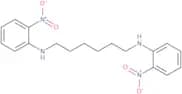
CAS:<p>Versatile small molecule scaffold</p>Formula:C13H19NO4Purity:Min. 95%Molecular weight:253.29 g/molN(1),N(6)-Bis(2-nitrophenyl)-1,6-hexanediamine
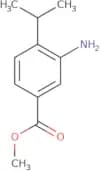
CAS:<p>Versatile small molecule scaffold</p>Formula:C18H22N4O4Purity:Min. 95%Molecular weight:358.4 g/molMethyl 3-amino-4-(propan-2-yl)benzoate
CAS:<p>Versatile small molecule scaffold</p>Formula:C11H15NO2Purity:Min. 95%Molecular weight:193.24 g/molRef: 3D-ZAA83044
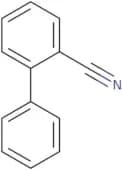
Discontinued product2-Cyanobiphenyl
CAS:<p>2-Cyanobiphenyl is a versatile research chemical that has various applications in the field of chemistry. It is a biphenyl compound that is commonly used as a fluorescent probe in scientific experiments. The chemical structure of 2-Cyanobiphenyl makes it an ideal candidate for studying phase transitions and solid-state NMR (Nuclear Magnetic Resonance). Researchers often use this compound to investigate the phase transition temperature and properties of different materials, such as nematic liquid crystals.</p>Formula:C13H9NPurity:Min. 95%Molecular weight:179.22 g/moltert-Butyl 5-formyl-1,2,3,4-tetrahydropyridine-1-carboxylate
CAS:<p>Versatile small molecule scaffold</p>Formula:C11H17NO3Purity:Min. 95%Molecular weight:211.26 g/molRef: 3D-ZEC65403
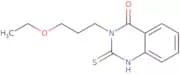
Discontinued product3-(3-Ethoxypropyl)-2-sulfanyl-3,4-dihydroquinazolin-4-one
CAS:<p>Versatile small molecule scaffold</p>Formula:C13H16N2O2SPurity:Min. 95%Molecular weight:264.35 g/molRef: 3D-FQA43696
Discontinued product[2-(3-Methyl-1H-pyrazol-1-yl)pyridin-4-yl]methanol
CAS:<p>Versatile small molecule scaffold</p>Formula:C10H11N3OPurity:Min. 95%Molecular weight:189.21 g/molRef: 3D-ZZB36394
Discontinued product2-Hydroxy-[1,1'-biphenyl]-3-carboxylic acid
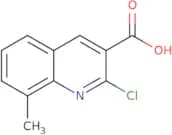
CAS:<p>2-Hydroxy-[1,1'-biphenyl]-3-carboxylic acid (2HBC) is a monomer that belongs to the group of ester compounds. It has been shown to inhibit the growth of trichophyton mentagrophytes and other fungi by forming hydrogen bonds with the enzyme activities in the cell wall. 2HBC also inhibits microbial growth by binding to enzymes such as phospholipase A2, cyclooxygenase, and lipoxygenase, which are involved in inflammatory processes. This drug also inhibits bacterial growth by binding to the ribosome, preventing protein synthesis and leading to cell death. The inhibition of microbial growth is not limited to bacteria; it also occurs in fungi and protozoa. 2HBC has been shown to be active against both extracellular and intracellular microbial infections.</p>Formula:C13H10O3Purity:Min. 95%Molecular weight:214.22 g/mol2-Chloro-8-methylquinoline-3-carboxylic acid
CAS:<p>Versatile small molecule scaffold</p>Formula:C11H8ClNO2Purity:Min. 95%Molecular weight:221.64 g/mol2-Methyl-4-[(1-methyl-1H-imidazol-2-yl)sulfanyl]aniline
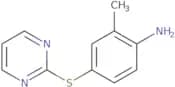
CAS:<p>Versatile small molecule scaffold</p>Formula:C11H13N3SPurity:Min. 95%Molecular weight:219.31 g/mol2-Methyl-4-(pyrimidin-2-ylsulfanyl)aniline
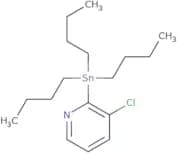
CAS:<p>Versatile small molecule scaffold</p>Formula:C11H11N3SPurity:Min. 95%Molecular weight:217.29 g/mol2-(Tributylstannyl)-3-chloropyridine
CAS:Controlled Product<p>Versatile small molecule scaffold</p>Formula:C17H30ClNSnPurity:Min. 95%Molecular weight:402.59 g/mol

![3-(Trifluoromethyl)-1,4,5,7-tetrahydropyrano[3,4-c]pyrazole](/_next/image/?url=https%3A%2Fstatic.cymitquimica.com%2Fproducts%2F3D%2Fthumb-webp%2FXQB93148.webp&w=3840&q=75)


![Methyl 5-oxa-2-azaspiro[3.4]oct-7-ene-7-carboxylate hydrochloride](/_next/image/?url=https%3A%2Fstatic.cymitquimica.com%2Fproducts%2F3D%2Fthumb-webp%2FYPD35610.webp&w=3840&q=75)
![1'-(tert-Butoxycarbonyl)-[1,4'-bipiperidine]-4-carboxylic acid](/_next/image/?url=https%3A%2Fstatic.cymitquimica.com%2Fproducts%2F3D%2Fthumb-webp%2FBIA81059.webp&w=3840&q=75)
![3-{1-[(tert-Butoxy)carbonyl]piperidin-3-yl}prop-2-ynoic acid](/_next/image/?url=https%3A%2Fstatic.cymitquimica.com%2Fproducts%2F3D%2Fthumb-webp%2FYXC25906.webp&w=3840&q=75)
![[2-(3-Methyl-1H-pyrazol-1-yl)pyridin-4-yl]methanol](/_next/image/?url=https%3A%2Fstatic.cymitquimica.com%2Fproducts%2F3D%2Fthumb-webp%2FZZB36394.webp&w=3840&q=75)
![2-Hydroxy-[1,1'-biphenyl]-3-carboxylic acid](/_next/image/?url=https%3A%2Fstatic.cymitquimica.com%2Fproducts%2F3D%2Fthumb-webp%2FAAA30406.webp&w=3840&q=75)
![2-Methyl-4-[(1-methyl-1H-imidazol-2-yl)sulfanyl]aniline](/_next/image/?url=https%3A%2Fstatic.cymitquimica.com%2Fproducts%2F3D%2Fthumb-webp%2FFWB90851.webp&w=3840&q=75)