Building Blocks
This section contains fundamental products for the synthesis of organic and biological compounds. Building blocks are the essential starting materials used to construct complex molecules through various chemical reactions. They play a critical role in drug discovery, material science, and chemical research. At CymitQuimica, we offer a diverse range of high-quality building blocks to support your innovative research and industrial projects, ensuring you have the essential components for successful synthesis.
Subcategories of "Building Blocks"
- Boronic Acids & Boronic Acid Derivatives(5,756 products)
- Chiral Building Blocks(1,242 products)
- Hydrocarbon Building Blocks(6,095 products)
- Organic Building Blocks(61,037 products)
Found 196139 products of "Building Blocks"
Sort by
Purity (%)
0
100
|
0
|
50
|
90
|
95
|
100
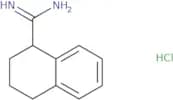
1,2,3,4-Tetrahydronaphthalene-1-carboximidamide hydrochloride
CAS:<p>Versatile small molecule scaffold</p>Formula:C11H15ClN2Purity:Min. 95%Molecular weight:210.7 g/molRef: 3D-AFC99689
Discontinued productEthyl 2-cyclopropanecarbonyl-4-oxopentanoate
CAS:<p>Versatile small molecule scaffold</p>Formula:C11H16O4Purity:Min. 95%Molecular weight:212.2 g/mol4-Bromo-N-[(4-hydroxyphenyl)methyl]-N-methyl-1H-pyrrole-2-carboxamide
CAS:<p>Versatile small molecule scaffold</p>Formula:C13H13BrN2O2Purity:Min. 95%Molecular weight:309.16 g/molRef: 3D-IXB45477
Discontinued product2-Cyclohexyl-1,3-thiazole-5-carbaldehyde
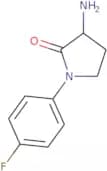
CAS:<p>Versatile small molecule scaffold</p>Formula:C10H13NOSPurity:Min. 95%Molecular weight:195.28 g/mol3-Amino-1-(4-fluorophenyl)pyrrolidin-2-one
CAS:<p>Versatile small molecule scaffold</p>Formula:C10H11FN2OPurity:Min. 95%Molecular weight:194.21 g/molRef: 3D-FAA30136
Discontinued product3-(Hydroxymethyl)cyclobutan-1-one
CAS:<p>3-(Hydroxymethyl)cyclobutan-1-one is a synthetic piperazine derivative that has been shown to have antitumor and antimycobacterial activities. It is a selective inhibitor of the enzyme purine nucleoside phosphorylase (PNP), which catalyzes the conversion of inosine monophosphate (IMP) to xanthosine monophosphate (XMP). This inhibition results in an accumulation of IMP and deoxyinosine monophosphate (dIMP) in tumor cells. 3-(Hydroxymethyl)cyclobutan-1-one also inhibits Mycobacterium tuberculosis, but not other bacteria such as Escherichia coli or Staphylococcus aureus. The product is synthetically produced by reacting cyclobutanone with hydroxylamine.</p>Formula:C5H8O2Purity:Min. 95%Molecular weight:100.12 g/molRef: 3D-IHA61618
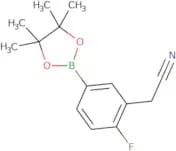
Discontinued product3-Cyanomethyl-4-fluorobenzeneboronic acid pinacol ester
CAS:<p>Versatile small molecule scaffold</p>Formula:C14H17BFNO2Purity:Min. 95%Molecular weight:261.1 g/molRef: 3D-VYB21951
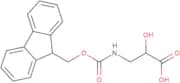
Discontinued productFmoc-(S)-3-amino-2-hydroxypropionic acid
CAS:<p>Versatile small molecule scaffold</p>Formula:C18H17NO5Purity:Min. 95%Molecular weight:327.3 g/molRef: 3D-XGA72123
Discontinued product3-(2,5-Dioxo-2,5-dihydro-1H-pyrrol-1-yl)-2,2-dimethylpropanoic acid
CAS:<p>Versatile small molecule scaffold</p>Formula:C9H11NO4Purity:Min. 95%Molecular weight:197.19 g/molRef: 3D-XLC39286
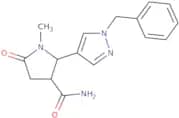
Discontinued productrac-(2R,3R)-2-(1-Benzyl-1H-pyrazol-4-yl)-1-methyl-5-oxopyrrolidine-3-carboxamide
CAS:<p>Versatile small molecule scaffold</p>Formula:C16H18N4O2Purity:Min. 95%Molecular weight:298.3 g/molRef: 3D-HXC94084
Discontinued product1-[(4-Iodophenyl)carbamoyl]cyclopropane-1-carboxylic acid
CAS:<p>Versatile small molecule scaffold</p>Formula:C11H10INO3Purity:Min. 95%Molecular weight:331.11 g/molMethyl 2-(pyrrolidin-3-yloxy)acetate hydrochloride
CAS:<p>Versatile small molecule scaffold</p>Formula:C7H14ClNO3Purity:Min. 95%Molecular weight:195.64 g/molRef: 3D-YEC22323
Discontinued productMethyl 5-oxa-2-azaspiro[3.4]oct-7-ene-7-carboxylate hydrochloride
CAS:<p>Versatile small molecule scaffold</p>Formula:C8H12ClNO3Purity:Min. 95%Molecular weight:205.6 g/molRef: 3D-YPD35610
Discontinued product3-{1-[(tert-Butoxy)carbonyl]piperidin-3-yl}prop-2-ynoic acid
CAS:<p>Versatile small molecule scaffold</p>Formula:C13H19NO4Purity:Min. 95%Molecular weight:253.29 g/mol3-[(3-Bromopyridin-2-yl)oxy]-4-methylaniline
CAS:<p>Versatile small molecule scaffold</p>Formula:C12H11BrN2OPurity:Min. 95%Molecular weight:279.13 g/molRef: 3D-YZB09914
Discontinued product2-Cyano-5-fluorophenol
CAS:<p>2-Cyano-5-fluorophenol is an organic compound that is used as a precursor to medicines and other chemicals. It reacts with calcium hydroxide in water to form 2-cyano-5-hydroxyfluorobenzene, which can be hydrolyzed to form 2-cyano-5-chlorofluorobenzene. This compound can also react with sodium hydroxide to produce sodium cyanate, which can be hydrolyzed to form sodium chloride and hydrogen cyanide gas. The alkali metal ions are needed for this reaction, which is why the product should not be exposed to water or moisture. 2-Cyano-5-fluorophenol has been shown to have liquid crystal properties and is used in the production of certain types of polymers. 2Cyano-5Fluorophenol crystals are also used in some medicines such as acetaminophen (paracetamol).</p>Formula:C7H4FNOPurity:Min. 95%Molecular weight:137.11 g/mol2-Oxa-spiro[3.3]heptan-6-ol
CAS:<p>Versatile small molecule scaffold</p>Formula:C6H10O2Purity:Min. 95%Molecular weight:114.14 g/mol2-Bromo-3,3,3-trifluoro-1-propene
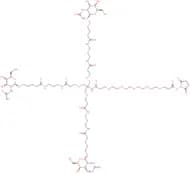
CAS:Controlled Product<p>2-Bromo-3,3,3-trifluoro-1-propene is a chemical compound that has been synthesized in an asymmetric reaction. The reactant is bromopropane and the product is 2,2,2-trifluoropropene. The methylene group on the propene molecule is activated by the nucleophilic attack of a fluoride ion from hydrogen fluoride to form a cavity with a highly strained bond. The kinetic study of this reaction revealed that the activation energy for the reaction is 42 kJ/mol. Palladium-catalyzed coupling reactions are catalyzed by palladium and require nonpolar solvents such as toluene or dichloromethane. This type of reaction has been shown to be exothermic with an isolated yield of 1%.</p>Formula:C3H2BrF3Purity:Min. 95%Color and Shape:Colorless PowderMolecular weight:174.95 g/molTri-b-GalNAc-PEG5-NHS ester
CAS:<p>Tri-GalNAc-NHS ester is a multivalent molecule composed of three GalNAc cluster arms. It is a protein degrader and a ligand of the asialoglycoprotein receptor (ASGPR) used for the development of targeted therapies for liver diseases. The GalNAc arms enable high-affinity binding to the ASGPR on hepatocyte surfaces. The crucial functional group, N-hydroxysuccinimide (NHS) ester, is known for its ease of conjugation with various biomolecules possessing amine (NH2) groups. This biocompatible reaction strategy allows the design and development of targeted conjugates such as drug-GalNAc conjugates, siRNA delivery vehicles, or probes for ASGPR imaging in the liver.</p>Formula:C79H137N11O37Purity:Min. 95%Color and Shape:PowderMolecular weight:1,832.99 g/molRef: 3D-FT183733
Discontinued product


![4-Bromo-N-[(4-hydroxyphenyl)methyl]-N-methyl-1H-pyrrole-2-carboxamide](/_next/image/?url=https%3A%2Fstatic.cymitquimica.com%2Fproducts%2F3D%2Fthumb-webp%2FIXB45477.webp&w=3840&q=75)



![1-[(4-Iodophenyl)carbamoyl]cyclopropane-1-carboxylic acid](/_next/image/?url=https%3A%2Fstatic.cymitquimica.com%2Fproducts%2F3D%2Fthumb-webp%2FXZB90132.webp&w=3840&q=75)
![Methyl 5-oxa-2-azaspiro[3.4]oct-7-ene-7-carboxylate hydrochloride](/_next/image/?url=https%3A%2Fstatic.cymitquimica.com%2Fproducts%2F3D%2Fthumb-webp%2FYPD35610.webp&w=3840&q=75)
![3-{1-[(tert-Butoxy)carbonyl]piperidin-3-yl}prop-2-ynoic acid](/_next/image/?url=https%3A%2Fstatic.cymitquimica.com%2Fproducts%2F3D%2Fthumb-webp%2FYXC25906.webp&w=3840&q=75)
![3-[(3-Bromopyridin-2-yl)oxy]-4-methylaniline](/_next/image/?url=https%3A%2Fstatic.cymitquimica.com%2Fproducts%2F3D%2Fthumb-webp%2FYZB09914.webp&w=3840&q=75)

![2-Oxa-spiro[3.3]heptan-6-ol](/_next/image/?url=https%3A%2Fstatic.cymitquimica.com%2Fproducts%2F3D%2Fthumb-webp%2FNEC38108.webp&w=3840&q=75)