Building Blocks
This section contains fundamental products for the synthesis of organic and biological compounds. Building blocks are the essential starting materials used to construct complex molecules through various chemical reactions. They play a critical role in drug discovery, material science, and chemical research. At CymitQuimica, we offer a diverse range of high-quality building blocks to support your innovative research and industrial projects, ensuring you have the essential components for successful synthesis.
Subcategories of "Building Blocks"
- Boronic Acids & Boronic Acid Derivatives(5,778 products)
- Chiral Building Blocks(1,242 products)
- Hydrocarbon Building Blocks(6,098 products)
- Organic Building Blocks(61,059 products)
Found 199580 products of "Building Blocks"
Sort by
Purity (%)
0
100
|
0
|
50
|
90
|
95
|
100
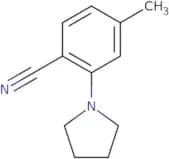
4-Methyl-2-(pyrrolidin-1-yl)benzonitrile
CAS:<p>Versatile small molecule scaffold</p>Formula:C12H14N2Purity:Min. 95%Molecular weight:186.25 g/mol[2-(Cyclopropylmethoxy)-4-methylphenyl]methanamine
CAS:Versatile small molecule scaffoldFormula:C12H17NOPurity:Min. 95%Molecular weight:191.27 g/mol4,4-Dimethylpyrrolidine-2,3-dione
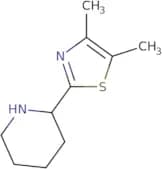
CAS:Versatile small molecule scaffoldFormula:C6H9NO2Purity:Min. 95%Molecular weight:127.14 g/mol2-(Dimethyl-1,3-thiazol-2-yl)piperidine
CAS:Versatile small molecule scaffoldFormula:C10H16N2SPurity:Min. 95%Molecular weight:196.31 g/mol2-Oxo-2,5,7,8-tetrahydro-1H-pyrano[4,3-b]pyridine-3-carboxylic acid
CAS:Versatile small molecule scaffoldFormula:C9H9NO4Purity:Min. 95%Molecular weight:195.17 g/mol[4-(1H-Imidazol-1-yl)-2-methylphenyl]methanol
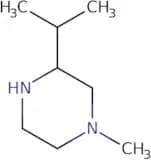
CAS:Versatile small molecule scaffoldFormula:C11H12N2OPurity:Min. 95%Molecular weight:188.23 g/mol1-Methyl-3-(propan-2-yl)piperazine
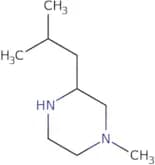
CAS:<p>Versatile small molecule scaffold</p>Formula:C8H18N2Purity:Min. 95%Molecular weight:142.24 g/mol3-Isobutyl-1-methylpiperazine
CAS:Versatile small molecule scaffoldFormula:C9H20N2Purity:Min. 95%Molecular weight:156.27 g/mol2-[(3,5-Dimethyl-1H-pyrazol-1-yl)methyl]piperidine
CAS:Controlled Product<p>Versatile small molecule scaffold</p>Formula:C11H19N3Purity:Min. 95%Molecular weight:193.29 g/molMethyl 3-{[(tert-butoxy)carbonyl](methyl)amino}-2-methylpropanoate
CAS:Versatile small molecule scaffoldFormula:C11H21NO4Purity:Min. 95%Molecular weight:231.29 g/mol[(6-Methylpyridin-2-yl)methyl](prop-2-yn-1-yl)amine
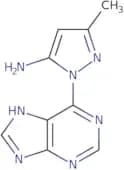
CAS:<p>Versatile small molecule scaffold</p>Formula:C10H12N2Purity:Min. 95%Molecular weight:160.22 g/mol3-Methyl-1-(7H-purin-6-yl)-1H-pyrazol-5-amine
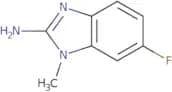
CAS:<p>Versatile small molecule scaffold</p>Formula:C9H9N7Purity:Min. 95%Molecular weight:215.22 g/mol6-Fluoro-1-methyl-1H-1,3-benzodiazol-2-amine
CAS:Versatile small molecule scaffoldFormula:C8H8FN3Purity:Min. 95%Molecular weight:165.17 g/mol1-Methanesulfonylcyclobutane-1-carbonitrile
CAS:<p>Versatile small molecule scaffold</p>Formula:C6H9NO2SPurity:Min. 95%Molecular weight:159.21 g/mol[(5-Cyclopropyl-1,2-oxazol-3-yl)methyl](ethyl)amine
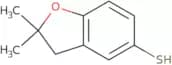
CAS:<p>Versatile small molecule scaffold</p>Formula:C9H14N2OPurity:Min. 95%Molecular weight:166.2 g/mol2,2-Dimethyl-2,3-dihydro-1-benzofuran-5-thiol
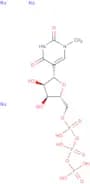
CAS:Versatile small molecule scaffoldFormula:C10H12OSPurity:Min. 95%Molecular weight:180.27 g/molN1-Methyl-pseudouridine-5'-triphosphate trisodium, 100mM aqueous solution
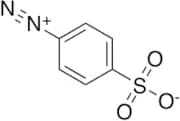
CAS:Methyl-pseudouridine-5'-triphosphate trisodium is the triphosphate of 1-Methylpseudouridine is a substitute for uridine in modified mRNA. This substitution has shown to increase transfection by reducing immuogenicity. UV max wavelength = 272nmFormula:C10H17N2O15P3•Na3Purity:Min. 95%Color and Shape:Clear LiquidMolecular weight:567.17 g/mol4-Diazobenzenesulfonic Acid
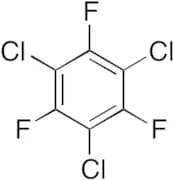
CAS:<p>Applications 4-Diazobenzenesulfonic acid (cas# 305-80-6) is a useful research chemical.<br></p>Formula:C6H4N2O3SMolecular weight:184.171,3,5-Trifluorotrichlorobenzene
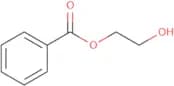
CAS:<p>Applications 1,3,5-Trifluorotrichlorobenzene is a useful reagent.<br></p>Formula:C6Cl3F3Molecular weight:235.422-Hydroxyethyl benzoate
CAS:<p>2-Hydroxyethyl benzoate is a model system that has been used to study the mechanism of hydrolysis of an ester with a hydroxyl group. The reaction products are a metal hydroxide and a chloride ion. 2-Hydroxyethyl benzoate is an antimicrobial agent that has shown activity against bacteria, fungi, and protozoa. It is thought to work by reacting with fatty acids in the cell membrane, leading to disruption of the membrane and leakage of cellular contents. It also reacts with chloride ions to form hydroxybenzoic acid and water molecules. The activation energy for this reaction was found to be around 19 kJ mol−1.</p>Formula:C9H10O3Purity:Min. 95%Molecular weight:166.17 g/mol

![[2-(Cyclopropylmethoxy)-4-methylphenyl]methanamine](/_next/image/?url=https%3A%2Fstatic.cymitquimica.com%2Fproducts%2F3D%2Fthumb-webp%2FYZB82563.webp&w=3840&q=75)

![2-Oxo-2,5,7,8-tetrahydro-1H-pyrano[4,3-b]pyridine-3-carboxylic acid](/_next/image/?url=https%3A%2Fstatic.cymitquimica.com%2Fproducts%2F3D%2Fthumb-webp%2FYZB89971.webp&w=3840&q=75)
![[4-(1H-Imidazol-1-yl)-2-methylphenyl]methanol](/_next/image/?url=https%3A%2Fstatic.cymitquimica.com%2Fproducts%2F3D%2Fthumb-webp%2FYZB90563.webp&w=3840&q=75)
![2-[(3,5-Dimethyl-1H-pyrazol-1-yl)methyl]piperidine](/_next/image/?url=https%3A%2Fstatic.cymitquimica.com%2Fproducts%2F3D%2Fthumb-webp%2FYZB91092.webp&w=3840&q=75)
amino}-2-methylpropanoate](/_next/image/?url=https%3A%2Fstatic.cymitquimica.com%2Fproducts%2F3D%2Fthumb-webp%2FYZB91426.webp&w=3840&q=75)
amine](/_next/image/?url=https%3A%2Fstatic.cymitquimica.com%2Fproducts%2F3D%2Fthumb-webp%2FYZB91522.webp&w=3840&q=75)
amine](/_next/image/?url=https%3A%2Fstatic.cymitquimica.com%2Fproducts%2F3D%2Fthumb-webp%2FYZB91992.webp&w=3840&q=75)