Building Blocks
This section contains fundamental products for the synthesis of organic and biological compounds. Building blocks are the essential starting materials used to construct complex molecules through various chemical reactions. They play a critical role in drug discovery, material science, and chemical research. At CymitQuimica, we offer a diverse range of high-quality building blocks to support your innovative research and industrial projects, ensuring you have the essential components for successful synthesis.
Subcategories of "Building Blocks"
- Boronic Acids & Boronic Acid Derivatives(5,778 products)
- Chiral Building Blocks(1,242 products)
- Hydrocarbon Building Blocks(6,098 products)
- Organic Building Blocks(61,098 products)
Found 199594 products of "Building Blocks"
Sort by
Purity (%)
0
100
|
0
|
50
|
90
|
95
|
100
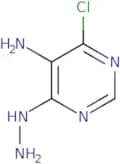
4-Chloro-6-hydrazino-pyrimidin-5-ylamine
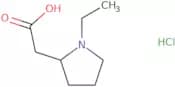
CAS:<p>Versatile small molecule scaffold</p>Formula:C4H6ClN5Purity:Min. 95%Molecular weight:159.58 g/mol2-(1-Ethylpyrrolidin-2-yl)acetic acid hydrochloride
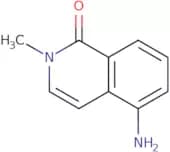
CAS:<p>Versatile small molecule scaffold</p>Formula:C8H16ClNO2Purity:Min. 95%Molecular weight:193.67 g/mol5-Amino-2-methyl-1,2-dihydroisoquinolin-1-one
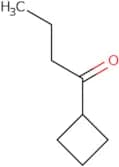
CAS:Versatile small molecule scaffoldFormula:C10H10N2OPurity:Min. 95%Molecular weight:174.2 g/mol1-Cyclobutylbutan-1-one
CAS:<p>Versatile small molecule scaffold</p>Formula:C8H14OPurity:Min. 95%Molecular weight:126.2 g/mol6-Methylhept-1-en-3-one
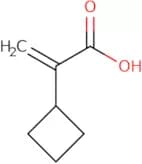
CAS:<p>Versatile small molecule scaffold</p>Formula:C8H14OPurity:Min. 95%Molecular weight:126.2 g/mol2-Cyclobutylprop-2-enoic acid
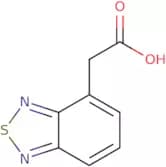
CAS:<p>Versatile small molecule scaffold</p>Formula:C7H10O2Purity:Min. 95%Molecular weight:126.15 g/mol2-(2,1,3-Benzothiadiazol-4-yl)acetic acid
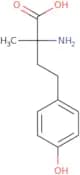
CAS:<p>Versatile small molecule scaffold</p>Formula:C8H6N2O2SPurity:Min. 95%Molecular weight:194.21 g/mol2-Amino-4-(4-hydroxyphenyl)-2-methylbutanoic acid
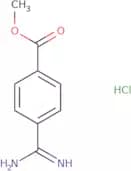
CAS:<p>Versatile small molecule scaffold</p>Formula:C11H15NO3Purity:Min. 95%Molecular weight:209.24 g/molMethyl 4-carbamimidoylbenzoate hydrochloride
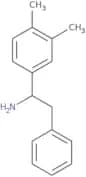
CAS:<p>Versatile small molecule scaffold</p>Formula:C9H10N2O2·HClPurity:Min. 95%Molecular weight:214.65 g/mol1-(3,4-Dimethylphenyl)-2-phenylethan-1-amine
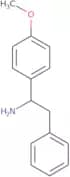
CAS:<p>Versatile small molecule scaffold</p>Formula:C16H19NPurity:Min. 95%Molecular weight:225.33 g/mol1-(4-Methoxyphenyl)-2-phenylethan-1-amine
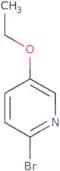
CAS:<p>Versatile small molecule scaffold</p>Formula:C15H17NOPurity:Min. 95%Molecular weight:227.3 g/mol2-Bromo-5-ethoxypyridine
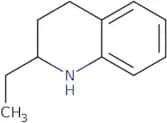
CAS:<p>Versatile small molecule scaffold</p>Formula:C7H8BrNOPurity:Min. 95%Molecular weight:202.05 g/mol2-Ethyl-1,2,3,4-tetrahydroquinoline
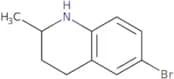
CAS:<p>2-Ethyl-1,2,3,4-tetrahydroquinoline is a synthetic reagent that is used in organic chemistry to perform alkylation and elimination reactions. It can be used as a cholesteryl ester transfer reagent and has been shown to have excellent stereoselectivity. 2-Ethyl-1,2,3,4-tetrahydroquinoline can be used to synthesize more complex molecules and it has been shown to react with magnesium metal (Mg) in the presence of an organic base such as cinnamyl alcohol. The resulting reaction product can be analyzed using crystallography.</p>Formula:C11H15NPurity:Min. 95%Molecular weight:161.24 g/mol6-Bromo-2-methyl-1,2,3,4-tetrahydroquinoline
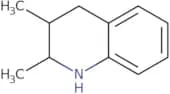
CAS:<p>Versatile small molecule scaffold</p>Formula:C10H12BrNPurity:Min. 95%Molecular weight:226.11 g/mol1,2,3,4-Tetrahydro-2,3-dimethylquinoline
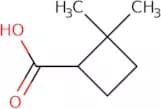
CAS:<p>Versatile small molecule scaffold</p>Formula:C11H15NPurity:Min. 95%Molecular weight:161.24 g/mol2,2-Dimethylcyclobutane-1-carboxylic acid
CAS:<p>2,2-Dimethylcyclobutane-1-carboxylic acid is a synthetic chemical that can be used as a biodiesel fuel additive. It is produced by the reaction of cyclohexanol and ethylene oxide. This compound has been shown to have redox potentials in the range of -0.03 V to -0.07 V, which makes it useful in synthesizing lipase and fatty acids. 2,2-Dimethylcyclobutane-1-carboxylic acid also has sulfonic acid groups that are reactive with metal surfaces, such as gold or silver electrodes and hydrochloric acid for pharmaceutical formulations. This compound has regulatory properties that can be used for preservatives or other functional purposes in pharmaceutical formulations. 2,2-Dimethylcyclobutane-1-carboxylic acid is also an acid catalyst in laboratory experiments involving regulatory pathways.br>br><br>2,2-Dimethylcyclobutane</p>Formula:C7H12O2Purity:Min. 95%Molecular weight:128.17 g/mol6-Methyl-3-(methylsulfanyl)-1,2,4-triazine
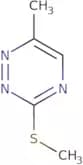
CAS:<p>Versatile small molecule scaffold</p>Formula:C5H7N3SPurity:Min. 95%Molecular weight:141.2 g/mol4-Chloro-N1-phenylbenzene-1,2-diamine
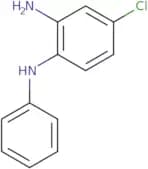
CAS:<p>Versatile small molecule scaffold</p>Formula:C12H11ClN2Purity:Min. 95%Molecular weight:218.68 g/molAzepan-2-ylmethanamine
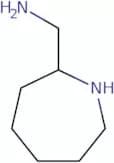
CAS:<p>Versatile small molecule scaffold</p>Formula:C7H16N2Purity:Min. 95%Molecular weight:128.22 g/molAzocan-3-amine
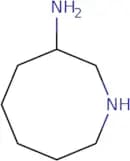
CAS:<p>Azocan-3-amine is a third-generation, small molecule inhibitor of the ErbB family of receptor tyrosine kinases. It was discovered by a team of scientists at AstraZeneca and has been evaluated in clinical trials for the treatment of various cancers. Azocan-3-amine inhibits the activity of EGFR and its two most common mutations, T790M and C797S. This drug is currently in Phase I/II trials for EGFR T790M mutation positive non-small cell lung cancer (NSCLC) and metastatic breast cancer patients with EGFR c797s mutation.</p>Formula:C7H16N2Purity:Min. 95%Molecular weight:128.22 g/mol