


Building Blocks
This section contains fundamental products for the synthesis of organic and biological compounds. Building blocks are the essential starting materials used to construct complex molecules through various chemical reactions. They play a critical role in drug discovery, material science, and chemical research. At CymitQuimica, we offer a diverse range of high-quality building blocks to support your innovative research and industrial projects, ensuring you have the essential components for successful synthesis.
Subcategories of "Building Blocks"
- Boronic Acids & Boronic Acid Derivatives(5,756 products)
- Chiral Building Blocks(1,242 products)
- Hydrocarbon Building Blocks(6,095 products)
- Organic Building Blocks(61,051 products)
Found 199813 products of "Building Blocks"
Sort by
Purity (%)
0
100
|
0
|
50
|
90
|
95
|
100
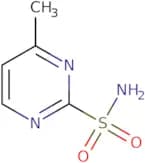
4-Methylpyrimidine-2-sulfonamide
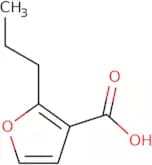
CAS:<p>4-Methylpyrimidine-2-sulfonamide is a pharmaceutical preparation that has been shown to be effective in the treatment of hyperproliferative diseases. It has been found to inhibit cellular proliferation and induce apoptosis in cells from patients with chronic bronchitis, which may be due to its ability to modulate extracellular signal transduction pathways. 4-Methylpyrimidine-2-sulfonamide also has anti-cancer effects, inhibiting the growth of cancer cells by triggering cell cycle arrest or inducing apoptosis. This drug can also lead to symptoms such as nausea, vomiting, and diarrhea, which are indications of a hypersensitivity reaction. The gene sequence analysis was done using DNA from wild type mice and transgenic animals.</p>Formula:C5H7N3O2SPurity:Min. 95%Molecular weight:173.2 g/mol2-Propylfuran-3-carboxylic acid
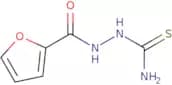
CAS:<p>Versatile small molecule scaffold</p>Formula:C8H10O3Purity:Min. 95%Molecular weight:154.16 g/molN-(Carbamothioylamino)furan-2-carboxamide
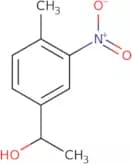
CAS:<p>N-(Carbamothioylamino)furan-2-carboxamide is a chemical compound that has been used as a liver protectant and to treat calcium deficiencies. The calcium salt of the drug is prepared by mixing anhydrous ethanol with calcium chloride and adding pyridine dropwise. Upon refluxing, the mixture is cooled and then evaporated under vacuum to yield the desired product.</p>Formula:C6H7N3O2SPurity:Min. 95%Molecular weight:185.21 g/mol1-(4-Methyl-3-nitrophenyl)ethan-1-ol
CAS:<p>Versatile small molecule scaffold</p>Formula:C9H11NO3Purity:Min. 95%Molecular weight:181.19 g/mol2,3,4,5-Tetrahydro-1-benzoxepin-3-one
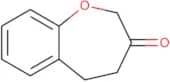
CAS:<p>2,3,4,5-Tetrahydro-1-benzoxepin-3-one is an acrylamide derivative that has been shown to undergo ring cleavage under certain conditions. The cleavage of the benzene ring leads to the formation of two aromatic rings and a carboxylic acid.</p>Formula:C10H10O2Purity:Min. 95%Molecular weight:162.18 g/mol3-(Pyrrolidin-2-yl)propanoic acid hydrochloride
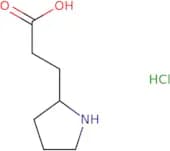
CAS:<p>Versatile small molecule scaffold</p>Formula:C7H14ClNO2Purity:Min. 95%Molecular weight:179.64 g/mol6-Cyano-4-oxo-4H-chromene-2-carboxylic acid
CAS:<p>Versatile small molecule scaffold</p>Formula:C11H5NO4Purity:Min. 95%Molecular weight:215.16 g/mol1,2,3,4-Tetrahydropyrido[3,4-b]pyrazine
CAS:<p>1,2,3,4-Tetrahydropyrido[3,4-b]pyrazine is an organic solvent that has been shown to be a good catalyst for the dimerization of isocyanates. It is used as a basic additive in resins and coatings. 1,2,3,4-Tetrahydropyrido[3,4-b]pyrazine is soluble in most solvents and can be used as a diluent of other solvents. This chemical has been shown to have good thermal stability and low volatility.</p>Formula:C7H9N3Purity:Min. 95%Molecular weight:135.17 g/mol6-Chloro-5-formyl-1,3-dimethyluracil
CAS:<p>6-Chloro-5-formyl-1,3-dimethyluracil is a cyclized compound that is formed from the reaction between a vinyl group and sulfilimine. It has been shown to be a precursor for the synthesis of uracil derivatives by photolysis. 6-Chloro-5-formyl-1,3-dimethyluracil is also an intermediate in the synthesis of analogues of uracil and cytosine.</p>Formula:C7H7ClN2O3Purity:Min. 95%Molecular weight:202.6 g/mol4-N-Phenylpyridine-3,4-diamine
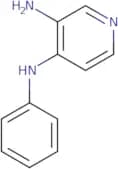
CAS:<p>Versatile small molecule scaffold</p>Formula:C11H11N3Purity:Min. 95%Molecular weight:185.22 g/molMethyl 4-Isopropoxybenzoate
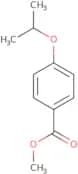
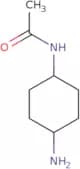
CAS:<p>Versatile small molecule scaffold</p>Formula:C11H14O3Purity:Min. 95%Molecular weight:194.23 g/molN-(4-Aminocyclohexyl)acetamide
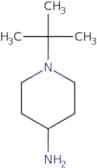
CAS:<p>Versatile small molecule scaffold</p>Formula:C8H16N2OPurity:Min. 95%Molecular weight:156.23 g/mol1-tert-Butylpiperidin-4-amine
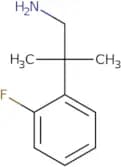
CAS:<p>Versatile small molecule scaffold</p>Formula:C9H20N2Purity:Min. 95%Molecular weight:156.27 g/mol2-(2-Fluoro-phenyl)-2-methyl-propylamine
CAS:<p>Versatile small molecule scaffold</p>Formula:C10H14FNPurity:Min. 95%Molecular weight:167.23 g/mol2-(3-Fluoro-phenyl)-2-methyl-propylamine
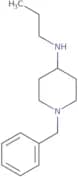
CAS:Versatile small molecule scaffoldFormula:C10H14FNPurity:Min. 95%Molecular weight:167.22 g/mol1-Benzyl-N-propylpiperidin-4-amine
CAS:<p>Versatile small molecule scaffold</p>Formula:C15H24N2Purity:Min. 95%Molecular weight:232.36 g/mol1-[(3,4-Difluorophenyl)methyl]piperidin-4-amine
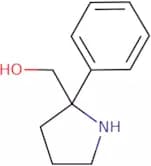
CAS:<p>Versatile small molecule scaffold</p>Formula:C12H16F2N2Purity:Min. 95%Molecular weight:226.27 g/mol(2-Phenylpyrrolidin-2-yl)methanol
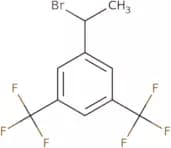
CAS:<p>Versatile small molecule scaffold</p>Formula:C11H15NOPurity:Min. 95%Molecular weight:177.24 g/mol3,5-Bis(trifluoromethyl)-alpha-methylbenzyl bromide
CAS:<p>3,5-Bis(trifluoromethyl)-alpha-methylbenzyl bromide is a cycloalkyl, brominating agent. It is used in the production of sulfides. It can be used as an additive to carboxylic acid esters and amides to selectively produce sulfides. This product has a high yield and can be used in the synthesis of 3-6 cycloalkyls, dialkyls, and aryloxy compounds. The brominating agent also reacts with an aryl group to produce an optically active compound.</p>Formula:C10H7BrF6Purity:Min. 95%Molecular weight:321.06 g/molMethyl 4-[(methylamino)methyl]benzoate hydrochloride
CAS:<p>Versatile small molecule scaffold</p>Formula:C10H14ClNO2Purity:Min. 95%Molecular weight:215.67 g/mol


![1,2,3,4-Tetrahydropyrido[3,4-b]pyrazine](/_next/image/?url=https%3A%2Fstatic.cymitquimica.com%2Fproducts%2F3D%2Fthumb-webp%2FKBA80841.webp&w=3840&q=75)


![1-[(3,4-Difluorophenyl)methyl]piperidin-4-amine](/_next/image/?url=https%3A%2Fstatic.cymitquimica.com%2Fproducts%2F3D%2Fthumb-webp%2FKGA35808.webp&w=3840&q=75)
![Methyl 4-[(methylamino)methyl]benzoate hydrochloride](/_next/image/?url=https%3A%2Fstatic.cymitquimica.com%2Fproducts%2F3D%2Fthumb-webp%2FKGA40865.webp&w=3840&q=75)