Building Blocks
This section contains fundamental products for the synthesis of organic and biological compounds. Building blocks are the essential starting materials used to construct complex molecules through various chemical reactions. They play a critical role in drug discovery, material science, and chemical research. At CymitQuimica, we offer a diverse range of high-quality building blocks to support your innovative research and industrial projects, ensuring you have the essential components for successful synthesis.
Subcategories of "Building Blocks"
- Boronic Acids & Boronic Acid Derivatives(5,756 products)
- Chiral Building Blocks(1,242 products)
- Hydrocarbon Building Blocks(6,095 products)
- Organic Building Blocks(61,051 products)
Found 199813 products of "Building Blocks"
Sort by
Purity (%)
0
100
|
0
|
50
|
90
|
95
|
100
4H-Thieno[3,2-c]chromene-2-carboxylic acid
CAS:<p>Versatile small molecule scaffold</p>Formula:C12H8O3SPurity:Min. 95%Molecular weight:232.26 g/mol3,4-Dihydro-2H-pyrano[2,3-b]pyridine
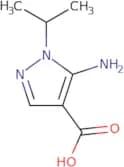
CAS:<p>Versatile small molecule scaffold</p>Formula:C8H9NOPurity:Min. 95%Molecular weight:135.17 g/mol5-amino-1-(propan-2-yl)-1H-pyrazole-4-carboxylic acid
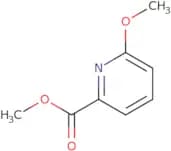
CAS:Versatile small molecule scaffoldFormula:C7H11N3O2Purity:Min. 95%Molecular weight:169.18 g/molMethyl 6-methoxypyridine-2-carboxylate
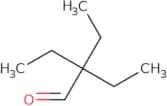
CAS:Methyl 6-methoxypyridine-2-carboxylate is an additive that can be used in the alkaline hydrolysis of esters. The pyridine nitrogen atom has a substituent effect on the methyl group, as it is electron donating and inductive. Substituent effects are seen when there are different atoms or groups attached to the same carbon atom. Methyl 6-methoxypyridine-2-carboxylate reacts with nucleophiles such as water, alcohols, amines, thiols, and acids to form esters and amides. These reactions are promoted by an acidic environment. The analogous reaction of methyl 6-methoxypyridine-2-carboxylate is its reaction with ammonia to form an amide.Formula:C8H9NO3Purity:Min. 95%Molecular weight:167.16 g/mol2,2-Diethylbutanal
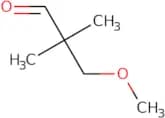
CAS:<p>2,2-Diethylbutanal is a chemical that is used as an antineoplastic drug. It has been shown to have affinity for the mineral sulfide and oxidizers. 2,2-Diethylbutanal has also been shown to be a long-term maternal toxicant in animals, with effects on the fetus and newborns. It has also been shown to cause problems for infants by reducing their serum levels of thyroxine and triiodothyronine (thyroid hormones). This chemical causes genetic mutations in isolates of organisms such as E coli and S cerevisiae. 2,2-Diethylbutanal may have adverse effects on the conformation of proteins or interfere with protein synthesis.</p>Formula:C8H16OPurity:85%MinColor and Shape:Clear LiquidMolecular weight:128.21 g/mol3-Methoxy-2,2-dimethylpropanal
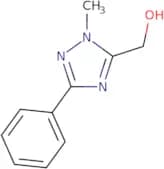
CAS:<p>Versatile small molecule scaffold</p>Formula:C6H12O2Purity:Min. 95%Molecular weight:116.16 g/mol(1-Methyl-3-phenyl-1H-1,2,4-triazol-5-yl)methanol
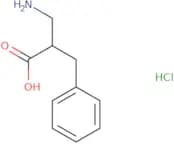
CAS:<p>Versatile small molecule scaffold</p>Formula:C10H11N3OPurity:Min. 95%Molecular weight:189.21 g/mol2-aminomethyl-3-phenylpropionic acid hcl
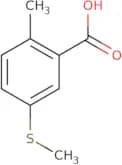
CAS:<p>Versatile small molecule scaffold</p>Formula:C10H14ClNO2Purity:Min. 95%Molecular weight:215.68 g/mol2-Methyl-5-(methylsulfanyl)benzoic acid
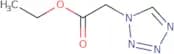
CAS:<p>Versatile small molecule scaffold</p>Formula:C9H10O2SPurity:Min. 95%Molecular weight:182.24 g/molEthyl 2-(1H-1,2,3,4-tetrazol-1-yl)acetate
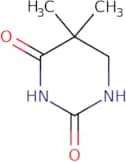
CAS:<p>Versatile small molecule scaffold</p>Formula:C5H8N4O2Purity:Min. 95%Molecular weight:156.14 g/mol5,5-Dimethyl-1,3-diazinane-2,4-dione
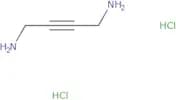
CAS:<p>5,5-Dimethyl-1,3-diazinane-2,4-dione is a hydrophobic molecule that regulates gene expression. It binds to the transcription factor TFEB and inhibits its activity. 5,5-Dimethyl-1,3-diazinane-2,4-dione also interacts with the transcription factor E2F and inhibits its activity. This agent is able to increase erythroid differentiation and inhibit hematopoietic differentiation. 5,5-Dimethyl-1,3-diazinane-2,4-dione has been shown to activate apoptosis by binding to DNA and inhibiting transcription of genes necessary for cell division. The affinity of this agent for DNA may be due to methyl groups on its structure.</p>Formula:C6H10N2O2Purity:Min. 95%Molecular weight:142.16 g/molBut-2-yne-1,4-diamine dihydrochloride
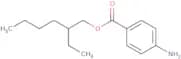
CAS:<p>Versatile small molecule scaffold</p>Formula:C4H10Cl2N2Purity:Min. 95%Molecular weight:157.04 g/molEthylhexyl triazone Related Compound A
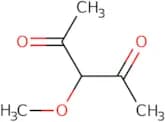
CAS:<p>Ethylhexyl triazone Related Compound A is a compound that inhibits the production of melanin. It is used as an ingredient in sunscreens to protect against ultraviolet radiation. It has been shown to be a potent UVB filter with good photostability, and has been shown to be effective against both erythema and skin cancer in vivo. The analytical method for this compound is based on HPLC separation followed by UV detection at 254 nm. The validation study has been conducted using animals and the recoveries were found to be good across all levels of the test samples.</p>Formula:C15H23NO2Purity:Min. 95%Molecular weight:249.35 g/mol3-Methoxypentane-2,4-dione
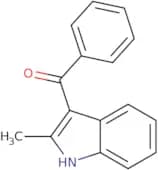
CAS:<p>Versatile small molecule scaffold</p>Formula:C6H10O3Purity:Min. 95%Molecular weight:130.14 g/mol3-Benzoyl-2-methyl-1H-indole
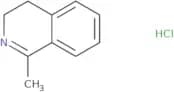
CAS:Controlled Product<p>3-Benzoyl-2-methyl-1H-indole is an isomer of tetrahydrocarbazole. It has a high yield and optical purity. 3-Benzoyl-2-methyl-1H indole can be synthesized from β-unsaturated aldehydes, such as 2-(4,4,5,5-tetramethyl-[1,3,2]dioxaborolan-2yl)-3,5,6,-trimethylphenol. The compound has been shown to react with alkali metals to form a salt in the presence of dehydrogenative conditions. This reaction proceeds via an iminium intermediate that reacts with the metal salt to produce the product. 3BzIMeI can also react with alcohols or amines in the presence of heterocycles such as mesitylene to form substituted benzimidazoles.</p>Formula:C16H13NOPurity:Min. 95%Molecular weight:235.28 g/mol1-Methyl-3,4-dihydroisoquinoline hydrochloride
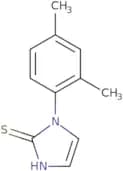
CAS:Versatile small molecule scaffoldFormula:C10H12ClNPurity:Min. 95%Molecular weight:181.66 g/mol1-(2,4-Dimethylphenyl)-1H-imidazole-2-thiol
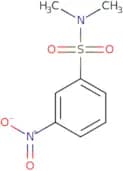
CAS:<p>Versatile small molecule scaffold</p>Formula:C11H12N2SPurity:Min. 95%Molecular weight:204.29 g/molN,N-Dimethyl 3-nitrobenzenesulfonamide
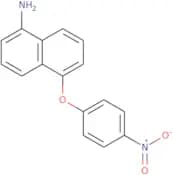
CAS:<p>Versatile small molecule scaffold</p>Formula:C8H10N2O4SPurity:Min. 95%Molecular weight:230.24 g/mol5-(4-Nitrophenoxy)naphthalen-1-amine
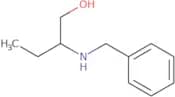
CAS:<p>Versatile small molecule scaffold</p>Formula:C16H12N2O3Purity:Min. 95%Molecular weight:280.28 g/mol(2S)-2-(Benzylamino)butan-1-ol
CAS:<p>Versatile small molecule scaffold</p>Formula:C11H17NOPurity:Min. 95%Molecular weight:179.26 g/mol
![4H-Thieno[3,2-c]chromene-2-carboxylic acid](/_next/image/?url=https%3A%2Fstatic.cymitquimica.com%2Fproducts%2F3D%2Fthumb-webp%2FBBA26804.webp&w=3840&q=75)

![3,4-Dihydro-2H-pyrano[2,3-b]pyridine](/_next/image/?url=https%3A%2Fstatic.cymitquimica.com%2Fproducts%2F3D%2Fthumb-webp%2FBBA26789.webp&w=3840&q=75)