Building Blocks
This section contains fundamental products for the synthesis of organic and biological compounds. Building blocks are the essential starting materials used to construct complex molecules through various chemical reactions. They play a critical role in drug discovery, material science, and chemical research. At CymitQuimica, we offer a diverse range of high-quality building blocks to support your innovative research and industrial projects, ensuring you have the essential components for successful synthesis.
Subcategories of "Building Blocks"
- Boronic Acids & Boronic Acid Derivatives(5,756 products)
- Chiral Building Blocks(1,242 products)
- Hydrocarbon Building Blocks(6,095 products)
- Organic Building Blocks(61,055 products)
Found 199650 products of "Building Blocks"
Sort by
Purity (%)
0
100
|
0
|
50
|
90
|
95
|
100
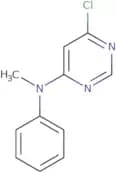
6-Chloro-N-methyl-N-phenylpyrimidin-4-amine
CAS:<p>Versatile small molecule scaffold</p>Formula:C11H10ClN3Purity:Min. 95%Molecular weight:219.67 g/molBicyclo[2.2.2]octan-2-ylmethanamine hydrochloride
CAS:<p>Versatile small molecule scaffold</p>Formula:C9H18ClNPurity:Min. 95%Molecular weight:175.7 g/molEthyl[2-(pyridin-2-yl)ethyl]amine
CAS:<p>Versatile small molecule scaffold</p>Formula:C9H14N2Purity:Min. 95%Molecular weight:150.22 g/mol{[(2,2-Dimethoxyethyl)sulfanyl]methyl}benzene
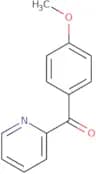
CAS:<p>Versatile small molecule scaffold</p>Formula:C11H16O2SPurity:Min. 95%Molecular weight:212.31 g/mol2-(4-Methoxybenzoyl)pyridine
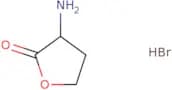
CAS:<p>2-(4-Methoxybenzoyl)pyridine (MBP) is an arylation agent that is used in organic chemistry to introduce a 4-methoxybenzoyl group onto an aromatic ring. MBP has been shown to react with imines and amides to form the corresponding pyridinium salt, which can be converted into substituted pyridine derivatives.</p>Formula:C13H11NO2Purity:Min. 95%Molecular weight:213.23 g/mol±-Amino-³-butyrolactone hydrobromide
CAS:<p>±-Amino-³-butyrolactone hydrobromide (±-ABL) is a chemical compound that can be found in chloroform. It is a synthetic activator of mutant strains of the bacterium Escherichia coli. ±-ABL emits light when mixed with chloroform, and this emission can be detected using a spectrophotometer. The emission spectrum of ±-ABL has been shown to have peaks at 510 nm and 530 nm, which correspond to the λmax values for ECL luminescence. This chemical also has the ability to activate mutant strains of E. coli when dissolved in liquid chromatography, and it can be extracted from plates exposed to light.</p>Formula:C4H7NO2·HBrPurity:Min. 95%Molecular weight:182.02 g/mol1,3-Diethyl 2-(cyclohex-2-en-1-yl)propanedioate
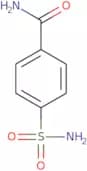
CAS:<p>Versatile small molecule scaffold</p>Formula:C13H20O4Purity:Min. 95%Molecular weight:240.29 g/mol4-Sulfamoylbenzamide
CAS:<p>4-Sulfamoylbenzamide is a sulfonamide that has been modified to improve its selectivity and potency. The modification of 4-sulfamoylbenzamide has been studied with anhydrase, which is an enzyme found in the eye that can cause glaucoma. The modifications allow this drug to selectively target the cytosolic isoforms of anhydrase. This drug also has anti-proliferative activity and can be used for the treatment of certain types of cancer, including breast, lung, prostate, and colon cancer. 4-Sulfamoylbenzamide was first synthesized in 1964 and was approved by the FDA in 1968 for use as an ophthalmic agent.</p>Formula:C7H8N2O3SPurity:Min. 95%Molecular weight:200.22 g/mol4-[(Aminocarbonyl)amino]benzoic acid
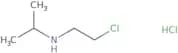
CAS:<p>4-[(Aminocarbonyl)amino]benzoic acid is an antibacterial fatty acid that is structurally related to the antimicrobial agents known as cyanates. It has a reactive center that can undergo a halogenation reaction with halides and a substitution reaction with carboxylic acids to form reactive compounds. 4-[(Aminocarbonyl)amino]benzoic acid has shown tuberculostatic activity against the bacteria Typhimurium and subtilis, and is effective against antifungal strains of yeast such as Candida albicans, Candida krusei, and Candida tropicalis. 4-[(Aminocarbonyl)amino]benzoic acid also has a molecule that can be used in the synthesis of diisocyanates.</p>Formula:C8H8N2O3Purity:Min. 95%Molecular weight:180.16 g/molN-(2-Chloroethyl)propan-2-amine hydrochloride
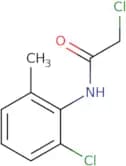
CAS:<p>Versatile small molecule scaffold</p>Formula:C5H13Cl2NPurity:Min. 95%Molecular weight:158.07 g/mol2-Chloro-N-(2-chloro-6-methylphenyl)acetamide
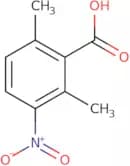
CAS:<p>2-Chloro-N-(2-chloro-6-methylphenyl)acetamide is a fungicide that belongs to the group of racemic mixtures. It has been shown to be effective against phytopathogenic fungi, and also inhibits bacterial growth. 2-Chloro-N-(2-chloro-6-methylphenyl)acetamide is used in crop protection as a seed dressing or foliar spray. It is also effective against fungal infections such as ringworm and athlete's foot. This drug has been shown to have microbicidal properties, which are due to its ability to inhibit the growth of fungi by interfering with protein synthesis. 2CMA is systemic and can be absorbed through the skin or stomach lining, leading to an optically active effect on fungi cells.</p>Formula:C9H9Cl2NOPurity:Min. 95%Molecular weight:218.08 g/mol2,6-Dimethyl-3-nitrobenzoic acid
CAS:<p>Versatile small molecule scaffold</p>Formula:C9H9NO4Purity:Min. 95%Molecular weight:195.17 g/mol4-chloropyridine-2,6-diamine
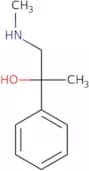
CAS:<p>4-Chloropyridine-2,6-diamine is a compound that contains nitrogen and carbon. It has been synthesized experimentally and the crystal structure has been determined by X-ray crystallography. This substance belongs to the class of heterocycles and it is a hydrogen bond acceptor. The crystal structure of 4-chloropyridine-2,6-diamine has been rationalized using experimental data. The electron density maps show that there are six moles of naphthalene for every mole of 4-chloropyridine-2,6-diamine in the crystal lattice. <br>4-Chloropyridine-2,6-diamine is an enthalpy donor because it donates its electrons to other substances. It also accepts hydrogen bonds from other substances. This substance can form supramolecular frameworks with pyridine and benzene molecules, which stabilizes the molecule's structure through coval</p>Formula:C5H6N3ClPurity:Min. 95%Molecular weight:143.57 g/mol1-(Methylamino)-2-phenylpropan-2-ol
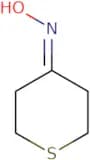
CAS:<p>Versatile small molecule scaffold</p>Formula:C10H15NOPurity:Min. 95%Molecular weight:165.23 g/molTetrahydrothiopyran-4-one oxime
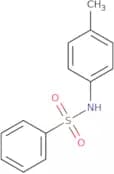
CAS:<p>Tetrahydrothiopyran-4-one oxime is a heterocyclic compound that contains a tetrahydrothiopyran ring. It is synthesized from dioxane and sulfur. Tetrahydrothiopyran-4-one oxime can be used to generate the corresponding tosylate through reaction with the corresponding alcohol. Tetrahydrothiopyran-4-one oxime can also be used as a building block for the synthesis of other heterocycles by cyclization or fragmentation reactions, such as cyclohexanone and stereoisomeric forms.</p>Formula:C5H9NOSPurity:Min. 95%Molecular weight:131.2 g/molN-(4-Methylphenyl)benzenesulfonamide
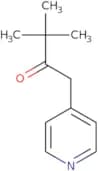
CAS:<p>N-(4-Methylphenyl)benzenesulfonamide is a fluorination agent that has been shown to form a hydrogen bond with the hydroxyl group of tyrosine. This bond leads to the formation of a radical chain reaction and increases the selectivity of N-(4-methylphenyl)benzenesulfonamide for tyrosine over other amino acids, such as phenylalanine. The radical chain reaction is also influenced by the functional group, ortho, and dihedral effects on the amide bond. Experimental results have shown that N-(4-methylphenyl)benzenesulfonamide undergoes a radical chain reaction with tyrosine in organic solvents.</p>Formula:C13H13NO2SPurity:Min. 95%Molecular weight:247.31 g/mol3,3-Dimethyl-1-(pyridin-4-yl)butan-2-one
CAS:<p>Versatile small molecule scaffold</p>Formula:C11H15NOPurity:Min. 95%Molecular weight:177.24 g/mol3-Methyl-3H-[1,2,3]triazolo[4,5-d]pyrimidin-7-amine
CAS:<p>3-Methyl-3H-[1,2,3]triazolo[4,5-d]pyrimidin-7-amine is a purine ligand that can be protonated at the N7 nitrogen. It has been shown to have biological properties such as anion binding and also shows strong dichroism spectra. The structure of 3-methyl-3H-[1,2,3]triazolo[4,5-d]pyrimidin-7-amine has been determined by X-ray crystallography and magnetic resonance spectroscopy. This ligand is not easily protonated in aqueous solution due to its high basicity. The protonation state of this ligand is sensitive to pH changes in the environment.</p>Formula:C5H6N6Purity:Min. 95%Molecular weight:150.14 g/molN,3-Dimethyl-3H-[1,2,3]triazolo[4,5-d]pyrimidin-7-amine
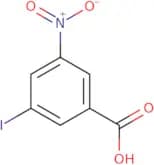
CAS:<p>Versatile small molecule scaffold</p>Formula:C6H8N6Purity:Min. 95%Molecular weight:164.17 g/mol3-Iodo-5-nitrobenzoic acid
CAS:<p>Versatile small molecule scaffold</p>Formula:C7H4INO4Purity:Min. 95%Molecular weight:293.02 g/mol

![Bicyclo[2.2.2]octan-2-ylmethanamine hydrochloride](/_next/image/?url=https%3A%2Fstatic.cymitquimica.com%2Fproducts%2F3D%2Fthumb-webp%2FGAA30364.webp&w=3840&q=75)
![Ethyl[2-(pyridin-2-yl)ethyl]amine](/_next/image/?url=https%3A%2Fstatic.cymitquimica.com%2Fproducts%2F3D%2Fthumb-webp%2FGAA30426.webp&w=3840&q=75)
![{[(2,2-Dimethoxyethyl)sulfanyl]methyl}benzene](/_next/image/?url=https%3A%2Fstatic.cymitquimica.com%2Fproducts%2F3D%2Fthumb-webp%2FGAA30494.webp&w=3840&q=75)

![4-[(Aminocarbonyl)amino]benzoic acid](/_next/image/?url=https%3A%2Fstatic.cymitquimica.com%2Fproducts%2F3D%2Fthumb-webp%2FGAA30625.webp&w=3840&q=75)

![3-Methyl-3H-[1,2,3]triazolo[4,5-d]pyrimidin-7-amine](/_next/image/?url=https%3A%2Fstatic.cymitquimica.com%2Fproducts%2F3D%2Fthumb-webp%2FGAA31255.webp&w=3840&q=75)
![N,3-Dimethyl-3H-[1,2,3]triazolo[4,5-d]pyrimidin-7-amine](/_next/image/?url=https%3A%2Fstatic.cymitquimica.com%2Fproducts%2F3D%2Fthumb-webp%2FGAA31260.webp&w=3840&q=75)