Building Blocks
This section contains fundamental products for the synthesis of organic and biological compounds. Building blocks are the essential starting materials used to construct complex molecules through various chemical reactions. They play a critical role in drug discovery, material science, and chemical research. At CymitQuimica, we offer a diverse range of high-quality building blocks to support your innovative research and industrial projects, ensuring you have the essential components for successful synthesis.
Subcategories of "Building Blocks"
- Boronic Acids & Boronic Acid Derivatives(5,756 products)
- Chiral Building Blocks(1,242 products)
- Hydrocarbon Building Blocks(6,095 products)
- Organic Building Blocks(61,055 products)
Found 199650 products of "Building Blocks"
Sort by
Purity (%)
0
100
|
0
|
50
|
90
|
95
|
100
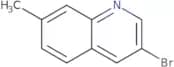
3-Bromo-7-methylquinoline
CAS:<p>Versatile small molecule scaffold</p>Formula:C10H8BrNPurity:Min. 95%Molecular weight:222.08 g/mol1,5-Dimethyl-1H-indole-2,3-dione
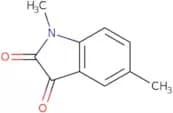
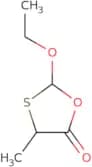
CAS:<p>1,5-Dimethyl-1H-indole-2,3-dione is a molecule with antibacterial activity. It has been shown to have interactions with staphylococcus and subtilis strains. Computational results show that the molecule has inhibitory effects on bacterial dna gyrase and topoisomerase IV. This inhibits the synthesis of bacterial proteins and leads to cell death. Hydrazides have been shown to be effective against staphylococcus aureus isolates and are hypothesized to inhibit protein synthesis by binding to bacterial ribosomes. The mechanism of action of 1,5-dimethyl-1H-indole-2,3-dione is not yet known.</p>Formula:C10H9NO2Purity:Min. 95%Molecular weight:175.19 g/mol2-Ethoxy-4-methyl-1,3-oxathiolan-5-one
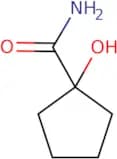
CAS:<p>Versatile small molecule scaffold</p>Formula:C6H10O3SPurity:Min. 95%Molecular weight:162.21 g/mol1-Hydroxycyclopentane-1-carboxamide
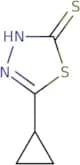
CAS:<p>Versatile small molecule scaffold</p>Formula:C6H11NO2Purity:Min. 95%Molecular weight:129.16 g/mol5-Cyclopropyl-1,3,4-thiadiazole-2-thiol
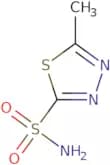
CAS:<p>Versatile small molecule scaffold</p>Formula:C5H6N2S2Purity:Min. 95%Molecular weight:158.2 g/mol5-Methyl-1,3,4-thiadiazole-2-sulfonamide
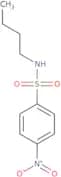
CAS:<p>Versatile small molecule scaffold</p>Formula:C3H5N3O2S2Purity:Min. 95%Molecular weight:179.2 g/molN-Butyl-4-nitrobenzenesulfonamide
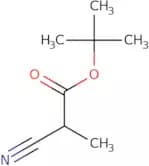
CAS:<p>N-Butyl-4-nitrobenzenesulfonamide is a chemical compound that belongs to the group of nitro compounds. It is synthesized by the reaction of an aliphatic amine with nitrobenzenesulfonyl chloride. The structure of this compound is characterized by an electron-deficient phenyl ring, which can be protonated and form a radical anion. N-Butyl-4-nitrobenzenesulfonamide has been shown to yield nitrated aliphatic amines, such as 3-nitropropane sulfonamide, when treated with sodium nitrate in dilute sulfuric acid. This chemical reaction occurs through radical ion mechanisms and involves the cleavage of a bond between two carbon atoms.</p>Formula:C10H14N2O4SPurity:Min. 95%Molecular weight:258.3 g/moltert-Butyl 2-cyano-2-methylacetate
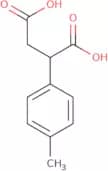
CAS:<p>tert-Butyl 2-cyano-2-methylacetate is a nonpolar chemical that is used as an alkylating agent in organic chemistry. It is synthesized by the reaction of glyoxylate and imine, which forms an enantiomeric pair with opposite stereogenic properties. The compound can also be used in asymmetric synthesis to form enantiomerically pure products. This compound has been shown to have catalytic activity when dissolved in organic solvents. Tert-butyl 2-cyano-2-methylacetate is soluble in both polar and nonpolar solvents, making it suitable for use in a variety of reactions.</p>Formula:C8H13NO2Purity:Min. 95%Molecular weight:155.19 g/mol2-(4-Methylphenyl)butanedioic acid
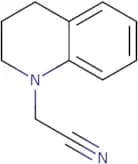
CAS:<p>Versatile small molecule scaffold</p>Formula:C11H12O4Purity:Min. 95%Molecular weight:208.21 g/mol2-(1,2,3,4-Tetrahydroquinolin-1-yl)acetonitrile
CAS:<p>Versatile small molecule scaffold</p>Formula:C11H12N2Purity:Min. 95%Molecular weight:172.23 g/mol6-chloro-3-methylbenzo[b]thiophene-2-carboxylic acid
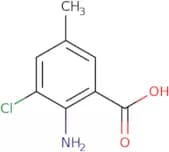
CAS:<p>Versatile small molecule scaffold</p>Formula:C10H7ClO2SPurity:Min. 95%Molecular weight:226.67 g/mol2-Amino-3-chloro-5-methylbenzoic acid
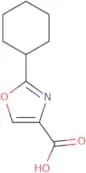
CAS:<p>Versatile small molecule scaffold</p>Formula:C8H8ClNO2Purity:Min. 95%Molecular weight:185.61 g/mol2-Cyclohexyl-oxazole-4-carboxylic acid
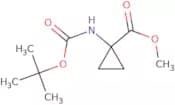
CAS:<p>Versatile small molecule scaffold</p>Formula:C10H13NO3Purity:Min. 95%Molecular weight:195.22 g/molMethyl 1-((tert-butoxycarbonyl)amino)cyclopropanecarboxylate
CAS:<p>Methyl 1-((tert-butoxycarbonyl)amino)cyclopropanecarboxylate is a six-membered analogue of the five-membered ring compound iprodione. It is used in the synthesis of compounds that are used as fungicides, such as propiconazole and fenpropimorph. This chemical reacts with nucleophiles to form adducts, which can be isolated in high yield by chromatography or crystallization. The methyl group in this compound also makes it an analogue of the six-membered ring molecule methylcyclopropane carboxylate.</p>Formula:C10H17NO4Purity:Min. 95%Molecular weight:215.25 g/mol3-Hydroxy-6-methylpyridine-2-carbaldehyde
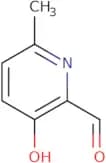
CAS:<p>3-Hydroxy-6-methylpyridine-2-carbaldehyde is a building block for the synthesis of spiropyran, a magnetic heterocyclic compound. 3-Hydroxy-6-methylpyridine-2-carbaldehyde is an aldehyde with a short chain and has the ability to form crossover chains. It has been shown to be fluorescent under UV light and has magnetic properties.</p>Formula:C7H7NO2Purity:Min. 95%Molecular weight:137.14 g/mol5-methylfuro[3,2-b]pyridine-2-carboxylic Acid hydrochloride
CAS:<p>Versatile small molecule scaffold</p>Formula:C9H7NO3·HClPurity:Min. 95%Molecular weight:213.61 g/molrac-(1R,5S)-1-Phenyl-3-azabicyclo[3.1.0]hexane hydrochloride
CAS:<p>Versatile small molecule scaffold</p>Formula:C11H14ClNPurity:Min. 95%Molecular weight:195.69 g/molrac-(1R,5S)-1-Phenyl-3-azabicyclo[3.1.0]hexane-2,4-dione
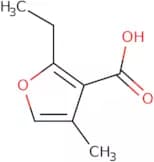
CAS:<p>Versatile small molecule scaffold</p>Formula:C11H9NO2Purity:Min. 95%Molecular weight:187.19 g/mol2-Ethyl-4-methylfuran-3-carboxylic acid
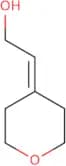
CAS:<p>Versatile small molecule scaffold</p>Formula:C8H10O3Purity:Min. 95%Molecular weight:154.16 g/mol2-(Oxan-4-ylidene)ethan-1-ol
CAS:<p>Versatile small molecule scaffold</p>Formula:C7H12O2Purity:Min. 95%Molecular weight:128.2 g/mol

![6-chloro-3-methylbenzo[b]thiophene-2-carboxylic acid](/_next/image/?url=https%3A%2Fstatic.cymitquimica.com%2Fproducts%2F3D%2Fthumb-webp%2FRCA49032.webp&w=3840&q=75)
![5-methylfuro[3,2-b]pyridine-2-carboxylic Acid hydrochloride](/_next/image/?url=https%3A%2Fstatic.cymitquimica.com%2Fproducts%2F3D%2Fthumb-webp%2FRCA49744.webp&w=3840&q=75)
![rac-(1R,5S)-1-Phenyl-3-azabicyclo[3.1.0]hexane hydrochloride](/_next/image/?url=https%3A%2Fstatic.cymitquimica.com%2Fproducts%2F3D%2Fthumb-webp%2FRCA50436.webp&w=3840&q=75)
![rac-(1R,5S)-1-Phenyl-3-azabicyclo[3.1.0]hexane-2,4-dione](/_next/image/?url=https%3A%2Fstatic.cymitquimica.com%2Fproducts%2F3D%2Fthumb-webp%2FRCA50437.webp&w=3840&q=75)