Building Blocks
This section contains fundamental products for the synthesis of organic and biological compounds. Building blocks are the essential starting materials used to construct complex molecules through various chemical reactions. They play a critical role in drug discovery, material science, and chemical research. At CymitQuimica, we offer a diverse range of high-quality building blocks to support your innovative research and industrial projects, ensuring you have the essential components for successful synthesis.
Subcategories of "Building Blocks"
- Boronic Acids & Boronic Acid Derivatives(5,756 products)
- Chiral Building Blocks(1,242 products)
- Hydrocarbon Building Blocks(6,095 products)
- Organic Building Blocks(61,038 products)
Found 196817 products of "Building Blocks"
Sort by
Purity (%)
0
100
|
0
|
50
|
90
|
95
|
100
2-Amino-N-(quinolin-8-yl)acetamide
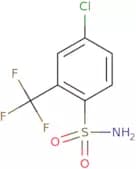
CAS:<p>2-Amino-N-(quinolin-8-yl)acetamide is a fluorescent inorganic compound. It has been shown to have a high affinity for chloride, with nanotube structures that are able to bind the chloride ions by supramolecular interactions. This binding prevents the chloride from interacting with other biomolecules, such as proteins and DNA. The energy of this interaction can be measured using fluorophore spectroscopy, which can be used for bioassays and medical imaging. 2-Amino-N-(quinolin-8-yl)acetamide has also been shown to have an ability to interact with zinc ions (Zn2+) in electrospray experiments, resulting in the emission of fluorescence.</p>Formula:C11H11N3OPurity:Min. 95%Molecular weight:201.22 g/mol4-Chloro-2-(trifluoromethyl)benzene sulfonamide
CAS:<p>Versatile small molecule scaffold</p>Formula:C7H5ClF3NO2SPurity:Min. 95%Molecular weight:259.63 g/molRef: 3D-NEA82398
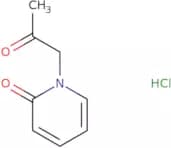
Discontinued product1-(2-Oxopropyl)-1,2-dihydropyridin-2-one hydrochloride
CAS:<p>Versatile small molecule scaffold</p>Formula:C8H10ClNO2Purity:Min. 95%Molecular weight:187.62 g/molRef: 3D-NWC61189
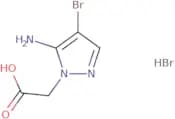
Discontinued product2-(5-Amino-4-bromo-1H-pyrazol-1-yl)acetic acid hydrobromide
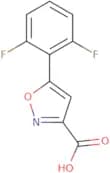
CAS:<p>Versatile small molecule scaffold</p>Formula:C5H7Br2N3O2Purity:Min. 95%Molecular weight:300.94 g/mol5-(2,6-Difluorophenyl)-1,2-oxazole-3-carboxylic acid
CAS:<p>Versatile small molecule scaffold</p>Formula:C10H5F2NO3Purity:Min. 95%Molecular weight:225.15 g/mol2-[(4-bromophenyl)sulfanyl]ethan-1-ol
CAS:<p>Versatile small molecule scaffold</p>Formula:C8H9OSBrPurity:Min. 95%Molecular weight:233.12 g/molRef: 3D-PAA70392
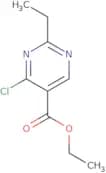
Discontinued productEthyl 4-chloro-2-ethylpyrimidine-5-carboxylate
CAS:<p>Versatile small molecule scaffold</p>Formula:C9H11ClN2O2Purity:Min. 95%Molecular weight:214.65 g/molRef: 3D-PCA17981
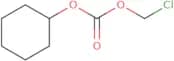
Discontinued productChloromethyl cyclohexyl carbonate
CAS:<p>Chloromethyl cyclohexyl carbonate is a new acyclic nucleoside phosphonate that has been shown to have antiviral properties. It is active against HIV strains and inhibits the production of clotting factors. Chloromethyl cyclohexyl carbonate can be used as a drug substance for treating bowel disease, hepatitis, and cancer. It also modulates syncytial cells and heterocycles. Pharmacokinetic studies on chloromethyl cyclohexyl carbonate have shown that it has high bioavailability in the small intestine and liver after oral administration. It is metabolized by tyrosine kinase, which indicates that it may interfere with other drugs such as warfarin or phenytoin. Chloromethyl cyclohexyl carbonate has been found to be effective in treating gastritis and cancer in animal models.</p>Formula:C8H13ClO3Purity:Min. 95%Molecular weight:192.64 g/mol3-[1-Ethyl-5-(morpholine-4-sulfonyl)-1H-1,3-benzodiazol-2-yl]propanoic acid
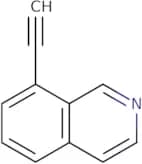
CAS:<p>Versatile small molecule scaffold</p>Formula:C16H21N3O5SPurity:Min. 95%Molecular weight:367.4 g/mol8-ethynylisoquinoline
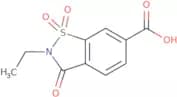
CAS:<p>Versatile small molecule scaffold</p>Formula:C11H7NPurity:Min. 95%Molecular weight:153.18 g/mol2-Ethyl-2,3-dihydro-3-oxo-1,2-benzisothiazole-6-carboxylic acid 1,1-dioxide
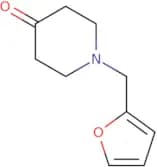
CAS:<p>Versatile small molecule scaffold</p>Formula:C10H9NO5SPurity:Min. 95%Molecular weight:255.25 g/mol1-(2-Furylmethyl)-4-piperidinone
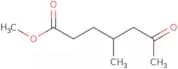
CAS:<p>Versatile small molecule scaffold</p>Formula:C10H13NO2Purity:Min. 95%Molecular weight:179.22 g/molMethyl 4-methyl-6-oxoheptanoate
CAS:<p>Versatile small molecule scaffold</p>Formula:C9H16O3Purity:Min. 95%Molecular weight:172.22 g/molRef: 3D-RBA84153
Discontinued product8-Thia-1-azabicyclo[3.2.1]octane-5-carboxylic acid 8,8-dioxide
CAS:<p>Versatile small molecule scaffold</p>Formula:C7H11NO4SPurity:Min. 95%Molecular weight:205.2 g/molRef: 3D-RPD13848
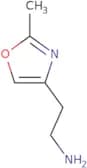
Discontinued product2-(2-Methyl-1,3-oxazol-4-yl)ethan-1-amine
CAS:<p>Versatile small molecule scaffold</p>Formula:C6H10N2OPurity:Min. 95%Molecular weight:126.2 g/molRef: 3D-SAC48361
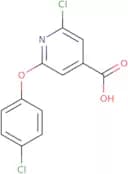
Discontinued product2-Chloro-6-(4-chlorophenoxy)pyridine-4-carboxylic acid
CAS:<p>Versatile small molecule scaffold</p>Formula:C12H7Cl2NO3Purity:Min. 95%Molecular weight:284.09 g/molRef: 3D-SBA52119
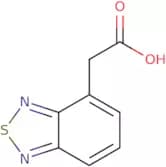
Discontinued product2-(2,1,3-Benzothiadiazol-4-yl)acetic acid
CAS:<p>Versatile small molecule scaffold</p>Formula:C8H6N2O2SPurity:Min. 95%Molecular weight:194.21 g/molRef: 3D-SBA81677
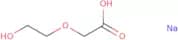
Discontinued productSodium ²-Hydroxyethoxyacetate
CAS:<p>Sodium 2-hydroxyethoxyacetate is a cross-linker that is used to immobilize proteins and enzymes. It has been shown to be effective in the treatment of autoimmune diseases, such as rheumatoid arthritis. This chemical can also be used as a cross-linking agent for the production of biodegradable polymers. The synthesis of this chemical was first reported in 1874 and it has been used for copolymerization with other compounds to form particles with potential biomedical applications.</p>Formula:C4H7NaO4Purity:Min. 95%Molecular weight:142.09 g/mol2-{[4-Phenyl-5-(pyridin-4-yl)-4H-1,2,4-triazol-3-yl]sulfanyl}acetic acid
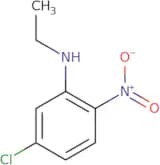
CAS:<p>Versatile small molecule scaffold</p>Formula:C15H12N4O2SPurity:Min. 95%Molecular weight:312.3 g/mol5-Chloro-N-ethyl-2-nitroaniline
CAS:<p>Versatile small molecule scaffold</p>Formula:C8H9ClN2O2Purity:Min. 95%Molecular weight:200.62 g/mol


![2-[(4-bromophenyl)sulfanyl]ethan-1-ol](/_next/image/?url=https%3A%2Fstatic.cymitquimica.com%2Fproducts%2F3D%2Fthumb-webp%2FPAA70392.webp&w=3840&q=75)
![3-[1-Ethyl-5-(morpholine-4-sulfonyl)-1H-1,3-benzodiazol-2-yl]propanoic acid](/_next/image/?url=https%3A%2Fstatic.cymitquimica.com%2Fproducts%2F3D%2Fthumb-webp%2FQGB27067.webp&w=3840&q=75)
![8-Thia-1-azabicyclo[3.2.1]octane-5-carboxylic acid 8,8-dioxide](/_next/image/?url=https%3A%2Fstatic.cymitquimica.com%2Fproducts%2F3D%2Fthumb-webp%2FRPD13848.webp&w=3840&q=75)
![2-{[4-Phenyl-5-(pyridin-4-yl)-4H-1,2,4-triazol-3-yl]sulfanyl}acetic acid](/_next/image/?url=https%3A%2Fstatic.cymitquimica.com%2Fproducts%2F3D%2Fthumb-webp%2FTAA19982.webp&w=3840&q=75)