Building Blocks
This section contains fundamental products for the synthesis of organic and biological compounds. Building blocks are the essential starting materials used to construct complex molecules through various chemical reactions. They play a critical role in drug discovery, material science, and chemical research. At CymitQuimica, we offer a diverse range of high-quality building blocks to support your innovative research and industrial projects, ensuring you have the essential components for successful synthesis.
Subcategories of "Building Blocks"
- Boronic Acids & Boronic Acid Derivatives(5,756 products)
- Chiral Building Blocks(1,242 products)
- Hydrocarbon Building Blocks(6,095 products)
- Organic Building Blocks(61,051 products)
Found 199813 products of "Building Blocks"
Sort by
Purity (%)
0
100
|
0
|
50
|
90
|
95
|
100
3-Thietanecarboxylicacid,1,1-dioxide
CAS:<p>Versatile small molecule scaffold</p>Formula:C4H6O4SPurity:Min. 95%Molecular weight:150.15 g/mol2-(Acetylamino)-4,5-dimethylthiophene-3-carboxylic acid
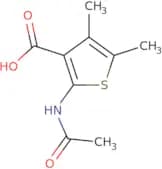
CAS:<p>Versatile small molecule scaffold</p>Formula:C9H11NO3SPurity:Min. 95%Molecular weight:213.25 g/mol5-Methyl-4-oxa-8-thia-6-azatricyclo[7.4.0.0,2,7]trideca-1(9),2(7),5-trien-3-one
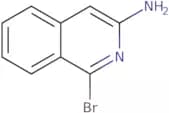
CAS:<p>Versatile small molecule scaffold</p>Formula:C11H11NO2SPurity:Min. 95%Molecular weight:221.28 g/mol1-Bromoisoquinolin-3-amine
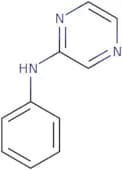
CAS:<p>1-Bromoisoquinolin-3-amine is a naphthyridine that can be synthesized by the reaction of 1-chloroisonicotinic acid with sodium azide and bromine. This compound has the potential to be used for the synthesis of other compounds, such as thiazolopyrimidines and benzothiazoles. Irradiation of 1-Bromoisoquinolin-3-amine in a nitrogen atmosphere yields an isomer with a phosphite group at C2. The tricycle structure of this isomer makes it reactive towards nucleophilic substitution reactions, making it useful for synthetic purposes.</p>Formula:C9H7BrN2Purity:Min. 95%Molecular weight:223.07 g/molN-Phenylpyrazin-2-amine
CAS:<p>N-Phenylpyrazin-2-amine is a tetrazole that has been shown to have an axial configuration. It is also a polymorph of the molecule, which means it can exist in different crystalline structures. N-Phenylpyrazin-2-amine has been shown to form hydrogen bonds with chlorine and hydrogen bonds with benzotriazole. The nitrogen atom in this compound is bonded to two phenyltetrazole rings and one carbon atom. This chain crystal structure was found to be monoclinic in nature.</p>Formula:C10H9N3Purity:Min. 95%Molecular weight:171.2 g/molMethyl 3-hydroxybenzo[b]thiophene-2-carboxylate
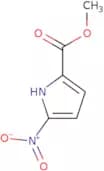
CAS:<p>Methyl 3-hydroxybenzo[b]thiophene-2-carboxylate is an intermediate in the synthesis of nitrobenzene. It is also a synthon for benzothiophene esters and functionalized derivatives.</p>Formula:C10H8O3SPurity:Min. 95%Molecular weight:208.23 g/molMethyl 5-nitro-1H-pyrrole-2-carboxylate
CAS:Versatile small molecule scaffoldFormula:C6H6N2O4Purity:Min. 95%Molecular weight:170.12 g/mol1H-pyrrole-2-carboxylic acid, 1-methyl-5-nitro-, methyl ester
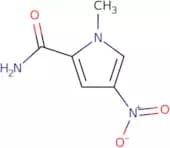
CAS:Versatile small molecule scaffoldFormula:C7H8N2O4Purity:Min. 95%Molecular weight:184.15 g/mol1-Methyl-4-nitro-1H-pyrrole-2-carboxamide
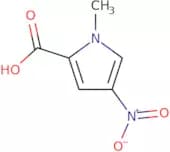
CAS:<p>Versatile small molecule scaffold</p>Formula:C6H7N3O3Purity:Min. 95%Molecular weight:169.14 g/mol1-Methyl-4-nitro-1H-pyrrole-2-carboxylic acid
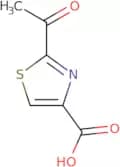
CAS:<p>1-Methyl-4-nitro-1H-pyrrole-2-carboxylic acid is a molecule that has been shown to be cytotoxic to cancer cells. It interacts with the DNA at the sequences that are responsible for the production of amino acids and inhibits the synthesis of proteins. This drug also interacts with a chromophore, which is an organic molecule that absorbs light, and it can be conjugated to other molecules in order to increase its cytotoxicity. The anticancer activity of 1MNP was found to be bimodal, meaning it has different effects on different types of cancer cells.</p>Formula:C6H6N2O4Purity:Min. 95%Molecular weight:170.12 g/mol2-Acetyl-1,3-thiazole-4-carboxylic acid
CAS:<p>2-Acetyl-1,3-thiazole-4-carboxylic acid is a carbonyl compound that is structurally related to other algicides. It has been shown to be effective against marine bacteria and organisms, including algae, bacteria and fungi. The 2-acetyl derivative of 1,3-thiazole has been found to have the highest activity among the derivatives tested. The chemical structure of this compound is similar to that of methyl ester and can be easily hydrolyzed by alkaline solutions. 2-Acetyl-1,3-thiazole-4-carboxylic acid also reacts with oxygen in air to form an unstable oxide which decomposes into water and carbon dioxide. This characteristic makes it suitable for use as an algicide because it can be easily decomposed by sunlight or UV light.</p>Formula:C6H5NO3SPurity:Min. 95%Molecular weight:171.18 g/mol2-Oxononanoic acid
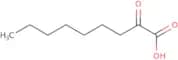
CAS:<p>2-Oxononanoic acid is a fatty acid that inhibits the binding of diagnostic agents to interleukin receptors. 2-Oxononanoic acid has been shown to inhibit the production of reactive oxygen species, which may be due to its acidic pH. This compound also inhibits the release of inflammatory mediators, such as cytokines and arachidonic acid metabolites. 2-Oxononanoic acid has been shown to have therapeutic potential in autoimmune diseases and infectious diseases, such as HIV/AIDS. 2-Oxononanoic acid is an affinity ligand for fatty acids and can be used in conjugates with antibodies or antigens for diagnostic purposes or therapy.</p>Formula:C9H16O3Purity:Min. 95%Molecular weight:172.22 g/mol3-(3-Hydroxyphenyl)-1-phenylurea
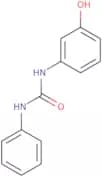
CAS:<p>Versatile small molecule scaffold</p>Formula:C13H12N2O2Purity:Min. 95%Molecular weight:228.25 g/mol(2-Methoxy-5-nitrophenyl)urea
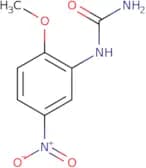
CAS:<p>Versatile small molecule scaffold</p>Formula:C8H9N3O4Purity:Min. 95%Molecular weight:211.17 g/mol4-(Morpholin-4-yl)-N-(propan-2-yl)aniline
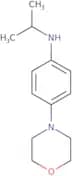
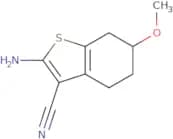
CAS:<p>Versatile small molecule scaffold</p>Formula:C13H20N2OPurity:Min. 95%Molecular weight:220.31 g/mol2-Amino-6-methoxy-4,5,6,7-tetrahydro-1-benzothiophene-3-carbonitrile
CAS:<p>Versatile small molecule scaffold</p>Formula:C10H12N2OSPurity:Min. 95%Molecular weight:208.28 g/mol2-Ethyl-[1,3,4]oxadiazole
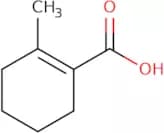
CAS:<p>Versatile small molecule scaffold</p>Formula:C4H6N2OPurity:Min. 95%Molecular weight:98.1 g/mol2-Methylcyclohex-1-ene-1-carboxylic acid
CAS:<p>Versatile small molecule scaffold</p>Formula:C8H12O2Purity:Min. 95%Molecular weight:140.18 g/mol1-Methanesulfinyl-3-methylbenzene
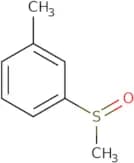
CAS:<p>1-Methanesulfinyl-3-methylbenzene is a white crystalline solid that belongs to the class of aromatic compounds. It has a melting point of 134° C and a boiling point of 350° C. 1-Methanesulfinyl-3-methylbenzene has been shown to have an x-ray crystal structure with four asymmetric units. This compound has also been analyzed by elemental analyses, which showed it contains hydrogen (H), carbon (C), sulfur (S), and oxygen (O) elements. 1-Methanesulfinyl-3-methylbenzene is soluble in organic solvents such as ethyl acetate, but insoluble in water or alcohols. It can be recrystallized from solvents such as ethyl acetate or diethyl ether. 1-Methanesulfinyl-3-methylbenzene is used for the synthesis of other organic compounds and for research purposes.</p>Formula:C8H10OSPurity:Min. 95%Molecular weight:154.23 g/mol1-Methanesulfinyl-3-methoxybenzene
CAS:<p>Versatile small molecule scaffold</p>Formula:C8H10O2SPurity:Min. 95%Molecular weight:170.23 g/mol

![5-Methyl-4-oxa-8-thia-6-azatricyclo[7.4.0.0,2,7]trideca-1(9),2(7),5-trien-3-one](/_next/image/?url=https%3A%2Fstatic.cymitquimica.com%2Fproducts%2F3D%2Fthumb-webp%2FNAA13047.webp&w=3840&q=75)
![Methyl 3-hydroxybenzo[b]thiophene-2-carboxylate](/_next/image/?url=https%3A%2Fstatic.cymitquimica.com%2Fproducts%2F3D%2Fthumb-webp%2FNAA13476.webp&w=3840&q=75)
![2-Ethyl-[1,3,4]oxadiazole](/_next/image/?url=https%3A%2Fstatic.cymitquimica.com%2Fproducts%2F3D%2Fthumb-webp%2FNAA14861.webp&w=3840&q=75)