


Building Blocks
This section contains fundamental products for the synthesis of organic and biological compounds. Building blocks are the essential starting materials used to construct complex molecules through various chemical reactions. They play a critical role in drug discovery, material science, and chemical research. At CymitQuimica, we offer a diverse range of high-quality building blocks to support your innovative research and industrial projects, ensuring you have the essential components for successful synthesis.
Subcategories of "Building Blocks"
- Boronic Acids & Boronic Acid Derivatives(5,756 products)
- Chiral Building Blocks(1,242 products)
- Hydrocarbon Building Blocks(6,095 products)
- Organic Building Blocks(61,055 products)
Found 199650 products of "Building Blocks"
Sort by
Purity (%)
0
100
|
0
|
50
|
90
|
95
|
100
±-Chlorophenylacetyl Chloride
CAS:<p>±-Chlorophenylacetyl Chloride is a chemical reagent that is used in organic chemistry. It reacts with tetronic acid to form a ruthenium complex, which can be used as a catalyst for organic reactions. It has been shown to react with n-dimethyl formamide and sodium chloride, forming an insoluble precipitate. The rate of reaction depends on the morphology of the reactant and whether it is soluble or not. The reactive properties of ±-chlorophenylacetyl chloride are due to its chlorine atom, which forms a stable bond with a carbon atom on the reactant. This product has been shown to have low expression levels in Chinese herbs and fetal bovine serum when compared to subtilis.</p>Formula:C8H6Cl2OPurity:Min. 95%Molecular weight:189.04 g/mol4-(Isopentyloxy)benzenecarboxylic acid
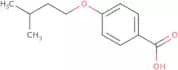
CAS:<p>Versatile small molecule scaffold</p>Formula:C12H16O3Purity:Min. 95%Molecular weight:208.25 g/molN,N-Dimethylethanimidamide hydrochloride
CAS:Controlled Product<p>Versatile small molecule scaffold</p>Formula:C4H11ClN2Purity:Min. 95%Molecular weight:122.6 g/mol5-(Bromomethyl)-2-methylpyrimidin-4-amine hydrobromide
CAS:<p>Versatile small molecule scaffold</p>Formula:C6H9Br2N3Purity:Min. 95%Molecular weight:282.97 g/mol2-(Dicyclohexylamino)-N-(4-{4-[2-(dicyclohexylamino)acetamido]benzenesulfonyl}phenyl)acetamide
CAS:<p>Versatile small molecule scaffold</p>Formula:C40H58N4O4SPurity:Min. 95%Molecular weight:691 g/molDiethyl (2-oxooxolan-3-yl)phosphonate
CAS:<p>Versatile small molecule scaffold</p>Formula:C8H15O5PPurity:Min. 95%Molecular weight:222.18 g/mol2,3-Dichlorobenzoyl chloride
CAS:<p>2,3-Dichlorobenzoyl chloride is an organic compound that is used as a pharmacological agent. It is a benzimidazole derivative with amide and fatty acid substituents. 2,3-Dichlorobenzoyl chloride has been shown to increase insulin sensitivity in rats by affecting the hypothalamic-pituitary-adrenal axis. This compound also has anti-inflammatory properties and can be used for the treatment of inflammatory diseases such as atherosclerotic cardiovascular disease.</p>Formula:C7H3Cl3OPurity:Min. 95%Molecular weight:209.46 g/mol1-Benzylpiperidine
CAS:<p>1-Benzylpiperidine is a drug that inhibits the enzyme acetylcholinesterase, which is responsible for breaking down the neurotransmitter acetylcholine. It has been shown to be effective in treating bowel disease and is being investigated as a potential treatment for autoimmune diseases, including multiple sclerosis. 1-Benzylpiperidine has also been found to be effective in preventing neuronal death in an animal model of Alzheimer's disease. The molecular docking analysis of 1-benzylpiperidine revealed that it binds to the active site of acetylcholinesterase by steric interactions with a nitrogen atom in the active site. This binding prevents access of acetylcholine and other inhibitors to the active site of acetylcholinesterase, thereby inhibiting its activity.</p>Formula:C12H17NPurity:Min. 95%Molecular weight:175.28 g/mol2-({4-Chloro-6-[(propan-2-yl)amino]-1,3,5-triazin-2-yl}amino)ethan-1-ol
CAS:Versatile small molecule scaffoldFormula:C8H14ClN5OPurity:Min. 95%Molecular weight:231.68 g/molEthyl N-(2,6-Dimethylphenyl)oxamate
CAS:<p>Versatile small molecule scaffold</p>Formula:C12H15NO3Purity:Min. 95%Molecular weight:221.25 g/mol2,2-Diphenylhexanoic acid
CAS:<p>Versatile small molecule scaffold</p>Formula:C18H20O2Purity:Min. 95%Molecular weight:268.3 g/molN-Acetyl-dl-tyrosine
CAS:<p>N-Acetyl-dl-tyrosine is a biologically active form of tyrosine that inhibits the activity of protein tyrosine phosphatases. It has been shown to inhibit the acylation reaction of acetylcholine esterase, which leads to the accumulation of acetylcholine in the synaptic cleft and enhances its effects on postsynaptic receptors. N-Acetyl-dl-tyrosine also binds to metal ions such as copper, zinc, or iron and can be used in metal chelation therapy. The drug has been shown to produce light emission when exposed to UV radiation and has been used for detection of biochemical abnormalities.</p>Formula:C11H13NO4Purity:Min. 95%Molecular weight:223.23 g/mol2,4-Diphenylbutanoic acid
CAS:Versatile small molecule scaffoldFormula:C16H16O2Purity:Min. 95%Molecular weight:240.3 g/mol3-(4-Chlorophenyl)-2-phenylpropanoic acid
CAS:<p>Versatile small molecule scaffold</p>Formula:C15H13ClO2Purity:Min. 95%Molecular weight:260.71 g/molEthyl 2-(4-methoxyphenyl)-2-methylpropanoate
CAS:<p>Versatile small molecule scaffold</p>Formula:C13H18O3Purity:Min. 95%Molecular weight:222.28 g/mol7-Bromo-5-phenyl-2,3-dihydro-1H-1,4-benzodiazepin-2-one
CAS:Controlled Product<p>Versatile small molecule scaffold</p>Formula:C15H11BrN2OPurity:Min. 95%Molecular weight:315.16 g/mol1-(3-Chloro-4-hydroxyphenyl)propan-1-one
CAS:<p>1-(3-Chloro-4-hydroxyphenyl)propan-1-one is an unlabelled, radioactive compound. It is a chemical intermediate for the synthesis of butylamino and other organic compounds.</p>Formula:C9H9ClO2Purity:Min. 95%Molecular weight:184.62 g/mol5'-Chloro-2'-hydroxypropiophenone
CAS:<p>Versatile small molecule scaffold</p>Formula:C9H9ClO2Purity:Min. 95%Molecular weight:184.62 g/mol2-(Piperidine-1-carbonyl)phenol
CAS:<p>Versatile small molecule scaffold</p>Formula:C12H15NO2Purity:Min. 95%Molecular weight:205.25 g/mol1-(1-Methylcyclohexyl)ethanone
CAS:<p>1-(1-Methylcyclohexyl)ethanone is an unsaturated ketone that is used for the production of fatty acid esters. It is also a volatile compound, which means it evaporates easily. The most significant use of 1-(1-Methylcyclohexyl)ethanone is in the production of carbinols and fatty acids. In addition, 1-(1-Methylcyclohexyl)ethanone has been shown to be photosensitized by uv irradiation and liquefaction. The mechanism of how this compound works is not yet fully understood; however, it has been found to inhibit the growth of aspergillus flavus and sulphureus in laboratory studies.</p>Formula:C9H16OPurity:Min. 95%Color and Shape:PowderMolecular weight:140.22 g/mol




![2-(Dicyclohexylamino)-N-(4-{4-[2-(dicyclohexylamino)acetamido]benzenesulfonyl}phenyl)acetamide](/_next/image/?url=https%3A%2Fstatic.cymitquimica.com%2Fproducts%2F3D%2Fthumb-webp%2FCAA90788.webp&w=3840&q=75)


![2-({4-Chloro-6-[(propan-2-yl)amino]-1,3,5-triazin-2-yl}amino)ethan-1-ol](/_next/image/?url=https%3A%2Fstatic.cymitquimica.com%2Fproducts%2F3D%2Fthumb-webp%2FCAA90453.webp&w=3840&q=75)


