Building Blocks
This section contains fundamental products for the synthesis of organic and biological compounds. Building blocks are the essential starting materials used to construct complex molecules through various chemical reactions. They play a critical role in drug discovery, material science, and chemical research. At CymitQuimica, we offer a diverse range of high-quality building blocks to support your innovative research and industrial projects, ensuring you have the essential components for successful synthesis.
Subcategories of "Building Blocks"
- Boronic Acids & Boronic Acid Derivatives(5,756 products)
- Chiral Building Blocks(1,242 products)
- Hydrocarbon Building Blocks(6,095 products)
- Organic Building Blocks(61,055 products)
Found 199650 products of "Building Blocks"
Sort by
Purity (%)
0
100
|
0
|
50
|
90
|
95
|
100
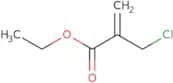
Ethyl 2-(Chloromethyl)acrylate (stabilized with HQ)
CAS:<p>Ethyl 2-(chloromethyl)acrylate is a monomer that belongs to the group of fluoroalkyl. It has been shown to be capable of copolymerization with other monomers, such as methacrylic acid. Copolymers are often used in polymer films and coatings because they have excellent water repellent properties. Copolymers can also be made using azobisisobutyronitrile (AIBN), which is an initiator that produces radicals that react with the double bond in the acrylate monomer. The size-exclusion chromatography technique can be used to measure the molecular weight of polymers. Polymerization reactions are often performed in the presence of cyanamide, which is a source of nitrogen for use as a reducing agent in these reactions. The benzoate anion or salt can be used as a stabilizer for this type of reaction, producing an ethyl ester from the benzoic acid</p>Formula:C6H9ClO2Purity:Min. 95%Molecular weight:148.59 g/molMethyl 2-[2-(hydroxyimino)cyclohexyl]acetate
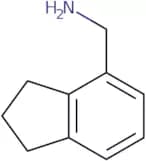
CAS:<p>Versatile small molecule scaffold</p>Formula:C9H15NO3Purity:Min. 95%Molecular weight:185.22 g/mol(2,3-Dihydro-1H-inden-4-yl)methanamine
CAS:<p>Versatile small molecule scaffold</p>Formula:C10H13NPurity:Min. 95%Molecular weight:147.22 g/mol(1-Benzofuran-6-yl)methanamine
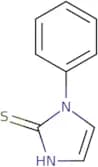
CAS:Versatile small molecule scaffoldFormula:C9H9NOPurity:Min. 95%Molecular weight:147.17 g/mol1-Phenyl-1H-imidazole-2(3H)-thione
CAS:<p>1-Phenyl-1H-imidazole-2(3H)-thione is a ligand that binds to metal ions. It can be synthesized by reacting an olefinic compound with acetylacetonates in the presence of zirconium, forming a cyclopentadienyl complex. The chloride ion acts as a counterion and is removed when the reaction is complete. This product has a particle size of less than 10 micrometers and can be used for the synthesis of organic compounds with metal carbonate ligands.</p>Formula:C9H8N2SPurity:Min. 95%Molecular weight:176.24 g/mol1-(4-Chlorophenyl)-1H-imidazole-2(3H)-thione
CAS:<p>1-(4-Chlorophenyl)-1H-imidazole-2(3H)-thione is a crystalline solid that belongs to the class of imidazoles. It has been synthesized by reacting 1,2-dibromoethane with sodium methoxide in methanol. The compound was found to have a melting point of about 183°C and a molecular weight of 212.06 g/mol. This compound has been shown to interact with methanol, methoxide, and ethoxy groups. Crystallization occurs when the substance is heated to about 183°C in vacuum and then cooled slowly.</p>Formula:C9H7ClN2SPurity:Min. 95%Molecular weight:210.68 g/mol1-(4-Methoxyphenyl)-1H-imidazole-2(3H)-thione
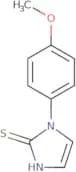
CAS:<p>Versatile small molecule scaffold</p>Formula:C10H10N2OSPurity:Min. 95%Molecular weight:206.26 g/mol1-(2,6-Dimethylphenyl)-2,3-dihydro-1H-imidazole-2-thione
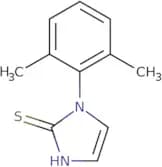
CAS:<p>Versatile small molecule scaffold</p>Formula:C11H12N2SPurity:Min. 95%Molecular weight:204.29 g/mol1-(4-Bromophenyl)imidazoline-2-thione
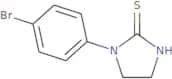
CAS:<p>Versatile small molecule scaffold</p>Formula:C9H7BrN2SPurity:Min. 95%Molecular weight:255.14 g/mol2-Amino-3-methoxypropanamide hydrochloride
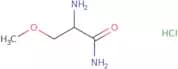
CAS:<p>Versatile small molecule scaffold</p>Formula:C4H11ClN2O2Purity:Min. 95%Molecular weight:154.59 g/mol7-Chloro-3-phenyl-3H-[1,2,3]triazolo[4,5-d]pyrimidine
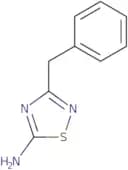
CAS:Versatile small molecule scaffoldFormula:C10H6ClN5Purity:Min. 95%Molecular weight:231.64 g/mol3-Benzyl-1,2,4-thiadiazol-5-amine
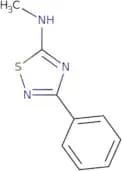
CAS:<p>Versatile small molecule scaffold</p>Formula:C9H9N3SPurity:Min. 95%Molecular weight:191.26 g/molN-Methyl-3-phenyl-1,2,4-thiadiazol-5-amine
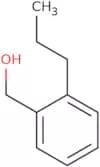
CAS:<p>Versatile small molecule scaffold</p>Formula:C9H9N3SPurity:Min. 95%Molecular weight:191.26 g/mol(2-Propylphenyl)methanol
CAS:<p>2-Propylphenyl methy alcohol is a carboxylic acid that is used in the synthesis of esterification products. It reacts with an alcohol to form an ester. This reaction can be done by heating the carboxylic acid and the alcohol together, or by using a catalyst such as sulfuric acid. 2-Propylphenyl methy alcohol can also react with a reactive halogenated molecule to form an ether. This process is called hydrolysis, which is the breaking down of a compound through water molecules. 2-Propylphenyl methy alcohol will react with a chlorine atom to form a chloroalkoxide, which can then be used in another reaction.</p>Formula:C10H14OPurity:Min. 95%Molecular weight:150.22 g/molTranylcypromine Related Compound B
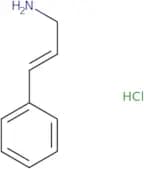
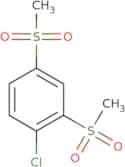
CAS:<p>Tranylcypromine Related Compound B (TCRB) is a fluorescent substrate for monoamine oxidase. It is used to measure the activity of this enzyme in biological samples, including plasma, urine, and cerebrospinal fluid. TCRB has been shown to be irreversibly fluorescent. TCRB is reversibly fluorescent when the pH of the sample is decreased by adding hydrochloric acid or sodium hydroxide. The fluorescence intensity decreases as pH increases from 2-6 and then increases as pH increases from 7-10 due to the accumulation of nonfluorescent products. Tranylcypromine also inhibits pepsin activity at low concentrations and can be used for measuring pepsin activity in vitro. This compound has been shown to have an operational half-life of about 18 hours in rats and about 27 hours in humans.</p>Formula:C9H11N·HClPurity:Min. 95%Molecular weight:169.65 g/mol1-Chloro-2,4-dimethanesulfonylbenzene
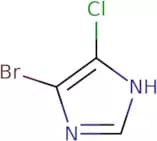
CAS:<p>Versatile small molecule scaffold</p>Formula:C8H9ClO4S2Purity:Min. 95%Molecular weight:268.7 g/mol4-Bromo-5-chloro-1H-imidazole
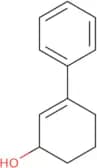
CAS:<p>Versatile small molecule scaffold</p>Formula:C3H2BrClN2Purity:Min. 95%Molecular weight:181.42 g/mol3-Phenylcyclohex-2-en-1-ol
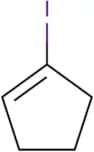
CAS:<p>Versatile small molecule scaffold</p>Formula:C12H14OPurity:Min. 95%Molecular weight:174.24 g/mol1-Iodocyclopent-1-ene
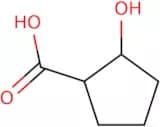
CAS:<p>Versatile small molecule scaffold</p>Formula:C5H7IPurity:Min. 95%Molecular weight:194.01 g/molCis-2-hydroxycyclopentanecarboxylic acid
CAS:<p>Cis-2-hydroxycyclopentane-carboxylic acid is a tosyl ester that is used as an intramolecular nucleophile. It reacts with a variety of electrophiles, including dioxan, to form tosylates. Cis-2-hydroxycyclopentane carboxylic acid has been found to be a useful buffer in the analysis of its kinetics and spectroscopic studies. This compound also shows aqueous solubility that is dependent on the presence of carbon tetrachloride or borate.</p>Formula:C6H10O3Purity:Min. 95%Molecular weight:130.14 g/mol

![Methyl 2-[2-(hydroxyimino)cyclohexyl]acetate](/_next/image/?url=https%3A%2Fstatic.cymitquimica.com%2Fproducts%2F3D%2Fthumb-webp%2FSAA44849.webp&w=3840&q=75)


![7-Chloro-3-phenyl-3H-[1,2,3]triazolo[4,5-d]pyrimidine](/_next/image/?url=https%3A%2Fstatic.cymitquimica.com%2Fproducts%2F3D%2Fthumb-webp%2FSAA46600.webp&w=3840&q=75)