Building Blocks
This section contains fundamental products for the synthesis of organic and biological compounds. Building blocks are the essential starting materials used to construct complex molecules through various chemical reactions. They play a critical role in drug discovery, material science, and chemical research. At CymitQuimica, we offer a diverse range of high-quality building blocks to support your innovative research and industrial projects, ensuring you have the essential components for successful synthesis.
Subcategories of "Building Blocks"
- Boronic Acids & Boronic Acid Derivatives(5,756 products)
- Chiral Building Blocks(1,242 products)
- Hydrocarbon Building Blocks(6,095 products)
- Organic Building Blocks(61,051 products)
Found 199813 products of "Building Blocks"
Sort by
Purity (%)
0
100
|
0
|
50
|
90
|
95
|
100
1-Iodobut-2-yne
CAS:1-Iodobut-2-yne is an alkynyl that can be synthesized from cyclohexanones and propargyl alcohol. It is a bicyclic compound that is structurally similar to the ketone, acetone. 1-Iodobut-2-yne has been used in the synthesis of a number of other organic compounds.Formula:C4H5IPurity:Min. 95%Molecular weight:179.99 g/molEthyl 2-[(4-aminophenyl)formamido]propanoate
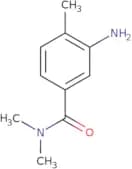
CAS:<p>Versatile small molecule scaffold</p>Formula:C12H16N2O3Purity:Min. 95%Molecular weight:236.27 g/mol3-Amino-N,N,4-trimethylbenzamide
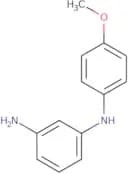
CAS:<p>Versatile small molecule scaffold</p>Formula:C10H14N2OPurity:Min. 95%Molecular weight:178.23 g/molN1-(4-Methoxyphenyl)benzene-1,3-diamine
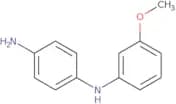
CAS:<p>Versatile small molecule scaffold</p>Formula:C13H14N2OPurity:Min. 95%Molecular weight:214.26 g/molN1-(3-Methoxyphenyl)benzene-1,4-diamine
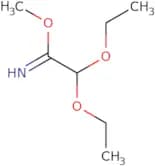
CAS:Versatile small molecule scaffoldFormula:C13H14N2OPurity:Min. 95%Molecular weight:214.26 g/molMethyl 2,2-Diethoxyacetimidate
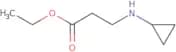
CAS:<p>Methyl 2,2-Diethoxyacetimidate is an inhibitor of metallo-β-lactamase, a class of enzymes that hydrolyzes the β-lactam ring in penicillin and cephalosporin antibiotics. It is effective against a broad range of Gram-positive and Gram-negative bacteria as well as against antibiotic resistant strains such as methicillin-resistant Staphylococcus aureus (MRSA). Methyl 2,2-Diethoxyacetimidate is orally bioavailable and has been shown to be safe for use in humans.<br>Methyl 2,2-Diethoxyacetimidate inhibits the activity of heterocycloalkyl compounds that are used by cancer cells to evade apoptosis. This compound has shown anticancer activity in tumor xenograft models in mice. In addition, methyl 2,2-diethoxyacetimidate can inhibit the production of inflammatory cytokines such as T</p>Formula:C7H15NO3Purity:Min. 95%Molecular weight:161.2 g/molEthyl 3-(cyclopropylamino)propanoate
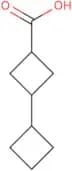
CAS:<p>Versatile small molecule scaffold</p>Formula:C8H15NO2Purity:Min. 95%Molecular weight:157.21 g/mol3-Cyclobutylcyclobutane-1-carboxylic acid
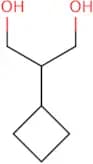
CAS:<p>Versatile small molecule scaffold</p>Formula:C9H14O2Purity:Min. 95%Molecular weight:154.2 g/mol2-Cyclobutylpropane-1,3-diol
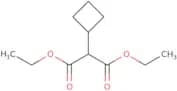
CAS:<p>Versatile small molecule scaffold</p>Formula:C7H14O2Purity:Min. 95%Molecular weight:130.18 g/mol1,3-Diethyl 2-cyclobutylpropanedioate
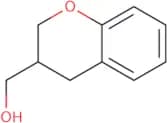
CAS:<p>1,3-Diethyl 2-cyclobutylpropanedioate is a liquid crystal composed of a mixture of compounds that are chiral and anisotropic. It has a hetero molecular structure with the chemical formula C10H20O2. The optical parameters for this liquid crystal are d=1.4284, n=1.5673, λ=568.0nm, and Δn=-0.0014. The optical parameters for this compound are c1-4 alkoxy (C1-4) with a phenyl group at the 6 position and an fluorine atom attached to the 3 position on the ring. This compound is also known as 1,3-diethyl 2-(3-methylcyclobutyl)propanedioate or 1,3-diethyl 2-(cyclopentyl)propanedioate depending on its substitution at the 1 position on the ring.br>br></p>Formula:C11H18O4Purity:Min. 95%Molecular weight:214.26 g/mol(3,4-Dihydro-2H-1-benzopyran-3-yl)methanol
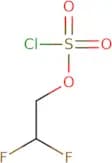
CAS:Versatile small molecule scaffoldFormula:C10H12O2Purity:Min. 95%Molecular weight:164.2 g/mol2,2-Difluoroethyl chloranesulfonate
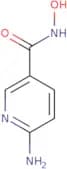
CAS:<p>Versatile small molecule scaffold</p>Formula:C2H3ClF2O3SPurity:Min. 95%Molecular weight:180.56 g/mol6-Amino-N-hydroxypyridine-3-carboxamide
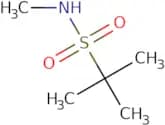
CAS:<p>6-Amino-N-hydroxypyridine-3-carboxamide is a toxic substance that can cause poisoning in humans and animals. It has been used as an anticoagulant in rodenticides, but it is not effective against rodents with resistance to this type of poison. Symptoms of 6-Amino-N-hydroxypyridine-3-carboxamide poisoning include vomiting, dizziness, drowsiness, headache, and coma. The toxic effects are due to the inhibition of vitamin K epoxide reductase (VKOR). Antidotes for 6-Amino-N-hydroxypyridine-3-carboxamide poisoning include nicotinamide and vitamin K1.</p>Formula:C6H7N3O2Purity:Min. 95%Molecular weight:153.14 g/molN,2-Dimethylpropane-2-sulfonamide
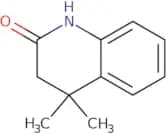
CAS:<p>Versatile small molecule scaffold</p>Formula:C5H13NO2SPurity:Min. 95%Molecular weight:151.23 g/mol4,4-Dimethyl-1,3-dihydroquinolin-2-one
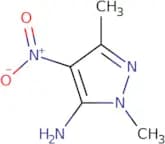
CAS:4,4-Dimethyl-1,3-dihydroquinolin-2-one is a heterocyclic compound that has been shown to be cytotoxic to cancer cells. It is also an inhibitor of cytochrome P450 and has been shown to induce blood pressure in rat models. This drug is synthesized by the reaction of 4,4-dimethylquinoline with chloroform in the presence of sodium hydroxide. 4,4-Dimethyl-1,3-dihydroquinolin-2-one is reactive and can undergo nucleophilic attack on chlorides or other nucleophiles at either nitrogen atom. This process can lead to tautomerization between two possible tautomers that differ in configuration at the double bond. The product of this reaction is an oxime.Formula:C11H13NOPurity:Min. 95%Molecular weight:175.23 g/mol1,3-Dimethyl-4-nitro-1H-pyrazol-5-amine
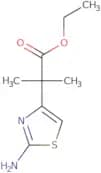
CAS:Versatile small molecule scaffoldFormula:C5H8N4O2Purity:Min. 95%Molecular weight:156.14 g/molEthyl 2-(2-amino-1,3-thiazol-4-yl)-2-methylpropanoate
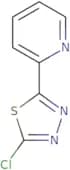
CAS:Versatile small molecule scaffoldFormula:C9H14N2O2SPurity:Min. 95%Molecular weight:214.29 g/mol2-(5-Chloro-1,3,4-thiadiazol-2-yl)pyridine
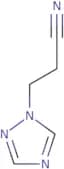
CAS:<p>Versatile small molecule scaffold</p>Formula:C7H4ClN3SPurity:Min. 95%Molecular weight:197.65 g/mol3-(1H-1,2,4-Triazol-1-yl)propanenitrile
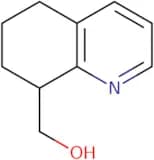
CAS:<p>3-(1H-1,2,4-Triazol-1-yl)propanenitrile is a triazole. It is a fungicide that inhibits the synthesis of proteins by binding to the enzyme RNA polymerase. 3-(1H-1,2,4-Triazol-1-yl)propanenitrile has been patented for use in the treatment of cercospora fruit rot and other plant diseases caused by fungi. The compound is also used as an additive in coatings with excellent corrosion and weathering properties. Triazoles are synthetic compounds that have three nitrogens (triazole rings) linked to a benzene ring.</p>Formula:C5H6N4Purity:Min. 95%Molecular weight:122.13 g/mol5,6,7,8-Tetrahydroquinolin-8-ylmethanol
CAS:<p>Versatile small molecule scaffold</p>Formula:C10H13NOPurity:Min. 95%Molecular weight:163.22 g/mol


![Ethyl 2-[(4-aminophenyl)formamido]propanoate](/_next/image/?url=https%3A%2Fstatic.cymitquimica.com%2Fproducts%2F3D%2Fthumb-webp%2FBDA76577.webp&w=3840&q=75)