Building Blocks
This section contains fundamental products for the synthesis of organic and biological compounds. Building blocks are the essential starting materials used to construct complex molecules through various chemical reactions. They play a critical role in drug discovery, material science, and chemical research. At CymitQuimica, we offer a diverse range of high-quality building blocks to support your innovative research and industrial projects, ensuring you have the essential components for successful synthesis.
Subcategories of "Building Blocks"
- Boronic Acids & Boronic Acid Derivatives(5,756 products)
- Chiral Building Blocks(1,242 products)
- Hydrocarbon Building Blocks(6,095 products)
- Organic Building Blocks(61,038 products)
Found 196817 products of "Building Blocks"
Sort by
Purity (%)
0
100
|
0
|
50
|
90
|
95
|
100
1-Butyl-2-(4-methoxyphenyl)-5-oxopyrrolidine-3-carboxylic acid
CAS:<p>Versatile small molecule scaffold</p>Formula:C16H21NO4Purity:Min. 95%Molecular weight:291.34 g/mol2-[(Oxolan-2-yl)methoxy]benzaldehyde
CAS:<p>Versatile small molecule scaffold</p>Formula:C12H14O3Purity:Min. 95%Molecular weight:206.24 g/mol3-Cyclohexyl-N-hydroxypropanamide
CAS:<p>Versatile small molecule scaffold</p>Formula:C9H17NO2Purity:Min. 95%Molecular weight:171.24 g/mol5-ethyl-2-methylmorpholine
CAS:<p>Versatile small molecule scaffold</p>Formula:C7H15NOPurity:Min. 95%Molecular weight:129.2 g/molRef: 3D-TEB44485
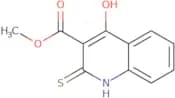
Discontinued productMethyl 4-hydroxy-2-sulfanylquinoline-3-carboxylate
CAS:<p>Methyl 4-hydroxy-2-sulfanylquinoline-3-carboxylate (MSQ) is a synthetic molecule that has shown to have antiviral activity against the hepatitis B virus. This compound is a competitive inhibitor of the virus and prevents it from infecting cells. MSQ has also been shown to inhibit other viruses, such as herpes simplex virus, influenza A and C, rotavirus, and human immunodeficiency virus type 1 (HIV-1). The high inhibition of MSQ can be attributed to its ability to form hydrogen bonds with the amino acid residues in viral proteins. Additionally, MSQ interacts with anions in the active site of the enzymes that are necessary for viral replication through alkylation reactions.<br>MSQ has been found to be selective for influenza A and C by binding at different sites on the enzyme compared to other compounds like zanamivir and oseltamivir. The single-crystal x</p>Formula:C11H9NO3SPurity:Min. 95%Molecular weight:235.26 g/molRef: 3D-SKB29434
Discontinued product[(2-Bromo-5-chlorophenyl)methyl](2-methylpropyl)amine
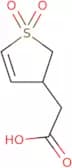
CAS:<p>Versatile small molecule scaffold</p>Formula:C11H15BrClNPurity:Min. 95%Molecular weight:276.6 g/mol2,3-Dihydro-3-thiopheneacetic acid 1,1-dioxide
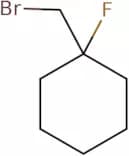
CAS:<p>2,3-Dihydro-3-thiopheneacetic acid 1,1-dioxide is a nucleophilic reagent that can be used to synthesize amides. It reacts with amines to form 2,3-dihydro-3-thiophenecarboxylic acid 1,1-diamide. Reactions of this compound with heterocycles such as pyridine and quinoline result in the formation of heterocyclic amines.</p>Formula:C6H8O4SPurity:Min. 95%Molecular weight:176.19 g/mol1-(Bromomethyl)-1-fluorocyclohexane
CAS:<p>Versatile small molecule scaffold</p>Formula:C7H12BrFPurity:Min. 95%Molecular weight:195.07 g/molRef: 3D-SAA17100
Discontinued productrac-(1R,3R,5S)-8-Oxobicyclo[3.2.1]octane-3-carboxylic acid, exo
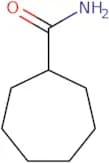
CAS:<p>Versatile small molecule scaffold</p>Formula:C9H12O3Purity:Min. 95%Molecular weight:168.19 g/molCycloheptanecarboxamide
CAS:<p>Cycloheptanecarboxamide is a cellular amide that is used in the study of β-amino acids. Cycloheptanecarboxamide is a prodrug that is converted to cycloheptylamine, which has been shown to be an inhibitor of proliferation and a potent inhibitor of inflammatory diseases. Cycloheptylamine also inhibits the production of aliphatic hydrocarbons and mineralocorticoids, as well as the activation of mineralocorticoid receptors. It has been shown to be an organic solution that can be used to generate tartrate-resistant acid potassium ions (TRAP).</p>Formula:C8H15NOPurity:Min. 95%Molecular weight:141.21 g/molRef: 3D-BAA45939
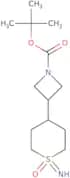
Discontinued producttert-Butyl 3-(1-imino-1-oxo-1λ⁶-thian-4-yl)azetidine-1-carboxylate
CAS:<p>Versatile small molecule scaffold</p>Formula:C13H24N2O3SPurity:Min. 95%Molecular weight:288.4 g/molRef: 3D-AVD26843
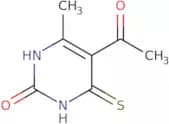
Discontinued product5-Acetyl-6-methyl-4-sulfanyl-1,2-dihydropyrimidin-2-one
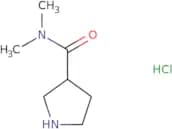
CAS:<p>Versatile small molecule scaffold</p>Formula:C7H8N2O2SPurity:Min. 95%Molecular weight:184.22 g/mol(3S)-N,N-Dimethyl-3-pyrrolidinecarboxamide hydrochloride
CAS:<p>Versatile small molecule scaffold</p>Formula:C7H15ClN2OPurity:Min. 95%Molecular weight:178.66 g/molRef: 3D-QCC59337
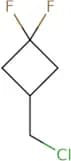
Discontinued product3-(Chloromethyl)-1,1-difluorocyclobutane
CAS:<p>Versatile small molecule scaffold</p>Formula:C5H7ClF2Purity:Min. 95%Molecular weight:140.56 g/molRef: 3D-QBC62558
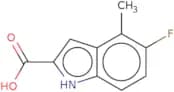
Discontinued product5-Fluoro-4-methyl-1H-indole-2-carboxylic acid
CAS:<p>Versatile small molecule scaffold</p>Formula:C10H8FNO2Purity:Min. 95%Molecular weight:193.2 g/molRef: 3D-ACA53662
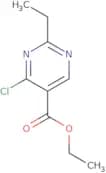
Discontinued productEthyl 4-chloro-2-ethylpyrimidine-5-carboxylate
CAS:<p>Versatile small molecule scaffold</p>Formula:C9H11ClN2O2Purity:Min. 95%Molecular weight:214.65 g/molRef: 3D-PCA17981
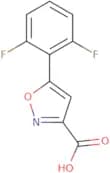
Discontinued product5-(2,6-Difluorophenyl)-1,2-oxazole-3-carboxylic acid
CAS:<p>Versatile small molecule scaffold</p>Formula:C10H5F2NO3Purity:Min. 95%Molecular weight:225.15 g/mol3-Methyl-6-(trifluoromethyl)-3,4-dihydro-2H-benzo[b][1,4]oxazine
CAS:<p>Versatile small molecule scaffold</p>Formula:C10H10F3NOPurity:Min. 95%Molecular weight:217.19 g/molRef: 3D-AAA44985
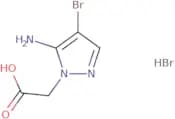
Discontinued product2-(5-Amino-4-bromo-1H-pyrazol-1-yl)acetic acid hydrobromide
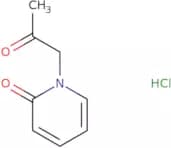
CAS:<p>Versatile small molecule scaffold</p>Formula:C5H7Br2N3O2Purity:Min. 95%Molecular weight:300.94 g/mol1-(2-Oxopropyl)-1,2-dihydropyridin-2-one hydrochloride
CAS:<p>Versatile small molecule scaffold</p>Formula:C8H10ClNO2Purity:Min. 95%Molecular weight:187.62 g/molRef: 3D-NWC61189
Discontinued product


![2-[(Oxolan-2-yl)methoxy]benzaldehyde](/_next/image/?url=https%3A%2Fstatic.cymitquimica.com%2Fproducts%2F3D%2Fthumb-webp%2FBJB32426.webp&w=3840&q=75)


amine](/_next/image/?url=https%3A%2Fstatic.cymitquimica.com%2Fproducts%2F3D%2Fthumb-webp%2FSJC31753.webp&w=3840&q=75)
![rac-(1R,3R,5S)-8-Oxobicyclo[3.2.1]octane-3-carboxylic acid, exo](/_next/image/?url=https%3A%2Fstatic.cymitquimica.com%2Fproducts%2F3D%2Fthumb-webp%2FQNA16419.webp&w=3840&q=75)
![3-Methyl-6-(trifluoromethyl)-3,4-dihydro-2H-benzo[b][1,4]oxazine](/_next/image/?url=https%3A%2Fstatic.cymitquimica.com%2Fproducts%2F3D%2Fthumb-webp%2FAAA44985.webp&w=3840&q=75)