


Building Blocks
This section contains fundamental products for the synthesis of organic and biological compounds. Building blocks are the essential starting materials used to construct complex molecules through various chemical reactions. They play a critical role in drug discovery, material science, and chemical research. At CymitQuimica, we offer a diverse range of high-quality building blocks to support your innovative research and industrial projects, ensuring you have the essential components for successful synthesis.
Subcategories of "Building Blocks"
- Boronic Acids & Boronic Acid Derivatives(5,756 products)
- Chiral Building Blocks(1,242 products)
- Hydrocarbon Building Blocks(6,095 products)
- Organic Building Blocks(61,055 products)
Found 199650 products of "Building Blocks"
Sort by
Purity (%)
0
100
|
0
|
50
|
90
|
95
|
100
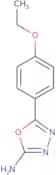
5-(4-Ethoxyphenyl)-1,3,4-oxadiazol-2-amine
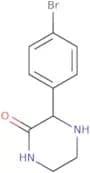
CAS:Versatile small molecule scaffoldFormula:C10H11N3O2Purity:Min. 95%Molecular weight:205.21 g/mol3-(4-Bromophenyl)piperazin-2-one
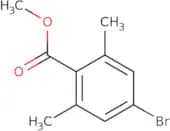
CAS:<p>Versatile small molecule scaffold</p>Formula:C10H11BrN2OPurity:Min. 95%Molecular weight:255.11 g/molMethyl 4-bromo-2,6-diMethylbenzoate
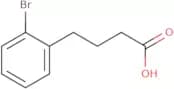
CAS:<p>Versatile small molecule scaffold</p>Formula:C10H11BrO2Purity:Min. 95%Molecular weight:243.1 g/mol4-(2-bromophenyl)butanoic acid
CAS:<p>4-(2-bromophenyl)butanoic acid is a ligand that has been used in intramolecular cyclisation reactions. It is also an amidation reagent, which can be used to synthesise amides from carboxylic acids and ammonia. 4-(2-bromophenyl)butanoic acid undergoes an amidation reaction with aromatic amines in the presence of a base to form 4-(2-bromophenyl)butanamide. This product has been used as an intermediate for the synthesis of other compounds such as aziridines and oxazolidinones.</p>Formula:C10H11BrO2Purity:Min. 95%Molecular weight:243.1 g/molEthyl 2-(2-bromophenoxy)acetate
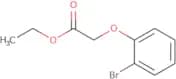
CAS:<p>Ethyl 2-(2-bromophenoxy)acetate is an organic compound that is used as a reagent in organic synthesis. The cell parameters of ethyl 2-(2-bromophenoxy)acetate anhydrous are:</p>Formula:C10H11BrO3Purity:Min. 95%Molecular weight:259.1 g/mol1-(4-Bromo-2,5-dimethoxyphenyl)ethan-1-one
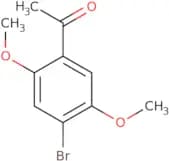
CAS:<p>Versatile small molecule scaffold</p>Formula:C10H11BrO3Purity:Min. 95%Molecular weight:259.1 g/mol2-(4-Bromobenzenesulfonyl)-2-methylpropanoic acid
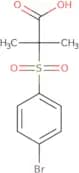
CAS:<p>Versatile small molecule scaffold</p>Formula:C10H11BrO4SPurity:Min. 95%Molecular weight:307.16 g/molN-(4-Cyanophenyl)-2-propenamide
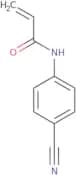
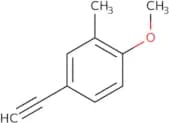
CAS:<p>Versatile small molecule scaffold</p>Formula:C10H8N2OPurity:Min. 95%Molecular weight:172.18 g/mol4-Ethynyl-1-methoxy-2-methylbenzene
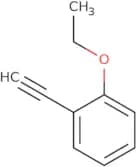
CAS:<p>Versatile small molecule scaffold</p>Formula:C10H10OPurity:Min. 95%Molecular weight:146.19 g/mol1-Ethoxy-2-ethynylbenzene
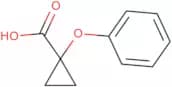
CAS:<p>1-Ethoxy-2-ethynylbenzene is an alkyne that reacts with nucleophiles to form C-C bonds. It can be used in the synthesis of polymers and pharmaceuticals. Computational studies show that the ethoxy group is more reactive than the ethynyl group, which means it will react faster with a nucleophile than 1-ethynylbenzene. This reactivity difference may be due to the electron withdrawing effect of the ethoxy group, which stabilizes the carbocation intermediate and leads to a higher rate of reaction.</p>Formula:C10H10OPurity:Min. 95%Molecular weight:146.19 g/mol1-Phenoxycyclopropane-1-carboxylic acid
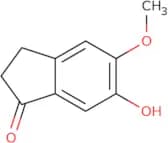
CAS:<p>Versatile small molecule scaffold</p>Formula:C10H10O3Purity:Min. 95%Molecular weight:178.18 g/mol6-Hydroxy-5-methoxy-1-indanone
CAS:<p>Versatile small molecule scaffold</p>Formula:C10H10O3Purity:Min. 95%Molecular weight:178.18 g/mol2-[4-(2-Bromoethoxy)phenyl]acetonitrile
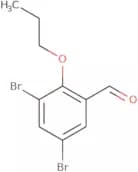
CAS:<p>Versatile small molecule scaffold</p>Formula:C10H10BrNOPurity:Min. 95%Molecular weight:240.1 g/mol3,5-Dibromo-2-propoxybenzaldehyde
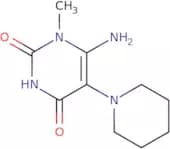
CAS:<p>Versatile small molecule scaffold</p>Formula:C10H10Br2O2Purity:Min. 95%Molecular weight:321.99 g/mol6-Amino-1-methyl-5-(piperidin-1-yl)-1,2,3,4-tetrahydropyrimidine-2,4-dione
CAS:<p>6-Amino-1-methyl-5-(piperidin-1-yl)-1,2,3,4-tetrahydropyrimidine-2,4-dione is a tripeptide inhibitor that inhibits the activity of proteases. It has been shown to inhibit the proliferation of cells in vitro and in vivo and to have anti-inflammatory properties. 6-[(3S)-3-(dimethylamino)pyrrolidin-1-yl]-N-[(6R)-6-(hydroxymethyl)oxanamido]-1H,2H,3H,4H,- 5H-[1]benzopyranorbornane hydrochloride is a potent protease inhibitor with a broad spectrum of activity against different types of proteases. The compound was found to be effective against proliferative diseases such as cancer and autoimmune diseases.</p>Formula:C10H16N4O2Purity:Min. 95%Molecular weight:224.26 g/mol6-Amino-5-(piperidin-1-yl)-1-propyl-1,2,3,4-tetrahydropyrimidine-2,4-dione
CAS:<p>Versatile small molecule scaffold</p>Formula:C12H20N4O2Purity:Min. 95%Molecular weight:252.31 g/mol2-Chloro-N-[3-(dimethylsulfamoyl)phenyl]propanamide
CAS:<p>Versatile small molecule scaffold</p>Formula:C11H15ClN2O3SPurity:Min. 95%Molecular weight:290.77 g/molN-{[5-(4-Chlorophenyl)-1,3,4-oxadiazol-2-yl]methyl}cyclopropanamine
CAS:<p>Versatile small molecule scaffold</p>Formula:C12H12ClN3OPurity:Min. 95%Molecular weight:249.69 g/mol2-{5H,6H,7H-Indeno[5,6-b]furan-3-yl}-N-(5-methyl-1,3-thiazol-2-yl)acetamide
CAS:<p>Versatile small molecule scaffold</p>Formula:C17H16N2O2SPurity:Min. 95%Molecular weight:312.4 g/mol2-[(Propan-2-yl)sulfamoyl]benzoic acid
CAS:<p>Versatile small molecule scaffold</p>Formula:C10H13NO4SPurity:Min. 95%Molecular weight:243.28 g/mol

![2-[4-(2-Bromoethoxy)phenyl]acetonitrile](/_next/image/?url=https%3A%2Fstatic.cymitquimica.com%2Fproducts%2F3D%2Fthumb-webp%2FQDA84474.webp&w=3840&q=75)

![2-Chloro-N-[3-(dimethylsulfamoyl)phenyl]propanamide](/_next/image/?url=https%3A%2Fstatic.cymitquimica.com%2Fproducts%2F3D%2Fthumb-webp%2FQGB23232.webp&w=3840&q=75)
![N-{[5-(4-Chlorophenyl)-1,3,4-oxadiazol-2-yl]methyl}cyclopropanamine](/_next/image/?url=https%3A%2Fstatic.cymitquimica.com%2Fproducts%2F3D%2Fthumb-webp%2FQGB23233.webp&w=3840&q=75)
![2-{5H,6H,7H-Indeno[5,6-b]furan-3-yl}-N-(5-methyl-1,3-thiazol-2-yl)acetamide](/_next/image/?url=https%3A%2Fstatic.cymitquimica.com%2Fproducts%2F3D%2Fthumb-webp%2FQGB24561.webp&w=3840&q=75)
![2-[(Propan-2-yl)sulfamoyl]benzoic acid](/_next/image/?url=https%3A%2Fstatic.cymitquimica.com%2Fproducts%2F3D%2Fthumb-webp%2FQGB24743.webp&w=3840&q=75)