Building Blocks
This section contains fundamental products for the synthesis of organic and biological compounds. Building blocks are the essential starting materials used to construct complex molecules through various chemical reactions. They play a critical role in drug discovery, material science, and chemical research. At CymitQuimica, we offer a diverse range of high-quality building blocks to support your innovative research and industrial projects, ensuring you have the essential components for successful synthesis.
Subcategories of "Building Blocks"
- Boronic Acids & Boronic Acid Derivatives(5,756 products)
- Chiral Building Blocks(1,242 products)
- Hydrocarbon Building Blocks(6,095 products)
- Organic Building Blocks(61,051 products)
Found 199813 products of "Building Blocks"
Sort by
Purity (%)
0
100
|
0
|
50
|
90
|
95
|
100
6-Chloro-2-methyl-imidazo[1,2-a]pyridine-3-carboxylic acid
CAS:Versatile small molecule scaffoldFormula:C9H7ClN2O2Purity:Min. 95%Molecular weight:210.62 g/mol3-Benzyl-8-azabicyclo[3.2.1]octan-3-ol
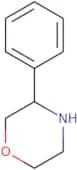
CAS:<p>Versatile small molecule scaffold</p>Formula:C14H19NOPurity:Min. 95%Molecular weight:217.31 g/mol3-Phenyl-morpholine
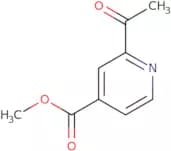
CAS:<p>3-Phenyl-morpholine is a functionalized aliphatic amine with three stereocenters. It is used as a substrate for the synthesis of cyclic and acyclic compounds. 3-Phenyl-morpholine can be used to functionalize amines, oximes, and other substrates with excellent diastereoselectivity and operational efficiency.</p>Formula:C10H13NOPurity:Min. 95%Molecular weight:163.22 g/molMethyl 2-Acetylpyridine-4-carboxylate
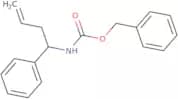
CAS:<p>Methyl 2-acetylpyridine-4-carboxylate is a photocurrent generating compound that can be used in organic solar cells. It has been shown to enhance the performance of organic solar cells by acting as a bidentate ligand for ruthenium complexes. Methyl 2-acetylpyridine-4-carboxylate is synthesized from the diacid, acetylene and formaldehyde. It can be used as an electron acceptor in coordination chemistry involving anthracene to produce a Ru(II) complex. The electron donor is usually a metal ion such as ruthenium, which can be activated by light or heat to generate electrons.</p>Formula:C9H9NO3Purity:Min. 95%Molecular weight:179.17 g/molBenzyl N-(1-phenylbut-3-en-1-yl)carbamate
CAS:Versatile small molecule scaffoldFormula:C18H19NO2Purity:Min. 95%Molecular weight:281.3 g/mol5-{[(tert-Butoxy)carbonyl]amino}-1H-indole-2-carboxylic acid
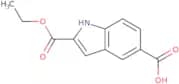
CAS:<p>Versatile small molecule scaffold</p>Formula:C14H16N2O4Purity:Min. 95%Molecular weight:276.29 g/mol2-(Ethoxycarbonyl)-1H-indole-5-carboxylic acid
CAS:<p>Versatile small molecule scaffold</p>Formula:C12H11NO4Purity:Min. 95%Molecular weight:233.22 g/moltert-Butyl 3-(hydroxymethyl)bicyclo[1.1.1]pentane-1-carboxylate
CAS:<p>Versatile small molecule scaffold</p>Formula:C11H18O3Purity:Min. 95%Molecular weight:198.26 g/moltert-Butyl 3-(bromomethyl)bicyclo[1.1.1]pentane-1-carboxylate
CAS:<p>Versatile small molecule scaffold</p>Formula:C11H17BrO2Purity:Min. 95%Molecular weight:261.15 g/mol5-({[(tert-Butoxy)carbonyl]amino}methyl)-1,2-oxazole-3-carboxylic acid
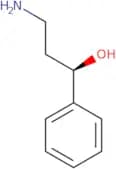
CAS:<p>Versatile small molecule scaffold</p>Formula:C10H14N2O5Purity:Min. 95%Molecular weight:242.23 g/mol(R)-3-Amino-1-phenyl-propan-1-ol
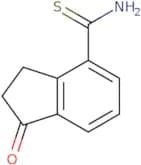
CAS:<p>(R)-3-Amino-1-phenyl-propan-1-ol is an antidepressant drug that belongs to the class of chiral, enantioselective reductants. It has been shown to have a high enantioselectivity for the reduction of nitroarenes and sulfides. The catalyzed reduction of these substrates is based on the formation of an intermediate sulfide complex with borane, which is then reduced by (R)-3-Amino-1-phenyl-propan-1-ol. The method described here can be used for the synthesis of alcohols and nitriles from optically pure starting materials.</p>Formula:C9H13NOPurity:Min. 95%Molecular weight:151.21 g/mol1-oxo-2,3-dihydro-1H-indene-4-carbothioamide
CAS:Versatile small molecule scaffoldFormula:C10H9NOSPurity:Min. 95%Molecular weight:191.25 g/molMethyl 2-[1-(4-methylbenzenesulfonyl)-1H-pyrrol-3-yl]acetate
CAS:<p>Versatile small molecule scaffold</p>Formula:C14H15NO4SPurity:Min. 95%Molecular weight:293.3 g/mol[(1S)-1-cyclohexylethyl](methyl)amine
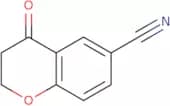
CAS:<p>Versatile small molecule scaffold</p>Formula:C9H19NPurity:Min. 95%Molecular weight:141.25 g/mol4-Oxochromane-6-carbonitrile
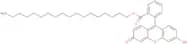
CAS:<p>Versatile small molecule scaffold</p>Formula:C10H7NO2Purity:Min. 95%Molecular weight:173.17 g/molChromoionophore xi
CAS:<p>Chromoionophore xi (CI) is a monoclonal antibody that binds to the CCR5 receptor on the surface of HIV-1. The binding of CI to the receptor inhibits HIV-1 entry into CD4+ cells, leading to a decrease in viral load. CI has an effective dose of 0.8 μg/mL and inhibits HIV-1 infection by 50% at 1 μg/mL. Chromoionophore xi has been shown to be effective in inhibiting HIV-1 infection in vitro and in vivo in mice.</p>Formula:C38H48O5Purity:Min. 95%Molecular weight:584.8 g/mol(E)-3-(3-(Benzyloxy)phenyl)acrylic acid
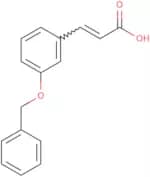
CAS:<p>(E)-3-(3-(Benzyloxy)phenyl)acrylic acid is a chiral, synthetic acrylic acid that is used in the synthesis of enantiomerically pure (2S,4R)-tapentadol. This compound is prepared by an enantioselective alkylation of (2S,4R)-2-aminobenzoic acid with benzyl bromide. The preparation of this compound was achieved by a chromatographic method and the purified product was obtained as a white solid. The purity of the product was confirmed by HPLC analysis and mass spectrometry.</p>Formula:C16H14O3Purity:Min. 95%Molecular weight:254.28 g/mol7-Chloro-5-methylpyrazolo[1,5-a]pyrimidine-3-carbonitrile
CAS:<p>Versatile small molecule scaffold</p>Formula:C8H5ClN4Purity:Min. 95%Molecular weight:192.6 g/mol7-Oxo-4H,7H-pyrazolo[1,5-a]pyrimidine-3-carbonitrile
CAS:<p>Versatile small molecule scaffold</p>Formula:C7H4N4OPurity:Min. 95%Molecular weight:160.13 g/mol1-(4-Fluoro-phenyl)-1H-pyrazole-4-carboxylic acid
CAS:Versatile small molecule scaffoldFormula:C10H7FN2O2Purity:Min. 95%Molecular weight:206.17 g/mol
![6-Chloro-2-methyl-imidazo[1,2-a]pyridine-3-carboxylic acid](/_next/image/?url=https%3A%2Fstatic.cymitquimica.com%2Fproducts%2F3D%2Fthumb-webp%2FNFA64296.webp&w=3840&q=75)

![3-Benzyl-8-azabicyclo[3.2.1]octan-3-ol](/_next/image/?url=https%3A%2Fstatic.cymitquimica.com%2Fproducts%2F3D%2Fthumb-webp%2FNFA66053.webp&w=3840&q=75)
![5-{[(tert-Butoxy)carbonyl]amino}-1H-indole-2-carboxylic acid](/_next/image/?url=https%3A%2Fstatic.cymitquimica.com%2Fproducts%2F3D%2Fthumb-webp%2FNFA73081.webp&w=3840&q=75)
![tert-Butyl 3-(hydroxymethyl)bicyclo[1.1.1]pentane-1-carboxylate](/_next/image/?url=https%3A%2Fstatic.cymitquimica.com%2Fproducts%2F3D%2Fthumb-webp%2FNFA73232.webp&w=3840&q=75)
![tert-Butyl 3-(bromomethyl)bicyclo[1.1.1]pentane-1-carboxylate](/_next/image/?url=https%3A%2Fstatic.cymitquimica.com%2Fproducts%2F3D%2Fthumb-webp%2FNFA73234.webp&w=3840&q=75)
![5-({[(tert-Butoxy)carbonyl]amino}methyl)-1,2-oxazole-3-carboxylic acid](/_next/image/?url=https%3A%2Fstatic.cymitquimica.com%2Fproducts%2F3D%2Fthumb-webp%2FNFA74219.webp&w=3840&q=75)
![Methyl 2-[1-(4-methylbenzenesulfonyl)-1H-pyrrol-3-yl]acetate](/_next/image/?url=https%3A%2Fstatic.cymitquimica.com%2Fproducts%2F3D%2Fthumb-webp%2FNFA77998.webp&w=3840&q=75)
amine](/_next/image/?url=https%3A%2Fstatic.cymitquimica.com%2Fproducts%2F3D%2Fthumb-webp%2FNFA78557.webp&w=3840&q=75)
![7-Chloro-5-methylpyrazolo[1,5-a]pyrimidine-3-carbonitrile](/_next/image/?url=https%3A%2Fstatic.cymitquimica.com%2Fproducts%2F3D%2Fthumb-webp%2FNFA90434.webp&w=3840&q=75)
![7-Oxo-4H,7H-pyrazolo[1,5-a]pyrimidine-3-carbonitrile](/_next/image/?url=https%3A%2Fstatic.cymitquimica.com%2Fproducts%2F3D%2Fthumb-webp%2FNFA90448.webp&w=3840&q=75)