Building Blocks
This section contains fundamental products for the synthesis of organic and biological compounds. Building blocks are the essential starting materials used to construct complex molecules through various chemical reactions. They play a critical role in drug discovery, material science, and chemical research. At CymitQuimica, we offer a diverse range of high-quality building blocks to support your innovative research and industrial projects, ensuring you have the essential components for successful synthesis.
Subcategories of "Building Blocks"
- Boronic Acids & Boronic Acid Derivatives(5,778 products)
- Chiral Building Blocks(1,242 products)
- Hydrocarbon Building Blocks(6,098 products)
- Organic Building Blocks(61,098 products)
Found 199594 products of "Building Blocks"
Sort by
Purity (%)
0
100
|
0
|
50
|
90
|
95
|
100
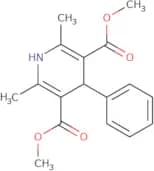
Dimethyl 2,6-dimethyl-4-phenyl-1,4-dihydropyridine-3,5-dicarboxylate
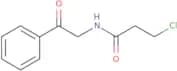
CAS:<p>Dimethyl 2,6-dimethyl-4-phenyl-1,4-dihydropyridine-3,5-dicarboxylate is a radioligand that binds to calcium channels. It is used as a radioligand in binding studies to determine the affinity of various drugs for specific types of calcium channels. Dimethyl 2,6-dimethyl-4-phenyl-1,4-dihydropyridine 3,5 dicarboxylate has been shown to bind specifically to a particular class of calcium channel antagonists (i.e., monosubstituted) and can be used as a pharmacological probe for the study of these compounds.</p>Formula:C17H19NO4Purity:Min. 95%Molecular weight:301.34 g/mol3-Chloro-N-(2-oxo-2-phenylethyl)propanamide
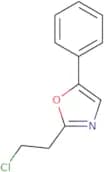
CAS:<p>Versatile small molecule scaffold</p>Formula:C11H12ClNO2Purity:Min. 95%Molecular weight:225.67 g/mol2-(2-Chloroethyl)-5-phenyl-1,3-oxazole
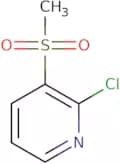
CAS:Versatile small molecule scaffoldFormula:C11H10ClNOPurity:Min. 95%Molecular weight:207.65 g/mol2-chloro-3-(methylsulfonyl)pyridine
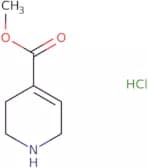
CAS:<p>Versatile small molecule scaffold</p>Formula:C6H6ClNO2SPurity:Min. 95%Molecular weight:191.63 g/molMethyl 1,2,3,6-tetrahydropyridine-4-carboxylate hydrochloride
CAS:<p>Versatile small molecule scaffold</p>Formula:C7H11NO2·HClPurity:Min. 95%Molecular weight:177.63 g/mol1-[(tert-butoxy)carbonyl]-1,2,3,6-tetrahydropyridine-4-carboxylic acid
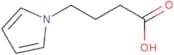
CAS:<p>Versatile small molecule scaffold</p>Formula:C11H17NO4Purity:Min. 95%Molecular weight:227.3 g/mol4-(1H-Pyrrol-1-yl)butanoic acid
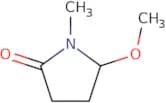
CAS:<p>4-(1H-Pyrrol-1-yl)butanoic acid is a biotinylated chemical compound that can be used as a labeling agent for analytical chemistry. The compound has been used to detect the presence of polygonatine, a neurotoxin that affects the central nervous system. 4-(1H-Pyrrol-1-yl)butanoic acid also has been used in conjunction with acridone and an intercalator to form a fluorescent sensor for DNA hybridization. The compound is also used in virus detection because of its ability to bind to viral dna and inhibit protein synthesis. 4-(1H-Pyrrol-1-yl)butanoic acid is an acetylation inhibitor, which means it prevents the formation of acetyl groups from acetate. This inhibition prevents the conversion of pyruvate into lactic acid, which is required for glycolysis in cells.</p>Formula:C8H11NO2Purity:Min. 95%Molecular weight:153.18 g/mol5-Methoxy-1-methylpyrrolidin-2-one
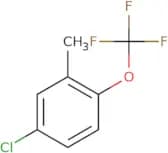
CAS:<p>Versatile small molecule scaffold</p>Formula:C6H11NO2Purity:Min. 95%Molecular weight:129.16 g/mol4-Chloro-2-methyl-1-(trifluoromethoxy)benzene
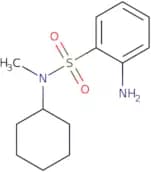
CAS:<p>Versatile small molecule scaffold</p>Formula:C8H6ClF3OPurity:Min. 95%Molecular weight:210.58 g/molo-Aminobenzene sulfon-N-methyl cyclohexylamide
CAS:Versatile small molecule scaffoldFormula:C13H20N2O2SPurity:Min. 95%Molecular weight:268.38 g/mol[(5-Chlorothiophen-2-yl)methyl](methyl)amine
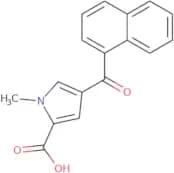
CAS:<p>Versatile small molecule scaffold</p>Formula:C6H8ClNSPurity:Min. 95%Molecular weight:161.65 g/mol1-Methyl-4-(naphthalene-1-carbonyl)-1H-pyrrole-2-carboxylic acid
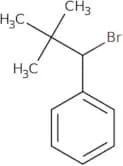
CAS:Controlled Product<p>1-Methyl-4-(naphthalene-1-carbonyl)-1H-pyrrole-2-carboxylic acid is a prodrug that is hydrolyzed in vivo to its active form, 1-methyl-4-(naphthalene-1-ylcarbonyl)-1H-pyrrole 2,3 dicarboxylic acid. The active compound has been shown to bind to the hydroxyl group of an amino acid sequence and inhibit the activity of enzymes that require this group for activity. It also has a high solubility in organic solvents and can be used as a diagnostic agent for nitrate reduction.</p>Formula:C17H13NO3Purity:Min. 95%Molecular weight:279.29 g/mol(1-Bromo-2,2-dimethylpropyl)benzene
CAS:<p>Versatile small molecule scaffold</p>Formula:C11H15BrPurity:Min. 95%Molecular weight:227.14 g/mol2-[3-(6-Methylpyridin-2-yl)propoxy]ethan-1-ol
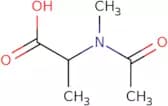
CAS:<p>Versatile small molecule scaffold</p>Formula:C11H17NO2Purity:Min. 95%Molecular weight:195.26 g/mol2-(N-Methylacetamido)propanoic acid
CAS:<p>Versatile small molecule scaffold</p>Formula:C6H11NO3Purity:Min. 95%Molecular weight:145.16 g/mol6-[Methyl(phenyl)amino]pyridine-3-carboxylic acid
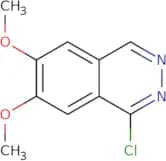
CAS:<p>Versatile small molecule scaffold</p>Formula:C13H12N2O2Purity:Min. 95%Molecular weight:228.25 g/mol1-Chloro-6,7-dimethoxyphthalazine
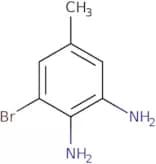
CAS:<p>Versatile small molecule scaffold</p>Formula:C10H9ClN2O2Purity:Min. 95%Molecular weight:224.64 g/mol3-Bromo-5-methyl-benzene-1,2-diamine
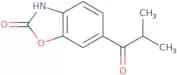
CAS:<p>Versatile small molecule scaffold</p>Formula:C7H9BrN2Purity:Min. 95%Molecular weight:201.06 g/mol6-(2-Methylpropanoyl)-2,3-dihydro-1,3-benzoxazol-2-one
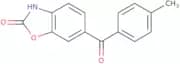
CAS:<p>Versatile small molecule scaffold</p>Formula:C11H11NO3Purity:Min. 95%Molecular weight:205.21 g/mol6-(4-Methylbenzoyl)-2,3-dihydro-1,3-benzoxazol-2-one
CAS:<p>Versatile small molecule scaffold</p>Formula:C15H11NO3Purity:Min. 95%Molecular weight:253.25 g/mol

![1-[(tert-butoxy)carbonyl]-1,2,3,6-tetrahydropyridine-4-carboxylic acid](/_next/image/?url=https%3A%2Fstatic.cymitquimica.com%2Fproducts%2F3D%2Fthumb-webp%2FVCA68484.webp&w=3840&q=75)
amine](/_next/image/?url=https%3A%2Fstatic.cymitquimica.com%2Fproducts%2F3D%2Fthumb-webp%2FVCA69637.webp&w=3840&q=75)
![2-[3-(6-Methylpyridin-2-yl)propoxy]ethan-1-ol](/_next/image/?url=https%3A%2Fstatic.cymitquimica.com%2Fproducts%2F3D%2Fthumb-webp%2FVCA71517.webp&w=3840&q=75)
![6-[Methyl(phenyl)amino]pyridine-3-carboxylic acid](/_next/image/?url=https%3A%2Fstatic.cymitquimica.com%2Fproducts%2F3D%2Fthumb-webp%2FVCA72013.webp&w=3840&q=75)