Building Blocks
This section contains fundamental products for the synthesis of organic and biological compounds. Building blocks are the essential starting materials used to construct complex molecules through various chemical reactions. They play a critical role in drug discovery, material science, and chemical research. At CymitQuimica, we offer a diverse range of high-quality building blocks to support your innovative research and industrial projects, ensuring you have the essential components for successful synthesis.
Subcategories of "Building Blocks"
- Boronic Acids & Boronic Acid Derivatives(5,756 products)
- Chiral Building Blocks(1,242 products)
- Hydrocarbon Building Blocks(6,095 products)
- Organic Building Blocks(61,055 products)
Found 199650 products of "Building Blocks"
Sort by
Purity (%)
0
100
|
0
|
50
|
90
|
95
|
100
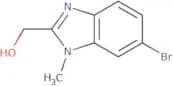
(6-Bromo-1-methyl-1H-1,3-benzodiazol-2-yl)methanol
CAS:Controlled Product<p>Versatile small molecule scaffold</p>Formula:C9H9BrN2OPurity:Min. 95%Molecular weight:241.08 g/mol{[4-Fluoro-3-(trifluoromethyl)phenyl]methyl}(methyl)amine
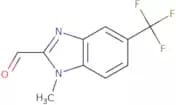
CAS:<p>Versatile small molecule scaffold</p>Formula:C9H9F4NPurity:Min. 95%Molecular weight:207.17 g/mol1-Methyl-5-(trifluoromethyl)-1H-1,3-benzodiazole-2-carbaldehyde
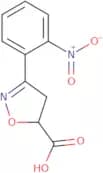
CAS:<p>Versatile small molecule scaffold</p>Formula:C10H7N2OF3Purity:Min. 95%Molecular weight:228.17 g/mol3-(2-Nitrophenyl)-4,5-dihydro-1,2-oxazole-5-carboxylic acid
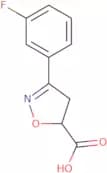
CAS:<p>Versatile small molecule scaffold</p>Formula:C10H8N2O5Purity:Min. 95%Molecular weight:236.18 g/mol3-(3-Fluorophenyl)-4,5-dihydro-1,2-oxazole-5-carboxylic acid
CAS:Controlled Product<p>3-(3-Fluorophenyl)-4,5-dihydro-1,2-oxazole-5-carboxylic acid (3FPO) is a small molecule that has been shown to inhibit the antibody response. 3FPO binds to a wide range of proteins, including ion channels and receptors. It has also been shown to bind to peptides, which are short chains of amino acids. 3FPO is soluble in water and can be stored at -20 degrees Celsius. 3FPO is an important research tool for studying protein interactions and receptor activation.</p>Formula:C10H8FNO3Purity:Min. 95%Molecular weight:209.17 g/moltert-Butyl (2R)-2-(2-chloroacetamido)-3-phenylpropanoate
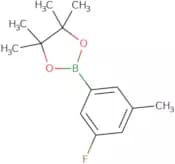
CAS:<p>Versatile small molecule scaffold</p>Formula:C15H20ClNO3Purity:Min. 95%Molecular weight:297.78 g/mol3-Fluoro-5-methylbenzeneboronic acid pinacol ester
CAS:<p>Versatile small molecule scaffold</p>Formula:C13H18BFO2Purity:Min. 95%Molecular weight:236.09 g/molN-(4-Aminophenyl)-3,3,3-trifluoropropanamide hydrochloride
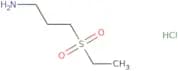
CAS:<p>Versatile small molecule scaffold</p>Formula:C9H10ClF3N2OPurity:Min. 95%Molecular weight:254.63 g/mol3-(Ethanesulfonyl)propan-1-amine hydrochloride
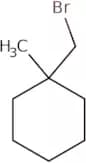
CAS:<p>Versatile small molecule scaffold</p>Formula:C5H14ClNO2SPurity:Min. 95%Molecular weight:187.69 g/mol1-(Bromomethyl)-1-methylcyclohexane
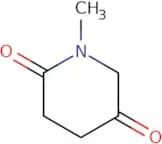
CAS:<p>Versatile small molecule scaffold</p>Formula:C8H15BrPurity:Min. 95%Molecular weight:191.11 g/mol1-Methylpiperidine-2,5-dione
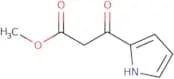
CAS:<p>Versatile small molecule scaffold</p>Formula:C6H9NO2Purity:Min. 95%Molecular weight:127.14 g/molMethyl 3-oxo-3-(1H-pyrrol-2-yl)propanoate
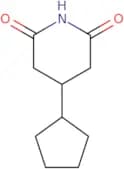
CAS:<p>Versatile small molecule scaffold</p>Formula:C8H9NO3Purity:Min. 95%Molecular weight:167.2 g/mol4-Cyclopentylpiperidine-2,6-dione
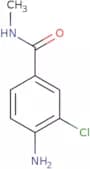
CAS:<p>Versatile small molecule scaffold</p>Formula:C10H15NO2Purity:Min. 95%Molecular weight:181.23 g/mol4-Amino-3-chloro-N-methylbenzamide
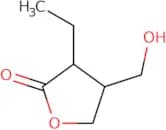
CAS:<p>Versatile small molecule scaffold</p>Formula:C8H9ClN2OPurity:Min. 95%Molecular weight:184.62 g/mol3-Ethyl-4-(hydroxymethyl)oxolan-2-ones
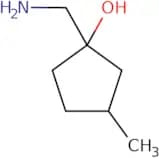
CAS:<p>Versatile small molecule scaffold</p>Formula:C7H12O3Purity:Min. 95%Molecular weight:144.2 g/mol1-(Aminomethyl)-3-methylcyclopentan-1-ols
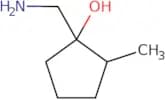
CAS:<p>Versatile small molecule scaffold</p>Formula:C7H15NOPurity:Min. 95%Molecular weight:129.2 g/mol1-(Aminomethyl)-2-methylcyclopentan-1-ol
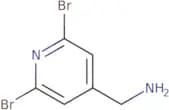
CAS:<p>Versatile small molecule scaffold</p>Formula:C7H15NOPurity:Min. 95%Molecular weight:129.2 g/mol(2,6-Dibromopyridin-4-yl)methanamine
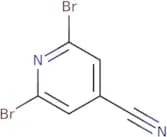
CAS:<p>Versatile small molecule scaffold</p>Formula:C6H6Br2N2Purity:Min. 95%Molecular weight:265.93 g/mol2,6-dibromopyridine-4-carbonitrile
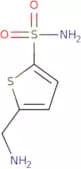
CAS:<p>2,6-Dibromopyridine-4-carbonitrile (2,6-DBPC) is a chemical compound with two bromine atoms and one carbon atom on each of the two pyridine rings. The bromine atoms are often used to form a probe for hydrostatic pressure and as a ligand in organic chemistry. 2,6-DBPC is also used as a luminescent material, which can be used to measure the hydrostatic pressure that is exerted on it. This chemical has been found to have excellent photophysical properties such as high quantum yield and good responsiveness. It also has excellent luminescence properties, such as high emission efficiency and long lifetime. The molecular structure of 2,6-DBPC is similar to that of other compounds with lanthanide ions in their structures. These include terbium(III) tris(2,6-dibromopyridine)chloride (Tb3+), euro</p>Formula:C6H2Br2N2Purity:Min. 95%Molecular weight:261.9 g/mol5-(Aminomethyl)thiophene-2-sulfonamide
CAS:<p>5-(Aminomethyl)thiophene-2-sulfonamide is a potent inhibitor of carbonic anhydrase. It is used as a research tool to study the active site, affinity and isoenzymes of carbonic anhydrase. The inhibition of this enzyme by 5-(Aminomethyl)thiophene-2-sulfonamide leads to a decrease in the rate of reaction between water and carbon dioxide, resulting in decreased acidity in tissues. The molecular modelling parameters for this drug are C=0.25, H=0.75, N=1.00, Cl=0.50, O=1.00 and S=1.00. These values correspond to the number of atoms present in the molecule and their respective charges and masses on the periodic table (C: 12+, H: 1+, N: 14+, Cl: 35+, O: 16+, S: 32+).</p>Formula:C5H8N2O2S2Purity:Min. 95%Molecular weight:192.26 g/mol

![{[4-Fluoro-3-(trifluoromethyl)phenyl]methyl}(methyl)amine](/_next/image/?url=https%3A%2Fstatic.cymitquimica.com%2Fproducts%2F3D%2Fthumb-webp%2FINB86361.webp&w=3840&q=75)