Building Blocks
This section contains fundamental products for the synthesis of organic and biological compounds. Building blocks are the essential starting materials used to construct complex molecules through various chemical reactions. They play a critical role in drug discovery, material science, and chemical research. At CymitQuimica, we offer a diverse range of high-quality building blocks to support your innovative research and industrial projects, ensuring you have the essential components for successful synthesis.
Subcategories of "Building Blocks"
- Boronic Acids & Boronic Acid Derivatives(5,756 products)
- Chiral Building Blocks(1,242 products)
- Hydrocarbon Building Blocks(6,095 products)
- Organic Building Blocks(61,051 products)
Found 199813 products of "Building Blocks"
Sort by
Purity (%)
0
100
|
0
|
50
|
90
|
95
|
100
N-(7-Nitro-3,4-dihydro-2H-chromen-6-yl)acetamide
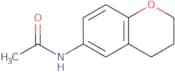
CAS:<p>Versatile small molecule scaffold</p>Formula:C11H12N2O4Purity:Min. 95%Molecular weight:236.22 g/molN-(3,4-Dihydro-2H-1-benzopyran-6-yl)acetamide
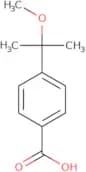
CAS:<p>Versatile small molecule scaffold</p>Formula:C11H13NO2Purity:Min. 95%Molecular weight:191.23 g/mol4-(2-Methoxypropan-2-yl)benzoic acid
CAS:<p>Versatile small molecule scaffold</p>Formula:C11H14O3Purity:Min. 95%Molecular weight:194.23 g/mol2-Benzyl-1,2,3,4-tetrahydroquinoline
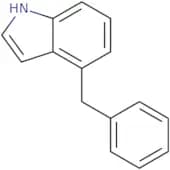
CAS:<p>Versatile small molecule scaffold</p>Formula:C16H17NPurity:Min. 95%Molecular weight:223.31 g/mol4-Benzyl-1H-indole
CAS:<p>4-Benzyl-1H-indole is a chemical compound that belongs to the class of dihydroisoquinolines. This drug has shown anti-HIV activity in vitro and in vivo. It has been tested for its ability to inhibit HIV replication and protein–protein interaction with human immunodeficiency virus type 1 (HIV-1) proteins. 4-Benzyl-1H-indole inhibits the growth of HIV by binding to the gp41 coiled coil, thereby preventing the conformational change necessary for fusion with host cells. The clinical use of this compound is limited due to its low solubility in water and poor oral bioavailability.</p>Formula:C15H13NPurity:Min. 95%Molecular weight:207.27 g/mol1H,4H,5H,6H,7H,8H-Pyrrolo[3,2-c]azepine
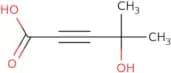
CAS:<p>1H,4H,5H,6H,7H,8H-Pyrrolo[3,2-c]azepine is a tranquilizer that is chemically related to piperazine. It has no analgesic properties and is used as a tranquilizer.</p>Formula:C8H12N2Purity:Min. 95%Molecular weight:136.19 g/mol4-Hydroxy-4-methyl-pent-2-ynoic acid
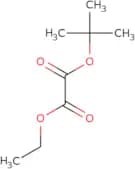
CAS:<p>4-Hydroxy-4-methyl-pent-2-ynoic acid is an organic compound with the formula CH(CH)COH. It is a methyl ester of propiolic acid. 4-Hydroxy-4-methyl-pent-2-ynoic acid can be synthesized from propiolic acid by reacting it with copper chloride and iodides in the presence of a catalytic amount of concentrated sulfuric acid. This reaction affords the methyl ester in high yield. The synthesis of 4-hydroxypropionic acid is analogous to that of acrylic acid, which also yields a methyl ester on chlorination. 4HMP has been used as an intermediate in the production of vitamin A by carbonylation, and as a precursor to propionic acid and its derivatives. 4HMP can also be used as an intermediate for making other chemicals such as dyes, pharmaceuticals, and polymers.</p>Formula:C6H8O3Purity:Min. 95%Molecular weight:128.13 g/molOxalic acid tert-butyl ester ethyl ester
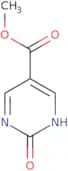
CAS:Oxalic acid tert-butyl ester ethyl ester is an organic compound that is a byproduct of the production of methyl acetate. It has been shown to have antitumor and anti-inflammatory effects in animal studies. Oxalic acid tert-butyl ester ethyl ester contains a 7-chloro group, which is also present in deoxyharringtonine. The latter drug has been used to treat tumours and inflammatory conditions. In addition, oxalic acid tert-butyl ester ethyl ester can be converted into cephalotaxine (a natural alkaloid), which has been shown to be effective against cancer cells and inflammation.Formula:C8H14O4Purity:Min. 95%Molecular weight:174.2 g/molMethyl 2-oxo-1,2-dihydropyrimidine-5-carboxylate
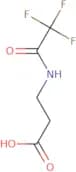
CAS:<p>Versatile small molecule scaffold</p>Formula:C6H6N2O3Purity:Min. 95%Molecular weight:154.12 g/mol3-(Trifluoroacetamido)propanoic acid
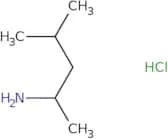
CAS:<p>Versatile small molecule scaffold</p>Formula:C5H6F3NO3Purity:Min. 95%Molecular weight:185.1 g/mol(2R)-4-Methylpentan-2-amine hydrochloride
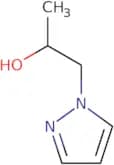
CAS:Controlled Product<p>Versatile small molecule scaffold</p>Formula:C6H16ClNPurity:Min. 95%Molecular weight:137.65 g/mol1-(1H-Pyrazol-1-yl)propan-2-ol
CAS:<p>Versatile small molecule scaffold</p>Formula:C6H10N2OPurity:Min. 95%Molecular weight:126.16 g/mol2-[(2,4-Dimethylphenyl)sulfanyl]acetic acid
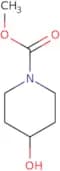
CAS:<p>Versatile small molecule scaffold</p>Formula:C10H12O2SPurity:Min. 95%Molecular weight:196.27 g/molMethyl 4-hydroxypiperidine-1-carboxyl
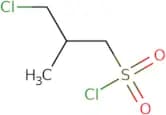
CAS:Versatile small molecule scaffoldFormula:C7H13NO3Purity:Min. 95%Molecular weight:159.18 g/mol3-Chloro-2-methylpropane-1-sulfonyl chloride
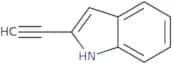
CAS:<p>Versatile small molecule scaffold</p>Formula:C4H8Cl2O2SPurity:Min. 95%Molecular weight:191.08 g/mol2-Ethynyl-1H-indole
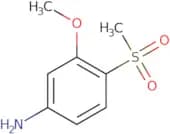
CAS:<p>2-Ethynyl-1H-indole is a synthetic nucleoside analog of the anti-viral drug acyclovir. It is an activated prodrug that is hydrolyzed by esterases to its active form, which inhibits viral polymerase and thus prevents the synthesis of new viral DNA. 2-Ethynyl-1H-indole also has been shown to have inhibitory effects on chronic bronchitis and emphysema, as well as demonstrating cytotoxic activity in vitro. The enantiomers of 2-ethynyl-1H indole have different pharmacological activities. The (R)-enantiomer is more potent than the (S)-enantiomer in inhibiting erythrocyte coagulation and platelet aggregation in vitro.</p>Formula:C10H7NPurity:Min. 95%Molecular weight:141.17 g/mol4-Methanesulfonyl-3-methoxyaniline
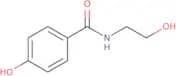
CAS:<p>Versatile small molecule scaffold</p>Formula:C8H11NO3SPurity:Min. 95%Molecular weight:201.25 g/mol4-Hydroxy-N-(2-hydroxyethyl)benzamide
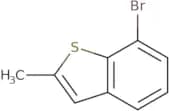
CAS:<p>4-Hydroxy-N-(2-hydroxyethyl)benzamide (4OHEBA) is a natural product that belongs to the class of phenolic compounds. It is found in macroalgae and has been shown to have anti-inflammatory properties, which may be due to its ability to inhibit prostaglandin synthesis. 4OHEBA has also been shown to have chemical diversity and studies show that it can be used in preservative systems.</p>Formula:C9H11NO3Purity:Min. 95%Molecular weight:181.19 g/mol7-Bromo-2-methyl-1-benzothiophene
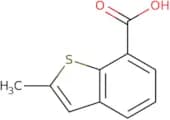
CAS:<p>Versatile small molecule scaffold</p>Formula:C9H7BrSPurity:Min. 95%Molecular weight:227.12 g/mol2-Methyl-1-benzothiophene-7-carboxylic acid
CAS:Versatile small molecule scaffoldFormula:C10H8O2SPurity:Min. 95%Molecular weight:192.24 g/mol



![1H,4H,5H,6H,7H,8H-Pyrrolo[3,2-c]azepine](/_next/image/?url=https%3A%2Fstatic.cymitquimica.com%2Fproducts%2F3D%2Fthumb-webp%2FACA61514.webp&w=3840&q=75)
![2-[(2,4-Dimethylphenyl)sulfanyl]acetic acid](/_next/image/?url=https%3A%2Fstatic.cymitquimica.com%2Fproducts%2F3D%2Fthumb-webp%2FADA24312.webp&w=3840&q=75)