Building Blocks
This section contains fundamental products for the synthesis of organic and biological compounds. Building blocks are the essential starting materials used to construct complex molecules through various chemical reactions. They play a critical role in drug discovery, material science, and chemical research. At CymitQuimica, we offer a diverse range of high-quality building blocks to support your innovative research and industrial projects, ensuring you have the essential components for successful synthesis.
Subcategories of "Building Blocks"
- Boronic Acids & Boronic Acid Derivatives(5,756 products)
- Chiral Building Blocks(1,242 products)
- Hydrocarbon Building Blocks(6,095 products)
- Organic Building Blocks(61,055 products)
Found 199650 products of "Building Blocks"
Sort by
Purity (%)
0
100
|
0
|
50
|
90
|
95
|
100
2-Ethyl-4H,5H,6H,7H-pyrazolo[1,5-a]pyrimidine-5,7-dione
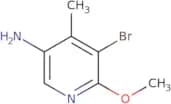
CAS:<p>Versatile small molecule scaffold</p>Formula:C8H9N3O2Purity:Min. 95%Molecular weight:179.18 g/mol5-Bromo-6-methoxy-4-methylpyridin-3-amine
CAS:<p>Versatile small molecule scaffold</p>Formula:C7H9BrN2OPurity:Min. 95%Molecular weight:217.06 g/mol6,6,8,8-Tetramethyl-1-azaspiro[3.5]nonane
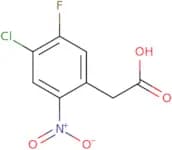
CAS:<p>Versatile small molecule scaffold</p>Formula:C12H23NPurity:Min. 95%Molecular weight:181.32 g/mol2-(4-Chloro-5-fluoro-2-nitrophenyl)acetic acid
CAS:<p>Versatile small molecule scaffold</p>Formula:C8H5ClFNO4Purity:Min. 95%Molecular weight:233.58 g/mol[3-Chloro-5-(ethanesulfonyl)phenyl]methanamine
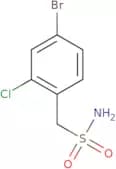
CAS:<p>Versatile small molecule scaffold</p>Formula:C9H12ClNO2SPurity:Min. 95%Molecular weight:233.72 g/mol(4-Bromo-2-chlorophenyl)methanesulfonamide
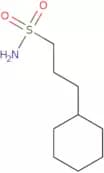
CAS:<p>Versatile small molecule scaffold</p>Formula:C7H7BrClNO2SPurity:Min. 95%Molecular weight:284.56 g/mol3-Cyclohexylpropane-1-sulfonamide
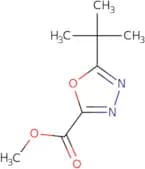
CAS:<p>Versatile small molecule scaffold</p>Formula:C9H19NO2SPurity:Min. 95%Molecular weight:205.32 g/molMethyl 5-tert-butyl-1,3,4-oxadiazole-2-carboxylate
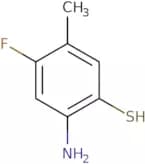
CAS:<p>Versatile small molecule scaffold</p>Formula:C8H12N2O3Purity:Min. 95%Molecular weight:184.19 g/mol2-Amino-4-fluoro-5-methylbenzenethiol
CAS:<p>Versatile small molecule scaffold</p>Formula:C7H8FNSPurity:Min. 95%Molecular weight:157.21 g/mol2-{Bicyclo[2.2.1]heptan-2-yl}-3,4-dihydropyrimidin-4-one
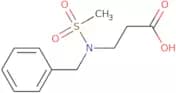
CAS:<p>Versatile small molecule scaffold</p>Formula:C11H14N2OPurity:Min. 95%Molecular weight:190.24 g/mol3-(N-Benzylmethanesulfonamido)propanoic acid
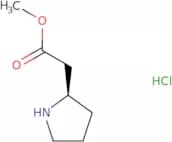
CAS:<p>Versatile small molecule scaffold</p>Formula:C11H15NO4SPurity:Min. 95%Molecular weight:257.31 g/molMethyl (R)-2-Pyrrolidineacetate Hydrochloride
CAS:<p>Versatile small molecule scaffold</p>Formula:C7H13NO2·HClPurity:Min. 95%Molecular weight:143.18 g/molrac-(1R,3R,5S)-8-Oxobicyclo[3.2.1]octane-3-carboxylic acid, exo
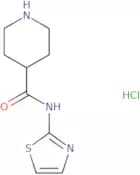
CAS:<p>Versatile small molecule scaffold</p>Formula:C9H12O3Purity:Min. 95%Molecular weight:168.19 g/molN-(1,3-Thiazol-2-yl)piperidine-4-carboxamide hydrochloride
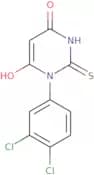
CAS:<p>Versatile small molecule scaffold</p>Formula:C9H14ClN3OSPurity:Min. 95%Molecular weight:247.75 g/mol1-(3,4-Dichlorophenyl)-2-sulfanylidene-1,3-diazinane-4,6-dione
CAS:<p>Versatile small molecule scaffold</p>Formula:C10H6Cl2N2O2SPurity:Min. 95%Molecular weight:289.14 g/mol2-Bromo-4-[(2-chlorobenzyl)oxy]-5-methoxybenzaldehyde
CAS:<p>Versatile small molecule scaffold</p>Formula:C15H12BrClO3Purity:Min. 95%Molecular weight:355.61 g/mol2-Bromo-4-[(2,4-dichlorobenzyl)oxy]-5-methoxybenzaldehyde
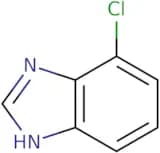
CAS:<p>Versatile small molecule scaffold</p>Formula:C15H11BrCl2O3Purity:Min. 95%Molecular weight:390.1 g/mol4-Chloro-1H-benzimidazole
CAS:<p>4-Chloro-1H-benzimidazole is a synthetic nucleophile that reacts with thioethers to form an ion pair. It can be used as a precursor for the synthesis of captopril, an antihypertensive drug. 4-Chloro-1H-benzimidazole is also known to react with carboxylic acids to form ion pairs and then dehydrate to form electrostatically bound products. The reaction mechanism starts with the nucleophilic attack of a proton on the carbonyl carbon atom in the carboxylic acid, forming an intermediate carbocation which reacts with a chloride ion. This intermediate then collapses and forms two products: one positively charged and one negatively charged. The positively charged product is a chloroformate salt while the negatively charged product is an alcohol.</p>Formula:C7H5ClN2Purity:Min. 95%Molecular weight:152.58 g/mol2-[Methyl(phenyl)carbamoyl]benzoic acid
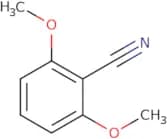
CAS:<p>Versatile small molecule scaffold</p>Formula:C15H13NO3Purity:Min. 95%Molecular weight:255.27 g/mol2,6-Dimethoxybenzonitrile
CAS:<p>2,6-Dimethoxybenzonitrile is an organic compound with the formula C8H9NO2. It is a white solid that is soluble in water and polar organic solvents. 2,6-Dimethoxybenzonitrile has three stereoisomers: Z, E and E. The Z form is usually obtained as a mixture of two diastereomers. The other two forms are obtained by reacting with methylamine or acetonitrile respectively. The photodecomposition of 2,6-dimethoxybenzonitrile starts with the generation of nitric oxide (NO) and then formation of quinones such as 9-acetylphenanthrene, which can react with triazolium to generate pyridinium. The reaction mechanism for this process involves bond cleavage followed by methylation reactions at the benzenes and cyanides.</p>Formula:C9H9NO2Purity:Min. 95%Molecular weight:163.17 g/mol
![2-Ethyl-4H,5H,6H,7H-pyrazolo[1,5-a]pyrimidine-5,7-dione](/_next/image/?url=https%3A%2Fstatic.cymitquimica.com%2Fproducts%2F3D%2Fthumb-webp%2FQMC85543.webp&w=3840&q=75)

![6,6,8,8-Tetramethyl-1-azaspiro[3.5]nonane](/_next/image/?url=https%3A%2Fstatic.cymitquimica.com%2Fproducts%2F3D%2Fthumb-webp%2FQMC92284.webp&w=3840&q=75)
![[3-Chloro-5-(ethanesulfonyl)phenyl]methanamine](/_next/image/?url=https%3A%2Fstatic.cymitquimica.com%2Fproducts%2F3D%2Fthumb-webp%2FQMC93559.webp&w=3840&q=75)
![2-{Bicyclo[2.2.1]heptan-2-yl}-3,4-dihydropyrimidin-4-one](/_next/image/?url=https%3A%2Fstatic.cymitquimica.com%2Fproducts%2F3D%2Fthumb-webp%2FQMC98158.webp&w=3840&q=75)
![rac-(1R,3R,5S)-8-Oxobicyclo[3.2.1]octane-3-carboxylic acid, exo](/_next/image/?url=https%3A%2Fstatic.cymitquimica.com%2Fproducts%2F3D%2Fthumb-webp%2FQNA16419.webp&w=3840&q=75)
![2-Bromo-4-[(2-chlorobenzyl)oxy]-5-methoxybenzaldehyde](/_next/image/?url=https%3A%2Fstatic.cymitquimica.com%2Fproducts%2F3D%2Fthumb-webp%2FQNA21655.webp&w=3840&q=75)
![2-Bromo-4-[(2,4-dichlorobenzyl)oxy]-5-methoxybenzaldehyde](/_next/image/?url=https%3A%2Fstatic.cymitquimica.com%2Fproducts%2F3D%2Fthumb-webp%2FQNA21656.webp&w=3840&q=75)
![2-[Methyl(phenyl)carbamoyl]benzoic acid](/_next/image/?url=https%3A%2Fstatic.cymitquimica.com%2Fproducts%2F3D%2Fthumb-webp%2FRAA93147.webp&w=3840&q=75)