Building Blocks
This section contains fundamental products for the synthesis of organic and biological compounds. Building blocks are the essential starting materials used to construct complex molecules through various chemical reactions. They play a critical role in drug discovery, material science, and chemical research. At CymitQuimica, we offer a diverse range of high-quality building blocks to support your innovative research and industrial projects, ensuring you have the essential components for successful synthesis.
Subcategories of "Building Blocks"
- Boronic Acids & Boronic Acid Derivatives(5,778 products)
- Chiral Building Blocks(1,242 products)
- Hydrocarbon Building Blocks(6,098 products)
- Organic Building Blocks(61,034 products)
Found 199601 products of "Building Blocks"
Sort by
Purity (%)
0
100
|
0
|
50
|
90
|
95
|
100
3-Chloro-N-[(furan-2-yl)methyl]aniline
CAS:<p>Versatile small molecule scaffold</p>Formula:C11H10ClNOPurity:Min. 95%Molecular weight:207.65 g/mol1-(4-Fluorophenyl)prop-2-en-1-one
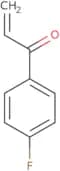
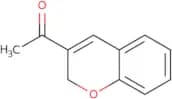
CAS:<p>1-(4-Fluorophenyl)prop-2-en-1-one is a chalcone that has been shown to have anticancer activity. It has been shown to stabilize the response elements of the transcriptional regulatory protein NF-κB and induce apoptosis in colorectal adenocarcinoma cells. This compound is also able to inhibit cancer growth by inhibiting tumor angiogenesis and metastasis. 1-(4-Fluorophenyl)prop-2-en-1-one binds to DNA, preventing transcription and replication, which leads to cell death. 1-(4-Fluorophenyl)prop-2-en-1-one has also been found to bind withaferin A, a molecule that has been shown to have anticancer activity.</p>Formula:C9H7FOPurity:Min. 95%Molecular weight:150.15 g/mol1-(2H-chromen-3-yl)ethanone
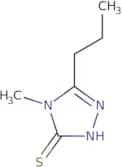
CAS:<p>Versatile small molecule scaffold</p>Formula:C11H10O2Purity:Min. 95%Molecular weight:174.19 g/mol4-Methyl-5-propyl-4H-1,2,4-triazole-3-thiol
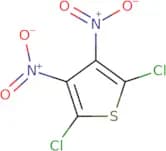
CAS:<p>Versatile small molecule scaffold</p>Formula:C6H11N3SPurity:Min. 95%Molecular weight:157.24 g/mol2,5-Dichloro-3,4-dinitrothiophene
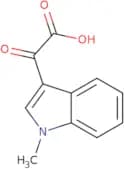
CAS:<p>2,5-Dichloro-3,4-dinitrothiophene is a crystalline solid with a tetragonal crystal system. It has been shown to form with yields of up to 45%, depending on the solvent. The crystal structure has been determined by X-ray crystallography and it was found to be monoclinic with nitro groups interacting in a manner analogous to nitro groups. Nitration of 2,5-dichloro-3,4-dinitrothiophene has been shown to produce 2,5-dichloro-3,4-dinitrobenzene and 2,5-dichloro-3,4-dinitrophenylhydrazine.</p>Formula:C4Cl2N2O4SPurity:Min. 95%Molecular weight:243.02 g/molN-Methyl-3-indoleglyoxylic acid 97
CAS:Controlled Product<p>N-Methyl-3-indoleglyoxylic acid 97 is a potent and selective inhibitor of protein kinases, including the mitogen activated protein kinase (MAPK) family. It has been shown to inhibit proliferation of cells in vitro. In addition, N-Methyl-3-indoleglyoxylic acid 97 inhibits the activation of MAPK in response to stress or cytokine stimulation. This agent has been shown to be selective for different isotypes of protein kinases and displays good selectivity for inhibition of the enzyme activity.</p>Formula:C11H9NO3Purity:Min. 95%Molecular weight:203.19 g/mol3,5-Bis(propan-2-yl)phenol
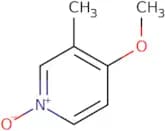
CAS:<p>3,5-Bis(propan-2-yl)phenol is an organic compound that has the chemical formula C8H12O. 3,5-Bis(propan-2-yl)phenol can be synthesized from benzene and eugenol by reacting them with a strong base in a high yield. The product is an aromatic ether with a phenyl group. 3,5-Bis(propan-2-yl)phenol is toxic to artemia at concentrations of 2%. It also reacts with triisopropylbenzene to form carvacrol.</p>Formula:C12H18OPurity:Min. 95%Molecular weight:178.27 g/molMethyl 3-methyl-1-oxidopyridin-4-yl ether
CAS:<p>Versatile small molecule scaffold</p>Formula:C7H9NO2Purity:Min. 95%Molecular weight:139.15 g/mol2-[(Adamantan-1-yl)carbamoyl]benzoic acid
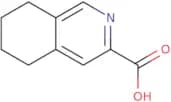
CAS:<p>Versatile small molecule scaffold</p>Formula:C18H21NO3Purity:Min. 95%Molecular weight:299.4 g/mol5,6,7,8-Tetrahydroisoquinoline-3-carboxylic acid
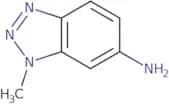
CAS:<p>Versatile small molecule scaffold</p>Formula:C10H11NO2Purity:Min. 95%Molecular weight:177.2 g/mol1-Methyl-1H-1,2,3-benzotriazol-6-amine
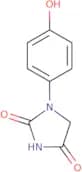
CAS:<p>Versatile small molecule scaffold</p>Formula:C7H8N4Purity:Min. 95%Molecular weight:148.17 g/mol1-(4-Hydroxyphenyl)imidazolidine-2,4-dione
CAS:1-(4-Hydroxyphenyl)imidazolidine-2,4-dione is a liquid at room temperature and pressure. It has a high yield of up to 99% and can be used in the production of styrene. The reaction time for this compound is about one hour. 1-(4-Hydroxyphenyl)imidazolidine-2,4-dione catalyses the conversion of styrene to divinylbenzene by reacting with water and base. This compound can also catalyse the conversion of hydantoin to dione when heated with an acid catalyst.Formula:C9H8N2O3Purity:Min. 95%Molecular weight:192.17 g/mol4-Chloro-N-(2-chlorophenyl)-3-nitrobenzene-1-sulfonamide
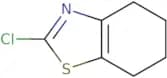
CAS:<p>Versatile small molecule scaffold</p>Formula:C12H8Cl2N2O4SPurity:Min. 95%Molecular weight:347.2 g/mol2-Chloro-4,5,6,7-tetrahydro-1,3-benzothiazole
CAS:Versatile small molecule scaffoldFormula:C7H8ClNSPurity:Min. 95%Molecular weight:173.66 g/mol4-Oxatricyclo[5.2.2.0,2,6]undecane-3,5-dione
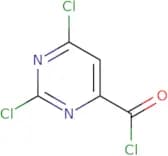
CAS:Versatile small molecule scaffoldFormula:C10H12O3Purity:Min. 95%Molecular weight:180.2 g/mol2,6-Dichloropyrimidine-4-carbonyl chloride
CAS:2,6-Dichloropyrimidine-4-carbonyl chloride is a chemical compound that is used as an intermediate in the synthesis of different drugs. It is also used as an intermediate for the synthesis of 2,6-dichloropyrimidines. This compound is a colorless liquid with a strong odor of chloroform.Formula:C5HCl3N2OPurity:Min. 95%Molecular weight:211.43 g/mol2-Amino-6-isopropyl-4,5,6,7-tetrahydrothieno[2,3-c]pyridine-3-carbonitrile
CAS:<p>Versatile small molecule scaffold</p>Formula:C11H15N3SPurity:Min. 95%Molecular weight:221.33 g/molOctanoic acid, 8-bromo-, methyl ester
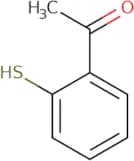
CAS:<p>Octanoic acid, 8-bromo-, methyl ester is a histone deacetylase (HDAC) inhibitor that belongs to the class of fatty esters. It has been shown to inhibit cancer cell proliferation and induce cell apoptosis in MDA-MB-231 cells by inhibiting HDAC activity. This drug also has inhibitory activities against cyclin D1 and Bcl-2 expression, which are two proteins that regulate the cell cycle. Octanoic acid, 8-bromo-, methyl ester inhibits HDAC activity by forming an amide bond with the catalytic subunit of the enzyme. This inhibition can be reversed by an aziridine in vitro. Octanoic acid, 8-bromo-, methyl ester also possesses a carbonyl group and functional groups that make it a powerful inhibitor of HDACs.</p>Formula:C9H17BrO2Purity:Min. 95%Molecular weight:237.13 g/mol1-(2-Sulfanylphenyl)ethan-1-one
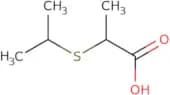
CAS:<p>1-(2-Sulfanylphenyl)ethan-1-one is an activating compound that has been shown to inhibit the growth of cancer cells. It has a strong inhibitory effect on malonic acid and epidermal growth factor, which are factors that stimulate cell proliferation. 1-(2-Sulfanylphenyl)ethan-1-one also inhibits the growth of tumor cells by inhibiting the synthesis of tissue extract and anticancer activity. The compound has been shown to have an inhibitory effect on skin cells and epidermal growth, as well as reducing fatty acids in tissues and sodium sulfide in blood plasma.</p>Formula:C8H8OSPurity:Min. 95%Molecular weight:152.22 g/mol2-(Propan-2-ylsulfanyl)propanoic acid
CAS:<p>Versatile small molecule scaffold</p>Formula:C6H12O2SPurity:Min. 95%Molecular weight:148.23 g/mol
![3-Chloro-N-[(furan-2-yl)methyl]aniline](/_next/image/?url=https%3A%2Fstatic.cymitquimica.com%2Fproducts%2F3D%2Fthumb-webp%2FBCA59776.webp&w=3840&q=75)


![2-[(Adamantan-1-yl)carbamoyl]benzoic acid](/_next/image/?url=https%3A%2Fstatic.cymitquimica.com%2Fproducts%2F3D%2Fthumb-webp%2FBBA87889.webp&w=3840&q=75)

![4-Oxatricyclo[5.2.2.0,2,6]undecane-3,5-dione](/_next/image/?url=https%3A%2Fstatic.cymitquimica.com%2Fproducts%2F3D%2Fthumb-webp%2FBBA84347.webp&w=3840&q=75)
![2-Amino-6-isopropyl-4,5,6,7-tetrahydrothieno[2,3-c]pyridine-3-carbonitrile](/_next/image/?url=https%3A%2Fstatic.cymitquimica.com%2Fproducts%2F3D%2Fthumb-webp%2FBBA83040.webp&w=3840&q=75)