


Building Blocks
This section contains fundamental products for the synthesis of organic and biological compounds. Building blocks are the essential starting materials used to construct complex molecules through various chemical reactions. They play a critical role in drug discovery, material science, and chemical research. At CymitQuimica, we offer a diverse range of high-quality building blocks to support your innovative research and industrial projects, ensuring you have the essential components for successful synthesis.
Subcategories of "Building Blocks"
- Boronic Acids & Boronic Acid Derivatives(5,778 products)
- Chiral Building Blocks(1,242 products)
- Hydrocarbon Building Blocks(6,098 products)
- Organic Building Blocks(61,034 products)
Found 199601 products of "Building Blocks"
Sort by
Purity (%)
0
100
|
0
|
50
|
90
|
95
|
100
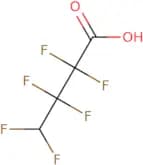
2,2,3,3,4,4-Hexafluorobutyric acid
CAS:<p>2,2,3,3,4,4-Hexafluorobutyric acid is a hydroxylated organic compound. It has been shown to be more chemically stable than other quaternary ammonium compounds. 2,2,3,3,4,4-Hexafluorobutyric acid is used as a polymerization initiator for the preparation of cationic polymers. This chemical can also be used to fragment proteins and nucleic acids in order to prepare samples for analysis by mass spectrometry. 2HFBA is reactive and can cause irritation on contact with the skin or eyes. It has been shown that this chemical may have an effect on body mass index and can bind to calcium ions.</p>Formula:C4H2F6O2Purity:Min. 95%Molecular weight:196.05 g/mol2-[(2,2,2-Trifluoroethyl)sulfanyl]acetic acid
CAS:2-[(2,2,2-Trifluoroethyl)sulfanyl]acetic acid (TFAA) is a pharmaceutical excipient that is used as a raw material for the production of cephalosporin. It has antibacterial activity against gram-positive and gram-negative bacteria. TFAA inhibits bacterial growth by binding to the active site of the enzyme methoxylmethyl esterase, which converts methoxymethyl esters to methyl esters. This leads to an accumulation of intermediates in cephalosporin synthesis and eventually cell death. TFAA has been shown to be effective against infections caused by methicillin-resistant Staphylococcus aureus (MRSA).Formula:C4H5F3O2SPurity:Min. 95%Molecular weight:174.14 g/mol4-Chlorobenzene-1-diazonium, tetrafluoroboranuide
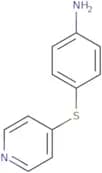
CAS:<p>4-Chlorobenzene-1,4-diazonium tetrafluoroborate is a carbocyclic nucleoside that has been synthesized and characterized by Raman spectroscopy. The systematic study of this molecule reveals that it has a crystalline structure and quantum theory. It also has low detection in the range of 0.03 ppm and can be used for the detection of guanine in DNA. 4-Chlorobenzene-1,4-diazonium tetrafluoroborate was immobilized on nanotubes with ammonolysis to form an exfoliated surface for use in surface-enhanced Raman spectroscopy.</p>Formula:C6H4BClF4N2Purity:Min. 95%Molecular weight:226.37 g/mol4-(Pyridin-4-ylsulfanyl)aniline
CAS:<p>Versatile small molecule scaffold</p>Formula:C11H10N2SPurity:Min. 95%Molecular weight:202.28 g/mol2-Oxo-2H-pyran-6-carboxylic acid
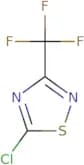
CAS:<p>2-Oxo-2H-pyran-6-carboxylic acid is a diphenyl ether that is used as an antimicrobial preservative. It functions by inhibiting bacterial growth and the activity of enzymes, such as pyrylium, which is required for the synthesis of DNA. 2-Oxo-2H-pyran-6-carboxylic acid has also been shown to bind to biphenyl and ether linkages in bacterial cells, preventing their replication. This compound has an acidic pH (4) and can be synthesized on a solid support using hydrochloric acid as a catalyst at neutral pH. The culture supernatant is then mixed with organic acids, such as acetic acid or formic acid, to produce 2-oxo-2H-pyran-6 carboxylic acid in solution.</p>Formula:C6H4O4Purity:Min. 95%Molecular weight:140.09 g/mol5-Chloro-3-(trifluoromethyl)-1,2,4-thiadiazole
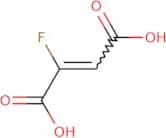
CAS:<p>5-Chloro-3-(trifluoromethyl)-1,2,4-thiadiazole is a molecule that has been synthesized and shown to have Raman spectroscopic features. It has been shown to be stable at temperatures up to 250°C and can be thermolyzed with wavelengths in the range of 270-700 nm. This molecule has also been observed in the gas phase by Raman spectroscopy. 5-Chloro-3-(trifluoromethyl)-1,2,4-thiadiazole is an orange solid that absorbs light in the ultraviolet region. The molecule is a sulfur analog of 1,2,4-triazole.</p>Formula:C3ClF3N2SPurity:Min. 95%Molecular weight:188.56 g/mol(2Z)-2-Fluorobut-2-enedioic acid
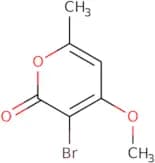
CAS:<p>(2Z)-2-Fluorobut-2-enedioic acid is an enzyme inhibitor that binds to the active site of enzymes. It has cross-linking properties and can be used as an activator or catalyst of polymerization reactions. (2Z)-2-Fluorobut-2-enedioic acid has been shown to be a good substrate for hydrogen fluoride, which converts it into a more reactive form that reacts with fatty acids to form esters. The reaction product is biocompatible and can be used in a variety of medical applications, such as the prevention of adhesions following surgery. (2Z)-2-Fluorobut-2-enedioic acid also acts as an antigen and can be used in the detection of specific antibodies.</p>Formula:C4H3FO4Purity:Min. 95%Molecular weight:134.06 g/mol3-Bromo-4-methoxy-6-methyl-2H-pyran-2-one
CAS:<p>3-Bromo-4-methoxy-6-methyl-2H-pyran-2-one (BMMP) is a substrate that is used in the synthesis of 1,3,5,7,9,11,13,15,17,19-octahydrocyclopenta[a]phenanthrene (CCHP). The BMMP molecule has a bromine atom at the 4th position and two methoxy groups at the 6th and 10th positions. This compound was synthesized by reacting 3-bromopropionitrile with 2-(chloromethyl)-1-(chloromethyl)ethene in a cross coupling reaction. The BMMP compound has been shown to have myelogenous properties and can be used as a probe for chloride ions.</p>Formula:C7H7BrO3Purity:Min. 95%Molecular weight:219.03 g/mol1-[2-(Trifluoromethyl)phenyl]propan-2-amine hydrochloride
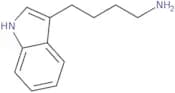
CAS:Controlled Product<p>Versatile small molecule scaffold</p>Formula:C10H13ClF3NPurity:Min. 95%Molecular weight:239.66 g/mol4-(1H-Indol-3-yl)butan-1-amine
CAS:<p>4-(1H-Indol-3-yl)butan-1-amine is a chemical compound that belongs to the group of indole compounds. It has been shown to have an antitumor effect on colon tumor cells in vivo as well as inhibiting cell growth and inducing apoptosis in vitro. 4-(1H-Indol-3-yl)butan-1-amine is structurally similar to 1,4 butanediol, which has been shown to inhibit histone deacetylase activity. The clinical trials are still ongoing for this drug.</p>Formula:C12H16N2Purity:Min. 95%Molecular weight:188.27 g/molTricyclo[5.2.1.0,2,6]decan-8-amine
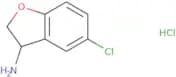
CAS:<p>Versatile small molecule scaffold</p>Formula:C10H17NPurity:Min. 95%Molecular weight:151.25 g/mol5-Chloro-2,3-dihydro-1-benzofuran-3-amine hydrochloride
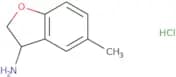
CAS:<p>Versatile small molecule scaffold</p>Formula:C8H8ClNO·HClPurity:Min. 95%Molecular weight:206.07 g/mol5-Methyl-2,3-dihydro-1-benzofuran-3-amine hydrochloride
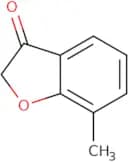
CAS:<p>Versatile small molecule scaffold</p>Formula:C9H12ClNOPurity:Min. 95%Molecular weight:185.65 g/mol7-Methylbenzofuran-3(2H)-one
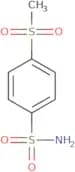
CAS:<p>7-Methylbenzofuran-3(2H)-one is a cyclic compound that consists of four rings in a furan and thiophene ring system. It is a reactive oxygen species (ROS) that can be found in the environment as an air pollutant. 7-Methylbenzofuran-3(2H)-one is used as an oxidant in organic synthesis and has been shown to have antiplatelet effects. This compound also reacts with sulfur compounds to form sulfides, which can be found in foods such as garlic, onion, and cabbage. The presence of ascorbic acid or other antioxidants may prevent this reaction from occurring. 7-Methylbenzofuran-3(2H)-one can also react with pyrazine to form hydroxypyrazines. This reaction product has been detected in human blood samples, where it may play a role in the development of atherosclerosis or heart disease.</p>Formula:C9H8O2Purity:Min. 95%Molecular weight:148.16 g/mol4-Methanesulfonylbenzene-1-sulfonamide
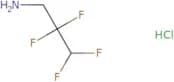
CAS:<p>4-Methanesulfonylbenzene-1-sulfonamide is a research chemical that is used in assays to study the metabolism of penicillium chrysogenum and other fungi. The metabolite 4-methanesulfonylbenzenesulfonic acid has been shown to inhibit fungal growth by inhibiting the synthesis of proteins, such as ribosomal proteins, which are necessary for cell division. This research chemical has also been shown to inhibit the production of aflatoxins, which are carcinogenic compounds produced by Aspergillus flavus and other species of fungi. 4-Methanesulfonylbenzene-1-sulfonamide has been found to be safe for use in humans and animals and can be used as a replacement for methyl bromide due to its sustainable functionality.</p>Formula:C7H9NO4S2Purity:Min. 95%Molecular weight:235.3 g/mol2,2,3,3-Tetrafluoropropan-1-amine hydrochloride
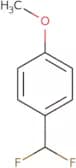
CAS:<p>Versatile small molecule scaffold</p>Formula:C3H6ClF4NPurity:Min. 95%Molecular weight:167.53 g/mol1-(Difluoromethyl)-4-methoxybenzene
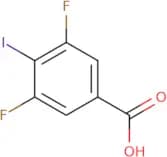
CAS:<p>Versatile small molecule scaffold</p>Formula:C8H8F2OPurity:Min. 95%Molecular weight:158.14 g/mol3,5-Difluoro-4-iodobenzoic acid
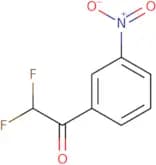
CAS:<p>Versatile small molecule scaffold</p>Formula:C7H3F2IO2Purity:Min. 95%Molecular weight:284 g/mol2,2-Difluoro-1-(3-nitrophenyl)ethan-1-one
CAS:Versatile small molecule scaffoldFormula:C8H5F2NO3Purity:Min. 95%Molecular weight:201.13 g/molN-[4-Chloro-3-(trifluoromethyl)phenyl]formamide
CAS:<p>Versatile small molecule scaffold</p>Formula:C8H5ClF3NOPurity:Min. 95%Molecular weight:223.58 g/mol

![2-[(2,2,2-Trifluoroethyl)sulfanyl]acetic acid](/_next/image/?url=https%3A%2Fstatic.cymitquimica.com%2Fproducts%2F3D%2Fthumb-webp%2FAAA67568.webp&w=3840&q=75)


![1-[2-(Trifluoromethyl)phenyl]propan-2-amine hydrochloride](/_next/image/?url=https%3A%2Fstatic.cymitquimica.com%2Fproducts%2F3D%2Fthumb-webp%2FAAA67003.webp&w=3840&q=75)
![Tricyclo[5.2.1.0,2,6]decan-8-amine](/_next/image/?url=https%3A%2Fstatic.cymitquimica.com%2Fproducts%2F3D%2Fthumb-webp%2FAAA66951.webp&w=3840&q=75)
![N-[4-Chloro-3-(trifluoromethyl)phenyl]formamide](/_next/image/?url=https%3A%2Fstatic.cymitquimica.com%2Fproducts%2F3D%2Fthumb-webp%2FAAA65696.webp&w=3840&q=75)