Building Blocks
This section contains fundamental products for the synthesis of organic and biological compounds. Building blocks are the essential starting materials used to construct complex molecules through various chemical reactions. They play a critical role in drug discovery, material science, and chemical research. At CymitQuimica, we offer a diverse range of high-quality building blocks to support your innovative research and industrial projects, ensuring you have the essential components for successful synthesis.
Subcategories of "Building Blocks"
- Boronic Acids & Boronic Acid Derivatives(5,778 products)
- Chiral Building Blocks(1,242 products)
- Hydrocarbon Building Blocks(6,098 products)
- Organic Building Blocks(61,098 products)
Found 199594 products of "Building Blocks"
Sort by
Purity (%)
0
100
|
0
|
50
|
90
|
95
|
100
2-(3-Chloro-phenyl)-oxirane
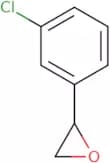
CAS:<p>2-(3-Chloro-phenyl)-oxirane is a reactive molecule with the chemical formula C6H4ClO2. It is an epoxide that can be obtained by ring-opening of acetone cyanohydrin. 2-(3-Chloro-phenyl)-oxirane has been used as a glycosidic bond in the synthesis of α-amino acid derivatives and as a substrate for ring opening polymerization. This compound is also used to study the mechanism of enantioselective reactions, such as kinetic and thermodynamic studies, which can lead to the development of new methods for producing enantiopure compounds.<br>2-(3-Chloro-phenyl)-oxirane has been shown to inhibit growth in E. coli K12 and S. typhimurium at concentrations between 10 and 100 μM; it also inhibits growth in ovary cells at concentrations between 5 and 50 μM. The inhibition of bacterial</p>Formula:C8H7ClOPurity:Min. 95%Molecular weight:154.6 g/mol2-(3-Nitrophenyl)oxirane
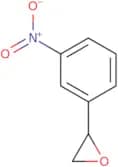
CAS:<p>2-(3-Nitrophenyl)oxirane is an oxidase inhibitor that inhibits the activity of many oxidases, including monoamine oxidases and aldehyde oxidases. It has been shown to inhibit the oxidative deamination of dibenamine, which is catalyzed by dehydrogenase. 2-(3-Nitrophenyl)oxirane also reacts with metal ions such as copper and zinc, forming a complex that can be reduced back to the parent compound by acceptor molecules such as NADH or glutathione. 2-(3-Nitrophenyl)oxirane binds to receptors in the brain and other organs and may inhibit neurotransmitter release from nerve endings.<br>2-(3-Nitrophenyl)oxirane inhibits acid production by inhibiting the activity of acid cholinesterase, which breaks down acetylcholine at synapses. The resulting accumulation of acetylcholine leads to paralysis of muscles in voluntary muscles (e</p>Formula:C8H7NO3Purity:Min. 95%Molecular weight:165.15 g/mol3-(4-Nitrophenyl)propan-1-ol
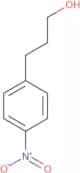
CAS:<p>Versatile small molecule scaffold</p>Formula:C9H11NO3Purity:Min. 95%Molecular weight:181.19 g/mol2-Methyl-decahydroquinoline
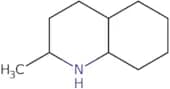
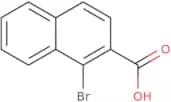
CAS:<p>2-Methyl-decahydroquinoline is a chemical compound of the quinoline group. It is a colorless solid that can be prepared by reacting carbon disulfide with chloroacetanilides in the presence of hydrochloric acid. The reaction mechanism of 2-methyl-decahydroquinoline is based on the substitution of chlorine by hydrogen, which produces an alkylthio group. This compound can be used to treat wastewater and has been found to have growth regulatory properties when used as an alkylsulfonyl fluoride reagent. It also has been shown to be a potential intermediate for the synthesis of thiocarbamates, oxime derivatives, and c1-c4 haloalkyls.</p>Formula:C10H19NPurity:Min. 95%Molecular weight:153.26 g/mol1-Bromo-2-naphthoic acid
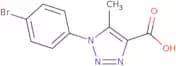
CAS:<p>1-Bromo-2-naphthoic acid is a tetronic acid with an antiproliferative effect. It has been shown to inhibit the enzyme IDO1, which is involved in the production of interferon gamma and other cytokines. 1-Bromo-2-naphthoic acid is also a potent inhibitor of cancer cells and leukemia cells, and has been shown to be cytotoxic at low concentrations. This drug inhibits the growth of tumor cells in vivo by preventing the division of cancer cells.</p>Formula:C11H7BrO2Purity:Min. 95%Molecular weight:251.08 g/mol1-(4-Bromophenyl)-5-methyl-1H-1,2,3-triazole-4-carboxylic acid
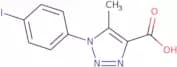
CAS:<p>Versatile small molecule scaffold</p>Formula:C10H8BrN3O2Purity:Min. 95%Molecular weight:282.1 g/mol1-(4-Iodophenyl)-5-methyl-1H-1,2,3-triazole-4-carboxylic acid
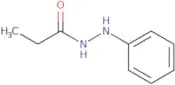
CAS:<p>Versatile small molecule scaffold</p>Formula:C10H8IN3O2Purity:Min. 95%Molecular weight:329.09 g/molPropionic acid N'-phenyl-hydrazide
CAS:<p>Versatile small molecule scaffold</p>Formula:C9H12N2OPurity:Min. 95%Molecular weight:164.2 g/mol2,5-Dicyanopyridine
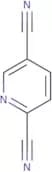
CAS:<p>2,5-Dicyanopyridine is a ligand that can form coordination complexes with metal ions. It has been shown to form a trimeric structure in nonpolar solvents. 2,5-Dicyanopyridine is also able to act as a substrate for the hydroxy group and cyclopenta ring cleavage of epoxides. The unpaired electron on the nitrogen atom in 2,5-dicyanopyridine makes it an excellent nucleophile in nature. This property may be used to convert feedstock into valuable products such as ammonia or ethylene oxide.</p>Formula:C7H3N3Purity:Min. 95%Molecular weight:129.12 g/mol3-Bromo-4,5-dimethoxybenzoic acid
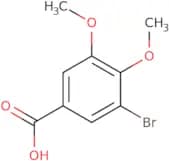
CAS:<p>3-Bromo-4,5-dimethoxybenzoic acid is an ether that is used in the synthesis of bromophenols. It can be prepared by reacting bromonaphthalene with sodium methoxide in methanol. 3-Bromo-4,5-dimethoxybenzoic acid has a methyl ether side chain. The compound is also known as bromophenol and it is a polysiphonia extract. This compound reacts with phenols to form ethers and the reaction product can then be purified by crystallization or vacuum distillation.</p>Formula:C9H9BrO4Purity:Min. 95%Molecular weight:261.07 g/molMethyl 2-hydroxy-2-phenylpropanoate
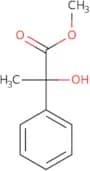
CAS:<p>Methyl 2-hydroxy-2-phenylpropanoate is an organic compound that contains a nitrogen atom. It is the product of the reaction between Grignard reagent and alkynyl group. This reactive chemical can be used in agricultural chemistry as a fungicide. Methyl 2-hydroxy-2-phenylpropanoate also has a functional group and can be used as an analog for other compounds, such as oxazolidinones and alkynyl amines. Methyl 2-hydroxy-2-phenylpropanoate may be synthesized by reacting methyl 2-chloroacetoacetate with hydroxylamine. The nitrogen atoms on this molecule are important for the formation of bonds with other molecules, which is why it is so reactive. Methyl 2-hydroxy-2-phenylpropanoate has been shown to inhibit collagen production in plants and to have receptor activity against fungi.</p>Formula:C10H12O3Purity:Min. 95%Molecular weight:180.2 g/mol3-(Dipropylamino)propanenitrile
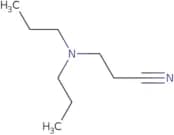
CAS:<p>Versatile small molecule scaffold</p>Formula:C9H18N2Purity:Min. 95%Molecular weight:154.25 g/molRef: 3D-VAA73311
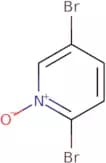
1g798.00€5gTo inquire10gTo inquire100mg202.00€250mg310.00€500mgTo inquire2500mg1,155.00€2,5-Dibromopyridine 1-oxide
CAS:<p>Versatile small molecule scaffold</p>Formula:C5H3Br2NOPurity:Min. 95%Molecular weight:252.89 g/molN-(1,3-Dioxaindan-5-ylmethylidene)hydroxylamine
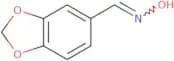
CAS:Controlled Product<p>N-(1,3-Dioxaindan-5-ylmethylidene)hydroxylamine is a chemical compound that is used as an intermediate in the synthesis of other compounds. It has been shown to increase tyrosinase activity and inhibit tyrosinase production in vitro. N-(1,3-Dioxaindan-5-ylmethylidene)hydroxylamine is also an aldoxime, which reacts with aluminium to form an insoluble aluminium hydroxide precipitate. This reaction can be used to precipitate aluminum from solution. Reaction with sodium carbonate forms an insoluble sodium carbonate precipitate, which can be useful for removing residual aluminum after precipitation. The reaction of N-(1,3-dioxaindan-5-ylmethylidene)hydroxylamine with propionate or methyl ethyl chloride produces a polymerized product and piperonal respectively. Reaction of this compound with benzoic acid yields the</p>Formula:C8H7NO3Purity:Min. 95%Molecular weight:165.15 g/mol4-(Chloroacetyl)-3,4-dihydro-2H-1,4-benzothiazine
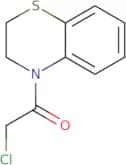
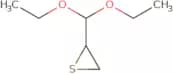
CAS:<p>Versatile small molecule scaffold</p>Formula:C10H10ClNOSPurity:Min. 95%Molecular weight:227.71 g/mol2-(Diethoxymethyl)thiirane
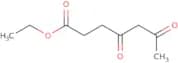
CAS:<p>Versatile small molecule scaffold</p>Formula:C7H14O2SPurity:Min. 95%Molecular weight:162.25 g/molEthyl 4,6-dioxoheptanoate
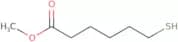
CAS:<p>Versatile small molecule scaffold</p>Formula:C9H14O4Purity:Min. 95%Molecular weight:186.2 g/molMethyl 6-sulfanylhexanoate
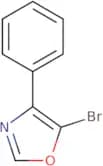
CAS:Methyl 6-sulfanylhexanoate (MSH) is a diphenylacetylene derivative that has been shown to be able to form a chemical bond with gold nanoparticles. MSH can be synthesized by the reaction of sulfur, ammonia, and methyl alcohol in an ionic liquid, followed by phase transfer catalytic reduction. This compound has been shown to act as a functional group for the synthesis of amides and sulfides. MSH also has the ability to absorb infrared light due to its thiolate functional group. In addition, MSH is able to function as a hydrogen-bonding donor or acceptor in chemical reactions, which can be useful for sensors or indicator compounds.Formula:C7H14O2SPurity:Min. 95%Molecular weight:162.25 g/mol5-Bromo-4-phenyl-1,3-oxazole
CAS:<p>5-Bromo-4-phenyl-1,3-oxazole is a marine sponge metabolite that has been found to have a 5-membered dihedral ring with a bromine and phenyl group. It is an organic compound that is used as a chemical building block in the synthesis of other compounds called multidrugs. The anticancer activity of 5-bromo-4-phenyl-1,3-oxazole has been demonstrated by chemists in the laboratory. This molecule has also been shown to be active against cancer cells in organisms such as rats and mice. 5-Bromo-4-phenyl-1,3 -oxazole is not effective against all types of cancer, but it has shown efficacy against certain cancers such as those found in the breast and colon.</p>Formula:C9H6BrNOPurity:Min. 95%Molecular weight:224.05 g/mol