Building Blocks
This section contains fundamental products for the synthesis of organic and biological compounds. Building blocks are the essential starting materials used to construct complex molecules through various chemical reactions. They play a critical role in drug discovery, material science, and chemical research. At CymitQuimica, we offer a diverse range of high-quality building blocks to support your innovative research and industrial projects, ensuring you have the essential components for successful synthesis.
Subcategories of "Building Blocks"
- Boronic Acids & Boronic Acid Derivatives(5,778 products)
- Chiral Building Blocks(1,243 products)
- Hydrocarbon Building Blocks(6,099 products)
- Organic Building Blocks(61,038 products)
Found 205376 products of "Building Blocks"
Sort by
Purity (%)
0
100
|
0
|
50
|
90
|
95
|
100
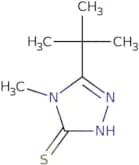
5-tert-Butyl-4-methyl-4H-1,2,4-triazole-3-thiol
CAS:Versatile small molecule scaffoldFormula:C7H13N3SPurity:Min. 95%Molecular weight:171.27 g/mol4-Bromo-N-[2-(morpholin-4-yl)ethyl]benzamide
CAS:Versatile small molecule scaffoldFormula:C13H17BrN2O2Purity:Min. 95%Molecular weight:313.19 g/mol4-(Pyridin-4-ylsulfanyl)phenol
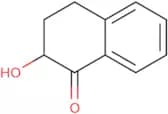
CAS:Versatile small molecule scaffoldFormula:C11H9NOSPurity:Min. 95%Molecular weight:203.26 g/mol2-Hydroxy-1,2,3,4-tetrahydronaphthalen-1-one
CAS:2-Hydroxy-1,2,3,4-tetrahydronaphthalen-1-one is a synthetic drug that binds to the opioid receptor and is used as an analgesic. It has been shown to have a strong affinity for opioid receptors in the central nervous system and intestine. 2-Hydroxy-1,2,3,4-tetrahydronaphthalen-1-one has been found to have an uptake of 40% in the brain and intestine. This drug also has a high affinity for opioid receptors in the brain and intestinal tissue and acts as a full agonist on these sites. 2-Hydroxy-1,2,3,4-tetrahydronaphthalen-1-one also has been found to be effective in treating Alzheimer's disease. This drug can be administered orally or intravenously.Formula:C10H10O2Purity:Min. 95%Molecular weight:162.18 g/mol(2S)-2-Amino-N,4-dimethylpentanamide
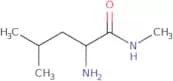
CAS:(2S)-2-Amino-N,4-dimethylpentanamide is an amide that is a metabolite of the amino acid l-tert-leucine. This drug has been shown to have bioactive properties and may be used in pharmaceutical preparations for the treatment of degenerative diseases. (2S)-2-Amino-N,4-dimethylpentanamide binds to cannabinoid receptors, which are found on the surface of cells. It also inhibits matrix metalloproteinase activity, leading to increased bone resorption and ulceration. The stereoisomers of this compound have different activities: 2R-(+)-(2S)-2-amino-N,4-dimethylpentanamide inhibits the production of inflammatory proteins and is used as a pharmaceutical preparation for the treatment of ulcers; 2S-(+)-(2S)-2-amino-N,4-dimethylpentanamide hasFormula:C7H16N2OPurity:Min. 95%Molecular weight:144.21 g/molEthyl N-[3-(2-oxopropyl)-1,2,4-thiadiazol-5-yl]carbamate
CAS:Versatile small molecule scaffoldFormula:C8H11N3O3SPurity:Min. 95%Molecular weight:229.26 g/mol(1H-Benzo[D]imidazol-4-yl)methanamine dihydrochloride
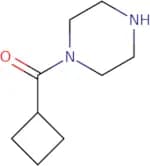
CAS:Versatile small molecule scaffoldFormula:C8H11Cl2N3Purity:Min. 95%Molecular weight:220.1 g/molcyclobutyl(piperazin-1-yl)methanone
CAS:Versatile small molecule scaffoldFormula:C9H16N2OPurity:Min. 95%Molecular weight:168.24 g/mol1-[Chloro(4-chlorophenyl)methyl]-4-fluorobenzene
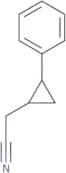
CAS:Versatile small molecule scaffoldFormula:C13H9Cl2FPurity:Min. 95%Molecular weight:255.11 g/mol2-(2-Phenylcyclopropyl)acetonitrile
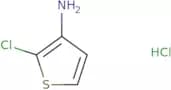
CAS:Versatile small molecule scaffoldFormula:C11H11NPurity:Min. 95%Molecular weight:157.21 g/mol2-Chlorothiophen-3-amine hydrochloride
CAS:Versatile small molecule scaffoldFormula:C4H5Cl2NSPurity:Min. 95%Molecular weight:170.06 g/mol(S)-1-Phenyl-2-propyn-1-ol
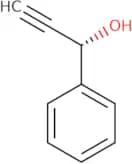
CAS:(S)-1-phenyl-2-propyn-1-ol is a bicyclic compound that is used in the metathesis reaction. This chemical can undergo a metathesis reaction, where two different types of bonds are broken and two new ones are formed. (S)-1-Phenyl-2-propyn-1-ol can be used for the synthesis of polymers, pharmaceuticals, and agrochemicals.
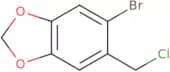
Formula:C9H8OPurity:Min. 95%Molecular weight:132.16 g/mol5-Bromo-6-(chloromethyl)-1,3-dioxaindane
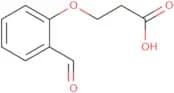
CAS:Versatile small molecule scaffoldFormula:C8H6BrClO2Purity:Min. 95%Molecular weight:249.49 g/mol3-(2-Formylphenoxy)propanoic acid
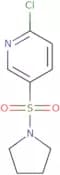
CAS:3-(2-Formylphenoxy)propanoic acid is a carboxylic acid that is used in the synthesis of pharmaceuticals. The carboxylic acid group of 3-(2-Formylphenoxy)propanoic acid reacts with amines to form amides. It can also be reacted with alcohols to form esters. The propanoic acid group in this compound can undergo reactions that generate carboxylic acids, alcohols, and hydrocarbons. 3-(2-Formylphenoxy)propanoic acid has two carboxylic acid groups, one on each end of the molecule. These groups are positioned so they react with other molecules by donating their electrons to create new bonds. This conformation is called a dimer.Formula:C10H10O4Purity:Min. 95%Molecular weight:194.18 g/mol2-Chloro-5-(pyrrolidine-1-sulfonyl)pyridine
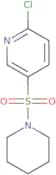
CAS:Versatile small molecule scaffoldFormula:C9H11ClN2O2SPurity:Min. 95%Molecular weight:246.71 g/mol2-Chloro-5-(piperidine-1-sulfonyl)pyridine
CAS:Versatile small molecule scaffoldFormula:C10H13ClN2O2SPurity:Min. 95%Molecular weight:260.74 g/mol1-[(6-Chloropyridin-3-yl)sulfonyl]-4-methylpiperazine
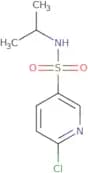
CAS:Versatile small molecule scaffoldFormula:C10H14ClN3O2SPurity:Min. 95%Molecular weight:275.76 g/mol6-Chloro-N-(propan-2-yl)pyridine-3-sulfonamide
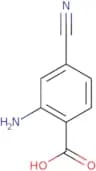
CAS:Versatile small molecule scaffoldFormula:C8H11ClN2O2SPurity:Min. 95%Molecular weight:234.7 g/mol2-amino-4-cyanobenzoic acid
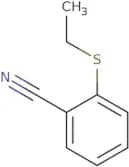
CAS:Versatile small molecule scaffoldFormula:C8H6N2O2Purity:Min. 95%Molecular weight:162.15 g/mol2-(Ethylsulfanyl)benzonitrile
CAS:Versatile small molecule scaffold
Formula:C9H9NSPurity:Min. 95%Molecular weight:163.24 g/mol

![4-Bromo-N-[2-(morpholin-4-yl)ethyl]benzamide](/_next/image/?url=https%3A%2Fstatic.cymitquimica.com%2Fproducts%2F3D%2Fthumb-webp%2FPCA54419.webp&w=3840&q=75)
![Ethyl N-[3-(2-oxopropyl)-1,2,4-thiadiazol-5-yl]carbamate](/_next/image/?url=https%3A%2Fstatic.cymitquimica.com%2Fproducts%2F3D%2Fthumb-webp%2FPCA57297.webp&w=3840&q=75)
![(1H-Benzo[D]imidazol-4-yl)methanamine dihydrochloride](/_next/image/?url=https%3A%2Fstatic.cymitquimica.com%2Fproducts%2F3D%2Fthumb-webp%2FPCA57423.webp&w=3840&q=75)
![1-[Chloro(4-chlorophenyl)methyl]-4-fluorobenzene](/_next/image/?url=https%3A%2Fstatic.cymitquimica.com%2Fproducts%2F3D%2Fthumb-webp%2FPCA58339.webp&w=3840&q=75)
![1-[(6-Chloropyridin-3-yl)sulfonyl]-4-methylpiperazine](/_next/image/?url=https%3A%2Fstatic.cymitquimica.com%2Fproducts%2F3D%2Fthumb-webp%2FPCA61453.webp&w=3840&q=75)