Building Blocks
This section contains fundamental products for the synthesis of organic and biological compounds. Building blocks are the essential starting materials used to construct complex molecules through various chemical reactions. They play a critical role in drug discovery, material science, and chemical research. At CymitQuimica, we offer a diverse range of high-quality building blocks to support your innovative research and industrial projects, ensuring you have the essential components for successful synthesis.
Subcategories of "Building Blocks"
- Boronic Acids & Boronic Acid Derivatives(5,778 products)
- Chiral Building Blocks(1,243 products)
- Hydrocarbon Building Blocks(6,098 products)
- Organic Building Blocks(61,057 products)
Found 200716 products of "Building Blocks"
Sort by
Purity (%)
0
100
|
0
|
50
|
90
|
95
|
100
Fmoc-b-Ala-Phe-Pro-OH
<p>Fmoc-b-Ala-Phe-Pro-OH is a chemical compound that is used as a reaction component, reagent, and useful scaffold. It reacts with various other chemicals to form complex compounds. This synthetic compound can be used as an intermediate in the synthesis of peptides, proteins, and other organic compounds. Fmoc-b-Ala-Phe-Pro-OH can also be used as a building block for the synthesis of speciality chemicals.</p>Formula:C32H33N3O6Purity:Min. 95%Color and Shape:PowderMolecular weight:555.62 g/molFmoc-Ala-Ala-Pro-OH
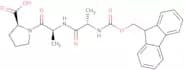
CAS:Fmoc-Ala-Ala-Pro-OH is a building block that is used in organic synthesis as a reaction component or reagent. It can be used to synthesize a wide range of complex compounds with speciality chemical and fine chemical applications. Fmoc-Ala-Ala-Pro-OH is also a versatile building block that can be used to synthesize various useful scaffolds, such as the Fmoc amino acid sequence, which has been shown to bind heparin. This compound has high purity and can be used in research and development.Formula:C26H29N3O6Purity:Min. 95%Color and Shape:PowderMolecular weight:479.53 g/mol5-Fluoro-2-hydrazinopyridine
CAS:Please enquire for more information about 5-Fluoro-2-hydrazinopyridine including the price, delivery time and more detailed product information at the technical inquiry form on this pageFormula:C5H6FN3Purity:Min. 95%Molecular weight:127.12 g/molEthyl 4-(hydroxymethyl)-1H-pyrazole-3-carboxylate
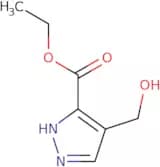
CAS:Versatile small molecule scaffoldFormula:C7H10N2O3Purity:Min. 95%Molecular weight:170.17 g/molL-Glutamic acid 5-benzyl ester
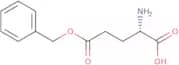
CAS:L-Glutamic acid 5-benzyl ester is an amino acid that has been synthesized to have a lysine residue. It is an ester hydrochloride and has been shown to have broad-spectrum antimicrobial properties. L-glutamic acid 5-benzyl ester's antimicrobial activity is thought to be due to its chemical structure which allows it to act as an antimicrobial peptide, binding to receptors on the surface of bacterial cells and inhibiting their growth. L-glutamic acid 5-benzyl ester also inhibits osteogenic genes in cervical cancer cells, but not in normal cells.Formula:C12H15NO4Purity:Min. 95%Color and Shape:White Off-White PowderMolecular weight:237.25 g/mol2-(Bromomethyl)-6-fluorobenzonitrile
CAS:Versatile small molecule scaffoldFormula:C8H5BrFNPurity:Min. 95%Molecular weight:214.04 g/mol3-chloro-4-cyanobenzoic acid
CAS:Versatile small molecule scaffoldFormula:C8H4ClNO2Purity:Min. 95%Molecular weight:181.58 g/mol2,4-Dichloroimidazo[2,1-F][1,2,4]triazine
CAS:Versatile small molecule scaffoldFormula:C5H2Cl2N4Purity:Min. 95%Molecular weight:189 g/molBis(3,5-bis(trifluoromethyl)phenyl)(2²,6²-bis(isopropoxy)-3,6-dimethoxybiphenyl-2-yl)phosphine
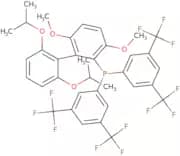
CAS:<p>Versatile small molecule scaffold</p>Formula:C36H31F12O4PPurity:Min. 95%Molecular weight:786.58 g/mol(e)-(2-(1-(tert-butoxycarbonyl)piperidin-4-yl)vinyl)boronic acid pinacol ester
CAS:<p>Versatile small molecule scaffold</p>Formula:C18H32BNO4Purity:Min. 95%Molecular weight:337.27 g/moltert-Butyl 1,8-diazaspiro[4.5]decane-1-carboxylate
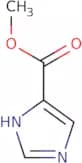
CAS:Versatile small molecule scaffoldFormula:C13H24N2O2Purity:Min. 95%Molecular weight:240.3 g/mol4-Imidazole methyl carboxylate
CAS:<p>4-Imidazole methyl carboxylate is a drug that inhibits the activity of dehydrogenases and other enzymes. It has been shown to be an inhibitor of the enzyme catalase in vitro and in vivo, which may be due to its ability to bind bidentately with the active site. 4-Imidazole methyl carboxylate is effective when administered orally, and it has been shown to improve symptoms of neurodegenerative diseases such as Alzheimer's disease. This drug also has a trifunctional chemical structure that contains a macrocyclic ring system with an imidazole group and a carboxylic acid group. The redox potential of this molecule makes it suitable for use as an antioxidant.</p>Formula:C5H6N2O2Purity:Min. 95%Color and Shape:White PowderMolecular weight:126.11 g/mol(3R)-3-Methylpyrrolidine hydrochloride
CAS:Versatile small molecule scaffoldFormula:C5H11N•HClPurity:Min. 95%Molecular weight:121.5 g/molInosine 5'-monophosphate disodium hydrate
CAS:<p>Please enquire for more information about Inosine 5'-monophosphate disodium hydrate including the price, delivery time and more detailed product information at the technical inquiry form on this page</p>Formula:C10H13N4O8P•Na2•(H2O)xPurity:Min. 95%Imidazolepyruvic acid hydrobromide hydrate
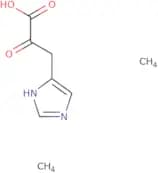
CAS:<p>Please enquire for more information about Imidazolepyruvic acid hydrobromide hydrate including the price, delivery time and more detailed product information at the technical inquiry form on this page</p>Formula:C6H6N2O3•(HBr)x•(H2O)xPurity:Min. 95%Color and Shape:Powder1H-Indol-2-ylmethanol
CAS:<p>1H-Indol-2-ylmethanol is a model compound for the synthesis of bioactive molecules. It is used in biological studies as an inhibitor of chronic lymphocytic leukemia, heart disease, and inflammatory pain. The nitro group on 1H-Indol-2-ylmethanol has been shown to activate various enzymes involved in the inflammatory response. The hydroxy group on 1H-Indol-2-ylmethanol has been shown to inhibit cyclooxygenase (COX) enzymes, which are responsible for the production of prostaglandins that cause inflammation.</p>Formula:C9H9NOPurity:Min. 95%Color and Shape:PowderMolecular weight:147.17 g/molMethyl 7-methoxy-4-oxo-1,4-dihydro-6-quinolinecarboxylate
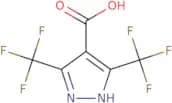
CAS:Versatile small molecule scaffoldFormula:C12H11NO4Purity:Min. 95%Molecular weight:233.22 g/mol3,5-Bis(trifluoromethyl)-1H-pyrazole-4-carboxylic acid
CAS:<p>3,5-Bis(trifluoromethyl)-1H-pyrazole-4-carboxylic acid is a chiral compound that has been shown to be an active building block for coordination frameworks. It is prepared from the reaction of 3,5-bis(trifluoromethyl)-1H-pyrazole with a carboxylic acid and can be used in the synthesis of metalloporphyrins. 3,5-Bis(trifluoromethyl)-1H-pyrazole-4-carboxylic acid has been shown to form stable coordination complexes with ligands such as bidentate or tridentate phosphoramidites and dimethylammonium chloride. This compound undergoes thermal treatment during the preparation process and reacts with various solvents and reagents.</p>Formula:C6H2F6N2O2Purity:Min. 95%Molecular weight:248.08 g/mol6-Quinolinecarboxylic acid, 4-chloro-7-methoxy-, methyl ester
CAS:Versatile small molecule scaffoldFormula:C12H10ClNO3Purity:Min. 95%Molecular weight:251.67 g/mol4-bromo-1H-imidazole-2-carbaldehyde
CAS:Versatile small molecule scaffoldFormula:C4H3BrN2OPurity:Min. 95%Molecular weight:175 g/mol





![2,4-Dichloroimidazo[2,1-F][1,2,4]triazine](/_next/image/?url=https%3A%2Fstatic.cymitquimica.com%2Fproducts%2F3D%2Fthumb-webp%2FKXC70089.webp&w=3840&q=75)

![tert-Butyl 1,8-diazaspiro[4.5]decane-1-carboxylate](/_next/image/?url=https%3A%2Fstatic.cymitquimica.com%2Fproducts%2F3D%2Fthumb-webp%2FKKB27992.webp&w=3840&q=75)