Building Blocks
This section contains fundamental products for the synthesis of organic and biological compounds. Building blocks are the essential starting materials used to construct complex molecules through various chemical reactions. They play a critical role in drug discovery, material science, and chemical research. At CymitQuimica, we offer a diverse range of high-quality building blocks to support your innovative research and industrial projects, ensuring you have the essential components for successful synthesis.
Subcategories of "Building Blocks"
- Boronic Acids & Boronic Acid Derivatives(5,778 products)
- Chiral Building Blocks(1,243 products)
- Hydrocarbon Building Blocks(6,097 products)
- Organic Building Blocks(61,048 products)
Found 203115 products of "Building Blocks"
Sort by
Purity (%)
0
100
|
0
|
50
|
90
|
95
|
100
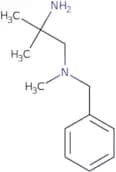
(2-Amino-2-methylpropyl)(benzyl)methylamine
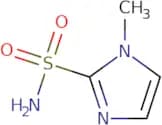
CAS:Versatile small molecule scaffoldFormula:C12H20N2Purity:Min. 95%Molecular weight:192.3 g/mol1-Methyl-1H-imidazole-2-sulfonamide
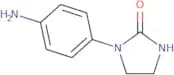
CAS:<p>Versatile small molecule scaffold</p>Formula:C4H7N3O2SPurity:Min. 95%Molecular weight:161.19 g/mol1-(4-Aminophenyl)imidazolidin-2-one
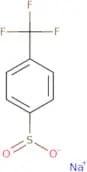
CAS:Versatile small molecule scaffoldFormula:C9H11N3OPurity:Min. 95%Molecular weight:177.2 g/molSodium 4-(trifluoromethyl)benzene-1-sulfinate
CAS:<p>Versatile small molecule scaffold</p>Formula:C7H4F3NaO2SPurity:Min. 95%Molecular weight:232.16 g/molSodium 3-bromobenzenesulfinate
CAS:<p>Versatile small molecule scaffold</p>Formula:C6H4BrNaO2SPurity:Min. 95%Molecular weight:243.05 g/mol2-(4-Chlorophenyl)-2H-1,2,3-triazole-4-carboxylic acid
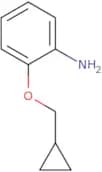
CAS:<p>Versatile small molecule scaffold</p>Formula:C9H6ClN3O2Purity:Min. 95%Molecular weight:223.61 g/mol2-(Cyclopropylmethoxy)aniline
CAS:<p>Versatile small molecule scaffold</p>Formula:C10H13NOPurity:Min. 95%Molecular weight:163.22 g/mol2-Amino-2-(2-methylcyclopropyl)acetic acids
CAS:<p>Versatile small molecule scaffold</p>Formula:C6H11NO2Purity:Min. 95%Molecular weight:129.2 g/mol5-(Hydroxymethyl)-1-methylpyrrolidin-2-one
CAS:<p>Versatile small molecule scaffold</p>Formula:C6H11NO2Purity:Min. 95%Molecular weight:129.15 g/molEthyl 2-(N-methylformamido)acetate
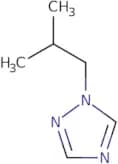
CAS:<p>Versatile small molecule scaffold</p>Formula:C6H11NO3Purity:Min. 95%Molecular weight:145.16 g/mol1-(2-Methylpropyl)-1H-1,2,4-triazole
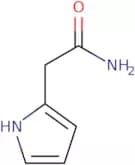
CAS:Versatile small molecule scaffoldFormula:C6H11N3Purity:Min. 95%Molecular weight:125.17 g/mol1H-Pyrrole-2-acetamide
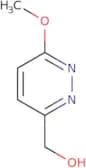
CAS:1H-Pyrrole-2-acetamide (1HPA) is a pyrrole derivative that inhibits the synthesis of viral proteins by binding to the amino acid derivatives that are used for this purpose. It has been shown to have a significant effect on HIV replication in cells from patients with AIDS, but not on healthy cells. 1HPA also has an inhibitory effect on the electron transport system and can lead to nerve damage, which may be due to its ability to bind to and inhibit enzymes in the nervous system. 1HPA does not have any effect on human immunodeficiency virus type 2 (HIV-2).Formula:C6H8N2OPurity:Min. 95%Molecular weight:124.14 g/mol(6-Methoxypyridazin-3-yl)methanol
CAS:<p>Versatile small molecule scaffold</p>Formula:C6H8N2O2Purity:Min. 95%Molecular weight:140.14 g/mol2-[(4-Methyl-1,3-thiazol-2-yl)amino]acetic acid
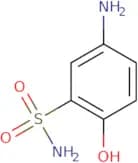
CAS:Versatile small molecule scaffoldFormula:C6H8N2O2SPurity:Min. 95%Molecular weight:172.21 g/mol5-Amino-2-hydroxybenzene-1-sulfonamide
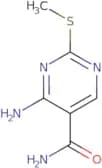
CAS:<p>Versatile small molecule scaffold</p>Formula:C6H8N2O3SPurity:Min. 95%Molecular weight:188.21 g/mol4-Amino-2-(methylthio)pyrimidine-5-carboxamide
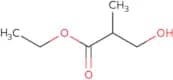
CAS:<p>Versatile small molecule scaffold</p>Formula:C6H8N4OSPurity:Min. 95%Molecular weight:184.22 g/molEthyl 3-hydroxy-2-methylpropanoate
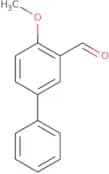
CAS:<p>Ethyl 3-hydroxy-2-methylpropanoate is an enantioselective chemical compound. It is a liquid at room temperature, with a molecular weight of 128.14 g/mol and a density of 0.879. Ethyl 3-hydroxy-2-methylpropanoate has been shown to undergo olefination reactions in the presence of acid catalysts. Reaction rates increase with increasing temperatures, reaching maximum rates at 100°C to 120°C.</p>Formula:C6H12O3Purity:Min. 95%Molecular weight:132.16 g/mol4-Methoxy-biphenyl-3-carbaldehyde
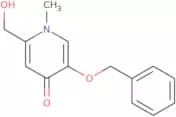
CAS:4-Methoxy-biphenyl-3-carbaldehyde is a flavonoid compound that is derived from 4-methoxybenzene and the hydroxyl group of cinnamic acid. It is an alkali that can be used as a flavoring agent in Japan. When combined with bromides, benzene, or cyclized compounds, this molecule undergoes a condensation reaction to produce chalcones. This molecule also has antioxidant properties due to its ability to scavenge free radicals. When combined with other flavonoids such as chalcones and flavones, this molecule produces flavonoid compounds such as flavones or flavanones.Formula:C14H12O2Purity:Min. 95%Molecular weight:212.24 g/mol5-(Benzyloxy)-2-(hydroxymethyl)-1-methyl-1,4-dihydropyridin-4-one
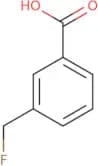
CAS:Versatile small molecule scaffoldFormula:C14H15NO3Purity:Min. 95%Molecular weight:245.27 g/mol3-(Fluoromethyl)benzoic acid
CAS:Versatile small molecule scaffoldFormula:C8H7FO2Purity:Min. 95%Molecular weight:154.14 g/mol





![2-[(4-Methyl-1,3-thiazol-2-yl)amino]acetic acid](/_next/image/?url=https%3A%2Fstatic.cymitquimica.com%2Fproducts%2F3D%2Fthumb-webp%2FPDA53285.webp&w=3840&q=75)