Building Blocks
Subcategories of "Building Blocks"
- Boronic Acids & Boronic Acid Derivatives(5,774 products)
- Chiral Building Blocks(1,237 products)
- Hydrocarbon Building Blocks(6,098 products)
- Organic Building Blocks(60,970 products)
Found 205135 products of "Building Blocks"
2-Phenylbenzyl Bromide
CAS:2-Phenylbenzyl Bromide is a compound that is used as an analytical reagent to measure the amount of fatty acids and carboxylic acids in water. It is a good indicator for measuring the degree of pollution in wastewater treatment plants. The fluorescence properties of 2-Phenylbenzyl Bromide are also used for analytical purposes, such as monitoring the reactions between sodium hydroxide solution and ester hydrochlorides. This product has been shown to be active against inflammatory diseases such as arthritis and asthma, as well as cervical cancer. 2-Phenylbenzyl Bromide has also been shown to activate AMPK activators and may be beneficial for the treatment of obesity and diabetes.
Formula:C13H11BrPurity:Min. 95%Molecular weight:247.13 g/mol1-(Adamantan-1-yl)propan-2-one
CAS:1-(Adamantan-1-yl)propan-2-one is an enolate reagent that is used in the synthesis of organic compounds. It reacts with chloride to form a chloroformate and can be used for the preparation of ketones, nitro compounds, and nitroalkanes. The 1-(Adamantan-1-yl)propan-2-one is also an enolate anion that has been shown to react with ethylmercury, nitroethane, and piperidine.
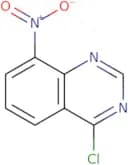
Formula:C13H20OPurity:Min. 95%Molecular weight:192.3 g/mol4-Chloro-8-nitroquinazoline
CAS:4-Chloro-8-nitroquinazoline is a potent antiproliferative agent that binds to the FGFR3 receptor and inhibits the proliferation of bladder cancer cells. It also has potent activity against bladder cancer cells in culture and inhibits cell growth by binding to submicromolar concentrations of this protein. 4-Chloro-8-nitroquinazoline may be useful for the treatment of bladder cancer, which is a disease characterized by uncontrolled cell division. This drug can inhibit proliferation of bladder cancer cells by interfering with their ability to signal through FGFR3 receptors, thereby inhibiting the activation of downstream signaling pathways that regulate cell cycle progression.
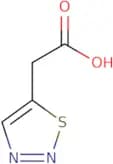
Formula:C8H4ClN3O2Purity:Min. 95%Molecular weight:209.59 g/mol2-(1,2,3-Thiadiazol-5-yl)acetic acid
CAS:Versatile small molecule scaffold
Formula:C4H4N2O2SPurity:Min. 95%Molecular weight:144.15 g/molRef: 3D-UAA81328
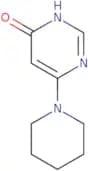
Discontinued product6-(Piperidin-1-yl)-3,4-dihydropyrimidin-4-one
CAS:Versatile small molecule scaffold
Formula:C9H13N3OPurity:Min. 95%Molecular weight:179.22 g/molRef: 3D-UAA80829
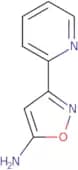
Discontinued product3-Pyridin-2-yl-isoxazol-5-ylamine
CAS:Versatile small molecule scaffold
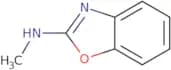
Formula:C8H7N3OPurity:Min. 95%Molecular weight:161.16 g/molN-Methyl-1,3-benzoxazol-2-amine
CAS:N-Methyl-1,3-benzoxazol-2-amine is a linker molecule that has been used in the synthesis of chlorides, molecular ions, trifluoroacetic acid, bromoacetone, yields and benzyne. It is also a precursor to the synthesis of benzoxazoles and alkylhalides. This compound reacts with cyclization reactions such as imino and benzoxazole. N-Methyl-1,3-benzoxazol-2-amine is also used in the gas phase to synthesize phenacyls.
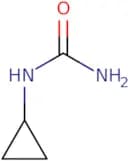
Formula:C8H8N2OPurity:Min. 95%Molecular weight:148.16 g/mol1-Cyclopropylurea
CAS:1-Cyclopropylurea is a synthetic anticancer drug that was originally developed as an antihypertensive agent. It has been shown to have inhibitory effects on cancer cells and inflammatory diseases, including cyclic nucleotide phosphodiesterase (cNPD) and b-raf. 1-Cyclopropylurea also inhibits the synthesis of epoxyeicosatrienoic acids (EETs) in vitro, suggesting that it may be useful for the treatment of cardiovascular diseases such as hypertension.
1-Cyclopropylurea has been shown to inhibit cell proliferation in culture by causing G2/M phase arrest and apoptosis. The mechanism of action of 1-cyclopropylurea is not well understood, but it has been suggested that the drug prevents the phosphorylation of b-raf, which prevents the activation of mitogen activated protein kinases (MAPKs).Purity:Min. 95%Ref: 3D-UAA75764
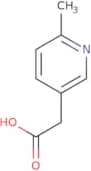
Discontinued product(6-Methylpyridin-3-yl)acetic acid
CAS:Versatile small molecule scaffold
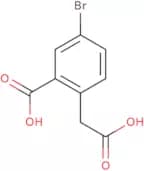
Formula:C8H9NO2Purity:Min. 95%Molecular weight:151.17 g/mol5-Bromo-2-(carboxymethyl)benzoic acid
CAS:Versatile small molecule scaffold
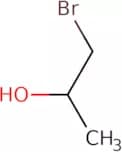
Formula:C9H7BrO4Purity:Min. 95%Molecular weight:259.05 g/mol1-Bromo-2-propanol
CAS:Silver trifluoromethanesulfonate is a chemical that is used in the manufacture of 1-bromo-2-propanol. When it reacts with hydroxyl groups, it forms an anhydrous sodium salt that can be used to inhibit population growth. Silver trifluoromethanesulfonate has been shown to have an inhibitory effect on human serum and postharvest populations of bacteria by reacting with the hydroxyl group in the enzyme population growth. Chemical ionization mass spectrometry (CI-MS) has been used to identify the aromatic hydrocarbon produced during this reaction. The mechanism for this reaction is thought to be due to hydrogen bonding between silver trifluoromethanesulfonate and the hydroxyl group.
Formula:C3H7BrOPurity:Min. 95%Molecular weight:138.99 g/molMethyl 2-[(2-methylpropyl)amino]acetate
CAS:Versatile small molecule scaffold
Formula:C7H15NO2Purity:Min. 95%Molecular weight:145.2 g/molRef: 3D-UAA62856
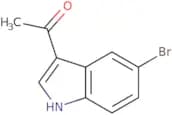
Discontinued product1-(5-Bromo-1H-indol-3-yl)ethanone
CAS:Controlled ProductVersatile small molecule scaffold
Formula:C10H8BrNOPurity:Min. 95%Molecular weight:238.08 g/mol2,7-Dichloro-[1,3]thiazolo[5,4-d]pyrimidine
CAS:Versatile small molecule scaffold
Formula:C5HCl2N3SPurity:Min. 95%Molecular weight:206.05 g/molRef: 3D-UAA60261
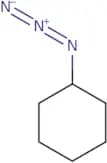
Discontinued productAzidocyclohexane
CAS:Azidocyclohexane is an unsymmetrical azide that is used in pharmaceutical preparations. It is a non-selective cation, which means it can bind to both positive and negative ions. Azidocyclohexane has been shown to have a chemokine receptor activity, which may be related to its immunosuppressive effects on autoimmune diseases. Azidocyclohexane also has been found to inhibit the binding of adenosine receptors in cancer cells, which may lead to cancer cell death. In addition, azidocyclohexane may also be effective in treating inflammatory bowel disease due to its anti-inflammatory properties.
Formula:C6H11N3Purity:Min. 95%Molecular weight:125.17 g/molRef: 3D-UAA57322
Discontinued productN,N'-Bis(2-hydroxyphenyl)ethanediamide
CAS:Versatile small molecule scaffold
Formula:C14H12N2O4Purity:Min. 95%Molecular weight:272.26 g/molRef: 3D-UAA53273
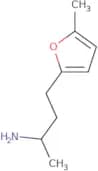
Discontinued product4-(5-Methylfuran-2-yl)butan-2-amine
CAS:Versatile small molecule scaffold
Formula:C9H15NOPurity:Min. 95%Molecular weight:153.22 g/molRef: 3D-UAA50975
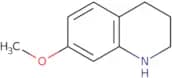
Discontinued product7-Methoxy-1,2,3,4-tetrahydroquinoline
CAS:Versatile small molecule scaffold
Formula:C10H13NOPurity:Min. 95%Molecular weight:163.22 g/molRef: 3D-UAA50061
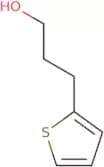
Discontinued product3-(thiophen-2-yl)propan-1-ol
CAS:3-(thiophen-2-yl)propan-1-ol is a chiral synthon. It is used as a building block in the synthesis of organic compounds, such as esters and amides. 3-(Thiophen-2-yl)propan-1-ol has been used to synthesize enantiomerically pure methylene compounds. This synthon can be prepared by the catalysis of vinyl acetate with thiophene, which forms a chain reaction that leads to the formation of 3-(thiophen-2-yl)propan-1-ol. The stereogenic center of this synthon is also chiral.
Formula:C7H10OSPurity:Min. 95%Molecular weight:142.22 g/molRef: 3D-UAA49872
Discontinued product2-Bromo-4-isopropylphenol
CAS:Versatile small molecule scaffold
Formula:C9H11BrOPurity:Min. 95%Molecular weight:215.1 g/mol


![Methyl 2-[(2-methylpropyl)amino]acetate](/_next/image/?url=https%3A%2Fstatic.cymitquimica.com%2Fproducts%2F3D%2Fthumb-webp%2FUAA62856.webp&w=3840&q=75)
![2,7-Dichloro-[1,3]thiazolo[5,4-d]pyrimidine](/_next/image/?url=https%3A%2Fstatic.cymitquimica.com%2Fproducts%2F3D%2Fthumb-webp%2FUAA60261.webp&w=3840&q=75)