Building Blocks
This section contains fundamental products for the synthesis of organic and biological compounds. Building blocks are the essential starting materials used to construct complex molecules through various chemical reactions. They play a critical role in drug discovery, material science, and chemical research. At CymitQuimica, we offer a diverse range of high-quality building blocks to support your innovative research and industrial projects, ensuring you have the essential components for successful synthesis.
Subcategories of "Building Blocks"
- Boronic Acids & Boronic Acid Derivatives(5,778 products)
- Chiral Building Blocks(1,243 products)
- Hydrocarbon Building Blocks(6,099 products)
- Organic Building Blocks(61,038 products)
Found 205376 products of "Building Blocks"
Sort by
Purity (%)
0
100
|
0
|
50
|
90
|
95
|
100
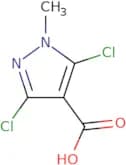
3,5-Dichloro-1-methyl-1H-pyrazole-4-carboxylic acid
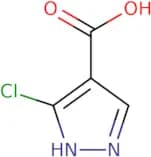
CAS:3,5-Dichloro-1-methyl-1H-pyrazole-4-carboxylic acid is a carboxylic acid that belongs to the group of medicines. It is used as an organic base and a catalyst in the preparation of other chemicals. 3,5-Dichloro-1-methyl-1H-pyrazole-4-carboxylic acid also has herbicidal and chlorinating properties. In addition, it can be converted into 3,5 dichloro 1 methyl pyrazole 4 (chloromethyl) oxazole, which can be used as an amide or glycolic reagent. This chemical is also used to make phosphorus pentoxide by reacting with phosphorus pentoxide in the liquid phase.Formula:C5H4Cl2N2O2Purity:Min. 95%Molecular weight:195 g/mol5-Chloro-1H-pyrazole-4-carboxylic acid
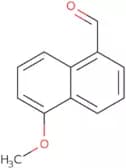
CAS:Versatile small molecule scaffoldFormula:C4H3ClN2O2Purity:Min. 95%Molecular weight:146.53 g/mol5-Methoxynaphthalene-1-carbaldehyde
CAS:Versatile small molecule scaffoldFormula:C12H10O2Purity:Min. 95%Molecular weight:186.21 g/moltert-Butyl N-[2-methyl-1-(methylamino)propan-2-yl]carbamate
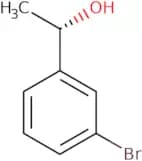
CAS:Versatile small molecule scaffoldFormula:C10H22N2O2Purity:Min. 95%Molecular weight:202.29 g/mol(S)-1-(3-Bromophenyl)ethanol
CAS:(S)-1-(3-Bromophenyl)ethanol is an aromatic ketone that is used as a substrate for the preparation of other compounds. It has been shown to be effective in the oxidation of formate, with dehydrogenase activity. The enzyme was immobilized onto an ion-exchange resin, which improved its stability and allowed for the selective removal of byproducts. The enantiopurity of (S)-1-(3-bromophenyl)ethanol was determined using preparative gas chromatography and parameters such as alcohols and chiral phenylacetaldehyde.Formula:C8H9BrOPurity:Min. 95%Molecular weight:201.06 g/mol(R)-1-(3-Bromophenyl)ethanol
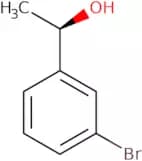
CAS:(R)-1-(3-Bromophenyl)ethanol is a prochiral ketone that undergoes asymmetric hydrogenation to afford racemic 1-phenylethanol. The catalytic system consists of an ionic liquid, imidazolium salt, and chiral ligands. This catalyst system can be used to transfer hydrogen to the ketone in order to generate two enantiomers with opposite optical rotation.Formula:C8H9BrOPurity:Min. 95%Molecular weight:201.06 g/mol2-[(3-Cyano-4-methyl-6-oxo-1,6-dihydropyridin-2-yl)sulfanyl]acetic acid
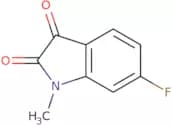
CAS:Versatile small molecule scaffoldFormula:C9H7N2O3SPurity:Min. 95%Molecular weight:223.23 g/mol6-Fluoro-1-methyl-2,3-dihydro-1H-indole-2,3-dione
CAS:Versatile small molecule scaffold
Formula:C9H6FNO2Purity:Min. 95%Molecular weight:179.15 g/moltert-Butyl (2Z)-2-[(dimethylamino)methylidene]-3-oxobutanoate
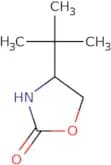
CAS:Versatile small molecule scaffoldFormula:C11H19NO3Purity:Min. 95%Molecular weight:213.27 g/mol4-tert-Butyl-1,3-oxazolidin-2-one
CAS:4-tert-Butyl-1,3-oxazolidin-2-one is a natural product that has been isolated from the Cathayensis plant. It is an inhibitor of protein synthesis and can be used to treat bacterial infections.
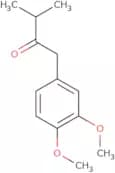
Formula:C7H13NO2Purity:Min. 95%Molecular weight:143.18 g/mol1-(3,4-Dimethoxyphenyl)-3-methylbutan-2-one
CAS:Versatile small molecule scaffoldFormula:C13H18O3Purity:Min. 95%Molecular weight:222.28 g/mol5-Bromo-6-methylimidazo[2,1-b][1,3]thiazole
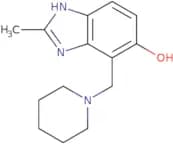
CAS:Versatile small molecule scaffoldFormula:C6H5BrN2SPurity:Min. 95%Molecular weight:217.09 g/mol2-Methyl-4-(piperidin-1-ylmethyl)-1H-1,3-benzodiazol-5-ol
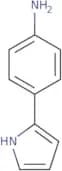
CAS:Versatile small molecule scaffoldFormula:C14H19N3OPurity:Min. 95%Molecular weight:245.32 g/mol4-(1H-Pyrrol-2-yl)aniline
CAS:Versatile small molecule scaffoldFormula:C10H10N2Purity:Min. 95%Molecular weight:158.2 g/mol2-[5-(Thiophen-3-yl)-1H-1,2,3,4-tetrazol-1-yl]acetic acid
CAS:2-[5-(Thiophen-3-yl)-1H-1,2,3,4-tetrazol-1-yl]acetic acid is a thiazolidinone derivative that has been shown to normalize peripheral nerve function in diabetic neuropathy. This drug has been shown to improve blood flow and nerve function in the sciatic nerve of diabetic rats, and to increase blood carnitine levels. 2-[5-(Thiophen-3-yl)-1H-1,2,3,4-tetrazol-1-yl]acetic acid is an analog of L -carnitine and may be used as a treatment for cardiac abnormalities caused by diabetes. It also helps decrease hyperactivity in mice with type 1 diabetes. 2-[5-(Thiophen-3-yl)-1H-1,2,3,4-tetrazol-1-yl]acetic acid is a potent inhibitor ofFormula:C7H6N4O2SPurity:Min. 95%Molecular weight:210.22 g/molEthyl 2-[5-(thiophen-3-yl)-1H-1,2,3,4-tetrazol-1-yl]acetate
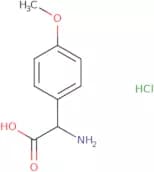
CAS:Versatile small molecule scaffoldFormula:C9H10N4O2SPurity:Min. 95%Molecular weight:238.3 g/mol2-Amino-2-(4-methoxyphenyl)acetic acid hydrochloride
CAS:Versatile small molecule scaffold
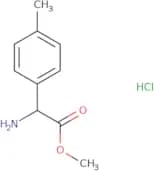
Formula:C9H12ClNO3Purity:Min. 95%Molecular weight:217.65 g/molmethyl 2-amino-2-(4-methylphenyl)acetate hydrochloride
CAS:Versatile small molecule scaffoldFormula:C10H14ClNO2Purity:Min. 95%Molecular weight:215.7 g/molAcetic acid, [(1,3-dihydro-1,3-dioxo-2H-isoindol-2-yl)oxy]-
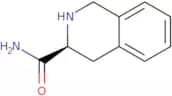
CAS:Acetic acid is a molecule that contains a linker group, which can be used in the synthesis of cinnamic acid derivatives. This molecule has been shown to have antioxidant activity and is often used as a synthetic flavonoid. Acetic acid is also reactive and may react with other molecules such as cinnamic acid derivatives or perfluorinated compounds. Acetic acid can be found in kidney disease patients and has been linked to inflammatory diseases such as arthritis. Acetic acid is also used for labeling purposes and can be crosslinked with other molecules to form a long-lasting complex.Formula:C10H7NO5Purity:Min. 95%Molecular weight:221.17 g/mol(S)-1,2,3,4-Tetrahydro-isoquinoline-3-carboxylic acid amide ee
CAS:Versatile small molecule scaffold
Formula:C10H12N2OPurity:Min. 95%Molecular weight:176.22 g/mol

![tert-Butyl N-[2-methyl-1-(methylamino)propan-2-yl]carbamate](/_next/image/?url=https%3A%2Fstatic.cymitquimica.com%2Fproducts%2F3D%2Fthumb-webp%2FJFA59795.webp&w=3840&q=75)
![2-[(3-Cyano-4-methyl-6-oxo-1,6-dihydropyridin-2-yl)sulfanyl]acetic acid](/_next/image/?url=https%3A%2Fstatic.cymitquimica.com%2Fproducts%2F3D%2Fthumb-webp%2FJFA61673.webp&w=3840&q=75)
![tert-Butyl (2Z)-2-[(dimethylamino)methylidene]-3-oxobutanoate](/_next/image/?url=https%3A%2Fstatic.cymitquimica.com%2Fproducts%2F3D%2Fthumb-webp%2FJFA65371.webp&w=3840&q=75)
![5-Bromo-6-methylimidazo[2,1-b][1,3]thiazole](/_next/image/?url=https%3A%2Fstatic.cymitquimica.com%2Fproducts%2F3D%2Fthumb-webp%2FJFA67013.webp&w=3840&q=75)
![2-[5-(Thiophen-3-yl)-1H-1,2,3,4-tetrazol-1-yl]acetic acid](/_next/image/?url=https%3A%2Fstatic.cymitquimica.com%2Fproducts%2F3D%2Fthumb-webp%2FJFA71773.webp&w=3840&q=75)
![Ethyl 2-[5-(thiophen-3-yl)-1H-1,2,3,4-tetrazol-1-yl]acetate](/_next/image/?url=https%3A%2Fstatic.cymitquimica.com%2Fproducts%2F3D%2Fthumb-webp%2FJFA71810.webp&w=3840&q=75)
![Acetic acid, [(1,3-dihydro-1,3-dioxo-2H-isoindol-2-yl)oxy]-](/_next/image/?url=https%3A%2Fstatic.cymitquimica.com%2Fproducts%2F3D%2Fthumb-webp%2FJFA72487.webp&w=3840&q=75)