Building Blocks
This section contains fundamental products for the synthesis of organic and biological compounds. Building blocks are the essential starting materials used to construct complex molecules through various chemical reactions. They play a critical role in drug discovery, material science, and chemical research. At CymitQuimica, we offer a diverse range of high-quality building blocks to support your innovative research and industrial projects, ensuring you have the essential components for successful synthesis.
Subcategories of "Building Blocks"
- Boronic Acids & Boronic Acid Derivatives(5,756 products)
- Chiral Building Blocks(1,242 products)
- Hydrocarbon Building Blocks(6,095 products)
- Organic Building Blocks(61,051 products)
Found 199813 products of "Building Blocks"
Sort by
Purity (%)
0
100
|
0
|
50
|
90
|
95
|
100
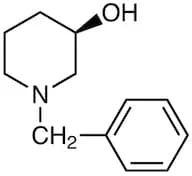
(R)-1-Benzyl-3-hydroxypiperidine
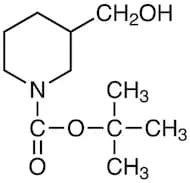
CAS:Formula:C12H17NOPurity:>98.0%(GC)Color and Shape:Light orange to Yellow to Green clear liquidMolecular weight:191.271-(tert-Butoxycarbonyl)-3-piperidinemethanol
CAS:Formula:C11H21NO3Purity:>95.0%(GC)Color and Shape:White to Almost white powder to crystalMolecular weight:215.29N,N-(Dimethyl-d6)hydrazine Hydrochloride
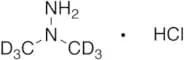
CAS:Controlled Product<p>Applications A labelled isotope of a toxic volatile hydrazine found in rocket fuel systems.<br>References Oanasyuk, A.G. et al.: Vis. Nat. Tekh. Univ. KhPI, 13, 59 (2010);<br></p>Formula:C2H3D6ClN2Color and Shape:NeatMolecular weight:102.604-Tetradecylphenyl-13C6 1-Sodium Sulfonate
CAS:Controlled ProductFormula:C6C14H33O3S·NaColor and Shape:NeatMolecular weight:382.4852-[Nitroso(phenylmethyl)amino]benzoic Acid
CAS:Controlled ProductFormula:C14H12N2O3Color and Shape:NeatMolecular weight:256.2572-Chloroethanol-1,1,2,2-d4
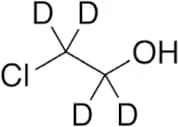
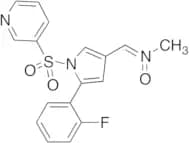
CAS:Controlled Product<p>Applications 2-Chloroethanol is used in the preparation of TTFTT (tetrathiafulvalene-2,3,6,7-tetrathiolate) and important building block in TTF syntheis. In addition, it is used in the synthesis of vinyltriazoles. This is the labeled analog.<br>Dangerous Goods Info This compound is forbidden to ship by air under IATA regulations.<br>References Svenstrup, N. et al.: Synthesis, 8, 809 (1994); Thibault, R. et al.: J. Am. Chem. Soc., 128, 12084 (2006);<br></p>Formula:C22H4ClOHColor and Shape:Colourless OilMolecular weight:84.54(Z)-N-((5-(2-Fluorophenyl)-1-(pyridin-3-ylsulfonyl)-1H-pyrrol-3-yl)methylene)methanamine Oxide
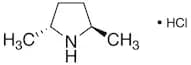
CAS:Formula:C17H14FN3O3SColor and Shape:Neat(-)-(2R,5R)-2,5-Dimethylpyrrolidine, Hydrochloride, 90% (contains meso-isomer)
CAS:Controlled Product<p>Applications Reagent used for asymmetric syntheses.<br>References Schlessinger, R., et al.: J. Org. Chem., 28, 3070 (1986)<br></p>Formula:C6H13N·ClHColor and Shape:NeatMolecular weight:135.64Glyceryl Trihexadecanoate-13C1 (2-Hexadecanoate-1-13C)
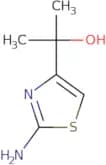
CAS:Controlled Product<p>Applications Glyceryl Trihexadecanoate-13C1 (2-Hexadecanoate-1-13C) is a useful isotopically labeled compound of Tripalmitin (T808130)<br></p>Formula:CC50H98O6Color and Shape:NeatMolecular weight:808.332-(2-Amino-1,3-thiazol-4-yl)propan-2-ol
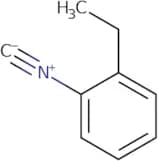
CAS:<p>Versatile small molecule scaffold</p>Formula:C6H10N2OSPurity:Min. 95%Molecular weight:158.22 g/mol1-Ethyl-2-isocyano-benzene
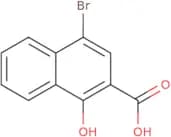
CAS:<p>Versatile small molecule scaffold</p>Formula:C9H9NPurity:Min. 95%Molecular weight:131.17 g/mol4-bromo-1-hydroxynaphthalene-2-carboxylic acid
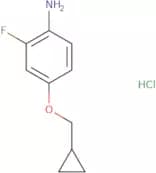
CAS:<p>4-Bromo-1-hydroxynaphthalene-2-carboxylic acid (4BHN) is a spectroscopic compound that has been used as a radioligand to study the binding of dopamine and dopamine D3 receptors. This compound binds to the d3 receptor with high affinity and specificity, but it does not interact with the d1 or d2 receptors. 4BHN has been shown to act as an agonist at the dopamine D3 receptor. It also acts as an antagonist at the piperidine site of the dopamine D2 receptor. The effects of 4BHN are reversible, which means that it can be displaced by unlabeled 4BHN or other compounds that bind to the same site on the receptor. This technique is useful for studying drug interactions and for determining whether drugs have a subtype selectivity profile.</p>Formula:C11H7BrO3Purity:Min. 95%Molecular weight:267.1 g/mol4-(Cyclopropylmethoxy)-2-fluoroaniline hydrochloride
CAS:<p>Versatile small molecule scaffold</p>Formula:C10H13ClFNOPurity:Min. 95%Molecular weight:217.67 g/molMethyl 4-methyl-3-{[(4-methyl-1H-imidazol-5-yl)methyl]amino}benzoate
CAS:<p>Versatile small molecule scaffold</p>Formula:C14H17N3O2Purity:Min. 95%Molecular weight:259.3 g/molRef: 3D-QCC36887
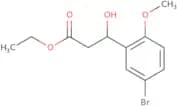
Discontinued productEthyl 3-(5-bromo-2-methoxyphenyl)-3-hydroxypropanoate
CAS:<p>Versatile small molecule scaffold</p>Formula:C12H15BrO4Purity:Min. 95%Molecular weight:303.15 g/molRef: 3D-QCC36863
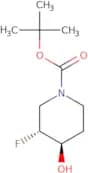
Discontinued producttrans-1-BOC-3-Fluoro-4-hydroxypiperidine
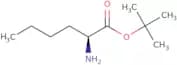
CAS:<p>Versatile small molecule scaffold</p>Formula:C10H18FNO3Purity:Min. 95%Molecular weight:219.26 g/moltert-butyl (2S)-2-aminohexanoate
CAS:<p>Tert-butyl (2S)-2-aminohexanoate is an intermediate that is used in the synthesis of glycine by the reaction of benzyl bromide and tert-butyl amine. The stereospecifically incorporated tert-butyl group has a high degree of enantioselectivity, which makes this intermediate useful in the synthesis of glycine. Tert-butyl (2S)-2-aminohexanoate can be synthesized using lithium diisopropylamide and a tertiary amine as an alkylating agent.</p>Formula:C10H21NO2Purity:Min. 95%Molecular weight:187.3 g/mol2-(2,4-Dimethylbenzoyl)furan
CAS:<p>Versatile small molecule scaffold</p>Formula:C13H12O2Purity:Min. 95%Molecular weight:200.23 g/mol




![2-[Nitroso(phenylmethyl)amino]benzoic Acid](/_next/image/?url=https%3A%2Fstatic.cymitquimica.com%2Fproducts%2FTR%2Fthumb-webp%2FN472575.webp&w=3840&q=75)


![Methyl 4-methyl-3-{[(4-methyl-1H-imidazol-5-yl)methyl]amino}benzoate](/_next/image/?url=https%3A%2Fstatic.cymitquimica.com%2Fproducts%2F3D%2Fthumb-webp%2FQCC36887.webp&w=3840&q=75)