Building Blocks
This section contains fundamental products for the synthesis of organic and biological compounds. Building blocks are the essential starting materials used to construct complex molecules through various chemical reactions. They play a critical role in drug discovery, material science, and chemical research. At CymitQuimica, we offer a diverse range of high-quality building blocks to support your innovative research and industrial projects, ensuring you have the essential components for successful synthesis.
Subcategories of "Building Blocks"
- Boronic Acids & Boronic Acid Derivatives(5,756 products)
- Chiral Building Blocks(1,242 products)
- Hydrocarbon Building Blocks(6,095 products)
- Organic Building Blocks(61,055 products)
Found 199650 products of "Building Blocks"
Sort by
Purity (%)
0
100
|
0
|
50
|
90
|
95
|
100
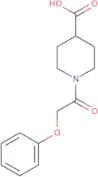
1-(Phenoxyacetyl)piperidine-4-carboxylic acid
CAS:<p>Versatile small molecule scaffold</p>Formula:C14H17NO4Purity:Min. 95%Molecular weight:263.29 g/molRef: 3D-CMB99029
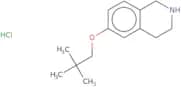
Discontinued product6-(2,2-Dimethylpropoxy)-1,2,3,4-tetrahydroisoquinoline hydrochloride
CAS:<p>Versatile small molecule scaffold</p>Formula:C14H22ClNOPurity:Min. 95%Molecular weight:255.8 g/molRef: 3D-APD14408
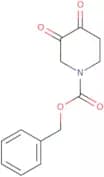
Discontinued productBenzyl 3,4-dioxopiperidine-1-carboxylate
CAS:<p>Versatile small molecule scaffold</p>Formula:C13H13NO4Purity:Min. 95%Molecular weight:247.25 g/molRef: 3D-JHD94774
Discontinued productQuinoline-5-carbonitrile
CAS:<p>Quinoline-5-carbonitrile is a cyanide compound that can be used in the synthesis of heterocyclic compounds. The reaction between quinoline and 5-cyanovaleric acid produces 6-nitroquinoline, which is then converted to dimethyl sulfoxide by alcoholysis. This reaction product can then be used to synthesize an amide or nucleophile. Quinoline-5-carbonitrile reacts with potassium in the presence of bifunctional hydrazide to produce a cyanide ion, which can be hydrolyzed by an acid to release hydrogen cyanide gas. This experiment has been shown as a model for reactions involving cyano compounds.</p>Formula:C10H6N2Purity:Min. 95%Molecular weight:154.17 g/molRef: 3D-JCA55102
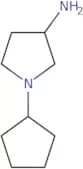
Discontinued product1-cyclopentylpyrrolidin-3-amine
CAS:<p>Versatile small molecule scaffold</p>Formula:C9H18N2Purity:Min. 95%Molecular weight:154.25 g/molRef: 3D-IMB71303
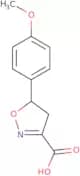
Discontinued product5-(4-Methoxyphenyl)-4,5-dihydro-1,2-oxazole-3-carboxylic acid
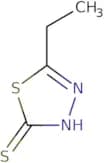
CAS:<p>Versatile small molecule scaffold</p>Formula:C11H11NO4Purity:Min. 95%Molecular weight:221.21 g/mol5-Ethyl-1,3,4-thiadiazole-2-thiol
CAS:<p>Versatile small molecule scaffold</p>Formula:C4H6N2S2Purity:Min. 95%Molecular weight:146.2 g/molRef: 3D-MBA66351
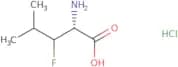
Discontinued product(2R)-2-Amino-3-fluoro-4-methylpentanoic acid hydrochloride
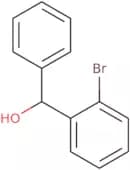
CAS:<p>Versatile small molecule scaffold</p>Formula:C6H13ClFNO2Purity:Min. 95%Molecular weight:185.6 g/mol(2-Bromophenyl)(phenyl)methanol
CAS:<p>The synthesis of (2-bromophenyl)(phenyl)methanol is accomplished by the reaction of an aldehyde with bromine followed by an alkylation with magnesium. The product is obtained as a racemic mixture of enantiomers with a chiral center, which can be resolved by fractional crystallization or other separation methods. This method has been shown to be efficient for the synthesis of alcohols and carbinols, and stereogenic reactions.</p>Formula:C13H11OBrPurity:Min. 95%Molecular weight:263.12 g/molRef: 3D-JCA14247
Discontinued product3-Morpholin-4-ylmethyl-2,3-dihydro-1H-indole
CAS:<p>Versatile small molecule scaffold</p>Formula:C13H18N2OPurity:Min. 95%Molecular weight:218.29 g/molRef: 3D-DKB61741
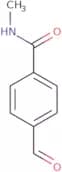
Discontinued product4-Formyl-N-methyl-benzamide
CAS:<p>Versatile small molecule scaffold</p>Formula:C9H9NO2Purity:Min. 95%Molecular weight:163.18 g/mol2-Chloro-N-[2-(3-chlorophenyl)ethyl]acetamide
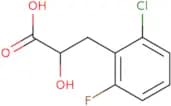
CAS:<p>Versatile small molecule scaffold</p>Formula:C10H11Cl2NOPurity:Min. 95%Molecular weight:232.1 g/mol3-(2-Chloro-6-fluorophenyl)-2-hydroxypropanoic acid
CAS:<p>Versatile small molecule scaffold</p>Formula:C9H8ClFO3Purity:Min. 95%Molecular weight:218.61 g/molRef: 3D-GXB56152
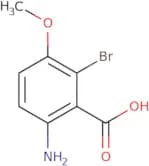
Discontinued product6-Amino-2-bromo-3-methoxybenzoic acid
CAS:<p>Versatile small molecule scaffold</p>Formula:C8H8BrNO3Purity:Min. 95%Molecular weight:246.06 g/molRef: 3D-CGA94638
Discontinued product2-[3-(Difluoromethoxy)-4-methoxyphenyl]ethan-1-amine
CAS:Controlled Product<p>Versatile small molecule scaffold</p>Formula:C10H13F2NO2Purity:Min. 95%Molecular weight:217.21 g/molRef: 3D-YHB23469
Discontinued product3-Methyl-2-[3-(trifluoromethyl)phenyl]butanoic acid
CAS:<p>Versatile small molecule scaffold</p>Formula:C12H13F3O2Purity:Min. 95%Molecular weight:246.22 g/molRef: 3D-BCA63232
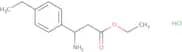
Discontinued productEthyl 3-Amino-3-(4-ethylphenyl)propanoate Hydrochloride
CAS:<p>Versatile small molecule scaffold</p>Formula:C13H19NO2·HClPurity:Min. 95%Molecular weight:221.3 g/molThieno[2,3-b]pyridine-5-carbonitrile
CAS:<p>Thienopyridine analogs are a class of chemical compounds that function as agonists of the receptor α. These compounds have been shown to inhibit fatty acid oxidation and ATP production in rat liver cells, which may be due to their ability to activate AMP-activated protein kinase (AMPK). Thienopyridine analogs are being investigated for use as anti-inflammatory agents and cancer treatments.</p>Formula:C8H4N2SPurity:Min. 95%Molecular weight:160.2 g/molRef: 3D-WAA34431
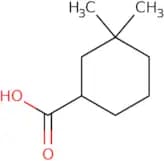
Discontinued product3,3-Dimethylcyclohexane-1-carboxylic acid
CAS:<p>Versatile small molecule scaffold</p>Formula:C9H16O2Purity:Min. 95%Molecular weight:156.22 g/molRef: 3D-CCA20977
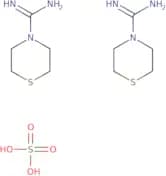
Discontinued productBis(thiomorpholine-4-carboximidamide) sulfate
CAS:<p>Versatile small molecule scaffold</p>Formula:C10H24N6O4S3Purity:Min. 95%Molecular weight:388.5 g/mol


![2-Chloro-N-[2-(3-chlorophenyl)ethyl]acetamide](/_next/image/?url=https%3A%2Fstatic.cymitquimica.com%2Fproducts%2F3D%2Fthumb-webp%2FJBA16215.webp&w=3840&q=75)
![2-[3-(Difluoromethoxy)-4-methoxyphenyl]ethan-1-amine](/_next/image/?url=https%3A%2Fstatic.cymitquimica.com%2Fproducts%2F3D%2Fthumb-webp%2FYHB23469.webp&w=3840&q=75)
![3-Methyl-2-[3-(trifluoromethyl)phenyl]butanoic acid](/_next/image/?url=https%3A%2Fstatic.cymitquimica.com%2Fproducts%2F3D%2Fthumb-webp%2FBCA63232.webp&w=3840&q=75)
![Thieno[2,3-b]pyridine-5-carbonitrile](/_next/image/?url=https%3A%2Fstatic.cymitquimica.com%2Fproducts%2F3D%2Fthumb-webp%2FWAA34431.webp&w=3840&q=75)