


Building Blocks
This section contains fundamental products for the synthesis of organic and biological compounds. Building blocks are the essential starting materials used to construct complex molecules through various chemical reactions. They play a critical role in drug discovery, material science, and chemical research. At CymitQuimica, we offer a diverse range of high-quality building blocks to support your innovative research and industrial projects, ensuring you have the essential components for successful synthesis.
Subcategories of "Building Blocks"
- Boronic Acids & Boronic Acid Derivatives(5,756 products)
- Chiral Building Blocks(1,242 products)
- Hydrocarbon Building Blocks(6,095 products)
- Organic Building Blocks(61,055 products)
Found 199650 products of "Building Blocks"
Sort by
Purity (%)
0
100
|
0
|
50
|
90
|
95
|
100
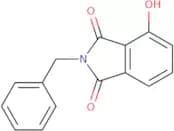
2-Benzyl-4-hydroxy-2,3-dihydro-1H-isoindole-1,3-dione
CAS:<p>Versatile small molecule scaffold</p>Formula:C15H11NO3Purity:Min. 95%Molecular weight:253.25 g/molRef: 3D-CSB68816
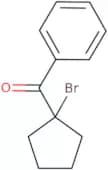
Discontinued product(1-Bromocyclopentyl)(phenyl)methanone
CAS:<p>Versatile small molecule scaffold</p>Formula:C12H13BrOPurity:Min. 95%Molecular weight:253.13 g/molRef: 3D-GAA74066
Discontinued product5-Chloro-2-(1H-pyrrol-1-yl)aniline
CAS:<p>Versatile small molecule scaffold</p>Formula:C10H9ClN2Purity:Min. 95%Molecular weight:192.64 g/molrac-tert-Butyl N-[(3R,4S)-4-(4-fluorophenyl)pyrrolidin-3-yl]carbamate
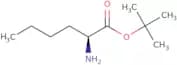
CAS:<p>Versatile small molecule scaffold</p>Formula:C15H21FN2O2Purity:Min. 95%Molecular weight:280.34 g/moltert-butyl (2S)-2-aminohexanoate
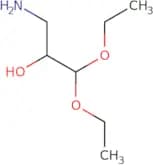
CAS:<p>Tert-butyl (2S)-2-aminohexanoate is an intermediate that is used in the synthesis of glycine by the reaction of benzyl bromide and tert-butyl amine. The stereospecifically incorporated tert-butyl group has a high degree of enantioselectivity, which makes this intermediate useful in the synthesis of glycine. Tert-butyl (2S)-2-aminohexanoate can be synthesized using lithium diisopropylamide and a tertiary amine as an alkylating agent.</p>Formula:C10H21NO2Purity:Min. 95%Molecular weight:187.3 g/mol3-Amino-1,1-diethoxypropan-2-ol
CAS:<p>Versatile small molecule scaffold</p>Formula:C7H17NO3Purity:Min. 95%Molecular weight:163.21 g/molRef: 3D-QEA82718
Discontinued product5-(Propan-2-yl)-1-(pyridin-4-yl)-1H-pyrazole-3-carboxylic acid
CAS:<p>Versatile small molecule scaffold</p>Formula:C12H13N3O2Purity:Min. 95%Molecular weight:231.25 g/mol(2S,5S)-1-{[(9H-Fluoren-9-yl)methoxy]carbonyl}-5-phenylpyrrolidine-2-carboxylic acid
CAS:<p>Versatile small molecule scaffold</p>Formula:C26H23NO4Purity:Min. 95%Molecular weight:413.5 g/molRef: 3D-UYB95360
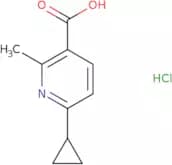
Discontinued product6-Cyclopropyl-2-methylpyridine-3-carboxylic acid hydrochloride
CAS:<p>Versatile small molecule scaffold</p>Formula:C10H12ClNO2Purity:Min. 95%Molecular weight:213.66 g/molRef: 3D-VXC68611
Discontinued product3-{[3-(Trifluoromethyl)-1H-pyrazol-1-yl]methyl}benzoic acid
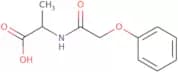
CAS:<p>Versatile small molecule scaffold</p>Formula:C12H9F3N2O2Purity:Min. 95%Molecular weight:270.21 g/mol2-(2-Phenoxyacetamido)propanoic acid
CAS:<p>Versatile small molecule scaffold</p>Formula:C11H13NO4Purity:Min. 95%Molecular weight:223.22 g/molRef: 3D-EKB12384
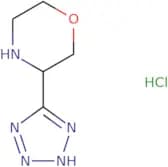
Discontinued product3-(1H-1,2,3,4-Tetrazol-5-yl)morpholine hydrochloride
CAS:<p>Versatile small molecule scaffold</p>Formula:C5H10ClN5OPurity:Min. 95%Molecular weight:191.62 g/molRef: 3D-VXC70511
Discontinued product[6-(Pyridin-2-yl)pyridin-3-yl]methanol
CAS:<p>Versatile small molecule scaffold</p>Formula:C11H10N2OPurity:Min. 95%Molecular weight:186.21 g/molRef: 3D-WFA58187
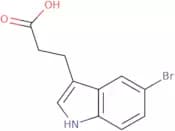
Discontinued product5-Bromo-indol-3-propionic acid
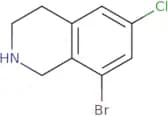
CAS:<p>Versatile small molecule scaffold</p>Formula:C11H10BrNO2Purity:Min. 95%Molecular weight:268.11 g/mol8-Bromo-6-chloro-1,2,3,4-tetrahydroisoquinoline
CAS:<p>Versatile small molecule scaffold</p>Formula:C9H9BrClNPurity:Min. 95%Molecular weight:246.53 g/molRef: 3D-DLC43685
Discontinued productrac-2-[(1R,3S)-3-(Propan-2-yl)-2,3-dihydro-1H-inden-1-yl]acetic acid
CAS:<p>Versatile small molecule scaffold</p>Formula:C14H18O2Purity:Min. 95%Molecular weight:218.29 g/molRef: 3D-ZLD00010
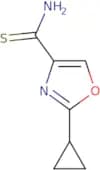
Discontinued product2-Cyclopropyl-1,3-oxazole-4-carbothioamide
CAS:<p>Versatile small molecule scaffold</p>Formula:C7H8N2OSPurity:Min. 95%Molecular weight:168.22 g/molRef: 3D-BKD17844
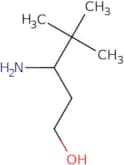
Discontinued product3-Amino-4,4-dimethylpentan-1-ol
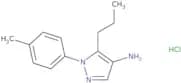
CAS:<p>Versatile small molecule scaffold</p>Formula:C7H17NOPurity:Min. 95%Molecular weight:131.22 g/mol1-(4-Methylphenyl)-5-propyl-1H-pyrazol-4-amine hydrochloride
CAS:<p>Versatile small molecule scaffold</p>Formula:C13H18ClN3Purity:Min. 95%Molecular weight:251.75 g/molRef: 3D-DXC60792
Discontinued producttert-Butyl 6,6-dioxo-6λ6-thia-2,7-diazaspiro[3.4]octane-2-carboxylate
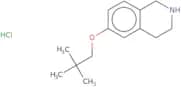
CAS:<p>Versatile small molecule scaffold</p>Formula:C10H18N2O4SPurity:Min. 95%Molecular weight:262.3 g/mol6-(2,2-Dimethylpropoxy)-1,2,3,4-tetrahydroisoquinoline hydrochloride
CAS:<p>Versatile small molecule scaffold</p>Formula:C14H22ClNOPurity:Min. 95%Molecular weight:255.8 g/molRef: 3D-APD14408
Discontinued product2-Amino-4H,5H-naphtho[2,1-b]thiophene-1-carbonitrile
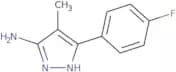
CAS:<p>2-Amino-4H,5H-naphtho[2,1-b]thiophene-1-carbonitrile is a dihydronaphthalene compound that has been shown to be active against influenza viruses. It inhibits the virus by binding to the pyrimidine ring of the virus's RNA polymerase. This inhibits viral replication and reduces plaque formation. 2-Amino-4H,5H-naphtho[2,1-b]thiophene-1-carbonitrile has antiviral activity against influenza A and is effective in inhibiting h5n1 virus replication.</p>Formula:C13H10N2SPurity:Min. 95%Molecular weight:226.3 g/mol5-(4-Fluoro-phenyl)-4-methyl-2H-pyrazol-3-ylamine
CAS:<p>Versatile small molecule scaffold</p>Formula:C10H10FN3Purity:Min. 95%Molecular weight:191.2 g/molRef: 3D-TTB06047
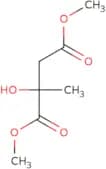
Discontinued product1,4-Dimethyl 2-hydroxy-2-methylbutanedioate
CAS:<p>1,4-Dimethyl 2-hydroxy-2-methylbutanedioate is an allylating agent that modifies the amino acid lysine residues in proteins. It has been shown to be effective in the treatment of skin lesions caused by Staphylococcus aureus and other bacteria because it inhibits bacterial growth through an antimicrobial effect. 1,4-Dimethyl 2-hydroxy-2-methylbutanedioate also has been used as a precursor for the synthesis of vitamin D3. This compound is metabolized in mammalian cells to form cysteamine, which is further converted to S-(1,4-dimethylpentadienoyl)cysteamine (DMPE). The resulting product can be used as a functional group on collagen or malic acid. 1,4-Dimethyl 2-hydroxy-2-methylbutanedioate also is used for modifications of mucocutaneous tissues such as skin and oral muc</p>Formula:C7H12O5Purity:Min. 95%Molecular weight:176.17 g/molRef: 3D-UAA02062
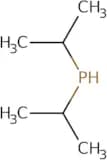
Discontinued productDiisopropylphosphine, 10wt.% in hexane
CAS:<p>Please enquire for more information about Diisopropylphosphine, 10wt.% in hexane including the price, delivery time and more detailed product information at the technical inquiry form on this page</p>Formula:C6H15PPurity:Min. 95%Molecular weight:118.16 g/molRef: 3D-VAA49153
Discontinued product2,6-Dichloro-N'-hydroxybenzene-1-carboximidamide
CAS:<p>Versatile small molecule scaffold</p>Formula:C7H6Cl2N2OPurity:Min. 95%Molecular weight:205.04 g/molRef: 3D-YAA50521
Discontinued product7-Chloro-5-fluoro-1,3-benzoxazole-2-thiol
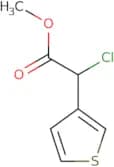
CAS:<p>Versatile small molecule scaffold</p>Formula:C7H3ClFNOSPurity:Min. 95%Molecular weight:203.62 g/molMethyl 2-chloro-2-(thiophen-3-yl)acetate
CAS:<p>Versatile small molecule scaffold</p>Formula:C7H7ClO2SPurity:Min. 95%Molecular weight:190.65 g/mol2-(4,5-Dichloro-2-nitrophenyl)-4,4,5,5-tetramethyl-1,3,2-dioxaborolane
CAS:<p>Versatile small molecule scaffold</p>Formula:C12H14BCl2NO4Purity:Min. 95%Molecular weight:317.96 g/molRef: 3D-CVD60911
Discontinued product7-Hydroxy-3,4-dimethyl-2,3-dihydro-1H-inden-1-one
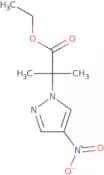
CAS:<p>Versatile small molecule scaffold</p>Formula:C11H12O2Purity:Min. 95%Molecular weight:176.21 g/mol2-Methyl-2-(4-nitro-pyrazol-1-yl)-propionic acid ethyl ester
CAS:<p>Versatile small molecule scaffold</p>Formula:C9H13N3O4Purity:Min. 95%Molecular weight:227.22 g/molRef: 3D-CQB24373
Discontinued productMethyl 2-formyl-4,5-dimethoxybenzoate
CAS:<p>Versatile small molecule scaffold</p>Formula:C11H12O5Purity:Min. 95%Molecular weight:224.21 g/molRef: 3D-DCA01284
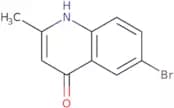
Discontinued product6-Bromo-2-methylquinolin-4-ol
CAS:<p>Versatile small molecule scaffold</p>Formula:C10H8BrNOPurity:Min. 95%Molecular weight:238.08 g/mol3-Morpholin-4-ylmethyl-2,3-dihydro-1H-indole
CAS:<p>Versatile small molecule scaffold</p>Formula:C13H18N2OPurity:Min. 95%Molecular weight:218.29 g/molRef: 3D-DKB61741
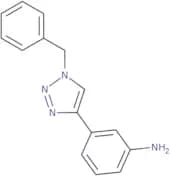
Discontinued product3-(1-Benzyl-1H-1,2,3-triazol-4-yl)aniline
CAS:<p>Versatile small molecule scaffold</p>Formula:C15H14N4Purity:Min. 95%Molecular weight:250.3 g/molRef: 3D-BWB92000
Discontinued product2-[1-(Difluoromethyl)-1H-imidazol-2-yl]-1-phenylethan-1-amine
CAS:<p>Versatile small molecule scaffold</p>Formula:C12H13F2N3Purity:Min. 95%Molecular weight:237.25 g/molRef: 3D-BAC92276
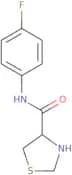
Discontinued productN-(4-Fluorophenyl)-1,3-thiazolidine-4-carboxamide
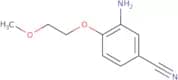
CAS:<p>Versatile small molecule scaffold</p>Formula:C10H11FN2OSPurity:Min. 95%Molecular weight:226.27 g/mol3-Amino-4-(2-methoxyethoxy)benzonitrile
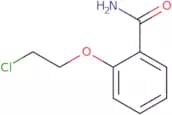
CAS:<p>Versatile small molecule scaffold</p>Formula:C10H12N2O2Purity:Min. 95%Molecular weight:192.21 g/mol2-(2-Chloroethoxy)benzamide
CAS:<p>Versatile small molecule scaffold</p>Formula:C9H10ClNO2Purity:Min. 95%Molecular weight:199.63 g/molRef: 3D-EBA57913
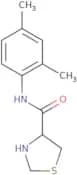
Discontinued productN-(2,4-Dimethylphenyl)-1,3-thiazolidine-4-carboxamide
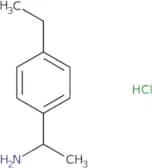
CAS:<p>Versatile small molecule scaffold</p>Formula:C12H16N2OSPurity:Min. 95%Molecular weight:236.34 g/mol(1R)-1-(4-Ethylphenyl)ethan-1-amine hydrochloride
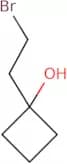
CAS:<p>Versatile small molecule scaffold</p>Formula:C10H16ClNPurity:Min. 95%Molecular weight:185.69 g/mol1-(2-Bromoethyl)cyclobutan-1-ol
CAS:<p>Versatile small molecule scaffold</p>Formula:C6H11BrOPurity:Min. 95%Molecular weight:179.05 g/molRef: 3D-JBD30961
Discontinued productQuinoline-5-carbonitrile
CAS:<p>Quinoline-5-carbonitrile is a cyanide compound that can be used in the synthesis of heterocyclic compounds. The reaction between quinoline and 5-cyanovaleric acid produces 6-nitroquinoline, which is then converted to dimethyl sulfoxide by alcoholysis. This reaction product can then be used to synthesize an amide or nucleophile. Quinoline-5-carbonitrile reacts with potassium in the presence of bifunctional hydrazide to produce a cyanide ion, which can be hydrolyzed by an acid to release hydrogen cyanide gas. This experiment has been shown as a model for reactions involving cyano compounds.</p>Formula:C10H6N2Purity:Min. 95%Molecular weight:154.17 g/molRef: 3D-JCA55102
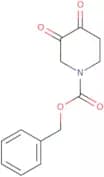
Discontinued productBenzyl 3,4-dioxopiperidine-1-carboxylate
CAS:<p>Versatile small molecule scaffold</p>Formula:C13H13NO4Purity:Min. 95%Molecular weight:247.25 g/molRef: 3D-JHD94774
Discontinued product4-(1-Naphthyl)piperidine hydrochloride
CAS:<p>Versatile small molecule scaffold</p>Formula:C15H18ClNPurity:Min. 95%Molecular weight:247.76 g/mol3-[(4-Chlorophenyl)amino]propanenitrile
CAS:<p>Versatile small molecule scaffold</p>Formula:C9H9ClN2Purity:Min. 95%Molecular weight:180.63 g/molRef: 3D-RBA83357
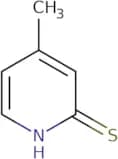
Discontinued product4-Methylpyridine-2-thiol
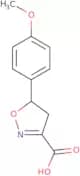
CAS:<p>4-Methylpyridine-2-thiol is a ligand that binds to metal ions. It has been shown to be an effective photoelectron scavenger for mercury and lead, as well as a wide variety of other metals. 4-Methylpyridine-2-thiol is also an important monomer in the preparation of polymers and resins. This ligand has been used in the synthesis of compounds with cyclic structures and hydrochloric acid, as well as being crystallized with x-ray crystallography. The properties of this ligand have been studied by voltammetry, spectroscopies, and crystallography. 4-Methylpyridine-2-thiol interacts with chloride ions in acetonitrile to form a salt called methylpyridinium chloride.</p>Formula:C6H7NSPurity:Min. 95%Molecular weight:125.19 g/mol5-(4-Methoxyphenyl)-4,5-dihydro-1,2-oxazole-3-carboxylic acid
CAS:<p>Versatile small molecule scaffold</p>Formula:C11H11NO4Purity:Min. 95%Molecular weight:221.21 g/mol3-Boc-3-azabicyclo[3.2.1]octan-8-amine
CAS:<p>Versatile small molecule scaffold</p>Formula:C12H22N2O2Purity:Min. 95%Molecular weight:226.32 g/mol2-Bromo-3,3,3-trifluoro-1-propene
CAS:Controlled Product<p>2-Bromo-3,3,3-trifluoro-1-propene is a chemical compound that has been synthesized in an asymmetric reaction. The reactant is bromopropane and the product is 2,2,2-trifluoropropene. The methylene group on the propene molecule is activated by the nucleophilic attack of a fluoride ion from hydrogen fluoride to form a cavity with a highly strained bond. The kinetic study of this reaction revealed that the activation energy for the reaction is 42 kJ/mol. Palladium-catalyzed coupling reactions are catalyzed by palladium and require nonpolar solvents such as toluene or dichloromethane. This type of reaction has been shown to be exothermic with an isolated yield of 1%.</p>Formula:C3H2BrF3Purity:Min. 95%Color and Shape:Colorless PowderMolecular weight:174.95 g/mol


![rac-tert-Butyl N-[(3R,4S)-4-(4-fluorophenyl)pyrrolidin-3-yl]carbamate](/_next/image/?url=https%3A%2Fstatic.cymitquimica.com%2Fproducts%2F3D%2Fthumb-webp%2FDQC54964.webp&w=3840&q=75)

![(2S,5S)-1-{[(9H-Fluoren-9-yl)methoxy]carbonyl}-5-phenylpyrrolidine-2-carboxylic acid](/_next/image/?url=https%3A%2Fstatic.cymitquimica.com%2Fproducts%2F3D%2Fthumb-webp%2FUYB95360.webp&w=3840&q=75)
![3-{[3-(Trifluoromethyl)-1H-pyrazol-1-yl]methyl}benzoic acid](/_next/image/?url=https%3A%2Fstatic.cymitquimica.com%2Fproducts%2F3D%2Fthumb-webp%2FEQB64362.webp&w=3840&q=75)
![[6-(Pyridin-2-yl)pyridin-3-yl]methanol](/_next/image/?url=https%3A%2Fstatic.cymitquimica.com%2Fproducts%2F3D%2Fthumb-webp%2FWFA58187.webp&w=3840&q=75)
![rac-2-[(1R,3S)-3-(Propan-2-yl)-2,3-dihydro-1H-inden-1-yl]acetic acid](/_next/image/?url=https%3A%2Fstatic.cymitquimica.com%2Fproducts%2F3D%2Fthumb-webp%2FZLD00010.webp&w=3840&q=75)
![tert-Butyl 6,6-dioxo-6λ6-thia-2,7-diazaspiro[3.4]octane-2-carboxylate](/_next/image/?url=https%3A%2Fstatic.cymitquimica.com%2Fproducts%2F3D%2Fthumb-webp%2FAVD27336.webp&w=3840&q=75)
![2-Amino-4H,5H-naphtho[2,1-b]thiophene-1-carbonitrile](/_next/image/?url=https%3A%2Fstatic.cymitquimica.com%2Fproducts%2F3D%2Fthumb-webp%2FMBA07120.webp&w=3840&q=75)



![2-[1-(Difluoromethyl)-1H-imidazol-2-yl]-1-phenylethan-1-amine](/_next/image/?url=https%3A%2Fstatic.cymitquimica.com%2Fproducts%2F3D%2Fthumb-webp%2FBAC92276.webp&w=3840&q=75)

![3-[(4-Chlorophenyl)amino]propanenitrile](/_next/image/?url=https%3A%2Fstatic.cymitquimica.com%2Fproducts%2F3D%2Fthumb-webp%2FRBA83357.webp&w=3840&q=75)
![3-Boc-3-azabicyclo[3.2.1]octan-8-amine](/_next/image/?url=https%3A%2Fstatic.cymitquimica.com%2Fproducts%2F3D%2Fthumb-webp%2FFDC76351.webp&w=3840&q=75)
