


Building Blocks
This section contains fundamental products for the synthesis of organic and biological compounds. Building blocks are the essential starting materials used to construct complex molecules through various chemical reactions. They play a critical role in drug discovery, material science, and chemical research. At CymitQuimica, we offer a diverse range of high-quality building blocks to support your innovative research and industrial projects, ensuring you have the essential components for successful synthesis.
Subcategories of "Building Blocks"
- Boronic Acids & Boronic Acid Derivatives(5,756 products)
- Chiral Building Blocks(1,242 products)
- Hydrocarbon Building Blocks(6,095 products)
- Organic Building Blocks(61,055 products)
Found 199650 products of "Building Blocks"
Sort by
Purity (%)
0
100
|
0
|
50
|
90
|
95
|
100
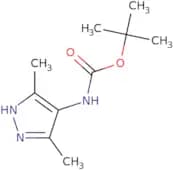
tert-Butyl N-(3,5-dimethyl-1H-pyrazol-4-yl)carbamate
CAS:<p>Versatile small molecule scaffold</p>Formula:C10H17N3O2Purity:Min. 95%Molecular weight:211.26 g/molRef: 3D-MXB34103
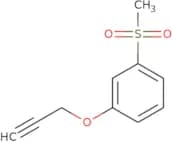
Discontinued product1-Methanesulfonyl-3-(prop-2-yn-1-yloxy)benzene
CAS:<p>Versatile small molecule scaffold</p>Formula:C10H10O3SPurity:Min. 95%Molecular weight:210.25 g/molRef: 3D-AAC11016
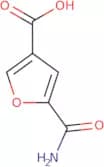
Discontinued product5-Carbamoylfuran-3-carboxylic acid
CAS:<p>Versatile small molecule scaffold</p>Formula:C6H5NO4Purity:Min. 95%Molecular weight:155.11 g/molRef: 3D-LIC70608
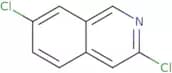
Discontinued product3,7-Dichloroisoquinoline
CAS:<p>Versatile small molecule scaffold</p>Formula:C9H5Cl2NPurity:Min. 95%Molecular weight:198.05 g/molRef: 3D-HDA11722
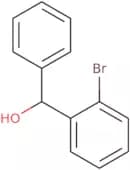
Discontinued product(2-Bromophenyl)(phenyl)methanol
CAS:<p>The synthesis of (2-bromophenyl)(phenyl)methanol is accomplished by the reaction of an aldehyde with bromine followed by an alkylation with magnesium. The product is obtained as a racemic mixture of enantiomers with a chiral center, which can be resolved by fractional crystallization or other separation methods. This method has been shown to be efficient for the synthesis of alcohols and carbinols, and stereogenic reactions.</p>Formula:C13H11OBrPurity:Min. 95%Molecular weight:263.12 g/molRef: 3D-JCA14247
Discontinued product[(1-Amino-2-methylpropan-2-yl)oxy]benzene hydrochloride
CAS:<p>Versatile small molecule scaffold</p>Formula:C10H16ClNOPurity:Min. 95%Molecular weight:201.69 g/molRef: 3D-LCC31526
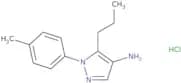
Discontinued product1-(4-Methylphenyl)-5-propyl-1H-pyrazol-4-amine hydrochloride
CAS:<p>Versatile small molecule scaffold</p>Formula:C13H18ClN3Purity:Min. 95%Molecular weight:251.75 g/molRef: 3D-DXC60792
Discontinued product2-[(4-Chloro-3,5-dimethyl-1H-pyrazol-1-yl)methanesulfonyl]acetic acid
CAS:<p>Versatile small molecule scaffold</p>Formula:C8H11ClN2O4SPurity:Min. 95%Molecular weight:266.7 g/molRef: 3D-GQB31932
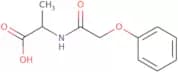
Discontinued product2-(2-Phenoxyacetamido)propanoic acid
CAS:<p>Versatile small molecule scaffold</p>Formula:C11H13NO4Purity:Min. 95%Molecular weight:223.22 g/molRef: 3D-EKB12384
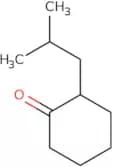
Discontinued product2-(2-Methylpropyl)cyclohexan-1-one
CAS:<p>2-(2-Methylpropyl)cyclohexan-1-one is a heterobicyclic compound with a hydroxyl group and two cyclohexane rings. It has a nitrogen atom with three substituents, one of which is a trifluoromethyl group. This molecule is used as a polymerization initiator for polyester and polycarbonate production. It also can be used in the production of liquid crystal compositions, aliphatic hydrocarbons, and organic solvents. 2-(2-Methylpropyl)cyclohexan-1-one is an organic solvent that can be used in the preparation of monomers such as carbonyl groups or cyanates.</p>Formula:C10H18OPurity:Min. 95%Molecular weight:154.25 g/molRef: 3D-EAA66864
Discontinued product2,6-Dichloro-N'-hydroxybenzene-1-carboximidamide
CAS:<p>Versatile small molecule scaffold</p>Formula:C7H6Cl2N2OPurity:Min. 95%Molecular weight:205.04 g/molRef: 3D-YAA50521
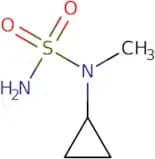
Discontinued productN-Cyclopropyl-N-methylaminosulfonamide
CAS:<p>Versatile small molecule scaffold</p>Formula:C4H10N2O2SPurity:Min. 95%Molecular weight:150.2 g/molRef: 3D-XPA13681
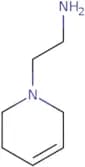
Discontinued product2-(1,2,3,6-Tetrahydropyridin-1-yl)ethan-1-amine
CAS:<p>Versatile small molecule scaffold</p>Formula:C7H14N2Purity:Min. 95%Molecular weight:126.2 g/molRef: 3D-CBA57863
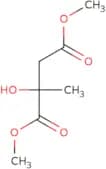
Discontinued product1,4-Dimethyl 2-hydroxy-2-methylbutanedioate
CAS:<p>1,4-Dimethyl 2-hydroxy-2-methylbutanedioate is an allylating agent that modifies the amino acid lysine residues in proteins. It has been shown to be effective in the treatment of skin lesions caused by Staphylococcus aureus and other bacteria because it inhibits bacterial growth through an antimicrobial effect. 1,4-Dimethyl 2-hydroxy-2-methylbutanedioate also has been used as a precursor for the synthesis of vitamin D3. This compound is metabolized in mammalian cells to form cysteamine, which is further converted to S-(1,4-dimethylpentadienoyl)cysteamine (DMPE). The resulting product can be used as a functional group on collagen or malic acid. 1,4-Dimethyl 2-hydroxy-2-methylbutanedioate also is used for modifications of mucocutaneous tissues such as skin and oral muc</p>Formula:C7H12O5Purity:Min. 95%Molecular weight:176.17 g/molRef: 3D-UAA02062
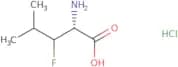
Discontinued product(2R)-2-Amino-3-fluoro-4-methylpentanoic acid hydrochloride
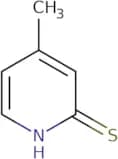
CAS:<p>Versatile small molecule scaffold</p>Formula:C6H13ClFNO2Purity:Min. 95%Molecular weight:185.6 g/mol4-Methylpyridine-2-thiol
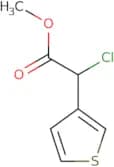
CAS:<p>4-Methylpyridine-2-thiol is a ligand that binds to metal ions. It has been shown to be an effective photoelectron scavenger for mercury and lead, as well as a wide variety of other metals. 4-Methylpyridine-2-thiol is also an important monomer in the preparation of polymers and resins. This ligand has been used in the synthesis of compounds with cyclic structures and hydrochloric acid, as well as being crystallized with x-ray crystallography. The properties of this ligand have been studied by voltammetry, spectroscopies, and crystallography. 4-Methylpyridine-2-thiol interacts with chloride ions in acetonitrile to form a salt called methylpyridinium chloride.</p>Formula:C6H7NSPurity:Min. 95%Molecular weight:125.19 g/molMethyl 2-chloro-2-(thiophen-3-yl)acetate
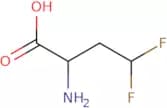
CAS:<p>Versatile small molecule scaffold</p>Formula:C7H7ClO2SPurity:Min. 95%Molecular weight:190.65 g/mol(2R)-2-Amino-4,4-difluorobutanoic acid
CAS:<p>Versatile small molecule scaffold</p>Formula:C4H7F2NO2Purity:Min. 95%Molecular weight:139.1 g/molRef: 3D-KHA34878
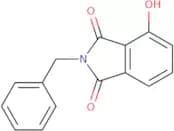
Discontinued product2-Benzyl-4-hydroxy-2,3-dihydro-1H-isoindole-1,3-dione
CAS:<p>Versatile small molecule scaffold</p>Formula:C15H11NO3Purity:Min. 95%Molecular weight:253.25 g/molRef: 3D-CSB68816
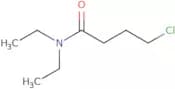
Discontinued product4-Chloro-N,N-diethyl-butyramide
CAS:<p>Versatile small molecule scaffold</p>Formula:C8H16ClNOPurity:Min. 95%Molecular weight:177.67 g/molRef: 3D-GCA79428
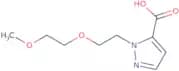
Discontinued product1-(2-(2-Methoxyethoxy)ethyl)-1H-pyrazole-5-carboxylic acid
CAS:<p>Versatile small molecule scaffold</p>Formula:C9H14N2O4Purity:Min. 95%Molecular weight:214.22 g/molRef: 3D-UDC29241
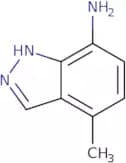
Discontinued product4-Methyl-1H-indazol-7-amine
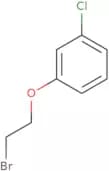
CAS:<p>Versatile small molecule scaffold</p>Formula:C8H9N3Purity:Min. 95%Molecular weight:147.18 g/mol1-(2-Bromoethoxy)-3-chlorobenzene
CAS:<p>Versatile small molecule scaffold</p>Formula:C8H8BrClOPurity:Min. 95%Molecular weight:235.51 g/mol1-({2-Methyl-5H,6H,7H,8H-imidazo[1,2-a]pyridin-3-yl}methyl)piperazine
CAS:<p>Versatile small molecule scaffold</p>Formula:C13H22N4Purity:Min. 95%Molecular weight:234.34 g/molRef: 3D-CHC38025
Discontinued product2-[Ethyl(propan-2-yl)amino]ethan-1-ol
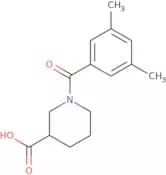
CAS:Controlled Product<p>Versatile small molecule scaffold</p>Formula:C7H17NOPurity:Min. 95%Molecular weight:131.22 g/mol1-(3,5-Dimethylbenzoyl)piperidine-3-carboxylic acid
CAS:<p>Versatile small molecule scaffold</p>Formula:C15H19NO3Purity:Min. 95%Molecular weight:261.32 g/mol7-Chloro-5-fluoro-1,3-benzoxazole-2-thiol
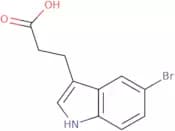
CAS:<p>Versatile small molecule scaffold</p>Formula:C7H3ClFNOSPurity:Min. 95%Molecular weight:203.62 g/mol5-Bromo-indol-3-propionic acid
CAS:<p>Versatile small molecule scaffold</p>Formula:C11H10BrNO2Purity:Min. 95%Molecular weight:268.11 g/mol1-(4H,6H,7H-Pyrano[4,3-d][1,3]thiazol-2-yl)ethan-1-ol
CAS:<p>Versatile small molecule scaffold</p>Formula:C8H11NO2SPurity:Min. 95%Molecular weight:185.25 g/molRef: 3D-UDC36735
Discontinued productrac-2-[(1R,3S)-3-(Propan-2-yl)-2,3-dihydro-1H-inden-1-yl]acetic acid
CAS:<p>Versatile small molecule scaffold</p>Formula:C14H18O2Purity:Min. 95%Molecular weight:218.29 g/molRef: 3D-ZLD00010
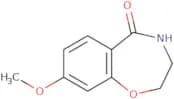
Discontinued product8-Methoxy-2,3,4,5-tetrahydro-1,4-benzoxazepin-5-one
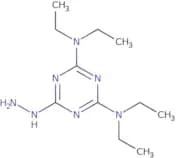
CAS:<p>Versatile small molecule scaffold</p>Formula:C10H11NO3Purity:Min. 95%Molecular weight:193.2 g/molN2,N2,N4,N4-Tetraethyl-6-hydrazinylidene-3,6-dihydro-1,3,5-triazine-2,4-diamine
CAS:<p>Tetrodotoxin is a potent neurotoxin that blocks the transfer of nerve impulses. It is used as a pharmacological treatment for diseases of the urinary tract such as bladder and urethral spasms, bladder dysfunction, and urinary retention. Tetrodotoxin can also be used for the treatment of other conditions that affect the target tissue such as stenosis or cavity. This drug has been shown to be beneficial in autoimmune diseases, inflammatory diseases, and infections. Tetrodotoxin is implanted into the body through devices such as catheters or balloons to treat these conditions. The drug has anticholinergic properties which may cause side effects like dry mouth, blurred vision, difficulty urinating, and dizziness.</p>Formula:C11H23N7Purity:Min. 95%Molecular weight:253.35 g/molRef: 3D-NAA95736
Discontinued product(2-Bromo-5-chlorophenyl)methanesulfonyl chloride
CAS:<p>Versatile small molecule scaffold</p>Formula:C7H5BrCl2O2SPurity:Min. 95%Molecular weight:303.99 g/molRef: 3D-AKC85158
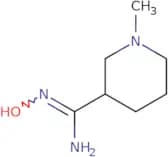
Discontinued productN'-Hydroxy-1-methylpiperidine-3-carboximidamide
CAS:<p>Versatile small molecule scaffold</p>Formula:C7H15N3OPurity:Min. 95%Molecular weight:157.21 g/molRef: 3D-UDC81574
Discontinued product3-[(4-Chlorophenyl)amino]propanenitrile
CAS:<p>Versatile small molecule scaffold</p>Formula:C9H9ClN2Purity:Min. 95%Molecular weight:180.63 g/molRef: 3D-RBA83357
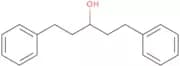
Discontinued product1,5-Diphenylpentan-3-ol
CAS:<p>Flindersia laevicarpa is a small tree native to Australia. The leaves of the tree are used for medicinal purposes and contain 1,5-diphenylpentan-3-ol. Flindersia laevicarpa has been shown to have anti-inflammatory and antioxidant properties, as well as an ability to inhibit platelet aggregation.</p>Formula:C17H20OPurity:Min. 95%Molecular weight:240.34 g/molRef: 3D-SAA48686
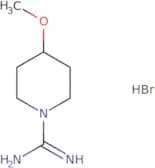
Discontinued product4-Methoxypiperidine-1-carboximidamide hydrobromide
CAS:<p>Versatile small molecule scaffold</p>Formula:C7H16BrN3OPurity:Min. 95%Molecular weight:238.13 g/molRef: 3D-THC98095
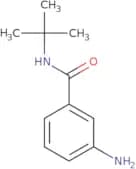
Discontinued product3-Amino-N-(tert-butyl)benzamide
CAS:<p>Versatile small molecule scaffold</p>Formula:C11H16N2OPurity:Min. 95%Molecular weight:192.26 g/molRef: 3D-ABA90062
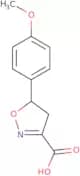
Discontinued product5-(4-Methoxyphenyl)-4,5-dihydro-1,2-oxazole-3-carboxylic acid
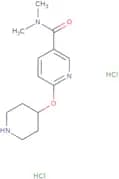
CAS:<p>Versatile small molecule scaffold</p>Formula:C11H11NO4Purity:Min. 95%Molecular weight:221.21 g/molN,N-Dimethyl-6-(piperidin-4-yloxy)pyridine-3-carboxamide dihydrochloride
CAS:<p>Versatile small molecule scaffold</p>Formula:C13H21Cl2N3O2Purity:Min. 95%Molecular weight:322.2 g/molRef: 3D-FDD53991
Discontinued product3-[(4-Methylphenyl)methyl]azetidine hydrochloride
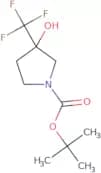
CAS:<p>Versatile small molecule scaffold</p>Formula:C11H16ClNPurity:Min. 95%Molecular weight:197.7 g/moltert-Butyl 3-hydroxy-3-(trifluoromethyl)pyrrolidine-1-carboxylate
CAS:<p>Versatile small molecule scaffold</p>Formula:C10H16F3NO3Purity:Min. 95%Molecular weight:255.23 g/mol(4,4,4-Trifluoro-2-nitrobut-2-en-1-yl)benzene
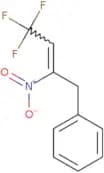
CAS:<p>Versatile small molecule scaffold</p>Formula:C10H8F3NO2Purity:Min. 95%Molecular weight:231.17 g/molRef: 3D-UDC84298
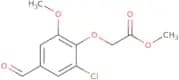
Discontinued productMethyl (2-chloro-4-formyl-6-methoxyphenoxy)acetate
CAS:<p>Versatile small molecule scaffold</p>Formula:C11H11ClO5Purity:Min. 95%Molecular weight:258.65 g/moltert-Butyl 1',5',6',7'-tetrahydrospiro[azetidine-3,4'-imidazo[4,5-c]pyridine]-1-carboxylate
CAS:<p>Versatile small molecule scaffold</p>Formula:C13H20N4O2Purity:Min. 95%Molecular weight:264.32 g/molRef: 3D-JBD31615
Discontinued productrac-(1R,5S,6R)-3-Benzyl-3-azabicyclo[3.1.0]hexan-6-amine dihydrochloride
CAS:<p>Versatile small molecule scaffold</p>Formula:C12H18Cl2N2Purity:Min. 95%Molecular weight:261.19 g/molRef: 3D-DJD39547
Discontinued product[1-(1-Amino-2-methylpropyl)cyclopent-3-en-1-yl]methanol hydrochloride
CAS:<p>Versatile small molecule scaffold</p>Formula:C10H20ClNOPurity:Min. 95%Molecular weight:205.72 g/molRef: 3D-JBD31750
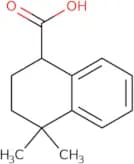
Discontinued product4,4-Dimethyl-1,2,3,4-tetrahydronaphthalene-1-carboxylic acid
CAS:<p>Versatile small molecule scaffold</p>Formula:C13H16O2Purity:Min. 95%Molecular weight:204.26 g/molRef: 3D-DDA10380
Discontinued product3-Boc-3-azabicyclo[3.2.1]octan-8-amine
CAS:<p>Versatile small molecule scaffold</p>Formula:C12H22N2O2Purity:Min. 95%Molecular weight:226.32 g/mol2-Bromo-3,3,3-trifluoro-1-propene
CAS:Controlled Product<p>2-Bromo-3,3,3-trifluoro-1-propene is a chemical compound that has been synthesized in an asymmetric reaction. The reactant is bromopropane and the product is 2,2,2-trifluoropropene. The methylene group on the propene molecule is activated by the nucleophilic attack of a fluoride ion from hydrogen fluoride to form a cavity with a highly strained bond. The kinetic study of this reaction revealed that the activation energy for the reaction is 42 kJ/mol. Palladium-catalyzed coupling reactions are catalyzed by palladium and require nonpolar solvents such as toluene or dichloromethane. This type of reaction has been shown to be exothermic with an isolated yield of 1%.</p>Formula:C3H2BrF3Purity:Min. 95%Color and Shape:Colorless PowderMolecular weight:174.95 g/mol

![[(1-Amino-2-methylpropan-2-yl)oxy]benzene hydrochloride](/_next/image/?url=https%3A%2Fstatic.cymitquimica.com%2Fproducts%2F3D%2Fthumb-webp%2FLCC31526.webp&w=3840&q=75)
![2-[(4-Chloro-3,5-dimethyl-1H-pyrazol-1-yl)methanesulfonyl]acetic acid](/_next/image/?url=https%3A%2Fstatic.cymitquimica.com%2Fproducts%2F3D%2Fthumb-webp%2FGQB31932.webp&w=3840&q=75)
![1-({2-Methyl-5H,6H,7H,8H-imidazo[1,2-a]pyridin-3-yl}methyl)piperazine](/_next/image/?url=https%3A%2Fstatic.cymitquimica.com%2Fproducts%2F3D%2Fthumb-webp%2FCHC38025.webp&w=3840&q=75)
![2-[Ethyl(propan-2-yl)amino]ethan-1-ol](/_next/image/?url=https%3A%2Fstatic.cymitquimica.com%2Fproducts%2F3D%2Fthumb-webp%2FCAA89361.webp&w=3840&q=75)
![1-(4H,6H,7H-Pyrano[4,3-d][1,3]thiazol-2-yl)ethan-1-ol](/_next/image/?url=https%3A%2Fstatic.cymitquimica.com%2Fproducts%2F3D%2Fthumb-webp%2FUDC36735.webp&w=3840&q=75)
![rac-2-[(1R,3S)-3-(Propan-2-yl)-2,3-dihydro-1H-inden-1-yl]acetic acid](/_next/image/?url=https%3A%2Fstatic.cymitquimica.com%2Fproducts%2F3D%2Fthumb-webp%2FZLD00010.webp&w=3840&q=75)

![3-[(4-Chlorophenyl)amino]propanenitrile](/_next/image/?url=https%3A%2Fstatic.cymitquimica.com%2Fproducts%2F3D%2Fthumb-webp%2FRBA83357.webp&w=3840&q=75)
![3-[(4-Methylphenyl)methyl]azetidine hydrochloride](/_next/image/?url=https%3A%2Fstatic.cymitquimica.com%2Fproducts%2F3D%2Fthumb-webp%2FFDD54017.webp&w=3840&q=75)
![tert-Butyl 1',5',6',7'-tetrahydrospiro[azetidine-3,4'-imidazo[4,5-c]pyridine]-1-carboxylate](/_next/image/?url=https%3A%2Fstatic.cymitquimica.com%2Fproducts%2F3D%2Fthumb-webp%2FJBD31615.webp&w=3840&q=75)
![rac-(1R,5S,6R)-3-Benzyl-3-azabicyclo[3.1.0]hexan-6-amine dihydrochloride](/_next/image/?url=https%3A%2Fstatic.cymitquimica.com%2Fproducts%2F3D%2Fthumb-webp%2FDJD39547.webp&w=3840&q=75)
![[1-(1-Amino-2-methylpropyl)cyclopent-3-en-1-yl]methanol hydrochloride](/_next/image/?url=https%3A%2Fstatic.cymitquimica.com%2Fproducts%2F3D%2Fthumb-webp%2FJBD31750.webp&w=3840&q=75)
![3-Boc-3-azabicyclo[3.2.1]octan-8-amine](/_next/image/?url=https%3A%2Fstatic.cymitquimica.com%2Fproducts%2F3D%2Fthumb-webp%2FFDC76351.webp&w=3840&q=75)
