


Building Blocks
This section contains fundamental products for the synthesis of organic and biological compounds. Building blocks are the essential starting materials used to construct complex molecules through various chemical reactions. They play a critical role in drug discovery, material science, and chemical research. At CymitQuimica, we offer a diverse range of high-quality building blocks to support your innovative research and industrial projects, ensuring you have the essential components for successful synthesis.
Subcategories of "Building Blocks"
- Boronic Acids & Boronic Acid Derivatives(5,756 products)
- Chiral Building Blocks(1,242 products)
- Hydrocarbon Building Blocks(6,095 products)
- Organic Building Blocks(61,051 products)
Found 199813 products of "Building Blocks"
Sort by
Purity (%)
0
100
|
0
|
50
|
90
|
95
|
100
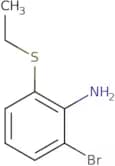
2-Bromo-6-(ethylsulfanyl)aniline
CAS:<p>Versatile small molecule scaffold</p>Formula:C8H10BrNSPurity:Min. 95%Molecular weight:232.14 g/molRef: 3D-DXC60876
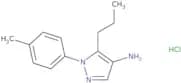
Discontinued product1-(4-Methylphenyl)-5-propyl-1H-pyrazol-4-amine hydrochloride
CAS:<p>Versatile small molecule scaffold</p>Formula:C13H18ClN3Purity:Min. 95%Molecular weight:251.75 g/molRef: 3D-DXC60792
Discontinued product3-(Chloromethyl)-5H,6H,8H-[1,2,4]triazolo[3,4-c][1,4]oxazine hydrochloride
CAS:<p>Versatile small molecule scaffold</p>Formula:C6H9Cl2N3OPurity:Min. 95%Molecular weight:210.06 g/molRef: 3D-DXC56271
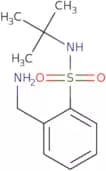
Discontinued product2-(Aminomethyl)-N-tert-butylbenzene-1-sulfonamide
CAS:<p>Versatile small molecule scaffold</p>Formula:C11H18N2O2SPurity:Min. 95%Molecular weight:242.34 g/molQuinoline-5-carbonitrile
CAS:<p>Quinoline-5-carbonitrile is a cyanide compound that can be used in the synthesis of heterocyclic compounds. The reaction between quinoline and 5-cyanovaleric acid produces 6-nitroquinoline, which is then converted to dimethyl sulfoxide by alcoholysis. This reaction product can then be used to synthesize an amide or nucleophile. Quinoline-5-carbonitrile reacts with potassium in the presence of bifunctional hydrazide to produce a cyanide ion, which can be hydrolyzed by an acid to release hydrogen cyanide gas. This experiment has been shown as a model for reactions involving cyano compounds.</p>Formula:C10H6N2Purity:Min. 95%Molecular weight:154.17 g/molRef: 3D-JCA55102
Discontinued product4-Chloro-2-methyl-5-nitroaniline
CAS:<p>4-Chloro-2-methyl-5-nitroaniline is an organic compound with the chemical formula C6H4ClNO2. It is a nitro derivative of aniline. 4-Chloro-2-methyl-5-nitroaniline is a white solid that is soluble in water, alcohols, and ethers. It has a melting point around 206 °C and decomposes at temperatures over 350 °C. This compound can be obtained by reacting hydroxylamine with nitrous acid and chlorinating 2,5-dimethylaniline. The sequence of reactions can be summarized as follows: hydroxy group to nitro group, nitro group to methyl group, methyl group to acetyl or acetylamino, acetyl or acetylamino to acetylation or methylation, transformation from hydroxyl group to amino group and esterification from acid hydrazide to acid group.</p>Formula:C7H7ClN2O2Purity:Min. 95%Molecular weight:186.59 g/mol3-[(2-Methyl-2-propen-1-yl)thio]-5H-1,2,4-triazino[5,6-b]indole
CAS:<p>3-[(2-Methyl-2-propen-1-yl)thio]-5H-1,2,4-triazino[5,6-b]indole is a recombinant protein that binds to the ribosomal protein L11. It has been shown to inhibit the biosynthesis of the bacterial cell wall and therefore inhibit replication of the bacterial genome. 3-[(2-Methyl-2-propen-1-yl)thio]-5H-1,2,4-triazino[5,6-b]indole also inhibits the synthesis of proteins essential for cell division. This compound has been shown to bind to ribosomes in both prokaryotic and eukaryotic cells. It may have potential as an inhibitor of cancerous cells because it inhibits protein synthesis in mammalian cells.</p>Formula:C13H12N4SPurity:Min. 95%Molecular weight:256.33 g/molRef: 3D-DNA02311
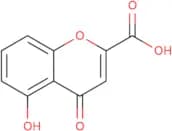
Discontinued product5-Hydroxy-4-oxo-4H-chromene-2-carboxylic acid
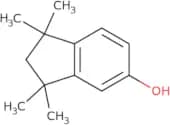
CAS:<p>Versatile small molecule scaffold</p>Formula:C10H6O5Purity:Min. 95%Molecular weight:206.15 g/mol1,1,3,3-Tetramethyl-2,3-dihydro-1H-inden-5-ol
CAS:<p>Versatile small molecule scaffold</p>Formula:C13H18OPurity:Min. 95%Molecular weight:190.28 g/molRef: 3D-DCA71826
Discontinued productMethyl 2-[4-(2-aminoethyl)phenoxy]acetate hydrochloride
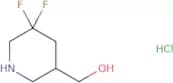
CAS:<p>Versatile small molecule scaffold</p>Formula:C11H16ClNO3Purity:Min. 95%Molecular weight:245.7 g/mol(5,5-difluoropiperidin-3-yl)methanol hcl
CAS:<p>Versatile small molecule scaffold</p>Formula:C6H12ClF2NOPurity:Min. 95%Molecular weight:187.61 g/molRef: 3D-GEC33873
Discontinued product3-Boc-3-azabicyclo[3.2.1]octan-8-amine
CAS:<p>Versatile small molecule scaffold</p>Formula:C12H22N2O2Purity:Min. 95%Molecular weight:226.32 g/mol2-Bromo-3,3,3-trifluoro-1-propene
CAS:Controlled Product<p>2-Bromo-3,3,3-trifluoro-1-propene is a chemical compound that has been synthesized in an asymmetric reaction. The reactant is bromopropane and the product is 2,2,2-trifluoropropene. The methylene group on the propene molecule is activated by the nucleophilic attack of a fluoride ion from hydrogen fluoride to form a cavity with a highly strained bond. The kinetic study of this reaction revealed that the activation energy for the reaction is 42 kJ/mol. Palladium-catalyzed coupling reactions are catalyzed by palladium and require nonpolar solvents such as toluene or dichloromethane. This type of reaction has been shown to be exothermic with an isolated yield of 1%.</p>Formula:C3H2BrF3Purity:Min. 95%Color and Shape:Colorless PowderMolecular weight:174.95 g/mol

![3-(Chloromethyl)-5H,6H,8H-[1,2,4]triazolo[3,4-c][1,4]oxazine hydrochloride](/_next/image/?url=https%3A%2Fstatic.cymitquimica.com%2Fproducts%2F3D%2Fthumb-webp%2FDXC56271.webp&w=3840&q=75)

![3-[(2-Methyl-2-propen-1-yl)thio]-5H-1,2,4-triazino[5,6-b]indole](/_next/image/?url=https%3A%2Fstatic.cymitquimica.com%2Fproducts%2F3D%2Fthumb-webp%2FDNA02311.webp&w=3840&q=75)
![Methyl 2-[4-(2-aminoethyl)phenoxy]acetate hydrochloride](/_next/image/?url=https%3A%2Fstatic.cymitquimica.com%2Fproducts%2F3D%2Fthumb-webp%2FHFA22482.webp&w=3840&q=75)
![3-Boc-3-azabicyclo[3.2.1]octan-8-amine](/_next/image/?url=https%3A%2Fstatic.cymitquimica.com%2Fproducts%2F3D%2Fthumb-webp%2FFDC76351.webp&w=3840&q=75)
