Building Blocks
This section contains fundamental products for the synthesis of organic and biological compounds. Building blocks are the essential starting materials used to construct complex molecules through various chemical reactions. They play a critical role in drug discovery, material science, and chemical research. At CymitQuimica, we offer a diverse range of high-quality building blocks to support your innovative research and industrial projects, ensuring you have the essential components for successful synthesis.
Subcategories of "Building Blocks"
- Boronic Acids & Boronic Acid Derivatives(5,756 products)
- Chiral Building Blocks(1,242 products)
- Hydrocarbon Building Blocks(6,093 products)
- Organic Building Blocks(60,532 products)
Found 195534 products of "Building Blocks"
Sort by
Purity (%)
0
100
|
0
|
50
|
90
|
95
|
100
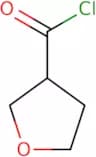
Tetrahydrofuran-3-carbonyl chloride
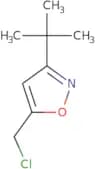
CAS:<p>Tetrahydrofuran-3-carbonyl chloride is a chiral, stereoselective, and sustainable chemical. It is used in the synthesis of various chiral compounds with high stereospecificity. Tetrahydrofuran-3-carbonyl chloride is an imine that reacts with an amine to produce an unsymmetrical ketone. The reaction mechanism involves the formation of a mixed anhydride as the first step by reacting the amine with chlorine or bromine. In this step, the carbonyl group of the reactant becomes attached to one carbon atom of the double bond in the mixed anhydride. This reaction can be used to synthesize staudinger and stereoselectively substituted tetrahydrofurans with high selectivity.</p>Formula:C5H7ClO2Purity:Min. 95%Molecular weight:134.56 g/mol3-tert-Butyl-5-(chloromethyl)-1,2-oxazole
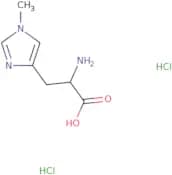
CAS:<p>Versatile small molecule scaffold</p>Formula:C8H12ClNOPurity:Min. 95%Molecular weight:173.64 g/mol1-Methyl-L-histidine dihydrochloride
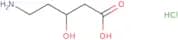
CAS:<p>Versatile small molecule scaffold</p>Formula:C7H13Cl2N3O2Purity:Min. 95%Molecular weight:242.1 g/mol5-Amino-3-hydroxypentanoic acid hydrochloride
CAS:<p>Versatile small molecule scaffold</p>Formula:C5H12ClNO3Purity:Min. 95%Molecular weight:169.61 g/molEthyl 5-{[(tert-butoxy)carbonyl]amino}-3-oxopentanoate
CAS:<p>Versatile small molecule scaffold</p>Formula:C12H21NO5Purity:Min. 95%Molecular weight:259.3 g/mol2-Iodo-1-benzofuran
CAS:<p>2-Iodo-1-benzofuran is a polymerase chain inhibitor that can bind to the d2 dopamine receptor. This drug has been shown to have potential use in the treatment of diseases such as autoimmune diseases, Parkinson’s disease, and cancer. 2-Iodo-1-benzofuran is a potent inhibitor of HIV replication in vitro and has been shown to be active against other retroviruses. 2-Iodo-1-benzofuran also binds with high affinity and specificity to rat striatal D2 dopamine receptors. The binding of this drug to the receptor leads to a decrease in the levels of dopamine in the brain and an increase in blood pressure.</p>Formula:C8H5IOPurity:Min. 95%Molecular weight:244.03 g/mol3-Cyclopropylimidazolidine-2,4-dione
CAS:<p>Versatile small molecule scaffold</p>Formula:C6H8N2O2Purity:Min. 95%Molecular weight:140.14 g/molPhenyl morpholine-4-carboxylate
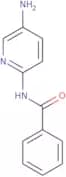
CAS:<p>Versatile small molecule scaffold</p>Formula:C11H13NO3Purity:Min. 95%Molecular weight:207.23 g/molN-(5-Aminopyridin-2-yl)benzamide
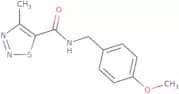
CAS:<p>Versatile small molecule scaffold</p>Formula:C12H11N3OPurity:Min. 95%Molecular weight:213.23 g/molN-(4-Methoxybenzyl)-4-methyl-1,2,3-thiadiazole-5-carboxamide
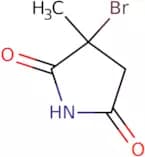
CAS:<p>Versatile small molecule scaffold</p>Formula:C12H13N3O2SPurity:Min. 95%Molecular weight:263.32 g/mol3-Bromo-3-methylpyrrolidine-2,5-dione
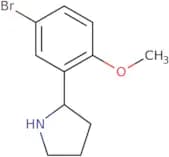
CAS:<p>Versatile small molecule scaffold</p>Formula:C5H6BrNO2Purity:Min. 95%Molecular weight:192.01 g/mol2-(5-Bromo-2-methoxyphenyl)pyrrolidine
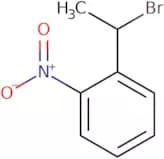
CAS:<p>Versatile small molecule scaffold</p>Formula:C11H14BrNOPurity:Min. 95%Molecular weight:256.14 g/mol1-(1-Bromoethyl)-2-nitrobenzene
CAS:<p>Versatile small molecule scaffold</p>Formula:C8H8BrNO2Purity:Min. 95%Molecular weight:230.06 g/molPentacyclo[6.3.0.0(2,7).0(4,11).0(5,9)]undecan-3-one
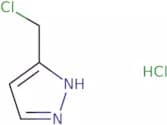
CAS:<p>Pentacyclo[6.3.0.0(2,7).0(4,11).0(5,9)]undecan-3-one is a polycyclic compound that has been postulated to be a thione derived from the desulfurization of pentacyclo[6.3.0.0(2,7).0(4,11).0(5,9)]undecane with dimethoxycarbene and toluene as reagents in the presence of a catalyst (Scheme 1). The stereoselective desulfurization of the lactams leads to the formation of either (1S) or (1R) products depending on the conditions used for the reaction. This reaction is thermally driven and occurs at 130°C under vacuum with a pressure of 10-2 Torr. The desulfurized product can then be converted into various esters by treatment with alcohols in the presence of</p>Formula:C11H12OPurity:Min. 95%Molecular weight:160.21 g/mol3-(Chloromethyl)-1H-pyrazole hydrochloride
CAS:<p>Versatile small molecule scaffold</p>Formula:C4H6Cl2N2Purity:Min. 95%Molecular weight:153.01 g/mol3-Methyl-3,6-diazabicyclo[3.2.1]octane
CAS:<p>Versatile small molecule scaffold</p>Formula:C7H14N2Purity:Min. 95%Molecular weight:126.2 g/mol2-Hydroxy-2-methyl-1-[4-(propan-2-yl)phenyl]propan-1-one
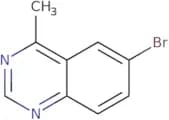
CAS:<p>Versatile small molecule scaffold</p>Formula:C13H18O2Purity:Min. 95%Molecular weight:206.28 g/mol6-Bromo-4-methylquinazoline
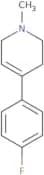
CAS:<p>Versatile small molecule scaffold</p>Formula:C9H7BrN2Purity:Min. 95%Molecular weight:223.07 g/mol4-(4-Fluorophenyl)-1,2,3,6-tetrahydro-1-methylpyridine
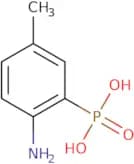
CAS:<p>4-(4-Fluorophenyl)-1,2,3,6-tetrahydro-1-methylpyridine is a chemical substance that can be used in the preparation of samples for analysis. It is sensitive to paroxetine and has analytical properties that are suitable for use as an analytical standard. 4-(4-Fluorophenyl)-1,2,3,6-tetrahydro-1-methylpyridine has been validated using liquid chromatography coupled with tandem mass spectrometry (LC/MS/MS) and has been shown to be minimal and highly repeatable. This reagent can be used in environments where the presence of toxic substances is not desirable.</p>Formula:C12H14FNPurity:Min. 95%Molecular weight:191.24 g/mol(2-Amino-5-methylphenyl)phosphonic acid
CAS:<p>Versatile small molecule scaffold</p>Formula:C7H10NO3PPurity:Min. 95%Molecular weight:187.13 g/mol2-[2-(1,3-dioxo-2,3-dihydro-1H-isoindol-2-yl)ethoxy]acetic acid
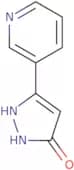
CAS:<p>2-[2-(1,3-Dioxo-2,3-dihydro-1H-isoindol-2-yl)ethoxy]acetic acid is an analog of niacinamide. It is a colorless liquid at room temperature and has a chemical formula of C5H8O4. 2-[2-(1,3-Dioxo-2,3-dihydro-1H-isoindol-2-yl)ethoxy]acetic acid can be synthesized by reacting ethyl acetate with acetone and methyl ethyl ketone. This reaction produces a mixture of diacetates. The diacetates are then reacted with nitric acid to produce 2-[2-(1,3-dioxo-2,3,-dihydroisindol)-2yl)ethoxy]acetic acid. The synthesis of this compound is similar to the synthesis of niacinamide from</p>Formula:C12H11NO5Purity:Min. 95%Molecular weight:249.22 g/mol3-(Pyridin-3-yl)-4,5-dihydro-1H-pyrazol-5-one
CAS:<p>Versatile small molecule scaffold</p>Formula:C8H7N3OPurity:Min. 95%Molecular weight:161.16 g/molrac-(2R,4R,6S)-2,4,6-Trimethylpiperidine hydrochloride
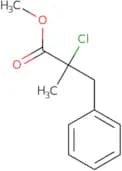
CAS:<p>Versatile small molecule scaffold</p>Formula:C8H18ClNPurity:Min. 95%Molecular weight:163.69 g/molMethyl 2-chloro-2-methyl-3-phenylpropanoate
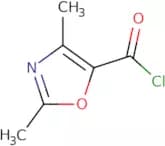
CAS:<p>Versatile small molecule scaffold</p>Formula:C11H13ClO2Purity:Min. 95%Molecular weight:212.67 g/molDimethyl-1,3-oxazole-5-carbonyl chloride
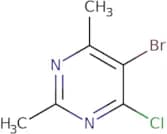
CAS:<p>Versatile small molecule scaffold</p>Formula:C6H6ClNO2Purity:Min. 95%Molecular weight:159.57 g/mol5-bromo-4-chloro-2,6-dimethylpyrimidine
CAS:<p>Versatile small molecule scaffold</p>Formula:C6H6BrClN2Purity:Min. 95%Molecular weight:221.5 g/mol5-Bromo-2,4-dimethylpyrimidine
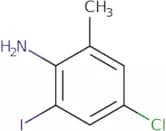
CAS:<p>Versatile small molecule scaffold</p>Formula:C6H7BrN2Purity:Min. 95%Molecular weight:187.04 g/mol4-Chloro-2-iodo-6-methylaniline
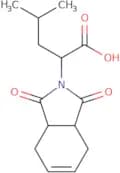
CAS:<p>4-Chloro-2-iodo-6-methylaniline is a chemical intermediate that is used as a catalyst in the synthesis of polyurethane. It can be prepared by transmetalation of chloroacetophenone with PdCl2, followed by reaction with 3 equivalents of iodine. The resulting mixture can then be purified using column chromatography and recrystallized from hexanes. 4-Chloro-2-iodo-6-methylaniline has been shown to yield high yields in this reaction (>90%) and has been used in the synthesis of polyurethane for use in tires, insulation foam, and carpet backing. This compound can also be obtained from anilines through a multigram scale operationally scalable procedure.</p>Formula:C7H7ClINPurity:Min. 95%Molecular weight:267.5 g/mol2-(1,3-Dioxo-1,3,3a,4,7,7a-hexahydro-isoindol-2-yl)-4-methyl-pentanoic acid
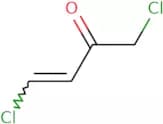
CAS:<p>Versatile small molecule scaffold</p>Formula:C14H19NO4Purity:Min. 95%Molecular weight:265.3 g/mol(3E)-1,4-Dichlorobut-3-en-2-one
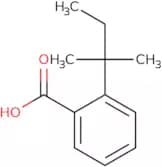
CAS:<p>(3E)-1,4-Dichlorobut-3-en-2-one is a reactive compound that reacts with malonic acid to form esters. It can also form adducts with aluminum chloride, which are typically hydrocarbons. It has been shown to undergo cyclisation when treated with styryl chloride and hydrogen chloride, and can be converted into analogues of aromatic hydrocarbons. This compound condenses with chlorides, such as aluminum chloride, to form a stable product. (3E)-1,4-Dichlorobut-3-en-2-one is used in the production of paints and varnishes because it is an effective pigment dispersant.</p>Formula:C4H4Cl2OPurity:Min. 95%Molecular weight:138.98 g/mol2-(2-Methylbutan-2-yl)benzoic acid
CAS:<p>Versatile small molecule scaffold</p>Formula:C12H16O2Purity:Min. 95%Molecular weight:192.25 g/mol2-(6-Methoxy-1-benzofuran-3-yl)acetic acid
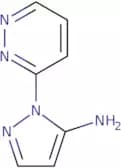
CAS:<p>2-(6-Methoxy-1-benzofuran-3-yl)acetic acid (MBFAA) is a fluorescent probe that is used to observe the process of DNA transfer. MBFAA has been shown to be a good candidate for use in the study of nucleophilic substitution reactions and other chemical reactions because it has a high degree of stability. It is also useful as a linear regression analysis tool. The spectral properties are characterized by a red shift in the fluorescence emission spectrum and an increase in fluorescence intensity with increasing concentration.</p>Formula:C11H10O4Purity:Min. 95%Molecular weight:206.19 g/mol1-(Pyridazin-3-yl)-1H-pyrazol-5-amine
CAS:<p>Versatile small molecule scaffold</p>Formula:C7H7N5Purity:Min. 95%Molecular weight:161.16 g/molEthyl 3-(2-aminoethyl)benzoate hydrochloride
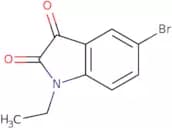
CAS:<p>Versatile small molecule scaffold</p>Formula:C11H16ClNO2Purity:Min. 95%Molecular weight:229.7 g/mol5-Bromo-1-ethyl-2,3-dihydro-1H-indole-2,3-dione
CAS:<p>5-Bromo-1-ethyl-2,3-dihydro-1H-indole-2,3-dione is a heterocyclic organic compound that contains both linear and cyclic structures. It has been used to study the symmetric nature of cyclic voltammetry. 5BED has also been used as an optical probe to study the potentials of carbazoles. 5BED exhibits strong photoluminescence at low temperatures, which can be attributed to its substitutions. The substitutions in 5BED can be determined by electrochemical studies.</p>Formula:C10H8BrNO2Purity:Min. 95%Molecular weight:254.08 g/mol3-{[(2-Chlorophenyl)methyl]amino}propan-1-ol
CAS:<p>Versatile small molecule scaffold</p>Formula:C10H14ClNOPurity:Min. 95%Molecular weight:199.68 g/mol7-Chloro-1,2,3,4-tetrahydronaphthalen-1-ol
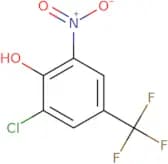
CAS:<p>Versatile small molecule scaffold</p>Formula:C10H11ClOPurity:Min. 95%Molecular weight:182.64 g/mol2-Chloro-6-nitro-4-(trifluoromethyl)phenol
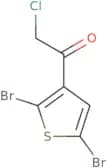
CAS:<p>Versatile small molecule scaffold</p>Formula:C7H3ClF3NO3Purity:Min. 95%Molecular weight:241.55 g/mol2-Chloro-1-(2,5-dibromothiophen-3-yl)ethan-1-one
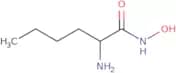
CAS:<p>Versatile small molecule scaffold</p>Formula:C6H3Br2ClOSPurity:Min. 95%Molecular weight:318.41 g/molN-Hydroxy2-aminohexanimidic acid
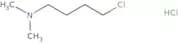
CAS:<p>N-Hydroxy2-aminohexanimidic acid is a ligand that forms hydroxo complexes with hydrogen ions. It has been shown to be a potentiometric indicator for the presence of hydroxo ions in solutions. The formation constants for N-hydroxy2-aminohexanimidic acid are high and it can form polynuclear complexes with metal ions, such as iron, manganese, and zinc. This ligand also chelates transition metals and heavy metals, such as copper and arsenic. The protonation constant of N-hydroxy2-aminohexanimidic acid is 10^6. The bivalent complexes formed by this ligand have been shown to have strong absorption bands in the ultraviolet region of the electromagnetic spectrum.</p>Formula:C6H14N2O2Purity:Min. 95%Molecular weight:146.19 g/mol(4-chlorobutyl)dimethylamine hydrochloride
CAS:<p>Versatile small molecule scaffold</p>Formula:C6H15Cl2NPurity:Min. 95%Molecular weight:172.09 g/mol2-Methanesulfonyl-1,3-thiazole
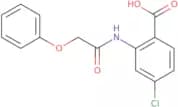
CAS:<p>Versatile small molecule scaffold</p>Formula:C4H5NO2S2Purity:Min. 95%Molecular weight:163.2 g/mol4-Chloro-2-(2-phenoxyacetamido)benzoic acid
CAS:<p>Versatile small molecule scaffold</p>Formula:C15H12ClNO4Purity:Min. 95%Molecular weight:305.71 g/mol2-[2-(4-Chlorophenoxy)acetamido]benzoic acid
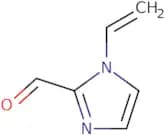
CAS:<p>Versatile small molecule scaffold</p>Formula:C15H12ClNO4Purity:Min. 95%Molecular weight:305.71 g/mol1-Ethenyl-1H-imidazole-2-carboxaldehyde
CAS:<p>1-Ethenyl-1H-imidazole-2-carboxaldehyde is a molecule that contains a vinyl group and a hydrogen bond. It has an intramolecular interaction with the carbonyl group and interactions with the formyl group and the pyridine ring. The vinyl group is also able to interact with other vinyl groups in other molecules, creating cycles of these molecules.</p>Formula:C6H6N2OPurity:Min. 95%Molecular weight:122.12 g/mol3-Benzyl-5-(1-chloroethyl)-1,2,4-oxadiazole
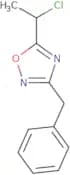
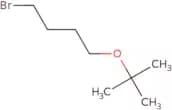
CAS:<p>Versatile small molecule scaffold</p>Formula:C11H11ClN2OPurity:Min. 95%Molecular weight:222.67 g/mol1-Bromo-4-(tert-butoxy)butane
CAS:<p>Versatile small molecule scaffold</p>Formula:C8H17BrOPurity:Min. 95%Molecular weight:209.12 g/mol[2-(2-Methylphenoxy)ethyl]hydrazine hydrochloride
CAS:<p>Versatile small molecule scaffold</p>Formula:C9H15ClN2OPurity:Min. 95%Molecular weight:202.68 g/mol[2-(4-Chlorophenoxy)ethyl]hydrazine hydrochloride
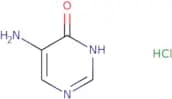
CAS:<p>Versatile small molecule scaffold</p>Formula:C8H12Cl2N2OPurity:Min. 95%Molecular weight:223.1 g/mol5-Aminopyrimidin-4(3H)-one
CAS:<p>5-Aminopyrimidin-4(3H)-one is an imidazole that is a precursor to the purines, which are nucleic acid bases. It is synthesized from the reaction of ammonium persulfate and 5-aminouracil with diacetate. This compound can be used as a fungicide and can also be used in the synthesis of 5-amino-1-(2,4,6-trichlorophenoxy)pyrimidine (5-ATP), a chemotherapeutic agent.</p>Purity:Min. 95%6-Methyl-1H,6H,7H-pyrazolo[3,4-d]pyridazin-7-one
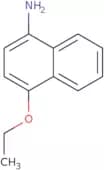
CAS:<p>Versatile small molecule scaffold</p>Formula:C6H6N4OPurity:Min. 95%Molecular weight:150.14 g/mol4-Ethoxynaphthalen-1-amine
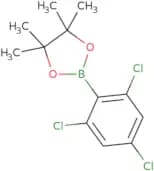
CAS:<p>Versatile small molecule scaffold</p>Formula:C12H13NOPurity:Min. 95%Molecular weight:187.24 g/mol4,4,5,5-Tetramethyl-2-(2,4,6-trichlorophenyl)-1,3,2-dioxaborolane
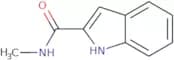
CAS:<p>Versatile small molecule scaffold</p>Formula:C12H14BCl3O2Purity:Min. 95%Molecular weight:307.41 g/molN-Methyl-1H-indole-2-carboxamide
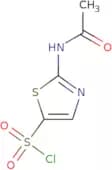
CAS:<p>N-Methyl-1H-indole-2-carboxamide is a molecule that has been optimized for antibacterial activity. It belongs to an indole family of molecules and has been shown to be active against the fungus, Neosartorya fischeri. In theory, this molecule could have potential as a drug agent for the prevention of bacterial infection. The optimization process was based on parameters such as carboxamide functional theory, nmr spectra, and potentials. The experimental data collected from NMR spectra and antibacterial activity confirmed that this molecule had a high degree of antibacterial activity against Gram-positive bacteria such as Staphylococcus aureus and Gram-negative bacteria such as Escherichia coli.</p>Formula:C10H10N2OPurity:Min. 95%Molecular weight:174.2 g/mol2-Acetamidothiazole-5-sulfonyl chloride
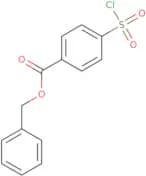
CAS:<p>2-Acetamidothiazole-5-sulfonyl chloride (2A5C) is a sulfonamide anticancer drug that exhibits cytotoxic activity. 2A5C is an indole derivative that has been synthesized for the purpose of developing a new class of anticancer agents. This drug has shown to have significant anti-tumor activity in molecular docking studies and can be used as a lead compound for future research.</p>Formula:C5H5ClN2O3S2Purity:Min. 95%Molecular weight:240.69 g/molBenzyl 4-(chlorosulfonyl)benzoate
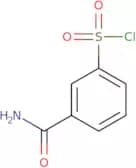
CAS:<p>Versatile small molecule scaffold</p>Formula:C14H11ClO4SPurity:Min. 95%Molecular weight:310.8 g/mol3-(aminocarbonyl)benzenesulfonyl chloride
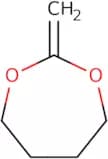
CAS:<p>3-(aminocarbonyl)benzenesulfonyl chloride (3-ACBSCl) is a compound that inhibits the life cycle of the HIV virus. It is a hexamer and binds to viral proteins, inhibiting the process of viral assembly. 3-ACBSCl helps to optimize lead compounds for antiviral drugs. This inhibitor has been shown to be active against HIV-1, and also inhibits other viruses that have an analogous life cycle. 3-ACBSCl has been shown to inhibit HIV-1 infection by binding to the capsid protein and preventing it from assembling into a functional virus particle.</p>Formula:C7H6ClNO3SPurity:Min. 95%Molecular weight:219.64 g/mol2-Methylene-1,3-dioxepane
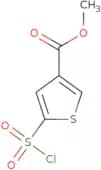
CAS:<p>2-Methylene-1,3-dioxepane is a biodegradable polymer that is used in the production of polyesters for use in film and packaging. It is synthesized by cationic polymerization, which involves the formation of ester linkages. 2-Methylene-1,3-dioxepane has been shown to be biocompatible in cell culture and can be used as a growth factor for tissue engineering. The melting point of this polymer is dependent on the molecular weight and it undergoes phase transition at temperatures around 130°C. This polymer degrades through hydrolysis when exposed to alkali or hydrogen chloride.2-Methylene-1,3-dioxepane has been observed to have an FTIR spectrum containing carbonyl absorption bands at 1710 cm−1 and 1650 cm−1. This material also displays a 13C NMR spectrum with peaks at -18 ppm and -7 ppm</p>Formula:C6H10O2Purity:Min. 95%Molecular weight:114.14 g/molMethyl 5-(chlorosulfonyl)thiophene-3-carboxylate
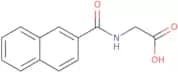
CAS:<p>Versatile small molecule scaffold</p>Formula:C6H5ClO4S2Purity:Min. 95%Molecular weight:240.7 g/mol2-(Naphthalen-2-ylformamido)acetic acid
CAS:<p>2-(Naphthalen-2-ylformamido)acetic acid (Nafamid) is a toxic agent that can be used to induce experimental diabetes in animals. Nafamid is metabolized to benzoate and then to chloride, which can be detected in urine. Chromatographic experiments showed that Nafamid was not metabolized by rats or mice, but was eliminated as the mercapturic acid (MNA) and mercapturic acid glucuronide (MAG). MNA has been isolated from urine samples of rats injected with Nafamid. The metabolic pathways for Nafamid are the same for animals and humans.</p>Formula:C13H11NO3Purity:Min. 95%Molecular weight:229.23 g/mol2-[(1-Benzofuran-2-yl)formamido]acetic acid
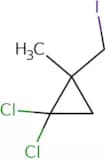
CAS:<p>Versatile small molecule scaffold</p>Formula:C11H9NO4Purity:Min. 95%Molecular weight:219.19 g/mol1,1-Dichloro-2-(iodomethyl)-2-methylcyclopropane
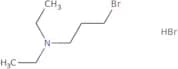
CAS:<p>Versatile small molecule scaffold</p>Formula:C5H7Cl2IPurity:Min. 95%Molecular weight:264.92 g/mol(3-Bromopropyl)diethylamine hydrobromide
CAS:<p>Versatile small molecule scaffold</p>Formula:C7H17Br2NPurity:Min. 95%Molecular weight:275.02 g/mol2-Chloro-N-[4-(3-methylphenoxy)phenyl]acetamide
CAS:<p>Versatile small molecule scaffold</p>Formula:C15H14ClNO2Purity:Min. 95%Molecular weight:275.73 g/mol2-Chloro-N-[4-(2-chlorophenoxy)phenyl]acetamide
CAS:<p>Versatile small molecule scaffold</p>Formula:C14H11Cl2NO2Purity:Min. 95%Molecular weight:296.1 g/mol2-Chloro-N-[4-(3-chlorophenoxy)phenyl]acetamide
CAS:<p>Versatile small molecule scaffold</p>Formula:C14H11Cl2NO2Purity:Min. 95%Molecular weight:296.1 g/mol3-(Methoxymethyl)-5-methylhexan-2-one
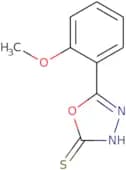
CAS:<p>Versatile small molecule scaffold</p>Formula:C9H18O2Purity:Min. 95%Molecular weight:158.2 g/mol5-(2-Methoxyphenyl)-1,3,4-oxadiazole-2-thiol
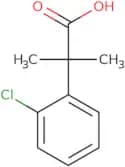
CAS:<p>Versatile small molecule scaffold</p>Formula:C9H8N2O2SPurity:Min. 95%Molecular weight:208.24 g/mol2-(2-Chlorophenyl)-2-methylpropanoic acid
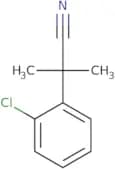
CAS:<p>Versatile small molecule scaffold</p>Formula:C10H11O2ClPurity:Min. 95%Molecular weight:198.64 g/mol2-(2-chlorophenyl)-2-methylpropanenitrile
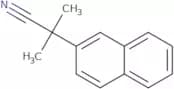
CAS:<p>Versatile small molecule scaffold</p>Formula:C10H10ClNPurity:Min. 95%Molecular weight:179.65 g/mol2-Methyl-2-(naphthalen-2-yl)propanenitrile
CAS:<p>Versatile small molecule scaffold</p>Formula:C14H13NPurity:Min. 95%Molecular weight:195.26 g/mol3-([3-(Dimethylamino)propyl]amino)propanamide
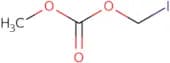
CAS:<p>Versatile small molecule scaffold</p>Formula:C8H19N3OPurity:Min. 95%Molecular weight:173.26 g/molIodomethyl methyl carbonate
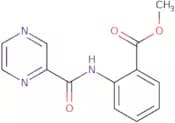
CAS:<p>Iodomethyl methyl carbonate is a carbapenem antibiotic that has been shown to have anti-influenza activity. It inhibits the cap-dependent endonuclease of the influenza virus, which prevents viral replication and release of new viruses. Iodomethyl methyl carbonate also inhibits the HIV integrase enzyme and may be used as an inhibitor for the treatment of HIV infection. This compound has antibacterial activity against bacteria that contain metallo-β-lactamase, such as Enterobacteriaceae. Iodomethyl methyl carbonate is stable in organic solvents, making it useful for chemical reactions.</p>Formula:C3H5IO3Purity:Min. 95%Molecular weight:215.97 g/molMethyl 2-(pyrazine-2-amido)benzoate
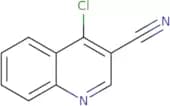
CAS:<p>Versatile small molecule scaffold</p>Formula:C13H11N3O3Purity:Min. 95%Molecular weight:257.24 g/mol4-Chloroquinoline-3-carbonitrile
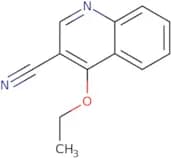
CAS:<p>4-Chloroquinoline-3-carbonitrile is an intermediate in the synthesis of the tyrosine kinase inhibitor pelitinib and the process for its synthesis has been described. The synthetic process starts from acetonitrile, which reacts with nitrous acid to produce 4-chloroquinoline-3-carbonitrile. The next stage involves the reaction of 4-chloroquinoline-3-carbonitrile with ethyl acetate in the presence of a catalyst to produce 2-(4'-chlorophenyl)ethyl acetate. This compound can then be reacted with phenylethylamine to form (2E)-N-[2-(4'-chlorophenyl)ethyl]-N-(2,6-dimethoxyphenyl)acrylamide, which is a key intermediate in the synthesis of pelitinib.</p>Formula:C10H5ClN2Purity:Min. 95%Molecular weight:188.61 g/mol4-Ethoxyquinoline-3-carbonitrile
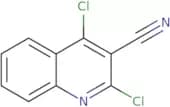
CAS:<p>Versatile small molecule scaffold</p>Formula:C12H10N2OPurity:Min. 95%Molecular weight:198.22 g/mol2,4-Dichloroquinoline-3-carbonitrile
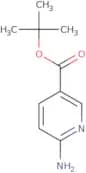
CAS:<p>2,4-Dichloroquinoline-3-carbonitrile is a nitrosourea compound that inhibits cancer cells. It is activated by the addition of a reducing agent such as triethyl orthoformate and then reacts with an amine to form the corresponding N,N'-dichloroquinoline. The product of this reaction inhibits cancer cells by binding to DNA and inhibiting RNA synthesis. 2,4-Dichloroquinoline-3-carbonitrile has been shown to be effective against leukemia cells in vitro.</p>Formula:C10H4Cl2N2Purity:Min. 95%Molecular weight:223.06 g/moltert-Butyl 6-aminopyridine-3-carboxylate
CAS:<p>Versatile small molecule scaffold</p>Formula:C10H14N2O2Purity:Min. 95%Molecular weight:194.23 g/mol6-Hydrazinylpyridine-3-carboxamide
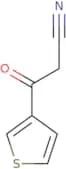
CAS:<p>6-Hydrazinylpyridine-3-carboxamide is a coligand with high affinity for technetium, which is used in analytical chemistry. The compound has been shown to bind to the transcription-polymerase chain reaction (PCR) and monoclonal antibody binding sites of the human immunodeficiency virus type 1 (HIV-1). 6-Hydrazinylpyridine-3-carboxamide has also been shown to be an effective inhibitor of protein synthesis in animal cells and to inhibit tumor cell growth. Clinical trials have demonstrated that this compound can be used as an aneurysm sealant and as a cancer treatment.</p>Formula:C6H8N4OPurity:Min. 95%Molecular weight:152.15 g/mol3-Oxo-3-(3-thienyl)propanenitrile
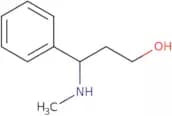
CAS:<p>3-Oxo-3-(3-thienyl)propanenitrile is a metabolite of 3-oxothiopropanal. It is an analog of prostaglandin, which has been shown to have antiinflammatory properties. 3-Oxo-3-(3-thienyl)propanenitrile has been used in the treatment of adjuvant arthritis and was found to inhibit the production of prostaglandins.</p>Formula:C7H5NOSPurity:Min. 95%Molecular weight:151.19 g/mol3-(Methylamino)-3-phenylpropan-1-ol
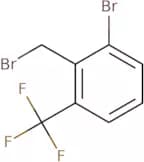
CAS:<p>Versatile small molecule scaffold</p>Formula:C10H15NOPurity:Min. 95%Molecular weight:165.23 g/mol2-Bromo-6-(trifluoromethyl)benzyl bromide
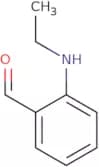
CAS:<p>Versatile small molecule scaffold</p>Purity:Min. 95%2-(Ethylamino)benzaldehyde
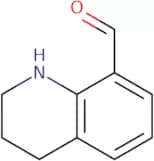
CAS:<p>2-(Ethylamino)benzaldehyde (2-EABA) is a reactive, radiation-sensitive compound that can be used as a diagnostic agent. 2-EABA is the precursor of styryl dyes and coumarin derivatives. 2-EABA reacts with chloride to form an amide in the presence of hydroxyl groups. The amide reacts with aromatic hydrocarbons to produce cationic polymers. The reactive functional group of 2-EABA is an aldehyde group, which reacts with basic dyes to form diamines and diamides. In addition, it has been shown that 2-EABA can be used to detect chloride ions in water samples, owing to its high solubility in water.</p>Formula:C9H11NOPurity:Min. 95%Molecular weight:149.19 g/mol1,2,3,4-Tetrahydroquinoline-8-carbaldehyde
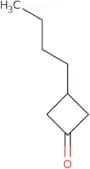
CAS:<p>Versatile small molecule scaffold</p>Formula:C10H11NOPurity:Min. 95%Molecular weight:161.2 g/mol3-Butylcyclobutan-1-one
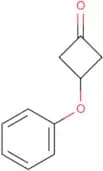
CAS:<p>Versatile small molecule scaffold</p>Formula:C8H14OPurity:Min. 95%Molecular weight:126.2 g/mol3-Phenoxycyclobutan-1-one
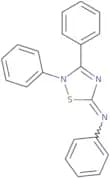
CAS:<p>3-Phenoxycyclobutan-1-one is a chemical compound that belongs to the group of sulfoxides. It is an intermediate in the synthesis of other compounds, such as methyl esters and sulfones. 3-Phenoxycyclobutan-1-one can be synthesized by coupling with phenol and cyclohexanone in the presence of a base. 3-Phenoxycyclobutan-1-one is also a precursor for the synthesis of other compounds, such as dyes and pharmaceuticals. The conversion to 3-phenoxycyclobutanones requires pyrolysis at temperatures greater than 300°C.</p>Formula:C10H10O2Purity:Min. 95%Molecular weight:162.19 g/molN,2,3-Triphenyl-2,5-dihydro-1,2,4-thiadiazol-5-imine
CAS:<p>Versatile small molecule scaffold</p>Formula:C20H15N3SPurity:Min. 95%Molecular weight:329.4 g/molrac-[(2R,5S)-5-tert-Butyloxolan-2-yl]methanol
CAS:<p>Versatile small molecule scaffold</p>Formula:C9H18O2Purity:Min. 95%Molecular weight:158.2 g/mol1-(3-Methylphenyl)-3-(prop-2-yn-1-yl)urea
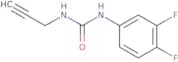
CAS:<p>Versatile small molecule scaffold</p>Formula:C11H12N2OPurity:Min. 95%Molecular weight:188.23 g/mol1-(3,4-Difluorophenyl)-3-(prop-2-yn-1-yl)urea
CAS:<p>Versatile small molecule scaffold</p>Formula:C10H8F2N2OPurity:Min. 95%Molecular weight:210.18 g/mol4-Chloro-2-fluoro-1-isocyanatobenzene
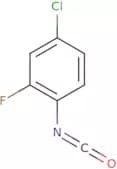
CAS:<p>Versatile small molecule scaffold</p>Formula:C7H3ClFNOPurity:Min. 95%Molecular weight:171.55 g/mol5-Amino-1-phenyl-1H,4H,5H-pyrazolo[3,4-d]pyrimidin-4-one
CAS:<p>Versatile small molecule scaffold</p>Formula:C11H9N5OPurity:Min. 95%Molecular weight:227.22 g/mol2-Fluoro-1-isocyanato-4-methylbenzene
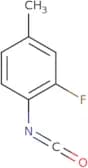
CAS:<p>Versatile small molecule scaffold</p>Formula:C8H6FNOPurity:Min. 95%Molecular weight:151.14 g/mol3-Methoxy-2,5-furandione
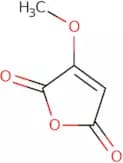
CAS:<p>3-Methoxy-2,5-furandione is a reactive functional group that belongs to the group of β-carboline alkaloids. It is used as a crosslinker in polyvinyl and iontophoresis applications, as well as a cross-linking agent for coatings or natural compounds. 3-Methoxy-2,5-furandione reacts with benzyl groups to form crosslinked products that are stable in acidic environments. This product is also used as an intermediate for the synthesis of tetronic acid (a coating) or reaction products.</p>Formula:C5H4O4Purity:Min. 95%Molecular weight:128.08 g/mol2-Chloro-6-(2-methylpropyl)pyridine-3-carbonitrile
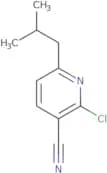
CAS:<p>2-Chloro-6-(2-methylpropyl)pyridine-3-carbonitrile is a naphthyridine that has been correlated to the ionization of the molecule. The substituent on the nitrogen atom is not ionized, while the nitrogens on the ring are. This difference in ionization constants allows 2CMP to be used as a research tool for studying nucleic acids and proteins.</p>Formula:C10H11ClN2Purity:Min. 95%Molecular weight:194.66 g/molMethyl 3-amino-3-methylbutanoate hydrochloride
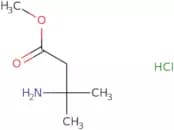
CAS:<p>Versatile small molecule scaffold</p>Formula:C6H14ClNO2Purity:Min. 95%Molecular weight:167.63 g/molN-(4-Chlorobenzyl)prop-2-en-1-amine
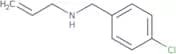
CAS:<p>Versatile small molecule scaffold</p>Formula:C10H12ClNPurity:Min. 95%Molecular weight:181.66 g/mol[(3,4-Dichlorophenyl)methyl](propan-2-yl)amine
CAS:<p>Versatile small molecule scaffold</p>Formula:C10H13Cl2NPurity:Min. 95%Molecular weight:218.12 g/molN-Ethyl-4-chlorobenzylamine
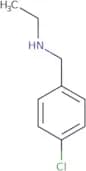
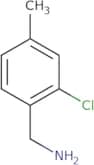
CAS:<p>Versatile small molecule scaffold</p>Formula:C9H12ClNPurity:Min. 95%Molecular weight:169.65 g/mol(2-Chloro-4-methylphenyl)methanamine
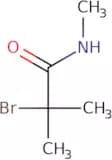
CAS:<p>Versatile small molecule scaffold</p>Formula:C8H10ClNPurity:Min. 95%Molecular weight:155.62 g/mol2-Bromo-N,2-dimethylpropanamide
CAS:<p>Versatile small molecule scaffold</p>Formula:C5H10BrNOPurity:Min. 95%Molecular weight:180.04 g/mol2-(Oxiran-2-yl)oxane
CAS:<p>Versatile small molecule scaffold</p>Formula:C7H12O2Purity:Min. 95%Molecular weight:128.2 g/mol2,2-Dimethyl-2H-chromene-6-carbaldehyde
CAS:<p>Versatile small molecule scaffold</p>Formula:C12H12O2Purity:Min. 95%Molecular weight:188.23 g/mol3-[(Methylsulfanyl)methyl]pyridine
CAS:<p>Versatile small molecule scaffold</p>Formula:C7H9NSPurity:Min. 95%Molecular weight:139.22 g/mol3-[(Phenylsulfanyl)methyl]pyridine
CAS:<p>Versatile small molecule scaffold</p>Formula:C12H11NSPurity:Min. 95%Molecular weight:201.29 g/molN-Methyl-N-[(pyridin-3-yl)methyl]acetamide
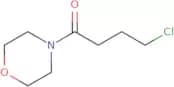
CAS:<p>Versatile small molecule scaffold</p>Formula:C9H12N2OPurity:Min. 95%Molecular weight:164.2 g/mol4-Chloro-1-(morpholin-4-yl)butan-1-one
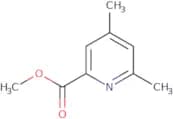
CAS:<p>Versatile small molecule scaffold</p>Formula:C8H14ClNO2Purity:Min. 95%Molecular weight:191.65 g/molMethyl 4,6-dimethylpyridine-2-carboxylate
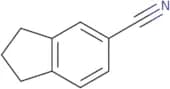
CAS:<p>Versatile small molecule scaffold</p>Formula:C9H11NO2Purity:Min. 95%Molecular weight:165.19 g/mol2,3-Dihydro-1h-indene-5-carbonitrile
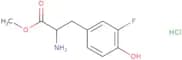
CAS:<p>Versatile small molecule scaffold</p>Formula:C10H9NPurity:Min. 95%Molecular weight:143.19 g/molMethyl 2-amino-3-(3-fluoro-4-hydroxyphenyl)propanoate hydrochloride
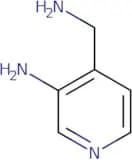
CAS:<p>Versatile small molecule scaffold</p>Formula:C10H13ClFNO3Purity:Min. 95%Molecular weight:249.66 g/mol4-(Aminomethyl)pyridin-3-amine
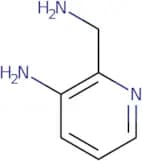
CAS:<p>Versatile small molecule scaffold</p>Formula:C6H9N3Purity:Min. 95%Molecular weight:123.16 g/mol2-(Aminomethyl)pyridin-3-amine
CAS:<p>Versatile small molecule scaffold</p>Formula:C6H9N3Purity:Min. 95%Molecular weight:123.16 g/moltert-Butyl N-(3,4-difluorophenyl)carbamate
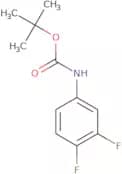
CAS:<p>Versatile small molecule scaffold</p>Formula:C11H13F2NO2Purity:Min. 95%Molecular weight:229.22 g/mol2-({3-Oxo-4-phenyl-8-thia-4,6-diazatricyclo[7.4.0.0,2,7]trideca-1(9),2(7),5-trien-5-yl}sulfanyl)acetohydrazide
CAS:<p>Versatile small molecule scaffold</p>Formula:C18H18N4O2S2Purity:Min. 95%Molecular weight:386.5 g/moltert-Butyl N-methyl-N-[(methylcarbamoyl)methyl]carbamate
CAS:<p>Versatile small molecule scaffold</p>Formula:C9H18N2O3Purity:Min. 95%Molecular weight:202.25 g/mol(2S)-1-{[(4-Bromophenyl)methoxy]carbonyl}pyrrolidine-2-carboxylic acid
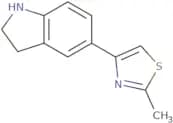
CAS:<p>Versatile small molecule scaffold</p>Formula:C13H14BrNO4Purity:Min. 95%Molecular weight:328.16 g/mol5-(2-Methyl-1,3-thiazol-4-yl)-2,3-dihydro-1H-indole
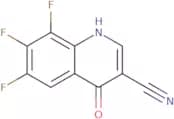
CAS:<p>Versatile small molecule scaffold</p>Formula:C12H12N2SPurity:Min. 95%Molecular weight:216.3 g/mol6,7,8-Trifluoro-4-oxo-1,4-dihydroquinoline-3-carbonitrile
CAS:<p>Versatile small molecule scaffold</p>Formula:C10H3F3N2OPurity:Min. 95%Molecular weight:224.14 g/molEthyl 2-cyano-3-[(2,3,4-trifluorophenyl)amino]prop-2-enoate
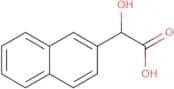
CAS:<p>Versatile small molecule scaffold</p>Formula:C12H9F3N2O2Purity:Min. 95%Molecular weight:270.21 g/mol(2S)-2-Hydroxy-2-(naphthalen-2-yl)acetic acid
CAS:<p>Versatile small molecule scaffold</p>Formula:C12H10O3Purity:Min. 95%Molecular weight:202.21 g/mol(3-Aminopropyl)boronic acid hydrochloride
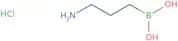
CAS:<p>Versatile small molecule scaffold</p>Formula:C3H11BClNO2Purity:Min. 95%Molecular weight:139.4 g/mol2-Hydroxy-6-(trifluoromethyl)benzoic acid
CAS:<p>Versatile small molecule scaffold</p>Formula:C8H5F3O3Purity:Min. 95%Molecular weight:206.12 g/mol2-(1H-Indol-5-yl)propan-2-ol
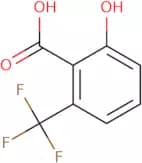
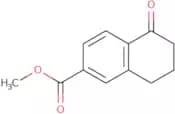
CAS:<p>Versatile small molecule scaffold</p>Formula:C11H13NOPurity:Min. 95%Molecular weight:175.23 g/molMethyl 5-Oxo-6,7,8-Trihydronaphthalene-2-Carboxylate
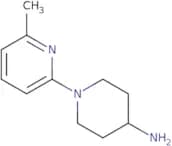
CAS:<p>Versatile small molecule scaffold</p>Formula:C12H12O3Purity:Min. 95%Molecular weight:204.22 g/mol1-(6-Methylpyridin-2-yl)piperidin-4-amine
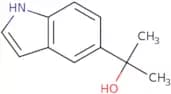
CAS:<p>Versatile small molecule scaffold</p>Formula:C11H17N3Purity:Min. 95%Molecular weight:191.27 g/mol2-[2-(Trifluoromethyl)-1,3-dithiolan-2-yl]acetic acid
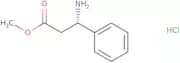
CAS:<p>Versatile small molecule scaffold</p>Formula:C6H7F3O2S2Purity:Min. 95%Molecular weight:232.2 g/mol(S)-β3-phenylalanine methyl ester hydrochloride
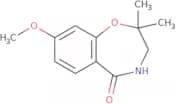
CAS:<p>Versatile small molecule scaffold</p>Formula:C10H13NO2·HClPurity:Min. 95%Molecular weight:215.68 g/mol8-Methoxy-2,2-dimethyl-2,3,4,5-tetrahydro-1,4-benzoxazepin-5-one
CAS:<p>Versatile small molecule scaffold</p>Formula:C12H15NO3Purity:Min. 95%Molecular weight:221.25 g/mol2-[2-(2-Nitrophenoxy)ethoxy]ethan-1-amine
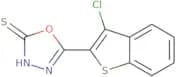
CAS:<p>Versatile small molecule scaffold</p>Formula:C10H14N2O4Purity:Min. 95%Molecular weight:226.23 g/mol5-(3-Chloro-1-benzothiophen-2-yl)-1,3,4-oxadiazole-2-thiol
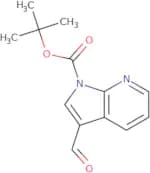
CAS:<p>5-(3-Chloro-1-benzothiophen-2-yl)-1,3,4-oxadiazole-2-thiol is an antibacterial agent that inhibits the growth of bacteria by binding to sulfur. It is a sulfur analog that has been shown to inhibit the growth of certain bacteria. 5-(3-Chloro-1-benzothiophen-2-yl)-1,3,4-oxadiazole-2-thiol binds to the thiol group in cysteine and methionine residues in bacterial proteins and blocks their activity. This leads to cell death by inhibiting protein synthesis.</p>Formula:C10H5ClN2OS2Purity:Min. 95%Molecular weight:268.7 g/mol1-Boc-7-azaindole-3-carboxaldehyde
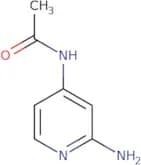
CAS:<p>Versatile small molecule scaffold</p>Formula:C13H14N2O3Purity:Min. 95%Molecular weight:246.26 g/molN-(2-Aminopyridin-4-yl)acetamide
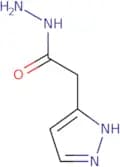
CAS:<p>Versatile small molecule scaffold</p>Formula:C7H9N3OPurity:Min. 95%Molecular weight:151.17 g/mol2-(1H-Pyrazol-3-yl)acetohydrazide
CAS:<p>Versatile small molecule scaffold</p>Formula:C5H8N4OPurity:Min. 95%Molecular weight:140.14 g/mol3-[(tert-Butyldimethylsilyl)oxy]-2,2-dimethylpropanal
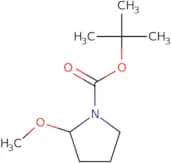
CAS:<p>Versatile small molecule scaffold</p>Formula:C11H24O2SiPurity:Min. 95%Molecular weight:216.39 g/mol1-Boc-2-Methoxypyrrolidine
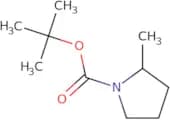
CAS:<p>Versatile small molecule scaffold</p>Formula:C10H19NO3Purity:Min. 95%Molecular weight:201.27 g/moltert-Butyl 2-methylpyrrolidine-1-carboxylate
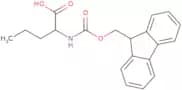
CAS:<p>Versatile small molecule scaffold</p>Formula:C10H19NO2Purity:Min. 95%Molecular weight:185.26 g/molFmoc-DL-norvaline
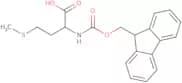
CAS:<p>Versatile small molecule scaffold</p>Formula:C20H21NO4Purity:Min. 95%Molecular weight:339.4 g/molFmoc-DL-methionine
CAS:<p>Fmoc-DL-methionine is a stereochemically pure amino acid that is used as an intermediate in the synthesis of peptides, antibiotics, and other organic compounds. Fmoc-DL-methionine has been shown to have antitumor activity and can be used for the treatment of cancer.</p>Formula:C20H21NO4SPurity:Min. 95%Molecular weight:371.5 g/mol1-Methoxy-5-methylhexane-2,4-dione
CAS:<p>Versatile small molecule scaffold</p>Formula:C8H14O3Purity:Min. 95%Molecular weight:158.19 g/mol6-Oxaspiro[2.5]octane-5,7-dione
CAS:<p>Versatile small molecule scaffold</p>Formula:C7H8O3Purity:90%MinMolecular weight:140.14 g/mol1-[2-(Difluoromethoxy)phenyl]ethan-1-amine
CAS:<p>Versatile small molecule scaffold</p>Formula:C9H11F2NOPurity:Min. 95%Molecular weight:187.19 g/mol4-(4-Iodophenoxy)oxane
CAS:<p>Versatile small molecule scaffold</p>Formula:C11H13IO2Purity:Min. 95%Molecular weight:304.12 g/mol2-[4-(Hydroxymethyl)phenyl]acetonitrile
CAS:<p>Versatile small molecule scaffold</p>Formula:C9H9NOPurity:Min. 95%Molecular weight:147.17 g/mol1-{[(9H-Fluoren-9-yl)methoxy]carbonyl}pyrrolidine-2-carboxylic acid
CAS:<p>1-{[(9H-Fluoren-9-yl)methoxy]carbonyl}pyrrolidine-2-carboxylic acid is a linear peptide analog of bivalirudin. It has been shown to be an efficient inhibitor of angiotensin II and exogenous peptides, with a high degree of specificity for the AT1 receptor. 1-{[(9H-Fluoren-9-yl)methoxy]carbonyl}pyrrolidine-2-carboxylic acid has also been found to have a labile amide bond in its structure, which can be deprotected by dilution or phase method.</p>Formula:C20H19NO4Purity:Min. 95%Molecular weight:337.4 g/mol4-{[(Propan-2-yl)carbamoyl]amino}benzoic acid
CAS:<p>Versatile small molecule scaffold</p>Formula:C11H14N2O3Purity:Min. 95%Molecular weight:222.24 g/mol2-Hydroxy-4-{[(propan-2-yl)carbamoyl]amino}benzoic acid
CAS:<p>Versatile small molecule scaffold</p>Formula:C11H14N2O4Purity:Min. 95%Molecular weight:238.24 g/mol2-Methyl-imidazo[1,2-a]pyridine-3-carboxylic acid hydrazide
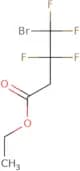
CAS:<p>Versatile small molecule scaffold</p>Formula:C9H10N4OPurity:Min. 95%Molecular weight:190.2 g/molEthyl 4-bromo-3,3,4,4-tetrafluorobutanoate
CAS:<p>Versatile small molecule scaffold</p>Formula:C6H7BrF4O2Purity:Min. 95%Molecular weight:267.02 g/mol2,6-Difluoro-3-methylaniline
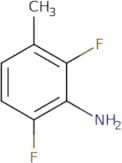
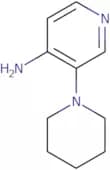
CAS:<p>2,6-Difluoro-3-methylaniline (2,6-DFMA) is an agriculturally important chemical intermediate. It is used as a precursor to other chemicals such as 2,6-dichloro-3-fluoroaniline. 2,6-DFMA is also a triazolo compound with aniline and chlorine substituents. These compounds are intermediates in the production of herbicides and pesticides. 2,6-DFMA has been shown to be toxic to aquatic organisms, so care should be taken when using this chemical.</p>Formula:C7H7F2NPurity:Min. 95%Molecular weight:143.14 g/mol3-(Piperidin-1-yl)pyridin-4-amine
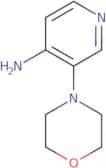
CAS:<p>Versatile small molecule scaffold</p>Formula:C10H15N3Purity:Min. 95%Molecular weight:177.25 g/mol3-(Morpholin-4-yl)pyridin-4-amine
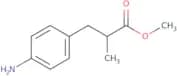
CAS:<p>Versatile small molecule scaffold</p>Formula:C9H13N3OPurity:Min. 95%Molecular weight:179.22 g/molMethyl 3-(4-aminophenyl)-2-methylpropanoate
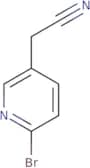
CAS:<p>Versatile small molecule scaffold</p>Formula:C11H15NO2Purity:Min. 95%Molecular weight:193.24 g/mol2-(6-Bromopyridin-3-yl)acetonitrile
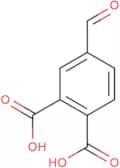
CAS:<p>2-(6-Bromopyridin-3-yl)acetonitrile (BPAN) is a pyridine derivative that has been shown to function as an acetylcholine receptor ligand. It binds to the nicotinic cholinergic receptors and has been shown to induce neuronal apoptosis in vitro. BPAN also inhibits the activity of histone deacetylase, which is involved in the regulation of gene expression and cellular proliferation. BPAN's anti-proliferative effects are thought to be due to its ability to inhibit the transcriptional activity of histones.</p>Formula:C7H5BrN2Purity:Min. 95%Molecular weight:197.03 g/mol4-Formylbenzene-1,2-dicarboxylic acid
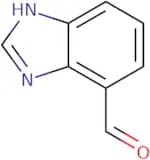
CAS:<p>Versatile small molecule scaffold</p>Formula:C9H6O5Purity:Min. 95%Molecular weight:194.14 g/mol1H-Benzimidazole-4-carboxaldehyde
CAS:<p>Versatile small molecule scaffold</p>Formula:C8H6N2OPurity:Min. 95%Molecular weight:146.15 g/molBenzo[d]thiazole-7-carbaldehyde
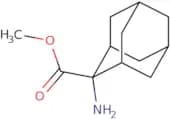
CAS:<p>Versatile small molecule scaffold</p>Formula:C8H5NOSPurity:Min. 95%Molecular weight:163.19 g/molMethyl 2-aminoadamantane-2-carboxylate
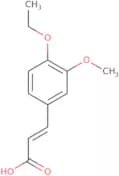
CAS:<p>Methyl 2-aminoadamantane-2-carboxylate is the methyl ester of the acid form of 2-aminoadamantane. It is a planar, conformationally constrained molecule with a carboxylic acid group on one end and an amine group on the other. The compound is functionalized with oxalamide and adamantane groups. This compound is a retropeptide, which means it contains an amino terminal that was derived from a precursor peptide.</p>Formula:C12H19NO2Purity:Min. 95%Molecular weight:209.28 g/mol(E)-3-(4-Ethoxy-3-methoxyphenyl)acrylic acid
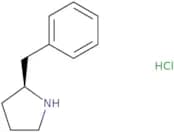
CAS:<p>Versatile small molecule scaffold</p>Formula:C12H14O4Purity:Min. 95%Molecular weight:222.24 g/mol(S)-2-Benzylpyrrolidine Hydrochloride
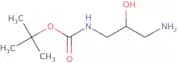
CAS:Controlled Product<p>Versatile small molecule scaffold</p>Formula:C11H15N·HClPurity:Min. 95%Molecular weight:197.7 g/moltert-butyl N-(3-amino-2-hydroxypropyl)carbamate
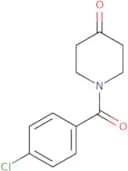
CAS:<p>Versatile small molecule scaffold</p>Formula:C8H18N2O3Purity:Min. 95%Molecular weight:190.2 g/mol1-(4-Chlorobenzoyl)piperidin-4-one
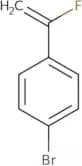
CAS:Controlled Product<p>Versatile small molecule scaffold</p>Formula:C12H12ClNO2Purity:Min. 95%Molecular weight:237.68 g/mol1-Bromo-4-(1-fluoroethenyl)benzene
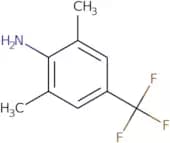
CAS:<p>Versatile small molecule scaffold</p>Formula:C8H6BrFPurity:Min. 95%Molecular weight:201.04 g/mol2,6-Dimethyl-4-(trifluoromethyl)aniline
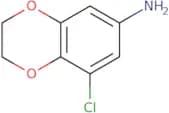
CAS:<p>Versatile small molecule scaffold</p>Formula:C9H10F3NPurity:Min. 95%Molecular weight:189.18 g/mol8-Chloro-2,3-dihydro-1,4-benzodioxin-6-amine
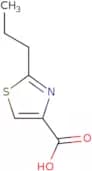
CAS:<p>Versatile small molecule scaffold</p>Formula:C8H8ClNO2Purity:Min. 95%Molecular weight:185.61 g/mol2-Propyl-1,3-thiazole-4-carboxylic acid
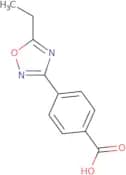
CAS:<p>Versatile small molecule scaffold</p>Formula:C7H9NO2SPurity:Min. 95%Molecular weight:171.22 g/mol4-(5-Ethyl-1,2,4-oxadiazol-3-yl)benzoic acid
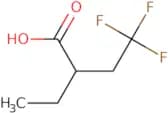
CAS:<p>4-(5-Ethyl-1,2,4-oxadiazol-3-yl)benzoic acid (ETOA) is a monocarboxylic acid that has been shown to be an effective electron donor in the oxidation of fatty acids. ETOA reacts with ammonium nitrate and sodium carbonate to form nanowires with hydrochloric acid as the carbon source. These wires were found to have optical properties that are similar to those of silicon and exhibit increased electrical conductivity when compared to other metals such as copper. ETOA has also been shown to chelate metal ions such as molybdenum.</p>Formula:C11H10N2O3Purity:Min. 95%Molecular weight:218.21 g/mol2-Ethyl-4,4,4-trifluorobutanoic acid
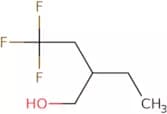
CAS:<p>Versatile small molecule scaffold</p>Formula:C6H9F3O2Purity:Min. 95%Molecular weight:170.13 g/mol2-Ethyl-4,4,4-trifluorobutan-1-ol
CAS:<p>Versatile small molecule scaffold</p>Formula:C6H11F3OPurity:Min. 95%Molecular weight:156.15 g/mol3-[(Piperidin-3-yl)methyl]pyridine
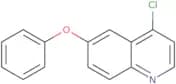
CAS:<p>Versatile small molecule scaffold</p>Formula:C11H16N2Purity:Min. 95%Molecular weight:176.26 g/mol4-Chloro-6-phenoxyquinoline
CAS:<p>Versatile small molecule scaffold</p>Formula:C15H10ClNOPurity:Min. 95%Molecular weight:255.7 g/mol4-Chloro-3-[(morpholin-4-yl)methyl]aniline
CAS:<p>Versatile small molecule scaffold</p>Formula:C11H15ClN2OPurity:Min. 95%Molecular weight:226.7 g/mol[4-(4,4,5,5-Tetramethyl-[1,3,2]dioxaborolan-2-yl)-phenoxy]-acetic acid tert-butyl ester
CAS:<p>Versatile small molecule scaffold</p>Formula:C18H27BO5Purity:Min. 95%Molecular weight:334.2 g/mol6-Chloro-1,3-dimethyl-1H-pyrazolo[3,4-b]pyridine-5-carbonitrile
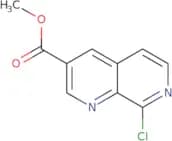
CAS:<p>Versatile small molecule scaffold</p>Formula:C9H7ClN4Purity:Min. 95%Molecular weight:206.63 g/molMethyl 8-chloro-1,7-naphthyridine-3-carboxylate
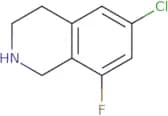
CAS:<p>Versatile small molecule scaffold</p>Formula:C10H7ClN2O2Purity:Min. 95%Molecular weight:222.63 g/mol6-Chloro-8-fluoro-1,2,3,4-tetrahydroisoquinoline
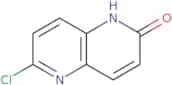
CAS:<p>Versatile small molecule scaffold</p>Formula:C9H9ClFNPurity:Min. 95%Molecular weight:185.62 g/mol6-Chloro-1,2-dihydro-1,5-naphthyridin-2-one
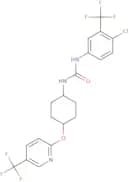
CAS:<p>Versatile small molecule scaffold</p>Formula:C8H5ClN2OPurity:Min. 95%Molecular weight:180.59 g/molrac-1-(4-Chloro-3-(trifluoromethyl)phenyl)-3-((1R,4R)-4-((5-(trifluoromethyl)pyridin-2-yl)oxy)cyclohexyl)urea
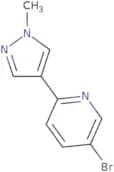
CAS:<p>Versatile small molecule scaffold</p>Formula:C20H18ClF6N3O2Purity:Min. 95%Molecular weight:481.8 g/mol5-Bromo-2-(1-methyl-1H-pyrazol-4-yl)pyridine
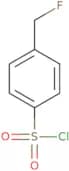
CAS:<p>Versatile small molecule scaffold</p>Formula:C9H8BrN3Purity:Min. 95%Molecular weight:238.08 g/mol4-(Fluoromethyl)benzene-1-sulfonyl chloride
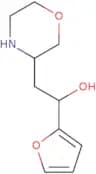
CAS:<p>Versatile small molecule scaffold</p>Formula:C7H6ClFO2SPurity:Min. 95%Molecular weight:208.64 g/mol1-(Furan-2-yl)-2-(morpholin-3-yl)ethan-1-ol
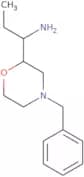
CAS:<p>Versatile small molecule scaffold</p>Formula:C10H15NO3Purity:Min. 95%Molecular weight:197.23 g/mol1-(4-Benzylmorpholin-2-yl)propan-1-amine
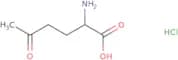
CAS:<p>Versatile small molecule scaffold</p>Formula:C14H22N2OPurity:Min. 95%Molecular weight:234.34 g/mol2-Amino-5-oxohexanoic acid hydrochloride
CAS:<p>Versatile small molecule scaffold</p>Formula:C6H12ClNO3Purity:Min. 95%Molecular weight:181.62 g/moltert-Butyl N-[2-(1,2,4-oxadiazol-3-yl)propan-2-yl]carbamate
CAS:<p>Versatile small molecule scaffold</p>Formula:C10H17N3O3Purity:Min. 95%Molecular weight:227.26 g/mol2-Amino-5-methoxypentanoic acid hydrochloride
CAS:<p>Versatile small molecule scaffold</p>Formula:C6H14ClNO3Purity:Min. 95%Molecular weight:183.63 g/mol2,5-Difluoro-4-methylbenzene-1-sulfonyl chloride
CAS:<p>Versatile small molecule scaffold</p>Formula:C7H5ClF2O2SPurity:Min. 95%Molecular weight:226.63 g/mol1-(1-Methylpyrrolidine-2-carbonyl)piperazine dihydrochloride
CAS:<p>Versatile small molecule scaffold</p>Formula:C10H21Cl2N3OPurity:Min. 95%Molecular weight:270.2 g/mol3-Amino-4-sulfamoylbenzamide
CAS:<p>Versatile small molecule scaffold</p>Formula:C7H9N3O3SPurity:Min. 95%Molecular weight:215.23 g/mol7-Chloro-3-methyl-1-benzothiophene-2-sulfonamide
CAS:<p>Versatile small molecule scaffold</p>Formula:C9H8ClNO2S2Purity:Min. 95%Molecular weight:261.8 g/mol2-(Methoxymethyl)-5H,6H,7H,8H-[1,2,4]triazolo[1,5-a]pyridin-8-amine
CAS:<p>Versatile small molecule scaffold</p>Formula:C8H14N4OPurity:Min. 95%Molecular weight:182.22 g/mol1-(Pyridin-3-yl)-1H-pyrazole-4-carboxylic acid hydrochloride
CAS:<p>Versatile small molecule scaffold</p>Formula:C9H8ClN3O2Purity:Min. 95%Molecular weight:225.63 g/mol6-Chloro-7,8-dimethyl-3-(trifluoromethyl)-[1,2,4]triazolo[4,3-b]pyridazine
CAS:<p>Versatile small molecule scaffold</p>Formula:C8H6ClF3N4Purity:Min. 95%Molecular weight:250.61 g/mol2-(3,5-Difluorophenoxy)aniline hydrochloride
CAS:<p>Versatile small molecule scaffold</p>Formula:C12H10ClF2NOPurity:Min. 95%Molecular weight:257.66 g/mol[1-(4-Chlorophenyl)-2,2,2-trifluoroethyl](methyl)amine hydrochloride
CAS:<p>Versatile small molecule scaffold</p>Formula:C9H10Cl2F3NPurity:Min. 95%Molecular weight:260.08 g/moltert-Butyl 6-chloro-1-methyl-1H,2H,3H,4H-pyrrolo[1,2-a]pyrazine-2-carboxylate
CAS:<p>Versatile small molecule scaffold</p>Formula:C13H19ClN2O2Purity:Min. 95%Molecular weight:270.75 g/moltert-Butyl 2-(piperidin-3-yl)acetate hydrochloride
CAS:<p>Versatile small molecule scaffold</p>Formula:C11H22ClNO2Purity:Min. 95%Molecular weight:235.75 g/mol(1,7-Dimethyl-1H-1,3-benzodiazol-2-yl)methanamine dihydrochloride
CAS:Controlled Product<p>Versatile small molecule scaffold</p>Formula:C10H15Cl2N3Purity:Min. 95%Molecular weight:248.15 g/mol4-(3,3-Diethoxypropoxy)benzonitrile
CAS:<p>Versatile small molecule scaffold</p>Formula:C14H19NO3Purity:Min. 95%Molecular weight:249.3 g/mol2-(tert-Butoxy)-6-(2-isocyanatoethyl)pyridine
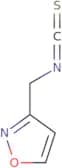
CAS:<p>Versatile small molecule scaffold</p>Formula:C12H16N2O2Purity:Min. 95%Molecular weight:220.27 g/mol3-(Isothiocyanatomethyl)-1,2-oxazole
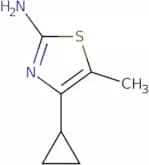
CAS:<p>Versatile small molecule scaffold</p>Formula:C5H4N2OSPurity:Min. 95%Molecular weight:140.17 g/mol4-Cyclopropyl-5-methyl-1,3-thiazol-2-amine
CAS:<p>Versatile small molecule scaffold</p>Formula:C7H10N2SPurity:Min. 95%Molecular weight:154.24 g/mol

![Ethyl 5-{[(tert-butoxy)carbonyl]amino}-3-oxopentanoate](/_next/image/?url=https%3A%2Fstatic.cymitquimica.com%2Fproducts%2F3D%2Fthumb-webp%2FUCA61921.webp&w=3840&q=75)


![Pentacyclo[6.3.0.0(2,7).0(4,11).0(5,9)]undecan-3-one](/_next/image/?url=https%3A%2Fstatic.cymitquimica.com%2Fproducts%2F3D%2Fthumb-webp%2FUCA64919.webp&w=3840&q=75)
![3-Methyl-3,6-diazabicyclo[3.2.1]octane](/_next/image/?url=https%3A%2Fstatic.cymitquimica.com%2Fproducts%2F3D%2Fthumb-webp%2FUCA66709.webp&w=3840&q=75)
![2-Hydroxy-2-methyl-1-[4-(propan-2-yl)phenyl]propan-1-one](/_next/image/?url=https%3A%2Fstatic.cymitquimica.com%2Fproducts%2F3D%2Fthumb-webp%2FUCA67385.webp&w=3840&q=75)
![2-[2-(1,3-dioxo-2,3-dihydro-1H-isoindol-2-yl)ethoxy]acetic acid](/_next/image/?url=https%3A%2Fstatic.cymitquimica.com%2Fproducts%2F3D%2Fthumb-webp%2FUCA67665.webp&w=3840&q=75)




![3-{[(2-Chlorophenyl)methyl]amino}propan-1-ol](/_next/image/?url=https%3A%2Fstatic.cymitquimica.com%2Fproducts%2F3D%2Fthumb-webp%2FUCA73955.webp&w=3840&q=75)


![2-[2-(4-Chlorophenoxy)acetamido]benzoic acid](/_next/image/?url=https%3A%2Fstatic.cymitquimica.com%2Fproducts%2F3D%2Fthumb-webp%2FUCA76409.webp&w=3840&q=75)
![[2-(2-Methylphenoxy)ethyl]hydrazine hydrochloride](/_next/image/?url=https%3A%2Fstatic.cymitquimica.com%2Fproducts%2F3D%2Fthumb-webp%2FUCA78193.webp&w=3840&q=75)
![[2-(4-Chlorophenoxy)ethyl]hydrazine hydrochloride](/_next/image/?url=https%3A%2Fstatic.cymitquimica.com%2Fproducts%2F3D%2Fthumb-webp%2FUCA78224.webp&w=3840&q=75)
![6-Methyl-1H,6H,7H-pyrazolo[3,4-d]pyridazin-7-one](/_next/image/?url=https%3A%2Fstatic.cymitquimica.com%2Fproducts%2F3D%2Fthumb-webp%2FUCA79272.webp&w=3840&q=75)
![2-[(1-Benzofuran-2-yl)formamido]acetic acid](/_next/image/?url=https%3A%2Fstatic.cymitquimica.com%2Fproducts%2F3D%2Fthumb-webp%2FUCA82670.webp&w=3840&q=75)
![2-Chloro-N-[4-(3-methylphenoxy)phenyl]acetamide](/_next/image/?url=https%3A%2Fstatic.cymitquimica.com%2Fproducts%2F3D%2Fthumb-webp%2FUCA83852.webp&w=3840&q=75)
![2-Chloro-N-[4-(2-chlorophenoxy)phenyl]acetamide](/_next/image/?url=https%3A%2Fstatic.cymitquimica.com%2Fproducts%2F3D%2Fthumb-webp%2FUCA83853.webp&w=3840&q=75)
![2-Chloro-N-[4-(3-chlorophenoxy)phenyl]acetamide](/_next/image/?url=https%3A%2Fstatic.cymitquimica.com%2Fproducts%2F3D%2Fthumb-webp%2FUCA83854.webp&w=3840&q=75)
![3-([3-(Dimethylamino)propyl]amino)propanamide](/_next/image/?url=https%3A%2Fstatic.cymitquimica.com%2Fproducts%2F3D%2Fthumb-webp%2FUCA85249.webp&w=3840&q=75)

![rac-[(2R,5S)-5-tert-Butyloxolan-2-yl]methanol](/_next/image/?url=https%3A%2Fstatic.cymitquimica.com%2Fproducts%2F3D%2Fthumb-webp%2FUCA91466.webp&w=3840&q=75)

![5-Amino-1-phenyl-1H,4H,5H-pyrazolo[3,4-d]pyrimidin-4-one](/_next/image/?url=https%3A%2Fstatic.cymitquimica.com%2Fproducts%2F3D%2Fthumb-webp%2FUCA92395.webp&w=3840&q=75)
amine](/_next/image/?url=https%3A%2Fstatic.cymitquimica.com%2Fproducts%2F3D%2Fthumb-webp%2FUCA95782.webp&w=3840&q=75)

![3-[(Methylsulfanyl)methyl]pyridine](/_next/image/?url=https%3A%2Fstatic.cymitquimica.com%2Fproducts%2F3D%2Fthumb-webp%2FUCA96644.webp&w=3840&q=75)
![3-[(Phenylsulfanyl)methyl]pyridine](/_next/image/?url=https%3A%2Fstatic.cymitquimica.com%2Fproducts%2F3D%2Fthumb-webp%2FUCA96647.webp&w=3840&q=75)
![N-Methyl-N-[(pyridin-3-yl)methyl]acetamide](/_next/image/?url=https%3A%2Fstatic.cymitquimica.com%2Fproducts%2F3D%2Fthumb-webp%2FUCA96650.webp&w=3840&q=75)
![2-({3-Oxo-4-phenyl-8-thia-4,6-diazatricyclo[7.4.0.0,2,7]trideca-1(9),2(7),5-trien-5-yl}sulfanyl)ac…](/_next/image/?url=https%3A%2Fstatic.cymitquimica.com%2Fproducts%2F3D%2Fthumb-webp%2FUFA31616.webp&w=3840&q=75)
![tert-Butyl N-methyl-N-[(methylcarbamoyl)methyl]carbamate](/_next/image/?url=https%3A%2Fstatic.cymitquimica.com%2Fproducts%2F3D%2Fthumb-webp%2FUFA33255.webp&w=3840&q=75)
![(2S)-1-{[(4-Bromophenyl)methoxy]carbonyl}pyrrolidine-2-carboxylic acid](/_next/image/?url=https%3A%2Fstatic.cymitquimica.com%2Fproducts%2F3D%2Fthumb-webp%2FUFA33275.webp&w=3840&q=75)
![Ethyl 2-cyano-3-[(2,3,4-trifluorophenyl)amino]prop-2-enoate](/_next/image/?url=https%3A%2Fstatic.cymitquimica.com%2Fproducts%2F3D%2Fthumb-webp%2FUFA36760.webp&w=3840&q=75)
![2-[2-(Trifluoromethyl)-1,3-dithiolan-2-yl]acetic acid](/_next/image/?url=https%3A%2Fstatic.cymitquimica.com%2Fproducts%2F3D%2Fthumb-webp%2FUFA48047.webp&w=3840&q=75)
![2-[2-(2-Nitrophenoxy)ethoxy]ethan-1-amine](/_next/image/?url=https%3A%2Fstatic.cymitquimica.com%2Fproducts%2F3D%2Fthumb-webp%2FUFA58771.webp&w=3840&q=75)
![3-[(tert-Butyldimethylsilyl)oxy]-2,2-dimethylpropanal](/_next/image/?url=https%3A%2Fstatic.cymitquimica.com%2Fproducts%2F3D%2Fthumb-webp%2FUFA68167.webp&w=3840&q=75)
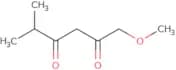
![6-Oxaspiro[2.5]octane-5,7-dione](/_next/image/?url=https%3A%2Fstatic.cymitquimica.com%2Fproducts%2F3D%2Fthumb-webp%2FUFA72822.webp&w=3840&q=75)
![1-[2-(Difluoromethoxy)phenyl]ethan-1-amine](/_next/image/?url=https%3A%2Fstatic.cymitquimica.com%2Fproducts%2F3D%2Fthumb-webp%2FUFA75910.webp&w=3840&q=75)
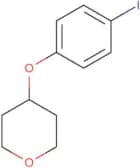
![2-[4-(Hydroxymethyl)phenyl]acetonitrile](/_next/image/?url=https%3A%2Fstatic.cymitquimica.com%2Fproducts%2F3D%2Fthumb-webp%2FUFA82518.webp&w=3840&q=75)
![1-{[(9H-Fluoren-9-yl)methoxy]carbonyl}pyrrolidine-2-carboxylic acid](/_next/image/?url=https%3A%2Fstatic.cymitquimica.com%2Fproducts%2F3D%2Fthumb-webp%2FUFA82996.webp&w=3840&q=75)
![4-{[(Propan-2-yl)carbamoyl]amino}benzoic acid](/_next/image/?url=https%3A%2Fstatic.cymitquimica.com%2Fproducts%2F3D%2Fthumb-webp%2FUFA83521.webp&w=3840&q=75)
![2-Hydroxy-4-{[(propan-2-yl)carbamoyl]amino}benzoic acid](/_next/image/?url=https%3A%2Fstatic.cymitquimica.com%2Fproducts%2F3D%2Fthumb-webp%2FUFA83524.webp&w=3840&q=75)
![2-Methyl-imidazo[1,2-a]pyridine-3-carboxylic acid hydrazide](/_next/image/?url=https%3A%2Fstatic.cymitquimica.com%2Fproducts%2F3D%2Fthumb-webp%2FUFA83567.webp&w=3840&q=75)
![Benzo[d]thiazole-7-carbaldehyde](/_next/image/?url=https%3A%2Fstatic.cymitquimica.com%2Fproducts%2F3D%2Fthumb-webp%2FUFA87637.webp&w=3840&q=75)
![3-[(Piperidin-3-yl)methyl]pyridine](/_next/image/?url=https%3A%2Fstatic.cymitquimica.com%2Fproducts%2F3D%2Fthumb-webp%2FUFB90925.webp&w=3840&q=75)
![4-Chloro-3-[(morpholin-4-yl)methyl]aniline](/_next/image/?url=https%3A%2Fstatic.cymitquimica.com%2Fproducts%2F3D%2Fthumb-webp%2FUFB96116.webp&w=3840&q=75)
![[4-(4,4,5,5-Tetramethyl-[1,3,2]dioxaborolan-2-yl)-phenoxy]-acetic acid tert-butyl ester](/_next/image/?url=https%3A%2Fstatic.cymitquimica.com%2Fproducts%2F3D%2Fthumb-webp%2FUFB96817.webp&w=3840&q=75)
![6-Chloro-1,3-dimethyl-1H-pyrazolo[3,4-b]pyridine-5-carbonitrile](/_next/image/?url=https%3A%2Fstatic.cymitquimica.com%2Fproducts%2F3D%2Fthumb-webp%2FUFB97154.webp&w=3840&q=75)
![tert-Butyl N-[2-(1,2,4-oxadiazol-3-yl)propan-2-yl]carbamate](/_next/image/?url=https%3A%2Fstatic.cymitquimica.com%2Fproducts%2F3D%2Fthumb-webp%2FUFC04003.webp&w=3840&q=75)


![2-(Methoxymethyl)-5H,6H,7H,8H-[1,2,4]triazolo[1,5-a]pyridin-8-amine](/_next/image/?url=https%3A%2Fstatic.cymitquimica.com%2Fproducts%2F3D%2Fthumb-webp%2FUFC04011.webp&w=3840&q=75)

![6-Chloro-7,8-dimethyl-3-(trifluoromethyl)-[1,2,4]triazolo[4,3-b]pyridazine](/_next/image/?url=https%3A%2Fstatic.cymitquimica.com%2Fproducts%2F3D%2Fthumb-webp%2FUFC04015.webp&w=3840&q=75)

amine hydrochloride](/_next/image/?url=https%3A%2Fstatic.cymitquimica.com%2Fproducts%2F3D%2Fthumb-webp%2FUFC04017.webp&w=3840&q=75)
![tert-Butyl 6-chloro-1-methyl-1H,2H,3H,4H-pyrrolo[1,2-a]pyrazine-2-carboxylate](/_next/image/?url=https%3A%2Fstatic.cymitquimica.com%2Fproducts%2F3D%2Fthumb-webp%2FUFC04018.webp&w=3840&q=75)