


Building Blocks
This section contains fundamental products for the synthesis of organic and biological compounds. Building blocks are the essential starting materials used to construct complex molecules through various chemical reactions. They play a critical role in drug discovery, material science, and chemical research. At CymitQuimica, we offer a diverse range of high-quality building blocks to support your innovative research and industrial projects, ensuring you have the essential components for successful synthesis.
Subcategories of "Building Blocks"
- Boronic Acids & Boronic Acid Derivatives(5,756 products)
- Chiral Building Blocks(1,242 products)
- Hydrocarbon Building Blocks(6,095 products)
- Organic Building Blocks(61,037 products)
Found 196139 products of "Building Blocks"
Sort by
Purity (%)
0
100
|
0
|
50
|
90
|
95
|
100
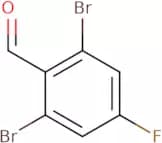
2,6-dibromo-4-fluoro-benzaldehyde
CAS:<p>Versatile small molecule scaffold</p>Formula:C7H3Br2FOPurity:Min. 95%Molecular weight:281.91 g/mol1-(Propan-2-yl)-1H-indazol-6-amine
CAS:<p>Versatile small molecule scaffold</p>Formula:C10H13N3Purity:Min. 95%Molecular weight:175.23 g/mol3-Amino-N-(5-chloro-2-methoxyphenyl)propanamide
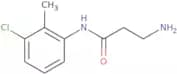
CAS:<p>Versatile small molecule scaffold</p>Formula:C10H13ClN2O2Purity:Min. 95%Molecular weight:228.67 g/mol3-Amino-N-(3-chloro-2-methylphenyl)propanamide
CAS:<p>Versatile small molecule scaffold</p>Formula:C10H13ClN2OPurity:Min. 95%Molecular weight:212.67 g/mol3-Amino-1-[4-(pyridin-2-yl)piperazin-1-yl]propan-1-one
CAS:<p>Versatile small molecule scaffold</p>Formula:C12H18N4OPurity:Min. 95%Molecular weight:234.3 g/mol3-Amino-1-[4-(pyrimidin-2-yl)piperazin-1-yl]propan-1-one
CAS:<p>Versatile small molecule scaffold</p>Formula:C11H17N5OPurity:Min. 95%Molecular weight:235.29 g/mol3-Amino-N-(4-bromo-2-methylphenyl)propanamide
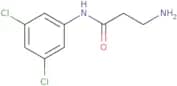
CAS:<p>Versatile small molecule scaffold</p>Formula:C10H13BrN2OPurity:Min. 95%Molecular weight:257.13 g/mol3-Amino-N-(3,5-dichlorophenyl)propanamide
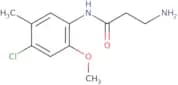
CAS:<p>Versatile small molecule scaffold</p>Formula:C9H10Cl2N2OPurity:Min. 95%Molecular weight:233.09 g/mol3-Amino-N-(4-chloro-2-methoxy-5-methylphenyl)propanamide
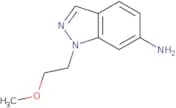
CAS:<p>Versatile small molecule scaffold</p>Formula:C11H15ClN2O2Purity:Min. 95%Molecular weight:242.7 g/mol1-(2-Methoxyethyl)-1H-indazol-6-amine
CAS:<p>Versatile small molecule scaffold</p>Formula:C10H13N3OPurity:Min. 95%Molecular weight:191.23 g/mol2-Chloro-N-[(4-chlorophenyl)methyl]quinazolin-4-amine
CAS:<p>Versatile small molecule scaffold</p>Formula:C15H11Cl2N3Purity:Min. 95%Molecular weight:304.2 g/molN-tert-Butylpyrrolidine-2-carboxamide
CAS:<p>Versatile small molecule scaffold</p>Formula:C9H18N2OPurity:Min. 95%Molecular weight:170.25 g/mol2-[4-(Morpholin-4-ylmethyl)phenyl]benzonitrile
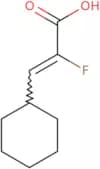
CAS:<p>Versatile small molecule scaffold</p>Formula:C18H18N2OPurity:Min. 95%Molecular weight:278.3 g/mol3-Cyclohexyl-2-fluoroprop-2-enoic acid
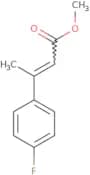
CAS:<p>Versatile small molecule scaffold</p>Formula:C9H13FO2Purity:Min. 95%Molecular weight:172.2 g/molMethyl 3-(4-fluorophenyl)but-2-enoate
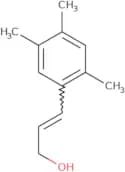
CAS:<p>Versatile small molecule scaffold</p>Formula:C11H11FO2Purity:Min. 95%Molecular weight:194.2 g/mol(2E)-3-(2,4,5-Trimethylphenyl)prop-2-en-1-ol
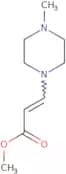
CAS:<p>Versatile small molecule scaffold</p>Formula:C12H16OPurity:Min. 95%Molecular weight:176.25 g/molMethyl 3-(4-methylpiperazin-1-yl)prop-2-enoate
CAS:<p>Versatile small molecule scaffold</p>Formula:C9H16N2O2Purity:Min. 95%Molecular weight:184.24 g/mol2-Methyl-3-[3-(trifluoromethyl)phenyl]prop-2-en-1-ol
CAS:<p>Versatile small molecule scaffold</p>Formula:C11H11F3OPurity:Min. 95%Molecular weight:216.2 g/mol3-[2-(Methoxymethyl)phenyl]-2-methylprop-2-en-1-ol
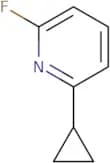
CAS:<p>Versatile small molecule scaffold</p>Formula:C12H16O2Purity:Min. 95%Molecular weight:192.25 g/mol2-Cyclopropyl-6-fluoropyridine
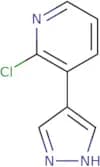
CAS:<p>Versatile small molecule scaffold</p>Formula:C8H8FNPurity:Min. 95%Molecular weight:137.15 g/mol2-Chloro-3-(1H-pyrazol-4-yl)pyridine
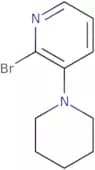
CAS:<p>Versatile small molecule scaffold</p>Formula:C8H6ClN3Purity:Min. 95%Molecular weight:179.6 g/mol2-Bromo-3-(piperidin-1-yl)pyridine
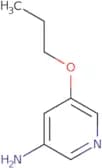
CAS:<p>Versatile small molecule scaffold</p>Formula:C10H13BrN2Purity:Min. 95%Molecular weight:241.13 g/mol5-Propoxypyridin-3-amine
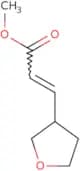
CAS:<p>Versatile small molecule scaffold</p>Formula:C8H12N2OPurity:Min. 95%Molecular weight:152.19 g/molMethyl (2E)-3-(oxolan-3-yl)prop-2-enoate
CAS:<p>Versatile small molecule scaffold</p>Formula:C8H12O3Purity:Min. 95%Molecular weight:156.18 g/mol2-[(Thiophen-3-yl)methylidene]butanal
CAS:<p>Versatile small molecule scaffold</p>Formula:C9H10OSPurity:Min. 95%Molecular weight:166.24 g/mol3-[2-(Methoxymethyl)phenyl]-2-methylprop-2-enal
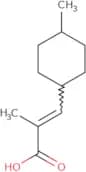
CAS:<p>Versatile small molecule scaffold</p>Formula:C12H14O2Purity:Min. 95%Molecular weight:190.24 g/mol2-Methyl-3-(4-methylcyclohexyl)prop-2-enoic acid
CAS:<p>Versatile small molecule scaffold</p>Formula:C11H18O2Purity:Min. 95%Molecular weight:182.26 g/mol4-[(1E)-3-Chloroprop-1-en-1-yl]-1-methyl-1H-pyrazole
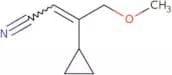
CAS:<p>Versatile small molecule scaffold</p>Formula:C7H9ClN2Purity:Min. 95%Molecular weight:156.61 g/mol3-Cyclopropyl-4-methoxybut-2-enenitrile
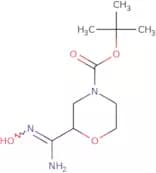
CAS:<p>Versatile small molecule scaffold</p>Formula:C8H11NOPurity:Min. 95%Molecular weight:137.18 g/moltert-Butyl 2-(N'-hydroxycarbamimidoyl)morpholine-4-carboxylate
CAS:<p>Versatile small molecule scaffold</p>Formula:C10H19N3O4Purity:Min. 95%Molecular weight:245.28 g/molMethyl 3-[(2,5-difluorophenyl)sulfanyl]prop-2-enoate
CAS:<p>Versatile small molecule scaffold</p>Formula:C10H8F2O2SPurity:Min. 95%Molecular weight:230.23 g/mol3-(5-Chlorothiophen-2-yl)-2-methylprop-2-enal
CAS:<p>Versatile small molecule scaffold</p>Formula:C8H7ClOSPurity:Min. 95%Molecular weight:186.66 g/molMethyl (2Z)-3-[(2,4-difluorophenyl)sulfanyl]prop-2-enoate
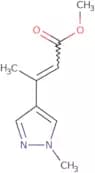
CAS:<p>Versatile small molecule scaffold</p>Formula:C10H8F2O2SPurity:Min. 95%Molecular weight:230.23 g/molMethyl 3-(1-methyl-1H-pyrazol-4-yl)but-2-enoate
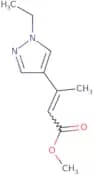
CAS:<p>Versatile small molecule scaffold</p>Formula:C9H12N2O2Purity:Min. 95%Molecular weight:180.2 g/molMethyl 3-(1-ethyl-1H-pyrazol-4-yl)but-2-enoate
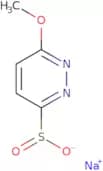
CAS:<p>Versatile small molecule scaffold</p>Formula:C10H14N2O2Purity:Min. 95%Molecular weight:194.23 g/molSodium 6-methoxypyridazine-3-sulfinate
CAS:<p>Versatile small molecule scaffold</p>Formula:C5H5N2NaO3SPurity:Min. 95%Molecular weight:196.16 g/mol4-[(tert-Butoxy)carbonyl]-3,4-dihydro-2H-1,4-benzoxazine-7-carboxylic acid
CAS:<p>Versatile small molecule scaffold</p>Formula:C14H17NO5Purity:Min. 95%Molecular weight:279.3 g/molN-(1-Methyl-1H-1,2,3,4-tetrazol-5-yl)formamide
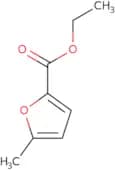
CAS:<p>Versatile small molecule scaffold</p>Formula:C3H5N5OPurity:Min. 95%Molecular weight:127.1 g/molEthyl 5-methylfuran-2-carboxylate
CAS:<p>Ethyl 5-methylfuran-2-carboxylate is a feedstock that is used in the production of additives for lubricants. Ethyl 5-methylfuran-2-carboxylate has been shown to have high thermal stability, excellent lubricity, and good resistance to oxidation. This feedstock has also been found to be compatible with alkoxycarbonyl groups and can be used as an additive for gasoline. The synthesis of this compound involves the alkylation of pyrrole using ethyllithium followed by dehydration, which leads to a high yield of this compound.</p>Formula:C8H10O3Purity:Min. 95%Molecular weight:154.16 g/mol4-Phenyl-tetrahydro-pyran-4-ylamine
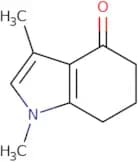
CAS:<p>Versatile small molecule scaffold</p>Formula:C11H15NOPurity:Min. 95%Molecular weight:177.24 g/mol1,3-Dimethyl-4,5,6,7-tetrahydro-1H-indol-4-one
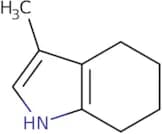
CAS:<p>Versatile small molecule scaffold</p>Formula:C10H13NOPurity:Min. 95%Molecular weight:163.22 g/mol3-Methyl-4,5,6,7-tetrahydro-1H-indole
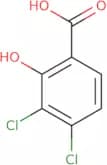
CAS:<p>Versatile small molecule scaffold</p>Formula:C9H13NPurity:Min. 95%Molecular weight:135.2 g/mol3,4-Dichloro-2-hydroxybenzoic acid
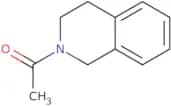
CAS:<p>3,4-Dichloro-2-hydroxybenzoic acid is a byproduct of the chlorination of carbon tetrachloride and 2,6-dichlorobenzoic acid. It can be used as an intermediate in the production of polyphosphoric acid. 3,4-Dichloro-2-hydroxybenzoic acid has been shown to have high yields and processability for use in polymer manufacturing. This active substance has also been shown to exhibit antibiotic activity against Staphylococcus aureus, which may be due to its ability to inhibit protein synthesis.</p>Formula:C7H4Cl2O3Purity:Min. 95%Molecular weight:207.01 g/mol1-(1,2,3,4-Tetrahydroisoquinolin-2-yl)ethan-1-one
CAS:<p>Versatile small molecule scaffold</p>Formula:C11H13NOPurity:Min. 95%Molecular weight:175.23 g/mol[(4-Amino-3,5-dimethylphenyl)sulfanyl]formonitrile
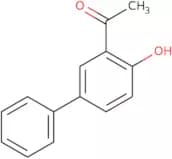
CAS:<p>Versatile small molecule scaffold</p>Formula:C9H10N2SPurity:Min. 95%Molecular weight:178.26 g/mol1-(2-Hydroxy-5-phenylphenyl)ethan-1-one
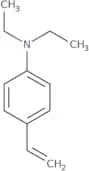
CAS:<p>Versatile small molecule scaffold</p>Formula:C14H12O2Purity:Min. 95%Molecular weight:212.24 g/mol4-Ethenyl-N,N-diethylaniline
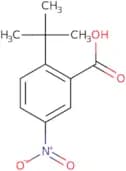
CAS:<p>Versatile small molecule scaffold</p>Formula:C12H17NPurity:Min. 95%Molecular weight:175.27 g/mol2-tert-Butyl-5-nitrobenzoic acid
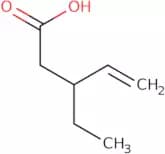
CAS:<p>Versatile small molecule scaffold</p>Formula:C11H13NO4Purity:Min. 95%Molecular weight:223.22 g/mol3-Ethylpent-4-enoic acid
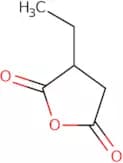
CAS:<p>Versatile small molecule scaffold</p>Formula:C7H12O2Purity:Min. 95%Molecular weight:128.17 g/mol3-Ethyloxolane-2,5-dione
CAS:<p>3-Ethyloxolane-2,5-dione is a polymerization initiator that is used in the production of polymers and sealants. Its main application is for the production of polycarboxylic acid ester resins, which are monosubstituted with an ethyloxolane group. 3-Ethyloxolane-2,5-dione reacts with aluminium chloride to form a hydrochloric acid salt. This polymerization initiator also reacts with hydrogen chloride to form a monomer that is soluble in organic solvents. It has been shown to be biodegradable and not toxic to humans or animals at low doses.</p>Formula:C6H8O3Purity:Min. 95%Molecular weight:128.13 g/mol3-(2-Methylpropyl)oxolane-2,5-dione
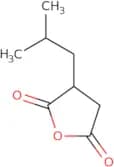
CAS:<p>3-(2-Methylpropyl)oxolane-2,5-dione is a synthetic drug that inhibits bone resorption and is used as an anti-inflammatory agent. It has been shown to have a synergistic effect with calcium carbonate in the prevention of restenosis. 3-(2-Methylpropyl)oxolane-2,5-dione also inhibits gelatinase activity and has been shown to be effective against cancer cells.</p>Formula:C8H12O3Purity:Min. 95%Molecular weight:156.18 g/mol3-Bromo-6-methoxyquinoline
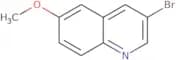
CAS:<p>Versatile small molecule scaffold</p>Formula:C10H8BrNOPurity:Min. 95%Molecular weight:238.08 g/mol1-(4-Chlorophenyl)-1H-pyrazol-4-amine
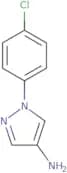
CAS:<p>Versatile small molecule scaffold</p>Formula:C9H8ClN3Purity:Min. 95%Molecular weight:193.63 g/mol1-(2,4-Dichlorophenyl)-1H-pyrazol-4-amine
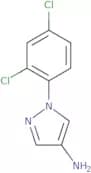
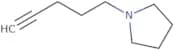
CAS:<p>Versatile small molecule scaffold</p>Formula:C9H7Cl2N3Purity:Min. 95%Molecular weight:228.07 g/mol1-(Pent-4-yn-1-yl)pyrrolidine
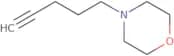
CAS:<p>Versatile small molecule scaffold</p>Formula:C9H15NPurity:Min. 95%Molecular weight:137.22 g/mol4-(Pent-4-yn-1-yl)morpholine
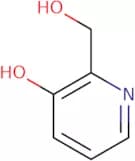
CAS:<p>Versatile small molecule scaffold</p>Formula:C9H15NOPurity:Min. 95%Molecular weight:153.22 g/mol2-(Hydroxymethyl)pyridin-3-ol
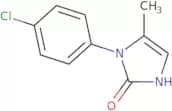
CAS:<p>2-(Hydroxymethyl)pyridin-3-ol is a pyridine derivative that has been shown to be an acetylcholinesterase inhibitor. It is used to treat tuberculosis and other bacterial infections. 2-(Hydroxymethyl)pyridin-3-ol binds to the active site of acetylcholinesterase, which leads to the inhibition of its activity. This drug also inhibits uptake of pyridines into cells, as well as uptake into mitochondria. In addition, it inhibits uptake of drugs by lung tissues and erythrocytes.</p>Formula:C6H7NO2Purity:Min. 95%Molecular weight:125.13 g/mol1-(4-Chlorophenyl)-5-methyl-2,3-dihydro-1H-imidazol-2-one
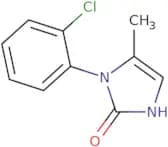
CAS:<p>Versatile small molecule scaffold</p>Formula:C10H9ClN2OPurity:Min. 95%Molecular weight:208.64 g/mol1-(2-Chlorophenyl)-5-methyl-2,3-dihydro-1H-imidazol-2-one
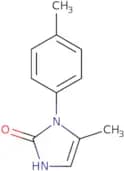
CAS:<p>Versatile small molecule scaffold</p>Formula:C10H9ClN2OPurity:Min. 95%Molecular weight:208.64 g/mol5-Methyl-1-(4-methylphenyl)-2,3-dihydro-1H-imidazol-2-one
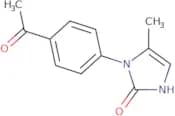
CAS:<p>Versatile small molecule scaffold</p>Formula:C11H12N2OPurity:Min. 95%Molecular weight:188.23 g/mol1-(4-Acetylphenyl)-5-methyl-2,3-dihydro-1H-imidazol-2-one
CAS:<p>Versatile small molecule scaffold</p>Formula:C12H12N2O2Purity:Min. 95%Molecular weight:216.24 g/mol4-Ethyl-2,6-dimethoxyphenol
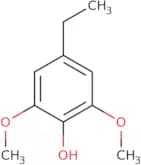
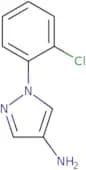
CAS:<p>4-Ethyl-2,6-dimethoxyphenol is a monomer that belongs to the group of phenols. It is used as a catalyst in the production of polyurethane foam and other catalytic processes. The molecular weight is 176.4 g/mol, with a melting point of 36°C and boiling point of 285°C. 4-Ethyl-2,6-dimethoxyphenol is also used in treatments for low molecular weight organic compounds such as methanol, phenolic, and hydrogenolysis. This monomer has been shown to be an effective catalyst for the industrial production of polyurethane foam and various other catalytic processes. The yield from 4-Ethyl-2,6-dimethoxyphenol ranges from 60% to 90%.</p>Formula:C10H14O3Purity:Min. 95%Molecular weight:182.22 g/mol1-(2-Chlorophenyl)-1H-pyrazol-4-amine
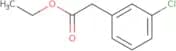
CAS:<p>Versatile small molecule scaffold</p>Formula:C9H8ClN3Purity:Min. 95%Molecular weight:193.63 g/molEthyl 2-(3-chlorophenyl)acetate
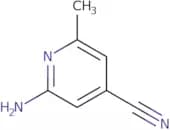
CAS:<p>Ethyl 2-(3-chlorophenyl)acetate is an orally active small molecule that has been shown to have a potent immunosuppressive activity in mice. It inhibits the production of antibodies and T cells by binding to the antibody-producing cells in the spleen. Ethyl 2-(3-chlorophenyl)acetate also blocks the production of interleukin-4, which is important for eosinophil activation, and it can be used for asthma treatment. This compound is a competitive antagonist of histamine H1 receptors and has been shown to be a bronchodilator in murine models of asthma.</p>Formula:C10H11ClO2Purity:Min. 95%Molecular weight:198.65 g/mol2-Amino-6-methylpyridine-4-carbonitrile
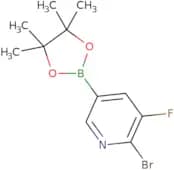
CAS:<p>Versatile small molecule scaffold</p>Formula:C7H7N3Purity:Min. 95%Molecular weight:133.15 g/mol6-Bromo-5-fluoropyridine-3-boronic acid pinacol ester
CAS:<p>Versatile small molecule scaffold</p>Formula:C11H14BBrFNO2Purity:Min. 95%Molecular weight:301.95 g/mol6-Bromopyrazolo[1,5-a]pyridine
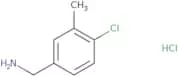
CAS:<p>Versatile small molecule scaffold</p>Formula:C7H5BrN2Purity:Min. 95%Molecular weight:197.03 g/mol(4-Chloro-3-methylphenyl)methanamine hydrochloride
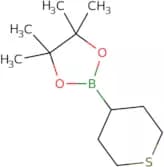
CAS:<p>Versatile small molecule scaffold</p>Formula:C8H11Cl2NPurity:Min. 95%Molecular weight:192.08 g/mol4,4,5,5-Tetramethyl-2-(3,5-dihydro-2H-thiopyran-4-yl)-1,3,2-dioxaborolane
CAS:<p>Versatile small molecule scaffold</p>Formula:C11H21BO2SPurity:Min. 95%Molecular weight:228.16 g/molFuro[3,2-c]pyridin-2-ylboronic acid
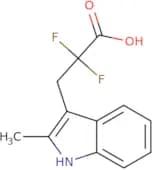
CAS:<p>Versatile small molecule scaffold</p>Formula:C7H6BNO3Purity:Min. 95%Molecular weight:162.94 g/mol2,2-Difluoro-3-(2-methyl-1H-indol-3-yl)propanoic acid
CAS:<p>Versatile small molecule scaffold</p>Formula:C12H11F2NO2Purity:Min. 95%Molecular weight:239.22 g/mol1-[(tert-Butoxy)carbonyl]-3-(2-oxopropyl)pyrrolidine-3-carboxylic acid
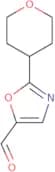
CAS:<p>Versatile small molecule scaffold</p>Formula:C13H21NO5Purity:Min. 95%Molecular weight:271.31 g/mol2-(Oxan-4-yl)-1,3-oxazole-5-carbaldehyde
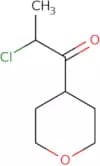
CAS:<p>Versatile small molecule scaffold</p>Formula:C9H11NO3Purity:Min. 95%Molecular weight:181.19 g/mol2-Chloro-1-(oxan-4-yl)propan-1-one
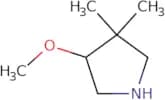
CAS:<p>Versatile small molecule scaffold</p>Formula:C8H13ClO2Purity:Min. 95%Molecular weight:176.64 g/mol4-Methoxy-3,3-dimethylpyrrolidine
CAS:<p>Versatile small molecule scaffold</p>Formula:C7H15NOPurity:Min. 95%Molecular weight:129.2 g/mol(5-Cyclopropyl-1,3-oxazol-2-yl)methanol
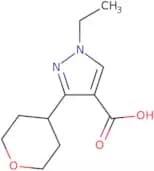
CAS:<p>Versatile small molecule scaffold</p>Formula:C7H9NO2Purity:Min. 95%Molecular weight:139.2 g/mol1-Ethyl-3-(oxan-4-yl)-1H-pyrazole-4-carboxylic acid
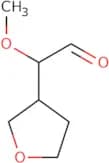
CAS:<p>Versatile small molecule scaffold</p>Formula:C11H16N2O3Purity:Min. 95%Molecular weight:224.26 g/mol2-Methoxy-2-(oxolan-3-yl)acetaldehyde
CAS:<p>Versatile small molecule scaffold</p>Formula:C7H12O3Purity:Min. 95%Molecular weight:144.17 g/mol3,3-Dimethyl-2-oxaspiro[4.5]decan-8-one
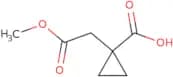
CAS:<p>Versatile small molecule scaffold</p>Formula:C11H18O2Purity:Min. 95%Molecular weight:182.26 g/mol1-(2-Methoxy-2-oxoethyl)cyclopropane-1-carboxylic acid
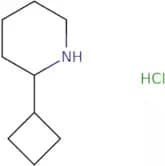
CAS:<p>Versatile small molecule scaffold</p>Formula:C7H10O4Purity:Min. 95%Molecular weight:158.15 g/mol2-Cyclobutylpiperidine hydrochloride
CAS:<p>Versatile small molecule scaffold</p>Formula:C9H18ClNPurity:Min. 95%Molecular weight:175.7 g/mol2-[2-(Difluoromethyl)phenoxy]acetic acid
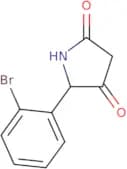
CAS:<p>Versatile small molecule scaffold</p>Formula:C9H8F2O3Purity:Min. 95%Molecular weight:202.15 g/mol5-(2-Bromophenyl)pyrrolidine-2,4-dione
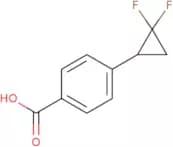
CAS:<p>Versatile small molecule scaffold</p>Formula:C10H8BrNO2Purity:Min. 95%Molecular weight:254.08 g/mol4-(2,2-Difluorocyclopropyl)benzoic acid
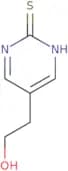
CAS:<p>Versatile small molecule scaffold</p>Formula:C10H8F2O2Purity:Min. 95%Molecular weight:198.17 g/mol2-(2-Sulfanylpyrimidin-5-yl)ethan-1-ol
CAS:<p>Versatile small molecule scaffold</p>Formula:C6H8N2OSPurity:Min. 95%Molecular weight:156.21 g/mol3-[(Oxan-4-yl)methyl]morpholine
CAS:<p>Versatile small molecule scaffold</p>Formula:C10H19NO2Purity:Min. 95%Molecular weight:185.26 g/mol2-[1-(Methoxymethyl)cyclopentyl]acetic acid
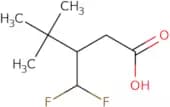
CAS:<p>Versatile small molecule scaffold</p>Formula:C9H16O3Purity:Min. 95%Molecular weight:172.22 g/mol3-(Difluoromethyl)-4,4-dimethylpentanoic acid
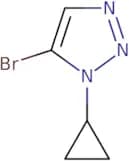
CAS:<p>Versatile small molecule scaffold</p>Formula:C8H14F2O2Purity:Min. 95%Molecular weight:180.19 g/mol5-Bromo-1-cyclopropyl-1H-1,2,3-triazole
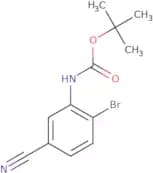
CAS:<p>Versatile small molecule scaffold</p>Formula:C5H6BrN3Purity:Min. 95%Molecular weight:188.03 g/moltert-Butyl N-(2-bromo-5-cyanophenyl)carbamate
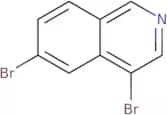
CAS:<p>Versatile small molecule scaffold</p>Formula:C12H13BrN2O2Purity:Min. 95%Molecular weight:297.15 g/mol4,6-Dibromoisoquinoline
CAS:<p>Versatile small molecule scaffold</p>Formula:C9H5Br2NPurity:Min. 95%Molecular weight:286.95 g/mol5-Cyclopropylpyrrolidin-3-ol hydrochloride
CAS:<p>Versatile small molecule scaffold</p>Formula:C7H14ClNOPurity:Min. 95%Molecular weight:163.64 g/mol1-Azaspiro[4.4]nonan-3-ol hydrochloride
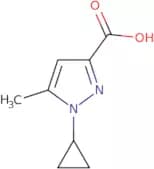
CAS:<p>Versatile small molecule scaffold</p>Formula:C8H16ClNOPurity:Min. 95%Molecular weight:177.7 g/mol1-Cyclopropyl-5-methyl-1H-pyrazole-3-carboxylic acid
CAS:<p>Versatile small molecule scaffold</p>Formula:C8H10N2O2Purity:Min. 95%Molecular weight:166.18 g/mol2-(Benzenesulfonyl)-2-methylpropan-1-ol
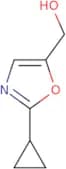
CAS:<p>Versatile small molecule scaffold</p>Formula:C10H14O3SPurity:Min. 95%Molecular weight:214.3 g/mol(2-cyclopropyloxazol-5-yl)methanol
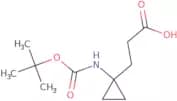
CAS:<p>Versatile small molecule scaffold</p>Formula:C7H9NO2Purity:Min. 95%Molecular weight:139.15 g/mol3-(1-((tert-Butoxycarbonyl)amino)cyclopropyl)propanoic acid
CAS:<p>Versatile small molecule scaffold</p>Formula:C11H19NO4Purity:Min. 95%Molecular weight:229.27 g/mol3-(1-{[(tert-Butoxy)carbonyl]amino}cyclopentyl)propanoic acid
CAS:<p>Versatile small molecule scaffold</p>Formula:C13H23NO4Purity:Min. 95%Molecular weight:257.33 g/moltert-Butyl N-[1-(piperidin-4-yl)cyclobutyl]carbamate
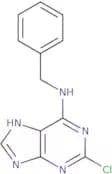
CAS:<p>Versatile small molecule scaffold</p>Formula:C14H26N2O2Purity:Min. 95%Molecular weight:254.37 g/molN-Benzyl-2-chloro-9H-purin-6-amine
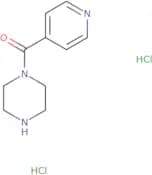
CAS:<p>Versatile small molecule scaffold</p>Formula:C12H10ClN5Purity:Min. 95%Molecular weight:259.69 g/mol1-(Pyridine-4-carbonyl)piperazine dihydrochloride
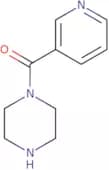
CAS:<p>Versatile small molecule scaffold</p>Formula:C10H15Cl2N3OPurity:Min. 95%Molecular weight:264.15 g/molPiperazin-1-yl-pyridin-3-yl-methanone dihydrochloride
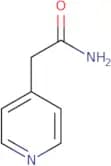
CAS:<p>Versatile small molecule scaffold</p>Formula:C10H15Cl2N3OPurity:Min. 95%Molecular weight:264.15 g/mol2-pyridin-4-ylacetamide
CAS:<p>2-pyridin-4-ylacetamide is a chiral inorganic compound that can be synthesized by reacting 4-hydroxypyridine with 2,2'-diaminodiethylamine. The crystal structure of this compound has been determined using x-ray diffraction techniques. The molecule adopts a conformation that is twisted about the central C=N bond, which is typical for pyridines. It also has a significant amide proton resonance, which causes it to have an intense conformational dependence on the temperature and solvent.</p>Formula:C7H8N2OPurity:Min. 95%Molecular weight:136.15 g/mol2-[2,2,3,3-Tetrafluoro-1-(hydroxymethyl)cyclobutyl]ethan-1-ol
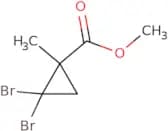
CAS:<p>Versatile small molecule scaffold</p>Formula:C7H10F4O2Purity:Min. 95%Molecular weight:202.15 g/molMethyl 2,2-dibromo-1-methylcyclopropane-1-carboxylate
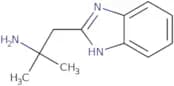
CAS:<p>Versatile small molecule scaffold</p>Formula:C6H8Br2O2Purity:Min. 95%Molecular weight:271.93 g/mol1-(1H-1,3-Benzodiazol-2-yl)-2-methylpropan-2-amine
CAS:<p>Versatile small molecule scaffold</p>Formula:C11H15N3Purity:Min. 95%Molecular weight:189.26 g/mol2,2-Dimethoxy-1-methylpyrrolidine
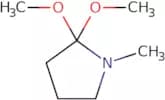
CAS:<p>Versatile small molecule scaffold</p>Formula:C7H15NO2Purity:Min. 95%Color and Shape:Clear LiquidMolecular weight:145.2 g/mol(2-chloro-4-methylphenyl)methanol
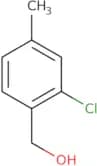
CAS:<p>Versatile small molecule scaffold</p>Formula:C8H9OClPurity:Min. 95%Molecular weight:156.6 g/mol4-Methoxy-3-nitrophenyl acetate
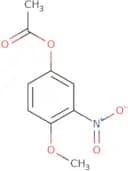
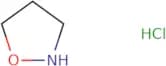
CAS:<p>Versatile small molecule scaffold</p>Formula:C9H9NO5Purity:Min. 95%Molecular weight:211.17 g/mol1,2-Oxazolidine hydrochloride
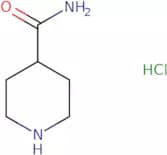
CAS:<p>1,2-Oxazolidine hydrochloride (1,2-OH) is an organic compound that is used as a reagent in organic synthesis. It is a chloride salt of the squaramide 1,2-oxazolidine and it reacts with hydrochloric acid to form the corresponding isoxazolidine. This process can be used to regenerate the starting reagent from a reaction mixture. The reaction yield for this process is in excess of 90%. 1,2-OH has shown pain control effects in mice and rats through its ability to inhibit prostaglandin synthesis. It also binds to c1-c6 alkoxyamines and iminiums, which are important intermediates in drug synthesis.</p>Formula:C3H8ClNOPurity:Min. 95%Molecular weight:109.55 g/mol4-Piperidinecarboxamide hydrochloride
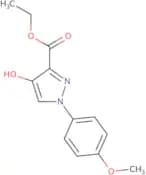
CAS:<p>Versatile small molecule scaffold</p>Formula:C6H13ClN2OPurity:Min. 95%Molecular weight:164.64 g/molEthyl 4-hydroxy-1-(4-methoxyphenyl)-1H-pyrazole-3-carboxylate
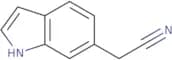
CAS:<p>Versatile small molecule scaffold</p>Formula:C13H14N2O4Purity:Min. 95%Molecular weight:262.26 g/mol2-(1H-Indol-6-yl)acetonitrile
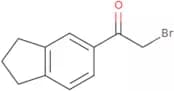
CAS:<p>Versatile small molecule scaffold</p>Formula:C10H8N2Purity:Min. 95%Molecular weight:156.18 g/mol2-Bromo-1-(2,3-dihydro-1H-inden-5-yl)ethan-1-one
CAS:<p>Versatile small molecule scaffold</p>Formula:C11H11BrOPurity:Min. 95%Molecular weight:239.11 g/mol7,8-Dihydro-5H-cyclohepta[b]pyridine-5,9(6H)-dione
CAS:<p>Versatile small molecule scaffold</p>Formula:C10H9NO2Purity:Min. 95%Molecular weight:175.19 g/molEthyl 3-chloro-5H,6H,7H,8H-pyrido[4,3-c]pyridazine-6-carboxylate
CAS:<p>Versatile small molecule scaffold</p>Formula:C10H12ClN3O2Purity:Min. 95%Molecular weight:241.67 g/molMethyl 3-chloro-5H,6H,7H,8H-pyrido[4,3-c]pyridazine-6-carboxylate
CAS:<p>Versatile small molecule scaffold</p>Formula:C9H10ClN3O2Purity:Min. 95%Molecular weight:227.65 g/molEthyl 3-hydroxy-5H,6H,7H,8H-pyrido[4,3-c]pyridazine-6-carboxylate
CAS:<p>Versatile small molecule scaffold</p>Formula:C10H13N3O3Purity:Min. 95%Molecular weight:223.23 g/mol2H,3H,5H,6H,7H,8H-Pyrido[4,3-c]pyridazin-3-one hydrochloride
CAS:<p>Versatile small molecule scaffold</p>Formula:C7H10ClN3OPurity:Min. 95%Molecular weight:187.63 g/mol5H,6H,7H,8H-Pyrido[4,3-c]pyridazin-3-ol
CAS:<p>Versatile small molecule scaffold</p>Formula:C7H9N3OPurity:Min. 95%Molecular weight:151.17 g/molMethyl 3-oxo-2H,3H,5H,6H,7H,8H-pyrido[4,3-c]pyridazine-6-carboxylate
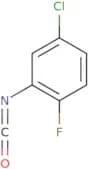
CAS:<p>Versatile small molecule scaffold</p>Formula:C9H11N3O3Purity:Min. 95%Molecular weight:209.2 g/mol4-Chloro-1-fluoro-2-isocyanatobenzene
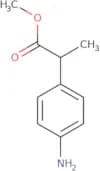
CAS:<p>Versatile small molecule scaffold</p>Formula:C7H3ClFNOPurity:Min. 95%Molecular weight:171.55 g/molmethyl 2-(4-aminophenyl)propanoate
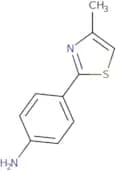
CAS:<p>Methyl 2-(4-aminophenyl)propanoate is a fatty acid amide that is derived from the arachidonic acid. It has been shown to be a lead compound with non-competitive inhibition of anandamide hydrolase. Methyl 2-(4-aminophenyl)propanoate also inhibits other hydrolases, such as the N-acylphosphatidylethanolamine phospholipase D and the phospholipase A2. This drug has been shown to have several effects in tissues, including cannabinoid receptors, which may be due to its ability to inhibit endocannabinoid metabolism and hydrolysis. This drug has also been shown to have anti-inflammatory properties.</p>Formula:C10H13NO2Purity:Min. 95%Molecular weight:179.2 g/mol4-(4-Methyl-1,3-thiazol-2-yl)aniline
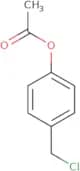
CAS:<p>Versatile small molecule scaffold</p>Formula:C10H10N2SPurity:Min. 95%Molecular weight:190.27 g/mol4-(Chloromethyl)phenyl acetate
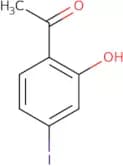
CAS:<p>4-(Chloromethyl)phenyl acetate is a nitro compound that is capable of inhibiting bacterial translocation in wild-type mice. It has been shown to decrease the influx of chloride ions into cells by binding to the membrane, preventing the formation of ion channels. 4-(Chloromethyl)phenyl acetate can also reduce lipid hydroperoxides and potentiate the activity of estradiol. This drug may be used to treat women with symptoms such as acne or endometriosis. The effects on phenotype are unknown because this drug has not been tested on humans.</p>Formula:C9H9ClO2Purity:Min. 95%Molecular weight:184.62 g/mol1-(2-Hydroxy-4-iodophenyl)ethan-1-one
CAS:<p>1-(2-Hydroxy-4-iodophenyl)ethan-1-one is a monomer that is used in the synthesis of polymers. It can be synthesized by irradiation of benzene with ultraviolet light. Yields are monitored by spectroscopies, such as elemental analysis, UV/visible spectroscopy, and IR spectroscopy. The reaction is carried out in organic solvents and yields 1-(2-hydroxy-4-iodophenyl)ethanone as an intermediate product. This compound can be polymerized using various methods to produce polymers with different properties. One method involves the use of benzene as a solvent and uv radiation for activation. 1-(2-Hydroxyphenyl)ethanone can also be polymerized using a metal catalyst (e.g., zinc). Theoretical models have been developed to predict the potential yields for this reaction.<br>END>></p>Formula:C8H7IO2Purity:Min. 95%Molecular weight:262.04 g/mol1-[4-Amino-2-(methylsulfanyl)-1,3-thiazol-5-yl]ethan-1-one
CAS:<p>Versatile small molecule scaffold</p>Formula:C6H8N2OS2Purity:Min. 95%Molecular weight:188.3 g/mol4-Amino-2-(methylthio)thiazole-5-carbonitrile
CAS:<p>4-Amino-2-(methylthio)thiazole-5-carbonitrile is an inhibitor of the epidermal growth factor receptor (EGFR). It binds to the EGFR and blocks the downstream signaling pathway, inhibiting cellular proliferation. This agent has been shown to inhibit tumor cell growth in vitro. 4-Amino-2-(methylthio)thiazole-5-carbonitrile binds to the enzyme tyrosine kinase, which is a key regulatory enzyme in signal transduction pathways. It inhibits phosphorylation of tyrosine residues on proteins, leading to inhibition of cellular proliferation. This drug has been shown to be effective against human tumor cells in culture and may be used for treating cancer patients with a specific mutation in their EGFR gene.</p>Formula:C9H17NO2Purity:Min. 95%Molecular weight:171.24 g/molMethyl 4-(1,3-dioxo-2,3-dihydro-1H-isoindol-2-yl)butanoate
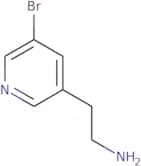
CAS:<p>Versatile small molecule scaffold</p>Formula:C13H13NO4Purity:Min. 95%Molecular weight:247.25 g/mol2-(5-Bromopyridin-3-yl)ethan-1-amine
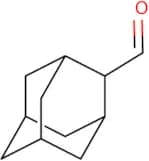
CAS:<p>Versatile small molecule scaffold</p>Formula:C7H9BrN2Purity:Min. 95%Molecular weight:201.06 g/molAdamantane-2-carbaldehyde
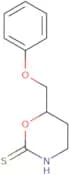
CAS:<p>Adamantane-2-carbaldehyde is a chemical that belongs to the class of organic compounds called ketones. It is used in model studies for the study of glutamate receptor metabotropic type 1 (mGluR1), which is a protein found in the central and peripheral nervous system. Adamantane-2-carbaldehyde can be synthesized by reacting an organometallic reagent with an enolate, which is formed from a Grignard reagent. This reaction produces an oxindole as a byproduct which can be converted into adamantane-2-carbaldehyde using acetonitrile. Adamantane-2-carbaldehyde has been shown to react with magnesium to form an adduct that binds to glutamic acid and other amino acids, demonstrating its use as a probe for studying glutamate receptor interactions with other biomolecules.</p>Formula:C11H16OPurity:Min. 95%Molecular weight:164.24 g/mol6-(Phenoxymethyl)-1,3-oxazinane-2-thione
CAS:<p>6-Phenoxymethyl-1,3-oxazinane-2-thione is a potent drug candidate that has been shown to bind to the target site of the disease and inhibit its growth. 6-Phenoxymethyl-1,3-oxazinane-2-thione is insoluble in water and has a high concentration of active compound. The drug can be injected or implanted as a treatment for many diseases. 6-Phenoxymethyl-1,3-oxazinane-2-thione binds to the target site by iontophoresis, which means that it is delivered into the body from an external source using an electric current. This drug will be used as a diagnostic agent for implanting devices that are made out of hydrophobic materials such as silicon or plastic.</p>Formula:C11H13NO2SPurity:Min. 95%Molecular weight:223.29 g/molMethyl 4-(2,4-dimethoxyphenyl)-2,4-dioxobutanoate
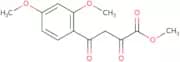
CAS:<p>Versatile small molecule scaffold</p>Formula:C13H14O6Purity:Min. 95%Molecular weight:266.25 g/mol2-(3-Oxocyclohexyl)acetic acid
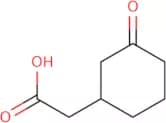
CAS:<p>Versatile small molecule scaffold</p>Formula:C8H12O3Purity:Min. 95%Molecular weight:156.18 g/mol1-Iodo-4,5-dimethyl-2-nitrobenzene
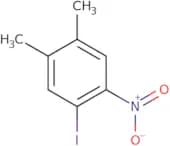
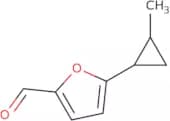
CAS:<p>1-Iodo-4,5-dimethyl-2-nitrobenzene is a synthetic chemical that is used to produce some pharmaceutical drugs. It has been shown to have a thermal expansion of 9.7 x 10^6 per °C at 20°C and 7.3 x 10^6 per °C at 100°C. The transition temperature for 1-iodo-4,5-dimethyl-2-nitrobenzene is 109°C. This chemical has an optical anisotropy of 0.28, which means that the material changes from being transparent to translucent when the light shines on it from different angles. 1-Iodo-4,5-dimethyl-2-nitrobenzene can be dissolved in a variety of solvents such as ether, acetone, and benzene. Refluxing this chemical produces ketones with a boiling point of around 210°C.</p>Formula:C8H8INO2Purity:Min. 95%Molecular weight:277.06 g/mol5-(2-Methylcyclopropyl)furan-2-carbaldehyde
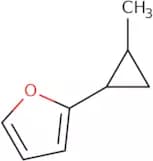
CAS:<p>Versatile small molecule scaffold</p>Formula:C9H10O2Purity:Min. 95%Molecular weight:150.17 g/mol2-(2-Methylcyclopropyl)furan
CAS:<p>2-(2-Methylcyclopropyl)furan is a furan with two methyl groups at the 2 and 6 positions. It is a colorless liquid that can be obtained by hydrogenating crotonaldehyde. 2-(2-Methylcyclopropyl)furan is used as a starting material in the production of alkylfurans, which are used as catalysts for the hydrogenation of olefins and dienes. The cyclopropane ring in this compound has been shown to react with catalytic amounts of palladium on carbon, forming an oxide on one side and a phenyl group on the other.</p>Formula:C8H10OPurity:Min. 95%Molecular weight:122.16 g/mol9-Decenal
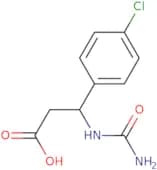
CAS:<p>9-Decenal is a polyunsaturated fatty acid that is found in many natural compounds. It has been shown to have antibacterial properties and is able to inhibit bacterial growth by catalysing the oxidation of nitrous oxide, which means it can be used as an antibiotic drug. 9-Decenal also has immunosuppressive activities and can suppress the immune system. In addition, 9-decenal can be used as a solid catalyst for chemical reactions. This compound has been shown to bind to silicon and form an ionic bond with the silicon atom, which may account for its anti-inflammatory properties. 9-Decenal also binds with fatty acids and primary alcohols, which are important components of marine metabolites. This compound's stereoselective properties have been studied extensively and it has been shown that it binds better to one enantiomer than the other.</p>Formula:C10H18OPurity:Min. 95%Molecular weight:154.25 g/mol3-(Carbamoylamino)-3-(4-chlorophenyl)propanoic acid
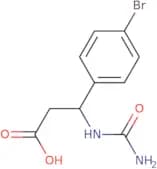
CAS:<p>Versatile small molecule scaffold</p>Formula:C10H11ClN2O3Purity:Min. 95%Molecular weight:242.66 g/mol3-(4-Bromophenyl)-3-(carbamoylamino)propanoic acid
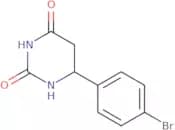
CAS:<p>Versatile small molecule scaffold</p>Formula:C10H11BrN2O3Purity:Min. 95%Molecular weight:287.11 g/mol6-(4-Bromophenyl)-1,3-diazinane-2,4-dione
CAS:<p>Versatile small molecule scaffold</p>Formula:C10H9BrN2O2Purity:Min. 95%Molecular weight:269.09 g/mol2-(Cyclopentyloxy)-2-phenylacetic acid, sodium salt
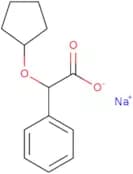
CAS:<p>Versatile small molecule scaffold</p>Formula:C13H15NaO3Purity:Min. 95%Molecular weight:242.25 g/mol1,2,3,4,5,6-Hexahydro-3-benzazocin-4-one
CAS:<p>Versatile small molecule scaffold</p>Formula:C11H13NOPurity:Min. 95%Molecular weight:175.23 g/mol2-Chloro-5,6-dimethyl-1H-benzimidazole
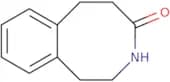
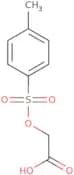
CAS:<p>2-Chloro-5,6-dimethyl-1H-benzimidazole is a riboside that has been shown to have cytotoxic activity against human cells. It is also able to inhibit the replication of simplex virus type 1 and herpes simplex virus type 1 in cell culture. 2-Chloro-5,6-dimethyl-1H-benzimidazole has been shown to be stereoselective and glycosylation resistant.</p>Formula:C9H9ClN2Purity:Min. 95%Molecular weight:180.63 g/mol2-(p-Toluenesulfonyloxy)acetic Acid
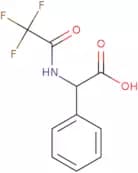
CAS:<p>Versatile small molecule scaffold</p>Formula:C9H10O5SPurity:Min. 95%Molecular weight:230.23 g/mol2-Phenyl-2-(trifluoroacetamido)acetic acid
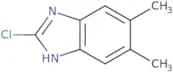
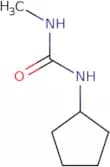
CAS:<p>Versatile small molecule scaffold</p>Formula:C10H8F3NO3Purity:Min. 95%Molecular weight:247.17 g/mol1-Cyclopentyl-3-methylurea
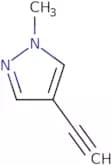
CAS:<p>Versatile small molecule scaffold</p>Formula:C7H14N2OPurity:Min. 95%Molecular weight:142.2 g/mol4-Ethynyl-1-methyl-1H-pyrazole
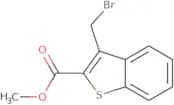
CAS:<p>Versatile small molecule scaffold</p>Formula:C6H6N2Purity:Min. 95%Molecular weight:106.13 g/molMethyl 3-(bromomethyl)-1-benzothiophene-2-carboxylate
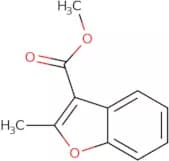
CAS:<p>Versatile small molecule scaffold</p>Formula:C11H9BrO2SPurity:Min. 95%Molecular weight:285.16 g/molMethyl 2-methyl-1-benzofuran-3-carboxylate
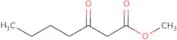
CAS:<p>Versatile small molecule scaffold</p>Formula:C11H10O3Purity:Min. 95%Molecular weight:190.19 g/molMethyl 3-Oxoheptanoate
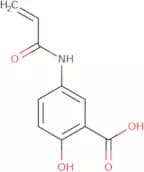
CAS:<p>Methyl 3-Oxoheptanoate is a synthetic compound with anti-cancer properties. It has been shown to inhibit the growth of neuroblastomas and other cancer cells. Methyl 3-Oxoheptanoate is a fluorescent compound that can be used as an affinity label in immunohistochemistry experiments. This molecule has also been shown to have an affinity for the atrial natriuretic peptide receptor, which may be responsible for its fibrillation inhibition activity. Methyl 3-Oxoheptanoate is synthesized by irradiation of a mixture of methyl octanoate and hexanal with UV light in the presence of oxygen.<br>Methyl 3-Oxoheptanoate was first reported by Friedel and Crafts in 1877, although this reaction is not catalyzed by methyl 3-oxoheptanoate itself.</p>Formula:C8H14O3Purity:Min. 95%Molecular weight:158.2 g/mol2-Hydroxy-5-(prop-2-enamido)benzoic acid
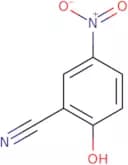
CAS:<p>Versatile small molecule scaffold</p>Formula:C10H9NO4Purity:Min. 95%Molecular weight:207.18 g/mol2-Hydroxy-5-nitrobenzonitrile
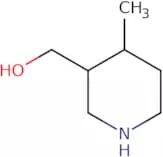
CAS:<p>2-Hydroxy-5-nitrobenzonitrile is a potential drug that has been shown to inhibit the uptake of pyochelin, a bacterial metabolite involved in iron metabolism. The kinetic and biological properties of 2-hydroxy-5-nitrobenzonitrile have been studied with respect to its effects on gram-negative bacteria such as Pseudomonas aeruginosa. This molecule has also been shown to have immunomodulatory activities and can be used as a potential drug for the treatment of various diseases, including diabetes mellitus. In addition, 2-hydroxy-5-nitrobenzonitrile is a potent xanthine oxidase inhibitor that has been shown to inhibit human albumin oxidation. This molecule is also stereoselective, which means it binds preferentially to one enantiomer of the enzyme it targets.</p>Formula:C7H4N2O3Purity:Min. 95%Molecular weight:164.12 g/mol(4-Methylpiperidin-3-yl)methanol
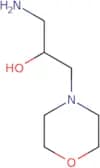
CAS:<p>Versatile small molecule scaffold</p>Formula:C7H15NOPurity:Min. 95%Molecular weight:129.2 g/mol1-Amino-3-morpholin-4-yl-propan-2-ol
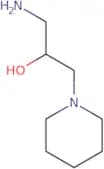
CAS:<p>Versatile small molecule scaffold</p>Formula:C7H16N2O2Purity:Min. 95%Molecular weight:160.21 g/mol1-Amino-3-(piperidin-1-yl)propan-2-ol
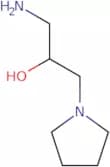
CAS:<p>Versatile small molecule scaffold</p>Formula:C8H18N2OPurity:Min. 95%Molecular weight:158.25 g/mol1-amino-3-pyrrolidin-1-ylpropan-2-ol
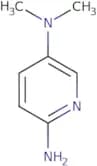
CAS:<p>Versatile small molecule scaffold</p>Formula:C7H16N2OPurity:Min. 95%Molecular weight:144.22 g/mol2,5-Pyridinediamine, N5,N5-dimethyl-
CAS:<p>2,5-Pyridinediamine, N5,N5-dimethyl (2,5-PD) is an organic compound that reacts with bromine to form 2,5-dibromopyridine. It can be used in the synthesis of other pyridine compounds.</p>Formula:C7H11N3Purity:Min. 95%Molecular weight:137.18 g/mol2-Bromobenzo[b]thiophene-3-carbaldehyde
CAS:<p>2-Bromobenzo[b]thiophene-3-carbaldehyde is a copper (II) complex, which is obtained by the reaction of 2-bromobenzo[b]-thiophene with copper metal in an alkaline environment. It is a divalent organometallic compound with a formyl group. The complex has been synthesized and studied using spectroscopic methods. It has also been shown to be nucleophilic and can react with electrophiles, such as hydrosulfide, to produce thiols. The carbonyl group can undergo tautomerization to the enol form.</p>Formula:C9H5BrOSPurity:Min. 95%Molecular weight:241.1 g/mol1,5-Dimethyl-1H-benzo[D]imidazol-2-amine
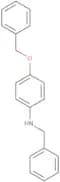
CAS:<p>Versatile small molecule scaffold</p>Formula:C9H11N3Purity:Min. 95%Molecular weight:161.21 g/molN-Benzyl-4-(benzyloxy)aniline
CAS:<p>Versatile small molecule scaffold</p>Formula:C20H19NOPurity:Min. 95%Molecular weight:289.4 g/molN-{[4-(Benzyloxy)phenyl]methyl}aniline
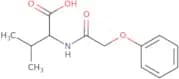
CAS:<p>Versatile small molecule scaffold</p>Formula:C20H19NOPurity:Min. 95%Molecular weight:289.4 g/mol(2S)-3-Methyl-2-(2-phenoxyacetamido)butanoic acid
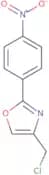
CAS:<p>Versatile small molecule scaffold</p>Formula:C13H17NO4Purity:Min. 95%Molecular weight:251.28 g/mol4-(Chloromethyl)-2-(4-nitrophenyl)-1,3-oxazole
CAS:<p>Versatile small molecule scaffold</p>Formula:C10H7ClN2O3Purity:Min. 95%Molecular weight:238.63 g/molBenzene, 1-bromo-4-cyclobutyl-
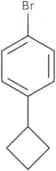
CAS:<p>Versatile small molecule scaffold</p>Formula:C10H11BrPurity:Min. 95%Molecular weight:211.1 g/mol8-Azabicyclo[5.2.0]nonane
CAS:<p>Versatile small molecule scaffold</p>Formula:C8H15NPurity:Min. 95%Molecular weight:125.21 g/mol2-(1H-1,2,4-Triazol-1-yl)aniline
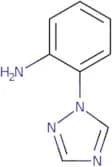
CAS:<p>Versatile small molecule scaffold</p>Formula:C8H8N4Purity:Min. 95%Molecular weight:160.18 g/molN-Methylthiophene-2-carboxamide
CAS:<p>N-Methylthiophene-2-carboxamide is an organic compound with a carbonyl group. The conformational and molecular parameters of this compound have been determined using X-ray diffraction and validated by quantum chemical calculations. It has been shown that N-Methylthiophene-2-carboxamide can modulate the conformational behavior of proteins, including their function as enzyme inhibitors, and it is also able to bind to DNA in a covalent manner. N-Methylthiophene-2-carboxamide can be used as a solvent for other molecules that are insoluble in water or other solvents.</p>Formula:C6H7NOSPurity:Min. 95%Molecular weight:141.19 g/mol2-Oxo-6-(pyridin-4-yl)-1,2-dihydropyridine-3-carbonitrile
CAS:<p>Versatile small molecule scaffold</p>Formula:C11H7N3OPurity:Min. 95%Molecular weight:197.19 g/mol2-Hydrazinyl-6-(pyridin-3-yl)pyridine
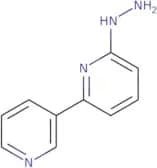
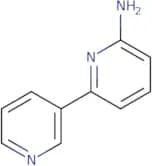
CAS:<p>Versatile small molecule scaffold</p>Formula:C10H10N4Purity:Min. 95%Molecular weight:186.21 g/mol3-(6-Aminopyridin-2-yl)pyridine
CAS:<p>Versatile small molecule scaffold</p>Formula:C10H9N3Purity:Min. 95%Molecular weight:171.2 g/mol2-(Aminomethyl)-2-ethylbutan-1-ol
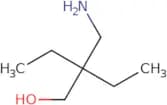
CAS:<p>Versatile small molecule scaffold</p>Formula:C7H17NOPurity:Min. 95%Molecular weight:131.22 g/mol(2-Amino-6-chlorophenyl)methanol
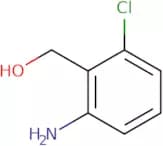
CAS:<p>2-Amino-6-chlorophenyl)methanol is a cyclic amine with a chloro substituent. It has been used as a precursor for the synthesis of carbamates and iminium compounds. The synthesis of 2-aminopyridine (1) from 2-amino-6-chlorophenol (2) involves an oxidative coupling reaction followed by an iminium formation. This process can be done in one step or in two steps, depending on the type of coupling agent used. The yields of this process are dependent on the reagents used, but can be up to 98% when using potassium permanganate as the coupling agent.</p>Formula:C7H8ClNOPurity:Min. 95%Molecular weight:157.6 g/mol4-Chloro-3-nitro-N-(propan-2-yl)benzamide
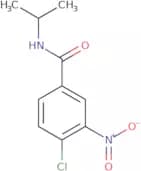
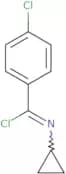
CAS:<p>Versatile small molecule scaffold</p>Formula:C10H11ClN2O3Purity:Min. 95%Molecular weight:242.66 g/mol4-Chloro-N-cyclopropylbenzene-1-carbonimidoyl chloride
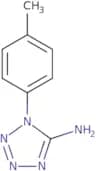
CAS:<p>Versatile small molecule scaffold</p>Formula:C10H9Cl2NPurity:Min. 95%Molecular weight:214.09 g/mol1-(4-Methylphenyl)-1H-1,2,3,4-tetrazol-5-amine
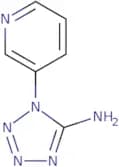
CAS:<p>Versatile small molecule scaffold</p>Formula:C8H9N5Purity:Min. 95%Molecular weight:175.19 g/mol1-(Pyridin-3-yl)-1H-1,2,3,4-tetrazol-5-amine
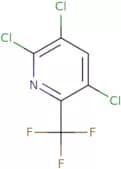
CAS:<p>Versatile small molecule scaffold</p>Formula:C6H6N6Purity:Min. 95%Molecular weight:162.2 g/mol2,3,5-Trichloro-6-(trifluoromethyl)pyridine
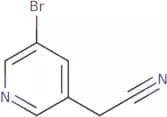
CAS:<p>Versatile small molecule scaffold</p>Formula:C6HCl3F3NPurity:Min. 95%Molecular weight:250.4 g/mol2-(5-Bromopyridin-3-yl)acetonitrile
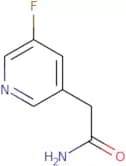
CAS:<p>Versatile small molecule scaffold</p>Formula:C7H5BrN2Purity:Min. 95%Molecular weight:197.03 g/mol2-(5-Fluoropyridin-3-yl)acetamide
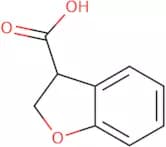
CAS:<p>Versatile small molecule scaffold</p>Formula:C7H7FN2OPurity:Min. 95%Molecular weight:154.14 g/mol2,3-Dihydrobenzofuran-3-carboxylic acid
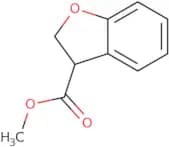
CAS:<p>Versatile small molecule scaffold</p>Formula:C9H8O3Purity:Min. 95%Molecular weight:164.16 g/molMethyl 2,3-dihydro-1-benzofuran-3-carboxylate
CAS:<p>Methyl 2,3-dihydro-1-benzofuran-3-carboxylate is a nonporous, nature, aldehyde that inhibits the growth of bacteria. It has been shown to inhibit the production of malonic acid in a reaction catalyzed by malonate decarboxylase and to inhibit the growth of bacteria by binding to their cell surfaces and interfering with their metabolism. Methyl 2,3-dihydro-1-benzofuran-3-carboxylate is used in techniques such as kinetic and titration calorimetry for measuring inhibition rates. This compound also has an oral route of administration and is used as an inhibitor in synthetic chemistry.</p>Formula:C10H10O3Purity:Min. 95%Molecular weight:178.18 g/molMethyl 2,3-dihydro-1-benzothiophene-3-carboxylate
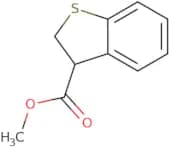
CAS:<p>Methyl 2,3-dihydro-1-benzothiophene-3-carboxylate is a chemical that is used to modify proteins by methylation. This process can be used to study epigenetics and the methylation patterns of proteins in mammalian cells. Methyl 2,3-dihydro-1-benzothiophene-3-carboxylate can also be used as a marker for DNA methylation. The detection methods for this compound include chromatography, mass spectrometry, and NMR spectroscopy.</p>Formula:C10H10O2SPurity:Min. 95%Molecular weight:194.25 g/molMethyl 1H-indene-3-carboxylate
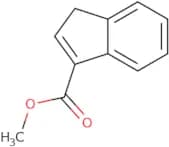
CAS:<p>Methyl 1H-indene-3-carboxylate (1,4-dimethoxybenzene) is an organic compound that is a methyl derivative of indene. It can be synthesized by the reaction of methyl acetoacetate with formaldehyde and hydrochloric acid. 1,4-Dimethoxybenzene has been shown to absorb light in the ultraviolet region, which may be due to its cyclic structure. This property allows the molecule to act as a photosensitive material for solar cells or photovoltaic devices. The efficiency of these devices has been increased by irradiating them with ultrafast pulses of light. Methyl 1H-indene-3-carboxylate may also function as an acceptor in organic electronic devices such as OLEDs and OPVs.</p>Formula:C11H10O2Purity:Min. 95%Molecular weight:174.2 g/mol2-Hydroxy-5-methoxy-benzonitrile
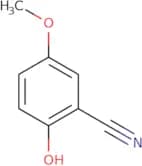
CAS:<p>2-Hydroxy-5-methoxy-benzonitrile (2HMOB) is a benzene carbonitrile that can be used in the synthesis of many different types of organic compounds. 2HMOB is synthesized by reacting anisole with benzyl bromide in the presence of a copper(I) catalyst. The reaction occurs through the following series of steps:</p>Formula:C8H7NO2Purity:Min. 95%Molecular weight:149.15 g/mol1,6-Epoxyisodihydrocarvone
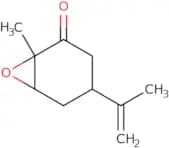
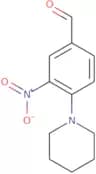
CAS:<p>Versatile small molecule scaffold</p>Formula:C10H14O2Purity:Min. 95%Molecular weight:166.22 g/mol3-Nitro-4-piperidinobenzaldehyde
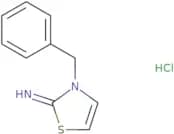
CAS:<p>Versatile small molecule scaffold</p>Formula:C12H14N2O3Purity:Min. 95%Molecular weight:234.25 g/mol3-Benzyl-2,3-dihydro-1,3-thiazol-2-imine hydrochloride
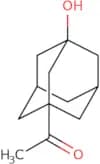
CAS:<p>Versatile small molecule scaffold</p>Formula:C10H11ClN2SPurity:Min. 95%Molecular weight:226.73 g/mol1-(3-Hydroxyadamantan-1-yl)ethan-1-one
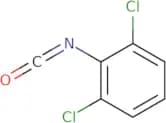
CAS:<p>1-(3-Hydroxyadamantan-1-yl)ethan-1-one (HAEE) is a racemic mixture of 1-(3-hydroxyadamantan-1-yl)ethanol (HAEE). HAEE can be synthesized from ethyl formate and quinidine. The process optimization step includes the reaction time and alkalization. HAEE has been used in the synthesis of quinine, an antimalarial drug, and to produce enolate salts. This process is optimized with chloride as a chlorinating agent and ethyl formate as an alkylating agent.</p>Formula:C12H18O2Purity:Min. 95%Molecular weight:194.27 g/mol2,6-Dichlorophenyl Isocyanate
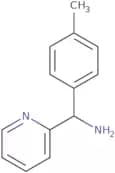
CAS:<p>2,6-Dichlorophenyl Isocyanate (2,6-DCPI) is an environmental pollutant that can be found in polyvinyl chloride and other plastics. 2,6-DCPI inhibits cell proliferation by binding to the tyrosine kinases of the cells. This binding prevents the activation of the cells' receptors and inhibits the production of proteins such as hydroxyproline. 2,6-DCPI has been shown to have anti-cancer effects in mice models and is being investigated for use in chemotherapy treatments. It also has a potential role in treating some skin diseases such as psoriasis because it inhibits the production of collagenase.</p>Formula:C7H3Cl2NOPurity:Min. 95%Molecular weight:188.01 g/mol(4-Methylphenyl)(pyridin-2-yl)methanamine
CAS:<p>Versatile small molecule scaffold</p>Formula:C13H14N2Purity:Min. 95%Molecular weight:198.26 g/mol1-(3-Chlorophenyl)-1-(pyridin-2-yl)methanamine
CAS:<p>Versatile small molecule scaffold</p>Formula:C12H11ClN2Purity:Min. 95%Molecular weight:218.68 g/mol1,3,7-Trimethyl-1H,2H,3H,4H,7H-pyrrolo[2,3-d]pyrimidine-2,4-dione
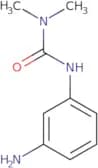
CAS:Controlled Product<p>Versatile small molecule scaffold</p>Formula:C9H11N3O2Purity:Min. 95%Molecular weight:193.2 g/mol1-(3-Aminophenyl)-3,3-dimethylurea
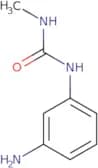
CAS:<p>Versatile small molecule scaffold</p>Formula:C9H13N3OPurity:Min. 95%Molecular weight:179.22 g/mol1-(3-Aminophenyl)-3-methylurea
CAS:<p>Versatile small molecule scaffold</p>Formula:C8H11N3OPurity:Min. 95%Molecular weight:165.19 g/mol(1-[(Dimethylamino)methyl]cyclobutyl)methanol
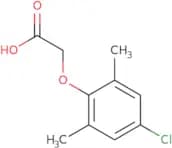
CAS:<p>Versatile small molecule scaffold</p>Formula:C8H17NOPurity:Min. 95%Molecular weight:143.23 g/mol2-(4-Chloro-2,6-dimethylphenoxy)acetic acid
CAS:<p>Versatile small molecule scaffold</p>Formula:C10H11ClO3Purity:Min. 95%Molecular weight:214.64 g/molEthyl 2-[(2-phenylphenyl)amino]acetate
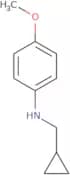
CAS:<p>Versatile small molecule scaffold</p>Formula:C16H17NO2Purity:Min. 95%Molecular weight:255.31 g/molN-(Cyclopropylmethyl)-4-methoxyaniline
CAS:<p>Versatile small molecule scaffold</p>Formula:C11H15NOPurity:Min. 95%Molecular weight:177.24 g/mol1-[2-(Trifluoromethyl)phenyl]ethylamine hydrochloride
CAS:<p>Versatile small molecule scaffold</p>Formula:C9H10F3N·HClPurity:Min. 95%Molecular weight:225.64 g/mol


![3-Amino-1-[4-(pyridin-2-yl)piperazin-1-yl]propan-1-one](/_next/image/?url=https%3A%2Fstatic.cymitquimica.com%2Fproducts%2F3D%2Fthumb-webp%2FNMB51718.webp&w=3840&q=75)
![3-Amino-1-[4-(pyrimidin-2-yl)piperazin-1-yl]propan-1-one](/_next/image/?url=https%3A%2Fstatic.cymitquimica.com%2Fproducts%2F3D%2Fthumb-webp%2FNMB51721.webp&w=3840&q=75)

![2-Chloro-N-[(4-chlorophenyl)methyl]quinazolin-4-amine](/_next/image/?url=https%3A%2Fstatic.cymitquimica.com%2Fproducts%2F3D%2Fthumb-webp%2FNMB52491.webp&w=3840&q=75)

![2-[4-(Morpholin-4-ylmethyl)phenyl]benzonitrile](/_next/image/?url=https%3A%2Fstatic.cymitquimica.com%2Fproducts%2F3D%2Fthumb-webp%2FNMB90387.webp&w=3840&q=75)
![2-Methyl-3-[3-(trifluoromethyl)phenyl]prop-2-en-1-ol](/_next/image/?url=https%3A%2Fstatic.cymitquimica.com%2Fproducts%2F3D%2Fthumb-webp%2FNMC46914.webp&w=3840&q=75)
![3-[2-(Methoxymethyl)phenyl]-2-methylprop-2-en-1-ol](/_next/image/?url=https%3A%2Fstatic.cymitquimica.com%2Fproducts%2F3D%2Fthumb-webp%2FNMC50372.webp&w=3840&q=75)
![2-[(Thiophen-3-yl)methylidene]butanal](/_next/image/?url=https%3A%2Fstatic.cymitquimica.com%2Fproducts%2F3D%2Fthumb-webp%2FNMC68262.webp&w=3840&q=75)
![3-[2-(Methoxymethyl)phenyl]-2-methylprop-2-enal](/_next/image/?url=https%3A%2Fstatic.cymitquimica.com%2Fproducts%2F3D%2Fthumb-webp%2FNMC75520.webp&w=3840&q=75)
![4-[(1E)-3-Chloroprop-1-en-1-yl]-1-methyl-1H-pyrazole](/_next/image/?url=https%3A%2Fstatic.cymitquimica.com%2Fproducts%2F3D%2Fthumb-webp%2FNMC79115.webp&w=3840&q=75)
![Methyl 3-[(2,5-difluorophenyl)sulfanyl]prop-2-enoate](/_next/image/?url=https%3A%2Fstatic.cymitquimica.com%2Fproducts%2F3D%2Fthumb-webp%2FNMC95723.webp&w=3840&q=75)

![Methyl (2Z)-3-[(2,4-difluorophenyl)sulfanyl]prop-2-enoate](/_next/image/?url=https%3A%2Fstatic.cymitquimica.com%2Fproducts%2F3D%2Fthumb-webp%2FNMC97041.webp&w=3840&q=75)
![4-[(tert-Butoxy)carbonyl]-3,4-dihydro-2H-1,4-benzoxazine-7-carboxylic acid](/_next/image/?url=https%3A%2Fstatic.cymitquimica.com%2Fproducts%2F3D%2Fthumb-webp%2FNMD18064.webp&w=3840&q=75)
![[(4-Amino-3,5-dimethylphenyl)sulfanyl]formonitrile](/_next/image/?url=https%3A%2Fstatic.cymitquimica.com%2Fproducts%2F3D%2Fthumb-webp%2FPAA03102.webp&w=3840&q=75)
![6-Bromopyrazolo[1,5-a]pyridine](/_next/image/?url=https%3A%2Fstatic.cymitquimica.com%2Fproducts%2F3D%2Fthumb-webp%2FPAC19311.webp&w=3840&q=75)
![Furo[3,2-c]pyridin-2-ylboronic acid](/_next/image/?url=https%3A%2Fstatic.cymitquimica.com%2Fproducts%2F3D%2Fthumb-webp%2FPAC51167.webp&w=3840&q=75)
![1-[(tert-Butoxy)carbonyl]-3-(2-oxopropyl)pyrrolidine-3-carboxylic acid](/_next/image/?url=https%3A%2Fstatic.cymitquimica.com%2Fproducts%2F3D%2Fthumb-webp%2FPAD13624.webp&w=3840&q=75)
![3,3-Dimethyl-2-oxaspiro[4.5]decan-8-one](/_next/image/?url=https%3A%2Fstatic.cymitquimica.com%2Fproducts%2F3D%2Fthumb-webp%2FPAD26873.webp&w=3840&q=75)
![2-[2-(Difluoromethyl)phenoxy]acetic acid](/_next/image/?url=https%3A%2Fstatic.cymitquimica.com%2Fproducts%2F3D%2Fthumb-webp%2FPAD40031.webp&w=3840&q=75)
![3-[(Oxan-4-yl)methyl]morpholine](/_next/image/?url=https%3A%2Fstatic.cymitquimica.com%2Fproducts%2F3D%2Fthumb-webp%2FPAD61434.webp&w=3840&q=75)
![2-[1-(Methoxymethyl)cyclopentyl]acetic acid](/_next/image/?url=https%3A%2Fstatic.cymitquimica.com%2Fproducts%2F3D%2Fthumb-webp%2FPAD64527.webp&w=3840&q=75)
![1-Azaspiro[4.4]nonan-3-ol hydrochloride](/_next/image/?url=https%3A%2Fstatic.cymitquimica.com%2Fproducts%2F3D%2Fthumb-webp%2FPAD94005.webp&w=3840&q=75)
![3-(1-{[(tert-Butoxy)carbonyl]amino}cyclopentyl)propanoic acid](/_next/image/?url=https%3A%2Fstatic.cymitquimica.com%2Fproducts%2F3D%2Fthumb-webp%2FPAD97752.webp&w=3840&q=75)
![tert-Butyl N-[1-(piperidin-4-yl)cyclobutyl]carbamate](/_next/image/?url=https%3A%2Fstatic.cymitquimica.com%2Fproducts%2F3D%2Fthumb-webp%2FPAD97757.webp&w=3840&q=75)
![2-[2,2,3,3-Tetrafluoro-1-(hydroxymethyl)cyclobutyl]ethan-1-ol](/_next/image/?url=https%3A%2Fstatic.cymitquimica.com%2Fproducts%2F3D%2Fthumb-webp%2FPBA64537.webp&w=3840&q=75)
![7,8-Dihydro-5H-cyclohepta[b]pyridine-5,9(6H)-dione](/_next/image/?url=https%3A%2Fstatic.cymitquimica.com%2Fproducts%2F3D%2Fthumb-webp%2FPBA71340.webp&w=3840&q=75)
![Ethyl 3-chloro-5H,6H,7H,8H-pyrido[4,3-c]pyridazine-6-carboxylate](/_next/image/?url=https%3A%2Fstatic.cymitquimica.com%2Fproducts%2F3D%2Fthumb-webp%2FPBA71599.webp&w=3840&q=75)
![Methyl 3-chloro-5H,6H,7H,8H-pyrido[4,3-c]pyridazine-6-carboxylate](/_next/image/?url=https%3A%2Fstatic.cymitquimica.com%2Fproducts%2F3D%2Fthumb-webp%2FPBA71601.webp&w=3840&q=75)
![Ethyl 3-hydroxy-5H,6H,7H,8H-pyrido[4,3-c]pyridazine-6-carboxylate](/_next/image/?url=https%3A%2Fstatic.cymitquimica.com%2Fproducts%2F3D%2Fthumb-webp%2FPBA71648.webp&w=3840&q=75)
![2H,3H,5H,6H,7H,8H-Pyrido[4,3-c]pyridazin-3-one hydrochloride](/_next/image/?url=https%3A%2Fstatic.cymitquimica.com%2Fproducts%2F3D%2Fthumb-webp%2FPBA71649.webp&w=3840&q=75)
![5H,6H,7H,8H-Pyrido[4,3-c]pyridazin-3-ol](/_next/image/?url=https%3A%2Fstatic.cymitquimica.com%2Fproducts%2F3D%2Fthumb-webp%2FPBA71650.webp&w=3840&q=75)
![Methyl 3-oxo-2H,3H,5H,6H,7H,8H-pyrido[4,3-c]pyridazine-6-carboxylate](/_next/image/?url=https%3A%2Fstatic.cymitquimica.com%2Fproducts%2F3D%2Fthumb-webp%2FPBA71652.webp&w=3840&q=75)
![1-[4-Amino-2-(methylsulfanyl)-1,3-thiazol-5-yl]ethan-1-one](/_next/image/?url=https%3A%2Fstatic.cymitquimica.com%2Fproducts%2F3D%2Fthumb-webp%2FPBA73626.webp&w=3840&q=75)



![2-Bromobenzo[b]thiophene-3-carbaldehyde](/_next/image/?url=https%3A%2Fstatic.cymitquimica.com%2Fproducts%2F3D%2Fthumb-webp%2FPBA85698.webp&w=3840&q=75)
![1,5-Dimethyl-1H-benzo[D]imidazol-2-amine](/_next/image/?url=https%3A%2Fstatic.cymitquimica.com%2Fproducts%2F3D%2Fthumb-webp%2FPBA86012.webp&w=3840&q=75)
![N-{[4-(Benzyloxy)phenyl]methyl}aniline](/_next/image/?url=https%3A%2Fstatic.cymitquimica.com%2Fproducts%2F3D%2Fthumb-webp%2FPBA86075.webp&w=3840&q=75)
![8-Azabicyclo[5.2.0]nonane](/_next/image/?url=https%3A%2Fstatic.cymitquimica.com%2Fproducts%2F3D%2Fthumb-webp%2FPBA87295.webp&w=3840&q=75)



![1,3,7-Trimethyl-1H,2H,3H,4H,7H-pyrrolo[2,3-d]pyrimidine-2,4-dione](/_next/image/?url=https%3A%2Fstatic.cymitquimica.com%2Fproducts%2F3D%2Fthumb-webp%2FPBA93051.webp&w=3840&q=75)
![(1-[(Dimethylamino)methyl]cyclobutyl)methanol](/_next/image/?url=https%3A%2Fstatic.cymitquimica.com%2Fproducts%2F3D%2Fthumb-webp%2FPBA94342.webp&w=3840&q=75)
![Ethyl 2-[(2-phenylphenyl)amino]acetate](/_next/image/?url=https%3A%2Fstatic.cymitquimica.com%2Fproducts%2F3D%2Fthumb-webp%2FPBA95019.webp&w=3840&q=75)
![1-[2-(Trifluoromethyl)phenyl]ethylamine hydrochloride](/_next/image/?url=https%3A%2Fstatic.cymitquimica.com%2Fproducts%2F3D%2Fthumb-webp%2FPBA95968.webp&w=3840&q=75)