Building Blocks
This section contains fundamental products for the synthesis of organic and biological compounds. Building blocks are the essential starting materials used to construct complex molecules through various chemical reactions. They play a critical role in drug discovery, material science, and chemical research. At CymitQuimica, we offer a diverse range of high-quality building blocks to support your innovative research and industrial projects, ensuring you have the essential components for successful synthesis.
Subcategories of "Building Blocks"
- Boronic Acids & Boronic Acid Derivatives(5,756 products)
- Chiral Building Blocks(1,242 products)
- Hydrocarbon Building Blocks(6,093 products)
- Organic Building Blocks(60,525 products)
Found 195536 products of "Building Blocks"
Sort by
Purity (%)
0
100
|
0
|
50
|
90
|
95
|
100
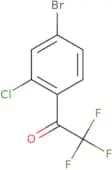
1-(4-Bromo-2-chlorophenyl)-2,2,2-trifluoroethan-1-one
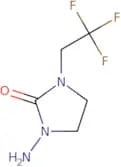
CAS:<p>Versatile small molecule scaffold</p>Formula:C8H3BrClF3OPurity:Min. 95%Molecular weight:287.46 g/mol1-Amino-3-(2,2,2-trifluoroethyl)imidazolidin-2-one
CAS:<p>Versatile small molecule scaffold</p>Formula:C5H8F3N3OPurity:Min. 95%Molecular weight:183.13 g/mol4-Bromo-6-[(4-methoxyphenyl)methoxy]-2-methylpyrimidine
CAS:<p>Versatile small molecule scaffold</p>Formula:C13H13BrN2O2Purity:Min. 95%Molecular weight:309.16 g/mol(4-Chlorophenyl)[4-(trifluoromethoxy)phenyl]methanamine
CAS:<p>Versatile small molecule scaffold</p>Formula:C14H11ClF3NOPurity:Min. 95%Molecular weight:301.69 g/mol2-[(3,3-Dimethylcyclopentyl)amino]pyridine-3-carboxylic acid
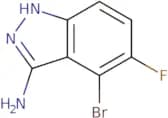
CAS:<p>Versatile small molecule scaffold</p>Formula:C13H18N2O2Purity:Min. 95%Molecular weight:234.3 g/mol4-Bromo-5-fluoro-1H-indazol-3-amine
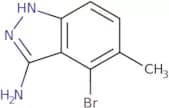
CAS:<p>Versatile small molecule scaffold</p>Formula:C7H5BrFN3Purity:Min. 95%Molecular weight:230.04 g/mol4-bromo-5-methyl-1h-indazol-3-amine
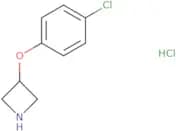
CAS:<p>Versatile small molecule scaffold</p>Formula:C8H8BrN3Purity:Min. 95%Molecular weight:226.08 g/mol3-(4-Chlorophenoxy)azetidine hydrochloride
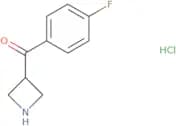
CAS:<p>Versatile small molecule scaffold</p>Formula:C9H10NOCl·HClPurity:Min. 95%Molecular weight:220.1 g/mol3-(4-Fluorobenzoyl)azetidine hydrochloride
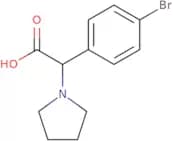
CAS:<p>Versatile small molecule scaffold</p>Formula:C10H11ClFNOPurity:Min. 95%Molecular weight:215.65 g/mol2-(4-Bromophenyl)-2-(pyrrolidin-1-yl)acetic acid
CAS:<p>Versatile small molecule scaffold</p>Formula:C12H14BrNO2Purity:Min. 95%Molecular weight:284.15 g/mol1-(4-(trifluoromethoxy)phenyl)-piperazine hydrochloride
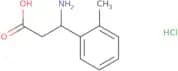
CAS:<p>Versatile small molecule scaffold</p>Formula:C11H14ClF3N2OPurity:Min. 95%Molecular weight:282.69 g/mol(3S)-3-Amino-3-(2-methylphenyl)propanoic acid hydrochloride
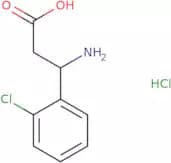
CAS:<p>Versatile small molecule scaffold</p>Formula:C10H14ClNO2Purity:Min. 95%Molecular weight:215.67 g/mol(3S)-3-Amino-3-(2-chlorophenyl)propanoic acid hydrochloride
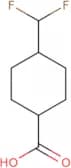
CAS:<p>Versatile small molecule scaffold</p>Formula:C9H11Cl2NO2Purity:Min. 95%Molecular weight:236.09 g/mol(1R,4R)-4-(Difluoromethyl)cyclohexanecarboxylic acid
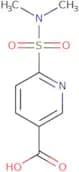
CAS:<p>Versatile small molecule scaffold</p>Formula:C8H12F2O2Purity:Min. 95%Molecular weight:178.18 g/mol6-(Dimethylsulfamoyl)pyridine-3-carboxylic acid
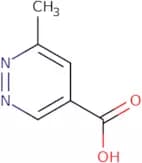
CAS:<p>Versatile small molecule scaffold</p>Formula:C8H10N2O4SPurity:Min. 95%Molecular weight:230.24 g/mol6-methylpyridazine-4-carboxylic acid
CAS:<p>Versatile small molecule scaffold</p>Formula:C6H6N2O2Purity:Min. 95%Molecular weight:138.12 g/molPotassium trifluoro[(oxetan-3-ylidene)methyl]boranuide
CAS:<p>Versatile small molecule scaffold</p>Formula:C4H5BF3KOPurity:Min. 95%Molecular weight:175.99 g/mol4,5,6,7-Tetrahydro-thiazolo[4,5-c]pyridine dihydrochloride
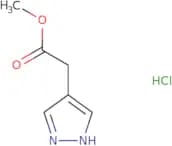
CAS:<p>Versatile small molecule scaffold</p>Formula:C6H10Cl2N2SPurity:Min. 95%Molecular weight:213.13 g/mol(1H-Pyrazol-4-yl)-acetic acid methyl ester hydrochloride
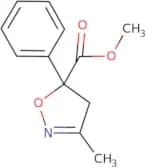
CAS:<p>Versatile small molecule scaffold</p>Formula:C6H9ClN2O2Purity:Min. 95%Molecular weight:176.6 g/molMethyl 3-methyl-5-phenyl-4,5-dihydro-1,2-oxazole-5-carboxylate
CAS:<p>Versatile small molecule scaffold</p>Formula:C12H13NO3Purity:Min. 95%Molecular weight:219.2 g/moltert-Butyl N-[(2-amino-5-bromophenyl)methyl]carbamate
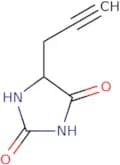
CAS:<p>Versatile small molecule scaffold</p>Formula:C12H17BrN2O2Purity:Min. 95%Molecular weight:301.18 g/mol5-(Prop-2-yn-1-yl)imidazolidine-2,4-dione
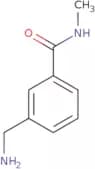
CAS:<p>Versatile small molecule scaffold</p>Formula:C6H6N2O2Purity:Min. 95%Molecular weight:138.12 g/mol3-(Aminomethyl)-N-methylbenzamide
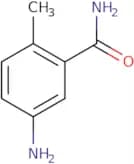
CAS:<p>Versatile small molecule scaffold</p>Formula:C9H12N2OPurity:Min. 95%Molecular weight:164.2 g/mol5-Amino-2-methylbenzamide
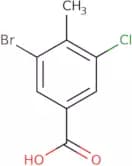
CAS:<p>Versatile small molecule scaffold</p>Formula:C8H10N2OPurity:Min. 95%Molecular weight:150.18 g/mol3-Bromo-5-chloro-4-methylbenzoic acid
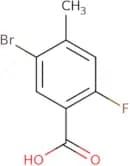
CAS:<p>3-Bromo-5-chloro-4-methylbenzoic acid is a molecule that has been optimized for the treatment of rheumatoid arthritis. It inhibits a protein kinase that is involved in the synthesis of pro-inflammatory cytokines. This drug has been shown to be effective in treating rheumatoid arthritis by inhibiting the translational and biosynthetic processes that lead to the production of pro-inflammatory cytokines. 3-Bromo-5-chloro-4-methylbenzoic acid has also been shown to inhibit mitogen activated protein kinase (MAPK) activation, which may be due to its ability to inhibit transcriptional activity.</p>Formula:C8H6BrClO2Purity:Min. 95%Molecular weight:249.49 g/mol5-Bromo-2-fluoro-4-methylbenzoic acid
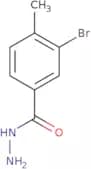
CAS:<p>Versatile small molecule scaffold</p>Formula:C8H6BrFO2Purity:Min. 95%Molecular weight:233.03 g/mol3-Bromo-4-methylbenzohydrazide
CAS:<p>Versatile small molecule scaffold</p>Formula:C8H9BrN2OPurity:Min. 95%Molecular weight:229.08 g/mol3-[(3-Aminophenyl)methyl]imidazolidine-2,4-dione
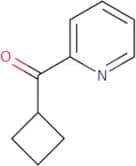
CAS:<p>Versatile small molecule scaffold</p>Formula:C10H11N3O2Purity:Min. 95%Molecular weight:205.21 g/mol2-Cyclobutanecarbonylpyridine
CAS:<p>Versatile small molecule scaffold</p>Formula:C10H11NOPurity:Min. 95%Molecular weight:161.2 g/mol1-[4-(2-Methoxy-ethoxy)-phenyl]-piperazine
CAS:<p>Versatile small molecule scaffold</p>Formula:C13H20N2O2Purity:Min. 95%Molecular weight:236.31 g/mol{4-[(4-methylpiperazin-1-yl)methyl]phenyl}methylamine
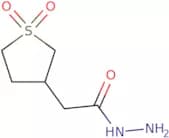
CAS:<p>Versatile small molecule scaffold</p>Formula:C13H21N3Purity:Min. 95%Molecular weight:219.33 g/molTetrahydro-3-thiopheneacetic acid hydrazide 1,1-dioxide
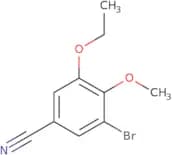
CAS:<p>Versatile small molecule scaffold</p>Formula:C6H12N2O3SPurity:Min. 95%Molecular weight:192.24 g/mol3-Bromo-5-ethoxy-4-methoxybenzonitrile
CAS:<p>Versatile small molecule scaffold</p>Formula:C10H10BrNO2Purity:Min. 95%Molecular weight:256.1 g/mol2-(4-Bromo-2-formylphenoxy)acetamide
CAS:<p>Versatile small molecule scaffold</p>Formula:C9H8BrNO3Purity:Min. 95%Molecular weight:258.07 g/mol1-Methyl-N-[(thiophen-2-yl)methyl]-1H-pyrazole-5-carboxamide
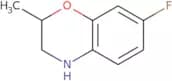
CAS:<p>Versatile small molecule scaffold</p>Formula:C10H11N3OSPurity:Min. 95%Molecular weight:221.28 g/mol7-Fluoro-2-methyl-3,4-dihydro-2H-1,4-benzoxazine
CAS:<p>Versatile small molecule scaffold</p>Formula:C9H10FNOPurity:Min. 95%Molecular weight:167.18 g/molN-Cyclohexyl(tert-butoxy)carbohydrazide
CAS:<p>Versatile small molecule scaffold</p>Formula:C11H22N2O2Purity:Min. 95%Molecular weight:214.3 g/mol3-[(4-Fluoro-2-nitrophenoxy)methyl]pyridine
CAS:<p>Versatile small molecule scaffold</p>Formula:C12H9FN2O3Purity:Min. 95%Molecular weight:248.21 g/molMethyl 1H-pyrazolo[3,4-c]pyridine-7-carboxylate
CAS:<p>Versatile small molecule scaffold</p>Formula:C8H7N3O2Purity:Min. 95%Molecular weight:177.16 g/mol7-Bromothieno[2,3-c]pyridine
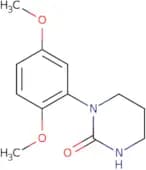
CAS:<p>Versatile small molecule scaffold</p>Formula:C7H4BrNSPurity:Min. 95%Molecular weight:214.08 g/mol1-(2,5-Dimethoxyphenyl)-1,3-diazinan-2-one
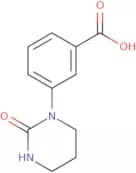
CAS:<p>Versatile small molecule scaffold</p>Formula:C12H16N2O3Purity:Min. 95%Molecular weight:236.27 g/mol3-(2-Oxo-1,3-diazinan-1-yl)benzoic acid
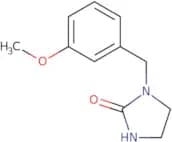
CAS:<p>Versatile small molecule scaffold</p>Formula:C11H12N2O3Purity:Min. 95%Molecular weight:220.22 g/mol1-(3-Methoxybenzyl)imidazolidin-2-one
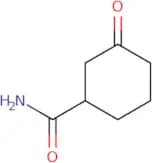
CAS:<p>Versatile small molecule scaffold</p>Formula:C11H14N2O2Purity:Min. 95%Molecular weight:206.24 g/mol3-Oxocyclohexane-1-carboxamide
CAS:<p>Versatile small molecule scaffold</p>Formula:C7H11NO2Purity:Min. 95%Molecular weight:141.17 g/mol5-[1-(Trifluoromethyl)cyclopropyl]-1,3,4-thiadiazol-2-amine
CAS:<p>Versatile small molecule scaffold</p>Formula:C6H6F3N3SPurity:Min. 95%Molecular weight:209.19 g/mol(2S)-2-Aminopropane-1-sulfonamide hydrochloride
CAS:<p>Versatile small molecule scaffold</p>Formula:C3H11ClN2O2SPurity:Min. 95%Molecular weight:174.6 g/molBenzyl N-[(2S)-1-(chlorosulfonyl)propan-2-yl]carbamate
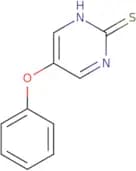
CAS:<p>Versatile small molecule scaffold</p>Formula:C11H14ClNO4SPurity:Min. 95%Molecular weight:291.75 g/mol5-Phenoxypyrimidine-2-thiol
CAS:<p>Versatile small molecule scaffold</p>Formula:C10H8N2OSPurity:Min. 95%Molecular weight:204.2 g/mol3-Bromo-7-chloroimidazo[1,2-a]pyrimidine
CAS:<p>Versatile small molecule scaffold</p>Formula:C6H3BrClN3Purity:Min. 95%Molecular weight:232.46 g/mol2-(2-{[(9H-Fluoren-9-yl)methoxy]carbonyl}-1,2,3,4-tetrahydroisoquinolin-1-yl)acetic acid
CAS:<p>Versatile small molecule scaffold</p>Formula:C26H23NO4Purity:Min. 95%Molecular weight:413.5 g/mol2-{[(9H-Fluoren-9-ylmethoxy)carbonyl](2-phenylethyl)amino}acetic acid
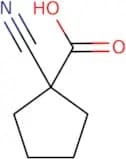
CAS:<p>Versatile small molecule scaffold</p>Formula:C25H23NO4Purity:Min. 95%Molecular weight:401.5 g/mol1-Cyanocyclopentanecarboxylic acid
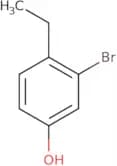
CAS:<p>Versatile small molecule scaffold</p>Formula:C7H9NO2Purity:Min. 95%Molecular weight:139.15 g/molPhenol, 3-bromo-4-ethyl-
CAS:<p>Versatile small molecule scaffold</p>Formula:C8H9BrOPurity:Min. 95%Molecular weight:201.06 g/mol2-[(4-Oxo-3,4-dihydroquinazolin-2-yl)methyl]benzoic acid
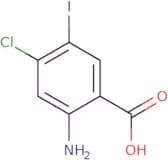
CAS:<p>2-[(4-Oxo-3,4-dihydroquinazolin-2-yl)methyl]benzoic acid is an acylating agent that forms a covalent bond with the amino group of a protein. It has been shown to react with both aromatic and aliphatic groups, but not with hydroxyl groups. 2-[(4-Oxo-3,4-dihydroquinazolin-2-yl)methyl]benzoic acid is commonly used in the synthesis of isoquinolines. This chemical is soluble in water and can be obtained as a yellow solid.</p>Formula:C16H12N2O3Purity:Min. 95%Molecular weight:280.28 g/mol2-Amino-4-chloro-5-iodobenzoic acid
CAS:<p>Versatile small molecule scaffold</p>Formula:C7H5ClINO2Purity:Min. 95%Molecular weight:297.48 g/mol(2S,4R)-1-[(tert-Butoxy)carbonyl]-4-(2-methoxy-2-oxoethyl)pyrrolidine-2-carboxylic acid
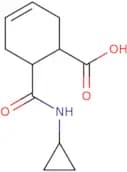
CAS:<p>Versatile small molecule scaffold</p>Formula:C13H21NO6Purity:Min. 95%Molecular weight:287.31 g/mol6-(Cyclopropylcarbamoyl)cyclohex-3-ene-1-carboxylic acid
CAS:<p>Versatile small molecule scaffold</p>Formula:C11H15NO3Purity:Min. 95%Molecular weight:209.24 g/mol4-[4-(4-Chlorophenyl)piperazin-1-yl]-4-oxobutanoic acid
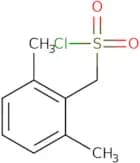
CAS:Controlled Product<p>Versatile small molecule scaffold</p>Formula:C14H17ClN2O3Purity:Min. 95%Molecular weight:296.75 g/mol(2,6-Dimethylphenyl)methanesulfonyl chloride
CAS:<p>Versatile small molecule scaffold</p>Formula:C9H11ClO2SPurity:Min. 95%Molecular weight:218.7 g/mol1-Sulfanyl-4H,5H-[1,2,4]triazolo[4,3-a]quinoxalin-4-one
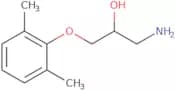
CAS:<p>1-Sulfanyl-4H,5H-[1,2,4]triazolo[4,3-a]quinoxalin-4-one is a potential antiviral drug that has been shown to inhibit the replication of the human immunodeficiency virus (HIV) in vitro. The most effective compounds have been shown to bind to the 5'-terminal region of the viral RNA genome and inhibit HIV's ability to interact with host cells. 1-Sulfanyl-4H,5H-[1,2,4]triazolo[4,3-a]quinoxalin-4-one has also been shown to be a potent inhibitor of influenza A virus replication in vitro. 1-Sulfanyl-4H,5H-[1,2,4]triazolo[4,3-a]quinoxalin-4-one binds tightly with high affinity to its target site and inhibits the enzyme PCSK9 which</p>Formula:C9H6N4OSPurity:Min. 95%Molecular weight:218.24 g/mol1-Amino-3-(2,6-dimethylphenoxy)propan-2-ol
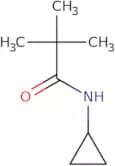
CAS:<p>Versatile small molecule scaffold</p>Formula:C11H17NO2Purity:Min. 95%Molecular weight:195.26 g/molN-Cyclopropyl-2,2-dimethyl-propanamide
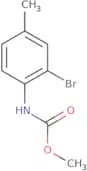
CAS:<p>Versatile small molecule scaffold</p>Formula:C8H15NOPurity:Min. 95%Molecular weight:141.21 g/molMethyl N-(2-bromo-4-methylphenyl)carbamate
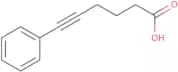
CAS:<p>Versatile small molecule scaffold</p>Formula:C9H10BrNO2Purity:Min. 95%Molecular weight:244.08 g/mol6-Phenylhex-5-ynoic acid
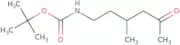
CAS:<p>Versatile small molecule scaffold</p>Formula:C12H12O2Purity:Min. 95%Molecular weight:188.22 g/moltert-Butyl N-(3-methyl-5-oxohexyl)carbamate
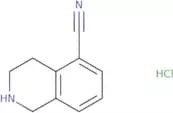
CAS:<p>Versatile small molecule scaffold</p>Formula:C12H23NO3Purity:Min. 95%Molecular weight:229.32 g/mol1,2,3,4-Tetrahydroisoquinoline-5-carbonitrile hydrochloride
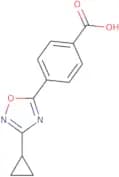
CAS:<p>Versatile small molecule scaffold</p>Formula:C10H11ClN2Purity:Min. 95%Molecular weight:194.66 g/mol4-(3-Cyclopropyl-1,2,4-oxadiazol-5-yl)benzoic acid
CAS:<p>Versatile small molecule scaffold</p>Formula:C12H10N2O3Purity:Min. 95%Molecular weight:230.22 g/mol2-[4-Chloro-2-(trifluoromethyl)phenyl]-4,4,5,5-tetramethyl-1,3,2-dioxaborolane
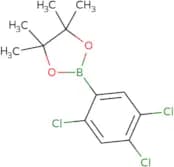
CAS:<p>Versatile small molecule scaffold</p>Formula:C13H15BClF3O2Purity:Min. 95%Molecular weight:306.52 g/mol4,4,5,5-Tetramethyl-2-(2,4,5-trichlorophenyl)-1,3,2-dioxaborolane
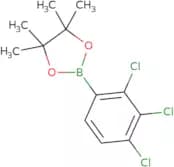
CAS:<p>Versatile small molecule scaffold</p>Formula:C12H14BCl3O2Purity:Min. 95%Molecular weight:307.4 g/mol4,4,5,5-Tetramethyl-2-(2,3,4-trichlorophenyl)-1,3,2-dioxaborolane
CAS:<p>Versatile small molecule scaffold</p>Formula:C12H14BCl3O2Purity:Min. 95%Molecular weight:307.4 g/mol2-[3-Chloro-4-(trifluoromethyl)phenyl]-4,4,5,5-tetramethyl-1,3,2-dioxaborolane
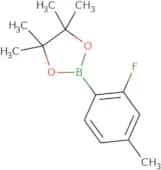
CAS:<p>Versatile small molecule scaffold</p>Formula:C13H15BClF3O2Purity:Min. 95%Molecular weight:306.52 g/mol2-(2-Fluoro-4-methyl-phenyl)-4,4,5,5-tetramethyl-1,3,2-dioxaborolane
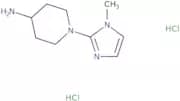
CAS:<p>Versatile small molecule scaffold</p>Formula:C13H18BFO2Purity:Min. 95%Molecular weight:236.09 g/mol1-(1-Methyl-1H-imidazol-2-yl)piperidin-4-amine dihydrochloride
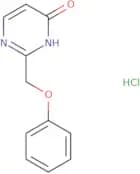
CAS:<p>Versatile small molecule scaffold</p>Formula:C9H18Cl2N4Purity:Min. 95%Molecular weight:253.17 g/mol2-(Phenoxymethyl)-1,4-dihydropyrimidin-4-one hydrochloride
CAS:<p>Versatile small molecule scaffold</p>Formula:C11H11ClN2O2Purity:Min. 95%Molecular weight:238.67 g/mol[2-(Morpholin-4-yl)-1,3-thiazol-5-yl]methanamine dihydrochloride
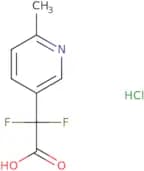
CAS:<p>Versatile small molecule scaffold</p>Formula:C8H15Cl2N3OSPurity:Min. 95%Molecular weight:272.19 g/mol2,2-Difluoro-2-(6-methylpyridin-3-yl)acetic acid hydrochloride
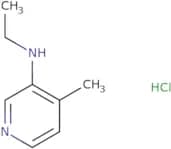
CAS:<p>Versatile small molecule scaffold</p>Formula:C8H8ClF2NO2Purity:Min. 95%Molecular weight:223.6 g/molN-Ethyl-4-methylpyridin-3-amine hydrochloride
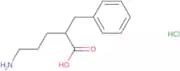
CAS:<p>Versatile small molecule scaffold</p>Formula:C8H13ClN2Purity:Min. 95%Molecular weight:172.65 g/mol5-Amino-2-benzylpentanoic acid hydrochloride
CAS:<p>Versatile small molecule scaffold</p>Formula:C12H18ClNO2Purity:Min. 95%Molecular weight:243.73 g/mol[1-(Aminomethyl)-3-phenylcyclobutyl]methanol hydrochloride
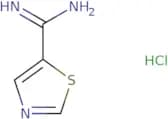
CAS:<p>Versatile small molecule scaffold</p>Formula:C12H18ClNOPurity:Min. 95%Molecular weight:227.73 g/mol1,3-Thiazole-5-carboximidamide hydrochloride
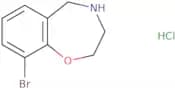
CAS:<p>Versatile small molecule scaffold</p>Formula:C4H6ClN3SPurity:Min. 95%Molecular weight:163.63 g/mol9-Bromo-2,3,4,5-tetrahydro-1,4-benzoxazepine hydrochloride
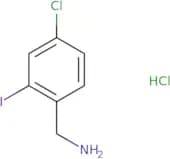
CAS:<p>Versatile small molecule scaffold</p>Formula:C9H11BrClNOPurity:Min. 95%Molecular weight:264.54 g/mol(4-Chloro-2-iodophenyl)methanamine hydrochloride
CAS:<p>Versatile small molecule scaffold</p>Formula:C7H8Cl2INPurity:Min. 95%Molecular weight:303.95 g/mol1-[2-Chloro-5-(trifluoromethyl)phenyl]cyclopropan-1-amine hydrochloride
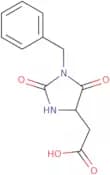
CAS:<p>Versatile small molecule scaffold</p>Formula:C10H10Cl2F3NPurity:Min. 95%Molecular weight:272.09 g/mol2-(1-Benzyl-2,5-dioxoimidazolidin-4-yl)acetic acid
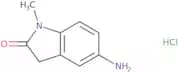
CAS:<p>Versatile small molecule scaffold</p>Formula:C12H12N2O4Purity:Min. 95%Molecular weight:248.23 g/mol5-Amino-1-methyl-2,3-dihydro-1H-indol-2-one hydrochloride
CAS:Controlled Product<p>5-Amino-1-methyl-2,3-dihydro-1H-indol-2-one hydrochloride is a research tool that belongs to the class of peptides. It is used as an inhibitor in pharmacological research or as a reagent in antibody production. This product has been shown to inhibit ion channels and bind to ligand receptors. 5-Amino-1-methyl-2,3-dihydro-1H-indol-2-one hydrochloride binds to the receptor using a mechanism involving hydrogen bonds or Van der Waals forces. It also interacts with other proteins and can be used as a high purity reagent for antibodies.</p>Formula:C9H11ClN2OPurity:Min. 95%Molecular weight:198.65 g/molN-Methyl-4-(propan-2-yloxy)aniline hydrochloride
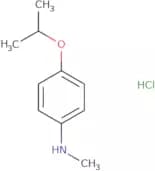
CAS:<p>Versatile small molecule scaffold</p>Formula:C10H16ClNOPurity:Min. 95%Molecular weight:201.69 g/mol6-Methyl-7-(trifluoromethyl)pyrazolo[1,5-a]pyrimidine-2-carboxylic acid
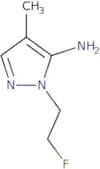
CAS:<p>Versatile small molecule scaffold</p>Formula:C9H6F3N3O2Purity:Min. 95%Molecular weight:245.16 g/mol1-(2-Fluoroethyl)-4-methyl-1H-pyrazol-5-amine
CAS:<p>Versatile small molecule scaffold</p>Formula:C6H10FN3Purity:Min. 95%Molecular weight:143.16 g/molN-[3-(2-Oxo-1,3-oxazolidin-3-yl)propyl]methanesulfonamide
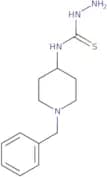
CAS:<p>Versatile small molecule scaffold</p>Formula:C7H14N2O4SPurity:Min. 95%Molecular weight:222.3 g/mol3-Amino-1-(1-benzylpiperidin-4-yl)thiourea
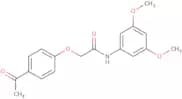
CAS:<p>Versatile small molecule scaffold</p>Formula:C13H20N4SPurity:Min. 95%Molecular weight:264.39 g/mol2-(4-Acetylphenoxy)-N-(3,5-dimethoxyphenyl)acetamide
CAS:<p>Versatile small molecule scaffold</p>Formula:C18H19NO5Purity:Min. 95%Molecular weight:329.3 g/mol3-[N-(4-Methylphenyl)benzenesulfonamido]propanoic acid
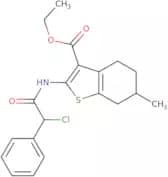
CAS:<p>Versatile small molecule scaffold</p>Formula:C16H17NO4SPurity:Min. 95%Molecular weight:319.4 g/molEthyl 2-(2-chloro-2-phenylacetamido)-6-methyl-4,5,6,7-tetrahydro-1-benzothiophene-3-carboxylate
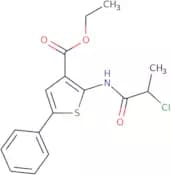
CAS:<p>Versatile small molecule scaffold</p>Formula:C20H22ClNO3SPurity:Min. 95%Molecular weight:391.9 g/molEthyl 2-(2-chloropropanamido)-5-phenylthiophene-3-carboxylate
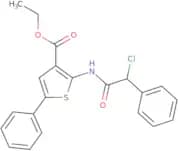
CAS:<p>Versatile small molecule scaffold</p>Formula:C16H16ClNO3SPurity:Min. 95%Molecular weight:337.8 g/molEthyl 2-(2-chloro-2-phenylacetamido)-5-phenylthiophene-3-carboxylate
CAS:<p>Versatile small molecule scaffold</p>Formula:C21H18ClNO3SPurity:Min. 95%Molecular weight:399.9 g/mol4-Chloro-2-{2-[(4-methyl-4H-1,2,4-triazol-3-yl)sulfanyl]acetamido}benzoic acid
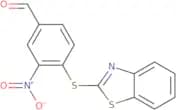
CAS:<p>Versatile small molecule scaffold</p>Formula:C12H11ClN4O3SPurity:Min. 95%Molecular weight:326.76 g/mol4-(1,3-Benzothiazol-2-ylsulfanyl)-3-nitrobenzaldehyde
CAS:<p>Versatile small molecule scaffold</p>Formula:C14H8N2O3S2Purity:Min. 95%Molecular weight:316.4 g/mol2-Chloro-N-[4-(4-ethylphenyl)-1,3-thiazol-2-yl]-2-phenylacetamide
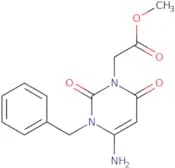
CAS:<p>Versatile small molecule scaffold</p>Formula:C19H17ClN2OSPurity:Min. 95%Molecular weight:356.9 g/molMethyl 2-(4-amino-3-benzyl-2,6-dioxo-1,2,3,6-tetrahydropyrimidin-1-yl)acetate
CAS:<p>Versatile small molecule scaffold</p>Formula:C14H15N3O4Purity:Min. 95%Molecular weight:289.29 g/mol2-[(5-Methylthiophen-2-yl)formamido]acetic acid
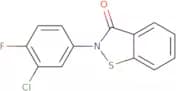
CAS:<p>2-[(5-Methylthiophen-2-yl)formamido]acetic acid is a research tool that is used as an activator of G protein coupled receptors. It binds to the receptor, which induces activation and signaling via second messengers. 2-[(5-Methylthiophen-2-yl)formamido]acetic acid has been shown to activate ion channels in cells and is also a ligand for the receptor. This compound has been shown to be a potent inhibitor of GABA (gamma amino butyric acid) binding in rat brain synaptosomes.</p>Formula:C8H9NO3SPurity:Min. 95%Molecular weight:199.23 g/mol2-(3-Chloro-4-fluorophenyl)-2,3-dihydro-1,2-benzothiazol-3-one
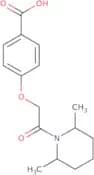
CAS:<p>Versatile small molecule scaffold</p>Formula:C13H7ClFNOSPurity:Min. 95%Molecular weight:279.72 g/mol4-(2-(2,6-Dimethylpiperidin-1-yl)-2-oxoethoxy)benzoic acid
CAS:<p>Versatile small molecule scaffold</p>Formula:C16H21NO4Purity:Min. 95%Molecular weight:291.34 g/mol2-Chloromethyl-5-methyl-4-oxo-3,4-dihydro-thieno[2,3-d]pyrimidine-6-carboxylic acid methyl ester
CAS:<p>Versatile small molecule scaffold</p>Formula:C10H9ClN2O3SPurity:Min. 95%Molecular weight:272.71 g/mol6-(Furan-2-yl)-3-methyl-1-phenyl-1H-pyrazolo[3,4-b]pyridine-4-carboxylic acid
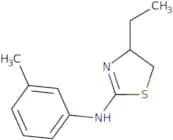
CAS:<p>Versatile small molecule scaffold</p>Formula:C18H13N3O3Purity:Min. 95%Molecular weight:319.3 g/mol4-Ethyl-N-(3-methylphenyl)-4,5-dihydro-1,3-thiazol-2-amine
CAS:<p>Versatile small molecule scaffold</p>Formula:C12H16N2SPurity:Min. 95%Molecular weight:220.34 g/mol7-Bromo-1H-indene
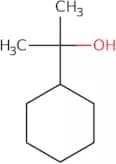
CAS:<p>7-Bromo-1H-indene is a chemical compound that is synthesized by dehydration of propionic acid. 7-Bromo-1H-indene is a processable compound that can be used as an intermediate in the industrial production of various products. Dehydration, chlorination, and alkene formation are factors that lead to the synthesis of 7-bromo-1H-indene. The industrial synthetic method for the production of this product yields a high yield with a low cost.</p>Formula:C9H7BrPurity:Min. 95%Molecular weight:195.06 g/mol2-cyclohexylpropan-2-ol
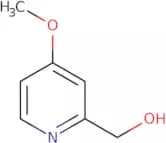
CAS:<p>2-Cyclohexylpropan-2-ol is a solvent that belongs to the group of primary alcohols. It is used for the dilution of biomolecules and as a solvent for organic reactions. 2-Cyclohexylpropan-2-ol has been shown to have a major effect on the solvation properties of hydroxyl groups in acidic environments. The hydroxyl group can be removed by photoexcitation or by reacting with an electrophilic reagent such as ozone, nitrous acid, or peroxy acids. The kinetic study of 2-cyclohexylpropan-2-ol was carried out in water at 37°C and showed that it has a low molecular weight and is rapidly hydrolyzed by alkaline solutions.</p>Formula:C9H18OPurity:Min. 95%Molecular weight:142.24 g/mol(4-Methoxy-pyridin-2-yl)-methanol
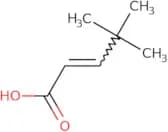
CAS:<p>(4-Methoxy-pyridin-2-yl)-methanol is a nucleophile that can be used in the preparation of phosphorothioates and triphosphates. It is also used to synthesize oligonucleotides, which are biomolecules used to probe the structure of DNA. This compound has been shown to have high yields and is exothermic, making it a good candidate for catalysis. The chemical properties of (4-Methoxy-pyridin-2-yl)-methanol make it an excellent nucleophile with a strong affinity for phosphorous, which makes it useful in the synthesis of phosphorothioates and triphosphates.</p>Formula:C7H9NO2Purity:Min. 95%Molecular weight:139.16 g/mol(E)-4,4-Dimethyl-2-pentenoic acid
CAS:<p>Versatile small molecule scaffold</p>Formula:C7H12O2Purity:Min. 95%Molecular weight:128.17 g/mol4-(2-Ethylphenyl)-3-thiosemicarbazide
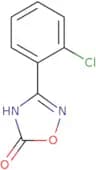
CAS:<p>Versatile small molecule scaffold</p>Formula:C9H13N3SPurity:Min. 95%Molecular weight:195.28 g/mol3-(2-Chlorophenyl)-1,2,4-oxadiazol-5-ol
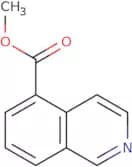
CAS:<p>Versatile small molecule scaffold</p>Formula:C8H5ClN2O2Purity:Min. 95%Molecular weight:196.59 g/molMethyl isoquinoline-5-carboxylate
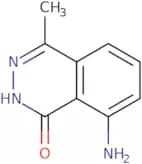
CAS:<p>Versatile small molecule scaffold</p>Formula:C11H9NO2Purity:Min. 95%Molecular weight:187.2 g/mol8-Amino-4-methyl-1,2-dihydrophthalazin-1-one
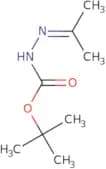
CAS:<p>Versatile small molecule scaffold</p>Formula:C9H9N3OPurity:Min. 95%Molecular weight:175.19 g/moltert-Butyl 2-(propan-2-ylidene)hydrazinecarboxylate
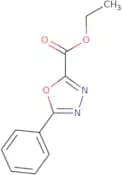
CAS:<p>Versatile small molecule scaffold</p>Formula:C8H16N2O2Purity:Min. 95%Molecular weight:172.22 g/molEthyl 5-phenyl-1,3,4-oxadiazole-2-carboxylate
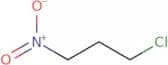
CAS:<p>Versatile small molecule scaffold</p>Formula:C11H10N2O3Purity:Min. 95%Molecular weight:218.21 g/mol1-Chloro-3-nitropropane
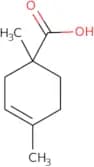
CAS:<p>1-Chloro-3-nitropropane is a compound that has been synthesized from ethylene diamine and yields amide, ethylene, and alkali metal. 1-Chloro-3-nitropropane is used as an intermediate in the production of hydrochloride salts of phosphorus pentoxide. This substance reacts with chlorine to produce phosphonitriles, which are intermediates for the synthesis of nitronates. The synthesis of 1-chloro-3-nitropropane was mechanistically studied by refluxing chlorination agents with phosphorus pentoxide.</p>Formula:C3H6ClNO2Purity:Min. 95%Molecular weight:123.54 g/mol1,4-Dimethylcyclohex-3-ene-1-carboxylic acid
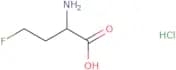
CAS:<p>Versatile small molecule scaffold</p>Formula:C9H14O2Purity:Min. 95%Molecular weight:154.21 g/mol2-Amino-4-fluorobutanoic acid hydrochloride
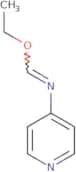
CAS:<p>Versatile small molecule scaffold</p>Formula:C4H9ClFNO2Purity:Min. 95%Molecular weight:157.57 g/molEthyl N-(pyridin-4-yl)carboximidate
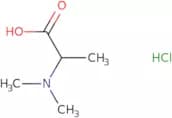
CAS:<p>Versatile small molecule scaffold</p>Formula:C8H10N2OPurity:Min. 95%Molecular weight:150.18 g/mol(2S)-2-(Dimethylamino)propanoic acid hydrochloride
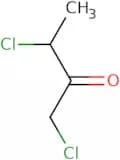
CAS:<p>Versatile small molecule scaffold</p>Formula:C5H12ClNO2Purity:Min. 95%Molecular weight:153.61 g/mol1,3-Dichlorobutan-2-one
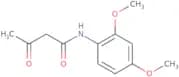
CAS:<p>Versatile small molecule scaffold</p>Formula:C4H6Cl2OPurity:Min. 95%Molecular weight:140.99 g/mol2',4'-Dimethoxyacetoacetanilide
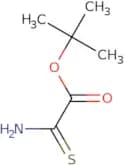
CAS:<p>2',4'-Dimethoxyacetoacetanilide is a disubstituted dicarbonyl compound that is synthesized by acetoxylation of 2,4-dimethoxybenzaldehyde. The equilibrium between the two forms can be shifted to favor one form through the addition of reagents, such as dimethylformamide or dicarbonyl compounds. The oxidation of 2',4'-dimethoxyacetoacetanilide with hydrogen peroxide yields 2,4-dihydroxydiphenylmethane, which can undergo hydrolysis with hydrochloric acid to yield phenol.</p>Formula:C12H15NO4Purity:Min. 95%Molecular weight:237.26 g/moltert-Butyl carbamothioylformate
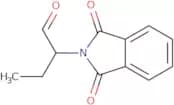
CAS:<p>Versatile small molecule scaffold</p>Formula:C6H11NO2SPurity:Min. 95%Molecular weight:161.22 g/mol2-(1,3-Dioxo-2,3-dihydro-1H-isoindol-2-yl)butanal
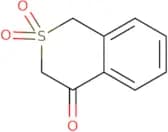
CAS:<p>2-(1,3-Dioxo-2,3-dihydro-1H-isoindol-2-yl)butanal is an antibacterial agent that belongs to the group of aminoglycosides. It is a synthetic compound that has shown antibacterial activity against gram positive and gram negative bacteria. 2-(1,3-Dioxo-2,3-dihydro-1H-isoindol-2-)butanal binds to the 30S ribosomal subunit of bacteria and inhibits protein synthesis by inhibiting the translocation of tRNA from the A site to the P site on the ribosome. This compound also prevents bacterial cell wall synthesis by binding to peptidoglycan precursors in the cell wall and inhibiting transglycosylation reactions.</p>Formula:C12H11NO3Purity:Min. 95%Molecular weight:217.22 g/mol1H-2-Benzothiopyran-4(3H)-one 2,2-dioxide
CAS:<p>1H-2-Benzothiopyran-4(3H)-one 2,2-dioxide belongs to the group of ketones and isomers. It has an electrophilic character and a nucleophilic character. The tautomerization of this molecule was studied by computational methods. The reactivity of 1H-2-Benzothiopyran-4(3H)-one 2,2-dioxide towards nucleophiles was studied experimentally by using reagents such as hydrogen bond donors, hydrogen bond acceptors, oximes and zwitterions. The conformations of the molecule were analyzed with single crystal x-ray diffraction experiments to find out the most stable conformation for each isomer.</p>Formula:C9H8O3SPurity:Min. 95%Molecular weight:196.22 g/mol3-N-Propoxypropylamine
CAS:<p>3-N-Propoxypropylamine is an alkyl ether that is synthesized from propylamine. The chemical structure of 3-N-Propoxypropylamine has a low molecular weight and contains acidic functional groups. This compound can be used in the synthesis of other drugs, such as alkanolamide derivatives. 3-N-Propoxypropylamine can also be used to deaminate histidine residues, which are found in proteins, and this property makes it useful for culture cell experiments.</p>Purity:Min. 95%4-Phenoxybutan-1-amine
CAS:<p>Phenoxybutanamine is a pharmaceutical preparation that contains 4-phenoxybutan-1-amine. It is used for the treatment of inflammatory diseases and bowel disease. Phenoxybutanamine may be prescribed as an antiinflammatory or immunosuppressant agent. This substance is also used to treat tumour necrosis factor-α (TNF-α) mediated inflammatory diseases, such as bowel disease. Phenoxybutanamine may be synthesized by reacting phenol with butylamine and hydrochloric acid. It is an aliphatic hydrocarbon with a carboxy group and a fluorine atom on the side chain. Phenoxybutanamine can inhibit the proliferation of cells in vitro, which may be due to its ability to inhibit protein synthesis in these cells.</p>Formula:C10H15NOPurity:Min. 95%Molecular weight:165.23 g/mol2-[Benzyl(methyl)amino]-1-phenylpropan-1-one
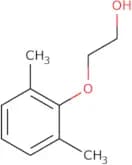
CAS:Controlled Product<p>Versatile small molecule scaffold</p>Formula:C17H19NOPurity:Min. 95%Molecular weight:253.34 g/mol2-(2,6-Dimethylphenoxy)ethan-1-ol
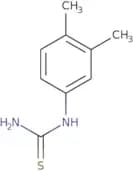
CAS:<p>Versatile small molecule scaffold</p>Formula:C10H14O2Purity:Min. 95%Molecular weight:166.22 g/mol1-(3,4-Dimethylphenyl)-2-thiourea
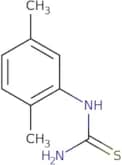
CAS:<p>Versatile small molecule scaffold</p>Formula:C9H12N2SPurity:Min. 95%Molecular weight:180.27 g/mol(2,5-Dimethyl-phenyl)-thiourea
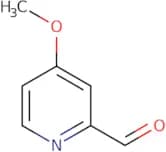
CAS:<p>Versatile small molecule scaffold</p>Formula:C9H12N2SPurity:Min. 95%Molecular weight:180.27 g/mol4-Methoxypyridine-2-carboxaldehyde
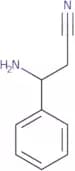
CAS:<p>4-Methoxypyridine-2-carboxaldehyde (4MPCA) is a chemical with antihistaminergic properties that can be used as a histamine antagonist. 4MPCA is synthesized from the reaction of 4-methoxypyridine, formaldehyde, and chloroacetic acid. The compound has been shown to inhibit the H2 receptor at concentrations of 1 x 10 M. It also has been shown to possess antiproliferative activity in tumor cell lines. This compound is unique because it contains a heterocyclic moiety in its structure and can be used in cross-coupling reactions.</p>Formula:C7H7NO2Purity:Min. 95%Molecular weight:137.14 g/mol3-Amino-3-phenylpropanenitrile
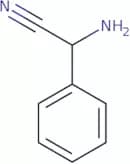
CAS:<p>3-Amino-3-phenylpropanenitrile is a monocarboxylic acid derivative. It is synthesized by reacting acrylonitrile with an excess of benzonitrile in the presence of a base, followed by treatment with an oxidizing agent. 3-Amino-3-phenylpropanenitrile has been shown to undergo protonation and form an amide linkage with dimethylformamide, which may be useful for preparative purposes. The compound class includes other compounds such as benzamide, 2-aminoethanol, and 2-aminophenol.</p>Formula:C9H10N2Purity:Min. 95%Molecular weight:146.19 g/mol2-Amino-2-phenylacetonitrile
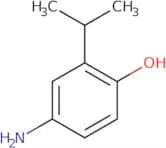
CAS:<p>2-Amino-2-phenylacetonitrile is a chiral compound that has been shown to be effective in the treatment of inflammation in the bowel. It has been shown to be effective against inflammatory bowel disease, which is a chronic inflammatory condition of unknown origin that affects the large intestine. 2-Amino-2-phenylacetonitrile inhibits neutrophil migration and reduces proinflammatory cytokines, such as tumor necrosis factor (TNF)-α and interferon (IFN)-γ. The drug may also have an effect on apoptosis protein expression. The drug is well tolerated with minimal side effects and can be used in patients with diabetes suffering from diabetic neuropathy. 2-Amino-2-phenylacetonitrile has pharmacokinetic properties that make it suitable for oral administration, while its hydrochloric acid solubility makes it well suited for use in the bladder. The drug's redox potentials are low</p>Formula:C8H8N2Purity:Min. 95%Molecular weight:132.16 g/mol4-Amino-2-isopropylphenol
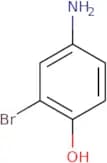
CAS:<p>4-Amino-2-isopropylphenol is a phenolic compound that is used in the synthesis of esters. It reacts with carboxylic acids to form an acylation product, which is selective for hydroxy groups. 4-Amino-2-isopropylphenol can be used as a solvent for phenolic compounds such as resorcinols and hydroquinones. This reagent also selectively reacts with organic solvents preferentially to hydroxy groups on the same molecule. The regioselective reaction of 4-amino-2-isopropylphenol is due to its steric hindrance by the substituent on the isopropyl group.</p>Formula:C9H13NOPurity:Min. 95%Molecular weight:151.21 g/mol4-Amino-2-bromophenol
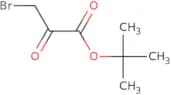
CAS:<p>4-Amino-2-bromophenol is a homolytic, alkaline, nitrate, oxidative, evolution, pyridinecarboxylic, alkylation, chloroplasts, aminophenols, oxidative decarboxylation, acyl chlorides and catalyzed by photosynthesis. 4-Amino-2-bromophenol is used in the preparation of acyl chlorides and catalyzed by photosynthesis. It is also used in the synthesis of azo dyes. 4-Amino-2-bromophenol hydrolyzes in an alkaline solution to form 4-aminobenzoic acid and bromine water. This reaction can be reversed by adding acid to the solution.</p>Formula:C6H6BrNOPurity:Min. 95%Molecular weight:188.02 g/moltert-Butyl 3-bromo-2-oxopropanoate
CAS:<p>Versatile small molecule scaffold</p>Formula:C7H11BrO3Purity:Min. 95%Molecular weight:223.06 g/molN-Benzyl-6-methoxybenzo[D]thiazol-2-amine
CAS:<p>Versatile small molecule scaffold</p>Formula:C15H14N2OSPurity:Min. 95%Molecular weight:270.4 g/molN-[(2,4-Dichlorophenyl)methyl]-6-methoxy-1,3-benzothiazol-2-amine
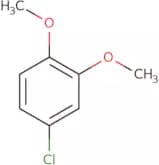
CAS:<p>Versatile small molecule scaffold</p>Formula:C15H12Cl2N2OSPurity:Min. 95%Molecular weight:339.2 g/mol4-Chloro-1,2-dimethoxybenzene
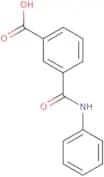
CAS:<p>4-Chloro-1,2-dimethoxybenzene is a ligand that binds to the active site of acetylcholinesterase. It is used in synthetic chemistry as a precursor for acridone and dimethoxyacridone. 4-Chloro-1,2-dimethoxybenzene has been found to have antioxidant properties and may be used as an antioxidant. This substance may also act as a potential antioxidant by protecting lipids against oxidation.</p>Formula:C8H9ClO2Purity:Min. 95%Molecular weight:172.61 g/mol3-(Phenylcarbamoyl)benzoic acid
CAS:<p>3-(Phenylcarbamoyl)benzoic acid (PCBA) is a molecule that is used in different fields of research, including mass spectrometry and diagnostic medicine. It has been shown to have properties that can be used for the diagnosis of Parkinson’s disease. The chemical structure of PCBA includes a carboxylic acid group and an aromatic ring with three hydroxyl groups. PCBA can be synthesized from phenylacetic acid by decarboxylation, elimination, or ortho-elimination reactions. This molecule has two possible isomers: 4-hydroxy-3-(phenylcarbamoyl)benzoic acid and 3-hydroxy-4-(phenylcarbamoyl)benzoic acid. PCBA may be used as a diagnostic agent for Parkinson’s disease because it can form molecular ions with m/z values of 302, 268, and 204, which are diagnostic for this</p>Formula:C14H11NO3Purity:Min. 95%Molecular weight:241.24 g/mol4-(Phenylcarbamoyl)benzoic Acid
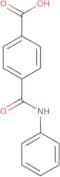
CAS:<p>4-(Phenylcarbamoyl)benzoic acid is a metabolite of all-trans-retinoic acid that has been shown to induce promyelocytic leukemia in human cells. It binds to cellular retinobenzoic acid receptors, which are proteins that regulate cellular differentiation and apoptosis. The binding of 4-(phenylcarbamoyl)benzoic acid to these receptors leads to the inhibition of cellular proliferation and the induction of apoptosis in promyelocytic leukemia cells. 4-(Phenylcarbamoyl)benzoic Acid also inhibits the metabolism of retinoids by inhibiting the enzyme retinol dehydrogenase, thereby increasing the levels of all-trans-retinoic acid. This leads to an increased activity of retinoic acid on its receptor.</p>Formula:C14H11NO3Purity:Min. 95%Molecular weight:241.24 g/mol2-(3-Piperidyl)ethanol HCl
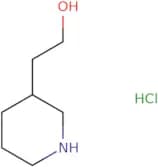
CAS:<p>Versatile small molecule scaffold</p>Formula:C7H16ClNOPurity:Min. 95%Molecular weight:165.66 g/molN-(6-Sulfamoylpyridazin-3-yl)acetamide
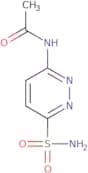
CAS:<p>Versatile small molecule scaffold</p>Formula:C6H8N4O3SPurity:Min. 95%Molecular weight:216.22 g/mol2-bromo-4,5-dimethoxyaniline
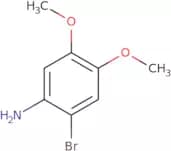
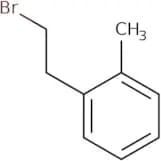
CAS:<p>2-Bromo-4,5-dimethoxyaniline is a chemical compound that is used to optimize the synthesis of antimalarial agents. It has been shown that 2-bromo-4,5-dimethoxyaniline can be used as an efficient and selective synthetic intermediate for the preparation of benzene derivatives with biological properties. This chemical compound has been shown to be a mediation agent in biological systems and is also responsible for cross-coupling reactions between carbazoles and acridinium. The method for preparing this chemical compound involves a two step process involving alkylation and hydrolysis. The first step involves the preparation of dimethylformamide by reacting methyl iodide with formaldehyde in methanol. In the second step, acetyl chloride reacts with 2-bromoethanol in DMF to produce 2-bromo-4,5-dimethoxyaniline.</p>Formula:C8H10BrNO2Purity:Min. 95%Molecular weight:232.1 g/mol2-Methylphenethyl bromide
CAS:<p>Versatile small molecule scaffold</p>Formula:C9H11BrPurity:Min. 95%Molecular weight:199.09 g/mol4-Chlorobenzoyl isothiocyanate
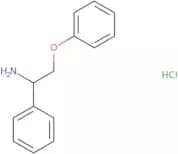
CAS:<p>4-Chlorobenzoyl isothiocyanate (4CBI) is an antibacterial agent that inhibits the growth of bacteria by binding to a molecule in the bacterial cell wall. 4CBI has been shown to inhibit the synthesis of a phytoalexin, which is a chemical compound that plants produce in response to infection or other injury. 4CBI's mode of action involves hydrogen bonding with the pyrazole ring and trisubstituted center of the molecule. This inhibition prevents formation of a reactive intermediate, which would otherwise lead to bacterial death.</p>Formula:C8H4ClNOSPurity:Min. 95%Molecular weight:197.64 g/mol(2-Amino-2-phenylethoxy)benzene hydrochloride
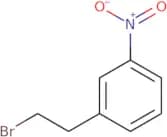
CAS:<p>Versatile small molecule scaffold</p>Formula:C14H16ClNOPurity:Min. 95%Molecular weight:249.73 g/mol3-Nitrophenethyl bromide
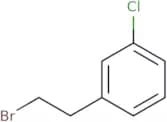
CAS:<p>Versatile small molecule scaffold</p>Formula:C8H8BrNO2Purity:Min. 95%Molecular weight:230.06 g/mol3-Chlorophenethyl bromide
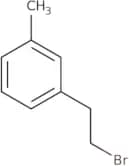
CAS:<p>3-Chlorophenethyl bromide is a linker that binds to viral proteins in the dimer interface and inhibits viral replication. It has been shown to be an inhibitor of HIV-1 reverse transcriptase and human immunodeficiency virus type 1 protease. 3-Chlorophenethyl bromide has also been found to inhibit the binding of HIV-1 integrase, which leads to inhibition of HIV-1 DNA integration into host cell chromosomes. 3-Chlorophenethyl bromide can be used for the treatment of AIDS and is being investigated for its use as a prophylactic agent for HIV infection.</p>Formula:ClC6H4CH2CH2BrPurity:Min. 95%Molecular weight:219.51 g/mol1-(2-Bromo-ethyl)-3-methyl-benzene
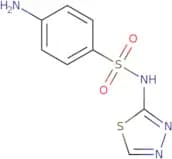
CAS:<p>Versatile small molecule scaffold</p>Formula:C9H11BrPurity:Min. 95%Molecular weight:199.09 g/mol4-Amino-N-(1,3,4-thiadiazol-2-yl)benzene-1-sulfonamide
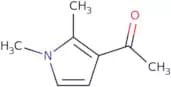
CAS:<p>Versatile small molecule scaffold</p>Formula:C8H8N4O2S2Purity:Min. 95%Molecular weight:256.3 g/mol1-(1,2-Dimethyl-1H-pyrrol-3-yl)-ethanone
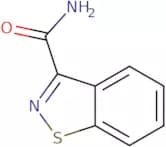
CAS:<p>Versatile small molecule scaffold</p>Formula:C8H11NOPurity:Min. 95%Molecular weight:137.18 g/mol1,2-Benzothiazole-3-carboxamide
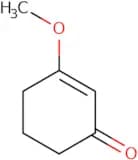
CAS:<p>Versatile small molecule scaffold</p>Formula:C8H6N2OSPurity:Min. 95%Molecular weight:178.21 g/mol3-Methoxy-2-cyclohexen-1-one
CAS:<p>3-Methoxy-2-cyclohexen-1-one is a stereoisomer of cyclohexanone. It is the product of an asymmetric synthesis by irradiation. The reaction requires methoxyphenol and acetyl chloride, with isomers being separated by gel chromatography. The stereoselectivity of the reaction has been shown to be high, with the desired product being oriented in a chiral environment. A hydrochloric acid solution is used to convert 3-methoxy-2-cyclohexen-1-one into 2,3-dimethoxybenzoic acid.</p>Formula:C7H10O2Purity:Min. 95%Molecular weight:126.15 g/mol2-[Ethyl(1-ethynylcyclohexyl)amino]ethan-1-ol
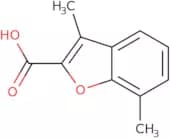
CAS:<p>Versatile small molecule scaffold</p>Formula:C12H21NOPurity:Min. 95%Molecular weight:195.3 g/mol3,7-Dimethyl-1-benzofuran-2-carboxylic acid
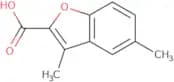
CAS:<p>Versatile small molecule scaffold</p>Formula:C11H10O3Purity:Min. 95%Molecular weight:190.19 g/mol3,5-Dimethyl-benzofuran-2-carboxylic acid
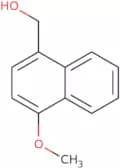
CAS:<p>Versatile small molecule scaffold</p>Formula:C11H10O3Purity:Min. 95%Molecular weight:190.2 g/mol4-Methoxy-1-naphthalenemethanol
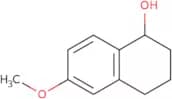
CAS:<p>4-Methoxy-1-naphthalenemethanol is an isoenzyme of a dehydrogenase. It is found in the pancreas, tissues and human serum. 4-Methoxy-1-naphthalenemethanol has been shown to catalyze the conversion of acetaldehyde to acetate and reduces fatty acids to their corresponding hydroxy acid. This enzyme also converts ethyl esters and aldehydes into their corresponding alcohols or carboxylic acids. The reduction products are carbocations, which can be reduced by other enzymes such as thioredoxin reductase.</p>Formula:C12H12O2Purity:Min. 95%Molecular weight:188.23 g/mol6-Methoxy-1,2,3,4-tetrahydronaphthalen-1-ol
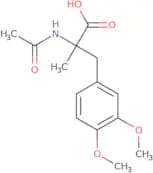
CAS:<p>The condensation of 6-methoxy-1,2,3,4-tetrahydronaphthalen-1-ol with a diaryl or chlorotrimethylsilane in the presence of a catalyst such as pyridine or triethylamine leads to the formation of a carbinol. The reaction is often used for the synthesis of phenols.</p>Formula:C11H14O2Purity:Min. 95%Molecular weight:178.23 g/mol(2S)-3-(3,4-Dimethoxyphenyl)-2-acetamido-2-methylpropanoic acid
CAS:<p>Versatile small molecule scaffold</p>Formula:C14H19NO5Purity:Min. 95%Molecular weight:281.3 g/mol1,2-Dihydronaphthalene-1-carboxylic acid
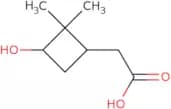
CAS:<p>Versatile small molecule scaffold</p>Formula:C11H10O2Purity:Min. 95%Molecular weight:174.2 g/mol2-(3-Hydroxy-2,2-dimethylcyclobutyl)acetic acid
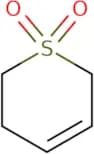
CAS:<p>Versatile small molecule scaffold</p>Formula:C8H14O3Purity:Min. 95%Molecular weight:158.19 g/molThiacyclohex-3-ene, 1,1-dioxide
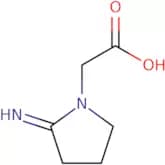
CAS:<p>Versatile small molecule scaffold</p>Formula:C5H8O2SPurity:Min. 95%Molecular weight:132.18 g/mol2-(2-Iminopyrrolidin-1-yl)acetic acid
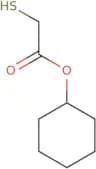
CAS:<p>Versatile small molecule scaffold</p>Formula:C6H10N2O2Purity:Min. 95%Molecular weight:142.16 g/molCyclohexyl 2-sulfanylacetate
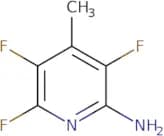
CAS:<p>Cyclohexyl 2-sulfanylacetate is an organic compound that belongs to the class of polycarboxylic acids. It is soluble in glycol ether and insoluble in water. Cyclohexyl 2-sulfanylacetate has a high melting point, which makes it a good conditioning agent. It also has functional groups that make it suitable for use as a modifier or colorant. This chemical can be used as a functional ingredient in hair care products, such as shampoos and conditioners, because of its cationic surfactant properties.</p>Formula:C8H14O2SPurity:Min. 95%Molecular weight:174.26 g/mol3,5,6-Trifluoro-4-methylpyridin-2-amine
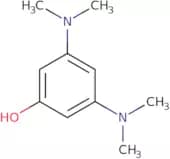
CAS:<p>Versatile small molecule scaffold</p>Formula:C6H5F3N2Purity:Min. 95%Molecular weight:162.11 g/mol3,5-Bis(dimethylamino)phenol
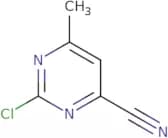
CAS:<p>Versatile small molecule scaffold</p>Formula:C10H16N2OPurity:Min. 95%Molecular weight:180.25 g/mol2-Chloro-6-methyl-pyrimidine-4-carbonitrile
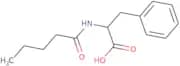
CAS:<p>Versatile small molecule scaffold</p>Formula:C6H4ClN3Purity:Min. 95%Molecular weight:153.57 g/mol2-Pentanamido-3-phenylpropanoic acid
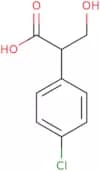
CAS:<p>Versatile small molecule scaffold</p>Formula:C14H19NO3Purity:Min. 95%Molecular weight:249.3 g/mol2-(4-Chlorophenyl)-3-hydroxypropanoic acid
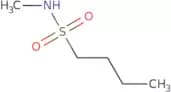
CAS:<p>Versatile small molecule scaffold</p>Formula:C9H9ClO3Purity:Min. 95%Molecular weight:200.62 g/molN-Methylbutane-1-sulfonamide
CAS:<p>Versatile small molecule scaffold</p>Formula:C5H13NO2SPurity:Min. 95%Molecular weight:151.23 g/molEthyl 7-chloro-4-oxo-4H-pyrido[1,2-a]pyrimidine-3-carboxylate
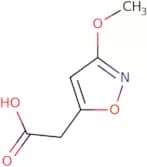
CAS:<p>Versatile small molecule scaffold</p>Formula:C11H9ClN2O3Purity:Min. 95%Molecular weight:252.65 g/mol2-(3-Methoxy-1,2-oxazol-5-yl)acetic acid
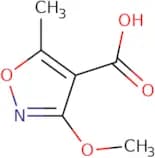
CAS:<p>Versatile small molecule scaffold</p>Formula:C6H7NO4Purity:Min. 95%Molecular weight:157.12 g/mol3-Methoxy-5-methyl-1,2-oxazole-4-carboxylic acid
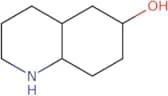
CAS:<p>3-Methoxy-5-methyl-1,2-oxazole-4-carboxylic acid hydrobromide is an excitatory drug that belongs to the group of carboxylic acids. It has been shown to increase the firing rate of neurons in the cerebral cortex. 3-Methoxy-5-methyl-1,2-oxazole-4-carboxylic acid hydrobromide is used as a research tool for studying nervous system function and as a diagnostic agent for epilepsy.</p>Formula:C6H7NO4Purity:Min. 95%Molecular weight:157.12 g/molDecahydroquinolin-6-ol
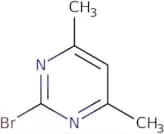
CAS:<p>Versatile small molecule scaffold</p>Formula:C9H17NOPurity:Min. 95%Molecular weight:155.24 g/mol2-Bromo-4,6-dimethylpyrimidine
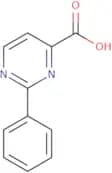
CAS:<p>2-Bromo-4,6-dimethylpyrimidine (2-BDMP) is a chemical compound that is synthesised by reacting acetonitrile with methylene bromide in the presence of copper. The 2-BDMP has a molecular weight of 136.22, melting point of 117°C and boiling point of 165°F. It has an ambident nature with respect to anions, which means it is soluble in water and organic solvents such as acetonitrile and tetrahydrofuran. 2-BDMP can be used as a building block for synthesising other compounds such as amidines or dioxanes. This chemical can also be used to produce yields of bromoalkyls in the presence of alkylating agents such as chloromethyl methyl ether or methanol.</p>Formula:C6H7BrN2Purity:Min. 95%Molecular weight:187.04 g/mol2-phenylpyrimidine-4-carboxylic acid
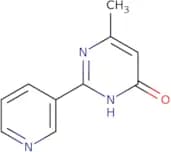
CAS:<p>2-Phenylpyrimidine-4-carboxylic acid is a luminescent copper complex that has been synthesized as a ligand in coordination complexes. It is soluble in dilute solutions and can be used to prepare the complexes of other metals. 2-Phenylpyrimidine-4-carboxylic acid has been shown to have an affinity for lanthanide metal ions and can be used as a sensitizer for lanthanides. The magnetic properties of this compound were determined using x-ray diffraction on single crystals. It was found that the compound is paramagnetic and has a weak antiferromagnetic interaction with dysprosium, which was confirmed by elemental analysis and diffraction measurements.</p>Formula:C11H8N2O2Purity:Min. 95%Molecular weight:200.19 g/mol6-Methyl-2-(pyridin-3-yl)pyrimidin-4-ol
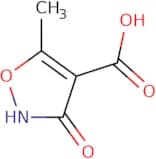
CAS:<p>Versatile small molecule scaffold</p>Formula:C10H9N3OPurity:Min. 95%Molecular weight:187.2 g/mol3-Hydroxy-5-methyl-1,2-oxazole-4-carboxylic acid
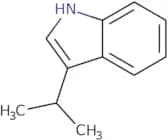
CAS:<p>Versatile small molecule scaffold</p>Formula:C5H5NO4Purity:Min. 95%Molecular weight:143.1 g/mol3-(Propan-2-yl)-1H-indole
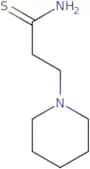
CAS:<p>3-(Propan-2-yl)-1H-indole is a zeolite that has been shown to catalyze the conversion of 2-propanol to butyl acetate. It is used in catalytic alkylation reactions, which are used to produce chemicals such as octane and styrene. 3-(Propan-2-yl)-1H-indole is able to increase the velocity of this reaction by lowering the reaction parameters. The zeolite can be used in industrial settings or in laboratory experiments.</p>Formula:C11H13NPurity:Min. 95%Molecular weight:159.23 g/mol3-(Piperidin-1-yl)propanethioamide
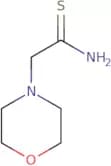
CAS:<p>Versatile small molecule scaffold</p>Formula:C8H16N2SPurity:Min. 95%Molecular weight:172.29 g/mol2-(Morpholin-4-yl)ethanethioamide
CAS:<p>Azapropazone is a non-steroidal anti-inflammatory drug that has been used for the treatment of chronic inflammatory conditions such as rheumatoid arthritis and osteoarthritis. Azapropazone has also been shown to be effective in the treatment of gastric ulcers. Azapropazone binds to the H2 receptor, which is the histamine receptor found on parietal cells in the stomach lining. This binding inhibits gastric acid secretion and reduces the release of histamine from these cells, thereby reducing inflammation and ulceration. Azapropazone is metabolized by cytochrome P450 enzymes, which are found in many tissues including liver, kidney, and lung tissue. The drug's major metabolite is N-desmethyl azapropazone (NDAZ), which has similar anti-inflammatory effects to azapropazone but with less risk of gastric upset and ulceration.</p>Formula:C6H12N2OSPurity:Min. 95%Molecular weight:160.24 g/mol8-Thiabicyclo[3.2.1]octan-3-one
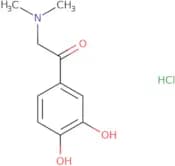
CAS:<p>8-Thiabicyclo[3.2.1]octan-3-one is a chiral tropane alkaloid that is used as an analog for pseudotropine and hyoscyamine. It is metabolized by oxidation, hydroxylation, or amide hydrolysis to form compounds with similar structures to tropane and hyoscyamine. 8-Thiabicyclo[3.2.1]octan-3-one has been shown to inhibit the biosynthesis of dopamine, norepinephrine, and serotonin in rat brain cells; therefore it may have therapeutic potential as a treatment for Parkinson's disease as well as other neurological disorders such as depression and anxiety.</p>Formula:C7H10OSPurity:Min. 95%Molecular weight:142.22 g/mol1-(3,4-Dihydroxyphenyl)-2-(dimethylamino)ethan-1-one hydrochloride
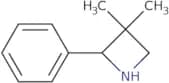
CAS:Controlled Product<p>Versatile small molecule scaffold</p>Formula:C10H14ClNO3Purity:Min. 95%Molecular weight:231.67 g/mol3,3-Dimethyl-2-phenylazetidine
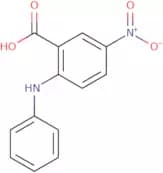
CAS:<p>Versatile small molecule scaffold</p>Formula:C11H15NPurity:Min. 95%Molecular weight:161.24 g/mol5-Nitro-2-(phenylamino)benzoic acid
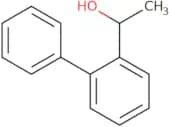
CAS:<p>Versatile small molecule scaffold</p>Formula:C13H10N2O4Purity:Min. 95%Molecular weight:258.23 g/mol1-(2-Phenylphenyl)ethan-1-ol
CAS:<p>Versatile small molecule scaffold</p>Formula:C14H14OPurity:Min. 95%Molecular weight:198.26 g/mol2-Amino-2-[4-(aminomethyl)phenyl]acetic acid dihydrochloride
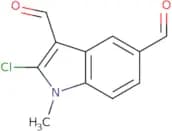
CAS:<p>Versatile small molecule scaffold</p>Formula:C9H14Cl2N2O2Purity:Min. 95%Molecular weight:253.12 g/mol2-Chloro-1-methyl-1H-indole-3,5-dicarbaldehyde
CAS:<p>Versatile small molecule scaffold</p>Formula:C11H8ClNO2Purity:Min. 95%Molecular weight:221.64 g/mol8-Methyl-1,4-dioxaspiro[4.5]decan-8-ol
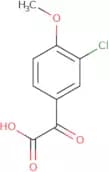
CAS:<p>Versatile small molecule scaffold</p>Formula:C9H16O3Purity:Min. 95%Molecular weight:172.23 g/mol2-(3-Chloro-4-methoxyphenyl)-2-oxoacetic acid
CAS:<p>Versatile small molecule scaffold</p>Formula:C9H7ClO4Purity:Min. 95%Molecular weight:214.6 g/molrac-[(1R,2S,4R,5R,6R)-3-Oxatricyclo[3.2.1.0,2,4]octan-6-yl]methanamine
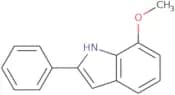
CAS:<p>Versatile small molecule scaffold</p>Formula:C8H13NOPurity:Min. 95%Molecular weight:139.2 g/mol7-Methoxy-2-phenyl-1H-indole
CAS:<p>Versatile small molecule scaffold</p>Formula:C15H13NOPurity:Min. 95%Molecular weight:223.27 g/molImidazo[1,2-a]pyridin-5-ylamine
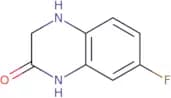
CAS:<p>Versatile small molecule scaffold</p>Formula:C7H7N3Purity:Min. 95%Molecular weight:133.15 g/mol7-Fluoro-3,4-dihydro-2(1H)-quinoxalinone
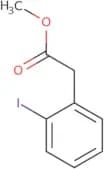
CAS:<p>Versatile small molecule scaffold</p>Formula:C8H7FN2OPurity:Min. 95%Molecular weight:166.15 g/molMethyl 2-(2-iodophenyl)acetate
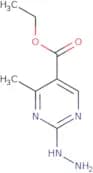
CAS:<p>Methyl 2-(2-iodophenyl)acetate is an alkylating agent that inhibits the growth of cancer cells by binding to their estrogen receptors. It has been shown that this drug binds to the estrogen receptor and blocks its interaction with estradiol in MCF-7 cells. Methyl 2-(2-iodophenyl)acetate also inhibits cell cycle progression, leading to cancer cell death. The stereoselective nature of this drug may be due to a specific interaction with the estrogen receptor, as well as other interactions with proteins in the target cell. In addition, this compound can be used to treat breast cancer by inhibiting tumor growth and stimulating apoptosis in MDA-MB-231 cells.</p>Formula:C9H9IO2Purity:Min. 95%Molecular weight:276.07 g/mol2-Hydrazino-4-methyl-pyrimidine-5-carboxylic acid ethyl ester
CAS:<p>2-Hydrazino-4-methylpyrimidine-5-carboxylic acid ethyl ester is a heterocyclic compound that is used in organic synthesis. It is obtained by the reaction of ethylene with chloroacetic acid and 2,6-dichloropyrimidine. This product can be used as a cocatalyst to promote the polymerization of ethylene. The molecular structure of this heterocyclic ring consists of three carbon atoms, five nitrogen atoms, and two oxygen atoms. The nomenclature for this product can be found in IUPAC Gold Book 1985. Triisobutylaluminium (TIBA) is a typical catalyst for the reaction. In addition, 2-hydrazino-4-methylpyrimidine-5-carboxylic acid ethyl ester chelates with copper or zinc compounds to form catalysts for reactions with other substrates.</p>Formula:C8H12N4O2Purity:Min. 95%Molecular weight:196.21 g/mol3-Ethyl-4,5-dihydro-1,2-oxazole-5-carbonitrile
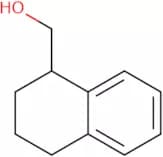
CAS:<p>Versatile small molecule scaffold</p>Formula:C6H8N2OPurity:Min. 95%Molecular weight:124.14 g/mol(1,2,3,4-Tetrahydronaphthalen-1-yl)methanol
CAS:<p>Versatile small molecule scaffold</p>Formula:C11H14OPurity:Min. 95%Molecular weight:162.23 g/mol

![4-Bromo-6-[(4-methoxyphenyl)methoxy]-2-methylpyrimidine](/_next/image/?url=https%3A%2Fstatic.cymitquimica.com%2Fproducts%2F3D%2Fthumb-webp%2FQTC29806.webp&w=3840&q=75)
![(4-Chlorophenyl)[4-(trifluoromethoxy)phenyl]methanamine](/_next/image/?url=https%3A%2Fstatic.cymitquimica.com%2Fproducts%2F3D%2Fthumb-webp%2FQTC35980.webp&w=3840&q=75)
![2-[(3,3-Dimethylcyclopentyl)amino]pyridine-3-carboxylic acid](/_next/image/?url=https%3A%2Fstatic.cymitquimica.com%2Fproducts%2F3D%2Fthumb-webp%2FQTC73424.webp&w=3840&q=75)

![Potassium trifluoro[(oxetan-3-ylidene)methyl]boranuide](/_next/image/?url=https%3A%2Fstatic.cymitquimica.com%2Fproducts%2F3D%2Fthumb-webp%2FQUD17378.webp&w=3840&q=75)
![4,5,6,7-Tetrahydro-thiazolo[4,5-c]pyridine dihydrochloride](/_next/image/?url=https%3A%2Fstatic.cymitquimica.com%2Fproducts%2F3D%2Fthumb-webp%2FQUD41828.webp&w=3840&q=75)
![tert-Butyl N-[(2-amino-5-bromophenyl)methyl]carbamate](/_next/image/?url=https%3A%2Fstatic.cymitquimica.com%2Fproducts%2F3D%2Fthumb-webp%2FQUD41971.webp&w=3840&q=75)
![3-[(3-Aminophenyl)methyl]imidazolidine-2,4-dione](/_next/image/?url=https%3A%2Fstatic.cymitquimica.com%2Fproducts%2F3D%2Fthumb-webp%2FQVA14380.webp&w=3840&q=75)
![1-[4-(2-Methoxy-ethoxy)-phenyl]-piperazine](/_next/image/?url=https%3A%2Fstatic.cymitquimica.com%2Fproducts%2F3D%2Fthumb-webp%2FQVA16072.webp&w=3840&q=75)
![{4-[(4-methylpiperazin-1-yl)methyl]phenyl}methylamine](/_next/image/?url=https%3A%2Fstatic.cymitquimica.com%2Fproducts%2F3D%2Fthumb-webp%2FQVA16220.webp&w=3840&q=75)

![1-Methyl-N-[(thiophen-2-yl)methyl]-1H-pyrazole-5-carboxamide](/_next/image/?url=https%3A%2Fstatic.cymitquimica.com%2Fproducts%2F3D%2Fthumb-webp%2FQVA84782.webp&w=3840&q=75)
![3-[(4-Fluoro-2-nitrophenoxy)methyl]pyridine](/_next/image/?url=https%3A%2Fstatic.cymitquimica.com%2Fproducts%2F3D%2Fthumb-webp%2FQVB03971.webp&w=3840&q=75)
![Methyl 1H-pyrazolo[3,4-c]pyridine-7-carboxylate](/_next/image/?url=https%3A%2Fstatic.cymitquimica.com%2Fproducts%2F3D%2Fthumb-webp%2FQVB24000.webp&w=3840&q=75)
![7-Bromothieno[2,3-c]pyridine](/_next/image/?url=https%3A%2Fstatic.cymitquimica.com%2Fproducts%2F3D%2Fthumb-webp%2FQVB24022.webp&w=3840&q=75)
![5-[1-(Trifluoromethyl)cyclopropyl]-1,3,4-thiadiazol-2-amine](/_next/image/?url=https%3A%2Fstatic.cymitquimica.com%2Fproducts%2F3D%2Fthumb-webp%2FQVB91714.webp&w=3840&q=75)
![Benzyl N-[(2S)-1-(chlorosulfonyl)propan-2-yl]carbamate](/_next/image/?url=https%3A%2Fstatic.cymitquimica.com%2Fproducts%2F3D%2Fthumb-webp%2FQVB94895.webp&w=3840&q=75)
![3-Bromo-7-chloroimidazo[1,2-a]pyrimidine](/_next/image/?url=https%3A%2Fstatic.cymitquimica.com%2Fproducts%2F3D%2Fthumb-webp%2FQWA46912.webp&w=3840&q=75)
![2-(2-{[(9H-Fluoren-9-yl)methoxy]carbonyl}-1,2,3,4-tetrahydroisoquinolin-1-yl)acetic acid](/_next/image/?url=https%3A%2Fstatic.cymitquimica.com%2Fproducts%2F3D%2Fthumb-webp%2FQWA48355.webp&w=3840&q=75)
amino}acetic acid](/_next/image/?url=https%3A%2Fstatic.cymitquimica.com%2Fproducts%2F3D%2Fthumb-webp%2FQWA48358.webp&w=3840&q=75)
![2-[(4-Oxo-3,4-dihydroquinazolin-2-yl)methyl]benzoic acid](/_next/image/?url=https%3A%2Fstatic.cymitquimica.com%2Fproducts%2F3D%2Fthumb-webp%2FQWA49574.webp&w=3840&q=75)
![(2S,4R)-1-[(tert-Butoxy)carbonyl]-4-(2-methoxy-2-oxoethyl)pyrrolidine-2-carboxylic acid](/_next/image/?url=https%3A%2Fstatic.cymitquimica.com%2Fproducts%2F3D%2Fthumb-webp%2FQWA50164.webp&w=3840&q=75)
![4-[4-(4-Chlorophenyl)piperazin-1-yl]-4-oxobutanoic acid](/_next/image/?url=https%3A%2Fstatic.cymitquimica.com%2Fproducts%2F3D%2Fthumb-webp%2FQWA52173.webp&w=3840&q=75)
![1-Sulfanyl-4H,5H-[1,2,4]triazolo[4,3-a]quinoxalin-4-one](/_next/image/?url=https%3A%2Fstatic.cymitquimica.com%2Fproducts%2F3D%2Fthumb-webp%2FQWA76027.webp&w=3840&q=75)
![2-[4-Chloro-2-(trifluoromethyl)phenyl]-4,4,5,5-tetramethyl-1,3,2-dioxaborolane](/_next/image/?url=https%3A%2Fstatic.cymitquimica.com%2Fproducts%2F3D%2Fthumb-webp%2FQWB93585.webp&w=3840&q=75)
![2-[3-Chloro-4-(trifluoromethyl)phenyl]-4,4,5,5-tetramethyl-1,3,2-dioxaborolane](/_next/image/?url=https%3A%2Fstatic.cymitquimica.com%2Fproducts%2F3D%2Fthumb-webp%2FQWB93597.webp&w=3840&q=75)
![[2-(Morpholin-4-yl)-1,3-thiazol-5-yl]methanamine dihydrochloride](/_next/image/?url=https%3A%2Fstatic.cymitquimica.com%2Fproducts%2F3D%2Fthumb-webp%2FQWC14073.webp&w=3840&q=75)
![[1-(Aminomethyl)-3-phenylcyclobutyl]methanol hydrochloride](/_next/image/?url=https%3A%2Fstatic.cymitquimica.com%2Fproducts%2F3D%2Fthumb-webp%2FQWC15580.webp&w=3840&q=75)
![1-[2-Chloro-5-(trifluoromethyl)phenyl]cyclopropan-1-amine hydrochloride](/_next/image/?url=https%3A%2Fstatic.cymitquimica.com%2Fproducts%2F3D%2Fthumb-webp%2FQWC15623.webp&w=3840&q=75)
![6-Methyl-7-(trifluoromethyl)pyrazolo[1,5-a]pyrimidine-2-carboxylic acid](/_next/image/?url=https%3A%2Fstatic.cymitquimica.com%2Fproducts%2F3D%2Fthumb-webp%2FQWC36586.webp&w=3840&q=75)
![N-[3-(2-Oxo-1,3-oxazolidin-3-yl)propyl]methanesulfonamide](/_next/image/?url=https%3A%2Fstatic.cymitquimica.com%2Fproducts%2F3D%2Fthumb-webp%2FQWC49536.webp&w=3840&q=75)
![3-[N-(4-Methylphenyl)benzenesulfonamido]propanoic acid](/_next/image/?url=https%3A%2Fstatic.cymitquimica.com%2Fproducts%2F3D%2Fthumb-webp%2FQXA16550.webp&w=3840&q=75)
![4-Chloro-2-{2-[(4-methyl-4H-1,2,4-triazol-3-yl)sulfanyl]acetamido}benzoic acid](/_next/image/?url=https%3A%2Fstatic.cymitquimica.com%2Fproducts%2F3D%2Fthumb-webp%2FQXA16634.webp&w=3840&q=75)
![2-Chloro-N-[4-(4-ethylphenyl)-1,3-thiazol-2-yl]-2-phenylacetamide](/_next/image/?url=https%3A%2Fstatic.cymitquimica.com%2Fproducts%2F3D%2Fthumb-webp%2FQXA16664.webp&w=3840&q=75)
![2-[(5-Methylthiophen-2-yl)formamido]acetic acid](/_next/image/?url=https%3A%2Fstatic.cymitquimica.com%2Fproducts%2F3D%2Fthumb-webp%2FQXA16671.webp&w=3840&q=75)
![2-Chloromethyl-5-methyl-4-oxo-3,4-dihydro-thieno[2,3-d]pyrimidine-6-carboxylic acid methyl ester](/_next/image/?url=https%3A%2Fstatic.cymitquimica.com%2Fproducts%2F3D%2Fthumb-webp%2FQXA16696.webp&w=3840&q=75)
![6-(Furan-2-yl)-3-methyl-1-phenyl-1H-pyrazolo[3,4-b]pyridine-4-carboxylic acid](/_next/image/?url=https%3A%2Fstatic.cymitquimica.com%2Fproducts%2F3D%2Fthumb-webp%2FQXA16701.webp&w=3840&q=75)

![2-[Benzyl(methyl)amino]-1-phenylpropan-1-one](/_next/image/?url=https%3A%2Fstatic.cymitquimica.com%2Fproducts%2F3D%2Fthumb-webp%2FRAA73530.webp&w=3840&q=75)
![N-Benzyl-6-methoxybenzo[D]thiazol-2-amine](/_next/image/?url=https%3A%2Fstatic.cymitquimica.com%2Fproducts%2F3D%2Fthumb-webp%2FRAA76301.webp&w=3840&q=75)
![N-[(2,4-Dichlorophenyl)methyl]-6-methoxy-1,3-benzothiazol-2-amine](/_next/image/?url=https%3A%2Fstatic.cymitquimica.com%2Fproducts%2F3D%2Fthumb-webp%2FRAA76313.webp&w=3840&q=75)

![2-[Ethyl(1-ethynylcyclohexyl)amino]ethan-1-ol](/_next/image/?url=https%3A%2Fstatic.cymitquimica.com%2Fproducts%2F3D%2Fthumb-webp%2FRAA81548.webp&w=3840&q=75)
![Ethyl 7-chloro-4-oxo-4H-pyrido[1,2-a]pyrimidine-3-carboxylate](/_next/image/?url=https%3A%2Fstatic.cymitquimica.com%2Fproducts%2F3D%2Fthumb-webp%2FRAA86755.webp&w=3840&q=75)
![8-Thiabicyclo[3.2.1]octan-3-one](/_next/image/?url=https%3A%2Fstatic.cymitquimica.com%2Fproducts%2F3D%2Fthumb-webp%2FRAA89250.webp&w=3840&q=75)
![2-Amino-2-[4-(aminomethyl)phenyl]acetic acid dihydrochloride](/_next/image/?url=https%3A%2Fstatic.cymitquimica.com%2Fproducts%2F3D%2Fthumb-webp%2FRCA32062.webp&w=3840&q=75)
![8-Methyl-1,4-dioxaspiro[4.5]decan-8-ol](/_next/image/?url=https%3A%2Fstatic.cymitquimica.com%2Fproducts%2F3D%2Fthumb-webp%2FRCA33642.webp&w=3840&q=75)
![rac-[(1R,2S,4R,5R,6R)-3-Oxatricyclo[3.2.1.0,2,4]octan-6-yl]methanamine](/_next/image/?url=https%3A%2Fstatic.cymitquimica.com%2Fproducts%2F3D%2Fthumb-webp%2FRCA34153.webp&w=3840&q=75)
![Imidazo[1,2-a]pyridin-5-ylamine](/_next/image/?url=https%3A%2Fstatic.cymitquimica.com%2Fproducts%2F3D%2Fthumb-webp%2FRCA35823.webp&w=3840&q=75)