


Building Blocks
This section contains fundamental products for the synthesis of organic and biological compounds. Building blocks are the essential starting materials used to construct complex molecules through various chemical reactions. They play a critical role in drug discovery, material science, and chemical research. At CymitQuimica, we offer a diverse range of high-quality building blocks to support your innovative research and industrial projects, ensuring you have the essential components for successful synthesis.
Subcategories of "Building Blocks"
- Boronic Acids & Boronic Acid Derivatives(5,756 products)
- Chiral Building Blocks(1,242 products)
- Hydrocarbon Building Blocks(6,095 products)
- Organic Building Blocks(60,526 products)
Found 195848 products of "Building Blocks"
Sort by
Purity (%)
0
100
|
0
|
50
|
90
|
95
|
100
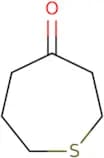
Thiepan-4-one
CAS:<p>Thiepan-4-one is an indole derivative that belongs to the group of unsymmetrical ketones. It is a heterocyclic compound that has been found to be an effective antibiotic against Gram-positive bacteria, such as Streptococcus pyogenes and Staphylococcus aureus. Thiepan-4-one has also shown activity against Mycobacterium tuberculosis and Mycobacterium avium complex.</p>Formula:C6H10OSPurity:Min. 95%Molecular weight:130.21 g/mol1-[4-(Methoxymethyl)phenyl]ethan-1-one
CAS:<p>Versatile small molecule scaffold</p>Formula:C10H12O2Purity:Min. 95%Molecular weight:164.2 g/mol(7-Aminoheptyl)dimethylamine
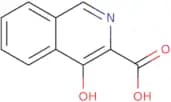
CAS:<p>Versatile small molecule scaffold</p>Formula:C9H22N2Purity:Min. 95%Color and Shape:Clear LiquidMolecular weight:158.28 g/mol4-Hydroxyisoquinoline-3-carboxylic acid
CAS:<p>Versatile small molecule scaffold</p>Formula:C10H7NO3Purity:Min. 95%Molecular weight:189.17 g/mol5-(1,2,3,4-Tetrahydroisoquinolin-2-ylmethyl)quinolin-8-ol
CAS:<p>Versatile small molecule scaffold</p>Formula:C19H18N2OPurity:Min. 95%Molecular weight:290.4 g/molEthyl 4-methylheptanoate
CAS:<p>Ethyl 4-methylheptanoate is a volatile compound that is used as a synthetic pheromone to control populations of Nicrophorus beetles. The compound is synthesized by the reaction of ethyl ester and heptanal, mediated by an organocuprate. It has been shown that this compound has a long-distance mediated effect on the population of Nicrophorus beetles. The phylogeny of this compound was determined using gas chromatography-mass spectrometry (GC-MS) analysis, which indicated that this compound is found in many species in the genus Ethyl 4-methylheptanoate. This substance also has fatty acid esters, which have been shown to have operational and behavioral effects on these beetles.</p>Formula:C10H20O2Purity:Min. 95%Molecular weight:172.26 g/mol(2,2-Dibromocyclopropyl)methanol
CAS:<p>Versatile small molecule scaffold</p>Formula:C4H6Br2OPurity:Min. 95%Molecular weight:229.9 g/mol2-[2-(4-Chlorophenyl)-1,3-oxazol-4-yl]acetic acid
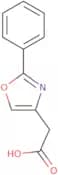
CAS:<p>Versatile small molecule scaffold</p>Formula:C11H8ClNO3Purity:Min. 95%Molecular weight:237.64 g/mol2-(2-Phenyl-1,3-oxazol-4-yl)acetic acid
CAS:<p>Versatile small molecule scaffold</p>Formula:C11H9NO3Purity:Min. 95%Molecular weight:203.19 g/mol2-[2-(4-Fluorophenyl)-1,3-oxazol-4-yl]acetonitrile
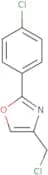
CAS:<p>Versatile small molecule scaffold</p>Formula:C11H7FN2OPurity:Min. 95%Molecular weight:202.18 g/mol4-(Chloromethyl)-2-(4-chlorophenyl)-1,3-oxazole
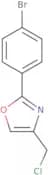
CAS:<p>Versatile small molecule scaffold</p>Formula:C10H7Cl2NOPurity:Min. 95%Molecular weight:228.07 g/mol2-(4-Bromophenyl)-4-(chloromethyl)-1,3-oxazole
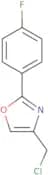
CAS:<p>Versatile small molecule scaffold</p>Formula:C10H7NOClBrPurity:Min. 95%Molecular weight:272.52 g/mol4-(chloromethyl)-2-(4-fluorophenyl)-1,3-oxazole
CAS:<p>Versatile small molecule scaffold</p>Formula:C10H7ClFNOPurity:Min. 95%Molecular weight:211.62 g/mol4-(Chloromethyl)-2-[4-(trifluoromethyl)phenyl]-1,3-oxazole
CAS:<p>Versatile small molecule scaffold</p>Formula:C11H7ClF3NOPurity:Min. 95%Molecular weight:261.63 g/mol2-[2-(4-Fluorophenyl)-1,3-oxazol-4-yl]acetic acid
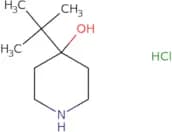
CAS:<p>Versatile small molecule scaffold</p>Formula:C11H8FNO3Purity:Min. 95%Molecular weight:221.18 g/mol4-(tert-Butyl)piperidin-4-ol hydrochloride
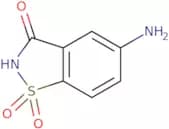
CAS:<p>Versatile small molecule scaffold</p>Formula:C9H20ClNOPurity:Min. 95%Molecular weight:193.71 g/mol5-Amino-2,3-dihydro-1,2-benzothiazole-1,1,3-trione
CAS:<p>5-Amino-2,3-dihydro-1,2-benzothiazole-1,1,3-trione is a nitro compound that has been shown to have toxin and sweet taste activity. 5-Amino-2,3-dihydro-1,2-benzothiazole-1,1,3-trione is used in the analysis of sweeteners in food products. It is also used as an intermediate in the synthesis of other compounds. 5AMT has been shown to be mutagenic and cytotoxic in some assays.</p>Formula:C7H6N2O3SPurity:Min. 95%Molecular weight:198.2 g/mol6-Amino-1,1-dioxo-1,2-benzothiazol-3-one
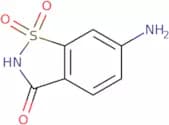
CAS:<p>6-Amino-1,1-dioxo-1,2-benzothiazol-3-one (6ABT) is a diazo compound that has been used in the synthesis of bioconjugates. 6ABT is an intermediate for the preparation of monoclonal antibodies and as an inhibitor of carbonic anhydrase II. 6ABT has been shown to have anti-cancer properties by inhibiting proliferation and inducing apoptosis in human cancer cells. It also inhibits cell growth in human colon cancer cells and human breast cancer cells. 6ABT has been found to inhibit the diphenolase activity of beta-hexosaminidase and alpha-glucosidase, which are enzymes that break down proteins and carbohydrates respectively. This inhibition may lead to metabolic disorders such as diabetes mellitus type 2.</p>Formula:C7H6N2O3SPurity:Min. 95%Color and Shape:PowderMolecular weight:198.19 g/mol5-Methyl-1,2,3-Thiadiazole-4-Carboxylic Acid
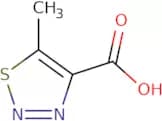
CAS:<p>5-Methyl-1,2,3-thiadiazole-4-carboxylic acid is a carboxylic acid that is used as an adjuvant for agricultural purposes. It is used to increase the effectiveness of insecticides and acaricides. This material can be prepared by synthetic methods. 5-Methyl-1,2,3-thiadiazole-4-carboxylic acid is activated by carboxylic acids to form a reactive methyl ester. This activation increases the solubility and stability of this compound. 5MTT provides insecticidal activity with an attack on the insect's nervous system and prevents virus infection in plants by blocking viral replication.</p>Formula:C4H4N2O2SPurity:Min. 95%Molecular weight:144.15 g/mol1,2,3-Benzothiadiazole-6-carboxylic acid
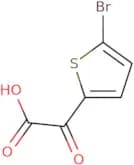
CAS:<p>Versatile small molecule scaffold</p>Formula:C7H4N2O2SPurity:Min. 95%Color and Shape:PowderMolecular weight:180.19 g/mol2-(5-Bromothiophen-2-yl)-2-oxoacetic acid
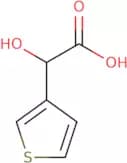
CAS:<p>Versatile small molecule scaffold</p>Formula:C6H3BrO3SPurity:Min. 95%Molecular weight:235.06 g/mol2-Hydroxy-2-(thiophen-3-yl)acetic acid
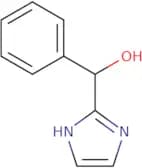
CAS:<p>Versatile small molecule scaffold</p>Formula:C6H6O3SPurity:Min. 95%Molecular weight:158.18 g/mol1H-Imidazol-2-yl(phenyl)methanol
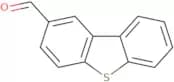
CAS:<p>Versatile small molecule scaffold</p>Formula:C10H10N2OPurity:Min. 95%Molecular weight:174.2 g/molDibenzothiophene-2-carboxaldehyde
CAS:<p>Dibenzothiophene-2-carboxaldehyde is a colorimetric, nucleophilic, and fluorescent compound. The fluorescence of this compound is activated by UV light and can be used to measure the concentration of other compounds with a high degree of sensitivity. This chemical is used in optical sensing devices such as fluorescent sensors or fluorophores. The fluorescence emission can be induced by an electron transfer reaction, which involves a nucleophilic attack on the carbonyl group. Dibenzothiophene-2-carboxaldehyde is also used in titrations and has low detection limits. It reacts with dmso solution to form a fluorescent sensor for monitoring reactions that require an intramolecular nucleophilic attack.</p>Formula:C13H8OSPurity:Min. 95%Molecular weight:212.27 g/mol2-{[(5-Methylfuran-2-yl)methyl]amino}ethan-1-ol
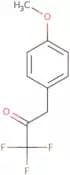
CAS:<p>Versatile small molecule scaffold</p>Formula:C8H13NO2Purity:Min. 95%Molecular weight:155.19 g/mol3-(4-Methoxyphenyl)-1,1,1-trifluoro-2-propanone
CAS:<p>Versatile small molecule scaffold</p>Formula:C10H9F3O2Purity:Min. 95%Molecular weight:218.17 g/molBenzyl[3-(dimethylamino)propyl]amine dihydrochloride
CAS:<p>Versatile small molecule scaffold</p>Formula:C12H22Cl2N2Purity:Min. 95%Molecular weight:265.22 g/mol2-(Propan-2-yl)but-3-ynoic acid
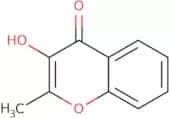
CAS:<p>Versatile small molecule scaffold</p>Formula:C7H10O2Purity:Min. 95%Molecular weight:126.2 g/mol3-Hydroxy-2-methyl-4H-chromen-4-one
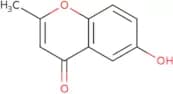
CAS:<p>3-Hydroxy-2-methyl-4H-chromen-4-one is a synthetic compound that has been shown to have potential use as an anticancer agent. It was originally developed for the treatment of cancer, but clinical studies have been limited due to its poor solubility and toxicity. 3-Hydroxy-2-methyl-4H-chromen-4-one has antiangiogenic effects, which means it prevents the formation of new blood vessels that are necessary for tumor growth. This effect may be due to its ability to inhibit the production of substances that stimulate angiogenesis, such as erythropoietin and vascular endothelial growth factor (VEGF). In addition, 3HMMCT inhibits iron homeostasis by binding to ferric iron in the enterocyte lysosome and preventing its absorption from food. This leads to increased excretion of iron in feces and urine.</p>Formula:C10H8O3Purity:Min. 95%Molecular weight:176.17 g/mol6-Hydroxy-2-methyl-4H-chromen-4-one
CAS:<p>Protocetraric acid is a natural product that is found in the bark of Usnea longissima. It can be synthesized by diazotization and oxidation of protocetraric acid with nitrous acid, followed by hydrolysis. Protocetraric acid has been shown to have cytotoxic effects on murine cells and multidimensional structures. The structure of protocetraric acid is similar to that of chromones and flavones, which are also found in Usnea longissima. Protocetraric acid has been shown to inhibit the enzyme catalase, suggesting it may have anti-inflammatory properties.</p>Formula:C10H8O3Purity:Min. 95%Molecular weight:176.17 g/molN-Methyl-N-phenylpyrrolidin-3-amine
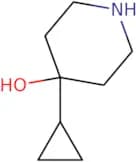
CAS:<p>Versatile small molecule scaffold</p>Formula:C11H16N2Purity:Min. 95%Molecular weight:176.26 g/mol4-cyclopropylpiperidin-4-ol
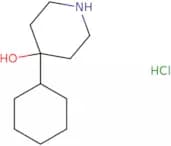
CAS:<p>Versatile small molecule scaffold</p>Formula:C8H15NOPurity:Min. 95%Molecular weight:141.21 g/mol4-Cyclohexylpiperidin-4-ol hydrochloride
CAS:<p>Versatile small molecule scaffold</p>Formula:C11H22ClNOPurity:Min. 95%Molecular weight:219.75 g/mol3,5,6-Trichloropicoline
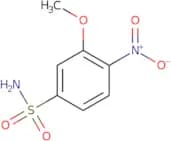
CAS:<p>Versatile small molecule scaffold</p>Formula:C6H4Cl3NPurity:Min. 95%Molecular weight:196.46 g/mol3-Methoxy-4-nitrobenzene-1-sulfonamide
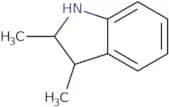
CAS:<p>Versatile small molecule scaffold</p>Formula:C7H8N2O5SPurity:Min. 95%Molecular weight:232.22 g/mol2,3-Dimethylindoline
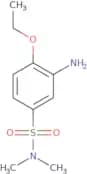
CAS:<p>2,3-Dimethylindoline is a homologous compound that is used in the synthesis of medicines. It has been shown to have selectable properties for the production of Hygromycin B, which is a type of antibiotic. This compound also has the potential to enhance glyceraldehyde-3-phosphate dehydrogenase activity in genetically engineered E. coli strains with this enzyme as a reporter gene. 2,3-Dimethylindoline has been shown to be effective against subcutaneous tissue infections caused by Staphylococcus aureus.</p>Formula:C10H13NPurity:Min. 95%Molecular weight:147.22 g/mol3-Amino-4-ethoxy-N,N-dimethylbenzene-1-sulfonamide
CAS:<p>Versatile small molecule scaffold</p>Formula:C10H16N2O3SPurity:Min. 95%Molecular weight:244.31 g/mol2',3'A,4',5',6',7'-Hexahydrospiro[cyclohexane-1,3'-indazole]
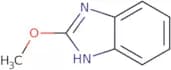
CAS:<p>Versatile small molecule scaffold</p>Formula:C12H20N2Purity:Min. 95%Molecular weight:192.3 g/mol2-Methoxy-1H-1,3-benzodiazole
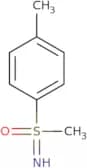
CAS:<p>2-Methoxy-1H-1,3-benzodiazole is a small molecule that has been shown to inhibit the activity of the cyclic AMP response element binding protein. This drug can be used in the treatment of hepatitis C, although it is not effective against other viral infections. 2-Methoxy-1H-1,3-benzodiazole is an antihypertensive agent that has been used in clinical trials for the treatment of diabetic patients and patients with insulin resistance. The mechanism by which this drug exerts its effects on blood pressure is not clear. It may act by decreasing vascular resistance or by increasing cardiac output. 2-Methoxy-1H-1,3-benzodiazole also has anticancer activity and inhibits tumor growth in mice with brain infarction. This compound binds to fatty acids and hydroxyl groups to form a reactive intermediate that reacts with DNA bases to form covalent adduct</p>Formula:C8H8N2OPurity:Min. 95%Molecular weight:148.16 g/molS-Methyl-S-(4-methylphenyl)-sulfoximine
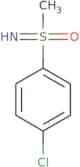
CAS:<p>Versatile small molecule scaffold</p>Formula:C8H11NOSPurity:Min. 95%Molecular weight:169.25 g/molS-Methyl-S-(4-chlorophenyl) sulfoximine
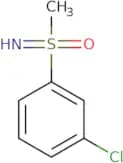
CAS:<p>Versatile small molecule scaffold</p>Formula:C7H8ClNOSPurity:Min. 95%Molecular weight:189.67 g/molS-(3-Chlorophenyl)-S-methyl-sulfoximine
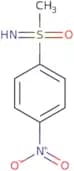
CAS:<p>Versatile small molecule scaffold</p>Formula:C7H8ClNOSPurity:Min. 95%Molecular weight:189.66 g/molImino(methyl)(4-nitrophenyl)-λ6-sulfanone
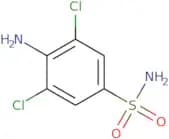
CAS:<p>Versatile small molecule scaffold</p>Formula:C7H8N2O3SPurity:Min. 95%Molecular weight:200.22 g/mol3,5-Dichlorosulfanilamide
CAS:<p>3,5-Dichlorosulfanilamide is a potent inhibitor of hydrogen peroxide anhydrase. It has been shown to outperform other sulfonamides in the inhibition of anhydrase activity. 3,5-Dichlorosulfanilamide inhibits the enzyme by forming a covalent adduct with the sulfonamide group and carbonic acid. This covalent adduct prevents the enzyme from binding to its substrate, thereby preventing catalysis. 3,5-Dichlorosulfanilamide also shows stereoselective inhibition of anhydrase enzymes. The synthesis of this drug can be efficiently achieved using a synthetic route that features high yields and short reaction times.</p>Formula:C6H6Cl2N2O2SPurity:Min. 95%Molecular weight:241.09 g/mol(R)-2-Hydroxy-3,3-dimethylbutanoic acid
CAS:<p>(R)-2-Hydroxy-3,3-dimethylbutanoic acid is an organic compound that is used as a hypochlorite. It is the stoichiometric reagent for the synthesis of hypochlorous acid and its salts. (R)-2-Hydroxy-3,3-dimethylbutanoic acid can be prepared by the reaction of sodium hypochlorite with chloral or chloroform in alkaline solution. This method yields a high yield of (R)-2-hydroxy-3,3-dimethylbutanoic acid. The optical purity of (R)-2-hydroxydimethylbutanoic acid can be increased by using palladium as a catalyst.</p>Formula:C6H12O3Purity:Min. 95%Molecular weight:132.16 g/mol2-Acetamido-3,3-dimethylbutanoic acid
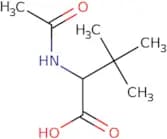
CAS:<p>2-Acetamido-3,3-dimethylbutanoic acid (2ADMBA) is a lipase inhibitor that is structurally related to amides. It is a competitive inhibitor of the enzyme lipase, which catalyzes the hydrolysis of triglycerides. 2ADMBA has been shown to be an efficient and selective inhibitor of this enzyme in both laboratory and industrial tests. The efficacy of 2ADMBA as a lipase inhibitor has also been demonstrated in vivo. In vitro studies have shown that 2ADMBA inhibits the hydrolysis of amino acids, including phenylalanine, tyrosine, and tryptophan, with high potency and selectivity. Cleavage reactions catalyzed by 2ADMBA have also been studied extensively.</p>Formula:C8H15NO3Purity:Min. 95%Molecular weight:173.21 g/mol(2S)-2-Acetamido-3,3-dimethylbutanoic acid
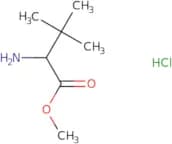
CAS:<p>Versatile small molecule scaffold</p>Formula:C8H15NO3Purity:Min. 95%Molecular weight:173.21 g/molMethyl 2-amino-3,3-dimethylbutanoate hydrochloride
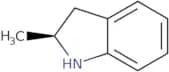
CAS:<p>Versatile small molecule scaffold</p>Formula:C7H16ClNO2Purity:Min. 95%Molecular weight:181.66 g/mol(2S)-2-methyl-2,3-dihydro-1H-indole
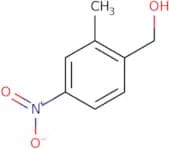
CAS:<p>(2S)-2-methyl-2,3-dihydro-1H-indole is a synthetic antipsychotic drug. It is an atypical antipsychotic drug that has been shown to be effective in the treatment of schizophrenia. The antipsychotic efficacy of this compound may be due to its ability to bind with serotonin receptors and inhibit the reuptake of dopamine. (2S)-2-methyl-2,3-dihydro-1H-indole binds more selectively to dopamine D4 receptors than other dopamine receptors. This compound was synthesized by diazotation, followed by selective reduction with hexafluoroisopropanol, and then asymmetric synthesis with piperazine and d4 as reactants.</p>Formula:C9H11NPurity:Min. 95%Molecular weight:133.19 g/mol2-Methyl-4-nitrobenzyl alcohol
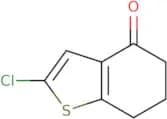
CAS:<p>2-Methyl-4-nitrobenzyl alcohol is a toxin that mediates the transfer of electrons from an electron donor to an acceptor. It has been shown to be bioreductive and can be used for the synthesis of nitro compounds. 2-Methyl-4-nitrobenzyl alcohol is also used in the analysis of nitro substituent effects in carbamates and chloroformates. This compound has been shown to be stable under irradiation, which can be used for synthesizing 2-methyl-4-nitrobenzoic acid with high yield.</p>Formula:C8H9NO3Purity:Min. 95%Molecular weight:167.16 g/mol2-Chloro-4,5,6,7-tetrahydro-1-benzothiophen-4-one
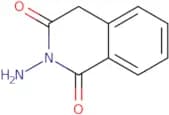
CAS:<p>Versatile small molecule scaffold</p>Formula:C8H7ClOSPurity:Min. 95%Molecular weight:186.66 g/mol2-Amino-1,2,3,4-tetrahydroisoquinoline-1,3-dione
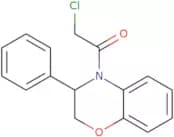
CAS:<p>2-Amino-1,2,3,4-tetrahydroisoquinoline-1,3-dione is a compound that can be used in cell transplantation. It has been shown to have an effect on autoimmune diseases by stimulating the production of insulin. This drug also has a protective effect against pancreatic injury and diabetes. 2-Amino-1,2,3,4-tetrahydroisoquinoline-1,3-dione stimulates β cells and increases the number of langerhans cells found in the pancreas. It also increases glucose transport into cells and increases their ability to produce insulin. 2-Amino-1,2,3,4-tetrahydroisoquinoline-1,3-dione inhibits autoimmunity by suppressing the activity of T lymphocytes and natural killer cells.<br>END></p>Formula:C9H8N2O2Purity:Min. 95%Molecular weight:176.17 g/mol2-Chloro-1-(3-phenyl-3,4-dihydro-2H-1,4-benzoxazin-4-yl)ethan-1-one
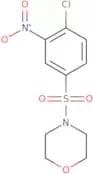
CAS:<p>Versatile small molecule scaffold</p>Formula:C16H14ClNO2Purity:Min. 95%Molecular weight:287.74 g/mol4-(4-Chloro-3-nitro-benzenesulfonyl)-morpholine
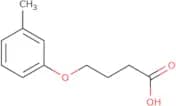
CAS:<p>Versatile small molecule scaffold</p>Formula:C10H11ClN2O5SPurity:Min. 95%Molecular weight:306.73 g/mol4-(3-Methylphenoxy)butanoic acid
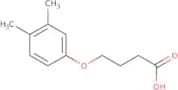
CAS:Controlled Product<p>Versatile small molecule scaffold</p>Formula:C11H14O3Purity:Min. 95%Molecular weight:194.23 g/mol4-(3,4-Dimethylphenoxy)butanoic acid
CAS:Controlled Product<p>Versatile small molecule scaffold</p>Formula:C12H16O3Purity:Min. 95%Molecular weight:208.25 g/mol(2,5-Dimethylphenyl)methanethiol
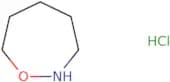
CAS:<p>Versatile small molecule scaffold</p>Formula:C9H12SPurity:Min. 95%Molecular weight:152.26 g/mol1,2-Oxazepane hydrochloride
CAS:<p>Versatile small molecule scaffold</p>Formula:C5H12ClNOPurity:Min. 95%Molecular weight:137.61 g/mol4-Amino-3-chloro-N-methylbenzenesulfonamide
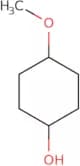
CAS:<p>Versatile small molecule scaffold</p>Formula:C7H9ClN2O2SPurity:Min. 95%Molecular weight:220.68 g/moltrans-4-Methoxycyclohexanol
CAS:<p>Trans-4-methoxycyclohexanol (TMC) is a cyclohexanol derivative that reacts with hydrogen peroxide to form a reactive intermediate. The reaction of the TMC molecule with hydrogen peroxide forms an unstable bond, which is then cleaved by a nucleophilic attack from water molecules. The reaction time for this process is shorter than that of other cyclohexanol derivatives. This product has been shown to be effective at breaking down organic acids such as acetic acid and formic acid.</p>Formula:C7H14O2Purity:Min. 95%Molecular weight:130.18 g/mol4-(Trifluoromethyl)bicyclo[2.2.2]octan-1-amine hydrochloride
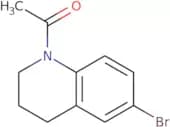
CAS:<p>Versatile small molecule scaffold</p>Formula:C9H15ClF3NPurity:Min. 95%Molecular weight:229.67 g/mol1-(6-Bromo-3,4-dihydroquinolin-1(2H)-yl)ethanone
CAS:<p>Versatile small molecule scaffold</p>Formula:C11H12BrNOPurity:Min. 95%Molecular weight:254.12 g/mol4-(Quinolin-4-yl)aniline
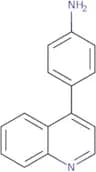
CAS:<p>Versatile small molecule scaffold</p>Formula:C15H12N2Purity:Min. 95%Molecular weight:220.27 g/mol(1,3-Dioxolan-4-yl)methanamine hydrochloride
CAS:<p>Versatile small molecule scaffold</p>Formula:C4H10ClNO2Purity:Min. 95%Molecular weight:139.58 g/mol2-(Chloromethyl)-1,4-dioxaspiro[4.4]nonane
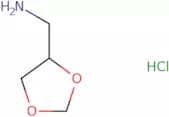
CAS:<p>Versatile small molecule scaffold</p>Formula:C8H13ClO2Purity:Min. 95%Molecular weight:176.64 g/mol4-[(2-Aminopyrimidin-4-yl)amino]benzene-1-sulfonamide hydrochloride
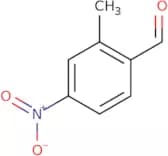
CAS:<p>Versatile small molecule scaffold</p>Formula:C10H12ClN5O2SPurity:Min. 95%Molecular weight:301.75 g/mol2-Methyl-4-nitrobenzaldehyde
CAS:<p>2-Methyl-4-nitrobenzaldehyde is an oxidizing agent that can be used as a phase transfer catalyst. It selectively transfers radicals from organic to inorganic systems and is used as a selective radical initiator or a transfer catalyst in high yield. 2-Methyl-4-nitrobenzaldehyde reacts with the chloride ion to produce an active radical, which will then react with the substrate to form products. It is typically used at refluxing temperatures and in the presence of a cocl2 phase transfer catalyst. 2-Methyl-4-nitrobenzoic acid is formed when 2-methyl-4-nitrobenzaldehyde is oxidized.</p>Formula:C8H7NO3Purity:Min. 95%Molecular weight:165.1 g/mol1,3-Dihydro-benzo[c]thiophene-5-sulfonamide 2,2-dioxide
CAS:<p>Versatile small molecule scaffold</p>Formula:C8H9NO4S2Purity:Min. 95%Molecular weight:247.3 g/mol1-Ethoxy-1-[(3-methylpent-1-en-4-yn-3-yl)oxy]ethane
CAS:<p>Versatile small molecule scaffold</p>Formula:C10H16O2Purity:Min. 95%Molecular weight:168.23 g/mol6-Bromo[1,2,5]thiadiazolo[3,4-b]pyridine
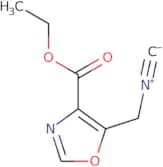
CAS:<p>Versatile small molecule scaffold</p>Formula:C5H2BrN3SPurity:Min. 95%Molecular weight:216.06 g/molEthyl 5-(isocyanomethyl)-1,3-oxazole-4-carboxylate
CAS:<p>Versatile small molecule scaffold</p>Formula:C8H8N2O3Purity:Min. 95%Molecular weight:180.16 g/molEthyl 4-hydroxypent-2-ynoate
CAS:<p>Versatile small molecule scaffold</p>Formula:C7H10O3Purity:Min. 95%Molecular weight:142.15 g/mol1-(4-Bromophenyl)-2-(pyridin-2-yl)ethan-1-one
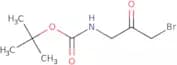
CAS:<p>Versatile small molecule scaffold</p>Formula:C13H10BrNOPurity:Min. 95%Molecular weight:276.13 g/moltert-Butyl N-(3-bromo-2-oxopropyl)carbamate
CAS:<p>Versatile small molecule scaffold</p>Formula:C8H14BrNO3Purity:Min. 95%Molecular weight:252.11 g/mol1-(4-Methylphenyl)-2-(pyridin-2-yl)ethan-1-one
CAS:<p>Versatile small molecule scaffold</p>Formula:C14H13NOPurity:Min. 95%Molecular weight:211.26 g/molMethyl 5-(furan-2-yl)-1H-pyrrole-2-carboxylate
CAS:<p>Versatile small molecule scaffold</p>Formula:C10H9NO3Purity:Min. 95%Molecular weight:191.18 g/mol5-(Furan-2-yl)-1H-pyrrole-2-carboxylic acid
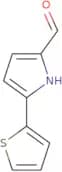
CAS:<p>Versatile small molecule scaffold</p>Formula:C9H7NO3Purity:Min. 95%Molecular weight:177.16 g/mol5-(Thiophen-2-yl)-1H-pyrrole-2-carbaldehyde
CAS:<p>Versatile small molecule scaffold</p>Formula:C9H7NOSPurity:Min. 95%Molecular weight:177.22 g/mol3-(2-Aminoethyl)-1,1-dimethylurea
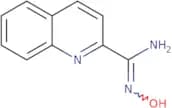
CAS:<p>Versatile small molecule scaffold</p>Formula:C5H13N3OPurity:Min. 95%Molecular weight:131.18 g/molN'-Hydroxyquinoline-2-carboximidamide
CAS:<p>N'-hydroxyquinoline-2-carboximidamide is a small molecule that was optimized for the treatment of cancer. It can bind to the DNA-dependent RNA polymerase, inhibiting transcription and replication. N'-hydroxyquinoline-2-carboximidamide selectively inhibits a hallmark signaling pathway in cancer cells, which leads to cell death. This compound has been shown to be effective in inhibiting the growth of tumor cells in various tissues including liver, lung, brain, and prostate. It also produces minimal side effects as it does not cross the blood brain barrier or enter the central nervous system.</p>Formula:C10H9N3OPurity:Min. 95%Molecular weight:187.2 g/mol6-methoxypyridazine-3-carbonitrile
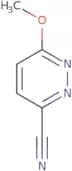
CAS:<p>Versatile small molecule scaffold</p>Formula:C6H5N3OPurity:Min. 95%Molecular weight:135.12 g/mol7-oxa-2-azaspiro[4.5]decane
CAS:<p>Versatile small molecule scaffold</p>Formula:C8H15NOPurity:Min. 95%Molecular weight:141.2 g/mol2-Chloro-3,4-dimethylpyridine
CAS:<p>Versatile small molecule scaffold</p>Formula:C7H8ClNPurity:Min. 95%Molecular weight:141.6 g/mol6-Chloro-2,3-dimethylpyridine
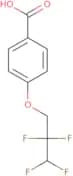
CAS:<p>Versatile small molecule scaffold</p>Formula:C7H8ClNPurity:Min. 95%Molecular weight:141.6 g/mol4-(2,2,3,3-Tetrafluoropropoxy)benzoic acid
CAS:<p>Versatile small molecule scaffold</p>Formula:C10H8F4O3Purity:Min. 95%Molecular weight:252.16 g/mol2-Amino-4-methoxybenzene-1-sulfonamide
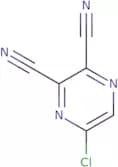
CAS:<p>Versatile small molecule scaffold</p>Formula:C7H10N2O3SPurity:Min. 95%Molecular weight:202.23 g/mol5-Chloropyrazine-2,3-dicarbonitrile
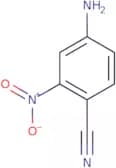
CAS:<p>5-Chloropyrazine-2,3-dicarbonitrile (5CPD) is an organochlorine compound that is used as a chlorinating agent in the production of alkyl and aralkyl chlorides. 5CPD is a monofunctional reagent that can also be used for the synthesis of furyl and thionyl chloride.</p>Formula:C6HClN4Purity:Min. 95%Molecular weight:164.55 g/mol4-Amino-2-nitrobenzonitrile
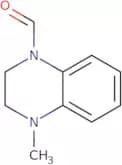
CAS:<p>Versatile small molecule scaffold</p>Formula:C7H5N3O2Purity:Min. 95%Molecular weight:163.13 g/mol4-Methyl-3,4-dihydroquinoxaline-1(2H)-carbaldehyde
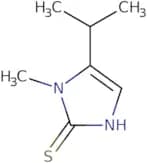
CAS:<p>Versatile small molecule scaffold</p>Formula:C10H12N2OPurity:Min. 95%Molecular weight:176.21 g/mol1-Methyl-5-(propan-2-yl)-1H-imidazole-2-thiol
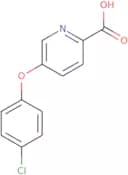
CAS:<p>Versatile small molecule scaffold</p>Formula:C7H12N2SPurity:Min. 95%Molecular weight:156.25 g/mol5-(4-Chlorophenoxy)pyridine-2-carboxylic acid
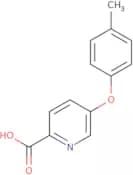
CAS:<p>Versatile small molecule scaffold</p>Formula:C12H8ClNO3Purity:Min. 95%Molecular weight:249.65 g/mol5-(4-Methylphenoxy)pyridine-2-carboxylic acid
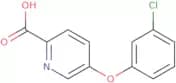
CAS:<p>Versatile small molecule scaffold</p>Formula:C13H11NO3Purity:Min. 95%Molecular weight:229.23 g/mol5-(3-Chlorophenoxy)pyridine-2-carboxylic acid
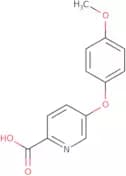
CAS:<p>Versatile small molecule scaffold</p>Formula:C12H8ClNO3Purity:Min. 95%Molecular weight:249.65 g/mol5-(4-Methoxyphenoxy)pyridine-2-carboxylic acid
CAS:<p>Versatile small molecule scaffold</p>Formula:C13H11NO4Purity:Min. 95%Molecular weight:245.23 g/mol[1-(Cyclohexylmethyl)pyrrolidin-2-yl]methanamine
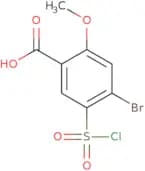
CAS:<p>Versatile small molecule scaffold</p>Formula:C12H24N2Purity:Min. 95%Molecular weight:196.33 g/mol4-Bromo-5-(chlorosulfonyl)-2-methoxybenzoic acid
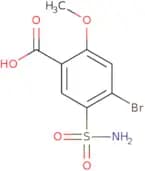
CAS:<p>Versatile small molecule scaffold</p>Formula:C8H6BrClO5SPurity:Min. 95%Molecular weight:329.55 g/mol4-Bromo-2-methoxy-5-sulfamoylbenzoic acid
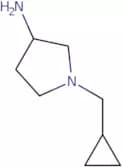
CAS:<p>Versatile small molecule scaffold</p>Formula:C8H8BrNO5SPurity:Min. 95%Molecular weight:310.12 g/mol1-(Cyclopropylmethyl)pyrrolidin-3-amine
CAS:<p>Versatile small molecule scaffold</p>Formula:C8H16N2Purity:Min. 95%Molecular weight:140.23 g/mol2H-[1,3]Dioxolo[4,5-b]pyridine
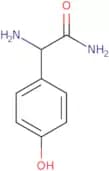
CAS:<p>Versatile small molecule scaffold</p>Formula:C6H5NO2Purity:Min. 95%Molecular weight:123.11 g/mol2-Amino-2-(4-hydroxyphenyl)acetamide hydrochloride
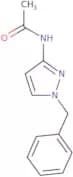
CAS:<p>2-Amino-2-(4-hydroxy-phenyl)-acetamide is a research chemical that belongs to the amide family. It is commonly used in scientific studies and experiments. This compound, also known as glycinamide, has various applications in the field of chemistry and biology. Its unique structure makes it a valuable tool for researchers looking to explore new areas of study or develop innovative solutions. With its high purity and reliable quality, 2-Amino-2-(4-hydroxy-phenyl)-acetamide is an essential component for any laboratory or research facility.</p>Formula:C8H10N2O2HClPurity:Min. 95%Molecular weight:202.64 g/molN-(1-Benzyl-1H-pyrazol-3-yl)acetamide
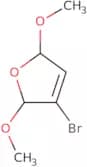
CAS:<p>Versatile small molecule scaffold</p>Formula:C12H13N3OPurity:Min. 95%Molecular weight:215.25 g/mol3-Bromo-2,5-dimethoxy-2,5-dihydrofuran
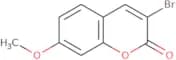
CAS:<p>Versatile small molecule scaffold</p>Formula:C6H9BrO3Purity:Min. 95%Molecular weight:209.04 g/mol3-Bromo-7-methoxy-2H-1-benzopyran-2-one
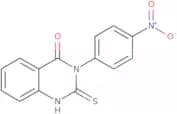
CAS:<p>3-Bromo-7-methoxy-2H-1-benzopyran-2-one is a coumarin derivative that has been shown to cause liver lesions in rats. The compound can also inhibit locomotor activity, as well as have a significant effect on the levels of serum prolactin. 3-Bromo-7-methoxy-2H-1-benzopyran-2-one is a ligand for the 5HT2 receptor, and it has been suggested that this may be due to its coordination geometry. In addition, 3BMOP binds to DNA with high affinity and specificity, which suggests that it could be used as an antitumor agent.</p>Formula:C10H7BrO3Purity:Min. 95%Molecular weight:255.06 g/mol3-(4-Nitrophenyl)-2-thioxo-2,3-dihydro-4(1H)-quinazolinone
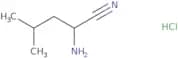
CAS:<p>Versatile small molecule scaffold</p>Formula:C14H9N3O3SPurity:Min. 95%Molecular weight:299.3 g/mol2-Amino-4-methylpentanenitrile hydrochloride
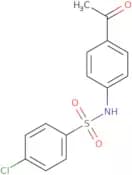
CAS:<p>Versatile small molecule scaffold</p>Formula:C6H12N2·HClPurity:Min. 95%Molecular weight:148.64 g/molN-(4-Acetylphenyl)-4-chlorobenzene-1-sulfonamide
CAS:<p>Versatile small molecule scaffold</p>Formula:C14H12ClNO3SPurity:Min. 95%Molecular weight:309.8 g/mol[(Propan-2-yl)sulfamoyl]amine
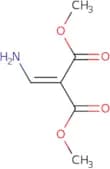
CAS:<p>[(Propan-2-yl)sulfamoyl]amine is a diphenyl ether, which is a type of aromatic hydrocarbon. It has a nitro group, phenyl groups and alkyl groups. This product also has a cycloalkyl ring with benzyl groups and hydrocarbon group. This compound is used as polymerization initiator in the production of polyacrylamide and other polymers. The [(propane-2-yl)sulfamoyl]amine can react with trifluoroacetic acid to form c1-4 alkyl sulfonic acid compounds. It can also react with urea derivatives to form bifunctional compounds that are used as plasticizers in plastics.</p>Formula:C3H10N2O2SPurity:Min. 95%Molecular weight:138.19 g/mol1,3-Dimethyl 2-(aminomethylidene)propanedioate
CAS:<p>1,3-Dimethyl 2-(aminomethylidene)propanedioate is an alkene that is used as a stabilizer for polymers. It can be found in the crystal structure of dimethyl.</p>Formula:C6H9NO4Purity:Min. 95%Molecular weight:159.14 g/mol(S)-1-Benzyl-2-methyl-4,4-difluoropyrrolidine-1,2-dicarboxylic acid
CAS:<p>Versatile small molecule scaffold</p>Formula:C14H15F2NO4Purity:Min. 95%Molecular weight:299.27 g/mol(S)-methyl 3-amino-2-hydroxypropanoate hydrochloride
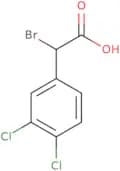
CAS:<p>Versatile small molecule scaffold</p>Formula:C4H10ClNO3Purity:Min. 95%Molecular weight:155.6 g/mol2-Bromo-2-(3,4-dichlorophenyl)acetic acid
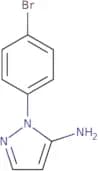
CAS:<p>Versatile small molecule scaffold</p>Formula:C8H5BrCl2O2Purity:Min. 95%Molecular weight:283.93 g/mol1-(4-Bromophenyl)-1H-pyrazol-5-amine
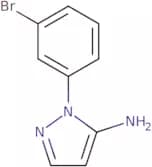
CAS:<p>Versatile small molecule scaffold</p>Formula:C9H8BrN3Purity:Min. 95%Molecular weight:238.08 g/mol1-(3-Bromophenyl)-1H-pyrazol-5-amine
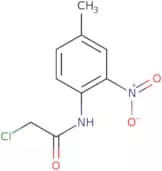
CAS:<p>Versatile small molecule scaffold</p>Formula:C9H8BrN3Purity:Min. 95%Molecular weight:238.08 g/mol2-Chloro-N-(4-methyl-2-nitrophenyl)acetamide
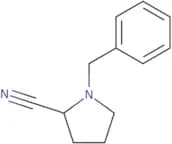
CAS:<p>Versatile small molecule scaffold</p>Formula:C9H9ClN2O3Purity:Min. 95%Molecular weight:228.63 g/mol1-Benzylpyrrolidine-2-carbonitrile
CAS:<p>Versatile small molecule scaffold</p>Formula:C12H14N2Purity:Min. 95%Molecular weight:186.25 g/mol2-[4-(Prop-2-en-1-yloxy)phenyl]acetic acid
CAS:<p>2-[4-(Prop-2-en-1-yloxy)phenyl]acetic acid, also known as propacetamol, is a nonsteroidal anti-inflammatory drug. It is an analgesic and a weak dehydrating agent. Propacetamol is used to relieve moderate or severe pain, such as that caused by headache, migraine, dental pain, or neuralgia. The chemical structure of propacetamol contains an ester which can be hydrolyzed to give the corresponding carboxylic acid and alcohol. 2-[4-(Prop-2-en-1-yloxy)phenyl]acetic acid has been shown to have antiplatelet properties and has been used to prevent thrombosis in patients undergoing coronary artery bypass grafting surgery. This drug also has the ability to inhibit epoxidation reactions that are catalyzed by cytochrome P450 enzymes.</p>Formula:C11H12O3Purity:Min. 95%Molecular weight:192.21 g/mol2-{4-[(Oxiran-2-yl)methoxy]phenyl}acetic acid
CAS:<p>2-{4-[(Oxiran-2-yl)methoxy]phenyl}acetic acid is an organic compound with the chemical formula CH3COCH2CH=OCH2C6H5. This white solid is a derivative of phenylacetic acid. It is used as a building block for the synthesis of esters, amides, and other derivatives. It can also be used to synthesize epoxides and amines by epoxidation or amine, respectively. 2-{4-[(Oxiran-2-yl)methoxy]phenyl}acetic acid has been shown to inhibit the growth of Pseudomonas aeruginosa and Staphylococcus aureus isolates. The ester group on this molecule may contribute to its anti-bacterial activity.</p>Formula:C11H12O4Purity:Min. 95%Molecular weight:208.21 g/mol3-(Chloromethyl)-5H,6H-imidazo[2,1-b][1,3]thiazole hydrochloride
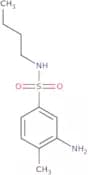
CAS:<p>Versatile small molecule scaffold</p>Formula:C6H8Cl2N2SPurity:Min. 95%Molecular weight:211.11 g/mol3-Amino-N-butyl-4-methylbenzenesulfonamide
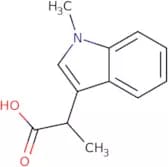
CAS:<p>Versatile small molecule scaffold</p>Formula:C11H18N2O2SPurity:Min. 95%Molecular weight:242.34 g/mol2-(1-Methyl-1H-indol-3-yl)propanoic acid
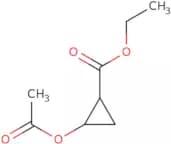
CAS:<p>Versatile small molecule scaffold</p>Formula:C12H13NO2Purity:Min. 95%Molecular weight:203.24 g/molethyl 2-(acetyloxy)cyclopropane-1-carboxylate
CAS:<p>Versatile small molecule scaffold</p>Formula:C8H12O4Purity:Min. 95%Molecular weight:172.17 g/molEthyl 2-oxabicyclo[4.1.0]heptane-7-carboxylate
CAS:<p>Versatile small molecule scaffold</p>Formula:C9H14O3Purity:Min. 95%Molecular weight:170.21 g/molN-[(4-Chlorophenyl)methyl]-4,5-dihydro-1,3-thiazol-2-amine
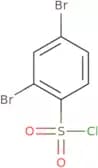
CAS:<p>Versatile small molecule scaffold</p>Formula:C10H11ClN2SPurity:Min. 95%Molecular weight:226.73 g/mol2,4-Dibromobenzenesulphonyl chloride
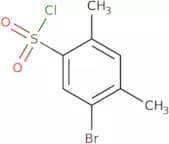
CAS:<p>Versatile small molecule scaffold</p>Formula:C6H3Br2ClO2SPurity:Min. 95%Molecular weight:334.41 g/mol5-Bromo-2,4-dimethylbenzenesulfonyl chloride
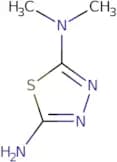
CAS:<p>Versatile small molecule scaffold</p>Formula:C8H8BrClO2SPurity:Min. 95%Molecular weight:283.56 g/molN2,N2-Dimethyl-1,3,4-thiadiazole-2,5-diamine
CAS:<p>Versatile small molecule scaffold</p>Formula:C4H8N4SPurity:Min. 95%Molecular weight:144.2 g/molMethoxy[1-(3-nitrophenyl)ethylidene]amine
CAS:<p>Versatile small molecule scaffold</p>Formula:C9H10N2O3Purity:Min. 95%Molecular weight:194.19 g/molN-{[(4-Chlorophenyl)carbamothioyl]amino}-2-phenylacetamide
CAS:<p>N-{[(4-Chlorophenyl)carbamothioyl]amino}-2-phenylacetamide is a small molecule that has been shown to be expressed in mammalian cells. It binds to the target enzyme and stabilizes the protein, which prevents it from denaturing. N-{[(4-Chlorophenyl)carbamothioyl]amino}-2-phenylacetamide has been shown to have beneficial effects on metabolic disorders such as aciduria and can be used as a chaperone when treating life threatening diseases. Structural analysis of this compound reveals coordination chemistry interactions with galactose.</p>Formula:C15H14ClN3OSPurity:Min. 95%Molecular weight:319.8 g/mol1-{4-[(2-Methylphenyl)methoxy]phenyl}ethan-1-one
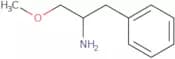
CAS:<p>1-{4-[(2-Methylphenyl)methoxy]phenyl}ethan-1-one is a small molecule that has been shown to inhibit the activity of ion channels. It binds to the receptor site, which is located on the outside of the cell membrane. This binding prevents the passage of ions through the channel, thereby preventing electrical signals from being transmitted by ligand gated ion channels. 1-{4-[(2-Methylphenyl)methoxy]phenyl}ethan-1-one is also an inhibitor of peptides and can be used as a research tool in cell biology and as an antibody in immunology.</p>Formula:C16H16O2Purity:Min. 95%Molecular weight:240.3 g/mol1-Methoxy-3-phenylpropan-2-amine
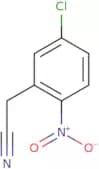
CAS:<p>Versatile small molecule scaffold</p>Formula:C10H15NOPurity:Min. 95%Molecular weight:165.23 g/mol2-(5-Chloro-2-nitrophenyl)acetonitrile
CAS:<p>2-(5-Chloro-2-nitrophenyl)acetonitrile is a n-oxide and carbanion that has been used as a model for the study of acrylonitrile. 2-(5-Chloro-2-nitrophenyl)acetonitrile can be synthesized by nitrating aniline with nitric acid, followed by oxidation with potassium permanganate. The resulting product is then reacted with acrylonitrile in the presence of an acid to form 2-(5-chloro-2-nitrophenyl)acrylonitrile. This compound is unstable and decomposes when it is heated to 150 degrees Celsius.</p>Formula:C8H5ClN2O2Purity:Min. 95%Molecular weight:196.59 g/mol5-Cyclopropyl-6-methyl-2-sulfanyl-1,4-dihydropyrimidin-4-one
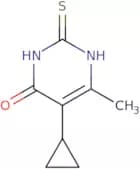
CAS:<p>Versatile small molecule scaffold</p>Formula:C8H10N2OSPurity:Min. 95%Molecular weight:182.25 g/mol3-Methanesulfonylpropane-1-sulfonyl chloride
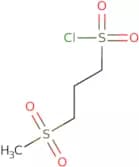
CAS:<p>Versatile small molecule scaffold</p>Formula:C4H9ClO4S2Purity:Min. 95%Molecular weight:220.7 g/moltrans-2-(4-Methoxyphenyl)vinylboronic acid
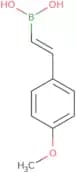
CAS:<p>Versatile small molecule scaffold</p>Formula:C9H11BO3Purity:Min. 95%Molecular weight:177.99 g/mol5-Cyclobutyl-2-sulfanylidene-1,2,3,4-tetrahydropyrimidin-4-one
CAS:<p>Versatile small molecule scaffold</p>Formula:C8H10N2OSPurity:Min. 95%Molecular weight:182.2 g/mol4-(2-Nitrophenyl)-2-oxobut-3-enoic acid
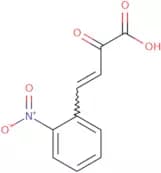
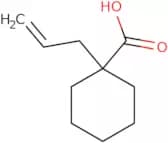
CAS:<p>4-(2-Nitrophenyl)-2-oxobut-3-enoic acid is an asymmetric synthesis of benazepril, a drug used to treat congestive heart failure. It is synthesized from formate and formaldehyde. The synthesis of 4-(2-nitrophenyl)-2-oxobut-3-enoic acid has been shown to be effective in reducing the severity of congestive heart failure in rats by inhibiting the production of l-glutamate. This compound also inhibits transamination reactions and glutamate dehydrogenase, which are enzymes that are involved in ammonia detoxification.</p>Formula:C10H7NO5Purity:Min. 95%Molecular weight:221.17 g/mol1-(Prop-2-en-1-yl)cyclohexane-1-carboxylic acid
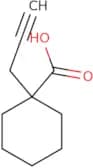
CAS:<p>1-(Prop-2-en-1-yl)cyclohexane-1-carboxylic acid is a functionalized, chloride salt. It has been shown to be an allylating agent in the presence of ultrasonication.</p>Formula:C10H16O2Purity:Min. 95%Molecular weight:168.23 g/mol1-(Prop-2-yn-1-yl)cyclohexane-1-carboxylic acid
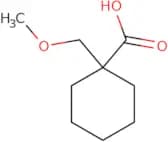
CAS:<p>Versatile small molecule scaffold</p>Formula:C10H14O2Purity:Min. 95%Molecular weight:166.22 g/mol1-(Methoxymethyl)cyclohexane-1-carboxylic acid
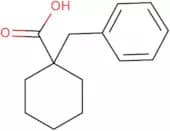
CAS:<p>Versatile small molecule scaffold</p>Formula:C9H16O3Purity:Min. 95%Molecular weight:172.22 g/mol1-Benzyl-1-cyclohexanecarboxylic acid
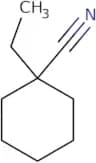
CAS:<p>Versatile small molecule scaffold</p>Formula:C14H18O2Purity:Min. 95%Molecular weight:218.29 g/mol1-Ethylcyclohexane-1-carbonitrile
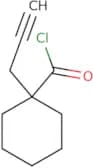
CAS:<p>Versatile small molecule scaffold</p>Formula:C9H15NPurity:Min. 95%Molecular weight:137.22 g/mol1-(Prop-2-yn-1-yl)cyclohexane-1-carbonyl chloride
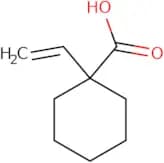
CAS:<p>Versatile small molecule scaffold</p>Formula:C10H13ClOPurity:Min. 95%Molecular weight:184.66 g/mol1-Ethenylcyclohexane-1-carboxylic acid
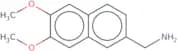
CAS:<p>Versatile small molecule scaffold</p>Formula:C9H14O2Purity:Min. 95%Molecular weight:154.2 g/mol(6,7-Dimethoxynaphthalen-2-yl)methanamine
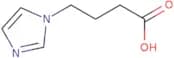
CAS:<p>Versatile small molecule scaffold</p>Formula:C13H15NO2Purity:Min. 95%Molecular weight:217.3 g/mol4-Imidazol-1-yl-butyric acid
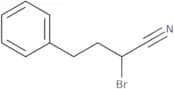
CAS:<p>4-Imidazol-1-yl-butyric acid is a coordination polymer with a carboxylate group. It can be synthesized by the reaction of butyric acid with isopropoxide in the presence of titanium tetrachloride and benzimidazole. The resulting product has a dimerization ability, which allows it to bind to metal ions. This binding leads to chelation and polymerization, which have been shown to have many applications, including pharmaceuticals and biomedicine.</p>Formula:C7H10N2O2Purity:Min. 95%Molecular weight:154.17 g/mol2-Bromo-4-phenylbutanenitrile
CAS:<p>2-Bromo-4-phenylbutanenitrile is a quinoline derivative that is used in the synthesis of nitriles, thiophenes, and pyridines. This compound can be obtained by cross-coupling reactions with organometallic reagents such as iodides and pyridines. The use of 2-bromo-4-phenylbutanenitrile in synthesis allows for enantioselective syntheses. This compound is also a nucleophile, which can be used to introduce a carbon atom into organic compounds. 2-Bromo-4-phenylbutanenitrile can be reduced with lithium aluminum hydride or sodium borohydride to form an alcohol or an amine respectively.</p>Formula:C10H10BrNPurity:Min. 95%Molecular weight:224.1 g/moltert-Butyl N-[(3-nitrophenyl)methyl]carbamate
CAS:<p>Versatile small molecule scaffold</p>Formula:C12H16N2O4Purity:Min. 95%Molecular weight:252.27 g/mol1-Chloro-3-[(2-methylpropyl)sulfanyl]propane
CAS:<p>Versatile small molecule scaffold</p>Formula:C7H15ClSPurity:Min. 95%Molecular weight:166.71 g/mol6-Methoxy-1,2-benzothiazole
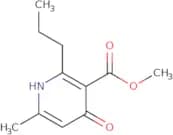
CAS:<p>Versatile small molecule scaffold</p>Formula:C8H9N3OPurity:Min. 95%Molecular weight:163.18 g/molMethyl 6-methyl-4-oxo-2-propyl-1,4-dihydropyridine-3-carboxylate
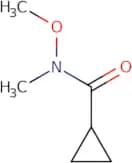
CAS:<p>Versatile small molecule scaffold</p>Formula:C11H15NO3Purity:Min. 95%Molecular weight:209.24 g/molN-Methoxy-N-methylcyclopropanecarboxamide
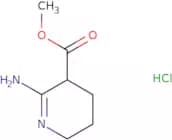
CAS:<p>N-Methoxy-N-methylcyclopropanecarboxamide is a selective inhibitor of the enzyme azaindole synthase. This drug was shown to be efficacious in vivo in rats with an azaindole-resistant strain of neutrophil leukemia. It also showed efficacy in vitro against human neutrophils and erythrocytes, as well as human blood cells. Azaindole synthase is an enzyme that catalyzes the synthesis of azaindoles from indole and acetaldehyde. This compound has been identified as a lead optimization candidate for treatment of certain cancers, such as leukemia and lymphoma.</p>Formula:C6H11NO2Purity:Min. 95%Molecular weight:129.16 g/molMethyl 2-amino-3,4,5,6-tetrahydropyridine-3-carboxylate hydrochloride
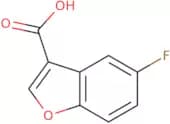
CAS:<p>Versatile small molecule scaffold</p>Formula:C7H13ClN2O2Purity:Min. 95%Molecular weight:192.64 g/mol5-Fluoro-1-benzofuran-3-carboxylic acid
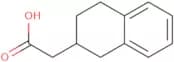
CAS:<p>Versatile small molecule scaffold</p>Formula:C9H5FO3Purity:Min. 95%Molecular weight:180.13 g/mol2-(1,2,3,4-Tetrahydronaphthalen-2-yl)acetic acid
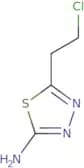
CAS:<p>Versatile small molecule scaffold</p>Formula:C12H14O2Purity:Min. 95%Molecular weight:190.24 g/mol5-(2-Chloroethyl)-1,3,4-thiadiazol-2-amine
CAS:<p>Versatile small molecule scaffold</p>Formula:C4H6ClN3SPurity:Min. 95%Molecular weight:163.63 g/mol3-Methoxynaphthalene-1-carboxylic acid
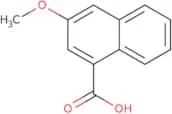
CAS:<p>3-Methoxynaphthalene-1-carboxylic acid is a biotransformed product of guanine and aziridine, which is involved in the formation of amide. 3-Methoxynaphthalene-1-carboxylic acid has been shown to inhibit tumor growth in vivo. It also has an antitumor effect on cultured cells and impurities that are present in the drug can be removed by preparative high performance liquid chromatography (HPLC). 3-Methoxynaphthalene-1-carboxylic acid inhibits bacterial growth by binding to DNA gyrase and topoisomerase IV, which are enzymes that maintain the integrity of bacterial DNA. 3-Methoxynaphthalene-1-carboxylic acid has not been tested as a potential antihypertensive agent. The cytotoxic activity of this compound is mainly due to its ability to interfere with DNA replication and</p>Formula:C12H10O3Purity:Min. 95%Molecular weight:202.21 g/mol5-Propoxy-1H-indole
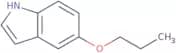
CAS:<p>5-Propoxy-1H-indole is a small molecule that inhibits protein synthesis at the level of translation. It binds to mammalian ribosomes and prevents the amino acid transfer, thereby inhibiting protein synthesis. 5-Propoxy-1H-indole has been shown to inhibit the production of proteins in cells in culture, and also has a strong effect on neuronal function in vivo. This drug has been shown to have clinical relevance for Parkinson's disease, as it may be used to treat symptoms such as tremors, rigidity, and bradykinesia.</p>Formula:C11H13NOPurity:Min. 95%Molecular weight:175.23 g/mol1-(3,4-Dimethoxyphenyl)cyclobutane-1-carboxylic acid
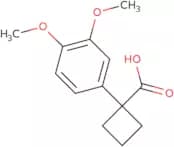
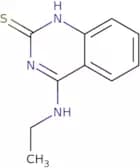
CAS:<p>Versatile small molecule scaffold</p>Formula:C13H16O4Purity:Min. 95%Molecular weight:236.26 g/mol4-(Ethylamino)quinazoline-2-thiol
CAS:<p>Versatile small molecule scaffold</p>Formula:C10H11N3SPurity:Min. 95%Molecular weight:205.28 g/mol3-[(4-Methylphenyl)sulfamoyl]benzoic acid
CAS:<p>Versatile small molecule scaffold</p>Formula:C14H13NO4SPurity:Min. 95%Molecular weight:291.32 g/mol3-[(2-Methoxyphenyl)sulfamoyl]benzoic acid
CAS:<p>3-[(2-Methoxyphenyl)sulfamoyl]benzoic acid is a synthetic small molecule that inhibits the activity of peptidases and is used as an activator for protein interactions. It has been shown to inhibit the activity of trypsin, chymotrypsin, and elastase. 3-[(2-Methoxyphenyl)sulfamoyl]benzoic acid also binds to receptors and ion channels in cells, and can be used as a research tool or as a reagent in antibody production. This chemical has high purity with less than 1% water content.</p>Formula:C14H13NO5SPurity:Min. 95%Molecular weight:307.32 g/mol3-[(4-Methoxyphenyl)sulfamoyl]benzoic acid
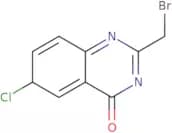
CAS:<p>Versatile small molecule scaffold</p>Formula:C14H13NO5SPurity:Min. 95%Molecular weight:307.32 g/mol2-(Bromomethyl)-6-chloro-3,4-dihydroquinazolin-4-one
CAS:<p>Versatile small molecule scaffold</p>Formula:C9H6BrClN2OPurity:Min. 95%Molecular weight:273.51 g/mol4-(2-Methylpropyl)-1H-pyrrole-2-carboxylic acid
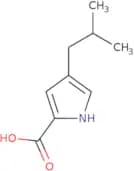
CAS:<p>Versatile small molecule scaffold</p>Formula:C9H13NO2Purity:Min. 95%Molecular weight:167.2 g/mol6-Chloro-4,5-dimethylpyridin-3-amine
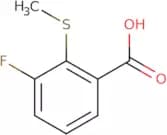
CAS:<p>Versatile small molecule scaffold</p>Formula:C7H9ClN2Purity:Min. 95%Molecular weight:156.61 g/mol3-Fluoro-2-(methylsulfanyl)benzoic acid
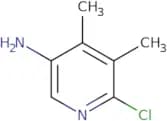
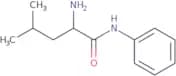
CAS:<p>Versatile small molecule scaffold</p>Formula:C8H7FO2SPurity:Min. 95%Molecular weight:186.21 g/mol(2S)-2-Amino-4-methyl-N-phenylpentanamide
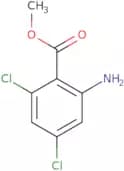
CAS:<p>(2S)-2-Amino-4-methyl-N-phenylpentanamide is a peptide that is used as an inhibitor of plant diseases. It binds to the active site of the enzyme alkoxy radical, which prevents the formation of reactive oxygen species and protects plants from oxidative damage. The residue that this compound leaves behind is also useful for determining whether or not a protein has been synthesized with an amino acid substitution. (2S)-2-Amino-4-methyl-N-phenylpentanamide can be used to determine whether or not two enantiomers have reacted with each other to form a diastereomer in a kinetic reaction.</p>Formula:C12H18N2OPurity:Min. 95%Molecular weight:206.28 g/molMethyl 2-amino-4,6-dichlorobenzoate
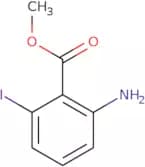
CAS:<p>Versatile small molecule scaffold</p>Formula:C8H7Cl2NO2Purity:Min. 95%Molecular weight:220.05 g/molMethyl 2-amino-6-iodobenzoate
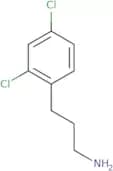
CAS:<p>Methyl 2-amino-6-iodobenzoate is a compound that belongs to the group of nitro compounds. It is problematic and toxic to humans.</p>Formula:C8H8INO2Purity:Min. 95%Molecular weight:277.06 g/mol3-(2,4-dichlorophenyl)propan-1-amine
CAS:<p>Versatile small molecule scaffold</p>Formula:C9H11Cl2NPurity:Min. 95%Molecular weight:204.09 g/mol4-[1-(Methoxyimino)ethyl]-2-methylphenol
CAS:<p>Versatile small molecule scaffold</p>Formula:C10H13NO2Purity:Min. 95%Molecular weight:179.22 g/mol[(2S)-1-Bromopropan-2-yl]benzene
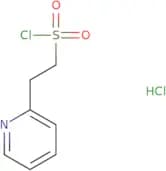
CAS:<p>Versatile small molecule scaffold</p>Formula:C9H11BrPurity:Min. 95%Molecular weight:199.09 g/mol2-(Pyridin-2-yl)ethane-1-sulfonyl chloride hydrochloride
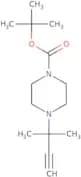
CAS:<p>Versatile small molecule scaffold</p>Formula:C7H9Cl2NO2SPurity:Min. 95%Molecular weight:242.12 g/moltert-Butyl 4-(2-methylbut-3-yn-2-yl)piperazine-1-carboxylate
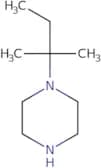
CAS:<p>Versatile small molecule scaffold</p>Formula:C14H24N2O2Purity:Min. 95%Molecular weight:252.35 g/mol1-(2-Methylbutan-2-yl)piperazine
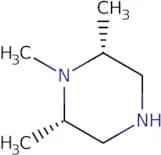
CAS:<p>Versatile small molecule scaffold</p>Formula:C9H20N2Purity:Min. 95%Molecular weight:156.27 g/molcis-1,2,6-Trimethylpiperazine
CAS:<p>Versatile small molecule scaffold</p>Formula:C7H16N2Purity:Min. 95%Molecular weight:128.22 g/molMethyl 5-amino-1H-indole-2-carboxylate
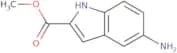
CAS:<p>Versatile small molecule scaffold</p>Formula:C10H10N2O2Purity:Min. 95%Molecular weight:190.2 g/mol2-(2-methylpropoxy)benzoic acid
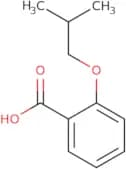
CAS:<p>Versatile small molecule scaffold</p>Formula:C11H14O3Purity:Min. 95%Molecular weight:194.22 g/mol3-[4-(2-Methylpropyl)phenyl]propan-1-ol
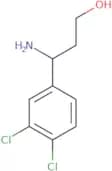
CAS:<p>Versatile small molecule scaffold</p>Formula:C13H20OPurity:Min. 95%Molecular weight:192.3 g/mol3-Amino-3-(3,4-dichlorophenyl)propan-1-ol
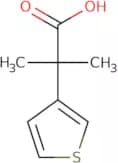
CAS:<p>Versatile small molecule scaffold</p>Formula:C9H11Cl2NOPurity:Min. 95%Molecular weight:220.09 g/mol2-Methyl-2-(thiophen-3-yl)propanoic acid
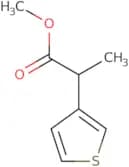
CAS:<p>Versatile small molecule scaffold</p>Formula:C8H10O2SPurity:Min. 95%Molecular weight:170.23 g/molMethyl 2-(thiophen-3-yl)propanoate
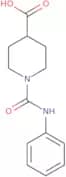
CAS:<p>Versatile small molecule scaffold</p>Formula:C8H10O2SPurity:Min. 95%Molecular weight:170.23 g/mol1-(Phenylcarbamoyl)piperidine-4-carboxylic acid
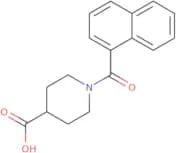
CAS:<p>Versatile small molecule scaffold</p>Formula:C13H16N2O3Purity:Min. 95%Molecular weight:248.28 g/mol1-(Naphthalene-1-carbonyl)piperidine-4-carboxylic acid
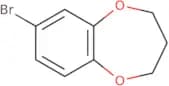
CAS:<p>Versatile small molecule scaffold</p>Formula:C17H17NO3Purity:Min. 95%Molecular weight:283.32 g/mol7-Bromo-3,4-dihydro-2H-1,5-benzodioxepine
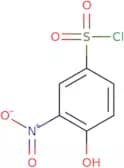
CAS:<p>Versatile small molecule scaffold</p>Formula:C9H9BrO2Purity:Min. 95%Molecular weight:229.07 g/mol4-Hydroxy-3-nitrobenzene-1-sulfonyl chloride
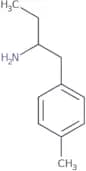
CAS:<p>Versatile small molecule scaffold</p>Formula:C6H4ClNO5SPurity:Min. 95%Molecular weight:237.62 g/mol1-(4-Methylphenyl)butan-2-amine
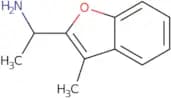
CAS:Controlled Product<p>Versatile small molecule scaffold</p>Formula:C11H17NPurity:Min. 95%Molecular weight:163.26 g/mol1-(3-Methyl-1-benzofuran-2-yl)ethan-1-amine
CAS:<p>Versatile small molecule scaffold</p>Formula:C11H13NOPurity:Min. 95%Molecular weight:175.23 g/mol2-[(5-Amino-4H-1,2,4-triazol-3-yl)amino]ethan-1-ol
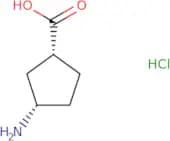
CAS:<p>Versatile small molecule scaffold</p>Formula:C4H9N5OPurity:Min. 95%Molecular weight:143.15 g/mol(1R,3S)-3-aminocyclopentane-1-carboxylic acid Hydrochloric Acid Salt
CAS:<p>Versatile small molecule scaffold</p>Formula:C6H12ClNO2Purity:Min. 95%Molecular weight:165.62 g/mol1-Oxa-6-azaspiro[2.5]octane-6-carboxylic acid tert-butyl ester
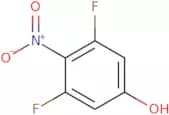
CAS:<p>Versatile small molecule scaffold</p>Formula:C11H19NO3Purity:Min. 95%Molecular weight:213.27 g/mol3,5-Difluoro-4-nitrophenol
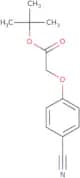
CAS:<p>Versatile small molecule scaffold</p>Formula:C6H3F2NO3Purity:Min. 95%Molecular weight:175.09 g/moltert-Butyl 2-(4-cyanophenoxy)acetate
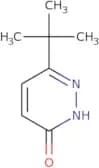
CAS:<p>Versatile small molecule scaffold</p>Formula:C13H15NO3Purity:Min. 95%Molecular weight:233.26 g/mol6-tert-Butyl-2,3-dihydropyridazin-3-one
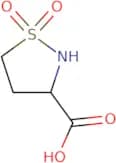
CAS:<p>Versatile small molecule scaffold</p>Formula:C8H12N2OPurity:Min. 95%Molecular weight:152.19 g/mol(3S)-1,1-Dioxo-1,2-thiazolidine-3-carboxylic acid
CAS:<p>Versatile small molecule scaffold</p>Formula:C4H7NO4SPurity:Min. 95%Molecular weight:165.17 g/molMethyl 2-amino-3-(2-bromophenyl)propanoate hydrochloride
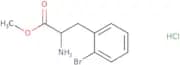
CAS:<p>Versatile small molecule scaffold</p>Formula:C10H13BrClNO2Purity:Min. 95%Molecular weight:294.57 g/molMethyl 4-(3-oxocyclohexyl)butanoate
CAS:<p>Versatile small molecule scaffold</p>Formula:C11H18O3Purity:Min. 95%Molecular weight:198.26 g/mol(2E)-3-(3-Fluoro-4-methoxyphenyl)prop-2-enoic acid
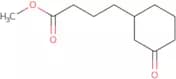
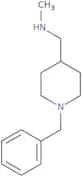
CAS:<p>Versatile small molecule scaffold</p>Formula:C10H9FO3Purity:Min. 95%Molecular weight:196.17 g/mol1-(1-Benzylpiperidin-4-yl)-N-methylmethanamine
CAS:<p>Versatile small molecule scaffold</p>Formula:C14H22N2Purity:Min. 95%Molecular weight:218.34 g/molBicyclo[1.1.1]pentane-1,3-diamine dihydrochloride
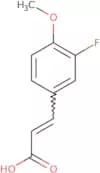
CAS:<p>Versatile small molecule scaffold</p>Formula:C5H12Cl2N2Purity:Min. 95%Molecular weight:171.07 g/mol

![1-[4-(Methoxymethyl)phenyl]ethan-1-one](/_next/image/?url=https%3A%2Fstatic.cymitquimica.com%2Fproducts%2F3D%2Fthumb-webp%2FXAA07250.webp&w=3840&q=75)



![2-[2-(4-Chlorophenyl)-1,3-oxazol-4-yl]acetic acid](/_next/image/?url=https%3A%2Fstatic.cymitquimica.com%2Fproducts%2F3D%2Fthumb-webp%2FXAA08688.webp&w=3840&q=75)
![2-[2-(4-Fluorophenyl)-1,3-oxazol-4-yl]acetonitrile](/_next/image/?url=https%3A%2Fstatic.cymitquimica.com%2Fproducts%2F3D%2Fthumb-webp%2FXAA08728.webp&w=3840&q=75)
![4-(Chloromethyl)-2-[4-(trifluoromethyl)phenyl]-1,3-oxazole](/_next/image/?url=https%3A%2Fstatic.cymitquimica.com%2Fproducts%2F3D%2Fthumb-webp%2FXAA09140.webp&w=3840&q=75)
![2-[2-(4-Fluorophenyl)-1,3-oxazol-4-yl]acetic acid](/_next/image/?url=https%3A%2Fstatic.cymitquimica.com%2Fproducts%2F3D%2Fthumb-webp%2FXAA09143.webp&w=3840&q=75)

![2-{[(5-Methylfuran-2-yl)methyl]amino}ethan-1-ol](/_next/image/?url=https%3A%2Fstatic.cymitquimica.com%2Fproducts%2F3D%2Fthumb-webp%2FXAA09962.webp&w=3840&q=75)
![Benzyl[3-(dimethylamino)propyl]amine dihydrochloride](/_next/image/?url=https%3A%2Fstatic.cymitquimica.com%2Fproducts%2F3D%2Fthumb-webp%2FXAA10229.webp&w=3840&q=75)


![2',3'A,4',5',6',7'-Hexahydrospiro[cyclohexane-1,3'-indazole]](/_next/image/?url=https%3A%2Fstatic.cymitquimica.com%2Fproducts%2F3D%2Fthumb-webp%2FXAA12296.webp&w=3840&q=75)




![4-(Trifluoromethyl)bicyclo[2.2.2]octan-1-amine hydrochloride](/_next/image/?url=https%3A%2Fstatic.cymitquimica.com%2Fproducts%2F3D%2Fthumb-webp%2FXAA18991.webp&w=3840&q=75)
![2-(Chloromethyl)-1,4-dioxaspiro[4.4]nonane](/_next/image/?url=https%3A%2Fstatic.cymitquimica.com%2Fproducts%2F3D%2Fthumb-webp%2FXAA19553.webp&w=3840&q=75)
![4-[(2-Aminopyrimidin-4-yl)amino]benzene-1-sulfonamide hydrochloride](/_next/image/?url=https%3A%2Fstatic.cymitquimica.com%2Fproducts%2F3D%2Fthumb-webp%2FXAA19993.webp&w=3840&q=75)
![1,3-Dihydro-benzo[c]thiophene-5-sulfonamide 2,2-dioxide](/_next/image/?url=https%3A%2Fstatic.cymitquimica.com%2Fproducts%2F3D%2Fthumb-webp%2FXCA00745.webp&w=3840&q=75)
![1-Ethoxy-1-[(3-methylpent-1-en-4-yn-3-yl)oxy]ethane](/_next/image/?url=https%3A%2Fstatic.cymitquimica.com%2Fproducts%2F3D%2Fthumb-webp%2FXCA00825.webp&w=3840&q=75)
![6-Bromo[1,2,5]thiadiazolo[3,4-b]pyridine](/_next/image/?url=https%3A%2Fstatic.cymitquimica.com%2Fproducts%2F3D%2Fthumb-webp%2FXCA02375.webp&w=3840&q=75)





![7-oxa-2-azaspiro[4.5]decane](/_next/image/?url=https%3A%2Fstatic.cymitquimica.com%2Fproducts%2F3D%2Fthumb-webp%2FXCA08842.webp&w=3840&q=75)


![[1-(Cyclohexylmethyl)pyrrolidin-2-yl]methanamine](/_next/image/?url=https%3A%2Fstatic.cymitquimica.com%2Fproducts%2F3D%2Fthumb-webp%2FXCA13532.webp&w=3840&q=75)
![2H-[1,3]Dioxolo[4,5-b]pyridine](/_next/image/?url=https%3A%2Fstatic.cymitquimica.com%2Fproducts%2F3D%2Fthumb-webp%2FXCA13873.webp&w=3840&q=75)
![[(Propan-2-yl)sulfamoyl]amine](/_next/image/?url=https%3A%2Fstatic.cymitquimica.com%2Fproducts%2F3D%2Fthumb-webp%2FXCA17985.webp&w=3840&q=75)


![2-[4-(Prop-2-en-1-yloxy)phenyl]acetic acid](/_next/image/?url=https%3A%2Fstatic.cymitquimica.com%2Fproducts%2F3D%2Fthumb-webp%2FXCA22422.webp&w=3840&q=75)
![2-{4-[(Oxiran-2-yl)methoxy]phenyl}acetic acid](/_next/image/?url=https%3A%2Fstatic.cymitquimica.com%2Fproducts%2F3D%2Fthumb-webp%2FXCA22425.webp&w=3840&q=75)
![3-(Chloromethyl)-5H,6H-imidazo[2,1-b][1,3]thiazole hydrochloride](/_next/image/?url=https%3A%2Fstatic.cymitquimica.com%2Fproducts%2F3D%2Fthumb-webp%2FXCA22461.webp&w=3840&q=75)
![Ethyl 2-oxabicyclo[4.1.0]heptane-7-carboxylate](/_next/image/?url=https%3A%2Fstatic.cymitquimica.com%2Fproducts%2F3D%2Fthumb-webp%2FXCA22908.webp&w=3840&q=75)
![N-[(4-Chlorophenyl)methyl]-4,5-dihydro-1,3-thiazol-2-amine](/_next/image/?url=https%3A%2Fstatic.cymitquimica.com%2Fproducts%2F3D%2Fthumb-webp%2FXCA23929.webp&w=3840&q=75)
![Methoxy[1-(3-nitrophenyl)ethylidene]amine](/_next/image/?url=https%3A%2Fstatic.cymitquimica.com%2Fproducts%2F3D%2Fthumb-webp%2FXCA27809.webp&w=3840&q=75)
![N-{[(4-Chlorophenyl)carbamothioyl]amino}-2-phenylacetamide](/_next/image/?url=https%3A%2Fstatic.cymitquimica.com%2Fproducts%2F3D%2Fthumb-webp%2FXCA29365.webp&w=3840&q=75)
![1-{4-[(2-Methylphenyl)methoxy]phenyl}ethan-1-one](/_next/image/?url=https%3A%2Fstatic.cymitquimica.com%2Fproducts%2F3D%2Fthumb-webp%2FXCA29394.webp&w=3840&q=75)

![tert-Butyl N-[(3-nitrophenyl)methyl]carbamate](/_next/image/?url=https%3A%2Fstatic.cymitquimica.com%2Fproducts%2F3D%2Fthumb-webp%2FXFA29165.webp&w=3840&q=75)
![1-Chloro-3-[(2-methylpropyl)sulfanyl]propane](/_next/image/?url=https%3A%2Fstatic.cymitquimica.com%2Fproducts%2F3D%2Fthumb-webp%2FXFA29864.webp&w=3840&q=75)
![3-[(4-Methylphenyl)sulfamoyl]benzoic acid](/_next/image/?url=https%3A%2Fstatic.cymitquimica.com%2Fproducts%2F3D%2Fthumb-webp%2FXFA41077.webp&w=3840&q=75)
![3-[(2-Methoxyphenyl)sulfamoyl]benzoic acid](/_next/image/?url=https%3A%2Fstatic.cymitquimica.com%2Fproducts%2F3D%2Fthumb-webp%2FXFA41079.webp&w=3840&q=75)
![3-[(4-Methoxyphenyl)sulfamoyl]benzoic acid](/_next/image/?url=https%3A%2Fstatic.cymitquimica.com%2Fproducts%2F3D%2Fthumb-webp%2FXFA41081.webp&w=3840&q=75)
![4-[1-(Methoxyimino)ethyl]-2-methylphenol](/_next/image/?url=https%3A%2Fstatic.cymitquimica.com%2Fproducts%2F3D%2Fthumb-webp%2FXFA50121.webp&w=3840&q=75)
![[(2S)-1-Bromopropan-2-yl]benzene](/_next/image/?url=https%3A%2Fstatic.cymitquimica.com%2Fproducts%2F3D%2Fthumb-webp%2FXFA51419.webp&w=3840&q=75)
![3-[4-(2-Methylpropyl)phenyl]propan-1-ol](/_next/image/?url=https%3A%2Fstatic.cymitquimica.com%2Fproducts%2F3D%2Fthumb-webp%2FXFA59821.webp&w=3840&q=75)
![2-[(5-Amino-4H-1,2,4-triazol-3-yl)amino]ethan-1-ol](/_next/image/?url=https%3A%2Fstatic.cymitquimica.com%2Fproducts%2F3D%2Fthumb-webp%2FXFA75128.webp&w=3840&q=75)
![1-Oxa-6-azaspiro[2.5]octane-6-carboxylic acid tert-butyl ester](/_next/image/?url=https%3A%2Fstatic.cymitquimica.com%2Fproducts%2F3D%2Fthumb-webp%2FXFA80430.webp&w=3840&q=75)
![Bicyclo[1.1.1]pentane-1,3-diamine dihydrochloride](/_next/image/?url=https%3A%2Fstatic.cymitquimica.com%2Fproducts%2F3D%2Fthumb-webp%2FXFA92761.webp&w=3840&q=75)