Building Blocks
This section contains fundamental products for the synthesis of organic and biological compounds. Building blocks are the essential starting materials used to construct complex molecules through various chemical reactions. They play a critical role in drug discovery, material science, and chemical research. At CymitQuimica, we offer a diverse range of high-quality building blocks to support your innovative research and industrial projects, ensuring you have the essential components for successful synthesis.
Subcategories of "Building Blocks"
- Boronic Acids & Boronic Acid Derivatives(5,756 products)
- Chiral Building Blocks(1,242 products)
- Hydrocarbon Building Blocks(6,095 products)
- Organic Building Blocks(61,055 products)
Found 199650 products of "Building Blocks"
Sort by
Purity (%)
0
100
|
0
|
50
|
90
|
95
|
100
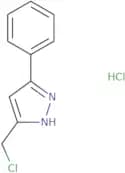
5-(Chloromethyl)-3-phenyl-1H-pyrazole hydrochloride
CAS:Versatile small molecule scaffoldFormula:C10H10Cl2N2Purity:Min. 95%Molecular weight:229.1 g/mol4-(2-Pyridinyl)-1H-pyrazol-5-amine
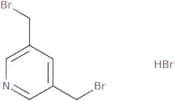
CAS:<p>Versatile small molecule scaffold</p>Formula:C8H8N4Purity:Min. 95%Molecular weight:160.18 g/mol3,5-Bis(bromomethyl)pyridine hydrobromide
CAS:Versatile small molecule scaffoldFormula:C7H8Br3NPurity:Min. 95%Molecular weight:345.86 g/mol(6-Oxospiro[3.3]hept-2-yl)carbamic acid tert-butyl ester
CAS:<p>Versatile small molecule scaffold</p>Formula:C12H19NO3Purity:Min. 95%Molecular weight:225.29 g/mol2,2-Bis(propan-2-yl) 6,6-dimethoxyspiro[3.3]heptane-2,2-dicarboxylate
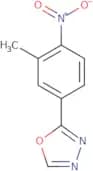
CAS:<p>Versatile small molecule scaffold</p>Formula:C17H28O6Purity:Min. 95%Molecular weight:328.4 g/mol2-(3-Methyl-4-nitrophenyl)-1,3,4-oxadiazole
CAS:<p>Versatile small molecule scaffold</p>Formula:C9H7N3O3Purity:Min. 95%Molecular weight:205.17 g/mol5-[(Methylsulfanyl)methyl]furan-2-carbaldehyde
CAS:<p>5-[(Methylsulfanyl)methyl]furan-2-carbaldehyde is a sulfonated, graphitic carbon with a nitride that can be used as a sustainable and environmentally friendly chemical. It has been shown to have biological and chemical activities at temperatures up to 200°C. 5-[(Methylsulfanyl)methyl]furan-2-carbaldehyde has also been used in the synthesis of carbohydrates for use in biomass applications.</p>Formula:C7H8O2SPurity:Min. 95%Molecular weight:156.2 g/molN-{1-[5-(3-Bromophenyl)thiophen-2-yl]ethylidene}hydroxylamine, somers
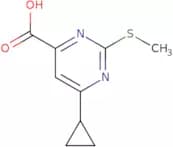
CAS:<p>Versatile small molecule scaffold</p>Formula:C12H10BrNOSPurity:Min. 95%Molecular weight:296.18 g/mol6-Cyclopropyl-2-(methylsulfanyl)pyrimidine-4-carboxylic acid
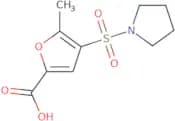
CAS:<p>Versatile small molecule scaffold</p>Formula:C9H10N2O2SPurity:Min. 95%Molecular weight:210.26 g/mol5-Methyl-4-(pyrrolidine-1-sulfonyl)furan-2-carboxylic acid
CAS:Controlled Product<p>5-Methyl-4-(pyrrolidine-1-sulfonyl)furan-2-carboxylic acid is a white crystalline powder. It has high purity, and is suitable for use as an ion channel activator or inhibitor in research applications. This compound is also used as a tool to study protein interactions, cell biology, and pharmacology. 5-Methyl-4-(pyrrolidine-1-sulfonyl)furan-2-carboxylic acid can be used as an antihypertensive drug and may have potential to treat cancer.</p>Formula:C10H13NO5SPurity:Min. 95%Molecular weight:259.28 g/mol3-methyl-1H-pyrazolo[3,4-b]pyridine-5-carboxylic acid
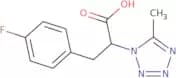
CAS:<p>Versatile small molecule scaffold</p>Formula:C8H7N3O2Purity:Min. 95%Molecular weight:177.16 g/mol3-(4-Fluorophenyl)-2-(5-methyl-1H-1,2,3,4-tetrazol-1-yl)propanoic acid
CAS:Controlled Product<p>3-(4-Fluorophenyl)-2-(5-methyl-1H-1,2,3,4-tetrazol-1-yl)propanoic acid is a potent and selective activator of the glycine receptor. It binds to the glycine site on the GABAA receptor and increases chloride conductance. 3-(4-Fluorophenyl)-2-(5-methyl-1H-1,2,3,4-tetrazol-1-yl)propanoic acid has been shown to possess a high affinity for the glycine receptor. This compound is an inhibitor of ion channels such as voltage gated sodium channels and calcium channels. 3-(4 - Fluorophenyl)-2-(5 -methyl - 1H - 1,2,3,4 - tetrazol - 1 - yl)propanoic acid is an excellent research tool for studying cell biology and receptor binding.</p>Formula:C11H11FN4O2Purity:Min. 95%Molecular weight:250.23 g/mol1-(Chloromethyl)-2-[(difluoromethyl)sulfanyl]benzene
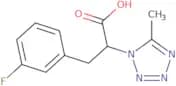
CAS:<p>Versatile small molecule scaffold</p>Formula:C8H7ClF2SPurity:Min. 95%Molecular weight:208.66 g/mol3-(3-Fluorophenyl)-2-(5-methyl-1H-1,2,3,4-tetrazol-1-yl)propanoic acid
CAS:Controlled Product<p>3-(3-Fluorophenyl)-2-(5-methyl-1H-1,2,3,4-tetrazol-1-yl)propanoic acid is a potent activator of GABAA receptors. It has been shown to have high affinity for GABA binding sites and is able to activate the receptor with an EC50 of around 100 nM. It also has no effect on other receptors that are structurally related to GABA, such as glycine and 5HT3 receptors. 3-(3-Fluorophenyl)-2-(5-methyl-1H-1,2,3,4-tetrazol-1-yl)propanoic acid is soluble in DMSO and ethanol.</p>Formula:C11H11FN4O2Purity:Min. 95%Molecular weight:250.23 g/mol2-{[(2-Nitrophenyl)methyl]sulfanyl}pyrimidine
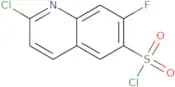
CAS:<p>Versatile small molecule scaffold</p>Formula:C11H9N3O2SPurity:Min. 95%Molecular weight:247.28 g/mol2-Chloro-7-fluoroquinoline-6-sulfonyl chloride
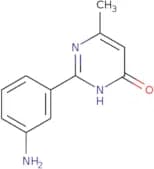
CAS:<p>Versatile small molecule scaffold</p>Formula:C9H4Cl2FNO2SPurity:Min. 95%Molecular weight:280.1 g/mol2-(3-Aminophenyl)-6-methyl-3,4-dihydropyrimidin-4-one
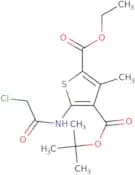
CAS:<p>Versatile small molecule scaffold</p>Formula:C11H11N3OPurity:Min. 95%Molecular weight:201.22 g/mol4-tert-Butyl 2-ethyl 5-(2-chloroacetamido)-3-methylthiophene-2,4-dicarboxylate
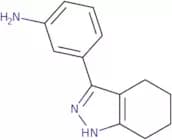
CAS:<p>Versatile small molecule scaffold</p>Formula:C15H20ClNO5SPurity:Min. 95%Molecular weight:361.8 g/mol3-(4,5,6,7-Tetrahydro-1H-indazol-3-yl)aniline
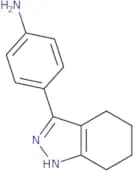
CAS:<p>Versatile small molecule scaffold</p>Formula:C13H15N3Purity:Min. 95%Molecular weight:213.28 g/mol4-(4,5,6,7-Tetrahydro-1H-indazol-3-yl)aniline
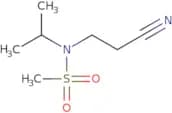
CAS:Versatile small molecule scaffoldFormula:C13H15N3Purity:Min. 95%Molecular weight:213.28 g/molN-(2-Cyanoethyl)-N-(propan-2-yl)methanesulfonamide
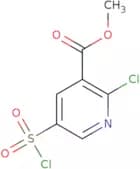
CAS:<p>Versatile small molecule scaffold</p>Formula:C7H14N2O2SPurity:Min. 95%Molecular weight:190.27 g/molMethyl 2-chloro-5-(chlorosulfonyl)pyridine-3-carboxylate
CAS:Versatile small molecule scaffoldFormula:C7H5Cl2NO4SPurity:Min. 95%Molecular weight:270.09 g/mol3-{1H,4H,5H,6H-Cyclopenta[C]pyrazol-3-yl}aniline
CAS:Versatile small molecule scaffoldFormula:C12H13N3Purity:Min. 95%Molecular weight:199.25 g/mol(2E)-3-[5-(Pyrrolidine-1-sulfonyl)thiophen-3-yl]prop-2-enoic acid
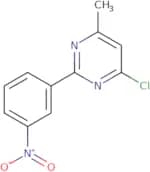
CAS:Versatile small molecule scaffoldFormula:C11H13NO4S2Purity:Min. 95%Molecular weight:287.4 g/mol4-Chloro-6-methyl-2-(3-nitrophenyl)pyrimidine
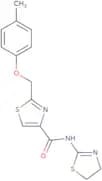
CAS:Versatile small molecule scaffoldFormula:C11H8ClN3O2Purity:Min. 95%Molecular weight:249.65 g/molN-(4,5-Dihydro-1,3-thiazol-2-yl)-2-(4-methylphenoxymethyl)-1,3-thiazole-4-carboxamide
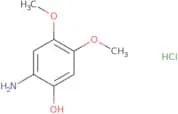
CAS:<p>Versatile small molecule scaffold</p>Formula:C15H15N3O2S2Purity:Min. 95%Molecular weight:333.4 g/mol2-Amino-4,5-dimethoxyphenol hydrochloride
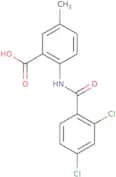
CAS:Versatile small molecule scaffoldFormula:C8H12ClNO3Purity:Min. 95%Molecular weight:205.64 g/mol2-(2,4-Dichlorobenzamido)-5-methylbenzoic acid
CAS:Versatile small molecule scaffoldFormula:C15H11Cl2NO3Purity:Min. 95%Molecular weight:324.2 g/mol7-Methyl-1,3-dihydroimidazo[4,5-b]pyridin-2-one
CAS:Versatile small molecule scaffoldFormula:C7H7N3OPurity:Min. 95%Molecular weight:149.15 g/molMethyl 7-azabicyclo[2.2.1]heptane-1-carboxylate hydrochloride
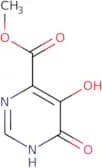
CAS:Versatile small molecule scaffoldFormula:C8H14ClNO2Purity:Min. 95%Molecular weight:191.65 g/mol5,6-Dihydroxy-pyrimidine-4-carboxylic acid methyl ester
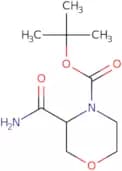
CAS:<p>5,6-Dihydroxy-pyrimidine-4-carboxylic acid methyl ester (DDC) is an antiviral drug that inhibits the viral enzyme integrase, which is required for viral replication. DDC binds to the active site of the integrase enzyme and prevents it from performing its function in viral replication. This compound has a potentiometric transfer activity and can be used as a probe to study the interactions of metal ions with proteins. DDC has been shown to inhibit HIV-1 infection in vitro by binding to nucleotides and inhibiting RNA synthesis. DDC has also been shown to have medicinal properties, such as reducing cholesterol levels and preventing atherosclerosis.</p>Formula:C6H6N2O4Purity:Min. 95%Molecular weight:170.12 g/moltert-Butyl 3-carbamoylmorpholine-4-carboxylate
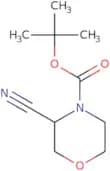
CAS:Versatile small molecule scaffoldFormula:C10H18N2O4Purity:Min. 95%Molecular weight:230.26 g/molN-Boc-3-Cyanomorpholine
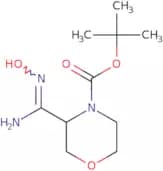
CAS:<p>Versatile small molecule scaffold</p>Formula:C10H16N2O3Purity:Min. 95%Molecular weight:212.25 g/moltert-Butyl 3-(N-hydroxycarbamimidoyl)morpholine-4-carboxylate
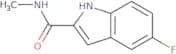
CAS:<p>Versatile small molecule scaffold</p>Formula:C10H19N3O4Purity:Min. 95%Molecular weight:245.28 g/mol5-Fluoro-N-methyl-1H-indole-2-carboxamide
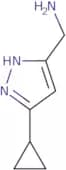
CAS:<p>Versatile small molecule scaffold</p>Formula:C10H9FN2OPurity:Min. 95%Molecular weight:192.19 g/mol(5-Cyclopropyl-1H-pyrazol-3-yl)methylamine
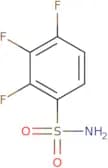
CAS:Versatile small molecule scaffoldFormula:C7H11N3Purity:Min. 95%Molecular weight:137.2 g/mol2,3,4-Trifluorobenzenesulphonamide
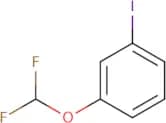
CAS:<p>Versatile small molecule scaffold</p>Formula:C6H4F3NO2SPurity:Min. 95%Molecular weight:211.16 g/mol1-(difluoromethoxy)-3-iodobenzene
CAS:<p>Versatile small molecule scaffold</p>Formula:C7H5F2IOPurity:Min. 95%Molecular weight:270.02 g/mol7-Oxaspiro[3.5]nonan-6-one
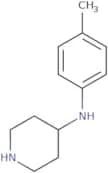
CAS:<p>Versatile small molecule scaffold</p>Formula:C8H12O2Purity:Min. 95%Molecular weight:140.18 g/molN-(4-Methylphenyl)piperidin-4-amine
CAS:Controlled Product<p>Versatile small molecule scaffold</p>Formula:C12H18N2Purity:Min. 95%Molecular weight:190.28 g/mol3-[4-(1-Aminoethyl)phenyl]benzonitrile
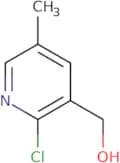
CAS:<p>Versatile small molecule scaffold</p>Formula:C15H14N2Purity:Min. 95%Molecular weight:222.28 g/mol(2-Chloro-5-methylpyridin-3-yl)methanol
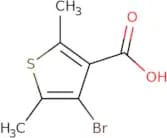
CAS:<p>Versatile small molecule scaffold</p>Formula:C7H8ClNOPurity:Min. 95%Molecular weight:157.6 g/mol4-Bromo-2,5-dimethylthiophene-3-carboxylic acid
CAS:Versatile small molecule scaffoldFormula:C7H7BrO2SPurity:Min. 95%Molecular weight:235.1 g/mol4-{[(Thiophen-3-yl)methyl]amino}benzoic acid
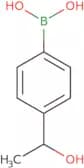
CAS:<p>Versatile small molecule scaffold</p>Formula:C12H11NO2SPurity:Min. 95%Molecular weight:233.29 g/mol(4-(1-Hydroxyethyl)phenyl)boronic acid
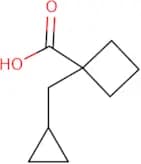
CAS:<p>Versatile small molecule scaffold</p>Formula:C8H11BO3Purity:Min. 95%Molecular weight:165.98 g/mol1-(Cyclopropylmethyl)cyclobutane-1-carboxylic acid
CAS:<p>Versatile small molecule scaffold</p>Formula:C9H14O2Purity:Min. 95%Molecular weight:154.21 g/mol1-[1-(2,4-Difluorophenyl)propyl]piperazine
CAS:Controlled Product<p>Versatile small molecule scaffold</p>Formula:C13H18F2N2Purity:Min. 95%Molecular weight:240.29 g/mol1-[1-(2,4-Difluorophenyl)ethyl]piperazine
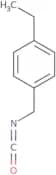
CAS:Controlled Product<p>Versatile small molecule scaffold</p>Formula:C12H16F2N2Purity:Min. 95%Molecular weight:226.27 g/mol1-Ethyl-4-(isocyanatomethyl)benzene
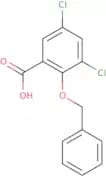
CAS:<p>Versatile small molecule scaffold</p>Formula:C10H11NOPurity:Min. 95%Molecular weight:161.2 g/mol2-(Benzyloxy)-3,5-dichlorobenzoic acid
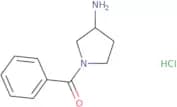
CAS:<p>Versatile small molecule scaffold</p>Formula:C14H10Cl2O3Purity:Min. 95%Molecular weight:297.1 g/mol1-Benzoylpyrrolidin-3-amine hydrochloride
CAS:Versatile small molecule scaffoldFormula:C11H15ClN2OPurity:Min. 95%Molecular weight:226.7 g/molEthyl 1,4,6,7-tetrahydropyrano[4,3-c]pyrazole-3-carboxylate
CAS:<p>Versatile small molecule scaffold</p>Formula:C10H12O4Purity:Min. 95%Molecular weight:196.2 g/moltert-Butyl 3-(2-ethoxy-2-oxoacetyl)-4-oxopiperidine-1-carboxylate
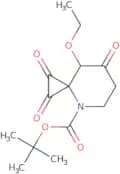
CAS:<p>Versatile small molecule scaffold</p>Formula:C14H21NO6Purity:Min. 95%Molecular weight:299.32 g/mol5-(tert-Butoxycarbonyl)-4,5,6,7-tetrahydro-1H-pyrazolo[4,3-c]pyridine-3-carboxylic acid
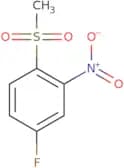
CAS:<p>Versatile small molecule scaffold</p>Formula:C12H17N3O4Purity:Min. 95%Molecular weight:267.28 g/mol5-Fluoro-2-(methylsulfonyl)nitrobenzene
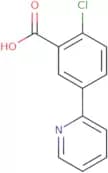
CAS:<p>Versatile small molecule scaffold</p>Formula:C7H6FNO4SPurity:Min. 95%Molecular weight:219.19 g/mol2-Chloro-5-(pyridin-2-yl)benzoic acid
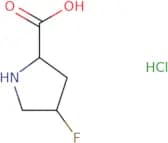
CAS:<p>Versatile small molecule scaffold</p>Formula:C12H8ClNO2Purity:Min. 95%Molecular weight:233.65 g/mol(2R,4S)-4-Fluoropyrrolidine-2-carboxylic acid hydrochloride
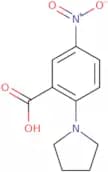
CAS:<p>Versatile small molecule scaffold</p>Formula:C5H9ClFNO2Purity:Min. 95%Molecular weight:169.58 g/mol5-Nitro-2-(1-pyrrolidinyl)benzenecarboxylic acid
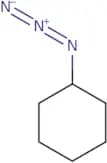
CAS:<p>Versatile small molecule scaffold</p>Formula:C11H12N2O4Purity:Min. 95%Molecular weight:236.22 g/molAzidocyclohexane
CAS:<p>Azidocyclohexane is an unsymmetrical azide that is used in pharmaceutical preparations. It is a non-selective cation, which means it can bind to both positive and negative ions. Azidocyclohexane has been shown to have a chemokine receptor activity, which may be related to its immunosuppressive effects on autoimmune diseases. Azidocyclohexane also has been found to inhibit the binding of adenosine receptors in cancer cells, which may lead to cancer cell death. In addition, azidocyclohexane may also be effective in treating inflammatory bowel disease due to its anti-inflammatory properties.</p>Formula:C6H11N3Purity:Min. 95%Molecular weight:125.17 g/mol2-{[(2-Methylphenyl)(phenyl)methoxy]methyl}oxirane
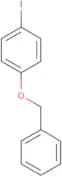
CAS:Versatile small molecule scaffoldFormula:C17H18O2Purity:Min. 95%Molecular weight:254.32 g/mol4-Iodobenzyloxybenzene
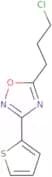
CAS:<p>4-Iodobenzyloxybenzene is an organic compound with a molecular formula of C6H5OHO. It is an aromatic hydrocarbon that can be used as a monomer for supramolecular chemistry. 4-Iodobenzyloxybenzene can also be used to introduce a clickable group to other molecules and is capable of forming nanowires in the presence of aluminium. The diameter of these nanowires can be controlled by changing the concentration of aluminium ions and temperature. This product has been shown to form complexes with water molecules, chloride, and halides.</p>Formula:IC6H4OCH2C6H5Purity:Min. 95%Molecular weight:310.13 g/mol5-(3-Chloropropyl)-3-(thiophen-2-yl)-1,2,4-oxadiazole
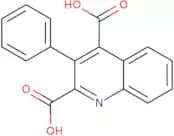
CAS:<p>Versatile small molecule scaffold</p>Formula:C9H9ClN2OSPurity:Min. 95%Molecular weight:228.7 g/mol3-Phenylquinoline-2,4-dicarboxylic acid
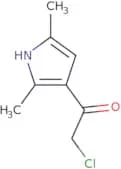
CAS:<p>Versatile small molecule scaffold</p>Formula:C17H11NO4Purity:Min. 95%Molecular weight:293.27 g/mol2-Chloro-1-(2,5-dimethyl-1H-pyrrol-3-yl)ethan-1-one
CAS:<p>Versatile small molecule scaffold</p>Formula:C8H10ClNOPurity:Min. 95%Molecular weight:171.62 g/mol2,7-Dichloro-[1,3]thiazolo[5,4-d]pyrimidine
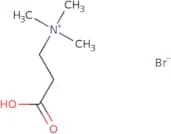
CAS:<p>Versatile small molecule scaffold</p>Formula:C5HCl2N3SPurity:Min. 95%Molecular weight:206.05 g/mol(2-Carboxyethyl)trimethylazanium bromide
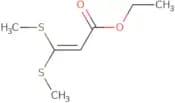
CAS:<p>Versatile small molecule scaffold</p>Formula:C6H14BrNO2Purity:Min. 95%Molecular weight:212.08 g/molEthyl 3,3-bis(methylsulfanyl)prop-2-enoate
CAS:<p>Versatile small molecule scaffold</p>Formula:C7H12O2S2Purity:Min. 95%Molecular weight:192.3 g/mol1-bromo-2-[(methylsulfanyl)methyl]benzene
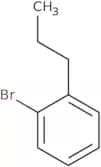
CAS:<p>Versatile small molecule scaffold</p>Formula:C8H9BrSPurity:Min. 95%Molecular weight:217.12 g/mol1-Bromo-2-propylbenzene
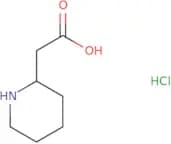
CAS:<p>Versatile small molecule scaffold</p>Formula:C9H11BrPurity:Min. 95%Molecular weight:199.09 g/mol2-(Piperidin-2-yl)acetic acid hydrochloride
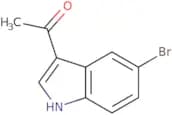
CAS:<p>2-(Piperidin-2-yl)acetic acid hydrochloride is a research chemical that is used in the synthesis of esters, solvents and other organic compounds. It is also used as a solvent in the production of pharmaceuticals. 2-(Piperidin-2-yl)acetic acid hydrochloride can be obtained by chemoenzymatic reactions or by alcoholysis of methyl esters. This compound has been shown to have the ability to act as a lipase inhibitor.</p>Formula:C7H14ClNO2Purity:Min. 95%Molecular weight:179.6 g/mol1-(5-Bromo-1H-indol-3-yl)ethanone
CAS:Controlled Product<p>Versatile small molecule scaffold</p>Formula:C10H8BrNOPurity:Min. 95%Molecular weight:238.08 g/mol2-Acetyl-2-azatricyclo[6.3.1.0,4,12]dodeca-1(12),8,10-trien-7-one
CAS:Versatile small molecule scaffoldFormula:C13H13NO2Purity:Min. 95%Molecular weight:215.25 g/molMethyl 2-[(2-methylpropyl)amino]acetate
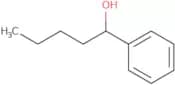
CAS:<p>Versatile small molecule scaffold</p>Formula:C7H15NO2Purity:Min. 95%Molecular weight:145.2 g/mol(1R)-1-Phenylpentan-1-ol
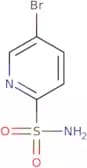
CAS:<p>Versatile small molecule scaffold</p>Formula:C11H16OPurity:Min. 95%Molecular weight:164.24 g/mol5-Bromopyridine-2-sulfonamide
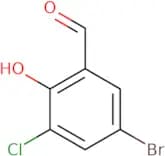
CAS:<p>Versatile small molecule scaffold</p>Formula:C5H5BrN2O2SPurity:Min. 95%Molecular weight:237.08 g/mol5-Bromo-3-chloro-2-hydroxybenzaldehyde
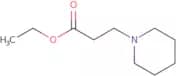
CAS:<p>5-Bromo-3-chloro-2-hydroxybenzaldehyde is a potent regulator of microglia, a type of immune cell. It has been shown to be neuroprotective in the presence of radiation and activated TNF-α, by decreasing necrosis and inflammation. This compound is also capable of inhibiting the production of IL-1β and IL-6 from human monocytes, which may be due to its hydrophobic properties. 5-Bromo-3-chloro-2-hydroxybenzaldehyde has been shown to suppress the development of experimental sclerosis in rats. The mechanism for this effect is unknown, but it may be due to its ability to inhibit the activation of proinflammatory genes such as p65 nuclear translocation or nuclear factor kappa B (NFκB).</p>Formula:C7H4BrClO2Purity:Min. 95%Molecular weight:235.46 g/molEthyl 1-Piperidinepropionate
CAS:<p>Ethyl 1-Piperidinepropionate is an organic compound that is an electron donor. It has an average molecular weight of 170.1 g/mol and a sensitivity to radiation. Ethyl 1-Piperidinepropionate can be used as a polymerization initiator for the preparation of polymers with a patterning ability. This compound is also used to produce dyes, flavours, perfumes, and pesticides.</p>Formula:C10H19NO2Purity:Min. 95%Molecular weight:185.27 g/mol1-[(4-Formylphenyl)sulfanyl]-N,N-dimethylformamide
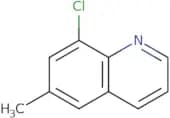
CAS:<p>Versatile small molecule scaffold</p>Formula:C10H11NO2SPurity:Min. 95%Molecular weight:209.27 g/mol8-Chloro-6-methylquinoline
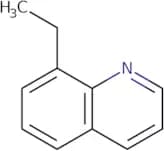
CAS:<p>8-Chloro-6-methylquinoline is a heterocyclic compound with the structure of an indole. This compound has been shown to selectively dehydrogenate cyclohexanones and transiminate indoles. 8-Chloro-6-methylquinoline is also capable of dehydrochlorinating indoles and tetrahydroquinolines, as well as azaheterocycles. The sequence in which these reactions occur can be controlled by the substitution of chlorine atoms at different positions on the ring.</p>Formula:C10H8ClNPurity:Min. 95%Molecular weight:177.63 g/mol8-Ethylquinoline
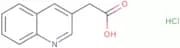
CAS:<p>8-Ethylquinoline is a chemical compound that is classified as an organometallic. It reacts with trifluoroacetic acid to give 8-ethyltrifluoromethylquinoline, which can undergo reductive elimination to form 8-ethylquinoline. 8-Ethylquinoline has been used in the synthesis of azobenzene derivatives, including a luminescent n-oxide and various quinolines. The structural studies of 8-ethylquinoline have been carried out by nmr spectroscopy. The compound has also been shown to be useful for the preparation of terminal alkynes, tetrachloropalladate ions, and constant potential cells.</p>Formula:C11H11NPurity:Min. 95%Molecular weight:157.21 g/mol2-(Quinolin-3-yl)acetic acid hydrochloride
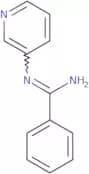
CAS:<p>Versatile small molecule scaffold</p>Formula:C11H10ClNO2Purity:Min. 95%Molecular weight:223.65 g/molN'-(Pyridin-3-yl)benzenecarboximidamide
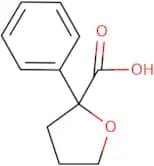
CAS:<p>Versatile small molecule scaffold</p>Formula:C12H11N3Purity:Min. 95%Molecular weight:197.24 g/mol2-Phenyloxolane-2-carboxylic acid
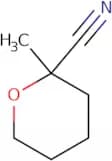
CAS:<p>Versatile small molecule scaffold</p>Formula:C11H12O3Purity:Min. 95%Molecular weight:192.21 g/mol2-Methyloxane-2-carbonitrile
CAS:<p>Versatile small molecule scaffold</p>Formula:C7H11NOPurity:Min. 95%Molecular weight:125.17 g/mol2-Chloro-N-[4-(2-phenyldiazen-1-yl)phenyl]acetamide
CAS:<p>Versatile small molecule scaffold</p>Formula:C14H12ClN3OPurity:Min. 95%Molecular weight:273.72 g/mol1-Oxa-3-azaspiro[4.4]nonan-2-one
CAS:<p>Versatile small molecule scaffold</p>Formula:C7H11NO2Purity:Min. 95%Molecular weight:141.17 g/mol8-Chloro-2,3,4,5-tetrahydro-1H-pyrido[4,3-b]-indole
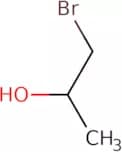
CAS:<p>Versatile small molecule scaffold</p>Formula:C11H11ClN2Purity:Min. 95%Molecular weight:206.67 g/mol1-Bromo-2-propanol
CAS:<p>Silver trifluoromethanesulfonate is a chemical that is used in the manufacture of 1-bromo-2-propanol. When it reacts with hydroxyl groups, it forms an anhydrous sodium salt that can be used to inhibit population growth. Silver trifluoromethanesulfonate has been shown to have an inhibitory effect on human serum and postharvest populations of bacteria by reacting with the hydroxyl group in the enzyme population growth. Chemical ionization mass spectrometry (CI-MS) has been used to identify the aromatic hydrocarbon produced during this reaction. The mechanism for this reaction is thought to be due to hydrogen bonding between silver trifluoromethanesulfonate and the hydroxyl group.</p>Formula:C3H7BrOPurity:Min. 95%Molecular weight:138.99 g/mol[(5-Amino-1,3-dimethyl-1H-pyrazol-4-yl)sulfanyl]formonitrile
CAS:<p>Versatile small molecule scaffold</p>Formula:C6H8N4SPurity:Min. 95%Molecular weight:168.22 g/mol[(5-Amino-3-methyl-1-phenyl-1H-pyrazol-4-yl)sulfanyl]formonitrile
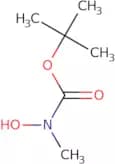
CAS:<p>Versatile small molecule scaffold</p>Formula:C11H10N4SPurity:Min. 95%Molecular weight:230.29 g/moltert-Butyl hydroxy(methyl)carbamate
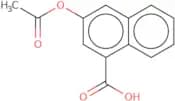
CAS:<p>Tert-Butyl hydroxy(methyl)carbamate is a linker that has been used in the synthesis of a number of pharmaceuticals including the anti-inflammatory drug celecoxib. It is an intermediate in the synthesis of several drugs, such as erythromycin, cefuroxime, and amoxicillin. Tert-Butyl hydroxy(methyl)carbamate can be activated to form reactive carbonyl groups by treatment with reagents like diazoethane or oxalyl chloride. These carbonyl groups can then react with nucleophiles like hydroxide ion to produce tert-butyl hydroxy(methyl)carbamate derivatives. Tert-Butyl hydroxy(methyl)carbamate reacts with bacterial cells by binding to purine bases on the ribosome. This binding prevents protein synthesis and cell division, leading to cell death.</p>Formula:C6H13NO3Purity:Min. 95%Molecular weight:147.17 g/mol3-(Acetyloxy)naphthalene-1-carboxylic acid
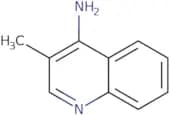
CAS:<p>Versatile small molecule scaffold</p>Formula:C13H10O4Purity:Min. 95%Molecular weight:230.2 g/mol4-Amino-3-methyl-quinoline
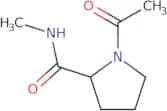
CAS:<p>Versatile small molecule scaffold</p>Formula:C10H10N2Purity:Min. 95%Molecular weight:158.19 g/mol(2S)-1-Acetyl-N-methylpyrrolidine-2-carboxamide
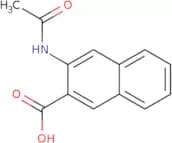
CAS:(2S)-1-Acetyl-N-methylpyrrolidine-2-carboxamide is a functional theory that has been shown to be able to form an intramolecular hydrogen bond. This compound's crystal x-ray diffraction study showed the presence of a water molecule, which helps to stabilize the molecule. The molecule was found to interact with a nonpolar solvent, such as chloroform, through a hydrogen bond. The computational method used for this study was DFT (density functional theory). The hydroxymethyl group on the 1st carbon atom forms a hydrogen bond with the oxygen atom on the 2nd carbon atom and also interacts with the chlorine atom on the 3rd carbon atom.Formula:C8H14N2O2Purity:Min. 95%Molecular weight:170.21 g/mol3-Acetamido-2-naphthoic acid
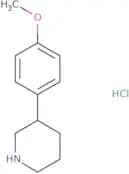
CAS:<p>Versatile small molecule scaffold</p>Formula:C13H11NO3Purity:Min. 95%Molecular weight:229.23 g/mol3-(4-Methoxyphenyl)piperidine hydrochloride
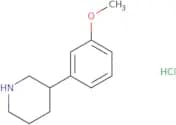
CAS:<p>Versatile small molecule scaffold</p>Formula:C12H18ClNOPurity:Min. 95%Molecular weight:227.73 g/mol3-(3-Methoxyphenyl)piperidine hydrochloride
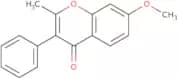
CAS:<p>Versatile small molecule scaffold</p>Formula:C12H18ClNOPurity:Min. 95%Molecular weight:227.74 g/mol7-Methoxy-2-methyl-3-phenyl-4H-chromen-4-one
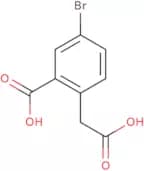
CAS:<p>7-Methoxy-2-methyl-3-phenyl-4H-chromen-4-one is a fungal metabolite that can be found in plants such as soybeans, peanuts, and peas. It also exists in human urine. 7-Methoxyisoflavone can inhibit the growth of fungi by inducing DNA damage. This compound has been shown to exhibit estrogenic activity and may have anticarcinogenic properties. 7-Methoxyisoflavone can also act as an inhibitor of the enzyme cyclopium and demethylase, which are responsible for the conversion of methoxyisoflavones into their corresponding phenolic acids.</p>Formula:C17H14O3Purity:Min. 95%Molecular weight:266.29 g/mol5-Bromo-2-(carboxymethyl)benzoic acid
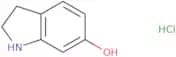
CAS:<p>Versatile small molecule scaffold</p>Formula:C9H7BrO4Purity:Min. 95%Molecular weight:259.05 g/mol2,3-Dihydro-1H-indol-6-ol hydrochloride
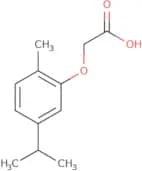
CAS:<p>Versatile small molecule scaffold</p>Formula:C8H10ClNOPurity:Min. 95%Molecular weight:171.62 g/mol(5-Isopropyl-2-methyl-phenoxy)-acetic acid
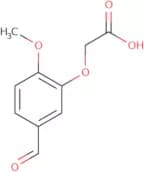
CAS:Versatile small molecule scaffoldFormula:C12H16O3Purity:Min. 95%Molecular weight:208.26 g/mol2-(5-Formyl-2-methoxyphenoxy)acetic acid
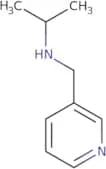
CAS:<p>Versatile small molecule scaffold</p>Formula:C10H10O5Purity:Min. 95%Molecular weight:210.18 g/molN-(Pyridin-3-ylmethyl)propan-2-amine
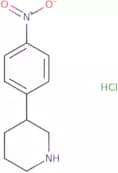
CAS:<p>Versatile small molecule scaffold</p>Formula:C9H14N2Purity:Min. 95%Molecular weight:150.22 g/mol3-(4-Nitrophenyl)piperidine hydrochloride
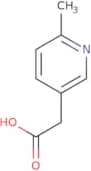
CAS:<p>Versatile small molecule scaffold</p>Formula:C11H15ClN2O2Purity:Min. 95%Molecular weight:242.7 g/mol(6-Methylpyridin-3-yl)acetic acid
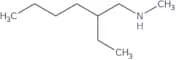
CAS:<p>Versatile small molecule scaffold</p>Formula:C8H9NO2Purity:Min. 95%Molecular weight:151.17 g/mol(2-Ethylhexyl)(methyl)amine
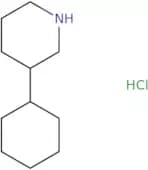
CAS:<p>Versatile small molecule scaffold</p>Formula:C9H21NPurity:Min. 95%Molecular weight:143.27 g/mol3-Cyclohexylpiperidine hydrochloride
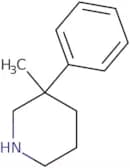
CAS:<p>Versatile small molecule scaffold</p>Formula:C11H22ClNPurity:Min. 95%Molecular weight:203.75 g/mol3-Methyl-3-phenylpiperidine
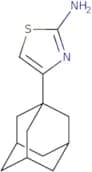
CAS:<p>3-Methyl-3-phenylpiperidine is a tertiary amine that contains a quaternary carbon. It has three different conformers, which can be determined by the presence of trifluoromethanesulfonic acid. The tertiary amine has two hydrogen atoms on the nitrogen atom and one hydrogen atom on the methyl group. 3-Methyl-3-phenylpiperidine is stable at room temperature in ethanol and preferentially reacts with sodium borohydride to form sodium N-(3-methyl-3-phenylpiperidinium) borohydride. This compound also has an electron withdrawing substituent, so it will have a higher thermodynamic stability than benzene or pyridinium salts.</p>Formula:C12H17NPurity:Min. 95%Molecular weight:175.27 g/mol4-(1-adamantyl)2-aminothiazole
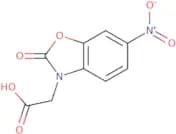
CAS:<p>Versatile small molecule scaffold</p>Formula:C13H18N2SPurity:Min. 95%Molecular weight:234.36 g/mol2-(6-Nitro-2-oxo-2,3-dihydro-1,3-benzoxazol-3-yl)acetic acid
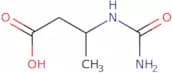
CAS:Versatile small molecule scaffoldFormula:C9H6N2O6Purity:Min. 95%Molecular weight:238.15 g/mol3-(Carbamoylamino)butanoic acid
CAS:<p>Versatile small molecule scaffold</p>Formula:C5H10N2O3Purity:Min. 95%Molecular weight:146.14 g/mol1,3-dimethyl-1H-pyrazolo[3,4-b]pyridine-5-carboxylic Acid
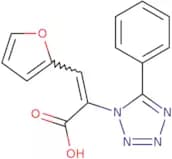
CAS:<p>Versatile small molecule scaffold</p>Formula:C9H9N3O2Purity:Min. 95%Molecular weight:191.18 g/mol3-(Furan-2-yl)-2-(5-phenyl-1H-1,2,3,4-tetrazol-1-yl)prop-2-enoic acid
CAS:<p>Versatile small molecule scaffold</p>Formula:C14H10N4O3Purity:Min. 95%Molecular weight:282.25 g/mol2-Chloro-N-[4-(1H-indol-3-yl)-1,3-thiazol-2-yl]acetamide
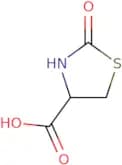
CAS:<p>Versatile small molecule scaffold</p>Formula:C13H10ClN3OSPurity:Min. 95%Molecular weight:291.76 g/mol2-Oxo-1,3-thiazolidine-4-carboxylic acid
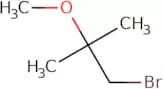
CAS:<p>2-Oxo-1,3-thiazolidine-4-carboxylic acid is an immunosuppressive agent that binds to the IL2 receptor. It has been shown in toxicological studies to have a low level of toxicity and no mutagenic activity. 2-Oxo-1,3-thiazolidine-4-carboxylic acid has also been shown to bind to DNA polymerase and inhibit the enzyme's activity in vitro. Clinical pathology studies on rats have shown that 2-Oxo-1,3-thiazolidine-4 carboxylic acid induces an increase in eosinophil cationic protein levels. The drug also inhibits growth factor β1 and can be used as a model system for leukemia inhibitory factor (LIF).</p>Formula:C4H5NO3SPurity:Min. 95%Molecular weight:147.15 g/mol1-bromo-2-methoxy-2-methylpropane
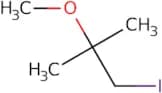
CAS:<p>Versatile small molecule scaffold</p>Formula:C5H11BrOPurity:Min. 95%Molecular weight:167.05 g/mol1-Iodo-2-methoxy-2-methylpropane
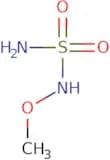
CAS:Versatile small molecule scaffoldFormula:C5H11IOPurity:Min. 95%Molecular weight:214.04 g/mol(Methoxysulfamoyl)amine
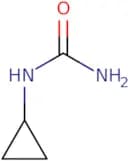
CAS:<p>Versatile small molecule scaffold</p>Formula:CH6N2O3SPurity:Min. 95%Molecular weight:126.14 g/mol1-Cyclopropylurea
CAS:<p>1-Cyclopropylurea is a synthetic anticancer drug that was originally developed as an antihypertensive agent. It has been shown to have inhibitory effects on cancer cells and inflammatory diseases, including cyclic nucleotide phosphodiesterase (cNPD) and b-raf. 1-Cyclopropylurea also inhibits the synthesis of epoxyeicosatrienoic acids (EETs) in vitro, suggesting that it may be useful for the treatment of cardiovascular diseases such as hypertension.<br>1-Cyclopropylurea has been shown to inhibit cell proliferation in culture by causing G2/M phase arrest and apoptosis. The mechanism of action of 1-cyclopropylurea is not well understood, but it has been suggested that the drug prevents the phosphorylation of b-raf, which prevents the activation of mitogen activated protein kinases (MAPKs).</p>Purity:Min. 95%3-Ethoxy-2-methylpropanoic acid
CAS:<p>Versatile small molecule scaffold</p>Formula:C6H12O3Purity:Min. 95%Molecular weight:132.2 g/mol3-Propoxypropanoic acid
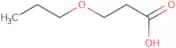
CAS:<p>Versatile small molecule scaffold</p>Formula:C6H12O3Purity:Min. 95%Molecular weight:132.16 g/molMethyl 5-ethynyl-1-methyl-1H-pyrazole-3-carboxylate
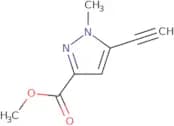
CAS:<p>Versatile small molecule scaffold</p>Formula:C8H8N2O2Purity:Min. 95%Molecular weight:164.16 g/molN-Methyl-1,3-benzoxazol-2-amine
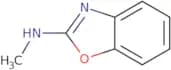
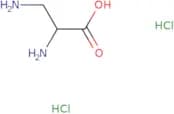
CAS:<p>N-Methyl-1,3-benzoxazol-2-amine is a linker molecule that has been used in the synthesis of chlorides, molecular ions, trifluoroacetic acid, bromoacetone, yields and benzyne. It is also a precursor to the synthesis of benzoxazoles and alkylhalides. This compound reacts with cyclization reactions such as imino and benzoxazole. N-Methyl-1,3-benzoxazol-2-amine is also used in the gas phase to synthesize phenacyls.</p>Formula:C8H8N2OPurity:Min. 95%Molecular weight:148.16 g/mol(S)-2,3-Diaminopropanoic acid dihydrochloride
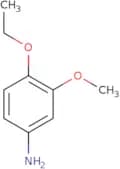
CAS:<p>Versatile small molecule scaffold</p>Formula:C3H10Cl2N2O2Purity:Min. 95%Molecular weight:177.03 g/mol4-Ethoxy-3-methoxyaniline
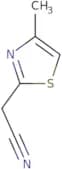
CAS:<p>Versatile small molecule scaffold</p>Formula:C9H13NO2Purity:Min. 95%Molecular weight:167.2 g/mol2-(4-Methyl-1,3-thiazol-2-yl)acetonitrile
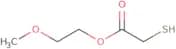
CAS:Versatile small molecule scaffoldFormula:C6H6N2SPurity:Min. 95%Molecular weight:138.19 g/mol2-Methoxyethyl 2-sulfanylacetate
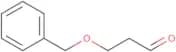
CAS:<p>2-Methoxyethyl 2-sulfanylacetate is a monomer that belongs to the group of acidic compounds. It has been shown to be a reliable acid and can be used when the desired pH range is between 4 and 7. This compound has been known to copolymerize with styrene, producing optical properties. When combined with trimethyltin, it forms an amide compound that has optical properties. The hydroxyl group on this monomer allows it to undergo reactions with mercaptides, which make it useful for optical purposes.</p>Formula:C5H10O3SPurity:Min. 95%Molecular weight:150.2 g/mol3-(Phenylmethoxy)propanal
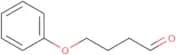
CAS:<p>3-(Phenylmethoxy)propanal is a chiral compound that can be used as an enantiomeric catalyst for the stereoselective synthesis of methyl ketones. It is also an analog for the synthesis of atorvastatin, which is a drug used to treat high cholesterol levels. This chemical has been shown to inhibit hmg-coa reductase in marine sponges and may be useful in the treatment of cardiovascular disease. 3-(Phenylmethoxy)propanal has also been shown to be effective against tetrahydropyran and marine sponge strains with aldehyde-degrading enzymes.</p>Formula:C10H12O2Purity:Min. 95%Molecular weight:164.2 g/mol4-Phenoxybutanal
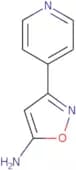
CAS:<p>Versatile small molecule scaffold</p>Formula:C10H12O2Purity:Min. 95%Molecular weight:164.2 g/mol3-(Pyridin-4-yl)isoxazol-5-amine
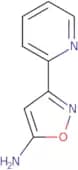
CAS:<p>The isoxazole ring of 3-(pyridin-4-yl)isoxazol-5-amine is stabilized by hydrogen bonds. The orientation of the pyridine ring and the two asymmetric carbon atoms result in a chiral center. The molecule has two possible structures. The result of this is a molecule that can be stabilized with one or the other configuration, depending on how it is synthesized.</p>Formula:C8H7N3OPurity:Min. 95%Molecular weight:161.16 g/mol3-Pyridin-2-yl-isoxazol-5-ylamine
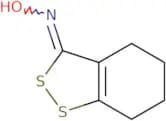
CAS:<p>Versatile small molecule scaffold</p>Formula:C8H7N3OPurity:Min. 95%Molecular weight:161.16 g/molN-(4,5,6,7-Tetrahydro-3H-1,2-benzodithiol-3-ylidene)hydroxylamine
CAS:<p>Versatile small molecule scaffold</p>Formula:C7H9NOS2Purity:Min. 95%Molecular weight:187.3 g/mol7-Oxabicyclo[2.2.1]heptane-2-carboxylic acid
CAS:<p>Versatile small molecule scaffold</p>Formula:C7H10O3Purity:Min. 95%Molecular weight:142.15 g/mol2-[(2-Nitrophenyl)sulfanyl]benzoic acid
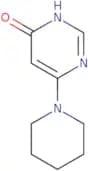
CAS:<p>Versatile small molecule scaffold</p>Formula:C13H9NO4SPurity:Min. 95%Molecular weight:275.28 g/mol6-(Piperidin-1-yl)-3,4-dihydropyrimidin-4-one
CAS:<p>Versatile small molecule scaffold</p>Formula:C9H13N3OPurity:Min. 95%Molecular weight:179.22 g/mol5-Chloroquinazolin-4-amine
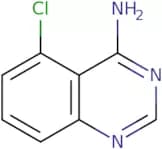
CAS:<p>Versatile small molecule scaffold</p>Formula:C8H6ClN3Purity:Min. 95%Molecular weight:179.61 g/mol7-Chloroquinazolin-4-amine
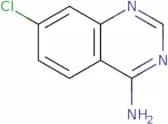
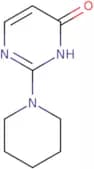
CAS:<p>Versatile small molecule scaffold</p>Formula:C8H6ClN3Purity:Min. 95%Molecular weight:179.6 g/mol2-(Piperidin-1-yl)pyrimidin-4-ol
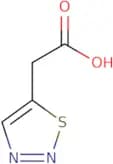
CAS:Versatile small molecule scaffoldFormula:C9H13N3OPurity:Min. 95%Molecular weight:179.22 g/mol2-(1,2,3-Thiadiazol-5-yl)acetic acid
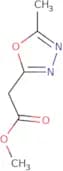
CAS:<p>Versatile small molecule scaffold</p>Formula:C4H4N2O2SPurity:Min. 95%Molecular weight:144.15 g/molMethyl 2-(5-methyl-1,3,4-oxadiazol-2-yl)acetate
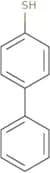
CAS:<p>Versatile small molecule scaffold</p>Formula:C6H8N2O3Purity:Min. 95%Molecular weight:156.14 g/molBiphenyl-4-thiol
CAS:<p>Biphenyl-4-thiol is a biphenyl derivative that is used in the treatment of fatty acid oxidation disorders. It is a lipophilic molecule that accumulates in red blood cells and can be detected by surface-enhanced Raman spectroscopy. Biphenyl-4-thiol has been shown to interact with the lipid bilayer, which may be due to its ability to form monolayers on the surface of red blood cells. The dipole moment of biphenyl-4-thiol causes an accumulation of electrons on one side of the molecule, which leads to electrochemical impedance changes upon exposure to electromagnetic radiation. X-ray absorption studies have shown that biphenyl-4-thiol has good chemical stability, which may be due to its aromaticity.</p>Formula:C12H10SPurity:Min. 95%Molecular weight:186.27 g/mol4-Chloro-8-nitroquinazoline
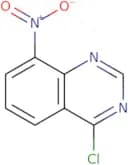
CAS:<p>4-Chloro-8-nitroquinazoline is a potent antiproliferative agent that binds to the FGFR3 receptor and inhibits the proliferation of bladder cancer cells. It also has potent activity against bladder cancer cells in culture and inhibits cell growth by binding to submicromolar concentrations of this protein. 4-Chloro-8-nitroquinazoline may be useful for the treatment of bladder cancer, which is a disease characterized by uncontrolled cell division. This drug can inhibit proliferation of bladder cancer cells by interfering with their ability to signal through FGFR3 receptors, thereby inhibiting the activation of downstream signaling pathways that regulate cell cycle progression.</p>Formula:C8H4ClN3O2Purity:Min. 95%Molecular weight:209.59 g/mol3-Ethynyl-1-azabicyclo[2.2.2]octan-3-ol
CAS:3-Ethynyl-1-azabicyclo[2.2.2]octan-3-ol is a potent inhibitor of farnesyl diphosphate synthase, an enzyme involved in the biosynthesis of cholesterol. It also has potent inhibitory activity against muscarinic acetylcholine receptors and antimuscarinic effects on the bladder. 3-Ethynyl-1-azabicyclo[2.2.2]octan-3-ol is rapidly absorbed from the gastrointestinal tract and catalyses the nonenzymatic conversion of low density lipoproteins (LDL) to oxidized LDL, which is then taken up by macrophages in the arterial wall where it promotes foam cell formation and atherosclerosis. This drug also inhibits cerebral function and has been shown to have antitumor properties in animal studies.Formula:C9H13NOPurity:Min. 95%Molecular weight:151.21 g/mol2-Amino-5-acetylpyridine
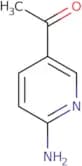
CAS:<p>2-Amino-5-acetylpyridine is a potent adenosine kinase inhibitor. It binds to the ATP site of the enzyme and inhibits the production of ATP, which is necessary for the normal functioning of cells. 2-Amino-5-acetylpyridine has been shown to be orally bioavailable in rat studies. In computational studies, it was found that analogues with a longer side chain may provide greater potency and oral bioavailability. Computational studies also revealed that 2-amino-5-acetylpyridine may have selectivity for adenosine over other substrates.</p>Formula:C7H8N2OPurity:Min. 95%Molecular weight:136.15 g/mol2-(Piperidin-2-yl)acetic acid
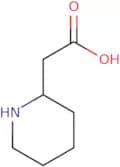
CAS:<p>2-(Piperidin-2-yl)acetic acid (2-PA) is a coordination complex that binds to the l-tartaric acid ligand, which is an amide. This compound may be used to treat urinary infections and fatty alcohols. 2-PA has shown anticancer activity in vitro and in vivo against a wide range of cancer cells. 2-PA also inhibits the production of isoflavonoid, which is a plant hormone that has been shown to possess anticancer properties. It also has been shown to have anti-inflammatory effects and can inhibit lipase activity. This compound can be synthesized using organic solvents at temperatures between -20°C and 180°C.</p>Formula:C7H13NO2Purity:Min. 95%Molecular weight:143.18 g/mol1-(1,2,4-Thiadiazol-5-yl)piperazine dihydrochloride
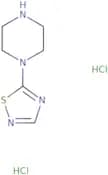
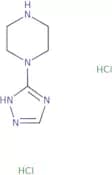
CAS:<p>Versatile small molecule scaffold</p>Formula:C6H12Cl2N4SPurity:Min. 95%Molecular weight:243.16 g/mol1-(1H-1,2,4-Triazol-3-yl)piperazine dihydrochloride
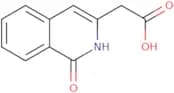
CAS:<p>Versatile small molecule scaffold</p>Formula:C6H13Cl2N5Purity:Min. 95%Molecular weight:226.1 g/mol2-(1-Oxo-1,2-dihydroisoquinolin-3-yl)acetic acid
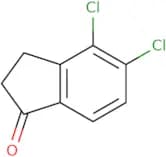
CAS:<p>Versatile small molecule scaffold</p>Formula:C11H9NO3Purity:Min. 95%Molecular weight:203.19 g/mol4,5-Dichloro-2,3-dihydro-1H-inden-1-one
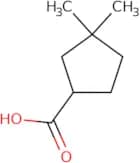
CAS:<p>Versatile small molecule scaffold</p>Formula:C8H6Cl2N2Purity:Min. 95%Molecular weight:201.05 g/mol3,3-Dimethylcyclopentane-1-carboxylic acid
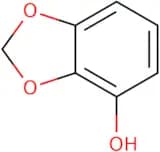
CAS:Versatile small molecule scaffoldFormula:C8H14O2Purity:Min. 95%Molecular weight:142.2 g/mol2H-1,3-benzodioxol-4-ol
CAS:<p>2H-1,3-benzodioxol-4-ol is a colorless liquid that has a density of 0.938 g/mL at 20°C. It is an acid with a pH of 3 and a lipophilicity of 1.2. The compound is reactive with chlorine, which can lead to the formation of diazonium salts in the presence of an acid catalyst. 2H-1,3-benzodioxol-4-ol's viscosity increases as its temperature decreases.</p>Formula:C7H6O3Purity:Min. 95%Molecular weight:138.12 g/mol2-(2'-Chloroethoxy)ethylphosphonic acid
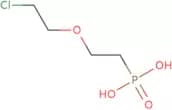
CAS:<p>Versatile small molecule scaffold</p>Formula:C4H10ClO4PPurity:Min. 95%Molecular weight:188.55 g/mol1-Chloro-2-(chloromethyl)-4-nitrobenzene
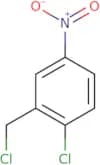
CAS:<p>1-Chloro-2-(chloromethyl)-4-nitrobenzene is a chemical that is used as a reagent to measure creatinine in human urine. Creatinine is a natural product of muscle metabolism, and its concentration in the blood is usually used to estimate the rate of muscle breakdown. The creatinine content of urine can be determined by measuring the concentration of 1-chloro-2-(chloromethyl)-4-nitrobenzene. This compound has been shown to be metabolized to oxime, which can be quantified using gas chromatography with mass spectrometry (GC/MS) or liquid chromatography with mass spectrometry (LC/MS). The validation of this method for creatinine quantification in human urine has been done by analyzing different dilutions of urine samples and comparing them with their corresponding values from the standard curve. Emulsions are also used in this process as they can help increase accuracy</p>Formula:C7H5Cl2NO2Purity:Min. 95%Molecular weight:206.02 g/mol3,3-Dimethylbutyl methanesulfonate
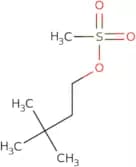
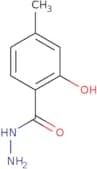
CAS:<p>Versatile small molecule scaffold</p>Formula:C7H16O3SPurity:Min. 95%Molecular weight:180.27 g/mol2-Hydroxy-4-methylbenzohydrazide
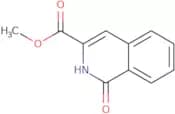
CAS:<p>2-Hydroxy-4-methylbenzohydrazide (2HMBA) is a supramolecular ligand that can bind to the active site of PI3K and AKT, which are two signaling molecules. 2HMBA has been shown to suppress immunosuppressive activities in an assay that measures the suppression of T cell proliferation by human peripheral blood mononuclear cells. The ligand binds to the active site of the enzyme and prevents its interaction with ATP, thereby inhibiting PI3K/AKT signaling. It also has magnetic properties. 2HMBA is a macrocyclic compound with a chiral center at C-2, which is responsible for its activity.</p>Formula:C8H10N2O2Purity:Min. 95%Molecular weight:166.18 g/molMethyl 1-oxo-1,2-dihydroisoquinoline-3-carboxylate
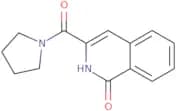
CAS:<p>Methyl 1-oxo-1,2-dihydroisoquinoline-3-carboxylate is a ligand that binds to the benzodiazepine receptor. It is a potential antitumor agent that inhibits the growth of cells in culture. The methyl ester form of Methyl 1-oxo-1,2-dihydroisoquinoline-3-carboxylate has been shown to have apoptosis inducing activity in human leukemia cells. This compound also has antiplasmodial and antiinflammatory properties.</p>Formula:C11H9NO3Purity:Min. 95%Molecular weight:203.19 g/mol3-(Pyrrolidine-1-carbonyl)-1,2-dihydroisoquinolin-1-one
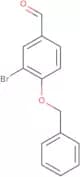
CAS:<p>Versatile small molecule scaffold</p>Formula:C14H14N2O2Purity:Min. 95%Molecular weight:242.27 g/mol4-Benzyloxy-3-bromobenzaldehyde
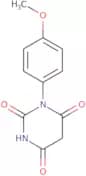
CAS:<p>4-Benzyloxy-3-bromobenzaldehyde (4BBA) is a natural product that has been found to have high affinity for the histone deacetylase (HDAC) enzyme. 4BBA shows low cytotoxicity in fibroblast cells, which are cells that synthesize collagen, and it may be used as a fluorescent probe for HDACs in marine sponges. 4BBA binds to the cytoplasmic side of the cell's nucleus and exhibits fluorescence when excited with light at 350 nm. This fluorogenic activity is due to the phenyl ring and should allow for visualization of HDACs on the surface of cells using microscopy techniques.</p>Formula:C14H11BrO2Purity:Min. 95%Molecular weight:291.14 g/mol1-(4-Methoxyphenyl)pyrimidine-2,4,6(1H,3H,5H)-trione
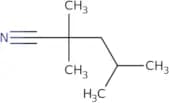
CAS:<p>Versatile small molecule scaffold</p>Formula:C11H10N2O4Purity:Min. 95%Molecular weight:234.21 g/mol2,2,4-Trimethylpentanenitrile
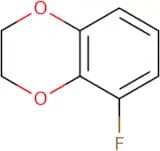
CAS:<p>Flecainide is an anti-arrhythmic drug that belongs to the class of drugs called Class IA or Class IC antiarrhythmics. It is used to treat arrhythmias in adults and children who are at least 6 months old. Flecainide is a long-acting medication, which means it remains active for a long time. This drug has been shown to have a low risk of causing neutropenia in women who take it during pregnancy. Flecainide has also been shown to cause an increase in serum levels of amide and trichloroethanol (TCE). The amide metabolite is responsible for most of the pharmacological effects of flecainide. The conformation and antipyrine metabolites are active against some bacteria and fungi, but not against other microorganisms such as Mycobacterium tuberculosis.</p>Formula:C8H15NPurity:Min. 95%Molecular weight:125.21 g/mol5-Fluoro-2,3-dihydro-1,4-benzodioxine
CAS:<p>Versatile small molecule scaffold</p>Formula:C8H7FO2Purity:Min. 95%Molecular weight:154.14 g/mol1,4-Diazabicyclo[2.2.2]octane-2-carboxylic acid dihydrochloride
CAS:Versatile small molecule scaffoldFormula:C7H14Cl2N2O2Purity:Min. 95%Molecular weight:229.1 g/mol4-(Pyrimidin-2-yl)aniline
CAS:<p>Versatile small molecule scaffold</p>Formula:C10H9N3Purity:Min. 95%Molecular weight:171.2 g/mol4-(Pyrimidin-5-yl)aniline
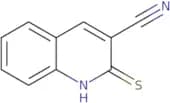
CAS:<p>Versatile small molecule scaffold</p>Formula:C10H9N3Purity:Min. 95%Molecular weight:171.2 g/mol2-Sulfanylquinoline-3-carbonitrile
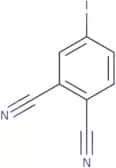
CAS:<p>2-Sulfanylquinoline-3-carbonitrile is a quinoline derivative that has been synthesized from chloroacetamide and chloroacetonitrile. It has antibacterial activity, and is effective against Gram-positive bacteria such as Methicillin-resistant Staphylococcus aureus (MRSA). Quinoline derivatives have been used in the synthesis of alkynylated quinolones, which are potent inhibitors of bacterial topoisomerase IV. These compounds have also been shown to be effective against Gram-negative bacteria. 2-Sulfanylquinoline-3-carbonitrile has also been shown to inhibit the production of proteins vital for cell division by binding to bacterial 16S ribosomal RNA.</p>Formula:C10H6N2SPurity:Min. 95%Molecular weight:186.24 g/mol4-Iodophthalonitrile
CAS:<p>4-Iodophthalonitrile is an unsymmetrical molecule with a low detection limit. This compound is soluble in organic solvents and has optical properties that are sensitive to the polarity of the solvent. 4-Iodophthalonitrile can be used as a precursor to other compounds, such as phenylacetic acid derivatives, which have potential applications in cancer treatment.</p>Formula:C8H3IN2Purity:Min. 95%Molecular weight:254.03 g/mol3-Formyl-4-methylbenzoic acid
CAS:<p>Versatile small molecule scaffold</p>Formula:C9H8O3Purity:Min. 95%Molecular weight:164.16 g/molEthyl 2-aminofuro[3,2-b]pyridine-3-carboxylate
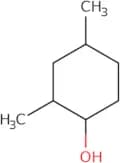
CAS:<p>Versatile small molecule scaffold</p>Formula:C10H10N2O3Purity:Min. 95%Molecular weight:206.2 g/mol2,4-Dimethylcyclohexan-1-ol
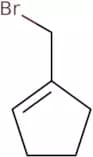
CAS:<p>Versatile small molecule scaffold</p>Formula:C8H16OPurity:Min. 95%Molecular weight:128.21 g/mol1-(bromomethyl)cyclopentene
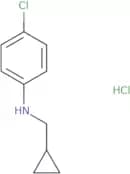
CAS:<p>1-(bromomethyl)cyclopentene is an organocatalyst that can be used in tandem with a metal salt to form a zirconocene. It reacts with alkynes to form conjugated dienes, which are useful for the production of polymers. 1-(bromomethyl)cyclopentene is also commonly used as a monomer in the synthesis of polymers containing nonconjugated vinyl groups.</p>Formula:C6H9BrPurity:Min. 95%Molecular weight:161.04 g/mol4-Chloro-N-(cyclopropylmethyl)aniline
CAS:<p>Versatile small molecule scaffold</p>Formula:C10H12ClNPurity:Min. 95%Molecular weight:181.67 g/mol3,5-Diethyl-4-hydroxybenzaldehyde
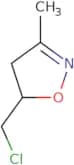
CAS:<p>Versatile small molecule scaffold</p>Formula:C11H14O2Purity:Min. 95%Molecular weight:178.23 g/mol5-(Chloromethyl)-3-methyl-4,5-dihydro-1,2-oxazole
CAS:<p>Versatile small molecule scaffold</p>Formula:C5H8ClNOPurity:Min. 95%Molecular weight:133.57 g/mol2-Oxo-2,3-dihydro-1H-imidazole-4,5-dicarboxylic acid
CAS:<p>Versatile small molecule scaffold</p>Formula:C5H4N2O5Purity:Min. 95%Molecular weight:172.1 g/mol2H,3H,5H-Indeno[1,2-c]pyridazin-3-one
CAS:<p>Versatile small molecule scaffold</p>Formula:C11H8N2OPurity:Min. 95%Molecular weight:184.19 g/mol3-Chloro-5H-indeno[1,2-c]pyridazine
CAS:<p>Versatile small molecule scaffold</p>Formula:C11H7ClN2Purity:Min. 95%Molecular weight:202.64 g/molTricyclo[7.1.1.0,2,7]undeca-2,4,6-trien-8-one
CAS:<p>Versatile small molecule scaffold</p>Formula:C11H10OPurity:Min. 95%Molecular weight:158.2 g/mol2-Pentyl-1,3-thiazolidine-4-carboxylic acid
CAS:<p>Versatile small molecule scaffold</p>Formula:C9H17NO2SPurity:Min. 95%Molecular weight:203.3 g/mol6-Chloro-N-phenyl-4-pyrimidinamine
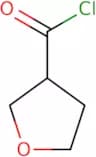
CAS:<p>Versatile small molecule scaffold</p>Formula:C10H8ClN3Purity:Min. 95%Molecular weight:205.65 g/molTetrahydrofuran-3-carbonyl chloride
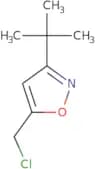
CAS:<p>Tetrahydrofuran-3-carbonyl chloride is a chiral, stereoselective, and sustainable chemical. It is used in the synthesis of various chiral compounds with high stereospecificity. Tetrahydrofuran-3-carbonyl chloride is an imine that reacts with an amine to produce an unsymmetrical ketone. The reaction mechanism involves the formation of a mixed anhydride as the first step by reacting the amine with chlorine or bromine. In this step, the carbonyl group of the reactant becomes attached to one carbon atom of the double bond in the mixed anhydride. This reaction can be used to synthesize staudinger and stereoselectively substituted tetrahydrofurans with high selectivity.</p>Formula:C5H7ClO2Purity:Min. 95%Molecular weight:134.56 g/mol3-tert-Butyl-5-(chloromethyl)-1,2-oxazole
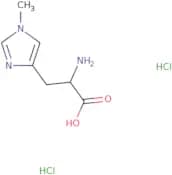
CAS:<p>Versatile small molecule scaffold</p>Formula:C8H12ClNOPurity:Min. 95%Molecular weight:173.64 g/mol1-Methyl-L-histidine dihydrochloride
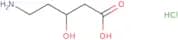
CAS:<p>Versatile small molecule scaffold</p>Formula:C7H13Cl2N3O2Purity:Min. 95%Molecular weight:242.1 g/mol5-Amino-3-hydroxypentanoic acid hydrochloride
CAS:<p>Versatile small molecule scaffold</p>Formula:C5H12ClNO3Purity:Min. 95%Molecular weight:169.61 g/molEthyl 5-{[(tert-butoxy)carbonyl]amino}-3-oxopentanoate
CAS:<p>Versatile small molecule scaffold</p>Formula:C12H21NO5Purity:Min. 95%Molecular weight:259.3 g/mol2-Iodo-1-benzofuran
CAS:<p>2-Iodo-1-benzofuran is a polymerase chain inhibitor that can bind to the d2 dopamine receptor. This drug has been shown to have potential use in the treatment of diseases such as autoimmune diseases, Parkinson’s disease, and cancer. 2-Iodo-1-benzofuran is a potent inhibitor of HIV replication in vitro and has been shown to be active against other retroviruses. 2-Iodo-1-benzofuran also binds with high affinity and specificity to rat striatal D2 dopamine receptors. The binding of this drug to the receptor leads to a decrease in the levels of dopamine in the brain and an increase in blood pressure.</p>Formula:C8H5IOPurity:Min. 95%Molecular weight:244.03 g/mol3-Cyclopropylimidazolidine-2,4-dione
CAS:<p>Versatile small molecule scaffold</p>Formula:C6H8N2O2Purity:Min. 95%Molecular weight:140.14 g/molPhenyl morpholine-4-carboxylate
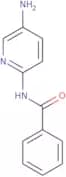
CAS:<p>Versatile small molecule scaffold</p>Formula:C11H13NO3Purity:Min. 95%Molecular weight:207.23 g/molN-(5-Aminopyridin-2-yl)benzamide
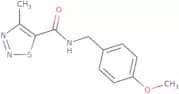
CAS:<p>Versatile small molecule scaffold</p>Formula:C12H11N3OPurity:Min. 95%Molecular weight:213.23 g/molN-(4-Methoxybenzyl)-4-methyl-1,2,3-thiadiazole-5-carboxamide
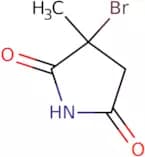
CAS:Versatile small molecule scaffoldFormula:C12H13N3O2SPurity:Min. 95%Molecular weight:263.32 g/mol3-Bromo-3-methylpyrrolidine-2,5-dione
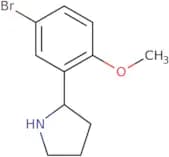
CAS:<p>Versatile small molecule scaffold</p>Formula:C5H6BrNO2Purity:Min. 95%Molecular weight:192.01 g/mol2-(5-Bromo-2-methoxyphenyl)pyrrolidine
CAS:<p>Versatile small molecule scaffold</p>Formula:C11H14BrNOPurity:Min. 95%Molecular weight:256.14 g/mol1-(1-Bromoethyl)-2-nitrobenzene
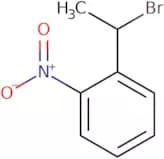
CAS:<p>Versatile small molecule scaffold</p>Formula:C8H8BrNO2Purity:Min. 95%Molecular weight:230.06 g/molPentacyclo[6.3.0.0(2,7).0(4,11).0(5,9)]undecan-3-one
CAS:<p>Pentacyclo[6.3.0.0(2,7).0(4,11).0(5,9)]undecan-3-one is a polycyclic compound that has been postulated to be a thione derived from the desulfurization of pentacyclo[6.3.0.0(2,7).0(4,11).0(5,9)]undecane with dimethoxycarbene and toluene as reagents in the presence of a catalyst (Scheme 1). The stereoselective desulfurization of the lactams leads to the formation of either (1S) or (1R) products depending on the conditions used for the reaction. This reaction is thermally driven and occurs at 130°C under vacuum with a pressure of 10-2 Torr. The desulfurized product can then be converted into various esters by treatment with alcohols in the presence of</p>Formula:C11H12OPurity:Min. 95%Molecular weight:160.21 g/mol3-(Chloromethyl)-1H-pyrazole hydrochloride
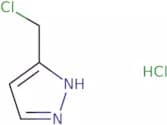
CAS:Versatile small molecule scaffoldFormula:C4H6Cl2N2Purity:Min. 95%Molecular weight:153.01 g/mol3-Methyl-3,6-diazabicyclo[3.2.1]octane
CAS:<p>Versatile small molecule scaffold</p>Formula:C7H14N2Purity:Min. 95%Molecular weight:126.2 g/mol2-Hydroxy-2-methyl-1-[4-(propan-2-yl)phenyl]propan-1-one
CAS:<p>Versatile small molecule scaffold</p>Formula:C13H18O2Purity:Min. 95%Molecular weight:206.28 g/mol6-Bromo-4-methylquinazoline
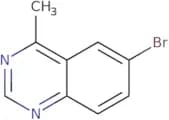
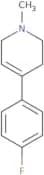
CAS:<p>Versatile small molecule scaffold</p>Formula:C9H7BrN2Purity:Min. 95%Molecular weight:223.07 g/mol4-(4-Fluorophenyl)-1,2,3,6-tetrahydro-1-methylpyridine
CAS:<p>4-(4-Fluorophenyl)-1,2,3,6-tetrahydro-1-methylpyridine is a chemical substance that can be used in the preparation of samples for analysis. It is sensitive to paroxetine and has analytical properties that are suitable for use as an analytical standard. 4-(4-Fluorophenyl)-1,2,3,6-tetrahydro-1-methylpyridine has been validated using liquid chromatography coupled with tandem mass spectrometry (LC/MS/MS) and has been shown to be minimal and highly repeatable. This reagent can be used in environments where the presence of toxic substances is not desirable.</p>Formula:C12H14FNPurity:Min. 95%Molecular weight:191.24 g/mol2-[2-(1,3-dioxo-2,3-dihydro-1H-isoindol-2-yl)ethoxy]acetic acid
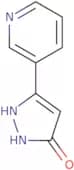
CAS:<p>2-[2-(1,3-Dioxo-2,3-dihydro-1H-isoindol-2-yl)ethoxy]acetic acid is an analog of niacinamide. It is a colorless liquid at room temperature and has a chemical formula of C5H8O4. 2-[2-(1,3-Dioxo-2,3-dihydro-1H-isoindol-2-yl)ethoxy]acetic acid can be synthesized by reacting ethyl acetate with acetone and methyl ethyl ketone. This reaction produces a mixture of diacetates. The diacetates are then reacted with nitric acid to produce 2-[2-(1,3-dioxo-2,3,-dihydroisindol)-2yl)ethoxy]acetic acid. The synthesis of this compound is similar to the synthesis of niacinamide from</p>Formula:C12H11NO5Purity:Min. 95%Molecular weight:249.22 g/mol3-(Pyridin-3-yl)-4,5-dihydro-1H-pyrazol-5-one
CAS:<p>Versatile small molecule scaffold</p>Formula:C8H7N3OPurity:Min. 95%Molecular weight:161.16 g/mol


![(6-Oxospiro[3.3]hept-2-yl)carbamic acid tert-butyl ester](/_next/image/?url=https%3A%2Fstatic.cymitquimica.com%2Fproducts%2F3D%2Fthumb-webp%2FTUB78686.webp&w=3840&q=75)
![2,2-Bis(propan-2-yl) 6,6-dimethoxyspiro[3.3]heptane-2,2-dicarboxylate](/_next/image/?url=https%3A%2Fstatic.cymitquimica.com%2Fproducts%2F3D%2Fthumb-webp%2FTUB78687.webp&w=3840&q=75)
![5-[(Methylsulfanyl)methyl]furan-2-carbaldehyde](/_next/image/?url=https%3A%2Fstatic.cymitquimica.com%2Fproducts%2F3D%2Fthumb-webp%2FTUB78697.webp&w=3840&q=75)
![N-{1-[5-(3-Bromophenyl)thiophen-2-yl]ethylidene}hydroxylamine, somers](/_next/image/?url=https%3A%2Fstatic.cymitquimica.com%2Fproducts%2F3D%2Fthumb-webp%2FTUB78706.webp&w=3840&q=75)
![3-methyl-1H-pyrazolo[3,4-b]pyridine-5-carboxylic acid](/_next/image/?url=https%3A%2Fstatic.cymitquimica.com%2Fproducts%2F3D%2Fthumb-webp%2FTUB78714.webp&w=3840&q=75)
![1-(Chloromethyl)-2-[(difluoromethyl)sulfanyl]benzene](/_next/image/?url=https%3A%2Fstatic.cymitquimica.com%2Fproducts%2F3D%2Fthumb-webp%2FTUB78718.webp&w=3840&q=75)
![2-{[(2-Nitrophenyl)methyl]sulfanyl}pyrimidine](/_next/image/?url=https%3A%2Fstatic.cymitquimica.com%2Fproducts%2F3D%2Fthumb-webp%2FTUB78728.webp&w=3840&q=75)
![3-{1H,4H,5H,6H-Cyclopenta[C]pyrazol-3-yl}aniline](/_next/image/?url=https%3A%2Fstatic.cymitquimica.com%2Fproducts%2F3D%2Fthumb-webp%2FTUB78810.webp&w=3840&q=75)
![(2E)-3-[5-(Pyrrolidine-1-sulfonyl)thiophen-3-yl]prop-2-enoic acid](/_next/image/?url=https%3A%2Fstatic.cymitquimica.com%2Fproducts%2F3D%2Fthumb-webp%2FTUB78819.webp&w=3840&q=75)
![7-Methyl-1,3-dihydroimidazo[4,5-b]pyridin-2-one](/_next/image/?url=https%3A%2Fstatic.cymitquimica.com%2Fproducts%2F3D%2Fthumb-webp%2FTVA03875.webp&w=3840&q=75)
![Methyl 7-azabicyclo[2.2.1]heptane-1-carboxylate hydrochloride](/_next/image/?url=https%3A%2Fstatic.cymitquimica.com%2Fproducts%2F3D%2Fthumb-webp%2FTVA04634.webp&w=3840&q=75)
![7-Oxaspiro[3.5]nonan-6-one](/_next/image/?url=https%3A%2Fstatic.cymitquimica.com%2Fproducts%2F3D%2Fthumb-webp%2FTVA28470.webp&w=3840&q=75)
![3-[4-(1-Aminoethyl)phenyl]benzonitrile](/_next/image/?url=https%3A%2Fstatic.cymitquimica.com%2Fproducts%2F3D%2Fthumb-webp%2FTVA30729.webp&w=3840&q=75)
![4-{[(Thiophen-3-yl)methyl]amino}benzoic acid](/_next/image/?url=https%3A%2Fstatic.cymitquimica.com%2Fproducts%2F3D%2Fthumb-webp%2FTVA33597.webp&w=3840&q=75)
![1-[1-(2,4-Difluorophenyl)propyl]piperazine](/_next/image/?url=https%3A%2Fstatic.cymitquimica.com%2Fproducts%2F3D%2Fthumb-webp%2FTVA97187.webp&w=3840&q=75)
![1-[1-(2,4-Difluorophenyl)ethyl]piperazine](/_next/image/?url=https%3A%2Fstatic.cymitquimica.com%2Fproducts%2F3D%2Fthumb-webp%2FTVA97207.webp&w=3840&q=75)
![Ethyl 1,4,6,7-tetrahydropyrano[4,3-c]pyrazole-3-carboxylate](/_next/image/?url=https%3A%2Fstatic.cymitquimica.com%2Fproducts%2F3D%2Fthumb-webp%2FTVA99021.webp&w=3840&q=75)
![5-(tert-Butoxycarbonyl)-4,5,6,7-tetrahydro-1H-pyrazolo[4,3-c]pyridine-3-carboxylic acid](/_next/image/?url=https%3A%2Fstatic.cymitquimica.com%2Fproducts%2F3D%2Fthumb-webp%2FTVA99056.webp&w=3840&q=75)
![2-{[(2-Methylphenyl)(phenyl)methoxy]methyl}oxirane](/_next/image/?url=https%3A%2Fstatic.cymitquimica.com%2Fproducts%2F3D%2Fthumb-webp%2FUAA57483.webp&w=3840&q=75)
![2,7-Dichloro-[1,3]thiazolo[5,4-d]pyrimidine](/_next/image/?url=https%3A%2Fstatic.cymitquimica.com%2Fproducts%2F3D%2Fthumb-webp%2FUAA60261.webp&w=3840&q=75)
![1-bromo-2-[(methylsulfanyl)methyl]benzene](/_next/image/?url=https%3A%2Fstatic.cymitquimica.com%2Fproducts%2F3D%2Fthumb-webp%2FUAA61411.webp&w=3840&q=75)
![2-Acetyl-2-azatricyclo[6.3.1.0,4,12]dodeca-1(12),8,10-trien-7-one](/_next/image/?url=https%3A%2Fstatic.cymitquimica.com%2Fproducts%2F3D%2Fthumb-webp%2FUAA62115.webp&w=3840&q=75)
![Methyl 2-[(2-methylpropyl)amino]acetate](/_next/image/?url=https%3A%2Fstatic.cymitquimica.com%2Fproducts%2F3D%2Fthumb-webp%2FUAA62856.webp&w=3840&q=75)
![1-[(4-Formylphenyl)sulfanyl]-N,N-dimethylformamide](/_next/image/?url=https%3A%2Fstatic.cymitquimica.com%2Fproducts%2F3D%2Fthumb-webp%2FUAA65438.webp&w=3840&q=75)
![2-Chloro-N-[4-(2-phenyldiazen-1-yl)phenyl]acetamide](/_next/image/?url=https%3A%2Fstatic.cymitquimica.com%2Fproducts%2F3D%2Fthumb-webp%2FUAA68035.webp&w=3840&q=75)
![1-Oxa-3-azaspiro[4.4]nonan-2-one](/_next/image/?url=https%3A%2Fstatic.cymitquimica.com%2Fproducts%2F3D%2Fthumb-webp%2FUAA68459.webp&w=3840&q=75)
![8-Chloro-2,3,4,5-tetrahydro-1H-pyrido[4,3-b]-indole](/_next/image/?url=https%3A%2Fstatic.cymitquimica.com%2Fproducts%2F3D%2Fthumb-webp%2FUAA68584.webp&w=3840&q=75)
![[(5-Amino-1,3-dimethyl-1H-pyrazol-4-yl)sulfanyl]formonitrile](/_next/image/?url=https%3A%2Fstatic.cymitquimica.com%2Fproducts%2F3D%2Fthumb-webp%2FUAA68892.webp&w=3840&q=75)
![[(5-Amino-3-methyl-1-phenyl-1H-pyrazol-4-yl)sulfanyl]formonitrile](/_next/image/?url=https%3A%2Fstatic.cymitquimica.com%2Fproducts%2F3D%2Fthumb-webp%2FUAA68895.webp&w=3840&q=75)
![1,3-dimethyl-1H-pyrazolo[3,4-b]pyridine-5-carboxylic Acid](/_next/image/?url=https%3A%2Fstatic.cymitquimica.com%2Fproducts%2F3D%2Fthumb-webp%2FUAA74372.webp&w=3840&q=75)
![2-Chloro-N-[4-(1H-indol-3-yl)-1,3-thiazol-2-yl]acetamide](/_next/image/?url=https%3A%2Fstatic.cymitquimica.com%2Fproducts%2F3D%2Fthumb-webp%2FUAA75029.webp&w=3840&q=75)
![7-Oxabicyclo[2.2.1]heptane-2-carboxylic acid](/_next/image/?url=https%3A%2Fstatic.cymitquimica.com%2Fproducts%2F3D%2Fthumb-webp%2FUAA80001.webp&w=3840&q=75)
![2-[(2-Nitrophenyl)sulfanyl]benzoic acid](/_next/image/?url=https%3A%2Fstatic.cymitquimica.com%2Fproducts%2F3D%2Fthumb-webp%2FUAA80643.webp&w=3840&q=75)
![3-Ethynyl-1-azabicyclo[2.2.2]octan-3-ol](/_next/image/?url=https%3A%2Fstatic.cymitquimica.com%2Fproducts%2F3D%2Fthumb-webp%2FUAA81707.webp&w=3840&q=75)
![1,4-Diazabicyclo[2.2.2]octane-2-carboxylic acid dihydrochloride](/_next/image/?url=https%3A%2Fstatic.cymitquimica.com%2Fproducts%2F3D%2Fthumb-webp%2FUCA49142.webp&w=3840&q=75)



![Ethyl 2-aminofuro[3,2-b]pyridine-3-carboxylate](/_next/image/?url=https%3A%2Fstatic.cymitquimica.com%2Fproducts%2F3D%2Fthumb-webp%2FUCA53964.webp&w=3840&q=75)


![2H,3H,5H-Indeno[1,2-c]pyridazin-3-one](/_next/image/?url=https%3A%2Fstatic.cymitquimica.com%2Fproducts%2F3D%2Fthumb-webp%2FUCA58116.webp&w=3840&q=75)
![3-Chloro-5H-indeno[1,2-c]pyridazine](/_next/image/?url=https%3A%2Fstatic.cymitquimica.com%2Fproducts%2F3D%2Fthumb-webp%2FUCA58117.webp&w=3840&q=75)
![Tricyclo[7.1.1.0,2,7]undeca-2,4,6-trien-8-one](/_next/image/?url=https%3A%2Fstatic.cymitquimica.com%2Fproducts%2F3D%2Fthumb-webp%2FUCA58447.webp&w=3840&q=75)


![Ethyl 5-{[(tert-butoxy)carbonyl]amino}-3-oxopentanoate](/_next/image/?url=https%3A%2Fstatic.cymitquimica.com%2Fproducts%2F3D%2Fthumb-webp%2FUCA61921.webp&w=3840&q=75)


![Pentacyclo[6.3.0.0(2,7).0(4,11).0(5,9)]undecan-3-one](/_next/image/?url=https%3A%2Fstatic.cymitquimica.com%2Fproducts%2F3D%2Fthumb-webp%2FUCA64919.webp&w=3840&q=75)
![3-Methyl-3,6-diazabicyclo[3.2.1]octane](/_next/image/?url=https%3A%2Fstatic.cymitquimica.com%2Fproducts%2F3D%2Fthumb-webp%2FUCA66709.webp&w=3840&q=75)
![2-Hydroxy-2-methyl-1-[4-(propan-2-yl)phenyl]propan-1-one](/_next/image/?url=https%3A%2Fstatic.cymitquimica.com%2Fproducts%2F3D%2Fthumb-webp%2FUCA67385.webp&w=3840&q=75)
![2-[2-(1,3-dioxo-2,3-dihydro-1H-isoindol-2-yl)ethoxy]acetic acid](/_next/image/?url=https%3A%2Fstatic.cymitquimica.com%2Fproducts%2F3D%2Fthumb-webp%2FUCA67665.webp&w=3840&q=75)