


Building Blocks
Subcategories of "Building Blocks"
- Boronic Acids & Boronic Acid Derivatives(5,774 products)
- Chiral Building Blocks(1,237 products)
- Hydrocarbon Building Blocks(6,098 products)
- Organic Building Blocks(60,970 products)
Found 205134 products of "Building Blocks"
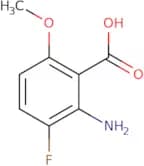
2-Amino-3-fluoro-6-methoxybenzoic acid
CAS:Versatile small molecule scaffoldFormula:C8H8FNO3Purity:Min. 95%Molecular weight:185.15 g/molRef: 3D-EEC94983
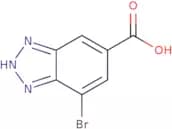
Discontinued product7-Bromo-1H-1,2,3-benzotriazole-5-carboxylic acid
CAS:Versatile small molecule scaffoldFormula:C7H4BrN3O2Purity:Min. 95%Molecular weight:242.03 g/mol4-(3-Aminophenyl)-1-methyl-1H-pyrazolo[3,4-b]pyridine-3-carboxylic acid
CAS:Versatile small molecule scaffoldFormula:C14H12N4O2Purity:Min. 95%Molecular weight:268.27 g/molRef: 3D-EEC70625
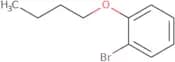
Discontinued product1-Bromo-2-butoxybenzene
CAS:1-Bromo-2-butoxybenzene is a chemical compound that is used in the manufacture of zinc oxide. It is also used as an electrolyte in dye-sensitized solar cells. In these cells, 1-bromo-2-butoxybenzene acts as an electron donor, which provides electrons to the redox dye on the surface of the semiconductor. This process leads to recombination, where electrons and holes recombine to produce electricity. The introduction of alkoxy groups into 1-bromo-2-butoxybenzene molecules allows for increased stability and efficiency in dye-sensitized solar cells.
Formula:C10H13BrOPurity:Min. 95%Molecular weight:229.11 g/molRef: 3D-ECA51430
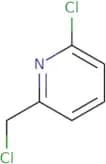
Discontinued product2-Chloro-6-(chloromethyl)pyridine
CAS:2-Chloro-6-(chloromethyl)pyridine (2C6CP) is a chloride precursor that can be used for the synthesis of metal chlorides, such as copper chlorides. 2C6CP is synthesized by reacting thionyl chloride with the substituted pyridine under anhydrous conditions at -78°C. The resultant 2C6CP is then hydrolyzed to produce the desired chloride.
2C6CP has been shown to act as a ligand in coordination chemistry. It was first synthesized by reacting 3-chloropyridine with thionyl chloride and then hydrolyzing it to 2-chloropyridine. This method was later modified to use 4-chlorobenzoyl chloride instead of 3-chloropyridine, producing 2,4-dichloropyridine.Formula:C6H5Cl2NPurity:Min. 95%Molecular weight:162.02 g/molRef: 3D-DDA84688
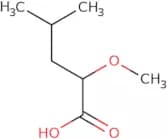
Discontinued product2-Methoxy-4-methylpentanoic acid
CAS:Versatile small molecule scaffold
Formula:C7H14O3Purity:Min. 95%Molecular weight:146.18 g/molRef: 3D-DDA81497
Discontinued productN-Methyl-7h-pyrrolo[2,3-d]pyrimidin-4-amine
CAS:Versatile small molecule scaffold
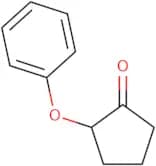
Formula:C7H8N4Purity:Min. 95%Molecular weight:148.17 g/mol2-Phenoxycyclopentan-1-one
CAS:Versatile small molecule scaffold
Formula:C11H12O2Purity:Min. 95%Molecular weight:176.21 g/molRef: 3D-DDA72616
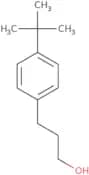
Discontinued product3-(4-tert-Butylphenyl)propan-1-ol
CAS:Versatile small molecule scaffold
Formula:C13H20OPurity:Min. 95%Molecular weight:192.3 g/molRef: 3D-DDA57408
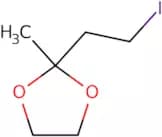
Discontinued product2-(2-Iodoethyl)-2-methyl-1,3-dioxolane
CAS:Versatile small molecule scaffold
Formula:C6H11IO2Purity:Min. 95%Molecular weight:242.05 g/molRef: 3D-DCA75051
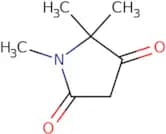
Discontinued product1,5,5-Trimethylpyrrolidine-2,4-dione
CAS:Versatile small molecule scaffold
Formula:C7H11NO2Purity:Min. 95%Molecular weight:141.2 g/molRef: 3D-DCA61796
Discontinued product3-(4-Ethylphenyl)butanoic acid
CAS:Versatile small molecule scaffold
Formula:C12H16O2Purity:Min. 95%Molecular weight:192.25 g/molRef: 3D-DCA08649
Discontinued product(4-Nitrophenyl)acetaldehyde
CAS:4-Nitrophenylacetaldehyde is an organic compound that belongs to the group of reactive chemicals. It is synthetically derived from nitrobenzene and reacts with proton, covalent adducts, or other functional groups. 4-Nitrophenylacetaldehyde has been shown to be a target for cancer research because it can be used to produce cancer drugs by linking a variety of functional groups to the molecule. The nitrogen atom in the molecule is also a target for research because it can be converted into nitro groups and can help in the development of new drugs through dehydration reactions.
Formula:C8H7NO3Purity:Min. 95%Molecular weight:165.15 g/molRef: 3D-BAA46005
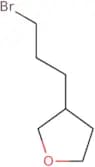
Discontinued product3-(3-Bromopropyl)oxolane
CAS:Versatile small molecule scaffold
Formula:C7H13BrOPurity:Min. 95%Molecular weight:193.08 g/molRef: 3D-ASB49655
Discontinued product4-(Dimethyl-1,2-oxazol-4-yl)phenol
CAS:Versatile small molecule scaffold
Formula:C11H11NO2Purity:Min. 95%Molecular weight:189.21 g/molRef: 3D-AKB62875
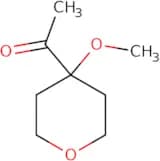
Discontinued product1-(4-Methoxyoxan-4-yl)ethan-1-one
CAS:Versatile small molecule scaffold
Formula:C8H14O3Purity:Min. 95%Molecular weight:158.19 g/molRef: 3D-AHA98278
Discontinued product1-[3-(Hydroxymethyl)phenyl]ethan-1-one
CAS:Versatile small molecule scaffold
Formula:C9H10O2Purity:Min. 95%Molecular weight:150.17 g/molRef: 3D-AFA60406
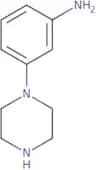
Discontinued product3-(Piperazin-1-yl)aniline
CAS:Versatile small molecule scaffold
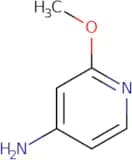
Formula:C10H15N3Purity:Min. 95%Molecular weight:177.25 g/mol(4-Aminopyridin-2-yl)methanol
CAS:Versatile small molecule scaffold
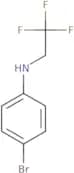
Formula:C6H8N2OPurity:Min. 95%Molecular weight:124.14 g/mol4-bromo-N-(2,2,2-trifluoroethyl)aniline
CAS:Versatile small molecule scaffold
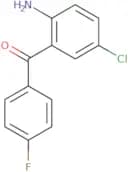
Formula:C8H7BrF3NPurity:Min. 95%Molecular weight:254 g/mol4-Chloro-2-(4-fluorobenzoyl)aniline
CAS:Versatile small molecule scaffold
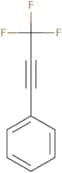
Formula:C13H9ClFNOPurity:Min. 95%Molecular weight:249.67 g/mol(3,3,3-Trifluoroprop-1-yn-1-yl)benzene
CAS:(3,3,3-Trifluoroprop-1-yn-1-yl)benzene is a reaction product that can be used to inhibit the activity of metalloprotease and as an anti-cancer agent. This compound inhibits the enzyme that causes chronic kidney disease and degenerative diseases. It is a potent inhibitor of metalloprotease, which is involved in cancer progression, fatty acid synthesis and bone formation. The effective dose for this drug is between 1 and 10mg/kg body weight. It has been shown to have an asymmetric synthesis with the use of amido groups. (3,3,3-Trifluoroprop-1-yn-1-yl)benzene also has antirheumatic properties due to its ability to inhibit proteases such as matrix metalloproteinases and cathepsins.
Formula:C9H5F3Purity:Min. 95%Molecular weight:170.13 g/molRef: 3D-AAA77262
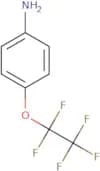
Discontinued product4-(Perfluoroethoxy)aniline
CAS:Versatile small molecule scaffold
Formula:C8H6F5NOPurity:Min. 95%Molecular weight:227.13 g/molRef: 3D-AAA71785
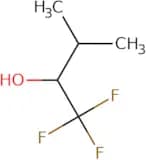
Discontinued product1,1,1-Trifluoro-3-methylbutan-2-ol
CAS:Versatile small molecule scaffold
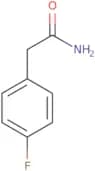
Formula:C5H9F3OPurity:Min. 95%Molecular weight:142.12 g/mol2-(4-Fluorophenyl)acetamide
CAS:2-(4-Fluorophenyl)acetamide (FFAA) is a broad-spectrum antiviral drug that has been evaluated against picornavirus, enterovirus, and rhinovirus. FFAA has been shown to be effective in the treatment of acute enterovirus infections in mice. This compound was also found to have a cytopathic effect on cells infected with enteroviruses in culture. It binds to the virus's RNA-dependent RNA polymerase and prevents viral replication. FFAA is not active against influenza A or B viruses, but it is active against influenza C virus. This compound has also been found to have medicinal properties, as it can inhibit the growth of human lung cancer cells in culture and may be useful for treating cancers such as leukemia.
Formula:C8H8FNOPurity:Min. 95%Molecular weight:153.15 g/molRef: 3D-AAA33229
Discontinued product4,5-Dihydro-1H-imidazol-2-amine hydrochloride
CAS:Please enquire for more information about 4,5-Dihydro-1H-imidazol-2-amine hydrochloride including the price, delivery time and more detailed product information at the technical inquiry form on this page
Formula:C3H7N3•HClPurity:Min. 95%Molecular weight:121.57 g/molRef: 3D-FD183639
Discontinued product4-Chloro-2-hydroxy-6-methylphenylboronic acid
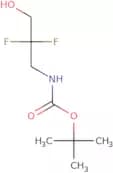
CAS:Versatile small molecule scaffoldFormula:C7H8BClO3Purity:Min. 95%Molecular weight:186.4 g/moltert-Butyl (2,2-difluoro-3-hydroxypropyl)carbamate
CAS:Versatile small molecule scaffoldFormula:C10H13NO4Purity:Min. 95%Molecular weight:211.21 g/mol1-Hydroxycyclopentane-1-carbonitrile
CAS:1-Hydroxycyclopentane-1-carbonitrile is a monomer that is hydrolyzed to form benzoin and cyanohydrins. It can be used in the production of scifinder as a monomer or dimerizer.
Formula:C6H9NOPurity:Min. 95%Molecular weight:111.14 g/mol2-Bromo-3,3,3-trifluoro-1-propene
CAS:Controlled Product2-Bromo-3,3,3-trifluoro-1-propene is a chemical compound that has been synthesized in an asymmetric reaction. The reactant is bromopropane and the product is 2,2,2-trifluoropropene. The methylene group on the propene molecule is activated by the nucleophilic attack of a fluoride ion from hydrogen fluoride to form a cavity with a highly strained bond. The kinetic study of this reaction revealed that the activation energy for the reaction is 42 kJ/mol. Palladium-catalyzed coupling reactions are catalyzed by palladium and require nonpolar solvents such as toluene or dichloromethane. This type of reaction has been shown to be exothermic with an isolated yield of 1%.
Formula:C3H2BrF3Purity:Min. 95%Color and Shape:Colorless PowderMolecular weight:174.95 g/mol3-Hydroxy-5-methylpyridine
CAS:3-Hydroxy-5-methylpyridine (3HMP) is a chemical substance that has been classified as an amine. It is a product of the metabolism of purines, which are nitrogenous bases found in DNA and RNA. 3HMP is produced by aerogenic bacteria (such as Enterobacter), and can be used to estimate the number of these bacteria present in water samples. 3HMP has been shown to have antiviral properties against influenza virus, and can be used as a biomarker for the presence of other viruses in animals. 3HMP also has mineralization properties, which have been studied extensively, particularly with regards to pancreatic disease.
Formula:C6H7NOPurity:Min. 95%Color and Shape:PowderMolecular weight:109.13 g/molRef: 3D-FH16174
Discontinued product8-Bromo-2-methylimidazo[1,2-a]pyridine
CAS:Versatile small molecule scaffold
Formula:C8H7N2BrPurity:Min. 95%Molecular weight:211.05 g/mol4,5-Dihydroxy-2,3-Pentanedione
CAS:4,5-Dihydroxy-2,3-pentanedione is a carbonyl compound that is the product of the oxidation of ascorbic acid. It is used in wastewater treatment and has antimicrobial properties against infectious diseases. This compound has been shown to inhibit protein synthesis by binding to the ribosome and preventing the formation of peptide bonds between amino acids. 4,5-Dihydroxy-2,3-pentanedione has also been shown to bind to plasma proteins, which may be due to its acyl chain structure. 4,5-Dihydroxy-2,3-pentanedione can be synthesized in a catalytic mechanism that involves dehydroascorbic acid and molecular oxygen.
Formula:C5H8O4Purity:Min. 95%Color and Shape:PowderMolecular weight:132.11 g/molRef: 3D-FD180770
Discontinued productPiperyline
CAS:Piperyline is an alkanoic acid that has shown to be effective against skin cancer. It also has antimicrobial properties, which may be due to its ability to bind metal ions and form polymeric compounds. Piperyline inhibits microbial growth by inhibiting the synthesis of proteins and nucleic acids. The antimicrobial activity is related to its cationic polymerization with hydroxyl groups, which forms a structure that can inhibit microbial enzymes and disrupt microbial cell membranes. This compound also interacts with the skin's natural lipids, making it difficult for microorganisms to attach and grow on the skin. Piperyline is synthesized in organic chemistry laboratories as an amide precursor of other pharmaceuticals such as penicillin.
Formula:C16H17NO3Purity:Min. 95%Molecular weight:271.31 g/mol

![4-(3-Aminophenyl)-1-methyl-1H-pyrazolo[3,4-b]pyridine-3-carboxylic acid](/_next/image/?url=https%3A%2Fstatic.cymitquimica.com%2Fproducts%2F3D%2Fthumb-webp%2FEEC70625.webp&w=3840&q=75)
![N-Methyl-7h-pyrrolo[2,3-d]pyrimidin-4-amine](/_next/image/?url=https%3A%2Fstatic.cymitquimica.com%2Fproducts%2F3D%2Fthumb-webp%2FDDA72716.webp&w=3840&q=75)



![1-[3-(Hydroxymethyl)phenyl]ethan-1-one](/_next/image/?url=https%3A%2Fstatic.cymitquimica.com%2Fproducts%2F3D%2Fthumb-webp%2FAFA60406.webp&w=3840&q=75)





![8-Bromo-2-methylimidazo[1,2-a]pyridine](/_next/image/?url=https%3A%2Fstatic.cymitquimica.com%2Fproducts%2F3D%2Fthumb-webp%2FUXB37475.webp&w=3840&q=75)

