


Building Blocks
Subcategories of "Building Blocks"
- Boronic Acids & Boronic Acid Derivatives(5,774 products)
- Chiral Building Blocks(1,237 products)
- Hydrocarbon Building Blocks(6,098 products)
- Organic Building Blocks(60,970 products)
Found 205134 products of "Building Blocks"
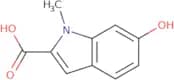
6-Hydroxy-1-methyl-1H-indole-2-carboxylic acid
CAS:Versatile small molecule scaffoldFormula:C10H9NO3Purity:Min. 95%Molecular weight:191.18 g/molRef: 3D-RWA52289
Discontinued product[2-(2-Methoxyethoxy)pyridin-4-yl]methanol
CAS:Versatile small molecule scaffold
Formula:C9H13NO3Purity:Min. 95%Molecular weight:183.2 g/molRef: 3D-XKB95076
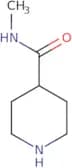
Discontinued productN-Methylpiperidine-4-carboxamide
CAS:Versatile small molecule scaffold
Formula:C7H14N2OPurity:Min. 95%Molecular weight:142.2 g/molRef: 3D-BAA90369
Discontinued product5-Cyclopropyl-7-oxa-5-azaspiro[3.4]octane-6,8-dione
CAS:Versatile small molecule scaffold
Formula:C9H11NO3Purity:Min. 95%Molecular weight:181.19 g/molRef: 3D-JBD33609
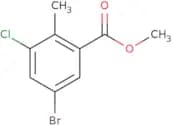
Discontinued productMethyl 5-bromo-3-chloro-2-methylbenzoate
CAS:Versatile small molecule scaffold
Formula:C9H8BrClO2Purity:Min. 95%Molecular weight:263.51 g/mol2-Benzoyl-2-azabicyclo[2.1.1]hexane-1-carboxylic acid
CAS:Versatile small molecule scaffold
Formula:C13H13NO3Purity:Min. 95%Molecular weight:231.25 g/molRef: 3D-JBD33608
Discontinued product5-Methyl-7-oxa-5-azaspiro[3.4]octane-6,8-dione
CAS:Versatile small molecule scaffold
Formula:C7H9NO3Purity:Min. 95%Molecular weight:155.15 g/molRef: 3D-JBD32590
Discontinued product2,2-Bis(chloromethyl)-1,3-dioxolane
CAS:2,2-Bis(chloromethyl)-1,3-dioxolane is a chemical intermediate that can be used in the production of polyester resins. It is a colorless liquid with an unpleasant odor. 2,2-Bis(chloromethyl)-1,3-dioxolane reacts with ethylene and glycol to produce polyester resins. This reaction occurs at high temperatures and produces a mixture of products such as diols and triols. When heated in acidic conditions, the compound hydrolyzes to form dihydroxyacetone and p-toluenesulfonic acid. The compound is also used as an industrial solvent for acidic materials. Recrystallizing the product from ethylene glycol results in a white crystalline powder that can be used in the manufacture of other chemicals such as sulfate salts.
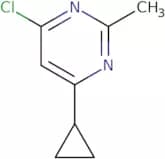
Formula:C5H8Cl2O2Purity:Min. 95%Molecular weight:171.02 g/mol4-Chloro-6-cyclopropyl-2-methylpyrimidine
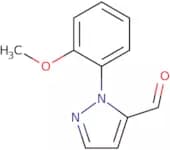
CAS:Versatile small molecule scaffoldFormula:C8H9ClN2Purity:Min. 95%Molecular weight:168.62 g/mol1-(2-Methoxyphenyl)-1H-pyrazole-5-carbaldehyde
CAS:Versatile small molecule scaffold
Formula:C11H10N2O2Purity:Min. 95%Molecular weight:202.21 g/molRef: 3D-JWB83034
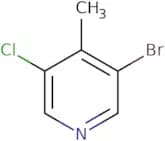
Discontinued product3-Bromo-5-chloro-4-methylpyridine
CAS:Versatile small molecule scaffold
Formula:C6H5BrClNPurity:Min. 95%Molecular weight:206.47 g/mol4-Chloro-2,6-dimethyl-5-phenylthieno[2,3-d]pyrimidine
CAS:Versatile small molecule scaffold
Formula:C14H11ClN2SPurity:Min. 95%Molecular weight:274.8 g/molRef: 3D-HFB22158
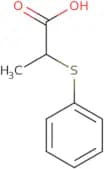
Discontinued product2-(Phenylsulfanyl)propanoic acid
CAS:Versatile small molecule scaffold
Formula:C9H10O2SPurity:Min. 95%Molecular weight:182.24 g/molRef: 3D-SAA43194
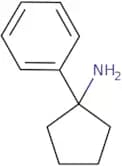
Discontinued product1-Phenyl-cyclopentylamine
CAS:Controlled Product1-Phenyl-cyclopentylamine (1-PCPA) is an amine that is typically used in the analysis of complex reactions. It has a nanomolar range and can be detected with various analytical methods, such as in vitro studies. 1-PCPA is used to measure enzymatic activity within the micromolar range. It has a bioisosteric relationship with pentapeptide, which means it can be substituted for pentapeptide in vivo without disrupting protein function or structure. 1-PCPA also has oral toxicity and behavioral effects, making it useful for analyzing the effect of amines on sensitivity and hydrochloric acid.
Formula:C11H15NPurity:Min. 95%Molecular weight:161.25 g/molRef: 3D-SAA38074
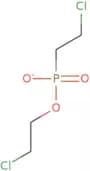
Discontinued product(2-Chloroethoxy)(2-chloroethyl)phosphinic acid
CAS:Versatile small molecule scaffold
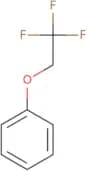
Formula:C4H8Cl2O3PPurity:Min. 95%Molecular weight:205.98 g/mol2,2,2-Trifluoroethoxybenzene
CAS:2,2,2-Trifluoroethoxybenzene is an acid catalyst that is used in the production of chlorobenzene. This organic compound has been shown to produce a number of products when heated with dihydroxybenzene. These products include acid chlorides and benzoyl chloride that can be used as intermediates in other chemical reactions. 2,2,2-Trifluoroethoxybenzene has also been shown to react with alkali metals to produce inorganic acids. In addition to acting as an acid catalyst, this compound may be used in the synthesis of flecainide, which is an antiarrhythmic drug. This product also reacts with carbonyl groups and acidic molecules such as halogens to form alkali metal carboxylates and alkanes.
Formula:C8H7F3OPurity:Min. 95%Molecular weight:176.14 g/mol4-(chloromethyl)-1-methyl-1H-imidazole hydrochloride
CAS:Controlled ProductVersatile small molecule scaffold
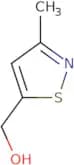
Formula:C5H8Cl2N2Purity:Min. 95%Molecular weight:167.03 g/mol(3-Methyl-1,2-thiazol-5-yl)methanol
CAS:Versatile small molecule scaffold
Formula:C5H7NOSPurity:Min. 95%Molecular weight:129.18 g/molRef: 3D-SAA26560
Discontinued product2-Chloro-3,4-dihydronaphthalen-1(2H)-one
CAS:2-Chloro-3,4-dihydronaphthalen-1(2H)-one is a sulfoxide with significant antifungal activity. It has been shown to be effective against Candida albicans and other fungi, including Aspergillus niger and Mucor racemosus. It is commonly used as an electrolyte in electroluminescent devices, such as light emitting diodes (LEDs). The reaction time for the formation of 2-chloro-3,4-dihydronaphthalen-1(2H)-one from potassium sulfate is dependent on the acid catalyst used. Organic chemists have shown that the use of 2-chloro-3,4-dihydronaphthalen-1(2H)-one can inhibit leukotriene synthesis.
Formula:C10H9OClPurity:Min. 95%Molecular weight:180.63 g/molRef: 3D-SAA21580
Discontinued productN-(3-Methoxyphenyl)prop-2-enamide
CAS:Versatile small molecule scaffold
Formula:C10H11NO2Purity:Min. 95%Molecular weight:177.2 g/molRef: 3D-SAA20899
Discontinued productEthyl spiro[2.3]hexane-1-carboxylate
CAS:Versatile small molecule scaffold
Formula:C9H14O2Purity:Min. 95%Molecular weight:154.21 g/molRef: 3D-SAA20257
Discontinued product2,3-Difluoro-6-methoxybenzenesulfonyl chloride
CAS:Versatile small molecule scaffold
Formula:C7H5ClF2O3SPurity:Min. 95%Molecular weight:242.63 g/molRef: 3D-IYB07496
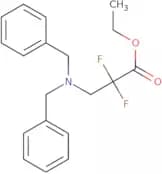
Discontinued productethyl 3-(dibenzylaMino)-2,2-difluoropropanoate
CAS:Versatile small molecule scaffold
Formula:C19H21F2NO2Purity:Min. 95%Molecular weight:333.37 g/molRef: 3D-RWA54736
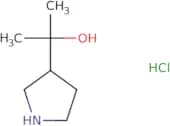
Discontinued product(S)-2-(3-Pyrrolidinyl)-2-propanol Hydrochloride ee
CAS:Versatile small molecule scaffold
Formula:C7H16ClNOPurity:Min. 95%Molecular weight:165.66 g/moltert-Butyl (2,2-difluoro-3-hydroxypropyl)carbamate
CAS:Versatile small molecule scaffoldFormula:C10H13NO4Purity:Min. 95%Molecular weight:211.21 g/mol2-Bromo-3,3,3-trifluoro-1-propene
CAS:Controlled Product2-Bromo-3,3,3-trifluoro-1-propene is a chemical compound that has been synthesized in an asymmetric reaction. The reactant is bromopropane and the product is 2,2,2-trifluoropropene. The methylene group on the propene molecule is activated by the nucleophilic attack of a fluoride ion from hydrogen fluoride to form a cavity with a highly strained bond. The kinetic study of this reaction revealed that the activation energy for the reaction is 42 kJ/mol. Palladium-catalyzed coupling reactions are catalyzed by palladium and require nonpolar solvents such as toluene or dichloromethane. This type of reaction has been shown to be exothermic with an isolated yield of 1%.
Formula:C3H2BrF3Purity:Min. 95%Color and Shape:Colorless PowderMolecular weight:174.95 g/mol4,5-Dihydro-1H-imidazol-2-amine hydrochloride
CAS:Please enquire for more information about 4,5-Dihydro-1H-imidazol-2-amine hydrochloride including the price, delivery time and more detailed product information at the technical inquiry form on this page
Formula:C3H7N3•HClPurity:Min. 95%Molecular weight:121.57 g/molRef: 3D-FD183639
Discontinued product4-Chloro-2-hydroxy-6-methylphenylboronic acid
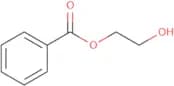
CAS:Versatile small molecule scaffoldFormula:C7H8BClO3Purity:Min. 95%Molecular weight:186.4 g/mol2-Hydroxyethyl benzoate
CAS:2-Hydroxyethyl benzoate is a model system that has been used to study the mechanism of hydrolysis of an ester with a hydroxyl group. The reaction products are a metal hydroxide and a chloride ion. 2-Hydroxyethyl benzoate is an antimicrobial agent that has shown activity against bacteria, fungi, and protozoa. It is thought to work by reacting with fatty acids in the cell membrane, leading to disruption of the membrane and leakage of cellular contents. It also reacts with chloride ions to form hydroxybenzoic acid and water molecules. The activation energy for this reaction was found to be around 19 kJ mol−1.
Formula:C9H10O3Purity:Min. 95%Molecular weight:166.17 g/mol1-Hydroxycyclopentane-1-carbonitrile
CAS:1-Hydroxycyclopentane-1-carbonitrile is a monomer that is hydrolyzed to form benzoin and cyanohydrins. It can be used in the production of scifinder as a monomer or dimerizer.
Formula:C6H9NOPurity:Min. 95%Molecular weight:111.14 g/mol3-Hydroxy-5-methylpyridine
CAS:3-Hydroxy-5-methylpyridine (3HMP) is a chemical substance that has been classified as an amine. It is a product of the metabolism of purines, which are nitrogenous bases found in DNA and RNA. 3HMP is produced by aerogenic bacteria (such as Enterobacter), and can be used to estimate the number of these bacteria present in water samples. 3HMP has been shown to have antiviral properties against influenza virus, and can be used as a biomarker for the presence of other viruses in animals. 3HMP also has mineralization properties, which have been studied extensively, particularly with regards to pancreatic disease.
Formula:C6H7NOPurity:Min. 95%Color and Shape:PowderMolecular weight:109.13 g/molRef: 3D-FH16174
Discontinued product8-Bromo-2-methylimidazo[1,2-a]pyridine
CAS:Versatile small molecule scaffold
Formula:C8H7N2BrPurity:Min. 95%Molecular weight:211.05 g/mol4,5-Dihydroxy-2,3-Pentanedione
CAS:4,5-Dihydroxy-2,3-pentanedione is a carbonyl compound that is the product of the oxidation of ascorbic acid. It is used in wastewater treatment and has antimicrobial properties against infectious diseases. This compound has been shown to inhibit protein synthesis by binding to the ribosome and preventing the formation of peptide bonds between amino acids. 4,5-Dihydroxy-2,3-pentanedione has also been shown to bind to plasma proteins, which may be due to its acyl chain structure. 4,5-Dihydroxy-2,3-pentanedione can be synthesized in a catalytic mechanism that involves dehydroascorbic acid and molecular oxygen.
Formula:C5H8O4Purity:Min. 95%Color and Shape:PowderMolecular weight:132.11 g/molRef: 3D-FD180770
Discontinued productPiperyline
CAS:Piperyline is an alkanoic acid that has shown to be effective against skin cancer. It also has antimicrobial properties, which may be due to its ability to bind metal ions and form polymeric compounds. Piperyline inhibits microbial growth by inhibiting the synthesis of proteins and nucleic acids. The antimicrobial activity is related to its cationic polymerization with hydroxyl groups, which forms a structure that can inhibit microbial enzymes and disrupt microbial cell membranes. This compound also interacts with the skin's natural lipids, making it difficult for microorganisms to attach and grow on the skin. Piperyline is synthesized in organic chemistry laboratories as an amide precursor of other pharmaceuticals such as penicillin.
Formula:C16H17NO3Purity:Min. 95%Molecular weight:271.31 g/mol

![[2-(2-Methoxyethoxy)pyridin-4-yl]methanol](/_next/image/?url=https%3A%2Fstatic.cymitquimica.com%2Fproducts%2F3D%2Fthumb-webp%2FXKB95076.webp&w=3840&q=75)
![5-Cyclopropyl-7-oxa-5-azaspiro[3.4]octane-6,8-dione](/_next/image/?url=https%3A%2Fstatic.cymitquimica.com%2Fproducts%2F3D%2Fthumb-webp%2FJBD33609.webp&w=3840&q=75)
![2-Benzoyl-2-azabicyclo[2.1.1]hexane-1-carboxylic acid](/_next/image/?url=https%3A%2Fstatic.cymitquimica.com%2Fproducts%2F3D%2Fthumb-webp%2FJBD33608.webp&w=3840&q=75)
![5-Methyl-7-oxa-5-azaspiro[3.4]octane-6,8-dione](/_next/image/?url=https%3A%2Fstatic.cymitquimica.com%2Fproducts%2F3D%2Fthumb-webp%2FJBD32590.webp&w=3840&q=75)

![4-Chloro-2,6-dimethyl-5-phenylthieno[2,3-d]pyrimidine](/_next/image/?url=https%3A%2Fstatic.cymitquimica.com%2Fproducts%2F3D%2Fthumb-webp%2FHFB22158.webp&w=3840&q=75)



![Ethyl spiro[2.3]hexane-1-carboxylate](/_next/image/?url=https%3A%2Fstatic.cymitquimica.com%2Fproducts%2F3D%2Fthumb-webp%2FSAA20257.webp&w=3840&q=75)







![8-Bromo-2-methylimidazo[1,2-a]pyridine](/_next/image/?url=https%3A%2Fstatic.cymitquimica.com%2Fproducts%2F3D%2Fthumb-webp%2FUXB37475.webp&w=3840&q=75)

