


Building Blocks
Subcategories of "Building Blocks"
- Boronic Acids & Boronic Acid Derivatives(5,778 products)
- Chiral Building Blocks(1,243 products)
- Hydrocarbon Building Blocks(6,099 products)
- Organic Building Blocks(61,038 products)
Found 205373 products of "Building Blocks"
4-[(Benzylamino)methyl]thian-4-ol
CAS:Versatile small molecule scaffold
Formula:C13H19NOSPurity:Min. 95%Molecular weight:237.4 g/molRef: 3D-VNC88729
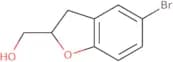
Discontinued product(5-Bromo-2,3-dihydro-1-benzofuran-2-yl)methanol
CAS:Versatile small molecule scaffold
Formula:C9H9O2BrPurity:Min. 95%Molecular weight:229.07 g/molRef: 3D-XHA57735
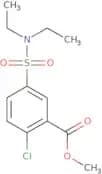
Discontinued productMethyl 2-chloro-5-(diethylsulfamoyl)benzoate
CAS:Versatile small molecule scaffold
Formula:C12H16ClNO4SPurity:Min. 95%Molecular weight:305.78 g/molRef: 3D-VNA62482
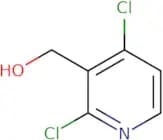
Discontinued product2,4-Dichloropyridine-3-methanol
CAS:Versatile small molecule scaffold
Formula:C6H5NOCl2Purity:Min. 95%Molecular weight:178.02 g/molRef: 3D-VMB54324
Discontinued product4-Methyl-1,2-oxazolidin-4-ol hydrochloride
CAS:Versatile small molecule scaffold
Formula:C4H10ClNO2Purity:Min. 95%Molecular weight:139.6 g/molRef: 3D-XLD15344
Discontinued product2-[(3,5-Dimethylphenyl)formamido]acetic acid
CAS:2-[(3,5-Dimethylphenyl)formamido]acetic acid is a compound with diverse applications and characteristics. It is a diphenyl ether that can be used as an electrode material in various electronic devices. Additionally, it has cholinergic properties, meaning it affects the neurotransmitter acetylcholine in the nervous system.
Formula:C11H13NO3Purity:Min. 95%Molecular weight:207.23 g/molRef: 3D-YAA08214
Discontinued product1-[3-(Chloromethyl)benzoyl]piperidine
CAS:Versatile small molecule scaffold
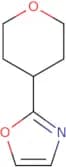
Formula:C13H16ClNOPurity:Min. 95%Molecular weight:237.72 g/mol2-(Oxan-4-yl)-1,3-oxazole
CAS:Versatile small molecule scaffold
Formula:C8H11NO2Purity:Min. 95%Molecular weight:153.18 g/molRef: 3D-NKD14693
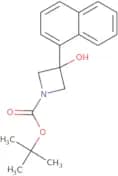
Discontinued producttert-Butyl 3-hydroxy-3-(naphthalen-1-yl)azetidine-1-carboxylate
CAS:Versatile small molecule scaffold
Formula:C18H21NO3Purity:Min. 95%Molecular weight:299.4 g/molRef: 3D-WSC84861
Discontinued productrac-(2R,3S)-1-{[(9H-Fluoren-9-yl)methoxy]carbonyl}-3-phenylpyrrolidine-2-carboxylic acid
CAS:Rac-1-{[(9H-fluoren-9-yl)methoxy]carbonyl}-3-phenylpyrrolidine-2-carboxylic acid is a chiral, stereospecific, cyclic sulfate that is synthetized by the reaction of glycol with lactam. It has been found to be effective against various types of cancer cells. Rac-1-{[(9H-fluoren-9-yl)methoxy]carbonyl}-3-phenylpyrrolidine 2 carboxylic acid is an enantiopure compound that can be used as an intermediate in the synthesis of antiinflammatory drugs such as kainic acid.
Formula:C26H23NO4Purity:Min. 95%Molecular weight:413.5 g/molAzacycloundecane
CAS:Azacycloundecane is a cycloalkane that is used as a solvent. The use of this compound in vivo models has been demonstrated to be useful in the study of drug uptake and distribution, as well as having clinical applications. Azacycloundecane is often used in detergent compositions due to its ability to solubilize fatty acids and inhibit their oxidation. This chemical has also been shown to have low energy, which makes it a suitable candidate for use in osmosis experiments. Azacycloundecane does not react with hydrogen chloride or carbonyl groups. It can be found naturally in fatty acids, amines, benzofuran derivatives, and aliphatic hydrocarbons.
Formula:C10H21NPurity:Min. 95%Molecular weight:155.28 g/molRef: 3D-AAA29442
Discontinued product3-(Chloromethyl)-5-phenylisoxazole
CAS:3-(Chloromethyl)-5-phenylisoxazole is a water soluble moiety that is used in the synthesis of conjugates with antitumor activity. 3-(Chloromethyl)-5-phenylisoxazole has been shown to inhibit the growth of brain tumors by binding to DNA, inhibiting transcription and replication. The drug also inhibits protein synthesis and cell division. This compound can be esterified and isothiazole substituted to form an antitumor drug that has a strong antiproliferative effect on human leukemia cells. The biological activity of 3-(chloromethyl)-5-phenylisoxazole can be enhanced by catalytic hydrogenation with methanol in acidic conditions.
Formula:C10H8ClNOPurity:Min. 95%Molecular weight:193.63 g/molRef: 3D-PAA73110
Discontinued product7-Oxa-1-azaspiro[3.5]nonan-2-one
CAS:Versatile small molecule scaffold
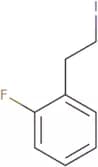
Formula:C7H11NO2Purity:Min. 95%Molecular weight:141.17 g/mol1-Fluoro-2-(2-iodoethyl)benzene
CAS:Versatile small molecule scaffold
Formula:C8H8FIPurity:Min. 95%Molecular weight:250.05 g/molRef: 3D-DHA68513
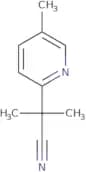
Discontinued product2-Methyl-2-(5-methylpyridin-2-yl)propanenitrile
CAS:Versatile small molecule scaffold
Formula:C10H12N2Purity:Min. 95%Molecular weight:160.22 g/molRef: 3D-EMB02197
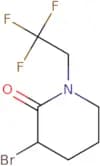
Discontinued product3-Bromo-1-(2,2,2-trifluoroethyl)piperidin-2-one
CAS:Versatile small molecule scaffold
Formula:C7H9BrF3NOPurity:Min. 95%Molecular weight:260.05 g/molRef: 3D-DHA94636
Discontinued product1-Hydroxycyclopentane-1-carbonitrile
CAS:1-Hydroxycyclopentane-1-carbonitrile is a monomer that is hydrolyzed to form benzoin and cyanohydrins. It can be used in the production of scifinder as a monomer or dimerizer.
Formula:C6H9NOPurity:Min. 95%Molecular weight:111.14 g/mol3-Hydroxy-5-methylpyridine
CAS:3-Hydroxy-5-methylpyridine (3HMP) is a chemical substance that has been classified as an amine. It is a product of the metabolism of purines, which are nitrogenous bases found in DNA and RNA. 3HMP is produced by aerogenic bacteria (such as Enterobacter), and can be used to estimate the number of these bacteria present in water samples. 3HMP has been shown to have antiviral properties against influenza virus, and can be used as a biomarker for the presence of other viruses in animals. 3HMP also has mineralization properties, which have been studied extensively, particularly with regards to pancreatic disease.
Formula:C6H7NOPurity:Min. 95%Color and Shape:PowderMolecular weight:109.13 g/molRef: 3D-FH16174
Discontinued product4-Chloro-2-hydroxy-6-methylphenylboronic acid
CAS:Versatile small molecule scaffoldFormula:C7H8BClO3Purity:Min. 95%Molecular weight:186.4 g/mol2-Bromo-3,3,3-trifluoro-1-propene
CAS:Controlled Product2-Bromo-3,3,3-trifluoro-1-propene is a chemical compound that has been synthesized in an asymmetric reaction. The reactant is bromopropane and the product is 2,2,2-trifluoropropene. The methylene group on the propene molecule is activated by the nucleophilic attack of a fluoride ion from hydrogen fluoride to form a cavity with a highly strained bond. The kinetic study of this reaction revealed that the activation energy for the reaction is 42 kJ/mol. Palladium-catalyzed coupling reactions are catalyzed by palladium and require nonpolar solvents such as toluene or dichloromethane. This type of reaction has been shown to be exothermic with an isolated yield of 1%.
Formula:C3H2BrF3Purity:Min. 95%Color and Shape:Colorless PowderMolecular weight:174.95 g/mol8-Bromo-2-methylimidazo[1,2-a]pyridine
CAS:Versatile small molecule scaffold
Formula:C8H7N2BrPurity:Min. 95%Molecular weight:211.05 g/mol4,5-Dihydroxy-2,3-Pentanedione
CAS:4,5-Dihydroxy-2,3-pentanedione is a carbonyl compound that is the product of the oxidation of ascorbic acid. It is used in wastewater treatment and has antimicrobial properties against infectious diseases. This compound has been shown to inhibit protein synthesis by binding to the ribosome and preventing the formation of peptide bonds between amino acids. 4,5-Dihydroxy-2,3-pentanedione has also been shown to bind to plasma proteins, which may be due to its acyl chain structure. 4,5-Dihydroxy-2,3-pentanedione can be synthesized in a catalytic mechanism that involves dehydroascorbic acid and molecular oxygen.
Formula:C5H8O4Purity:Min. 95%Color and Shape:PowderMolecular weight:132.11 g/molRef: 3D-FD180770
Discontinued productPiperyline
CAS:Piperyline is an alkanoic acid that has shown to be effective against skin cancer. It also has antimicrobial properties, which may be due to its ability to bind metal ions and form polymeric compounds. Piperyline inhibits microbial growth by inhibiting the synthesis of proteins and nucleic acids. The antimicrobial activity is related to its cationic polymerization with hydroxyl groups, which forms a structure that can inhibit microbial enzymes and disrupt microbial cell membranes. This compound also interacts with the skin's natural lipids, making it difficult for microorganisms to attach and grow on the skin. Piperyline is synthesized in organic chemistry laboratories as an amide precursor of other pharmaceuticals such as penicillin.
Formula:C16H17NO3Purity:Min. 95%Molecular weight:271.31 g/mol
![4-[(Benzylamino)methyl]thian-4-ol](/_next/image/?url=https%3A%2Fstatic.cymitquimica.com%2Fproducts%2F3D%2Fthumb-webp%2FVNC88729.webp&w=3840&q=75)


![2-[(3,5-Dimethylphenyl)formamido]acetic acid](/_next/image/?url=https%3A%2Fstatic.cymitquimica.com%2Fproducts%2F3D%2Fthumb-webp%2FYAA08214.webp&w=3840&q=75)
![1-[3-(Chloromethyl)benzoyl]piperidine](/_next/image/?url=https%3A%2Fstatic.cymitquimica.com%2Fproducts%2F3D%2Fthumb-webp%2FYFA58364.webp&w=3840&q=75)
![rac-(2R,3S)-1-{[(9H-Fluoren-9-yl)methoxy]carbonyl}-3-phenylpyrrolidine-2-carboxylic acid](/_next/image/?url=https%3A%2Fstatic.cymitquimica.com%2Fproducts%2F3D%2Fthumb-webp%2FENC98387.webp&w=3840&q=75)


![7-Oxa-1-azaspiro[3.5]nonan-2-one](/_next/image/?url=https%3A%2Fstatic.cymitquimica.com%2Fproducts%2F3D%2Fthumb-webp%2FDHA24292.webp&w=3840&q=75)




![8-Bromo-2-methylimidazo[1,2-a]pyridine](/_next/image/?url=https%3A%2Fstatic.cymitquimica.com%2Fproducts%2F3D%2Fthumb-webp%2FUXB37475.webp&w=3840&q=75)

