Building Blocks
This section contains fundamental products for the synthesis of organic and biological compounds. Building blocks are the essential starting materials used to construct complex molecules through various chemical reactions. They play a critical role in drug discovery, material science, and chemical research. At CymitQuimica, we offer a diverse range of high-quality building blocks to support your innovative research and industrial projects, ensuring you have the essential components for successful synthesis.
Subcategories of "Building Blocks"
- Boronic Acids & Boronic Acid Derivatives(5,778 products)
- Chiral Building Blocks(1,242 products)
- Hydrocarbon Building Blocks(6,098 products)
- Organic Building Blocks(61,034 products)
Found 199601 products of "Building Blocks"
Sort by
Purity (%)
0
100
|
0
|
50
|
90
|
95
|
100
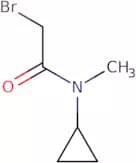
2-bromo-N-cyclopropyl-N-methylacetamide
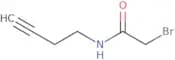
CAS:Versatile small molecule scaffoldFormula:C6H10BrNOPurity:Min. 95%Molecular weight:192.06 g/mol2-Bromo-N-(but-3-yn-1-yl)acetamide
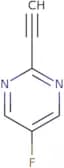
CAS:<p>Versatile small molecule scaffold</p>Formula:C6H8BrNOPurity:Min. 95%Molecular weight:190.04 g/mol2-Ethynyl-5-fluoropyrimidine
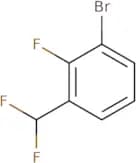
CAS:<p>Versatile small molecule scaffold</p>Formula:C6H3FN2Purity:Min. 95%Molecular weight:122.1 g/mol1-Bromo-3-(difluoromethyl)-2-fluorobenzene
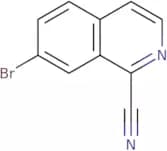
CAS:Versatile small molecule scaffoldFormula:C7H4BrF3Purity:Min. 95%Molecular weight:225.01 g/mol7-Bromoisoquinoline-1-carbonitrile
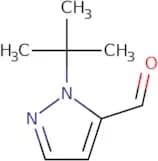
CAS:<p>Versatile small molecule scaffold</p>Formula:C10H5BrN2Purity:Min. 95%Molecular weight:233.06 g/mol1-(tert-Butyl)-1H-pyrazole-5-carbaldehyde
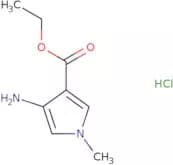
CAS:<p>Versatile small molecule scaffold</p>Formula:C8H12N2OPurity:Min. 95%Molecular weight:152.19 g/molEthyl 4-amino-1-methyl-1H-pyrrole-3-carboxylate hydrochloride
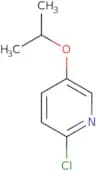
CAS:<p>Versatile small molecule scaffold</p>Formula:C8H13ClN2O2Purity:Min. 95%Molecular weight:204.65 g/mol2-Chloro-5-isopropoxypyridine
CAS:<p>Versatile small molecule scaffold</p>Formula:C8H10ClNOPurity:Min. 95%Molecular weight:171.62 g/mol3-Iodo-2-methylimidazo[1,2-a]pyridine
CAS:<p>Versatile small molecule scaffold</p>Formula:C8H7IN2Purity:Min. 95%Molecular weight:258.06 g/mol2-Bromo-4-chloro-6-fluorobenzenesulfonamide
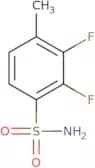
CAS:Versatile small molecule scaffoldFormula:C6H4BrClFNO2SPurity:Min. 95%Molecular weight:288.52 g/mol2,3-Difluoro-4-methylbenzene-1-sulfonamide
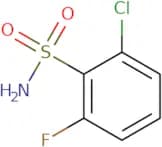
CAS:<p>Versatile small molecule scaffold</p>Formula:C7H7F2NO2SPurity:Min. 95%Molecular weight:207.2 g/mol2-Chloro-6-fluorobenzene-1-sulfonamide
CAS:<p>2-Chloro-6-fluorobenzene-1-sulfonamide is a pharmacological agent that has been shown to have anticancer activity. It is an inhibitor of sterol regulatory element binding protein 2 (SREBP2) and, as such, inhibits cholesterol synthesis. This inhibition results in the accumulation of fatty acids and downstream metabolites in cancer cells, which leads to apoptosis. 2-Chloro-6-fluorobenzene-1-sulfonamide may also be used to treat neurodegenerative diseases and inflammatory pathways.</p>Formula:C6H5ClFNO2SPurity:Min. 95%Molecular weight:209.63 g/mol2,3,6-Trifluorobenzenesulfonamide
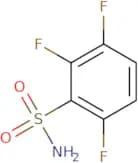
CAS:<p>Versatile small molecule scaffold</p>Formula:C6H4F3NO2SPurity:Min. 95%Molecular weight:211.16 g/mol2-Fluoro-4-nitrobenzene-1-sulfonamide
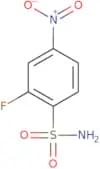
CAS:<p>Versatile small molecule scaffold</p>Formula:C6H5FN2O4SPurity:Min. 95%Molecular weight:220.18 g/molEthyl 2-{6-bromo-2-oxo-1H,2H,3H-imidazo[4,5-b]pyridin-3-yl}acetate
CAS:<p>Versatile small molecule scaffold</p>Formula:C10H10BrN3O3Purity:Min. 95%Molecular weight:300.11 g/mol3-(5-Bromo-4-methyl-1,3-thiazol-2-yl)pyridine
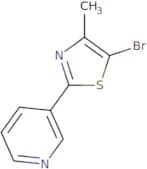
CAS:<p>Versatile small molecule scaffold</p>Formula:C9H7BrN2SPurity:Min. 95%Molecular weight:255.14 g/moltert-Butyl 8-(hydroxymethyl)-1,2,3,4-tetrahydroisoquinoline-2-carboxylate
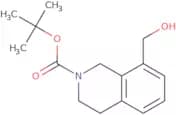
CAS:<p>Versatile small molecule scaffold</p>Formula:C15H21NO3Purity:Min. 95%Molecular weight:263.33 g/mol8-[(tert-Butoxy)carbonyl]-8-azabicyclo[3.2.1]oct-2-ene-3-carboxylic acid
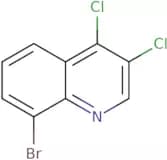
CAS:<p>Versatile small molecule scaffold</p>Formula:C13H19NO4Purity:Min. 95%Molecular weight:253.29 g/mol8-Bromo-3,4-dichloroquinoline
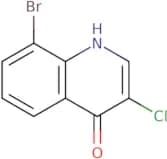
CAS:<p>Versatile small molecule scaffold</p>Formula:C9H4BrCl2NPurity:Min. 95%Molecular weight:276.94 g/mol3-Chloro-8-bromo-4-hydroxyquinoline
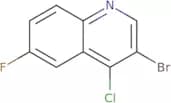
CAS:<p>Versatile small molecule scaffold</p>Formula:C9H5BrClNOPurity:Min. 95%Molecular weight:258.5 g/mol3-Bromo-4-chloro-6-fluoroquinoline
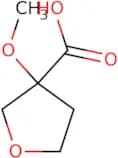
CAS:Versatile small molecule scaffoldFormula:C9H4BrClFNPurity:Min. 95%Molecular weight:260.49 g/mol3-Methoxyoxolane-3-carboxylic acid
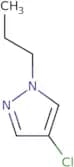
CAS:<p>Versatile small molecule scaffold</p>Formula:C6H10O4Purity:Min. 95%Molecular weight:146.14 g/mol4-Chloro-1-propyl-1H-pyrazole
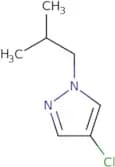
CAS:<p>Versatile small molecule scaffold</p>Formula:C6H9ClN2Purity:Min. 95%Molecular weight:144.6 g/mol4-Chloro-1-isobutyl-1H-pyrazole
CAS:<p>Versatile small molecule scaffold</p>Formula:C7H11ClN2Purity:Min. 95%Molecular weight:158.63 g/mol3-Methyl-N-(piperidin-4-yl)benzamide hydrochloride
CAS:<p>Versatile small molecule scaffold</p>Formula:C13H19ClN2OPurity:Min. 95%Molecular weight:254.75 g/molYQ128
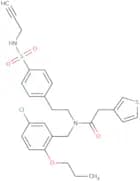
CAS:Controlled ProductYQ128 is an anticancer drug that targets kinases, enzymes that play a critical role in regulating cell growth and division. This inhibitor has been shown to be effective against various types of cancer cells, including those found in the urine of Chinese patients with cancer. YQ128 works by inducing apoptosis, or programmed cell death, and inhibiting the cell cycle, which prevents cancer cells from dividing and spreading. This medicinal compound is a potent protein kinase inhibitor that has shown promising results in preclinical studies as a potential treatment for tumors. Its ability to target multiple kinases makes it a promising candidate for further development as an anticancer therapy.Formula:C27H29ClN2O4S2Purity:Min. 95%Molecular weight:545.1 g/mol2-fluoro-4-formylbenzoic acid
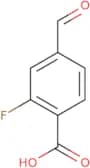
CAS:<p>Versatile small molecule scaffold</p>Formula:C8H5FO3Purity:Min. 95%Molecular weight:168.1 g/mol4-Formyl-3-nitrobenzoic acid
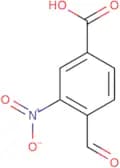
CAS:<p>Versatile small molecule scaffold</p>Formula:C8H5NO5Purity:Min. 95%Molecular weight:195.13 g/mol6-Methoxy-2,3,4,5-tetrahydro-1H-1-benzazepine
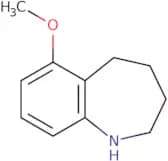
CAS:Versatile small molecule scaffoldFormula:C11H15NOPurity:Min. 95%Molecular weight:177.24 g/mol2-Cyclopropylquinazoline-4-thiol
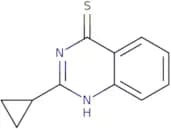
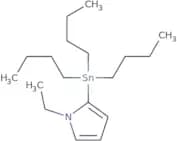
CAS:<p>Versatile small molecule scaffold</p>Formula:C11H10N2SPurity:Min. 95%Molecular weight:202.28 g/mol1-Ethyl-2-(tributylstannyl)-1H-pyrrole
CAS:Controlled Product<p>Versatile small molecule scaffold</p>Formula:C18H35NSnPurity:Min. 95%Molecular weight:384.2 g/mol2-[(Cyclobutylcarbonyl)amino]acetic acid
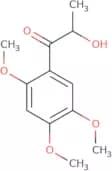
CAS:<p>Versatile small molecule scaffold</p>Formula:C7H11NO3Purity:Min. 95%Molecular weight:157.17 g/mol(2R)-2-Hydroxy-1-(2,4,5-trimethoxyphenyl)propan-1-one
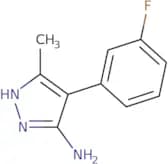
CAS:<p>(2R)-2-Hydroxy-1-(2,4,5-trimethoxyphenyl)propan-1-one is an efficient method for the synthesis of adenosine. This method is based on a cyclic reaction with trimethoxybenzene and yields 2 moles of adenosine per mole of trimethoxybenzene. The reaction time is short and the yield is high. This synthetic route has been used to produce large quantities of adenosine for use in pharmacological studies. (2R)-2-Hydroxy-1-(2,4,5-trimethoxyphenyl)propan-1-one can be used as an enantiomer for the synthesis of other compounds. It was also shown that nitrite mediates this reaction</p>Formula:C12H16O5Purity:Min. 95%Molecular weight:240.25 g/mol4-(3-Fluorophenyl)-3-methyl-1H-pyrazol-5-amine
CAS:<p>Versatile small molecule scaffold</p>Formula:C10H10FN3Purity:Min. 95%Molecular weight:191.2 g/molrac-2-[(1R,2R)-2-Aminocyclohexyl]ethan-1-ol
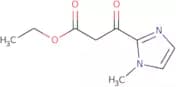
CAS:<p>Versatile small molecule scaffold</p>Formula:C8H17NOPurity:Min. 95%Molecular weight:143.2 g/molEthyl 3-(1-methyl-1H-imidazol-2-yl)-3-oxopropanoate
CAS:<p>Versatile small molecule scaffold</p>Formula:C9H12N2O3Purity:Min. 95%Molecular weight:196.2 g/moltert-Butyl (4aS,7aS)-octahydro-1H-pyrrolo[3,4-b]pyridine-6-carboxylate
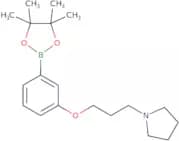
CAS:<p>Versatile small molecule scaffold</p>Formula:C12H22N2O2Purity:Min. 95%Molecular weight:226.32 g/mol1-(3-(3-(4,4,5,5-Tetramethyl-1,3,2-dioxaborolan-2-yl)phenoxy)propyl)pyrrolidine
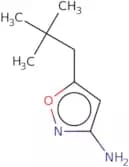
CAS:<p>Versatile small molecule scaffold</p>Formula:C19H30BNO3Purity:Min. 95%Molecular weight:331.3 g/mol5-(2,2-Dimethylpropyl)-1,2-oxazol-3-amine
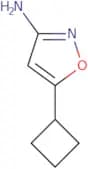
CAS:Versatile small molecule scaffoldFormula:C8H14N2OPurity:Min. 95%Molecular weight:154.2 g/mol5-Cyclobutyl-1,2-oxazol-3-amine
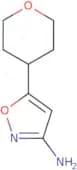
CAS:<p>Versatile small molecule scaffold</p>Formula:C7H10N2OPurity:Min. 95%Molecular weight:138.17 g/mol5-(Oxan-4-yl)-1,2-oxazol-3-amine
CAS:<p>Versatile small molecule scaffold</p>Formula:C8H12N2O2Purity:Min. 95%Molecular weight:168.19 g/moltert-Butyl 4-[4-(aminomethyl)-1H-1,2,3-triazol-1-yl]piperidine-1-carboxylate
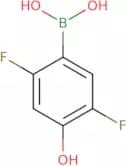
CAS:<p>Versatile small molecule scaffold</p>Formula:C13H23N5O2Purity:Min. 95%Molecular weight:281.35 g/mol(2,5-Difluoro-4-hydroxyphenyl)boronic acid
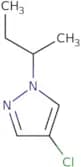
CAS:<p>Versatile small molecule scaffold</p>Formula:C6H5BF2O3Purity:Min. 95%Molecular weight:173.91 g/mol1-Sec-butyl-4-chloro-1H-pyrazole
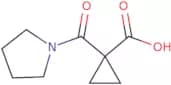
CAS:<p>Versatile small molecule scaffold</p>Formula:C7H11ClN2Purity:Min. 95%Molecular weight:158.63 g/mol1-(Pyrrolidine-1-carbonyl)cyclopropane-1-carboxylic acid
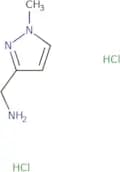
CAS:<p>Versatile small molecule scaffold</p>Formula:C9H13NO3Purity:Min. 95%Molecular weight:183.2 g/mol(1-Methyl-1H-pyrazol-3-yl)methanamine dihydrochloride
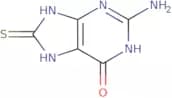
CAS:<p>Versatile small molecule scaffold</p>Formula:C5H11Cl2N3Purity:Min. 95%Molecular weight:184.07 g/mol2-Amino-6-hydroxy-8-mercaptopurine
CAS:<p>2-Amino-6-hydroxy-8-mercaptopurine is an antimicrobial agent that inhibits the growth of bacteria by binding to their ribosomes. It has been shown to have a cytotoxic effect in vivo on cancer cells and intestinal parasites, as well as a protective effect against infectious diseases. 2-Amino-6-hydroxy-8-mercaptopurine has also been shown to inhibit the synthesis of proteins in vitro, which may be due to its ability to bind to the ribosomal subunit and inhibit protein synthesis. 2-Amino-6-hydroxy-8-mercaptopurine inhibits bacterial growth by binding to DNA dependent RNA polymerase, thereby preventing transcription and replication. The high frequency of human activity has been shown using a patch clamp technique on human erythrocytes. This active form is metabolized through a number of metabolic transformations, including hydrolysis by esterases or gluc</p>Formula:C5H5N5OSPurity:Min. 95%Color and Shape:PowderMolecular weight:183.19 g/molBis[(pinacolato)boryl]methane
CAS:<p>Bis[(pinacolato)boryl]methane is a bifunctional organoboron reagent with an allyl group on one end and a cyclopropane on the other end. It is useful in organic synthesis as a nucleophile for allylation, as well as for the synthesis of unsymmetrical cyclopropanes. This compound can be used to catalyze asymmetric methods, such as the synthesis of alicyclic compounds. Bis[(pinacolato)boryl]methane can also be used to synthesize biomolecules.</p>Formula:C13H26B2O4Purity:Min. 95%Color and Shape:White To Off-White SolidMolecular weight:267.97 g/molBis[2-(perfluorooctyl)ethyl] phosphate
CAS:Controlled Product<p>Bis[2-(perfluorooctyl)ethyl] phosphate is a perfluorinated compound that can be used as an alternative to polyvinyl chloride in the manufacture of children's toys and other consumer products. It has been shown to have no health effects on humans, unlike other perfluorinated compounds, in a study where human serum was analyzed. Bis[2-(perfluorooctyl)ethyl] phosphate also has a high affinity for polyfluoroalkyl substances (PFASs) and can be used in analytical methods for their detection. The optimised extraction procedure is simple and rapid, using ultrasonic extraction with no need for any organic solvents. Recoveries are high (>99%) and the method does not require any volatile solvents.</p>Formula:C20H9F34O4PPurity:Min. 95%Molecular weight:990.2 g/mol8-Bromoisoquinoline
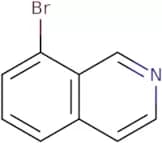
CAS:<p>8-Bromoisoquinoline is a bifunctional alkylating agent that is used to synthesize esters and amides. It is commonly used for the synthesis of amino acids, peptides, and other biologically active molecules. 8-Bromoisoquinoline has been shown to have a synergistic effect with hydroxyalkyl carbamates, which may be due to its ability to form an ionic bond with the carboxylic acid in these compounds. This chemical can also react with nitro groups and serve as a chlorinating agent, as well as react with anions such as phosphate and acetate. 8-Bromoisoquinoline can be synthesized by reacting ethyl bromoacetate with tetrahydroisoquinolinium chloride in hydrochloric acid or isopropyl alcohol.</p>Formula:C9H6BrNPurity:Min. 95%Color and Shape:PowderMolecular weight:208.05 g/mol

![3-Iodo-2-methylimidazo[1,2-a]pyridine](/_next/image/?url=https%3A%2Fstatic.cymitquimica.com%2Fproducts%2F3D%2Fthumb-webp%2FEYB52714.webp&w=3840&q=75)
![Ethyl 2-{6-bromo-2-oxo-1H,2H,3H-imidazo[4,5-b]pyridin-3-yl}acetate](/_next/image/?url=https%3A%2Fstatic.cymitquimica.com%2Fproducts%2F3D%2Fthumb-webp%2FEYB59981.webp&w=3840&q=75)
![8-[(tert-Butoxy)carbonyl]-8-azabicyclo[3.2.1]oct-2-ene-3-carboxylic acid](/_next/image/?url=https%3A%2Fstatic.cymitquimica.com%2Fproducts%2F3D%2Fthumb-webp%2FEYB80989.webp&w=3840&q=75)
![2-[(Cyclobutylcarbonyl)amino]acetic acid](/_next/image/?url=https%3A%2Fstatic.cymitquimica.com%2Fproducts%2F3D%2Fthumb-webp%2FEZA79072.webp&w=3840&q=75)
![rac-2-[(1R,2R)-2-Aminocyclohexyl]ethan-1-ol](/_next/image/?url=https%3A%2Fstatic.cymitquimica.com%2Fproducts%2F3D%2Fthumb-webp%2FEZB03941.webp&w=3840&q=75)
![tert-Butyl (4aS,7aS)-octahydro-1H-pyrrolo[3,4-b]pyridine-6-carboxylate](/_next/image/?url=https%3A%2Fstatic.cymitquimica.com%2Fproducts%2F3D%2Fthumb-webp%2FEZB42851.webp&w=3840&q=75)
![tert-Butyl 4-[4-(aminomethyl)-1H-1,2,3-triazol-1-yl]piperidine-1-carboxylate](/_next/image/?url=https%3A%2Fstatic.cymitquimica.com%2Fproducts%2F3D%2Fthumb-webp%2FEZB51672.webp&w=3840&q=75)
![Bis[(pinacolato)boryl]methane](/_next/image/?url=https%3A%2Fstatic.cymitquimica.com%2Fproducts%2F3D%2Fthumb-webp%2FFB18774.webp&w=3840&q=75)
![Bis[2-(perfluorooctyl)ethyl] phosphate](/_next/image/?url=https%3A%2Fstatic.cymitquimica.com%2Fproducts%2F3D%2Fthumb-webp%2FFB18790.webp&w=3840&q=75)