


Building Blocks
This section contains fundamental products for the synthesis of organic and biological compounds. Building blocks are the essential starting materials used to construct complex molecules through various chemical reactions. They play a critical role in drug discovery, material science, and chemical research. At CymitQuimica, we offer a diverse range of high-quality building blocks to support your innovative research and industrial projects, ensuring you have the essential components for successful synthesis.
Subcategories of "Building Blocks"
- Boronic Acids & Boronic Acid Derivatives(5,756 products)
- Chiral Building Blocks(1,242 products)
- Hydrocarbon Building Blocks(6,095 products)
- Organic Building Blocks(61,055 products)
Found 199650 products of "Building Blocks"
Sort by
Purity (%)
0
100
|
0
|
50
|
90
|
95
|
100
4-[(4-Methoxyphenyl)sulfanyl]aniline
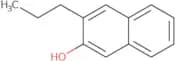
CAS:<p>Versatile small molecule scaffold</p>Formula:C13H13NOSPurity:Min. 95%Molecular weight:231.32 g/mol3-Propylnaphthalen-2-ol
CAS:<p>Versatile small molecule scaffold</p>Formula:C13H14OPurity:Min. 95%Molecular weight:186.25 g/mol3-Phenyl-2-[(prop-2-en-1-yl)amino]propanoic acid
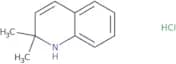
CAS:<p>Versatile small molecule scaffold</p>Formula:C12H15NO2Purity:Min. 95%Molecular weight:205.25 g/mol2,2-Dimethyl-1,2-dihydroquinoline hydrochloride
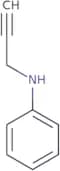
CAS:<p>Versatile small molecule scaffold</p>Formula:C11H14ClNPurity:Min. 95%Molecular weight:195.69 g/molPhenyl-prop-2-ynyl-amine
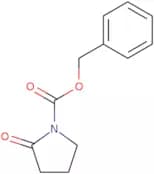
CAS:<p>Phenyl-prop-2-ynyl-amine is a primary amine with neuroprotective properties. It can be activated to the corresponding aniline by treatment with a base. Phenyl-prop-2-ynyl-amine has been shown to have neuroprotective effects in a model system of Parkinson's disease. It also possesses ring-opening activity on quinoline derivatives and gold nanoparticles. This reaction is slow, but it can be accelerated by the addition of a carboxylic acid. The use of this method for the synthesis of phenylpropene derivatives provides an efficient route for the construction of complex molecules with functional groups in their skeletons.</p>Formula:C9H9NPurity:Min. 95%Molecular weight:131.17 g/mol1-Z-2-Pyrrolidinone
CAS:<p>Versatile small molecule scaffold</p>Formula:C12H13NO3Purity:Min. 95%Molecular weight:219.24 g/mol4-Bromopentanenitrile
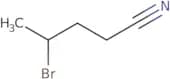
CAS:<p>4-Bromopentanenitrile is a medicinal molecule that has been shown to have oral bioavailability. This compound is an antagonist of the chemokine receptor CXCR4 and blocks the binding of SDF-1α and other ligands to this receptor, which inhibits the migration of lymphocytes from bone marrow into peripheral tissues. 4-Bromopentanenitrile has also been shown to inhibit cell proliferation in vitro and in vivo, which may be due to its ability to block DNA replication. 4-Bromopentanenitrile has been tested for its ability to inhibit the growth of cancer cells in mice models.</p>Formula:C5H8BrNPurity:Min. 95%Molecular weight:162.03 g/molCyclopropyl-thiophen-2-ylmethyl-amine
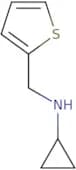
CAS:<p>Versatile small molecule scaffold</p>Formula:C8H11NSPurity:Min. 95%Molecular weight:153.25 g/mol(E)-3-(m-Tolyl)acrylic acid
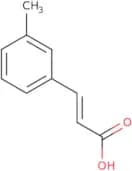
CAS:<p>(E)-3-(m-Tolyl)acrylic acid is a natural flavonoid compound found in plants. It is an intermediate in the biosynthesis of phenylpropanoids, which are a group of plant secondary metabolites. (E)-3-(m-Tolyl)acrylic acid has been shown to inhibit the production of heterocyclic amines, which are carcinogenic compounds formed during the cooking process of meat and fish. In addition, this compound has been shown to have cytotoxic effects on cancer cells and inhibitory effects on malonic acid production in plants. (E)-3-(m-Tolyl)acrylic acid is synthesized from cinnamic acid derivatives and hydroxyl groups. It is also produced by sulfonation of eugenol with sulfuric acid followed by oxidation with hydrogen peroxide.</p>Formula:C10H10O2Purity:Min. 95%Molecular weight:162.19 g/mol3-Chlorocinnamic acid
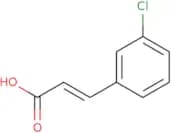
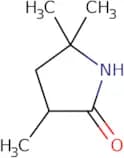
CAS:<p>3-Chlorocinnamic acid is a potential anticancer agent that has been shown to stimulate the growth of epidermal cells. It inhibits the activity of epidermal growth factor (EGF) and is active against some forms of cancer. 3-Chlorocinnamic acid binds to an activated form of the epidermal growth factor receptor and prevents its activation. 3-Chlorocinnamic acid also inhibits pro-apoptotic protein kinase activities, which may be useful for treating conditions such as tuberculosis. The chemical group in this compound is responsible for its optical properties and its ability to bind to proteins with cinnamoyl groups.</p>Formula:C9H7ClO2Purity:Min. 95%Molecular weight:182.6 g/mol3,5,5-Trimethyl-2-pyrrolidinone
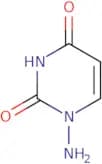
CAS:<p>3,5,5-Trimethyl-2-pyrrolidinone is a cyclic hydrocarbon that is produced by the photolysis of acetonylacetone. It undergoes hydrolysis to form 3,5,5-trimethyl-3-oxazolidinone and 2-oxopropanal. The former reacts with nitrones to form oxaziridines and pyrrolidinones. 3,5,5-Trimethyl-2-pyrrolidinone can be used as a protecting group for hydroxyl groups in organic synthesis.</p>Formula:C7H13NOPurity:Min. 95%Molecular weight:127.18 g/mol1-Amino-1,2,3,4-tetrahydropyrimidine-2,4-dione
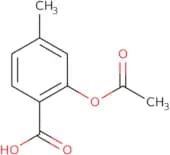
CAS:<p>1-Amino-1,2,3,4-tetrahydropyrimidine-2,4-dione is an alkynyl amine that is used in the agricultural industry as a binding agent for acid. It has been shown to bind to cyanoalkyl, haloalkyl and aminouracil groups. The compound also has a variety of other uses in the pharmaceutical industry including use as a nerve toxin. 1-Amino-1,2,3,4-tetrahydropyrimidine-2,4-dione is also used as a spectrum diluent and can be used in refluxing reactions with nitro compounds.</p>Formula:C4H5N3O2Purity:Min. 95%Molecular weight:127.1 g/mol2-(Acetyloxy)-4-methylbenzoic acid
CAS:<p>2-(Acetyloxy)-4-methylbenzoic acid (AMBA) is a compound that is used in the field of health care. It has been shown to have neuroprotective effects and to reduce neuronal apoptosis, which may be due to its ability to attenuate proinflammatory responses. AMBA has also been shown to inhibit the formation of amyloid plaques in Alzheimer's disease. This compound has also shown anti-inflammatory properties and can be used as a treatment for neuroinflammation. AMBA inhibits the activation of caspases, which are responsible for initiating the apoptosis pathway by cleaving proteins necessary for cell survival, such as PARP1 or Bcl-2. The mechanism of action is not fully understood but it appears that AMBA alters mitochondrial function and reduces intracellular calcium levels.</p>Formula:C10H10O4Purity:Min. 95%Molecular weight:194.18 g/mol2-(Acetyloxy)-5-methylbenzoic acid
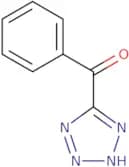
CAS:<p>Versatile small molecule scaffold</p>Formula:C10H10O4Purity:Min. 95%Molecular weight:194.18 g/mol5-Benzoyl-2H-1,2,3,4-tetrazole
CAS:<p>5-Benzoyl-2H-1,2,3,4-tetrazole is a pyrazole compound that can be synthesized by reacting an aliphatic azide with a sulfoxide. The reaction of the sulfoxide with potassium hydroxide and dimethylbenzoyl chloride produces the desired product. 5-Benzoyl-2H-1,2,3,4-tetrazole is used in research as a short term substrate for enzymes such as diazo compounds and tetrazole. It has also been shown to be capable of forming covalent bonds with alkali metal ions such as sodium and potassium. This compound is also useful for the synthesis of 2H-1,2,3,4-tetrazoles via diazotization.</p>Formula:C8H6N4OPurity:Min. 95%Molecular weight:174.16 g/mol5H,6H,7H,8H-Imidazo[1,5-c]pyrimidin-5-one
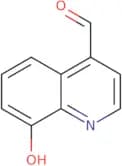
CAS:<p>5H,6H,7H,8H-Imidazo[1,5-c]pyrimidin-5-one is a marine alkaloid that belongs to the family of histamine. It is found in the sponge pseudoceratina and has been shown to have antifouling properties. 5H,6H,7H,8H-Imidazo[1,5-c]pyrimidin-5-one can be used as a treatment for hyperhistaminemia and may inhibit tyrosine hydroxylase activity.</p>Formula:C6H7N3OPurity:Min. 95%Molecular weight:137.14 g/mol8-Hydroxy-4-quinolinecarboxaldehyde
CAS:<p>8-Hydroxy-4-quinolinecarboxaldehyde is an alkaloid that is found in the bark of Broussonetia papyrifera, a tree native to Asia. Alkaloids are nitrogenous organic compounds that contain basic properties. 8-Hydroxy-4-quinolinecarboxaldehyde can be synthesized by reacting oxime with hydroquinone. This compound has been studied using spectroscopic methods and can be used as a starting point for the synthesis of other alkaloids.</p>Formula:C10H7NO2Purity:Min. 95%Molecular weight:173.17 g/mol2-Amino-3-[(2-phenylethyl)sulfanyl]propanoic acid
CAS:Versatile small molecule scaffoldFormula:C11H15NO2SPurity:Min. 95%Molecular weight:225.31 g/mol[(2-Chloroethyl)(dimethylamino)phosphoryl]dimethylamine
CAS:<p>Versatile small molecule scaffold</p>Formula:C6H16ClN2OPPurity:Min. 95%Molecular weight:198.63 g/molSpiro[4.5]dec-6-en-8-one
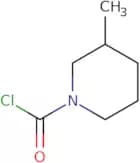
CAS:Spiro[4.5]dec-6-en-8-one is a natural product isolated from the leaves of plants in Madagascar. It has an inhibitory effect on insects and was sampled by researchers at the University of Florida. Spiro[4.5]dec-6-en-8-one can be extracted from camphene, naphthalene, and solenopsis. The compound inhibits the growth of insects through its inhibitory effects on protein synthesis by binding to ribosomal RNA. This activity is more pronounced in insect cells than in human cells, which may be due to a lower expression of ribosomal RNA in human cells.Formula:C10H14OPurity:Min. 95%Color and Shape:Clear LiquidMolecular weight:150.22 g/mol3-Methylpiperidine-1-carbonyl chloride
CAS:<p>Versatile small molecule scaffold</p>Formula:C7H12ClNOPurity:Min. 95%Molecular weight:161.63 g/molN-[3,3-Dimethyl-1-(1H-pyrazol-1-yl)butan-2-ylidene]hydroxylamine
CAS:<p>Versatile small molecule scaffold</p>Formula:C9H15N3OPurity:Min. 95%Molecular weight:181.23 g/mol3-Methyl-1-(1H-pyrazol-1-yl)butan-2-one
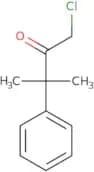
CAS:<p>Versatile small molecule scaffold</p>Formula:C8H12N2OPurity:Min. 95%Molecular weight:152.19 g/mol1-Chloro-3-methyl-3-phenylbutan-2-one
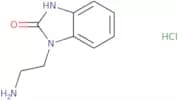
CAS:<p>Versatile small molecule scaffold</p>Formula:C11H13ClOPurity:Min. 95%Molecular weight:196.67 g/mol1-(2-Aminoethyl)-2,3-dihydro-1H-1,3-benzodiazol-2-one hydrochloride
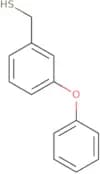
CAS:<p>Versatile small molecule scaffold</p>Formula:C9H12ClN3OPurity:Min. 95%Molecular weight:213.67 g/mol(3-Phenoxyphenyl)methanethiol
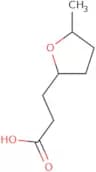
CAS:<p>Versatile small molecule scaffold</p>Formula:C13H12OSPurity:Min. 95%Molecular weight:216.3 g/mol3-(5-Methyloxolan-2-yl)propanoic acid
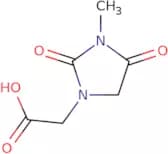
CAS:<p>Versatile small molecule scaffold</p>Formula:C8H14O3Purity:Min. 95%Molecular weight:158.19 g/mol2-(3-Methyl-2,4-dioxoimidazolidin-1-yl)acetic acid
CAS:<p>Versatile small molecule scaffold</p>Formula:C6H8N2O4Purity:Min. 95%Molecular weight:172.14 g/molEthyl imidazo[1,2-a]pyrimidine-3-carboxylate
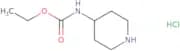
CAS:<p>Versatile small molecule scaffold</p>Formula:C9H9N3O2Purity:Min. 95%Molecular weight:191.19 g/molEthyl piperidin-4-ylcarbamate hydrochloride
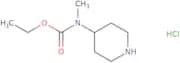
CAS:<p>Versatile small molecule scaffold</p>Formula:C8H17ClN2O2Purity:Min. 95%Molecular weight:208.68 g/molEthyl N-methyl-N-(piperidin-4-yl)carbamate hydrochloride
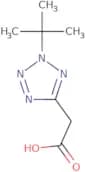
CAS:<p>Versatile small molecule scaffold</p>Formula:C9H19ClN2O2Purity:Min. 95%Molecular weight:222.71 g/mol2-(2-tert-Butyl-2H-1,2,3,4-tetrazol-5-yl)acetic acid
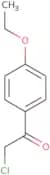
CAS:<p>Versatile small molecule scaffold</p>Formula:C7H12N4O2Purity:Min. 95%Molecular weight:184.2 g/mol2-Chloro-1-(4-ethoxyphenyl)ethan-1-one
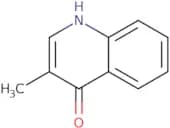
CAS:<p>2-Chloro-1-(4-ethoxyphenyl)ethan-1-one is a hydrocarbon radical that is used as a vitamin and in the synthesis of other molecules. This molecule has a covalent bond between the two chlorine atoms and one carbon atom. The hydrocarbon radical is also present in many hydrocarbons.</p>Formula:C10H11ClO2Purity:Min. 95%Molecular weight:198.64 g/mol3-methylquinolin-4-ol
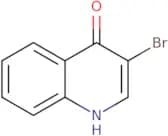
CAS:<p>Versatile small molecule scaffold</p>Formula:C10H9NOPurity:Min. 95%Molecular weight:159.19 g/mol3-Bromoquinolin-4-ol
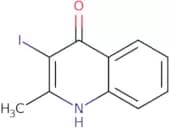
CAS:<p>3-Bromoquinolin-4-ol is a pyrrole derivative with a hydroxy group on the 4 position. It is an intermediate in the synthesis of 3-bromo-5-hydroxypyridine, which can be used as a reagent for aminations, oxindole syntheses, and piperidide formation. The presence of substituents on the 2 position of the quinoline ring determines whether it is an isomeric or nonisomeric compound. Substituents on the 2 position also determine if it is a nucleus or not. Finally, a substitution at the 4 position determines whether it is 2-amino-4-hydroxypyridine or pyrrole derivatives.</p>Formula:C9H6BrNOPurity:Min. 95%Molecular weight:224.05 g/mol3-Iodo-2-methylquinolin-4-ol
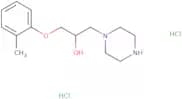
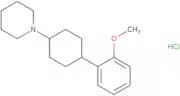
CAS:<p>Versatile small molecule scaffold</p>Formula:C10H8INOPurity:Min. 95%Molecular weight:285.08 g/mol1-(2-Methylphenoxy)-3-(piperazin-1-yl)propan-2-ol dihydrochloride
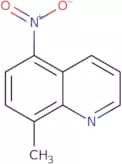
CAS:<p>Versatile small molecule scaffold</p>Formula:C14H24Cl2N2O2Purity:Min. 95%Molecular weight:323.3 g/mol8-Methyl-5-nitroquinoline
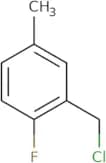
CAS:<p>8-methyl-5-nitroquinoline is a linker that has been shown to be cytotoxic in tumor cells. It binds to DNA by forming covalent bonds and inhibits the synthesis of DNA. 8-methyl-5-nitroquinoline is also able to inhibit the growth of human colon carcinoma cells in vitro and tumor xenografts in vivo. This nitro compound has been shown to cause necrosis, which may be due to its ability to bind oxygen and generate reactive oxygen species. The ability of 8-methyl-5-nitroquinoline to form covalent bonds with DNA makes it a potent antioxidant that may be used for the treatment of radiation injury.</p>Formula:C10H8N2O2Purity:Min. 95%Molecular weight:188.18 g/mol2-(Chloromethyl)-1-fluoro-4-methylbenzene
CAS:<p>Versatile small molecule scaffold</p>Formula:C8H8ClFPurity:Min. 95%Molecular weight:158.6 g/mol4-(Benzylamino)-4-oxobutanoic acid
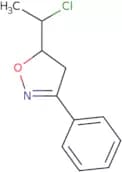
CAS:<p>Versatile small molecule scaffold</p>Formula:C11H13NO3Purity:Min. 95%Molecular weight:207.23 g/mol5-(1-Chloroethyl)-3-phenyl-4,5-dihydro-1,2-oxazole
CAS:<p>Versatile small molecule scaffold</p>Formula:C11H12ClNOPurity:Min. 95%Molecular weight:209.67 g/mol2-[2-(4-Hydroxyphenyl)ethyl]-2,3-dihydro-1H-isoindole-1,3-dione
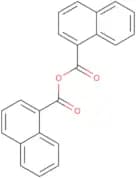
CAS:<p>Versatile small molecule scaffold</p>Formula:C16H13NO3Purity:Min. 95%Molecular weight:267.28 g/molNaphthalene-1-carbonyl naphthalene-1-carboxylate
CAS:<p>Naphthalene-1-carbonyl naphthalene-1-carboxylate is a benzoylation of a primary alcohol. It is a monosubstituted benzoyl derivative with a transition state that has a benzoic anhydride and enolate as reactants. It is not an alkylation reaction because the carbonyl group prevents the formation of an alkyl bond. The kinetic product, which is favored in this reaction, is the cyclic sulfate ester. The carboxylate group can be either chiral or non-chiral depending on the configuration of the starting material. The R/S system for naphthalene-1-carbonyl naphthalene-1-carboxylate would be S/R because it has no chiral atoms. Naphthalene-1-carbonyl naphthalene-1-carboxylate can also form chiral alcohol</p>Formula:C22H14O3Purity:Min. 95%Molecular weight:326.3 g/mol4-[(2,5-Dioxo-2,5-dihydro-1H-pyrrol-1-yl)methyl]benzoic acid
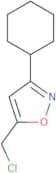
CAS:<p>Versatile small molecule scaffold</p>Formula:C12H9NO4Purity:Min. 95%Molecular weight:231.2 g/mol5-(Chloromethyl)-3-cyclohexylisoxazole
CAS:<p>5-(Chloromethyl)-3-cyclohexylisoxazole is an aliphatic aldehyde. It reacts with aldoximes to form cyclic imines, and then undergoes nucleophilic substitution with sodium hydroxide to produce the corresponding oxime. This reagent can be used for the synthesis of 2-amino-1,3-dioxolane compounds.</p>Formula:C10H14ClNOPurity:Min. 95%Molecular weight:199.68 g/mol2-(Ethylamino)-3-phenylpropanoic acid
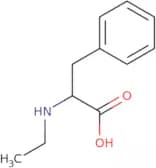
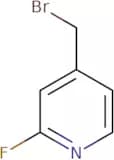
CAS:<p>Versatile small molecule scaffold</p>Formula:C11H15NO2Purity:Min. 95%Molecular weight:193.24 g/mol4-(Bromomethyl)-2-fluoropyridine
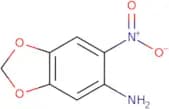
CAS:<p>Versatile small molecule scaffold</p>Formula:C6H5BrFNPurity:Min. 95%Molecular weight:190.01 g/mol6-Nitro-1,3-benzodioxol-5-amine
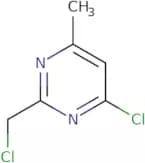
CAS:<p>Versatile small molecule scaffold</p>Formula:C7H6N2O4Purity:Min. 95%Molecular weight:182.13 g/mol4-Chloro-2-(chloromethyl)-6-methylpyrimidine
CAS:<p>Versatile small molecule scaffold</p>Formula:C6H6Cl2N2Purity:Min. 95%Molecular weight:177.03 g/mol4-[2-(2-Methoxyethoxy)ethoxy]benzaldehyde
CAS:<p>Versatile small molecule scaffold</p>Formula:C12H16O4Purity:Min. 95%Molecular weight:224.25 g/mol
![4-[(4-Methoxyphenyl)sulfanyl]aniline](/_next/image/?url=https%3A%2Fstatic.cymitquimica.com%2Fproducts%2F3D%2Fthumb-webp%2FPAA45385.webp&w=3840&q=75)

![3-Phenyl-2-[(prop-2-en-1-yl)amino]propanoic acid](/_next/image/?url=https%3A%2Fstatic.cymitquimica.com%2Fproducts%2F3D%2Fthumb-webp%2FPAA46399.webp&w=3840&q=75)

![5H,6H,7H,8H-Imidazo[1,5-c]pyrimidin-5-one](/_next/image/?url=https%3A%2Fstatic.cymitquimica.com%2Fproducts%2F3D%2Fthumb-webp%2FPAA50966.webp&w=3840&q=75)
![2-Amino-3-[(2-phenylethyl)sulfanyl]propanoic acid](/_next/image/?url=https%3A%2Fstatic.cymitquimica.com%2Fproducts%2F3D%2Fthumb-webp%2FPAA51018.webp&w=3840&q=75)
![[(2-Chloroethyl)(dimethylamino)phosphoryl]dimethylamine](/_next/image/?url=https%3A%2Fstatic.cymitquimica.com%2Fproducts%2F3D%2Fthumb-webp%2FPAA51801.webp&w=3840&q=75)
![Spiro[4.5]dec-6-en-8-one](/_next/image/?url=https%3A%2Fstatic.cymitquimica.com%2Fproducts%2F3D%2Fthumb-webp%2FPAA52353.webp&w=3840&q=75)
![N-[3,3-Dimethyl-1-(1H-pyrazol-1-yl)butan-2-ylidene]hydroxylamine](/_next/image/?url=https%3A%2Fstatic.cymitquimica.com%2Fproducts%2F3D%2Fthumb-webp%2FPCA92157.webp&w=3840&q=75)
![Ethyl imidazo[1,2-a]pyrimidine-3-carboxylate](/_next/image/?url=https%3A%2Fstatic.cymitquimica.com%2Fproducts%2F3D%2Fthumb-webp%2FPCA95107.webp&w=3840&q=75)
![2-[2-(4-Hydroxyphenyl)ethyl]-2,3-dihydro-1H-isoindole-1,3-dione](/_next/image/?url=https%3A%2Fstatic.cymitquimica.com%2Fproducts%2F3D%2Fthumb-webp%2FPCA98542.webp&w=3840&q=75)
![4-[(2,5-Dioxo-2,5-dihydro-1H-pyrrol-1-yl)methyl]benzoic acid](/_next/image/?url=https%3A%2Fstatic.cymitquimica.com%2Fproducts%2F3D%2Fthumb-webp%2FPCA98781.webp&w=3840&q=75)
![4-[2-(2-Methoxyethoxy)ethoxy]benzaldehyde](/_next/image/?url=https%3A%2Fstatic.cymitquimica.com%2Fproducts%2F3D%2Fthumb-webp%2FPCA99451.webp&w=3840&q=75)