Building Blocks
This section contains fundamental products for the synthesis of organic and biological compounds. Building blocks are the essential starting materials used to construct complex molecules through various chemical reactions. They play a critical role in drug discovery, material science, and chemical research. At CymitQuimica, we offer a diverse range of high-quality building blocks to support your innovative research and industrial projects, ensuring you have the essential components for successful synthesis.
Subcategories of "Building Blocks"
- Boronic Acids & Boronic Acid Derivatives(5,756 products)
- Chiral Building Blocks(1,242 products)
- Hydrocarbon Building Blocks(6,095 products)
- Organic Building Blocks(61,038 products)
Found 196817 products of "Building Blocks"
Sort by
Purity (%)
0
100
|
0
|
50
|
90
|
95
|
100
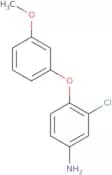
3-Chloro-4-(3-methoxyphenoxy)aniline
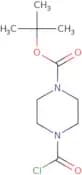
CAS:<p>Versatile small molecule scaffold</p>Formula:C13H12ClNO2Purity:Min. 95%Molecular weight:249.69 g/moltert-Butyl 4-chlorocarbonylpiperazine-1-carboxylate
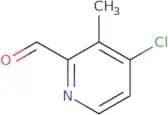
CAS:<p>Versatile small molecule scaffold</p>Formula:C10H17ClN2O3Purity:Min. 95%Color and Shape:PowderMolecular weight:248.71 g/mol4-Chloro-3-methylpyridine-2-carbaldehyde
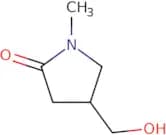
CAS:<p>Versatile small molecule scaffold</p>Formula:C7H6ClNOPurity:Min. 95%Molecular weight:155.58 g/mol4-(Hydroxymethyl)-1-methylpyrrolidin-2-one
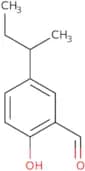
CAS:<p>Versatile small molecule scaffold</p>Formula:C6H11NO2Purity:Min. 95%Molecular weight:129.16 g/mol5-(Butan-2-yl)-2-hydroxybenzaldehyde
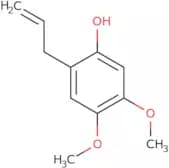
CAS:<p>Versatile small molecule scaffold</p>Formula:C11H14O2Purity:Min. 95%Molecular weight:178.23 g/mol2-Allyl-4,5-dimethoxyphenol
CAS:<p>2-Allyl-4,5-dimethoxyphenol is a pheromone that binds to the olfactory receptor of Diptera. It is also present in the fruit of Eugenia sp. (Myrtaceae). The binding of 2-allyl-4,5-dimethoxyphenol to the olfactory receptor of Diptera has been shown in vivo and in vitro. Spectrometric analyses have revealed significant cytotoxicity for this molecule against breast cancer cells. This molecule may be transformed by β-caryophyllene and eugenol into bioactive molecules with cytotoxic, antioxidant, or antiinflammatory activities.</p>Formula:C11H14O3Purity:Min. 95%Molecular weight:194.23 g/mol3-Ethyl-5,6-dimethyl-2-sulfanyl-3H,4H-thieno[2,3-d]pyrimidin-4-one
CAS:<p>Versatile small molecule scaffold</p>Formula:C10H12N2OS2Purity:Min. 95%Molecular weight:240.3 g/mol3-Butyl-5,6-dimethyl-2-sulfanyl-3H,4H-thieno[2,3-d]pyrimidin-4-one
CAS:<p>Versatile small molecule scaffold</p>Formula:C12H16N2OS2Purity:Min. 95%Molecular weight:268.4 g/mol3-Benzyl-5,6-dimethyl-2-sulfanyl-3H,4H-thieno[2,3-d]pyrimidin-4-one
CAS:<p>Versatile small molecule scaffold</p>Formula:C15H14N2OS2Purity:Min. 95%Molecular weight:302.4 g/mol4-Ethyl-5-sulfanyl-8-thia-4,6-diazatricyclo[7.4.0.0,2,7]trideca-1(9),2(7),5-trien-3-one
CAS:Versatile small molecule scaffoldFormula:C12H14N2OS2Purity:Min. 95%Molecular weight:266.4 g/mol4-(4-Methylphenyl)-5-sulfanyl-8-thia-4,6-diazatricyclo[7.4.0.0,2,7]trideca-1(9),2(7),5-trien-3-one
CAS:<p>Versatile small molecule scaffold</p>Formula:C17H16N2OS2Purity:Min. 95%Molecular weight:328.5 g/mol4-Phenyl-5-sulfanyl-8-thia-4,6-diazatricyclo[7.5.0.0,2,7]tetradeca-1(9),2(7),5-trien-3-one
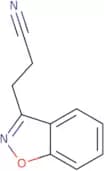
CAS:<p>Versatile small molecule scaffold</p>Formula:C17H16N2OS2Purity:Min. 95%Molecular weight:328.5 g/mol3-(1,2-Benzoxazol-3-yl)propanenitrile
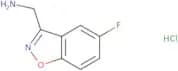
CAS:<p>Versatile small molecule scaffold</p>Formula:C10H8N2OPurity:Min. 95%Molecular weight:172.18 g/mol(5-Fluoro-1,2-benzoxazol-3-yl)methanamine hydrochloride
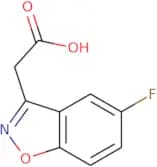
CAS:<p>Versatile small molecule scaffold</p>Formula:C8H8ClFN2OPurity:Min. 95%Molecular weight:202.61 g/mol2-(5-Fluoro-1,2-benzoxazol-3-yl)acetic acid
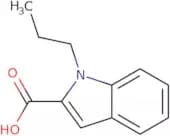
CAS:<p>Versatile small molecule scaffold</p>Formula:C9H6FNO3Purity:Min. 95%Molecular weight:195.15 g/mol1-Propyl-1H-indole-2-carboxylic acid
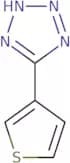
CAS:<p>Versatile small molecule scaffold</p>Formula:C12H13NO2Purity:Min. 95%Molecular weight:203.24 g/mol5-(Thiophen-3-yl)-2H-1,2,3,4-tetrazole
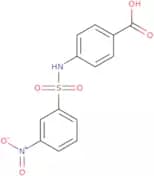
CAS:<p>Versatile small molecule scaffold</p>Formula:C5H4N4SPurity:Min. 95%Molecular weight:152.18 g/mol4-(3-Nitro-benzenesulfonylamino)-benzoic acid
CAS:<p>Versatile small molecule scaffold</p>Formula:C13H10N2O6SPurity:Min. 95%Molecular weight:322.3 g/mol4-[2-(Diethylamino)ethoxy]benzoic acid hydrochloride
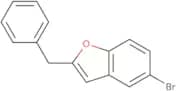
CAS:Controlled Product<p>Versatile small molecule scaffold</p>Formula:C13H20ClNO3Purity:Min. 95%Molecular weight:273.75 g/mol2-Benzyl-5-bromo-1-benzofuran
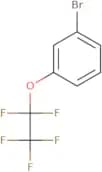
CAS:<p>Versatile small molecule scaffold</p>Formula:C15H11BrOPurity:Min. 95%Molecular weight:287.15 g/mol1-Bromo-3-(1,1,2,2,2-pentafluoroethoxy)benzene
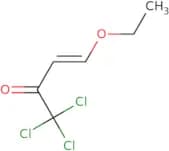
CAS:<p>Versatile small molecule scaffold</p>Formula:C8H4BrF5OPurity:Min. 95%Molecular weight:291.01 g/mol1,1,1-Trichloro-4-ethoxy-but-3-en-2-one
CAS:<p>1,1,1-Trichloro-4-ethoxy-but-3-en-2-one is a chemical compound that is used as a solvent and as a reagent in organic synthesis. It has been used to prepare pyrazole derivatives with regiospecific substitution at the alpha position. 1,1,1-Trichloro-4-ethoxy-but-3-en-2-one can also be used to produce enamines and vinyl ethers by reacting with pyrrole or carbonyl groups. This chemical is an excellent catalyst for reactions involving heterocycles such as sulfates and isomeric chlorides. 1,1,1-Trichloro4ethoxybut3en2one reacts with diethyl ether in the presence of a base to form ethyl chloride.</p>Formula:C6H7Cl3O2Purity:Min. 95%Molecular weight:217.48 g/mol3-Iodo-7-methyl-imidazo[1,2-a]pyridine
CAS:<p>Versatile small molecule scaffold</p>Formula:C8H7IN2Purity:Min. 95%Molecular weight:258.06 g/mol(3-Bromoimidazo[1,2-a]pyridin-2-yl)methanol
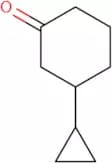
CAS:<p>Versatile small molecule scaffold</p>Formula:C8H7BrN2OPurity:Min. 95%Molecular weight:227.06 g/mol3-Cyclopropylcyclohexan-1-one
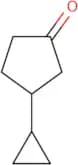
CAS:<p>Versatile small molecule scaffold</p>Formula:C9H14OPurity:Min. 95%Molecular weight:138.21 g/mol3-Cyclopropylcyclopentan-1-one
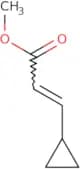
CAS:<p>Versatile small molecule scaffold</p>Formula:C8H12OPurity:Min. 95%Molecular weight:124.18 g/molMethyl (2E)-3-cyclopropylprop-2-enoate
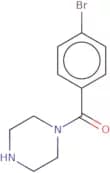
CAS:<p>Methyl (2E)-3-cyclopropylprop-2-enoate is a chiral compound. It can be synthesized from the corresponding chiral propionate by a cross-coupling reaction with cyclopropanes and triflates. The product is a racemic mixture of two diastereomers, an E and Z isomer, which can be separated using chromatography or crystallization. This compound has been used in the synthesis of natural compounds such as alkenes and esters. Methyl (2E)-3-cyclopropylprop-2-enoate can also be synthesized through the use of sodium borohydride to reduce acrylate or catalytic hydrogenation to reduce esters.</p>Formula:C7H10O2Purity:Min. 95%Molecular weight:126.15 g/mol1-(4-bromobenzoyl)piperazine
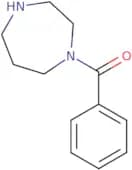
CAS:<p>Versatile small molecule scaffold</p>Formula:C11H13BrN2OPurity:Min. 95%Molecular weight:269.1 g/mol1-Benzoyl-1,4-diazepane
CAS:<p>Versatile small molecule scaffold</p>Formula:C12H16N2OPurity:Min. 95%Molecular weight:204.27 g/molPyrazolo[1,5-a]pyridin-2(1H)-one
CAS:<p>Pyrazolo[1,5-a]pyridin-2(1H)-one is a natural product that is found in plants and fungi. It has been shown to have anticancer activity by inhibiting the proliferation of cancer cells. Pyrazolo[1,5-a]pyridin-2(1H)-one may also act as a backup for dehydrogenase enzymes such as uridine 5'-diphospho-glucose dehydrogenase (UDPGDH) that are involved in the biosynthesis of nucleotides such as uridine triphosphate (UTP). Pyrazolo[1,5-a]pyridin-2(1H)-one inhibits mitochondrial membrane potential and cell proliferation in leukemia cells. The inhibition of mitochondrial membrane potential may be due to its ability to inhibit the enzyme electron transport chain complex I.</p>Formula:C7H6N2OPurity:Min. 95%Molecular weight:134.14 g/mol1-(pyrazolo[1,5-a]pyridin-3-yl)ethanone
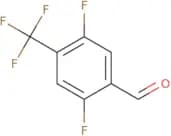
CAS:<p>Versatile small molecule scaffold</p>Formula:C9H8N2OPurity:Min. 95%Molecular weight:160.17 g/mol2,5-Difluoro-4-(trifluoromethyl)benzaldehyde
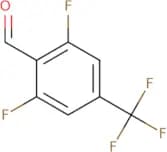
CAS:<p>Versatile small molecule scaffold</p>Formula:C8H3F5OPurity:Min. 95%Molecular weight:210.1 g/mol2,6-Difluoro-4-(trifluoromethyl)benzaldehyde
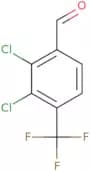
CAS:<p>Versatile small molecule scaffold</p>Formula:C8H3F5OPurity:Min. 95%Molecular weight:210.1 g/mol2,3-Dichloro-4-(trifluoromethyl)benzaldehyde
CAS:<p>Versatile small molecule scaffold</p>Formula:C8H3Cl2F3OPurity:Min. 95%Molecular weight:243.01 g/mol(3R,7aS)-1,7a-Dihydro-3-phenyl-3H,5H-pyrrolo[1,2-c]oxazol-5-one
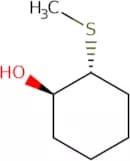
CAS:<p>Versatile small molecule scaffold</p>Formula:C12H11NO2Purity:Min. 95%Molecular weight:201.22 g/mol2-(Methylsulfanyl)cyclohexan-1-ol, trans
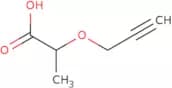
CAS:<p>Versatile small molecule scaffold</p>Formula:C7H14OSPurity:Min. 95%Molecular weight:146.3 g/mol2-(Prop-2-yn-1-yloxy)propanoic acid
CAS:<p>Versatile small molecule scaffold</p>Formula:C6H8O3Purity:Min. 95%Molecular weight:128.13 g/molBicyclo[2.2.1]heptan-1-ylmethanesulfonyl chloride
CAS:<p>Versatile small molecule scaffold</p>Formula:C8H13ClO2SPurity:Min. 95%Molecular weight:208.71 g/molEthyl 2-amino-4,5,6,7-tetrahydrobenzo[d]thiazole-6-carboxylate
CAS:<p>Versatile small molecule scaffold</p>Formula:C10H14N2O2SPurity:Min. 95%Molecular weight:226.3 g/mol1,4-Dioxaspiro[4.5]decane-8-acetic acid
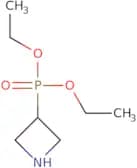
CAS:<p>Versatile small molecule scaffold</p>Formula:C10H16O4Purity:Min. 95%Molecular weight:200.23 g/molDiethyl (azetidin-3-yl)phosphonate
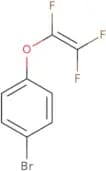
CAS:<p>Versatile small molecule scaffold</p>Formula:C7H16NO3PPurity:Min. 95%Molecular weight:193.18 g/mol1-Bromo-4-(trifluorovinyloxy)benzene
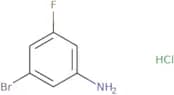
CAS:<p>1-Bromo-4-(trifluorovinyloxy)benzene is a polyether that can be used to synthesize fluorescent polymers. The vinylene group in 1-bromo-4-(trifluorovinyloxy)benzene has shown to act as a nucleophile and yield polymerized products. This compound is insoluble in organic solvents, which makes it difficult to isolate yields. It has been experimentally shown that the anomeric carbon in this compound can be converted into the alpha form by treatment with potassium bis(trimethylsilyl)amide and then subjected to Wittig reaction.</p>Formula:C8H4BrF3OPurity:Min. 95%Molecular weight:253.02 g/mol3-Bromo-5-fluoroaniline HCl
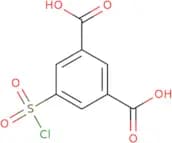
CAS:<p>Versatile small molecule scaffold</p>Formula:C6H5BrFN·HClPurity:Min. 95%Molecular weight:226.48 g/mol5-(Chlorosulfonyl)benzene-1,3-dicarboxylic acid
CAS:<p>Versatile small molecule scaffold</p>Formula:C8H5ClO6SPurity:Min. 95%Molecular weight:264.64 g/mol1-Oxaspiro[4.4]nonan-6-one
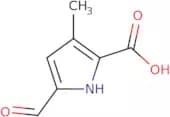
CAS:<p>1-Oxaspiro[4.4]nonan-6-one is a geometric isomer of the bicyclic compound 1,3,5-trioxaspiro[4.4]nonane. It has been synthesized by reacting 3-methylcyclohexanone with nitroethane in the presence of sodium ethoxide and potassium hydroxide. The substituents on the ring have been found to have an effect on the selectivity of 1-oxaspiro[4.4]nonan-6-one. For example, steric effects are more significant in this compound than in other six-membered rings with substituents that are not axial or equatorial. In addition, 1-oxaspiro[4.4]nonan-6-one has been shown to be a stronger diastereoselective agent than other six membered ring compounds with substituents that are not axial or equatorial due to</p>Formula:C8H12O2Purity:Min. 95%Molecular weight:140.18 g/mol5-Formyl-3-methyl-1H-pyrrole-2-carboxylic acid
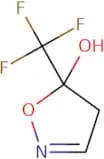
CAS:<p>Versatile small molecule scaffold</p>Formula:C7H7NO3Purity:Min. 95%Molecular weight:153.14 g/mol5-(Trifluoromethyl)-4,5-dihydroisoxazol-5-ol
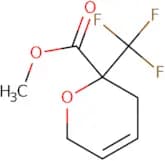
CAS:<p>Versatile small molecule scaffold</p>Formula:C4H4F3NO2Purity:Min. 95%Molecular weight:155.08 g/molMethyl 2-(trifluoromethyl)-3,6-dihydro-2H-pyran-2-carboxylate
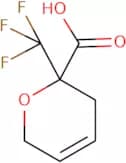
CAS:<p>Versatile small molecule scaffold</p>Formula:C8H9F3O3Purity:Min. 95%Molecular weight:210.15 g/mol2-(Trifluoromethyl)-3,6-dihydro-2H-pyran-2-carboxylic acid
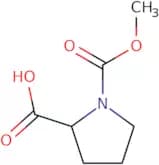
CAS:<p>Versatile small molecule scaffold</p>Formula:C7H7F3O3Purity:Min. 95%Molecular weight:196.12 g/mol1-(Methoxycarbonyl)pyrrolidine-2-carboxylic acid
CAS:<p>Versatile small molecule scaffold</p>Formula:C7H11NO4Purity:Min. 95%Molecular weight:173.17 g/mol

![3-Ethyl-5,6-dimethyl-2-sulfanyl-3H,4H-thieno[2,3-d]pyrimidin-4-one](/_next/image/?url=https%3A%2Fstatic.cymitquimica.com%2Fproducts%2F3D%2Fthumb-webp%2FJCA89860.webp&w=3840&q=75)
![3-Butyl-5,6-dimethyl-2-sulfanyl-3H,4H-thieno[2,3-d]pyrimidin-4-one](/_next/image/?url=https%3A%2Fstatic.cymitquimica.com%2Fproducts%2F3D%2Fthumb-webp%2FJCA89861.webp&w=3840&q=75)
![3-Benzyl-5,6-dimethyl-2-sulfanyl-3H,4H-thieno[2,3-d]pyrimidin-4-one](/_next/image/?url=https%3A%2Fstatic.cymitquimica.com%2Fproducts%2F3D%2Fthumb-webp%2FJCA89863.webp&w=3840&q=75)
![4-Ethyl-5-sulfanyl-8-thia-4,6-diazatricyclo[7.4.0.0,2,7]trideca-1(9),2(7),5-trien-3-one](/_next/image/?url=https%3A%2Fstatic.cymitquimica.com%2Fproducts%2F3D%2Fthumb-webp%2FJCA89866.webp&w=3840&q=75)
![4-(4-Methylphenyl)-5-sulfanyl-8-thia-4,6-diazatricyclo[7.4.0.0,2,7]trideca-1(9),2(7),5-trien-3-one](/_next/image/?url=https%3A%2Fstatic.cymitquimica.com%2Fproducts%2F3D%2Fthumb-webp%2FJCA89869.webp&w=3840&q=75)
![4-Phenyl-5-sulfanyl-8-thia-4,6-diazatricyclo[7.5.0.0,2,7]tetradeca-1(9),2(7),5-trien-3-one](/_next/image/?url=https%3A%2Fstatic.cymitquimica.com%2Fproducts%2F3D%2Fthumb-webp%2FJCA89871.webp&w=3840&q=75)
![4-[2-(Diethylamino)ethoxy]benzoic acid hydrochloride](/_next/image/?url=https%3A%2Fstatic.cymitquimica.com%2Fproducts%2F3D%2Fthumb-webp%2FJCA93128.webp&w=3840&q=75)
![3-Iodo-7-methyl-imidazo[1,2-a]pyridine](/_next/image/?url=https%3A%2Fstatic.cymitquimica.com%2Fproducts%2F3D%2Fthumb-webp%2FJCA93833.webp&w=3840&q=75)
![(3-Bromoimidazo[1,2-a]pyridin-2-yl)methanol](/_next/image/?url=https%3A%2Fstatic.cymitquimica.com%2Fproducts%2F3D%2Fthumb-webp%2FJCA93841.webp&w=3840&q=75)
![Pyrazolo[1,5-a]pyridin-2(1H)-one](/_next/image/?url=https%3A%2Fstatic.cymitquimica.com%2Fproducts%2F3D%2Fthumb-webp%2FJCA94287.webp&w=3840&q=75)
![1-(pyrazolo[1,5-a]pyridin-3-yl)ethanone](/_next/image/?url=https%3A%2Fstatic.cymitquimica.com%2Fproducts%2F3D%2Fthumb-webp%2FJCA94295.webp&w=3840&q=75)
![(3R,7aS)-1,7a-Dihydro-3-phenyl-3H,5H-pyrrolo[1,2-c]oxazol-5-one](/_next/image/?url=https%3A%2Fstatic.cymitquimica.com%2Fproducts%2F3D%2Fthumb-webp%2FJFA10765.webp&w=3840&q=75)
![Bicyclo[2.2.1]heptan-1-ylmethanesulfonyl chloride](/_next/image/?url=https%3A%2Fstatic.cymitquimica.com%2Fproducts%2F3D%2Fthumb-webp%2FJFA12745.webp&w=3840&q=75)
![Ethyl 2-amino-4,5,6,7-tetrahydrobenzo[d]thiazole-6-carboxylate](/_next/image/?url=https%3A%2Fstatic.cymitquimica.com%2Fproducts%2F3D%2Fthumb-webp%2FJFA13600.webp&w=3840&q=75)
![1,4-Dioxaspiro[4.5]decane-8-acetic acid](/_next/image/?url=https%3A%2Fstatic.cymitquimica.com%2Fproducts%2F3D%2Fthumb-webp%2FJFA13604.webp&w=3840&q=75)
![1-Oxaspiro[4.4]nonan-6-one](/_next/image/?url=https%3A%2Fstatic.cymitquimica.com%2Fproducts%2F3D%2Fthumb-webp%2FJFA17901.webp&w=3840&q=75)