Building Blocks
This section contains fundamental products for the synthesis of organic and biological compounds. Building blocks are the essential starting materials used to construct complex molecules through various chemical reactions. They play a critical role in drug discovery, material science, and chemical research. At CymitQuimica, we offer a diverse range of high-quality building blocks to support your innovative research and industrial projects, ensuring you have the essential components for successful synthesis.
Subcategories of "Building Blocks"
- Boronic Acids & Boronic Acid Derivatives(5,756 products)
- Chiral Building Blocks(1,242 products)
- Hydrocarbon Building Blocks(6,095 products)
- Organic Building Blocks(61,037 products)
Found 196200 products of "Building Blocks"
Sort by
Purity (%)
0
100
|
0
|
50
|
90
|
95
|
100
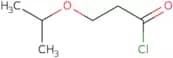
3-(Propan-2-yloxy)propanoyl chloride
CAS:<p>Versatile small molecule scaffold</p>Formula:C6H11ClO2Purity:Min. 95%Molecular weight:150.6 g/mol1,5-Dimethyl-7-methylidenebicyclo[3.3.1]nonan-3-one
CAS:<p>Versatile small molecule scaffold</p>Formula:C12H18OPurity:Min. 95%Molecular weight:178.27 g/mol1,2-Diazaspiro[4.5]decan-3-one
CAS:<p>Versatile small molecule scaffold</p>Formula:C8H14N2OPurity:Min. 95%Molecular weight:154.21 g/mol3-[4-(Hydroxymethyl)phenyl]propanoic acid
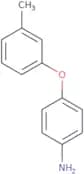
CAS:<p>Versatile small molecule scaffold</p>Formula:C10H12O3Purity:Min. 95%Molecular weight:180.2 g/mol4-(3-Methylphenoxy)aniline hydrochloride
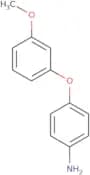
CAS:<p>Versatile small molecule scaffold</p>Formula:C13H14ClNOPurity:Min. 95%Molecular weight:235.72 g/mol4-(3-Methoxyphenoxy)aniline
CAS:<p>Versatile small molecule scaffold</p>Formula:C13H13NO2Purity:Min. 95%Molecular weight:215.25 g/mol2-[(1-Methylpiperidin-4-yl)amino]ethan-1-ol
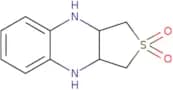
CAS:<p>Versatile small molecule scaffold</p>Formula:C8H18N2OPurity:Min. 95%Molecular weight:158.24 g/mol1,3,3a,4,9,9a-Hexahydrothieno(3,4-b)quinoxaline 2,2-dioxide
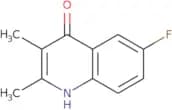
CAS:<p>Versatile small molecule scaffold</p>Formula:C10H12N2O2SPurity:Min. 95%Molecular weight:224.28 g/mol6-Fluoro-2,3-dimethylquinolin-4-ol
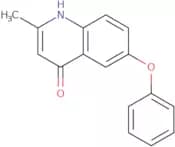
CAS:<p>Versatile small molecule scaffold</p>Formula:C11H10FNOPurity:Min. 95%Molecular weight:191.2 g/mol2-Methyl-6-phenoxyquinolin-4-ol
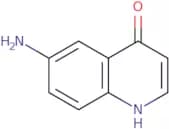
CAS:<p>Versatile small molecule scaffold</p>Formula:C16H13NO2Purity:Min. 95%Molecular weight:251.28 g/mol6-Aminoquinolin-4-ol
CAS:<p>Versatile small molecule scaffold</p>Formula:C9H8N2OPurity:Min. 95%Molecular weight:160.17 g/mol2-[(1-Phenylethyl)amino]acetohydrazide
CAS:<p>Versatile small molecule scaffold</p>Formula:C10H15N3OPurity:Min. 95%Molecular weight:193.25 g/molEthyl 2-[(1-phenylethyl)amino]acetate
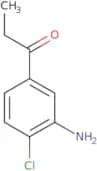
CAS:<p>Versatile small molecule scaffold</p>Formula:C12H17NO2Purity:Min. 95%Molecular weight:207.27 g/mol1-(3-Amino-4-chlorophenyl)propan-1-one
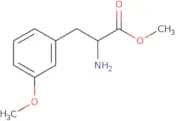
CAS:<p>Versatile small molecule scaffold</p>Formula:C9H10ClNOPurity:Min. 95%Molecular weight:183.63 g/molMethyl 2-amino-3-(3-methoxyphenyl)propanoate
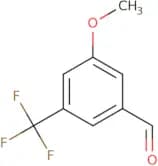
CAS:<p>Versatile small molecule scaffold</p>Formula:C11H15NO3Purity:Min. 95%Molecular weight:209.24 g/mol3-Methoxy-5-(trifluoromethyl)benzaldehyde
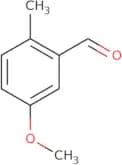
CAS:<p>Versatile small molecule scaffold</p>Formula:C9H7F3O2Purity:Min. 95%Molecular weight:204.15 g/mol5-Methoxy-2-methylbenzaldehyde
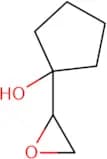
CAS:<p>5-Methoxy-2-methylbenzaldehyde is a piperazine derivative that is used in the synthesis of other organic compounds. It is an intermediate for the production of fluoroquinolones, which are broad spectrum antibiotics. 5-Methoxy-2-methylbenzaldehyde can be synthesized using the liquid phase technique, which involves the use of solvents such as chloroform and ethanol. It has two isomers, methoxy methyl and methoxymethyl, which can be separated by chromatography or mass spectrometry. The synthesis of 5-methoxy-2-methylbenzaldehyde starts with a reaction between trimethylamine and formaldehyde in concentrated sulfuric acid. This reaction produces diethyl fumarate, which reacts with hydrochloric acid to produce diethyl malonate. The next step in this process involves heating the malonate mixture to produce 5-methoxy-2-methylbenz</p>Formula:C9H10O2Purity:Min. 95%Molecular weight:150.18 g/mol1-(Oxiran-2-yl)cyclopentan-1-ol
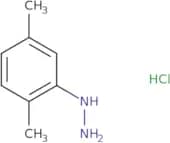
CAS:<p>Versatile small molecule scaffold</p>Formula:C7H12O2Purity:Min. 95%Molecular weight:128.17 g/mol2,5-Dimethylphenylhydrazine hydrochloride
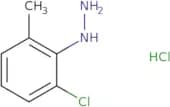
CAS:<p>Versatile small molecule scaffold</p>Formula:C8H12N2·HClPurity:Min. 95%Molecular weight:172.66 g/mol(2-Chloro-6-methylphenyl)hydrazine hydrochloride
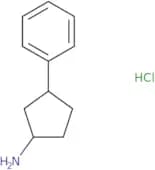
CAS:<p>Versatile small molecule scaffold</p>Formula:C7H10Cl2N2Purity:Min. 95%Molecular weight:193.07 g/mol3-Phenylcyclopentan-1-amine hydrochloride
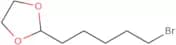
CAS:<p>Versatile small molecule scaffold</p>Formula:C11H16ClNPurity:Min. 95%Molecular weight:197.7 g/mol2-(5-Bromopentyl)-1,3-dioxolane
CAS:<p>Versatile small molecule scaffold</p>Formula:C8H15BrO2Purity:Min. 95%Molecular weight:223.11 g/mol1-[1-(Pyridin-3-yl)ethyl]piperazine
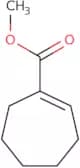
CAS:<p>Versatile small molecule scaffold</p>Formula:C11H17N3Purity:Min. 95%Molecular weight:191.27 g/molMethyl cyclohept-1-ene-1-carboxylate
CAS:<p>Methyl cyclohept-1-ene-1-carboxylate is a histone methyltransferase inhibitor that inhibits the synthesis of histones in mammalian cells. Methyl cyclohept-1-ene-1-carboxylate is used for the treatment of cancers, such as leukemia, lymphoma, and multiple myeloma. It binds to the DNA at specific sites and blocks the formation of histones by inhibiting the transfer of methyl groups. This process leads to changes in gene expression and cellular proliferation. Methyl cyclohept-1-ene-1-carboxylate has also been shown to inhibit demethylation, leading to increased methylation of DNA. The effector proteins may be involved in regulating this process, but more research is needed to confirm this hypothesis.</p>Formula:C9H14O2Purity:Min. 95%Molecular weight:154.21 g/molEthyl 3-(2-methylcyclopropyl)-3-oxopropanoates
CAS:<p>Versatile small molecule scaffold</p>Formula:C9H14O3Purity:Min. 95%Molecular weight:170.2 g/mol4-Cyano-1H-imidazole-5-carboxylic acid
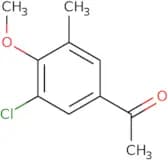
CAS:<p>Versatile small molecule scaffold</p>Formula:C5H3N3O2Purity:Min. 95%Molecular weight:137.1 g/mol1-(3-Chloro-4-methoxy-5-methylphenyl)ethan-1-one
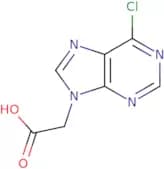
CAS:<p>Versatile small molecule scaffold</p>Formula:C10H11ClO2Purity:Min. 95%Molecular weight:198.64 g/mol2-(6-Chloro-9H-purin-9-yl)acetic acid
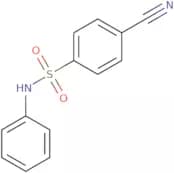
CAS:<p>Versatile small molecule scaffold</p>Formula:C7H5ClN4O2Purity:Min. 95%Molecular weight:212.59 g/mol4-Cyano-N-phenylbenzene-1-sulfonamide
CAS:<p>4-Cyano-N-phenylbenzene-1-sulfonamide is a salt that belongs to the group of aromatic sulfonamides. It is a white, crystalline solid with a melting point of 197 °C. 4-Cyano-N-phenylbenzene-1-sulfonamide has been found to be a polymorphic substance, which means that it can exist in more than one form. The systematic name for this compound is 1-(4'-cyano-3'-nitrophenyl)-4-(4'-cyano-3'-nitrophenyl)benzenesulfonamide monohydrochloride (2:1), and it has two polymorphs: the tetragonal crystal system and the orthorhombic crystal system. 4-Cyano-N-phenylbenzene-1 -sulfonamide also has hydrogen bonding interactions between its molecules and diffraction patterns</p>Formula:C13H10N2O2SPurity:Min. 95%Molecular weight:258.3 g/mol(S)-1-(4-Chlorophenyl)ethanamine hydrochloride
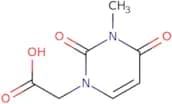
CAS:<p>Versatile small molecule scaffold</p>Formula:C8H11Cl2NPurity:Min. 95%Molecular weight:192.09 g/mol2-(3-Methyl-2,4-dioxo-1,2,3,4-tetrahydropyrimidin-1-yl)acetic acid
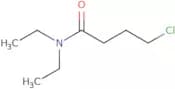
CAS:<p>Versatile small molecule scaffold</p>Formula:C7H8N2O4Purity:Min. 95%Molecular weight:184.15 g/mol4-Chloro-N,N-diethyl-butyramide
CAS:<p>Versatile small molecule scaffold</p>Formula:C8H16ClNOPurity:Min. 95%Molecular weight:177.67 g/mol2-[(2-Cyanoethyl)sulfanyl]acetic acid
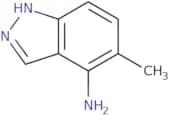
CAS:<p>Versatile small molecule scaffold</p>Formula:C5H7NO2SPurity:Min. 95%Molecular weight:145.2 g/mol5-Methyl-1H-indazol-4-amine
CAS:<p>5-Methyl-1H-indazol-4-amine is a tyrosine kinase inhibitor that has been shown to be potent in inhibiting the activity of various types of tyrosine kinases. It has good oral pharmacokinetics and is not metabolized by the liver. 5-Methyl-1H-indazol-4-amine binds to the ATP site on the enzyme and prevents phosphorylation, which inhibits cell proliferation and growth. This agent also inhibits DNA synthesis, protein synthesis, and phosphoinositide turnover in cells. 5-Methyl-1H-indazol-4-amine is an orally active inhibitor of tyrosine kinases with good oral pharmacokinetics and does not require metabolic activation by the liver. This agent may be used for the treatment of cancer or other diseases associated with uncontrolled cell growth.</p>Formula:C8H9N3Purity:Min. 95%Molecular weight:147.18 g/mol2-[[4-(Boc-amino)methyl]phenoxy]acetic acid
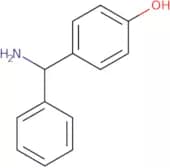
CAS:<p>Versatile small molecule scaffold</p>Formula:C14H19NO5Purity:Min. 95%Molecular weight:281.3 g/molα-(4-hydroxyphenyl)benzylamine
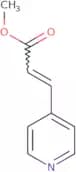
CAS:<p>Versatile small molecule scaffold</p>Formula:C13H13NOPurity:Min. 95%Molecular weight:199.25 g/mol(E)-Methyl 3-(pyridin-4-yl)acrylate
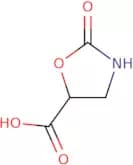
CAS:<p>Versatile small molecule scaffold</p>Formula:C9H9NO2Purity:Min. 95%Molecular weight:163.17 g/mol(5S)-2-Oxo-1,3-oxazolidine-5-carboxylic acid
CAS:<p>Versatile small molecule scaffold</p>Formula:C4H5NO4Purity:Min. 95%Molecular weight:131.09 g/mol2-[(1-Phenylpropyl)amino]ethan-1-ol
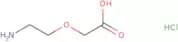
CAS:<p>Versatile small molecule scaffold</p>Formula:C11H17NOPurity:Min. 95%Molecular weight:179.26 g/mol2-(2-Aminoethoxy)acetic acid hydrochloride
CAS:<p>Versatile small molecule scaffold</p>Formula:C4H10ClNO3Purity:Min. 95%Molecular weight:155.58 g/mol4-[(4-Fluorophenyl)methoxy]piperidine
CAS:<p>Versatile small molecule scaffold</p>Formula:C12H16FNOPurity:Min. 95%Molecular weight:209.26 g/mol4-[(2-Methylphenyl)methoxy]piperidine
CAS:<p>Versatile small molecule scaffold</p>Formula:C13H19NOPurity:Min. 95%Molecular weight:205.3 g/mol4-[(2-Methoxyphenyl)methoxy]piperidine hydrochloride
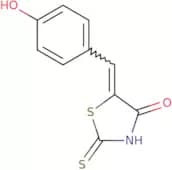
CAS:<p>Versatile small molecule scaffold</p>Formula:C13H20ClNO2Purity:Min. 95%Molecular weight:257.75 g/mol(E)-5-(4-Hydroxybenzylidene)-2-mercaptothiazol-4(5H)-one
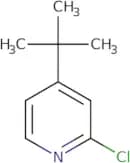
CAS:<p>Versatile small molecule scaffold</p>Formula:C10H7NO2S2Purity:Min. 95%Molecular weight:237.3 g/mol4-(tert-Butyl)-2-chloropyridine
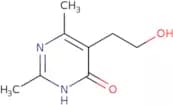
CAS:<p>4-(tert-Butyl)-2-chloropyridine is a ligand that has been used in the synthesis of a number of boronic acids and quinoline derivatives. It is also useful in cross-coupling reactions, which are nucleophilic substitution reactions involving two partners, such as an organometallic reagent and an organic halide or pseudohalide. The linker can be any group that connects the two partners together for these reactions. 4-(tert-Butyl)-2-chloropyridine is stable under acidic conditions, making it an excellent choice for coupling with amines to produce amides.</p>Formula:C9H12ClNPurity:Min. 95%Molecular weight:169.65 g/mol5-(2-Hydroxyethyl)-2,6-dimethylpyrimidin-4-ol
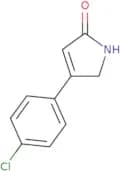
CAS:<p>Versatile small molecule scaffold</p>Formula:C8H12N2O2Purity:Min. 95%Molecular weight:168.19 g/mol4-(4-Chlorophenyl)-2,5-dihydro-1H-pyrrol-2-one
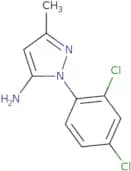
CAS:<p>Versatile small molecule scaffold</p>Formula:C10H8ClNOPurity:Min. 95%Molecular weight:193.63 g/mol1-(2,4-Dichlorophenyl)-3-methyl-1H-pyrazol-5-amine
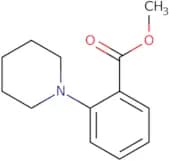
CAS:<p>Versatile small molecule scaffold</p>Formula:C10H9Cl2N3Purity:Min. 95%Molecular weight:242.1 g/molMethyl 2-(piperidin-1-yl)benzoate
CAS:<p>Versatile small molecule scaffold</p>Formula:C13H17NO2Purity:Min. 95%Molecular weight:219.28 g/mol8-Bromooct-1-yne
CAS:<p>8-Bromooct-1-yne has a chiral carbon and is therefore optically active. It has a boiling point of about 44 degrees Celsius, and it is soluble in ether and chloroform but not in water. The compound is stable at temperatures up to 130 degrees Celsius, and it is soluble in benzene and acetone but not in acetone. 8-Bromooct-1-yne has an optical rotation of +10.5 degrees. The molecule can be monosubstituted with a hydrogen atom or halogen atom, which changes the optical properties of the molecule. 8-Bromooct-1-yne has dichroism when viewed under polarized light, which means that the molecule absorbs light differently when it is rotated by 90° compared to when it is rotated by 0°. The compound's fluorescence emission maxima are at 488 nm and 514 nm. 8-Bromooct-1-yne's con</p>Formula:C8H13BrPurity:Min. 95%Molecular weight:189.09 g/mol

![1,5-Dimethyl-7-methylidenebicyclo[3.3.1]nonan-3-one](/_next/image/?url=https%3A%2Fstatic.cymitquimica.com%2Fproducts%2F3D%2Fthumb-webp%2FGCA69600.webp&w=3840&q=75)
![1,2-Diazaspiro[4.5]decan-3-one](/_next/image/?url=https%3A%2Fstatic.cymitquimica.com%2Fproducts%2F3D%2Fthumb-webp%2FGCA70030.webp&w=3840&q=75)
![3-[4-(Hydroxymethyl)phenyl]propanoic acid](/_next/image/?url=https%3A%2Fstatic.cymitquimica.com%2Fproducts%2F3D%2Fthumb-webp%2FGCA70334.webp&w=3840&q=75)
![2-[(1-Methylpiperidin-4-yl)amino]ethan-1-ol](/_next/image/?url=https%3A%2Fstatic.cymitquimica.com%2Fproducts%2F3D%2Fthumb-webp%2FGCA70951.webp&w=3840&q=75)
![2-[(1-Phenylethyl)amino]acetohydrazide](/_next/image/?url=https%3A%2Fstatic.cymitquimica.com%2Fproducts%2F3D%2Fthumb-webp%2FGCA72093.webp&w=3840&q=75)
![Ethyl 2-[(1-phenylethyl)amino]acetate](/_next/image/?url=https%3A%2Fstatic.cymitquimica.com%2Fproducts%2F3D%2Fthumb-webp%2FGCA72098.webp&w=3840&q=75)
![1-[1-(Pyridin-3-yl)ethyl]piperazine](/_next/image/?url=https%3A%2Fstatic.cymitquimica.com%2Fproducts%2F3D%2Fthumb-webp%2FGCA74361.webp&w=3840&q=75)


![2-[(2-Cyanoethyl)sulfanyl]acetic acid](/_next/image/?url=https%3A%2Fstatic.cymitquimica.com%2Fproducts%2F3D%2Fthumb-webp%2FGCA79610.webp&w=3840&q=75)
![2-[[4-(Boc-amino)methyl]phenoxy]acetic acid](/_next/image/?url=https%3A%2Fstatic.cymitquimica.com%2Fproducts%2F3D%2Fthumb-webp%2FGDA12340.webp&w=3840&q=75)
![2-[(1-Phenylpropyl)amino]ethan-1-ol](/_next/image/?url=https%3A%2Fstatic.cymitquimica.com%2Fproducts%2F3D%2Fthumb-webp%2FGDA13369.webp&w=3840&q=75)
![4-[(4-Fluorophenyl)methoxy]piperidine](/_next/image/?url=https%3A%2Fstatic.cymitquimica.com%2Fproducts%2F3D%2Fthumb-webp%2FGDA15135.webp&w=3840&q=75)
![4-[(2-Methylphenyl)methoxy]piperidine](/_next/image/?url=https%3A%2Fstatic.cymitquimica.com%2Fproducts%2F3D%2Fthumb-webp%2FGDA15151.webp&w=3840&q=75)
![4-[(2-Methoxyphenyl)methoxy]piperidine hydrochloride](/_next/image/?url=https%3A%2Fstatic.cymitquimica.com%2Fproducts%2F3D%2Fthumb-webp%2FGDA15157.webp&w=3840&q=75)