Building Blocks
This section contains fundamental products for the synthesis of organic and biological compounds. Building blocks are the essential starting materials used to construct complex molecules through various chemical reactions. They play a critical role in drug discovery, material science, and chemical research. At CymitQuimica, we offer a diverse range of high-quality building blocks to support your innovative research and industrial projects, ensuring you have the essential components for successful synthesis.
Subcategories of "Building Blocks"
- Boronic Acids & Boronic Acid Derivatives(5,756 products)
- Chiral Building Blocks(1,242 products)
- Hydrocarbon Building Blocks(6,095 products)
- Organic Building Blocks(61,038 products)
Found 196817 products of "Building Blocks"
Sort by
Purity (%)
0
100
|
0
|
50
|
90
|
95
|
100
3-[Benzyl(methyl)amino]-2-{[(tert-butoxy)carbonyl]amino}propanoic acid
CAS:<p>Versatile small molecule scaffold</p>Formula:C16H24N2O4Purity:Min. 95%Molecular weight:308.37 g/molrac-tert-Butyl N-[(1R,2R)-2-aminocyclobutyl]carbamate
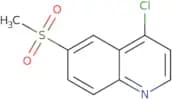
CAS:<p>Versatile small molecule scaffold</p>Formula:C9H18N2O2Purity:Min. 95%Molecular weight:186.25 g/mol4-Chloro-6-(methylsulfonyl)quinoline
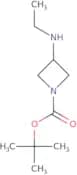
CAS:<p>Versatile small molecule scaffold</p>Formula:C10H8ClNO2SPurity:Min. 95%Molecular weight:241.69 g/moltert-butyl 3-(ethylamino)azetidine-1-carboxylate
CAS:<p>Versatile small molecule scaffold</p>Formula:C10H20N2O2Purity:Min. 95%Molecular weight:200.3 g/mol7-Boc-3-oxa-7-azabicyclo[3.3.1]nonane-9-one
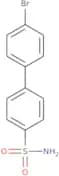
CAS:<p>Versatile small molecule scaffold</p>Formula:C12H19NO4Purity:Min. 95%Molecular weight:241.28 g/mol4-(4-Bromophenyl)benzene-1-sulfonamide
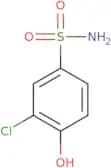
CAS:<p>Versatile small molecule scaffold</p>Formula:C12H10BrNO2SPurity:Min. 95%Molecular weight:312.18 g/mol3-Chloro-4-hydroxybenzene-1-sulfonamide
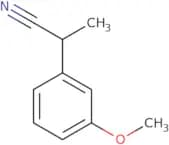
CAS:<p>Versatile small molecule scaffold</p>Formula:C6H6ClNO3SPurity:Min. 95%Molecular weight:207.64 g/mol2-(3-Methoxyphenyl)propanenitrile
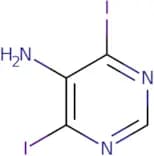
CAS:<p>Versatile small molecule scaffold</p>Formula:C10H11NOPurity:Min. 95%Molecular weight:161.2 g/mol4,6-Diiodopyrimidin-5-amine
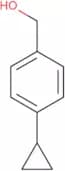
CAS:<p>Versatile small molecule scaffold</p>Formula:C4H3I2N3Purity:Min. 95%Molecular weight:346.9 g/mol(4-Cyclopropylphenyl)methanol
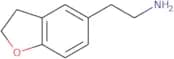
CAS:<p>Versatile small molecule scaffold</p>Formula:C10H12OPurity:Min. 95%Molecular weight:148.21 g/mol2-(2,3-Dihydro-1-benzofuran-5-yl)ethan-1-amine
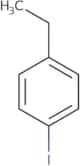
CAS:Controlled Product<p>Versatile small molecule scaffold</p>Formula:C10H13NOPurity:Min. 95%Color and Shape:PowderMolecular weight:163.22 g/mol1-Ethyl-4-iodobenzene
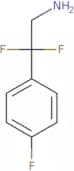
CAS:<p>1-Ethyl-4-iodobenzene is a chemical compound with an aromatic ring that is used as a starting material for the synthesis of other compounds. It is mainly used in cross-coupling reactions, such as the Suzuki reaction, and can be used to link two molecules together to form a new molecule. 1-Ethyl-4-iodobenzene can be used as a low molecular weight solvent and has been shown to have potent inhibitory activity against cell growth. The toxicity of 1-ethyl-4-iodobenzene has been studied by using various imaging techniques, including fluorescence microscopy and electron microscopy.</p>Formula:C8H9IPurity:Min. 95%Molecular weight:232.06 g/mol2,2-Difluoro-2-(4-fluorophenyl)ethan-1-amine
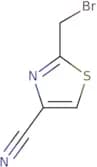
CAS:<p>Versatile small molecule scaffold</p>Formula:C8H8F3NPurity:Min. 95%Molecular weight:175.15 g/mol2-(Bromomethyl)-1,3-thiazole-4-carbonitrile
CAS:<p>Versatile small molecule scaffold</p>Formula:C5H3BrN2SPurity:Min. 95%Molecular weight:203.06 g/mol4-Amino-1-{4H,5H,6H,7H-thieno[3,2-c]pyridin-5-yl}butan-1-one hydrochloride
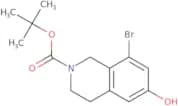
CAS:<p>Versatile small molecule scaffold</p>Formula:C11H17ClN2OSPurity:Min. 95%Molecular weight:260.78 g/moltert-Butyl 8-bromo-6-hydroxy-1,2,3,4-tetrahydroisoquinoline-2-carboxylate
CAS:<p>Versatile small molecule scaffold</p>Formula:C14H18BrNO3Purity:Min. 95%Molecular weight:328.2 g/mol2-Amino-N-[(benzylcarbamoyl)methyl]acetamide hydrochloride
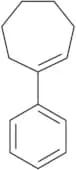
CAS:<p>Versatile small molecule scaffold</p>Formula:C11H16ClN3O2Purity:Min. 95%Molecular weight:257.72 g/mol1-Phenylcyclohept-1-ene
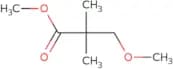
CAS:<p>1-Phenylcyclohept-1-ene is a chemical reagent that is used in the production of polymers. It belongs to the dichlorocarbene class of hypervalent molecules and can be used for the preparation of styrene derivatives, such as iminium ions and halides. 1-Phenylcyclohept-1-ene also reacts with hypobromous acid to form pyridinium chlorochromate, which is a useful oxidizing agent. The rate of 1-phenylcyclohept-1-ene reactions has been studied using kinetics methods. This compound has shown to be an effective sensitizer for radiation polymerization processes.</p>Formula:C13H16Purity:Min. 95%Molecular weight:172.27 g/molMethyl 3-methoxy-2,2-dimethylpropanoate
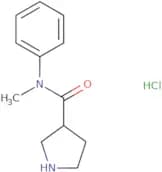
CAS:<p>Versatile small molecule scaffold</p>Formula:C7H14O3Purity:Min. 95%Molecular weight:146.18 g/molN-Methyl-N-phenylpyrrolidine-3-carboxamide hydrochloride
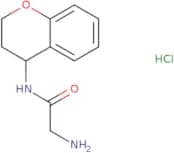
CAS:<p>Versatile small molecule scaffold</p>Formula:C12H17ClN2OPurity:Min. 95%Molecular weight:240.73 g/mol2-Amino-N-(3,4-dihydro-2H-1-benzopyran-4-yl)acetamide hydrochloride
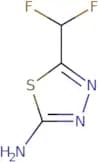
CAS:<p>Versatile small molecule scaffold</p>Formula:C11H15ClN2O2Purity:Min. 95%Molecular weight:242.7 g/mol5-(Difluoromethyl)-1,3,4-thiadiazol-2-amine
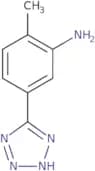
CAS:<p>Versatile small molecule scaffold</p>Formula:C3H3F2N3SPurity:Min. 95%Molecular weight:151.14 g/mol2-Methyl-5-(2H-tetrazol-5-yl)aniline
CAS:<p>Versatile small molecule scaffold</p>Formula:C8H9N5Purity:Min. 95%Molecular weight:175.19 g/mol{3-[(Cyclohexyloxy)methyl]phenyl}methanamine
CAS:<p>Versatile small molecule scaffold</p>Formula:C14H21NOPurity:Min. 95%Molecular weight:219.32 g/mol{3-[(2,2,2-Trifluoroethoxy)methyl]phenyl}methanamine
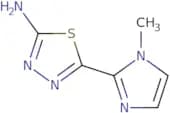
CAS:<p>Versatile small molecule scaffold</p>Formula:C10H12F3NOPurity:Min. 95%Molecular weight:219.2 g/mol5-(1-Methyl-1H-imidazol-2-yl)-1,3,4-thiadiazol-2-amine
CAS:<p>Versatile small molecule scaffold</p>Formula:C6H7N5SPurity:Min. 95%Molecular weight:181.22 g/mol6-(3-Chlorophenyl)-3-methyl-[1,2]oxazolo[5,4-b]pyridine-4-carboxylic acid
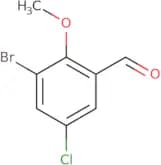
CAS:<p>Versatile small molecule scaffold</p>Formula:C14H9ClN2O3Purity:Min. 95%Molecular weight:288.68 g/mol3-bromo-5-chloro-2-methoxybenzaldehyde
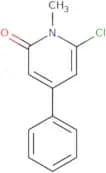
CAS:<p>Versatile small molecule scaffold</p>Formula:C8H6O2ClBrPurity:Min. 95%Molecular weight:249.49 g/mol6-Chloro-1-methyl-4-phenyl-1,2-dihydropyridin-2-one
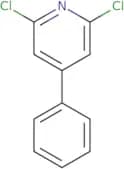
CAS:<p>Versatile small molecule scaffold</p>Formula:C12H10ClNOPurity:Min. 95%Molecular weight:219.66 g/mol2,6-Dichloro-4-phenylpyridine
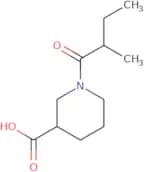
CAS:<p>2,6-Dichloro-4-phenylpyridine is a chemosensor that can be used to detect the presence of aromatic compounds. It has a modular structure consisting of an emission domain and a substrate binding domain. The fluorophore is reversibly bound to the substrate binding domain, which means that it can be detached from the substrate when the desired molecule is detected. This sensor has been shown to have high selectivity for aromatic molecules in both water and organic solvents. 2,6-Dichloro-4-phenylpyridine has also been studied structurally and found to react with a number of other chemical entities such as thiocyanate ion, nitrobenzene, and nitrophenol.</p>Formula:C11H7Cl2NPurity:Min. 95%Molecular weight:224.09 g/mol1-(2-Methylbutanoyl)piperidine-3-carboxylic acid
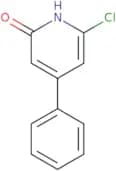
CAS:<p>Versatile small molecule scaffold</p>Formula:C11H19NO3Purity:Min. 95%Molecular weight:213.27 g/mol6-Chloro-4-phenyl-1,2-dihydropyridin-2-one
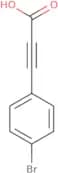
CAS:<p>Versatile small molecule scaffold</p>Formula:C11H8ClNOPurity:Min. 95%Molecular weight:205.64 g/mol3-(4-Bromophenyl)propiolic Acid
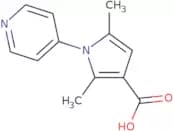
CAS:<p>3-(4-Bromophenyl)propiolic acid is an alkynyl compound that can be synthesized by the catalyzed cross-coupling of triarylbismuth with aryl bromides. This reaction requires a catalyst and is carried out in the presence of a base, such as potassium carbonate. The reaction proceeds rapidly at room temperature and can be performed using either an organic or inorganic solvent. The product is obtained in high yield, but it must be purified to remove any residual starting materials and byproducts. 3-(4-Bromophenyl)propiolic acid has a carboxylic functional group that can undergo further reactions to form other compounds, such as cross-coupling reactions with alkenes or carboxylic acids.</p>Formula:C9H5BrO2Purity:Min. 95%Molecular weight:225.04 g/mol2,5-Dimethyl-1-(pyridin-4-yl)-1H-pyrrole-3-carboxylic acid
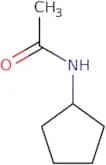
CAS:<p>Versatile small molecule scaffold</p>Formula:C12H12N2O2Purity:Min. 95%Molecular weight:216.24 g/molN-Cyclopentylacetamide
CAS:<p>N-Cyclopentylacetamide is a reactive alkylating agent that is used in the synthesis of organic chemicals. It reacts with chlorine to form chloroform, and with acetonitrile to form acetanilide. N-Cyclopentylacetamide also reacts electrochemically with fission products such as uranium to form uranium hexafluoride. The reaction of N-Cyclopentylacetamide with bromides yields a spectrum of cyclopentyl bromides. This compound can be used for the synthesis of pharmaceuticals and other chemical compounds.</p>Formula:C7H13NOPurity:Min. 95%Molecular weight:127.18 g/mol1-{[3-(Aminomethyl)phenyl]methyl}piperidine-3-carboxamide
CAS:<p>Versatile small molecule scaffold</p>Formula:C14H21N3OPurity:Min. 95%Molecular weight:247.34 g/mol{3-[(Benzyloxy)methyl]phenyl}methanamine
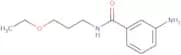
CAS:<p>Versatile small molecule scaffold</p>Formula:C15H17NOPurity:Min. 95%Molecular weight:227.3 g/mol3-Amino-N-(3-ethoxypropyl)benzamide
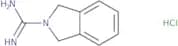
CAS:<p>Versatile small molecule scaffold</p>Formula:C12H18N2O2Purity:Min. 95%Molecular weight:222.28 g/mol2,3-Dihydro-1H-isoindole-2-carboximidamide hydrochloride
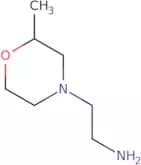
CAS:<p>Versatile small molecule scaffold</p>Formula:C9H12ClN3Purity:Min. 95%Molecular weight:197.66 g/mol2-(2-Methylmorpholin-4-yl)ethan-1-amine
CAS:<p>Versatile small molecule scaffold</p>Formula:C7H16N2OPurity:Min. 95%Molecular weight:144.21 g/mol1-({[(3-Bromophenyl)methyl]carbamoyl}amino)cyclopentane-1-carboxylic acid
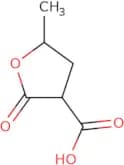
CAS:Controlled Product<p>1-({[(3-Bromophenyl)methyl]carbamoyl}amino)cyclopentane-1-carboxylic acid is a research tool that can be used in the study of cell biology and pharmacology. It is an inhibitor that binds to ion channels, which are membrane proteins that allow the passage of ions across a lipid bilayer. This product has been shown to be a ligand for peptide and receptor interactions, and activation of these receptors can lead to various biological effects. 1-({[(3-Bromophenyl)methyl]carbamoyl}amino)cyclopentane-1-carboxylic acid is also an antibody activator, which means it can bind to antibodies and activate their immune response functions.</p>Formula:C14H17BrN2O3Purity:Min. 95%Molecular weight:341.2 g/mol5-Methyl-2-oxooxolane-3-carboxylic acid
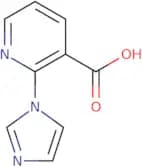
CAS:<p>Versatile small molecule scaffold</p>Formula:C6H8O4Purity:Min. 95%Molecular weight:144.12 g/mol2-(1H-Imidazol-1-yl)pyridine-3-carboxylic acid
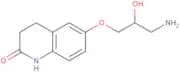
CAS:<p>Versatile small molecule scaffold</p>Formula:C9H7N3O2Purity:Min. 95%Molecular weight:189.17 g/mol6-(3-Amino-2-hydroxypropoxy)-1,2,3,4-tetrahydroquinolin-2-one
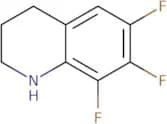
CAS:<p>Versatile small molecule scaffold</p>Formula:C12H16N2O3Purity:Min. 95%Molecular weight:236.27 g/mol6,7,8-Trifluoro-1,2,3,4-tetrahydroquinoline
CAS:<p>Versatile small molecule scaffold</p>Formula:C9H8F3NPurity:Min. 95%Molecular weight:187.16 g/mol3-[(Cyclopropylmethyl)sulfamoyl]benzoic acid
CAS:<p>Versatile small molecule scaffold</p>Formula:C11H13NO4SPurity:Min. 95%Molecular weight:255.29 g/mol6-Cyclopropyl-1-(thiophen-3-ylmethyl)-1H-pyrazolo[3,4-b]pyridine-4-carboxylic acid
CAS:<p>Versatile small molecule scaffold</p>Formula:C15H13N3O2SPurity:Min. 95%Molecular weight:299.3 g/mol3-Cyclopropyl-6-phenyl-[1,2]oxazolo[5,4-b]pyridine-4-carboxylic acid
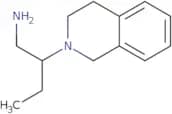
CAS:<p>Versatile small molecule scaffold</p>Formula:C16H12N2O3Purity:Min. 95%Molecular weight:280.28 g/mol2-(1,2,3,4-Tetrahydroisoquinolin-2-yl)butan-1-amine
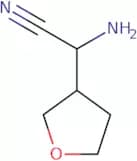
CAS:<p>Versatile small molecule scaffold</p>Formula:C13H20N2Purity:Min. 95%Molecular weight:204.31 g/mol2-Amino-2-(oxolan-3-yl)acetonitrile
CAS:<p>Versatile small molecule scaffold</p>Formula:C6H10N2OPurity:Min. 95%Molecular weight:126.16 g/mol
![3-[Benzyl(methyl)amino]-2-{[(tert-butoxy)carbonyl]amino}propanoic acid](/_next/image/?url=https%3A%2Fstatic.cymitquimica.com%2Fproducts%2F3D%2Fthumb-webp%2FETA71297.webp&w=3840&q=75)

![rac-tert-Butyl N-[(1R,2R)-2-aminocyclobutyl]carbamate](/_next/image/?url=https%3A%2Fstatic.cymitquimica.com%2Fproducts%2F3D%2Fthumb-webp%2FETA70994.webp&w=3840&q=75)
![7-Boc-3-oxa-7-azabicyclo[3.3.1]nonane-9-one](/_next/image/?url=https%3A%2Fstatic.cymitquimica.com%2Fproducts%2F3D%2Fthumb-webp%2FETA69520.webp&w=3840&q=75)
![4-Amino-1-{4H,5H,6H,7H-thieno[3,2-c]pyridin-5-yl}butan-1-one hydrochloride](/_next/image/?url=https%3A%2Fstatic.cymitquimica.com%2Fproducts%2F3D%2Fthumb-webp%2FENC80960.webp&w=3840&q=75)
![2-Amino-N-[(benzylcarbamoyl)methyl]acetamide hydrochloride](/_next/image/?url=https%3A%2Fstatic.cymitquimica.com%2Fproducts%2F3D%2Fthumb-webp%2FENC19856.webp&w=3840&q=75)
![{3-[(Cyclohexyloxy)methyl]phenyl}methanamine](/_next/image/?url=https%3A%2Fstatic.cymitquimica.com%2Fproducts%2F3D%2Fthumb-webp%2FENB58660.webp&w=3840&q=75)
![{3-[(2,2,2-Trifluoroethoxy)methyl]phenyl}methanamine](/_next/image/?url=https%3A%2Fstatic.cymitquimica.com%2Fproducts%2F3D%2Fthumb-webp%2FENB58523.webp&w=3840&q=75)
![6-(3-Chlorophenyl)-3-methyl-[1,2]oxazolo[5,4-b]pyridine-4-carboxylic acid](/_next/image/?url=https%3A%2Fstatic.cymitquimica.com%2Fproducts%2F3D%2Fthumb-webp%2FENB58474.webp&w=3840&q=75)
![1-{[3-(Aminomethyl)phenyl]methyl}piperidine-3-carboxamide](/_next/image/?url=https%3A%2Fstatic.cymitquimica.com%2Fproducts%2F3D%2Fthumb-webp%2FENB58387.webp&w=3840&q=75)
![{3-[(Benzyloxy)methyl]phenyl}methanamine](/_next/image/?url=https%3A%2Fstatic.cymitquimica.com%2Fproducts%2F3D%2Fthumb-webp%2FENB58286.webp&w=3840&q=75)
![1-({[(3-Bromophenyl)methyl]carbamoyl}amino)cyclopentane-1-carboxylic acid](/_next/image/?url=https%3A%2Fstatic.cymitquimica.com%2Fproducts%2F3D%2Fthumb-webp%2FENB58124.webp&w=3840&q=75)
![3-[(Cyclopropylmethyl)sulfamoyl]benzoic acid](/_next/image/?url=https%3A%2Fstatic.cymitquimica.com%2Fproducts%2F3D%2Fthumb-webp%2FENB57938.webp&w=3840&q=75)
![6-Cyclopropyl-1-(thiophen-3-ylmethyl)-1H-pyrazolo[3,4-b]pyridine-4-carboxylic acid](/_next/image/?url=https%3A%2Fstatic.cymitquimica.com%2Fproducts%2F3D%2Fthumb-webp%2FENB57922.webp&w=3840&q=75)
![3-Cyclopropyl-6-phenyl-[1,2]oxazolo[5,4-b]pyridine-4-carboxylic acid](/_next/image/?url=https%3A%2Fstatic.cymitquimica.com%2Fproducts%2F3D%2Fthumb-webp%2FENB57892.webp&w=3840&q=75)