


Building Blocks
This section contains fundamental products for the synthesis of organic and biological compounds. Building blocks are the essential starting materials used to construct complex molecules through various chemical reactions. They play a critical role in drug discovery, material science, and chemical research. At CymitQuimica, we offer a diverse range of high-quality building blocks to support your innovative research and industrial projects, ensuring you have the essential components for successful synthesis.
Subcategories of "Building Blocks"
- Boronic Acids & Boronic Acid Derivatives(5,756 products)
- Chiral Building Blocks(1,242 products)
- Hydrocarbon Building Blocks(6,095 products)
- Organic Building Blocks(61,037 products)
Found 196200 products of "Building Blocks"
Sort by
Purity (%)
0
100
|
0
|
50
|
90
|
95
|
100
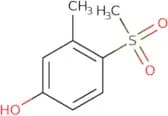
4-Methanesulfonyl-3-methylphenol
CAS:<p>4-Methanesulfonyl-3-methylphenol is a chromatographic and spectrometric reagent that reacts with sulfoxides to form sulfones. It is used in the analysis of pesticides, herbicides, and other organic chemicals. The reaction system consists of two components: the 4-methanesulfonyl-3-methylphenol reagent and the sulfoxide substrate. The linear range is from 0.1 to 100 micrograms per milliliter for 4-methanesulfonyl-3-methylphenol and from 1 to 500 micrograms per milliliter for sulfoxide. This chemical has been found to be resistant to hypersalinity, tissue acclimation, and oxidation products.</p>Formula:C8H10O3SPurity:Min. 95%Molecular weight:186.23 g/mol1-Methyl-2-oxo-1,2,3,4-tetrahydroquinoline-4-carboxylic acid
CAS:<p>Versatile small molecule scaffold</p>Formula:C11H11NO3Purity:Min. 95%Molecular weight:205.21 g/mol3-ethylheptanoic acid
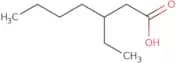
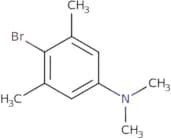
CAS:<p>3-Ethylheptanoic acid is used in the analysis of sedimentation and viscosity. It was found to be a good antioxidant based on its ability to inhibit the oxidation of linoleic acid, which is an essential fatty acid. 3-Ethylheptanoic acid has also been shown to have chemopreventive properties in mice with skin cancer. This compound is thought to have anti-inflammatory properties because it inhibits the production of prostaglandins by inhibiting cyclooxygenase activity. Furthermore, 3-ethylheptanoic acid has been used as a chemical intermediate for synthesizing other compounds such as amines, alcohols, and phenolic compounds.</p>Formula:C9H18O2Purity:Min. 95%Molecular weight:158.23 g/mol4-Bromo-N,N,3,5-tetramethylaniline
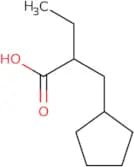
CAS:<p>Versatile small molecule scaffold</p>Formula:C10H14BrNPurity:Min. 95%Molecular weight:228.13 g/mol2-(Cyclopentylmethyl)butanoic acid
CAS:<p>Versatile small molecule scaffold</p>Formula:C10H18O2Purity:Min. 95%Molecular weight:170.25 g/mol1-[(4-Methylphenyl)sulfonyl]-2,3-dihydroquinolin-4(1H)-one
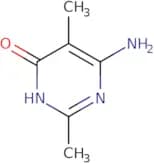
CAS:<p>Versatile small molecule scaffold</p>Formula:C16H15NO3SPurity:Min. 95%Molecular weight:301.4 g/mol6-Amino-2,5-dimethylpyrimidin-4-ol
CAS:<p>Versatile small molecule scaffold</p>Formula:C6H9N3OPurity:Min. 95%Molecular weight:139.16 g/molBis(2-[3-(morpholin-4-yl)propyl]guanidine), sulfuric acid
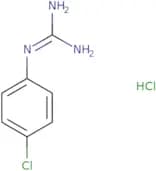
CAS:<p>Versatile small molecule scaffold</p>Formula:C16H38N8O6SPurity:Min. 95%Molecular weight:470.6 g/mol4-Chlorophenylguanidine hydrochloride
CAS:<p>Versatile small molecule scaffold</p>Formula:C7H8ClN3·HClPurity:Min. 95%Molecular weight:206.07 g/molBis(1-[(3-methoxyphenyl)methyl]guanidine), sulfuric acid
CAS:<p>Versatile small molecule scaffold</p>Formula:C18H28N6O6SPurity:Min. 95%Molecular weight:456.5 g/mol4-Formylthiophene-2-carboxylic acid
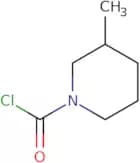
CAS:<p>Versatile small molecule scaffold</p>Formula:C6H4O3SPurity:Min. 95%Molecular weight:156.16 g/mol3-Methylpiperidine-1-carbonyl chloride
CAS:<p>Versatile small molecule scaffold</p>Formula:C7H12ClNOPurity:Min. 95%Molecular weight:161.63 g/molN-[3,3-Dimethyl-1-(1H-pyrazol-1-yl)butan-2-ylidene]hydroxylamine
CAS:<p>Versatile small molecule scaffold</p>Formula:C9H15N3OPurity:Min. 95%Molecular weight:181.23 g/mol3-Methyl-1-(1H-pyrazol-1-yl)butan-2-one
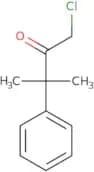
CAS:<p>Versatile small molecule scaffold</p>Formula:C8H12N2OPurity:Min. 95%Molecular weight:152.19 g/mol1-Chloro-3-methyl-3-phenylbutan-2-one
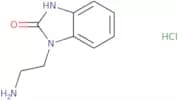
CAS:<p>Versatile small molecule scaffold</p>Formula:C11H13ClOPurity:Min. 95%Molecular weight:196.67 g/mol1-(2-Aminoethyl)-2,3-dihydro-1H-1,3-benzodiazol-2-one hydrochloride
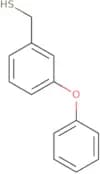
CAS:<p>Versatile small molecule scaffold</p>Formula:C9H12ClN3OPurity:Min. 95%Molecular weight:213.67 g/mol(3-Phenoxyphenyl)methanethiol
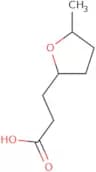
CAS:<p>Versatile small molecule scaffold</p>Formula:C13H12OSPurity:Min. 95%Molecular weight:216.3 g/mol3-(5-Methyloxolan-2-yl)propanoic acid
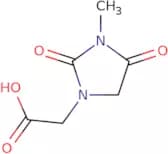
CAS:<p>Versatile small molecule scaffold</p>Formula:C8H14O3Purity:Min. 95%Molecular weight:158.19 g/mol2-(3-Methyl-2,4-dioxoimidazolidin-1-yl)acetic acid
CAS:<p>Versatile small molecule scaffold</p>Formula:C6H8N2O4Purity:Min. 95%Molecular weight:172.14 g/molEthyl imidazo[1,2-a]pyrimidine-3-carboxylate
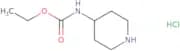
CAS:<p>Versatile small molecule scaffold</p>Formula:C9H9N3O2Purity:Min. 95%Molecular weight:191.19 g/molEthyl piperidin-4-ylcarbamate hydrochloride
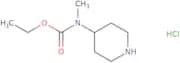
CAS:<p>Versatile small molecule scaffold</p>Formula:C8H17ClN2O2Purity:Min. 95%Molecular weight:208.68 g/molEthyl N-methyl-N-(piperidin-4-yl)carbamate hydrochloride
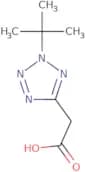
CAS:<p>Versatile small molecule scaffold</p>Formula:C9H19ClN2O2Purity:Min. 95%Molecular weight:222.71 g/mol2-(2-tert-Butyl-2H-1,2,3,4-tetrazol-5-yl)acetic acid
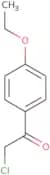
CAS:<p>Versatile small molecule scaffold</p>Formula:C7H12N4O2Purity:Min. 95%Molecular weight:184.2 g/mol2-Chloro-1-(4-ethoxyphenyl)ethan-1-one
CAS:<p>2-Chloro-1-(4-ethoxyphenyl)ethan-1-one is a hydrocarbon radical that is used as a vitamin and in the synthesis of other molecules. This molecule has a covalent bond between the two chlorine atoms and one carbon atom. The hydrocarbon radical is also present in many hydrocarbons.</p>Formula:C10H11ClO2Purity:Min. 95%Molecular weight:198.64 g/mol3-methylquinolin-4-ol
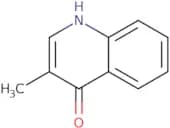
CAS:<p>Versatile small molecule scaffold</p>Formula:C10H9NOPurity:Min. 95%Molecular weight:159.19 g/mol3-Bromoquinolin-4-ol
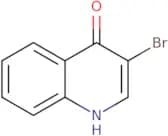
CAS:<p>3-Bromoquinolin-4-ol is a pyrrole derivative with a hydroxy group on the 4 position. It is an intermediate in the synthesis of 3-bromo-5-hydroxypyridine, which can be used as a reagent for aminations, oxindole syntheses, and piperidide formation. The presence of substituents on the 2 position of the quinoline ring determines whether it is an isomeric or nonisomeric compound. Substituents on the 2 position also determine if it is a nucleus or not. Finally, a substitution at the 4 position determines whether it is 2-amino-4-hydroxypyridine or pyrrole derivatives.</p>Formula:C9H6BrNOPurity:Min. 95%Molecular weight:224.05 g/mol3-Iodo-2-methylquinolin-4-ol
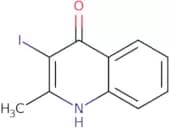
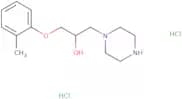
CAS:<p>Versatile small molecule scaffold</p>Formula:C10H8INOPurity:Min. 95%Molecular weight:285.08 g/mol1-(2-Methylphenoxy)-3-(piperazin-1-yl)propan-2-ol dihydrochloride
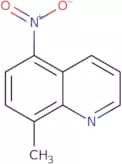
CAS:<p>Versatile small molecule scaffold</p>Formula:C14H24Cl2N2O2Purity:Min. 95%Molecular weight:323.3 g/mol8-Methyl-5-nitroquinoline
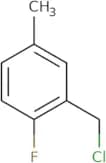
CAS:<p>8-methyl-5-nitroquinoline is a linker that has been shown to be cytotoxic in tumor cells. It binds to DNA by forming covalent bonds and inhibits the synthesis of DNA. 8-methyl-5-nitroquinoline is also able to inhibit the growth of human colon carcinoma cells in vitro and tumor xenografts in vivo. This nitro compound has been shown to cause necrosis, which may be due to its ability to bind oxygen and generate reactive oxygen species. The ability of 8-methyl-5-nitroquinoline to form covalent bonds with DNA makes it a potent antioxidant that may be used for the treatment of radiation injury.</p>Formula:C10H8N2O2Purity:Min. 95%Molecular weight:188.18 g/mol2-(Chloromethyl)-1-fluoro-4-methylbenzene
CAS:<p>Versatile small molecule scaffold</p>Formula:C8H8ClFPurity:Min. 95%Molecular weight:158.6 g/mol4-(Benzylamino)-4-oxobutanoic acid
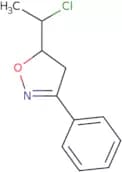
CAS:<p>Versatile small molecule scaffold</p>Formula:C11H13NO3Purity:Min. 95%Molecular weight:207.23 g/mol5-(1-Chloroethyl)-3-phenyl-4,5-dihydro-1,2-oxazole
CAS:<p>Versatile small molecule scaffold</p>Formula:C11H12ClNOPurity:Min. 95%Molecular weight:209.67 g/mol2-[2-(4-Hydroxyphenyl)ethyl]-2,3-dihydro-1H-isoindole-1,3-dione
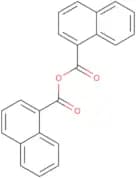
CAS:<p>Versatile small molecule scaffold</p>Formula:C16H13NO3Purity:Min. 95%Molecular weight:267.28 g/molNaphthalene-1-carbonyl naphthalene-1-carboxylate
CAS:<p>Naphthalene-1-carbonyl naphthalene-1-carboxylate is a benzoylation of a primary alcohol. It is a monosubstituted benzoyl derivative with a transition state that has a benzoic anhydride and enolate as reactants. It is not an alkylation reaction because the carbonyl group prevents the formation of an alkyl bond. The kinetic product, which is favored in this reaction, is the cyclic sulfate ester. The carboxylate group can be either chiral or non-chiral depending on the configuration of the starting material. The R/S system for naphthalene-1-carbonyl naphthalene-1-carboxylate would be S/R because it has no chiral atoms. Naphthalene-1-carbonyl naphthalene-1-carboxylate can also form chiral alcohol</p>Formula:C22H14O3Purity:Min. 95%Molecular weight:326.3 g/mol4-[(2,5-Dioxo-2,5-dihydro-1H-pyrrol-1-yl)methyl]benzoic acid
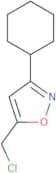
CAS:<p>Versatile small molecule scaffold</p>Formula:C12H9NO4Purity:Min. 95%Molecular weight:231.2 g/mol5-(Chloromethyl)-3-cyclohexylisoxazole
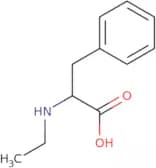
CAS:<p>5-(Chloromethyl)-3-cyclohexylisoxazole is an aliphatic aldehyde. It reacts with aldoximes to form cyclic imines, and then undergoes nucleophilic substitution with sodium hydroxide to produce the corresponding oxime. This reagent can be used for the synthesis of 2-amino-1,3-dioxolane compounds.</p>Formula:C10H14ClNOPurity:Min. 95%Molecular weight:199.68 g/mol2-(Ethylamino)-3-phenylpropanoic acid
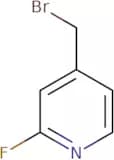
CAS:<p>Versatile small molecule scaffold</p>Formula:C11H15NO2Purity:Min. 95%Molecular weight:193.24 g/mol4-(Bromomethyl)-2-fluoropyridine
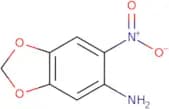
CAS:<p>Versatile small molecule scaffold</p>Formula:C6H5BrFNPurity:Min. 95%Molecular weight:190.01 g/mol6-Nitro-1,3-benzodioxol-5-amine
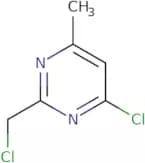
CAS:<p>Versatile small molecule scaffold</p>Formula:C7H6N2O4Purity:Min. 95%Molecular weight:182.13 g/mol4-Chloro-2-(chloromethyl)-6-methylpyrimidine
CAS:<p>Versatile small molecule scaffold</p>Formula:C6H6Cl2N2Purity:Min. 95%Molecular weight:177.03 g/mol4-[2-(2-Methoxyethoxy)ethoxy]benzaldehyde
CAS:<p>Versatile small molecule scaffold</p>Formula:C12H16O4Purity:Min. 95%Molecular weight:224.25 g/mol2-(Piperidin-3-yl)-acetic acid ethyl ester
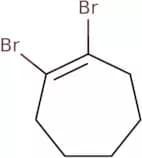
CAS:<p>Versatile small molecule scaffold</p>Formula:C9H17NO2Purity:Min. 95%Molecular weight:171.24 g/mol1,2-Dibromocyclohept-1-ene
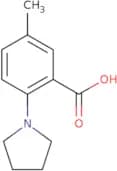
CAS:<p>Versatile small molecule scaffold</p>Formula:C7H10Br2Purity:Min. 95%Molecular weight:253.96 g/mol5-Methyl-2-(pyrrolidin-1-yl)benzoic acid
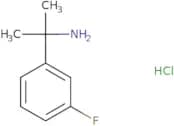
CAS:<p>Versatile small molecule scaffold</p>Formula:C12H15NO2Purity:Min. 95%Molecular weight:205.25 g/mol2-(3-Fluorophenyl)propan-2-amine hydrochloride
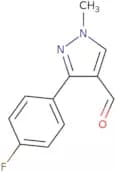
CAS:<p>Versatile small molecule scaffold</p>Formula:C9H13ClFNPurity:Min. 95%Molecular weight:189.66 g/mol3-(4-Fluorophenyl)-1-methyl-1H-pyrazole-4-carbaldehyde
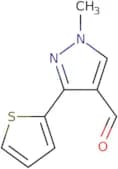
CAS:<p>Versatile small molecule scaffold</p>Formula:C11H9FN2OPurity:Min. 95%Molecular weight:204.2 g/mol1-Methyl-3-(thiophen-2-yl)-1H-pyrazole-4-carbaldehyde
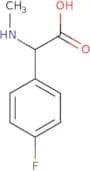
CAS:<p>Versatile small molecule scaffold</p>Formula:C9H8N2OSPurity:Min. 95%Molecular weight:192.24 g/mol2-(4-Fluorophenyl)-2-(methylamino)acetic acid
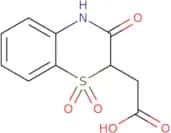
CAS:<p>Versatile small molecule scaffold</p>Formula:C9H10FNO2Purity:Min. 95%Molecular weight:183.18 g/mol2-(1,1,3-Trioxo-3,4-dihydro-2H-1λ⁶,4-benzothiazin-2-yl)acetic acid
CAS:<p>Versatile small molecule scaffold</p>Formula:C10H9NO5SPurity:Min. 95%Molecular weight:255.2 g/mol7H,8H-Imidazo[1,2-d][1,2,4]triazin-8-one
CAS:<p>Versatile small molecule scaffold</p>Formula:C5H4N4OPurity:Min. 95%Molecular weight:136.1 g/mol


![1-[(4-Methylphenyl)sulfonyl]-2,3-dihydroquinolin-4(1H)-one](/_next/image/?url=https%3A%2Fstatic.cymitquimica.com%2Fproducts%2F3D%2Fthumb-webp%2FPAA27837.webp&w=3840&q=75)
![Bis(2-[3-(morpholin-4-yl)propyl]guanidine), sulfuric acid](/_next/image/?url=https%3A%2Fstatic.cymitquimica.com%2Fproducts%2F3D%2Fthumb-webp%2FPAA27976.webp&w=3840&q=75)
![Bis(1-[(3-methoxyphenyl)methyl]guanidine), sulfuric acid](/_next/image/?url=https%3A%2Fstatic.cymitquimica.com%2Fproducts%2F3D%2Fthumb-webp%2FPAA27994.webp&w=3840&q=75)

![N-[3,3-Dimethyl-1-(1H-pyrazol-1-yl)butan-2-ylidene]hydroxylamine](/_next/image/?url=https%3A%2Fstatic.cymitquimica.com%2Fproducts%2F3D%2Fthumb-webp%2FPCA92157.webp&w=3840&q=75)
![Ethyl imidazo[1,2-a]pyrimidine-3-carboxylate](/_next/image/?url=https%3A%2Fstatic.cymitquimica.com%2Fproducts%2F3D%2Fthumb-webp%2FPCA95107.webp&w=3840&q=75)
![2-[2-(4-Hydroxyphenyl)ethyl]-2,3-dihydro-1H-isoindole-1,3-dione](/_next/image/?url=https%3A%2Fstatic.cymitquimica.com%2Fproducts%2F3D%2Fthumb-webp%2FPCA98542.webp&w=3840&q=75)
![4-[(2,5-Dioxo-2,5-dihydro-1H-pyrrol-1-yl)methyl]benzoic acid](/_next/image/?url=https%3A%2Fstatic.cymitquimica.com%2Fproducts%2F3D%2Fthumb-webp%2FPCA98781.webp&w=3840&q=75)
![4-[2-(2-Methoxyethoxy)ethoxy]benzaldehyde](/_next/image/?url=https%3A%2Fstatic.cymitquimica.com%2Fproducts%2F3D%2Fthumb-webp%2FPCA99451.webp&w=3840&q=75)

![7H,8H-Imidazo[1,2-d][1,2,4]triazin-8-one](/_next/image/?url=https%3A%2Fstatic.cymitquimica.com%2Fproducts%2F3D%2Fthumb-webp%2FPCB29800.webp&w=3840&q=75)