Building Blocks
This section contains fundamental products for the synthesis of organic and biological compounds. Building blocks are the essential starting materials used to construct complex molecules through various chemical reactions. They play a critical role in drug discovery, material science, and chemical research. At CymitQuimica, we offer a diverse range of high-quality building blocks to support your innovative research and industrial projects, ensuring you have the essential components for successful synthesis.
Subcategories of "Building Blocks"
- Boronic Acids & Boronic Acid Derivatives(5,756 products)
- Chiral Building Blocks(1,242 products)
- Hydrocarbon Building Blocks(6,095 products)
- Organic Building Blocks(61,037 products)
Found 196200 products of "Building Blocks"
Sort by
Purity (%)
0
100
|
0
|
50
|
90
|
95
|
100
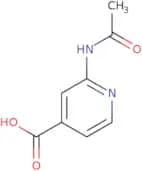
2-Acetylamino-isonicotinic acid
CAS:<p>2-Acetylamino-isonicotinic acid is a polymerization reaction product of pyridine and vinyl acetate. It is soluble in water, ethanol, and ether. 2-Acetylamino-isonicotinic acid has been used as a template for the synthesis of silver nanoparticles. These particles have shown to be effective against gram positive bacteria such as Staphylococcus aureus and Mycobacterium tuberculosis. The supramolecular assembly of these nanoparticles was achieved using an ion exchange membrane as the template. This assembly leads to the formation of hierarchically organized, porous structures with high surface area that are able to adsorb molecules at their surface.</p>Formula:C8H8N2O3Purity:Min. 95%Molecular weight:180.16 g/mol(1R)-1-(4-Ethylphenyl)ethan-1-ol
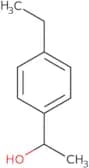
CAS:<p>Versatile small molecule scaffold</p>Formula:C10H14OPurity:Min. 95%Molecular weight:150.22 g/mol2-(5,6-Dichloropyridin-3-yl)acetonitrile
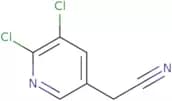
CAS:<p>Versatile small molecule scaffold</p>Formula:C7H4Cl2N2Purity:Min. 95%Molecular weight:187.02 g/mol2-(2-Hydroxyethoxy)ethyl formate
CAS:<p>2-(2-Hydroxyethoxy)ethyl formate is a liquid that can be used as a solvent for chemical reactions. It is also used in the production of artificial rubber, plastics, paper products, and pharmaceuticals. 2-(2-Hydroxyethoxy)ethyl formate hydrolyzes readily in water to produce formic acid and ethylene glycol. It is often used as an encapsulating agent to protect sensitive chemicals from harsh environments such as acid or heat, or to provide protection from radiation. The impurities in this product are not more than 1% by weight. The service life of this product is 3 years when stored at room temperature (20°C). This product can be degraded by exposure to ultraviolet light and radiation. Average particle diameter of this product is 0.5 microns butyric acid content is less than 0.01%, amide content is less than 0.1%.</p>Formula:C5H12O5Purity:Min. 95%Molecular weight:152.15 g/mol4-(2-Nitropyridin-3-yl)morpholine
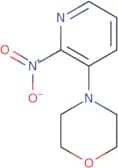
CAS:<p>4-(2-Nitropyridin-3-yl)morpholine is a nucleophilic reagent that reacts with pyridine to form a 4-pyridinol. It is a halogen that has the ability to act as a nucleophile and can be used in organic synthesis reactions such as the result of pyridine. The nature of this chemical is not known.</p>Formula:C9H11N3O3Purity:Min. 95%Molecular weight:209.2 g/mol2-(Chloromethyl)-1-methyl-5-nitro-1H-imidazole hydrochloride
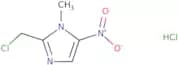
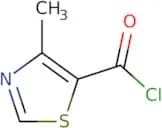
CAS:<p>Versatile small molecule scaffold</p>Formula:C5H7Cl2N3O2Purity:Min. 95%Molecular weight:212.03 g/mol4-Methyl-1,3-thiazole-5-carbonyl chloride
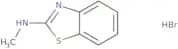
CAS:<p>4-Methyl-1,3-thiazole-5-carbonyl chloride is a research compound that has been shown to have antiinflammatory properties. It is an antibacterial agent that inhibits the production of inflammatory molecules such as prostaglandins and leukotrienes, which are involved in exacerbations of chronic bronchitis. 4-Methyl-1,3-thiazole-5-carbonyl chloride also inhibits the activity of chloride ion channels in human epithelial cells. This inhibition prevents the influx of chloride ions into these cells and reduces their volume, leading to an increase in mucus production and secretion.</p>Formula:C5H4NOSClPurity:Min. 95%Molecular weight:161.6 g/molN-Methyl-1,3-benzothiazol-2-amine hydrobromide
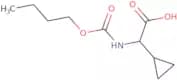
CAS:<p>Versatile small molecule scaffold</p>Formula:C8H9BrN2SPurity:Min. 95%Molecular weight:245.14 g/mol2-((Butoxycarbonyl)amino)-2-cyclopropylacetic acid
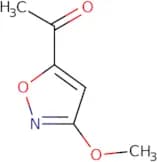
CAS:<p>Versatile small molecule scaffold</p>Formula:C10H17NO4Purity:Min. 95%Molecular weight:215.25 g/mol1-(3-Methoxy-1,2-oxazol-5-yl)ethan-1-one
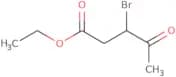
CAS:<p>Versatile small molecule scaffold</p>Formula:C6H7NO3Purity:Min. 95%Molecular weight:141.12 g/molEthyl 3-bromo-4-oxopentanoate
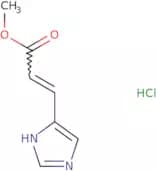
CAS:<p>Ethyl 3-bromo-4-oxopentanoate is an antiinflammatory agent that belongs to the class of thiazole derivatives. It is a synthetic compound with a pharmacological action as an inhibitor of prostaglandin synthesis. It has been shown to have antiinflammatory activity in animal testing and has been found to be effective in treating inflammation in humans. The drug was developed by modifying the 2-aminobenzothiazole structure with ketones, which increased its stability and reduced its toxicity. Ethyl 3-bromo-4-oxopentanoate is hydrolyzed into the corresponding alcohol and acid by alkaline hydrolysis. This process can be carried out using either anhydrous ethanol or hydrous ethanol, depending on the desired yield of each product.</p>Formula:C7H11BrO3Purity:Min. 95%Molecular weight:223.06 g/molMethyl (2E)-3-(1H-imidazol-4-yl)prop-2-enoate hydrochloride
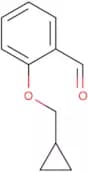
CAS:<p>Versatile small molecule scaffold</p>Formula:C7H9ClN2O2Purity:Min. 95%Molecular weight:188.61 g/mol2-(Cyclopropylmethoxy)benzaldehyde
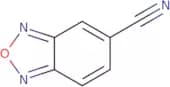
CAS:<p>Versatile small molecule scaffold</p>Formula:C11H12O2Purity:Min. 95%Molecular weight:176.21 g/mol2,1,3-Benzoxadiazole-5-carbonitrile
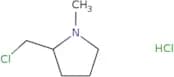
CAS:<p>Versatile small molecule scaffold</p>Formula:C7H3N3OPurity:Min. 95%Molecular weight:145.12 g/mol2-(Chloromethyl)-1-methylpyrrolidine hydrochloride
CAS:<p>Versatile small molecule scaffold</p>Formula:C6H13Cl2NPurity:Min. 95%Molecular weight:170.08 g/mol4-[(Methylsulfanyl)methyl]aniline
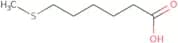
CAS:<p>Versatile small molecule scaffold</p>Formula:C8H11NSPurity:Min. 95%Molecular weight:153.25 g/mol6-(Methylsulfanyl)hexanoic acid
CAS:<p>6-(Methylsulfanyl)hexanoic acid is a triterpene. It has been shown to be the most sensitive and specific triterpene for determining the presence of diptocarpamine in plants. 6-(Methylsulfanyl)hexanoic acid has been found to have a high sensitivity and reproducibility when used as a sorbent. The alkaloid content of this compound is racemic, meaning that it contains equal amounts of two different stereoisomers.</p>Formula:C7H14O2SPurity:Min. 95%Molecular weight:162.25 g/mol3-[(Methylsulfanyl)methyl]benzoic acid
CAS:<p>Versatile small molecule scaffold</p>Formula:C9H10O2SPurity:Min. 95%Molecular weight:182.24 g/mol2-(Ethylthio)ethylamine hydrochloride
CAS:<p>2-(Ethylthio)ethylamine hydrochloride is a ligand that can be used for diagnostic purposes. It can be synthesized in high yield and with a scalable process. This compound is fluorescent, which enables it to be detected by immunofluorescence. 2-(Ethylthio)ethylamine hydrochloride has been shown to have anti-cancer properties and is also used as a metal ion chelator, and as a nanomaterial. The uptake of this compound by cancer cells can be enhanced by the use of techniques such as intraoperative radiation or metal ions.</p>Formula:C2H5SCH2CH2NH2·HClPurity:Min. 95%Molecular weight:141.66 g/mol2'H-Dispiro[1,3-dioxolane-2,1'-indene-3',2''-[1,3]dioxolane]-7'-amine
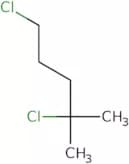
CAS:<p>Versatile small molecule scaffold</p>Formula:C13H15NO4Purity:Min. 95%Molecular weight:249.26 g/mol1,4-Dichloro-4-methylpentane
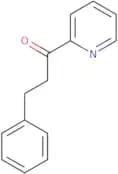
CAS:<p>Versatile small molecule scaffold</p>Formula:C6H12Cl2Purity:Min. 95%Molecular weight:155.06 g/mol3-Phenyl-1-(pyridin-2-yl)propan-1-one
CAS:<p>Versatile small molecule scaffold</p>Formula:C14H13NOPurity:Min. 95%Molecular weight:211.26 g/mol1-Bromo-3-(chloromethoxy)propane
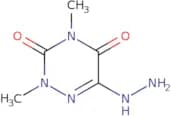
CAS:<p>Versatile small molecule scaffold</p>Formula:C4H8BrClOPurity:Min. 95%Molecular weight:187.46 g/mol6-Hydrazinyl-2,4-dimethyl-2,3,4,5-tetrahydro-1,2,4-triazine-3,5-dione
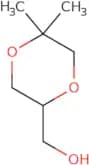
CAS:<p>Versatile small molecule scaffold</p>Formula:C5H9N5O2Purity:Min. 95%Molecular weight:171.16 g/mol(5,5-Dimethyl-1,4-dioxan-2-yl)methanol
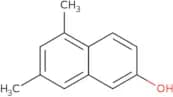
CAS:<p>Versatile small molecule scaffold</p>Formula:C7H14O3Purity:Min. 95%Molecular weight:146.18 g/mol5,7-Dimethylnaphthalen-2-ol
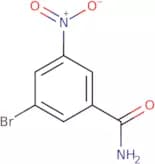
CAS:<p>Versatile small molecule scaffold</p>Formula:C12H12OPurity:Min. 95%Molecular weight:172.22 g/mol3-Bromo-5-nitrobenzamide
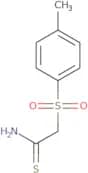
CAS:<p>Versatile small molecule scaffold</p>Formula:C7H5BrN2O3Purity:Min. 95%Molecular weight:245.03 g/mol2-(4-Methylbenzenesulfonyl)ethanethioamide
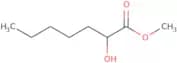
CAS:<p>Versatile small molecule scaffold</p>Formula:C9H11NO2S2Purity:Min. 95%Molecular weight:229.3 g/molMethyl 2-hydroxyheptanoate
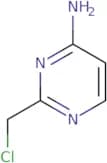
CAS:<p>Methyl 2-hydroxyheptanoate is a fatty acid that is found in soybean lipoxygenase. It has been shown to inhibit prostaglandin synthesis by the enzymatic hydrolysis of methyl 2-hydroxyheptanoate. The hydrolysis products of this reaction are anions, sulfoxide, and carboxylates. Methyl 2-hydroxyheptanoate is also a substrate for the enzyme, soybean lipoxygenase. This enzyme catalyzes the conversion of methyl 2-hydroxyheptanoate to prostaglandin E2 (PGE2). PGE2 is a potent inhibitor of platelet aggregation and vasoconstriction.</p>Formula:C8H16O3Purity:Min. 95%Molecular weight:160.21 g/mol2-(Chloromethyl)pyrimidin-4-amine
CAS:<p>Versatile small molecule scaffold</p>Formula:C5H6ClN3Purity:Min. 95%Molecular weight:143.57 g/mol8-Methyl-3H,4H,5H-pyridazino[4,5-b]indol-4-one
CAS:<p>Versatile small molecule scaffold</p>Formula:C11H9N3OPurity:Min. 95%Molecular weight:199.21 g/mol4-Amino-1,3-diazaspiro[4.4]non-3-en-2-one
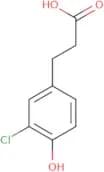
CAS:<p>Versatile small molecule scaffold</p>Formula:C7H11N3OPurity:Min. 95%Molecular weight:153.18 g/mol3-(3-Chloro-4-hydroxyphenyl)propanoic acid
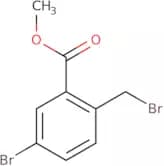
CAS:<p>Versatile small molecule scaffold</p>Formula:C9H9ClO3Purity:Min. 95%Molecular weight:200.62 g/molMethyl 5-bromo-2-(bromomethyl)benzoate
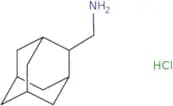
CAS:<p>Methyl 5-bromo-2-(bromomethyl)benzoate (5BMB) is a synthetic chemical that can be prepared by anionic bromination of methyl benzoate. The reaction proceeds with high efficiency and the product is obtained in good yields. 5BMB has been used as a target compound for X-ray diffraction studies, which have shown its structural properties.</p>Formula:C9H8Br2O2Purity:Min. 95%Molecular weight:307.98 g/molAdamantan-2-ylmethanamine hydrochloride
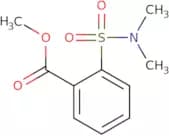
CAS:<p>Versatile small molecule scaffold</p>Formula:C11H20ClNPurity:Min. 95%Molecular weight:201.73 g/molMethyl 2-(dimethylsulfamoyl)benzoate
CAS:<p>Versatile small molecule scaffold</p>Formula:C10H13NO4SPurity:Min. 95%Molecular weight:243.28 g/mol[2,3,5,6-Tetrafluoro-4-(trifluoromethyl)phenyl]methanol
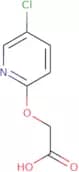
CAS:<p>Versatile small molecule scaffold</p>Formula:C8H3F7OPurity:Min. 95%Molecular weight:248.1 g/mol2-((5-Chloropyridin-2-yl)oxy)acetic acid
CAS:<p>Versatile small molecule scaffold</p>Formula:C7H6ClNO3Purity:Min. 95%Molecular weight:187.58 g/mol2-[(5-Bromopyridin-2-yl)oxy]acetic acid
CAS:<p>Versatile small molecule scaffold</p>Formula:C7H6BrNO3Purity:Min. 95%Molecular weight:232.03 g/mol2-Trifluoromethanesulfinylbenzoic acid
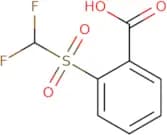
CAS:<p>Versatile small molecule scaffold</p>Formula:C8H5F3O3SPurity:Min. 95%Molecular weight:238.19 g/mol2-Difluoromethanesulfonylbenzoic acid
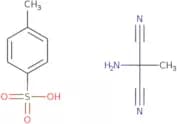
CAS:<p>Versatile small molecule scaffold</p>Formula:C8H6F2O4SPurity:Min. 95%Molecular weight:236.19 g/mol2-Amino-2-methylpropanedinitrile, 4-methylbenzene-1-sulfonic acid
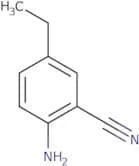
CAS:<p>2-Amino-2-methylpropanedinitrile (MMPD) is a precursor for the synthesis of perovskite. It is used as a reagent in organic synthesis to introduce nitrogen atoms into molecules. MMPD reacts with 4-methylbenzenesulfonic acid to produce the corresponding sulfonyl chloride and an aldehyde, which can be oxidized to produce a carboxylic acid. This reaction has been shown to be efficient and selective. The optimal reaction time is 2 hours at room temperature in order to yield the desired product with minimal amounts of byproducts. MMPD has been used in biological studies and chemical structures analysis, including an analytical method that can detect hydrogen bonds between MMPD and chloride ions.</p>Formula:C11H13N3O3SPurity:Min. 95%Molecular weight:267.31 g/mol2-Amino-5-ethylbenzonitrile
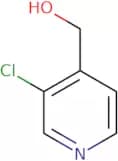
CAS:<p>Versatile small molecule scaffold</p>Formula:C9H10N2Purity:Min. 95%Molecular weight:146.19 g/mol(3-Chloropyridin-4-yl)methanol
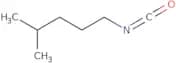
CAS:<p>Versatile small molecule scaffold</p>Formula:C6H6ClNOPurity:Min. 95%Molecular weight:143.57 g/mol1-Isocyanato-4-methylpentane
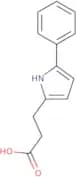
CAS:<p>Versatile small molecule scaffold</p>Formula:C7H13NOPurity:Min. 95%Molecular weight:127.18 g/mol3-(5-Phenyl-1H-pyrrol-2-yl)-propionic acid
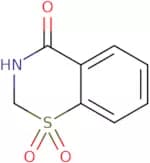
CAS:<p>Versatile small molecule scaffold</p>Formula:C13H13NO2Purity:Min. 95%Molecular weight:215.25 g/mol2,3-Dihydro-4H-1,3-benzothiazin-4-one 1,1-dioxide
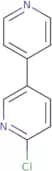
CAS:<p>Versatile small molecule scaffold</p>Formula:C8H7NO3SPurity:Min. 95%Molecular weight:197.21 g/mol6-Chloro-3,4'bipyridine
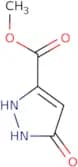
CAS:<p>Versatile small molecule scaffold</p>Formula:C10H7N2ClPurity:Min. 95%Molecular weight:190.63 g/mol5-Hydroxy-2H-pyrazole-3-carboxylic acid methyl ester
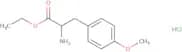
CAS:<p>Versatile small molecule scaffold</p>Formula:C5H6N2O3Purity:Min. 95%Molecular weight:142.11 g/molEthyl 2-amino-3-(4-methoxyphenyl)propanoate hydrochloride
CAS:<p>Versatile small molecule scaffold</p>Formula:C12H18ClNO3Purity:Min. 95%Molecular weight:259.73 g/mol


![4-[(Methylsulfanyl)methyl]aniline](/_next/image/?url=https%3A%2Fstatic.cymitquimica.com%2Fproducts%2F3D%2Fthumb-webp%2FECA29304.webp&w=3840&q=75)
![3-[(Methylsulfanyl)methyl]benzoic acid](/_next/image/?url=https%3A%2Fstatic.cymitquimica.com%2Fproducts%2F3D%2Fthumb-webp%2FECA29310.webp&w=3840&q=75)

![2'H-Dispiro[1,3-dioxolane-2,1'-indene-3',2''-[1,3]dioxolane]-7'-amine](/_next/image/?url=https%3A%2Fstatic.cymitquimica.com%2Fproducts%2F3D%2Fthumb-webp%2FECA30475.webp&w=3840&q=75)

![8-Methyl-3H,4H,5H-pyridazino[4,5-b]indol-4-one](/_next/image/?url=https%3A%2Fstatic.cymitquimica.com%2Fproducts%2F3D%2Fthumb-webp%2FEDA65237.webp&w=3840&q=75)
![4-Amino-1,3-diazaspiro[4.4]non-3-en-2-one](/_next/image/?url=https%3A%2Fstatic.cymitquimica.com%2Fproducts%2F3D%2Fthumb-webp%2FEDA66282.webp&w=3840&q=75)
![[2,3,5,6-Tetrafluoro-4-(trifluoromethyl)phenyl]methanol](/_next/image/?url=https%3A%2Fstatic.cymitquimica.com%2Fproducts%2F3D%2Fthumb-webp%2FEDA67446.webp&w=3840&q=75)
![2-[(5-Bromopyridin-2-yl)oxy]acetic acid](/_next/image/?url=https%3A%2Fstatic.cymitquimica.com%2Fproducts%2F3D%2Fthumb-webp%2FEDA67466.webp&w=3840&q=75)