Building Blocks
This section contains fundamental products for the synthesis of organic and biological compounds. Building blocks are the essential starting materials used to construct complex molecules through various chemical reactions. They play a critical role in drug discovery, material science, and chemical research. At CymitQuimica, we offer a diverse range of high-quality building blocks to support your innovative research and industrial projects, ensuring you have the essential components for successful synthesis.
Subcategories of "Building Blocks"
- Boronic Acids & Boronic Acid Derivatives(5,756 products)
- Chiral Building Blocks(1,242 products)
- Hydrocarbon Building Blocks(6,095 products)
- Organic Building Blocks(61,037 products)
Found 196139 products of "Building Blocks"
Sort by
Purity (%)
0
100
|
0
|
50
|
90
|
95
|
100
2-Amino-4-methoxybenzene-1-sulfonamide
CAS:<p>Versatile small molecule scaffold</p>Formula:C7H10N2O3SPurity:Min. 95%Molecular weight:202.23 g/mol5-Chloropyrazine-2,3-dicarbonitrile
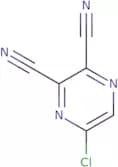
CAS:<p>5-Chloropyrazine-2,3-dicarbonitrile (5CPD) is an organochlorine compound that is used as a chlorinating agent in the production of alkyl and aralkyl chlorides. 5CPD is a monofunctional reagent that can also be used for the synthesis of furyl and thionyl chloride.</p>Formula:C6HClN4Purity:Min. 95%Molecular weight:164.55 g/mol4-Amino-2-nitrobenzonitrile
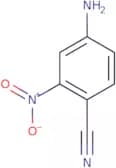
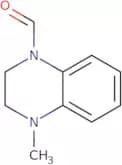
CAS:<p>Versatile small molecule scaffold</p>Formula:C7H5N3O2Purity:Min. 95%Molecular weight:163.13 g/mol4-Methyl-3,4-dihydroquinoxaline-1(2H)-carbaldehyde
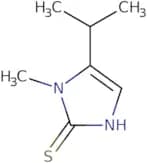
CAS:<p>Versatile small molecule scaffold</p>Formula:C10H12N2OPurity:Min. 95%Molecular weight:176.21 g/mol1-Methyl-5-(propan-2-yl)-1H-imidazole-2-thiol
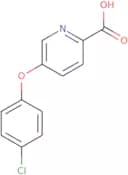
CAS:<p>Versatile small molecule scaffold</p>Formula:C7H12N2SPurity:Min. 95%Molecular weight:156.25 g/mol5-(4-Chlorophenoxy)pyridine-2-carboxylic acid
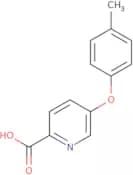
CAS:<p>Versatile small molecule scaffold</p>Formula:C12H8ClNO3Purity:Min. 95%Molecular weight:249.65 g/mol5-(4-Methylphenoxy)pyridine-2-carboxylic acid
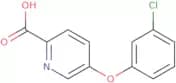
CAS:<p>Versatile small molecule scaffold</p>Formula:C13H11NO3Purity:Min. 95%Molecular weight:229.23 g/mol5-(3-Chlorophenoxy)pyridine-2-carboxylic acid
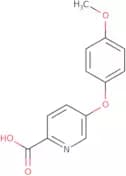
CAS:<p>Versatile small molecule scaffold</p>Formula:C12H8ClNO3Purity:Min. 95%Molecular weight:249.65 g/mol5-(4-Methoxyphenoxy)pyridine-2-carboxylic acid
CAS:<p>Versatile small molecule scaffold</p>Formula:C13H11NO4Purity:Min. 95%Molecular weight:245.23 g/mol[1-(Cyclohexylmethyl)pyrrolidin-2-yl]methanamine
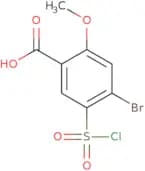
CAS:<p>Versatile small molecule scaffold</p>Formula:C12H24N2Purity:Min. 95%Molecular weight:196.33 g/mol4-Bromo-5-(chlorosulfonyl)-2-methoxybenzoic acid
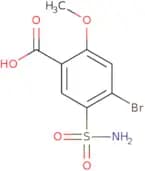
CAS:<p>Versatile small molecule scaffold</p>Formula:C8H6BrClO5SPurity:Min. 95%Molecular weight:329.55 g/mol4-Bromo-2-methoxy-5-sulfamoylbenzoic acid
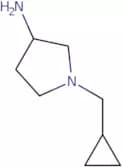
CAS:<p>Versatile small molecule scaffold</p>Formula:C8H8BrNO5SPurity:Min. 95%Molecular weight:310.12 g/mol1-(Cyclopropylmethyl)pyrrolidin-3-amine
CAS:<p>Versatile small molecule scaffold</p>Formula:C8H16N2Purity:Min. 95%Molecular weight:140.23 g/mol2H-[1,3]Dioxolo[4,5-b]pyridine
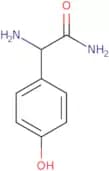
CAS:<p>Versatile small molecule scaffold</p>Formula:C6H5NO2Purity:Min. 95%Molecular weight:123.11 g/mol2-Amino-2-(4-hydroxyphenyl)acetamide hydrochloride
CAS:<p>2-Amino-2-(4-hydroxy-phenyl)-acetamide is a research chemical that belongs to the amide family. It is commonly used in scientific studies and experiments. This compound, also known as glycinamide, has various applications in the field of chemistry and biology. Its unique structure makes it a valuable tool for researchers looking to explore new areas of study or develop innovative solutions. With its high purity and reliable quality, 2-Amino-2-(4-hydroxy-phenyl)-acetamide is an essential component for any laboratory or research facility.</p>Formula:C8H10N2O2HClPurity:Min. 95%Molecular weight:202.64 g/molN-(1-Benzyl-1H-pyrazol-3-yl)acetamide
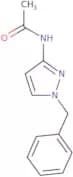
CAS:<p>Versatile small molecule scaffold</p>Formula:C12H13N3OPurity:Min. 95%Molecular weight:215.25 g/mol3-Bromo-2,5-dimethoxy-2,5-dihydrofuran
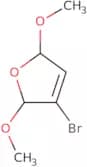
CAS:<p>Versatile small molecule scaffold</p>Formula:C6H9BrO3Purity:Min. 95%Molecular weight:209.04 g/mol3-Bromo-7-methoxy-2H-1-benzopyran-2-one
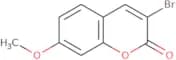
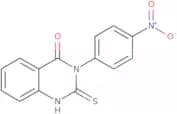
CAS:<p>3-Bromo-7-methoxy-2H-1-benzopyran-2-one is a coumarin derivative that has been shown to cause liver lesions in rats. The compound can also inhibit locomotor activity, as well as have a significant effect on the levels of serum prolactin. 3-Bromo-7-methoxy-2H-1-benzopyran-2-one is a ligand for the 5HT2 receptor, and it has been suggested that this may be due to its coordination geometry. In addition, 3BMOP binds to DNA with high affinity and specificity, which suggests that it could be used as an antitumor agent.</p>Formula:C10H7BrO3Purity:Min. 95%Molecular weight:255.06 g/mol3-(4-Nitrophenyl)-2-thioxo-2,3-dihydro-4(1H)-quinazolinone
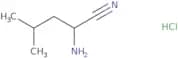
CAS:<p>Versatile small molecule scaffold</p>Formula:C14H9N3O3SPurity:Min. 95%Molecular weight:299.3 g/mol2-Amino-4-methylpentanenitrile hydrochloride
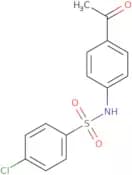
CAS:<p>Versatile small molecule scaffold</p>Formula:C6H12N2·HClPurity:Min. 95%Molecular weight:148.64 g/molN-(4-Acetylphenyl)-4-chlorobenzene-1-sulfonamide
CAS:<p>Versatile small molecule scaffold</p>Formula:C14H12ClNO3SPurity:Min. 95%Molecular weight:309.8 g/mol[(Propan-2-yl)sulfamoyl]amine
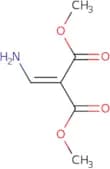
CAS:<p>[(Propan-2-yl)sulfamoyl]amine is a diphenyl ether, which is a type of aromatic hydrocarbon. It has a nitro group, phenyl groups and alkyl groups. This product also has a cycloalkyl ring with benzyl groups and hydrocarbon group. This compound is used as polymerization initiator in the production of polyacrylamide and other polymers. The [(propane-2-yl)sulfamoyl]amine can react with trifluoroacetic acid to form c1-4 alkyl sulfonic acid compounds. It can also react with urea derivatives to form bifunctional compounds that are used as plasticizers in plastics.</p>Formula:C3H10N2O2SPurity:Min. 95%Molecular weight:138.19 g/mol1,3-Dimethyl 2-(aminomethylidene)propanedioate
CAS:<p>1,3-Dimethyl 2-(aminomethylidene)propanedioate is an alkene that is used as a stabilizer for polymers. It can be found in the crystal structure of dimethyl.</p>Formula:C6H9NO4Purity:Min. 95%Molecular weight:159.14 g/mol(S)-1-Benzyl-2-methyl-4,4-difluoropyrrolidine-1,2-dicarboxylic acid
CAS:<p>Versatile small molecule scaffold</p>Formula:C14H15F2NO4Purity:Min. 95%Molecular weight:299.27 g/mol(S)-methyl 3-amino-2-hydroxypropanoate hydrochloride
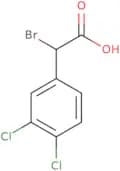
CAS:<p>Versatile small molecule scaffold</p>Formula:C4H10ClNO3Purity:Min. 95%Molecular weight:155.6 g/mol2-Bromo-2-(3,4-dichlorophenyl)acetic acid
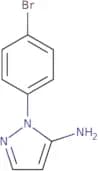
CAS:<p>Versatile small molecule scaffold</p>Formula:C8H5BrCl2O2Purity:Min. 95%Molecular weight:283.93 g/mol1-(4-Bromophenyl)-1H-pyrazol-5-amine
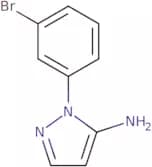
CAS:<p>Versatile small molecule scaffold</p>Formula:C9H8BrN3Purity:Min. 95%Molecular weight:238.08 g/mol1-(3-Bromophenyl)-1H-pyrazol-5-amine
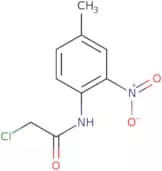
CAS:<p>Versatile small molecule scaffold</p>Formula:C9H8BrN3Purity:Min. 95%Molecular weight:238.08 g/mol2-Chloro-N-(4-methyl-2-nitrophenyl)acetamide
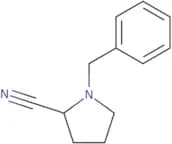
CAS:<p>Versatile small molecule scaffold</p>Formula:C9H9ClN2O3Purity:Min. 95%Molecular weight:228.63 g/mol1-Benzylpyrrolidine-2-carbonitrile
CAS:<p>Versatile small molecule scaffold</p>Formula:C12H14N2Purity:Min. 95%Molecular weight:186.25 g/mol2-[4-(Prop-2-en-1-yloxy)phenyl]acetic acid
CAS:<p>2-[4-(Prop-2-en-1-yloxy)phenyl]acetic acid, also known as propacetamol, is a nonsteroidal anti-inflammatory drug. It is an analgesic and a weak dehydrating agent. Propacetamol is used to relieve moderate or severe pain, such as that caused by headache, migraine, dental pain, or neuralgia. The chemical structure of propacetamol contains an ester which can be hydrolyzed to give the corresponding carboxylic acid and alcohol. 2-[4-(Prop-2-en-1-yloxy)phenyl]acetic acid has been shown to have antiplatelet properties and has been used to prevent thrombosis in patients undergoing coronary artery bypass grafting surgery. This drug also has the ability to inhibit epoxidation reactions that are catalyzed by cytochrome P450 enzymes.</p>Formula:C11H12O3Purity:Min. 95%Molecular weight:192.21 g/mol2-{4-[(Oxiran-2-yl)methoxy]phenyl}acetic acid
CAS:<p>2-{4-[(Oxiran-2-yl)methoxy]phenyl}acetic acid is an organic compound with the chemical formula CH3COCH2CH=OCH2C6H5. This white solid is a derivative of phenylacetic acid. It is used as a building block for the synthesis of esters, amides, and other derivatives. It can also be used to synthesize epoxides and amines by epoxidation or amine, respectively. 2-{4-[(Oxiran-2-yl)methoxy]phenyl}acetic acid has been shown to inhibit the growth of Pseudomonas aeruginosa and Staphylococcus aureus isolates. The ester group on this molecule may contribute to its anti-bacterial activity.</p>Formula:C11H12O4Purity:Min. 95%Molecular weight:208.21 g/mol3-(Chloromethyl)-5H,6H-imidazo[2,1-b][1,3]thiazole hydrochloride
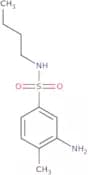
CAS:<p>Versatile small molecule scaffold</p>Formula:C6H8Cl2N2SPurity:Min. 95%Molecular weight:211.11 g/mol3-Amino-N-butyl-4-methylbenzenesulfonamide
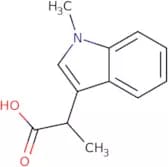
CAS:<p>Versatile small molecule scaffold</p>Formula:C11H18N2O2SPurity:Min. 95%Molecular weight:242.34 g/mol2-(1-Methyl-1H-indol-3-yl)propanoic acid
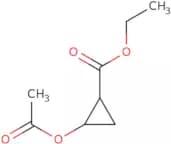
CAS:<p>Versatile small molecule scaffold</p>Formula:C12H13NO2Purity:Min. 95%Molecular weight:203.24 g/molethyl 2-(acetyloxy)cyclopropane-1-carboxylate
CAS:<p>Versatile small molecule scaffold</p>Formula:C8H12O4Purity:Min. 95%Molecular weight:172.17 g/molEthyl 2-oxabicyclo[4.1.0]heptane-7-carboxylate
CAS:<p>Versatile small molecule scaffold</p>Formula:C9H14O3Purity:Min. 95%Molecular weight:170.21 g/molN-[(4-Chlorophenyl)methyl]-4,5-dihydro-1,3-thiazol-2-amine
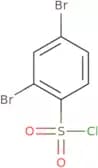
CAS:<p>Versatile small molecule scaffold</p>Formula:C10H11ClN2SPurity:Min. 95%Molecular weight:226.73 g/mol2,4-Dibromobenzenesulphonyl chloride
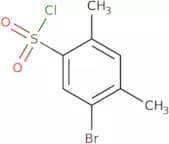
CAS:<p>Versatile small molecule scaffold</p>Formula:C6H3Br2ClO2SPurity:Min. 95%Molecular weight:334.41 g/mol5-Bromo-2,4-dimethylbenzenesulfonyl chloride
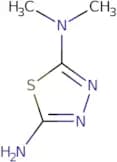
CAS:<p>Versatile small molecule scaffold</p>Formula:C8H8BrClO2SPurity:Min. 95%Molecular weight:283.56 g/molN2,N2-Dimethyl-1,3,4-thiadiazole-2,5-diamine
CAS:<p>Versatile small molecule scaffold</p>Formula:C4H8N4SPurity:Min. 95%Molecular weight:144.2 g/molMethoxy[1-(3-nitrophenyl)ethylidene]amine
CAS:<p>Versatile small molecule scaffold</p>Formula:C9H10N2O3Purity:Min. 95%Molecular weight:194.19 g/molN-{[(4-Chlorophenyl)carbamothioyl]amino}-2-phenylacetamide
CAS:<p>N-{[(4-Chlorophenyl)carbamothioyl]amino}-2-phenylacetamide is a small molecule that has been shown to be expressed in mammalian cells. It binds to the target enzyme and stabilizes the protein, which prevents it from denaturing. N-{[(4-Chlorophenyl)carbamothioyl]amino}-2-phenylacetamide has been shown to have beneficial effects on metabolic disorders such as aciduria and can be used as a chaperone when treating life threatening diseases. Structural analysis of this compound reveals coordination chemistry interactions with galactose.</p>Formula:C15H14ClN3OSPurity:Min. 95%Molecular weight:319.8 g/mol1-{4-[(2-Methylphenyl)methoxy]phenyl}ethan-1-one
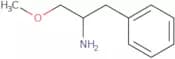
CAS:<p>1-{4-[(2-Methylphenyl)methoxy]phenyl}ethan-1-one is a small molecule that has been shown to inhibit the activity of ion channels. It binds to the receptor site, which is located on the outside of the cell membrane. This binding prevents the passage of ions through the channel, thereby preventing electrical signals from being transmitted by ligand gated ion channels. 1-{4-[(2-Methylphenyl)methoxy]phenyl}ethan-1-one is also an inhibitor of peptides and can be used as a research tool in cell biology and as an antibody in immunology.</p>Formula:C16H16O2Purity:Min. 95%Molecular weight:240.3 g/mol1-Methoxy-3-phenylpropan-2-amine
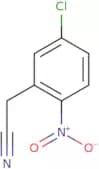
CAS:<p>Versatile small molecule scaffold</p>Formula:C10H15NOPurity:Min. 95%Molecular weight:165.23 g/mol2-(5-Chloro-2-nitrophenyl)acetonitrile
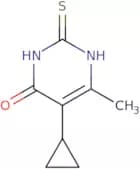
CAS:<p>2-(5-Chloro-2-nitrophenyl)acetonitrile is a n-oxide and carbanion that has been used as a model for the study of acrylonitrile. 2-(5-Chloro-2-nitrophenyl)acetonitrile can be synthesized by nitrating aniline with nitric acid, followed by oxidation with potassium permanganate. The resulting product is then reacted with acrylonitrile in the presence of an acid to form 2-(5-chloro-2-nitrophenyl)acrylonitrile. This compound is unstable and decomposes when it is heated to 150 degrees Celsius.</p>Formula:C8H5ClN2O2Purity:Min. 95%Molecular weight:196.59 g/mol5-Cyclopropyl-6-methyl-2-sulfanyl-1,4-dihydropyrimidin-4-one
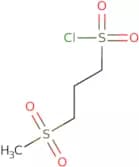
CAS:<p>Versatile small molecule scaffold</p>Formula:C8H10N2OSPurity:Min. 95%Molecular weight:182.25 g/mol3-Methanesulfonylpropane-1-sulfonyl chloride
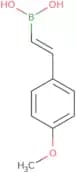
CAS:<p>Versatile small molecule scaffold</p>Formula:C4H9ClO4S2Purity:Min. 95%Molecular weight:220.7 g/moltrans-2-(4-Methoxyphenyl)vinylboronic acid
CAS:<p>Versatile small molecule scaffold</p>Formula:C9H11BO3Purity:Min. 95%Molecular weight:177.99 g/mol5-Cyclobutyl-2-sulfanylidene-1,2,3,4-tetrahydropyrimidin-4-one
CAS:<p>Versatile small molecule scaffold</p>Formula:C8H10N2OSPurity:Min. 95%Molecular weight:182.2 g/mol


![[1-(Cyclohexylmethyl)pyrrolidin-2-yl]methanamine](/_next/image/?url=https%3A%2Fstatic.cymitquimica.com%2Fproducts%2F3D%2Fthumb-webp%2FXCA13532.webp&w=3840&q=75)
![2H-[1,3]Dioxolo[4,5-b]pyridine](/_next/image/?url=https%3A%2Fstatic.cymitquimica.com%2Fproducts%2F3D%2Fthumb-webp%2FXCA13873.webp&w=3840&q=75)
![[(Propan-2-yl)sulfamoyl]amine](/_next/image/?url=https%3A%2Fstatic.cymitquimica.com%2Fproducts%2F3D%2Fthumb-webp%2FXCA17985.webp&w=3840&q=75)


![2-[4-(Prop-2-en-1-yloxy)phenyl]acetic acid](/_next/image/?url=https%3A%2Fstatic.cymitquimica.com%2Fproducts%2F3D%2Fthumb-webp%2FXCA22422.webp&w=3840&q=75)
![2-{4-[(Oxiran-2-yl)methoxy]phenyl}acetic acid](/_next/image/?url=https%3A%2Fstatic.cymitquimica.com%2Fproducts%2F3D%2Fthumb-webp%2FXCA22425.webp&w=3840&q=75)
![3-(Chloromethyl)-5H,6H-imidazo[2,1-b][1,3]thiazole hydrochloride](/_next/image/?url=https%3A%2Fstatic.cymitquimica.com%2Fproducts%2F3D%2Fthumb-webp%2FXCA22461.webp&w=3840&q=75)
![Ethyl 2-oxabicyclo[4.1.0]heptane-7-carboxylate](/_next/image/?url=https%3A%2Fstatic.cymitquimica.com%2Fproducts%2F3D%2Fthumb-webp%2FXCA22908.webp&w=3840&q=75)
![N-[(4-Chlorophenyl)methyl]-4,5-dihydro-1,3-thiazol-2-amine](/_next/image/?url=https%3A%2Fstatic.cymitquimica.com%2Fproducts%2F3D%2Fthumb-webp%2FXCA23929.webp&w=3840&q=75)
![Methoxy[1-(3-nitrophenyl)ethylidene]amine](/_next/image/?url=https%3A%2Fstatic.cymitquimica.com%2Fproducts%2F3D%2Fthumb-webp%2FXCA27809.webp&w=3840&q=75)
![N-{[(4-Chlorophenyl)carbamothioyl]amino}-2-phenylacetamide](/_next/image/?url=https%3A%2Fstatic.cymitquimica.com%2Fproducts%2F3D%2Fthumb-webp%2FXCA29365.webp&w=3840&q=75)
![1-{4-[(2-Methylphenyl)methoxy]phenyl}ethan-1-one](/_next/image/?url=https%3A%2Fstatic.cymitquimica.com%2Fproducts%2F3D%2Fthumb-webp%2FXCA29394.webp&w=3840&q=75)