Building Blocks
This section contains fundamental products for the synthesis of organic and biological compounds. Building blocks are the essential starting materials used to construct complex molecules through various chemical reactions. They play a critical role in drug discovery, material science, and chemical research. At CymitQuimica, we offer a diverse range of high-quality building blocks to support your innovative research and industrial projects, ensuring you have the essential components for successful synthesis.
Subcategories of "Building Blocks"
- Boronic Acids & Boronic Acid Derivatives(5,778 products)
- Chiral Building Blocks(1,242 products)
- Hydrocarbon Building Blocks(6,098 products)
- Organic Building Blocks(61,034 products)
Found 199601 products of "Building Blocks"
Sort by
Purity (%)
0
100
|
0
|
50
|
90
|
95
|
100
N-{[4-(Benzyloxy)phenyl]methyl}aniline
CAS:<p>Versatile small molecule scaffold</p>Formula:C20H19NOPurity:Min. 95%Molecular weight:289.4 g/mol(2S)-3-Methyl-2-(2-phenoxyacetamido)butanoic acid
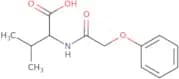
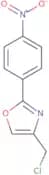
CAS:<p>Versatile small molecule scaffold</p>Formula:C13H17NO4Purity:Min. 95%Molecular weight:251.28 g/mol4-(Chloromethyl)-2-(4-nitrophenyl)-1,3-oxazole
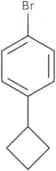
CAS:<p>Versatile small molecule scaffold</p>Formula:C10H7ClN2O3Purity:Min. 95%Molecular weight:238.63 g/molBenzene, 1-bromo-4-cyclobutyl-
CAS:<p>Versatile small molecule scaffold</p>Formula:C10H11BrPurity:Min. 95%Molecular weight:211.1 g/mol8-Azabicyclo[5.2.0]nonane
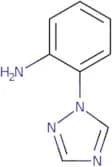
CAS:Versatile small molecule scaffoldFormula:C8H15NPurity:Min. 95%Molecular weight:125.21 g/mol2-(1H-1,2,4-Triazol-1-yl)aniline
CAS:<p>Versatile small molecule scaffold</p>Formula:C8H8N4Purity:Min. 95%Molecular weight:160.18 g/molN-Methylthiophene-2-carboxamide
CAS:<p>N-Methylthiophene-2-carboxamide is an organic compound with a carbonyl group. The conformational and molecular parameters of this compound have been determined using X-ray diffraction and validated by quantum chemical calculations. It has been shown that N-Methylthiophene-2-carboxamide can modulate the conformational behavior of proteins, including their function as enzyme inhibitors, and it is also able to bind to DNA in a covalent manner. N-Methylthiophene-2-carboxamide can be used as a solvent for other molecules that are insoluble in water or other solvents.</p>Formula:C6H7NOSPurity:Min. 95%Molecular weight:141.19 g/mol2-Oxo-6-(pyridin-4-yl)-1,2-dihydropyridine-3-carbonitrile
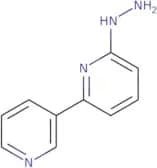
CAS:<p>Versatile small molecule scaffold</p>Formula:C11H7N3OPurity:Min. 95%Molecular weight:197.19 g/mol2-Hydrazinyl-6-(pyridin-3-yl)pyridine
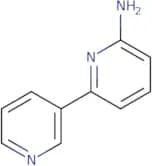
CAS:<p>Versatile small molecule scaffold</p>Formula:C10H10N4Purity:Min. 95%Molecular weight:186.21 g/mol3-(6-Aminopyridin-2-yl)pyridine
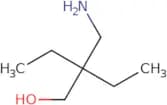
CAS:<p>Versatile small molecule scaffold</p>Formula:C10H9N3Purity:Min. 95%Molecular weight:171.2 g/mol2-(Aminomethyl)-2-ethylbutan-1-ol
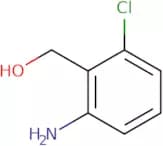
CAS:<p>Versatile small molecule scaffold</p>Formula:C7H17NOPurity:Min. 95%Molecular weight:131.22 g/mol(2-Amino-6-chlorophenyl)methanol
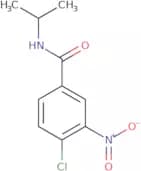
CAS:<p>2-Amino-6-chlorophenyl)methanol is a cyclic amine with a chloro substituent. It has been used as a precursor for the synthesis of carbamates and iminium compounds. The synthesis of 2-aminopyridine (1) from 2-amino-6-chlorophenol (2) involves an oxidative coupling reaction followed by an iminium formation. This process can be done in one step or in two steps, depending on the type of coupling agent used. The yields of this process are dependent on the reagents used, but can be up to 98% when using potassium permanganate as the coupling agent.</p>Formula:C7H8ClNOPurity:Min. 95%Molecular weight:157.6 g/mol4-Chloro-3-nitro-N-(propan-2-yl)benzamide
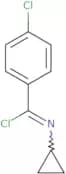
CAS:<p>Versatile small molecule scaffold</p>Formula:C10H11ClN2O3Purity:Min. 95%Molecular weight:242.66 g/mol4-Chloro-N-cyclopropylbenzene-1-carbonimidoyl chloride
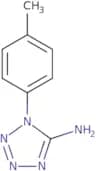
CAS:<p>Versatile small molecule scaffold</p>Formula:C10H9Cl2NPurity:Min. 95%Molecular weight:214.09 g/mol1-(4-Methylphenyl)-1H-1,2,3,4-tetrazol-5-amine
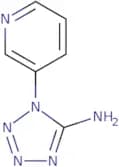
CAS:<p>Versatile small molecule scaffold</p>Formula:C8H9N5Purity:Min. 95%Molecular weight:175.19 g/mol1-(Pyridin-3-yl)-1H-1,2,3,4-tetrazol-5-amine
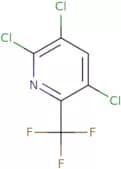
CAS:<p>Versatile small molecule scaffold</p>Formula:C6H6N6Purity:Min. 95%Molecular weight:162.2 g/mol2,3,5-Trichloro-6-(trifluoromethyl)pyridine
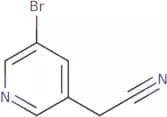
CAS:<p>Versatile small molecule scaffold</p>Formula:C6HCl3F3NPurity:Min. 95%Molecular weight:250.4 g/mol2-(5-Bromopyridin-3-yl)acetonitrile
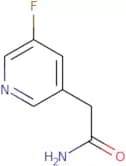
CAS:<p>Versatile small molecule scaffold</p>Formula:C7H5BrN2Purity:Min. 95%Molecular weight:197.03 g/mol2-(5-Fluoropyridin-3-yl)acetamide
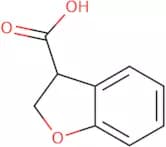
CAS:<p>Versatile small molecule scaffold</p>Formula:C7H7FN2OPurity:Min. 95%Molecular weight:154.14 g/mol2,3-Dihydrobenzofuran-3-carboxylic acid
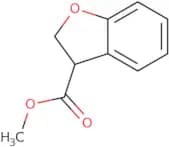
CAS:<p>Versatile small molecule scaffold</p>Formula:C9H8O3Purity:Min. 95%Molecular weight:164.16 g/molMethyl 2,3-dihydro-1-benzofuran-3-carboxylate
CAS:<p>Methyl 2,3-dihydro-1-benzofuran-3-carboxylate is a nonporous, nature, aldehyde that inhibits the growth of bacteria. It has been shown to inhibit the production of malonic acid in a reaction catalyzed by malonate decarboxylase and to inhibit the growth of bacteria by binding to their cell surfaces and interfering with their metabolism. Methyl 2,3-dihydro-1-benzofuran-3-carboxylate is used in techniques such as kinetic and titration calorimetry for measuring inhibition rates. This compound also has an oral route of administration and is used as an inhibitor in synthetic chemistry.</p>Formula:C10H10O3Purity:Min. 95%Molecular weight:178.18 g/molMethyl 2,3-dihydro-1-benzothiophene-3-carboxylate
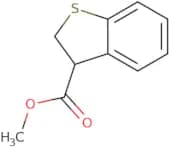
CAS:<p>Methyl 2,3-dihydro-1-benzothiophene-3-carboxylate is a chemical that is used to modify proteins by methylation. This process can be used to study epigenetics and the methylation patterns of proteins in mammalian cells. Methyl 2,3-dihydro-1-benzothiophene-3-carboxylate can also be used as a marker for DNA methylation. The detection methods for this compound include chromatography, mass spectrometry, and NMR spectroscopy.</p>Formula:C10H10O2SPurity:Min. 95%Molecular weight:194.25 g/molMethyl 1H-indene-3-carboxylate
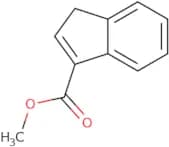
CAS:<p>Methyl 1H-indene-3-carboxylate (1,4-dimethoxybenzene) is an organic compound that is a methyl derivative of indene. It can be synthesized by the reaction of methyl acetoacetate with formaldehyde and hydrochloric acid. 1,4-Dimethoxybenzene has been shown to absorb light in the ultraviolet region, which may be due to its cyclic structure. This property allows the molecule to act as a photosensitive material for solar cells or photovoltaic devices. The efficiency of these devices has been increased by irradiating them with ultrafast pulses of light. Methyl 1H-indene-3-carboxylate may also function as an acceptor in organic electronic devices such as OLEDs and OPVs.</p>Formula:C11H10O2Purity:Min. 95%Molecular weight:174.2 g/mol2-Hydroxy-5-methoxy-benzonitrile
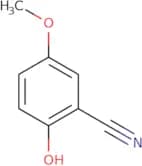
CAS:<p>2-Hydroxy-5-methoxy-benzonitrile (2HMOB) is a benzene carbonitrile that can be used in the synthesis of many different types of organic compounds. 2HMOB is synthesized by reacting anisole with benzyl bromide in the presence of a copper(I) catalyst. The reaction occurs through the following series of steps:</p>Formula:C8H7NO2Purity:Min. 95%Molecular weight:149.15 g/mol1,6-Epoxyisodihydrocarvone
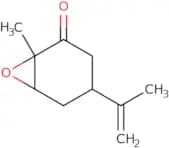
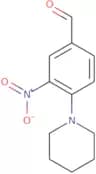
CAS:<p>Versatile small molecule scaffold</p>Formula:C10H14O2Purity:Min. 95%Molecular weight:166.22 g/mol3-Nitro-4-piperidinobenzaldehyde
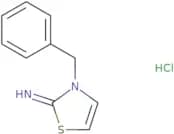
CAS:Versatile small molecule scaffoldFormula:C12H14N2O3Purity:Min. 95%Molecular weight:234.25 g/mol3-Benzyl-2,3-dihydro-1,3-thiazol-2-imine hydrochloride
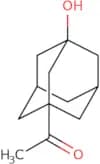
CAS:<p>Versatile small molecule scaffold</p>Formula:C10H11ClN2SPurity:Min. 95%Molecular weight:226.73 g/mol1-(3-Hydroxyadamantan-1-yl)ethan-1-one
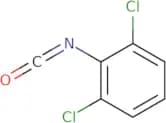
CAS:<p>1-(3-Hydroxyadamantan-1-yl)ethan-1-one (HAEE) is a racemic mixture of 1-(3-hydroxyadamantan-1-yl)ethanol (HAEE). HAEE can be synthesized from ethyl formate and quinidine. The process optimization step includes the reaction time and alkalization. HAEE has been used in the synthesis of quinine, an antimalarial drug, and to produce enolate salts. This process is optimized with chloride as a chlorinating agent and ethyl formate as an alkylating agent.</p>Formula:C12H18O2Purity:Min. 95%Molecular weight:194.27 g/mol2,6-Dichlorophenyl Isocyanate
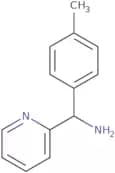
CAS:<p>2,6-Dichlorophenyl Isocyanate (2,6-DCPI) is an environmental pollutant that can be found in polyvinyl chloride and other plastics. 2,6-DCPI inhibits cell proliferation by binding to the tyrosine kinases of the cells. This binding prevents the activation of the cells' receptors and inhibits the production of proteins such as hydroxyproline. 2,6-DCPI has been shown to have anti-cancer effects in mice models and is being investigated for use in chemotherapy treatments. It also has a potential role in treating some skin diseases such as psoriasis because it inhibits the production of collagenase.</p>Formula:C7H3Cl2NOPurity:Min. 95%Molecular weight:188.01 g/mol(4-Methylphenyl)(pyridin-2-yl)methanamine
CAS:<p>Versatile small molecule scaffold</p>Formula:C13H14N2Purity:Min. 95%Molecular weight:198.26 g/mol1-(3-Chlorophenyl)-1-(pyridin-2-yl)methanamine
CAS:<p>Versatile small molecule scaffold</p>Formula:C12H11ClN2Purity:Min. 95%Molecular weight:218.68 g/mol1,3,7-Trimethyl-1H,2H,3H,4H,7H-pyrrolo[2,3-d]pyrimidine-2,4-dione
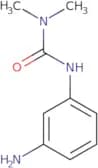
CAS:Controlled Product<p>Versatile small molecule scaffold</p>Formula:C9H11N3O2Purity:Min. 95%Molecular weight:193.2 g/mol1-(3-Aminophenyl)-3,3-dimethylurea
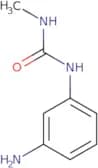
CAS:<p>Versatile small molecule scaffold</p>Formula:C9H13N3OPurity:Min. 95%Molecular weight:179.22 g/mol1-(3-Aminophenyl)-3-methylurea
CAS:<p>Versatile small molecule scaffold</p>Formula:C8H11N3OPurity:Min. 95%Molecular weight:165.19 g/mol(1-[(Dimethylamino)methyl]cyclobutyl)methanol
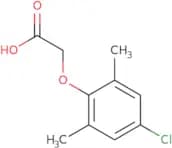
CAS:<p>Versatile small molecule scaffold</p>Formula:C8H17NOPurity:Min. 95%Molecular weight:143.23 g/mol2-(4-Chloro-2,6-dimethylphenoxy)acetic acid
CAS:<p>Versatile small molecule scaffold</p>Formula:C10H11ClO3Purity:Min. 95%Molecular weight:214.64 g/molEthyl 2-[(2-phenylphenyl)amino]acetate
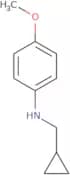
CAS:<p>Versatile small molecule scaffold</p>Formula:C16H17NO2Purity:Min. 95%Molecular weight:255.31 g/molN-(Cyclopropylmethyl)-4-methoxyaniline
CAS:<p>Versatile small molecule scaffold</p>Formula:C11H15NOPurity:Min. 95%Molecular weight:177.24 g/mol1-[2-(Trifluoromethyl)phenyl]ethylamine hydrochloride
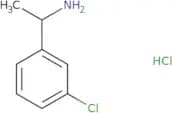
CAS:<p>Versatile small molecule scaffold</p>Formula:C9H10F3N·HClPurity:Min. 95%Molecular weight:225.64 g/mol1-(3-Chlorophenyl)ethanamine HCl
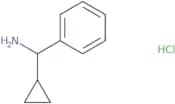
CAS:<p>Versatile small molecule scaffold</p>Formula:C8H10ClN·HClPurity:Min. 95%Molecular weight:192.09 g/mol1-Cyclopropyl-1-phenylmethanamine hydrochloride
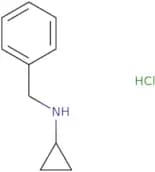
CAS:<p>Versatile small molecule scaffold</p>Formula:C10H14ClNPurity:Min. 95%Molecular weight:183.68 g/molN-Cyclopropylbenzylamine HCl
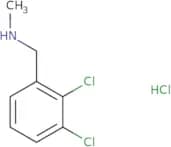
CAS:<p>N-Cyclopropylbenzylamine HCl is a molecule that is used in the synthesis of other compounds. It is an amine that has been reconstituted and inactivated with water. N-Cyclopropylbenzylamine HCl irreversibly inhibits phosphodiesterase type 4, which catalyzes the hydrolysis of cyclic adenosine monophosphate (cAMP). The bond between the N-cyclopropyl group and the benzene ring is cleaved, yielding a residue.</p>Formula:C10H13N·HClPurity:Min. 95%Molecular weight:183.68 g/mol1-(2,3-Dichlorophenyl)-N-methylmethanamine hydrochloride
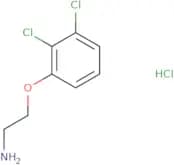
CAS:<p>Versatile small molecule scaffold</p>Formula:C8H10Cl3NPurity:Min. 95%Molecular weight:226.5 g/mol1-(2-Aminoethoxy)-2,3-dichlorobenzene hydrochloride
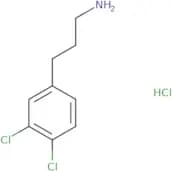
CAS:<p>Versatile small molecule scaffold</p>Formula:C8H10Cl3NOPurity:Min. 95%Molecular weight:242.5 g/mol3-(3,4-Dichlorophenyl)propan-1-amine hydrochloride
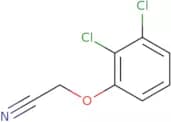
CAS:<p>Versatile small molecule scaffold</p>Formula:C9H12Cl3NPurity:Min. 95%Molecular weight:240.6 g/mol2-(2,3-Dichlorophenoxy)acetonitrile
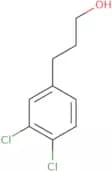
CAS:<p>Versatile small molecule scaffold</p>Formula:C8H5Cl2NOPurity:Min. 95%Molecular weight:202.03 g/mol3-(3,4-Dichlorophenyl)propan-1-ol
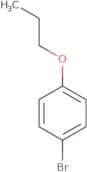
CAS:Versatile small molecule scaffoldFormula:C9H10Cl2OPurity:Min. 95%Molecular weight:205.08 g/mol1-Bromo-4-propoxybenzene
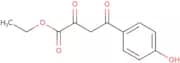
CAS:<p>Versatile small molecule scaffold</p>Formula:C9H11BrOPurity:Min. 95%Molecular weight:215.09 g/molEthyl 4-(4-hydroxyphenyl)-2,4-dioxobutanoate
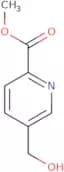
CAS:<p>Versatile small molecule scaffold</p>Formula:C12H12O5Purity:Min. 95%Molecular weight:236.22 g/molMethyl 5-(hydroxymethyl)pyridine-2-carboxylate
CAS:<p>Versatile small molecule scaffold</p>Formula:C8H9NO3Purity:Min. 95%Molecular weight:167.16 g/mol
![N-{[4-(Benzyloxy)phenyl]methyl}aniline](/_next/image/?url=https%3A%2Fstatic.cymitquimica.com%2Fproducts%2F3D%2Fthumb-webp%2FPBA86075.webp&w=3840&q=75)

![8-Azabicyclo[5.2.0]nonane](/_next/image/?url=https%3A%2Fstatic.cymitquimica.com%2Fproducts%2F3D%2Fthumb-webp%2FPBA87295.webp&w=3840&q=75)



![1,3,7-Trimethyl-1H,2H,3H,4H,7H-pyrrolo[2,3-d]pyrimidine-2,4-dione](/_next/image/?url=https%3A%2Fstatic.cymitquimica.com%2Fproducts%2F3D%2Fthumb-webp%2FPBA93051.webp&w=3840&q=75)
![(1-[(Dimethylamino)methyl]cyclobutyl)methanol](/_next/image/?url=https%3A%2Fstatic.cymitquimica.com%2Fproducts%2F3D%2Fthumb-webp%2FPBA94342.webp&w=3840&q=75)
![Ethyl 2-[(2-phenylphenyl)amino]acetate](/_next/image/?url=https%3A%2Fstatic.cymitquimica.com%2Fproducts%2F3D%2Fthumb-webp%2FPBA95019.webp&w=3840&q=75)
![1-[2-(Trifluoromethyl)phenyl]ethylamine hydrochloride](/_next/image/?url=https%3A%2Fstatic.cymitquimica.com%2Fproducts%2F3D%2Fthumb-webp%2FPBA95968.webp&w=3840&q=75)